DR ANJANA MOHITE
ASSOC PROFESSOR ENT
DY PATIL MEDICAL COLLEGE,
KOLHAPUR,MAHARASHTRA
INDIA
RHINOSPORIDIOSIS
Definition
 It’s a chronic granulomatous disease caused by
Rhinosporidium seeberi affecting both man and
animals.
Epidemiology
 India, Srilanka, Pakistan.
 Africa, South America, North America, Europe and
Canada.
 In India it is prevalent in Tamil Nadu, Kerala,
Madya Pradesh, Chattisgarh, Puducherry and
Andra Pradesh.
 Few cases reported from Punjab and Haryana.
 Affects cows, bulls, horses, mules and dogs, where
common infected ponds are shared by men and
animals.
Causative agent
 Initially considered a fungus.
 Some consider it to be protozoa or fish parasite
belonging to DRIP clade ie
 Dermocystidium, Rossette agent, Ichthyophonus
and Psorospermum.
Life Cycle
3 stages:
1. Trophic stage.
2. Development of sporangia.
3. Production of endospores.
Trophic stage
 The endospore is oval or rounded, 6to
8micrometres in size, with clear cytoplasm,
vesicular nucleus with nucleolus and covering of
chitin.
 This gradually increases in size,begins to divide
cytoplasm and nucleus forming small endospores
by several divisions.
 Tropocytes become large filled with endospores.
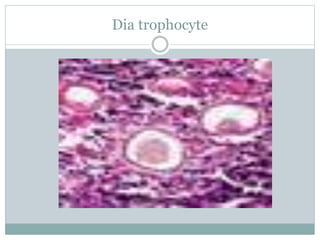
Dia trophocyte
Development of sporangia
 The mature trophocyte then develops into
sporangium.
 200-250 micrometres in diameter, contains
12,000-16,000 endospores.
 It has thick wall consisting of 2 layers: outer
chitinous and inner cellulose layer.
 Endospores mature with formation of mucoid and
chitinous walls.
 Sporangia filled with thousands of endospores
develops a germinal pore ready to burst and
liberate the endospores.
Production of endospores
 Sporangium filled with endospores develops high
internal pressure and ruptures liberating
endospores into the surrounding tissue.If internal
pressure is less spores are released one by one
without breakage of wall. After liberation
endospores start their life as trophic stage.
 Some of the endospores are carried by lymphatic
channels in the blood stream to cause
disseminated form of disease.`
Clinical Features
 Disease affects nose and nasopharynx.
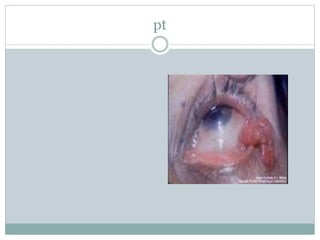
 Other sites: lip, palate, conjunctiva,
epiglottis,larynx, trachea, bronchi, skin, vulva and
vagina.
 Animal faecal contaminated water of ponds.
 ARS: pink polypoidal fleshy mass attached to nasal
septum or lateral wall. Surface looks studded with
white dots (represent sporangia) like strawberry,
The mass is very vascular and bleeds easily on
touch.
 Blood stained nasal discharge, nasal obstruction
and frank epistaxis.
pt
Diagnosis
 Biopsy with caution as bleeds.
 Culture not possible.
Rx
 Complete surgical excision of mass with diathermy
knife and cauterization of base. Recurrence may
occur.
 Laser excision.
 Dapsone has been tried with success.
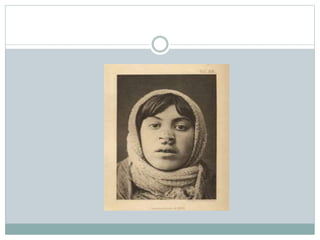
Rhinoscleroma
 It is chronic granulomatous disease caused by Gram
negative bacillus called Klebsiella
Rhinoscleromatous or Frisch bacillus.
 Endemic in several parts of the world.
 More seen in northern India than southern parts.
 Should be named as Sleroma.
Pathology
 Starts in nose and extends to nasopharynx,
oropharynx, larynxie mainly subglottic region,
trachea and bronchi.
 Mode of infection- not known.
 Both sexes affected.
 Any age group.
Clinical Features
 4 stages:
1. Catarrhal stage- rhinitis.
2. Atrophic stage-foul smelling purulent nasal
discharge and crust formation mimicks atrophic
rhinitis.
3. Nodular or granulomatous stage- bluish
granulomatoud nodules form over mucosa.
Subdermal infiltration of lower part of nose gives
a woody feel to nose. Nodules are painless and
nonulcerative.
4. Stenotic stage- stenosis of nares with
adhesions.Subglottic stenosis with respiratory
distress.
Diagnosis
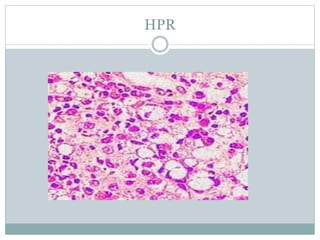
 Biopsy shows infiltration of submucosa with
plasma cells, lymphocytes, eosinophils, Mikulicz
cells and Russell bodies. The last 2 are diagnostic
of the disease.
 Miklicz cells are large foamy cells woth central
nucleus and vacuolated cytoplasm containing the
organism Frisch bacilli.
 Russell bodies are homogenous eosinophilic
inclusion bodies found in the plasma cells. Occur
due to accumulation of Igs secreted by plasma
cells.
 Organisms can be cultured from biopsy material.
HPR
Rx
 Streptomycin 1gm/day and tetracycline 2gm/day
are given together for 4 to 6 weeks and repeated if
necessary after 1 month.
 Treatment is stopped only when 2 consecutive
cultures are negative.
 Steroids a can be combined to reduce fibrosis.
 Surgical recanalisation of nose to establish airway
and correct nasal deformity.
Thank you

Presentation 8

  • 1.
    DR ANJANA MOHITE ASSOCPROFESSOR ENT DY PATIL MEDICAL COLLEGE, KOLHAPUR,MAHARASHTRA INDIA RHINOSPORIDIOSIS
  • 2.
    Definition  It’s achronic granulomatous disease caused by Rhinosporidium seeberi affecting both man and animals.
  • 3.
    Epidemiology  India, Srilanka,Pakistan.  Africa, South America, North America, Europe and Canada.  In India it is prevalent in Tamil Nadu, Kerala, Madya Pradesh, Chattisgarh, Puducherry and Andra Pradesh.  Few cases reported from Punjab and Haryana.  Affects cows, bulls, horses, mules and dogs, where common infected ponds are shared by men and animals.
  • 4.
    Causative agent  Initiallyconsidered a fungus.  Some consider it to be protozoa or fish parasite belonging to DRIP clade ie  Dermocystidium, Rossette agent, Ichthyophonus and Psorospermum.
  • 5.
    Life Cycle 3 stages: 1.Trophic stage. 2. Development of sporangia. 3. Production of endospores.
  • 6.
    Trophic stage  Theendospore is oval or rounded, 6to 8micrometres in size, with clear cytoplasm, vesicular nucleus with nucleolus and covering of chitin.  This gradually increases in size,begins to divide cytoplasm and nucleus forming small endospores by several divisions.  Tropocytes become large filled with endospores.
  • 7.
  • 8.
    Development of sporangia The mature trophocyte then develops into sporangium.  200-250 micrometres in diameter, contains 12,000-16,000 endospores.  It has thick wall consisting of 2 layers: outer chitinous and inner cellulose layer.  Endospores mature with formation of mucoid and chitinous walls.  Sporangia filled with thousands of endospores develops a germinal pore ready to burst and liberate the endospores.
  • 9.
    Production of endospores Sporangium filled with endospores develops high internal pressure and ruptures liberating endospores into the surrounding tissue.If internal pressure is less spores are released one by one without breakage of wall. After liberation endospores start their life as trophic stage.  Some of the endospores are carried by lymphatic channels in the blood stream to cause disseminated form of disease.`
  • 10.
    Clinical Features  Diseaseaffects nose and nasopharynx.  Other sites: lip, palate, conjunctiva, epiglottis,larynx, trachea, bronchi, skin, vulva and vagina.  Animal faecal contaminated water of ponds.  ARS: pink polypoidal fleshy mass attached to nasal septum or lateral wall. Surface looks studded with white dots (represent sporangia) like strawberry, The mass is very vascular and bleeds easily on touch.  Blood stained nasal discharge, nasal obstruction and frank epistaxis.
  • 11.
  • 12.
    Diagnosis  Biopsy withcaution as bleeds.  Culture not possible.
  • 13.
    Rx  Complete surgicalexcision of mass with diathermy knife and cauterization of base. Recurrence may occur.  Laser excision.  Dapsone has been tried with success.
  • 14.
    Rhinoscleroma  It ischronic granulomatous disease caused by Gram negative bacillus called Klebsiella Rhinoscleromatous or Frisch bacillus.  Endemic in several parts of the world.  More seen in northern India than southern parts.  Should be named as Sleroma.
  • 15.
    Pathology  Starts innose and extends to nasopharynx, oropharynx, larynxie mainly subglottic region, trachea and bronchi.  Mode of infection- not known.  Both sexes affected.  Any age group.
  • 16.
    Clinical Features  4stages: 1. Catarrhal stage- rhinitis. 2. Atrophic stage-foul smelling purulent nasal discharge and crust formation mimicks atrophic rhinitis. 3. Nodular or granulomatous stage- bluish granulomatoud nodules form over mucosa. Subdermal infiltration of lower part of nose gives a woody feel to nose. Nodules are painless and nonulcerative. 4. Stenotic stage- stenosis of nares with adhesions.Subglottic stenosis with respiratory distress.
  • 18.
    Diagnosis  Biopsy showsinfiltration of submucosa with plasma cells, lymphocytes, eosinophils, Mikulicz cells and Russell bodies. The last 2 are diagnostic of the disease.  Miklicz cells are large foamy cells woth central nucleus and vacuolated cytoplasm containing the organism Frisch bacilli.  Russell bodies are homogenous eosinophilic inclusion bodies found in the plasma cells. Occur due to accumulation of Igs secreted by plasma cells.  Organisms can be cultured from biopsy material.
  • 19.
  • 20.
    Rx  Streptomycin 1gm/dayand tetracycline 2gm/day are given together for 4 to 6 weeks and repeated if necessary after 1 month.  Treatment is stopped only when 2 consecutive cultures are negative.  Steroids a can be combined to reduce fibrosis.  Surgical recanalisation of nose to establish airway and correct nasal deformity.
  • 21.