What is Activelistening?
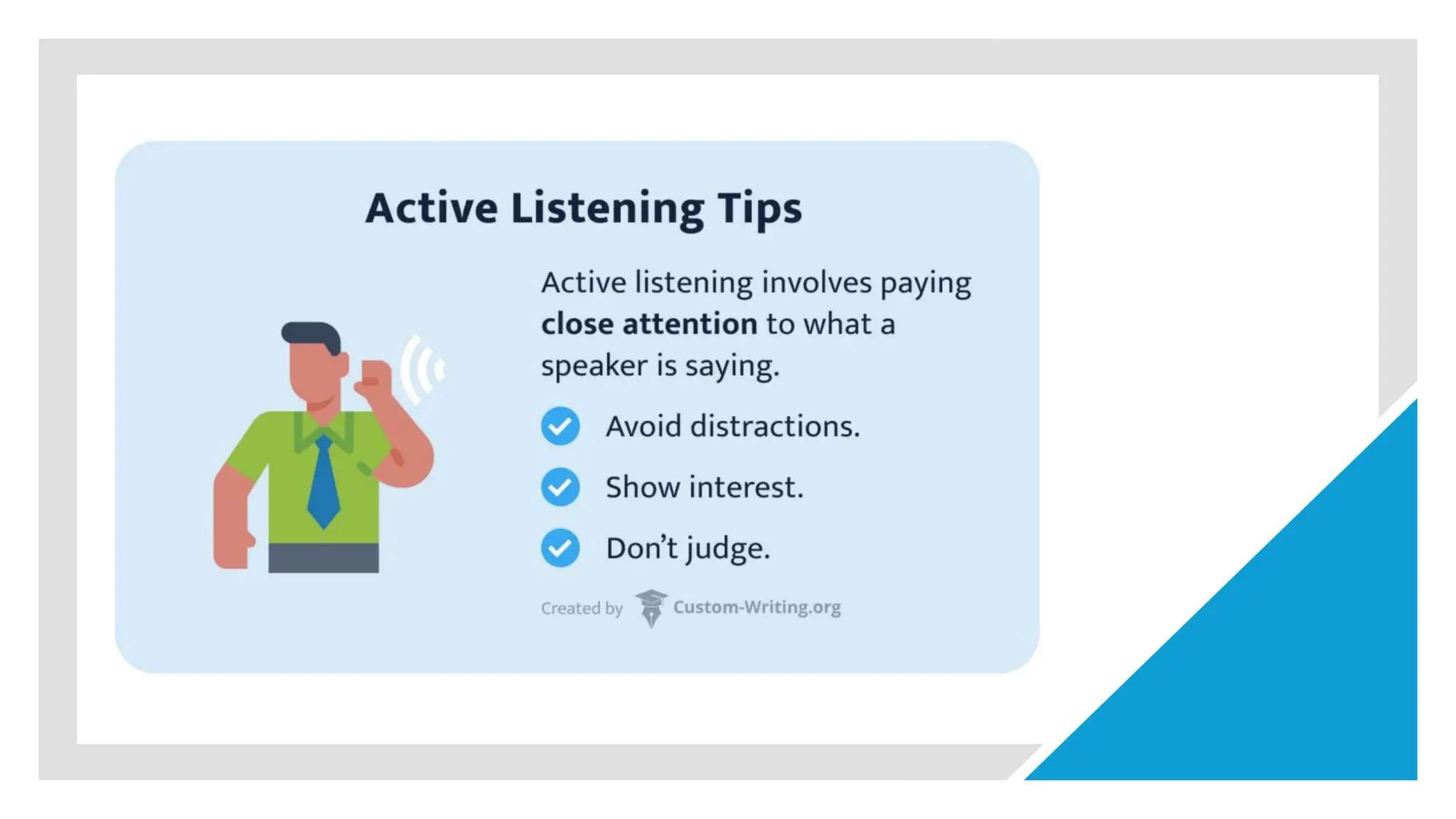
Active listening means paying full attention to
what someone is saying, both verbally and
nonverbally by actively engaging with the speaker
through techniques like asking clarifying
questions summarizing what they've said and
demonstrating genuine interest to fully
understand their message rather than just
passively hearing the words
4.
More over:
.IT's acommunication skill
Active listening requires mastering many skills
including reading body language and tone of voice
maintaining your attention and being aware of and
controlling your emotional response.
5.
TYPES OF ACTIVELISTENING
• Reflective Listening
It is a communication skill where the
listener focuses on understanding the
speaker's message and then reflects it
back to ensure clarity and mutual
understanding.
6.
Empathetic Listening
•Empathetic listeningis about paying
attention not only to the words someone
is saying, but also to their emotions and
feelings. You focus on understanding how
the person feels, and you show that you
care by acknowledging those feelings.
This helps the person feel understood and
supported
7.
Critical Listening
•Critical listeningis when you listen carefully
and think about what is being said. Instead of
just agreeing you ask questions and check if it
makes sense or is true. It helps you
understand the information better and make
smarter decisions. It’s useful when you need
to solve problems or figure out if something is
right.
8.
Informational Listening
• Informationallistening is when you listen carefully to
gather facts, details, or instructions. The goal is to
understand and remember the information being shared,
not necessarily to respond emotionally or critically. You
focus on learning and absorbing what is being said. This
type of listening is often used in situations like lectures
training sessions or when someone gives you directions
or specific information. It helps you stay organized and
informed ensuring you understand the key points clearly.
9.
Appreciative Listening
•Appreciative listeningis when you listen to
something because you enjoy it or find it
interesting. This could be when you listen to
music, a good story, or a motivational speaker.
You focus on the enjoyment or beauty of the
message, rather than analyzing it or
remembering every detail. The main goal is to
appreciate and enjoy the experience of
listening, whether it's for fun, inspiration, or
relaxation.
10.
Supportive Listening
•Supportive listeningis when you listen to
someone with the goal of offering help
comfort or encouragement. You pay attention
to their feelings and provide emotional
support by showing care and understanding.
This type of listening helps the speaker feel
supported and not alone especially when
they’re going through a tough time. You might
say things like I’m here for you or You’re doing
great to show your support.
12.
WAYS TO IMPROVEACTIVE LISTENING
•Be Fully Present:
Active listening requires being fully
present in the conversation. This
enables you to concentrate on what is
being said. Being present involves
listening with all your senses (sight,
sound, etc.) and giving your full
attention to the speaker
13.
Pay Attention toNon-Verbal Cues:
•As much as 65% of a person's communication is
unspoken. Paying attention to these nonverbal
cues can tell you a lot about the person and what they
are trying to say. If they talk fast, for instance, this
could be a sign that they are nervous or anxious. If they
talk slowly, they may be tired or trying to carefully
choose their words
NOTE:Non verbal cues are signals we send without words like body language facial
expressions tone of voice eye contact. These cues reveal a person’s emotions, thoughts or
intentions and help in communication.
14.
Keep Good EyeContact:
•When engaged in active listening
making eye contact is especially
important. This tells the other
person that you are present and
listening to what they say. It also
shows that you aren't distracted by
anything else around you...
15.
Be Patient:
•Patience isan important active
listening technique because it
allows the other person to speak
without interruption. It also gives
them the time to say what they
are thinking without having to try
to finish their sentences for them.
16.
Listen without judging,or jumping to
conclusions:
• Try to focus on listening. Equally, do not assume that
you know what’s going to be said next
Listening without judging or jumping to conclusions
means hearing what someone says without immediately
making opinions or assumptions. It’s about being open
and allowing the person to share their thoughts fully
before you respond. This helps build trust and makes the
person feel heard and understood




![Art of listening 1234@#$&£§√=€¢✓^]¢™[¢[¢°](https://cdn.slidesharecdn.com/ss_thumbnails/theartoflistening-250221103137-e09ad216-thumbnail.jpg?width=640&height=640&fit=bounds)


