PRESENTED BY:-
 RESHI KUMARI
FROM THE CONSUMER’S PERSPECTIVE:
Frequent purchase
Low involvement(little or no effort to choose the item)
Low price
FROM THE MARKETER’S ANGLE:
High volumes
Low contribution margin
Extensive distribution networks
High stock turnover
 HINDUSTAN UNILEVER LTD
 ITC LTD
 NESTLE INDIA LTD
 AMUL
 DABUR INDIA LTD
 HUL
 MARICO
 HALDIRAM
 HIMALAYA HEALTHCARE LTD
 EMAMI
 CAVINKARE
 GODREJ CONSUMER PRODUCTS LTD
 GLAXO SMITH KLINE
 COLGATE
 TATA GLOBAL BEV.
 FMCG Companies are expected to register strong profit and sales
growth in the quarter ended march, led by hike in prices at regular
intervals and sales growth.
 You can invest in this sector through equity, by selecting right
company stocks to add in your portfolio.
 The alternative way to invest is mutual fund route. In the mutual
fund you can invest lump sum amount or invest regularly through
systematic investment plan without worries about volatility in the
indices.
 In investing through equity route; FMCG index mainly compose by
three players i.e. ITC ltd, Hindustan Unilever ltd and Nestle India ltd .
They together contribute ~80% market cap to total of BSE FMCG
index.
 In investing through mutual fund route; there are two sector funds
available in market which invests mainly in two FMCG stocks .They
are SBI Magnum FMCG fund and ICICI Prudential FMCG fund.
COMPANY
NAME
INDUSTRY LAST PRICE CHANGE % CHANGE MKT.CAP
(RS.cr)
Colgate Personal
care
899.35 +8.70 +0.98 24,461.03
Dabur
India
Personal
care
281.65 +2.80 +1.00 49,613.23
Emami Personal
care
1072.90 +10.45 +0.98 24,351.36
Hul Personal
care
827.95 +2.05 +0.25 1,79,191.1
2
ITC Cigarettes 249.65 +5.00 +2.04 3,02,609.8
0
Tata global
bev
Plantatatio
ntea and
coffee
128.35 +3.20 +2.56 8100.55
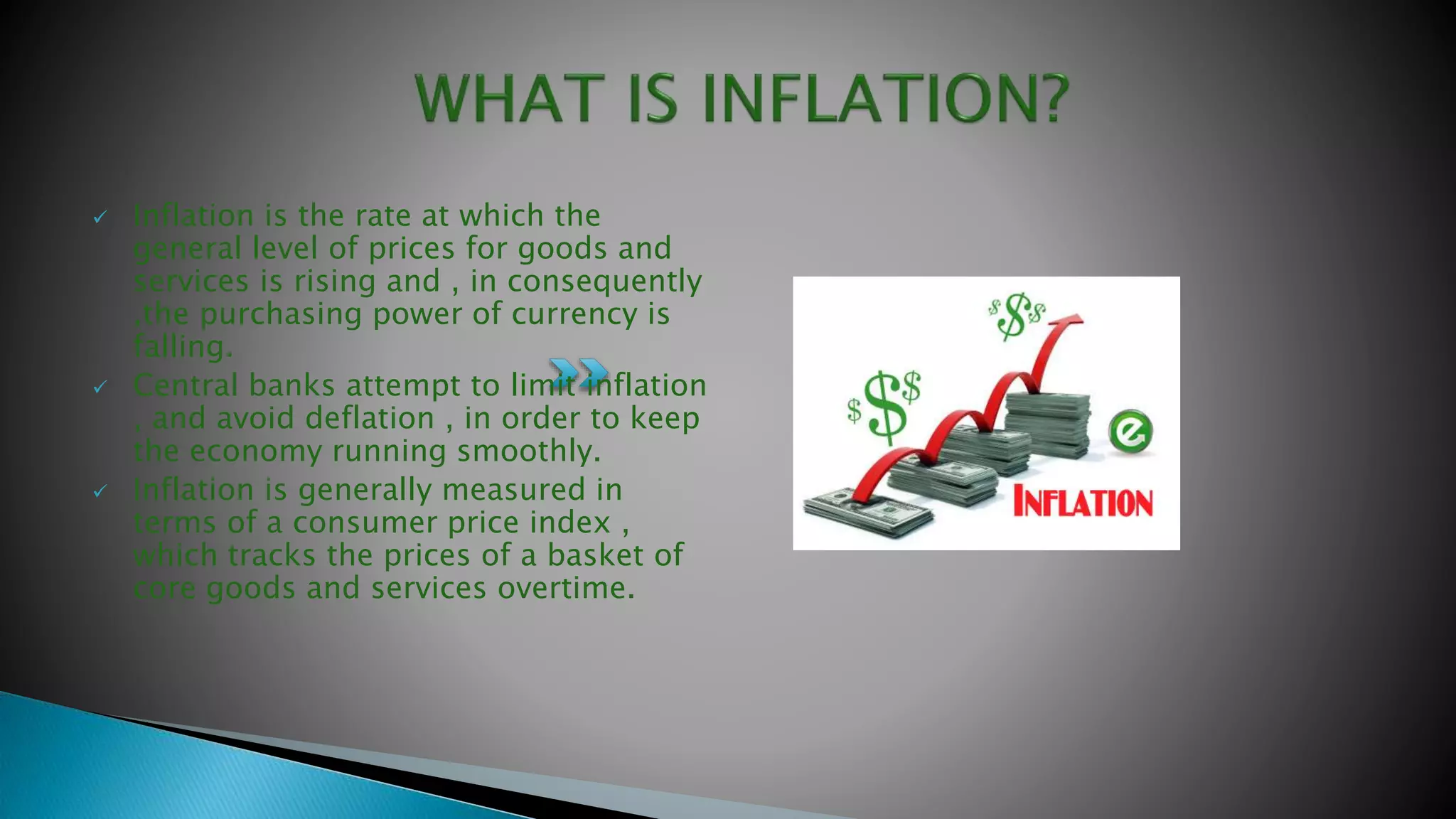
 Inflation is the rate at which the
general level of prices for goods and
services is rising and , in consequently
,the purchasing power of currency is
falling.
 Central banks attempt to limit inflation
, and avoid deflation , in order to keep
the economy running smoothly.
 Inflation is generally measured in
terms of a consumer price index ,
which tracks the prices of a basket of
core goods and services overtime.
 The sector is considered defensive, which means its stock are in high
demands when the markets are failing. The reason is simple irrespective
of how the economy is performing, the demands for consumer goods,
daily necessities like food and toothpastes, remains stable. During
difficult times, people will reduce spending on discretionary items such
as cars and air-conditioners but continue to buy basic essentials. This
has held true since the 2008 crisis. But now, as other sectors revive,
FMCG may not remain everyone’s favorite.
 FMCG stock indices have been performing quite well with CNX FMCG
index on the national stock exchange. Funds such as ICICI prudential
FMCG fund and SBI FMCG fund returned 18.08% and 26.75% respectively
during the period. But will this really continue?
 Analysts say stock in the sector are trading higher than historical
valuations. Sustaining these will be a challenge. Expansion will be
difficult, and the biggest risk in the price to earnings, or PE, ratio going
down. The ratio, use to value a stock, measures how much the market is
willing to pay for it compared to the companies earnings.
Volatility in inflation rate will affect the cost of manufacturing and
customer consumption which leads to precariousness in stock price
movements.
 high food inflation has an adverse affect on the FMCG industry.
people will spend less money on discretionary items which will hit
the FMCG industry.
 A good monsoon will not give any inflation worries and also
increases the consumption power creating demand for hair oil,
biscuits , soaps , shampoos and laundry.
 Over time and with growing purchasing power, The
Indian customer is moving from food to non-food, non-
discretionary to discretionary items of consumption.
With rising income level, it is accepted that the
consumption of value-added products in the consumer
durables segment will continue to be on the upswing.
Consumption is expected to grow in double digits over
the next decade.
Over the last couple of years, with rise in agricultural
income and inflows from rural employment generating
programmes like the national rural employment
guarantee act(NREGA), rural and semi-urban indian is
flush with liquidity.
In the last couple of year’s the shares of the fast moving
consumer goods companies have provided investors
with a certain sense of security during times of financial
trouble. According to the recommendations of MOTILAL
OSWAL securities, has stated that FMCG shares are
regarded as good defensive options.
FMCG index delivered very good returns as compared to
the all other index in last two years. As per economic
experts ,the FMCG shares like technology and energy
stocks have low beta and provides greater yields in
terms of dividends.
•WWW.BUSINESSTODAY.COM
•WWW.NINEMILLIONDOLLARS.COM
•WWW.ECONOMICTIMES.COM
Investment in FMCG

Investment in FMCG

  • 1.
  • 4.
    FROM THE CONSUMER’SPERSPECTIVE: Frequent purchase Low involvement(little or no effort to choose the item) Low price FROM THE MARKETER’S ANGLE: High volumes Low contribution margin Extensive distribution networks High stock turnover
  • 5.
     HINDUSTAN UNILEVERLTD  ITC LTD  NESTLE INDIA LTD  AMUL  DABUR INDIA LTD  HUL  MARICO  HALDIRAM  HIMALAYA HEALTHCARE LTD  EMAMI  CAVINKARE  GODREJ CONSUMER PRODUCTS LTD  GLAXO SMITH KLINE  COLGATE  TATA GLOBAL BEV.
  • 6.
     FMCG Companiesare expected to register strong profit and sales growth in the quarter ended march, led by hike in prices at regular intervals and sales growth.  You can invest in this sector through equity, by selecting right company stocks to add in your portfolio.  The alternative way to invest is mutual fund route. In the mutual fund you can invest lump sum amount or invest regularly through systematic investment plan without worries about volatility in the indices.  In investing through equity route; FMCG index mainly compose by three players i.e. ITC ltd, Hindustan Unilever ltd and Nestle India ltd . They together contribute ~80% market cap to total of BSE FMCG index.  In investing through mutual fund route; there are two sector funds available in market which invests mainly in two FMCG stocks .They are SBI Magnum FMCG fund and ICICI Prudential FMCG fund.
  • 7.
    COMPANY NAME INDUSTRY LAST PRICECHANGE % CHANGE MKT.CAP (RS.cr) Colgate Personal care 899.35 +8.70 +0.98 24,461.03 Dabur India Personal care 281.65 +2.80 +1.00 49,613.23 Emami Personal care 1072.90 +10.45 +0.98 24,351.36 Hul Personal care 827.95 +2.05 +0.25 1,79,191.1 2 ITC Cigarettes 249.65 +5.00 +2.04 3,02,609.8 0 Tata global bev Plantatatio ntea and coffee 128.35 +3.20 +2.56 8100.55
  • 8.
     Inflation isthe rate at which the general level of prices for goods and services is rising and , in consequently ,the purchasing power of currency is falling.  Central banks attempt to limit inflation , and avoid deflation , in order to keep the economy running smoothly.  Inflation is generally measured in terms of a consumer price index , which tracks the prices of a basket of core goods and services overtime.
  • 10.
     The sectoris considered defensive, which means its stock are in high demands when the markets are failing. The reason is simple irrespective of how the economy is performing, the demands for consumer goods, daily necessities like food and toothpastes, remains stable. During difficult times, people will reduce spending on discretionary items such as cars and air-conditioners but continue to buy basic essentials. This has held true since the 2008 crisis. But now, as other sectors revive, FMCG may not remain everyone’s favorite.  FMCG stock indices have been performing quite well with CNX FMCG index on the national stock exchange. Funds such as ICICI prudential FMCG fund and SBI FMCG fund returned 18.08% and 26.75% respectively during the period. But will this really continue?  Analysts say stock in the sector are trading higher than historical valuations. Sustaining these will be a challenge. Expansion will be difficult, and the biggest risk in the price to earnings, or PE, ratio going down. The ratio, use to value a stock, measures how much the market is willing to pay for it compared to the companies earnings.
  • 11.
    Volatility in inflationrate will affect the cost of manufacturing and customer consumption which leads to precariousness in stock price movements.  high food inflation has an adverse affect on the FMCG industry. people will spend less money on discretionary items which will hit the FMCG industry.  A good monsoon will not give any inflation worries and also increases the consumption power creating demand for hair oil, biscuits , soaps , shampoos and laundry.
  • 12.
     Over timeand with growing purchasing power, The Indian customer is moving from food to non-food, non- discretionary to discretionary items of consumption. With rising income level, it is accepted that the consumption of value-added products in the consumer durables segment will continue to be on the upswing. Consumption is expected to grow in double digits over the next decade. Over the last couple of years, with rise in agricultural income and inflows from rural employment generating programmes like the national rural employment guarantee act(NREGA), rural and semi-urban indian is flush with liquidity.
  • 13.
    In the lastcouple of year’s the shares of the fast moving consumer goods companies have provided investors with a certain sense of security during times of financial trouble. According to the recommendations of MOTILAL OSWAL securities, has stated that FMCG shares are regarded as good defensive options. FMCG index delivered very good returns as compared to the all other index in last two years. As per economic experts ,the FMCG shares like technology and energy stocks have low beta and provides greater yields in terms of dividends.
  • 14.