PRESENT
CONTINUOUS
1R ESO
Anna Torrent
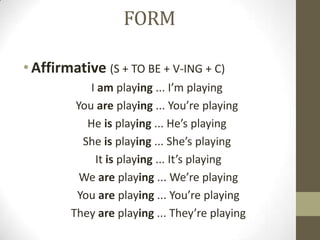
FORM

• Affirmative (S + TO BE + V-ING + C)
            I am playing ... I’m playing
         You are playing ... You’re playing
           He is playing ... He’s playing
          She is playing ... She’s playing
             It is playing ... It’s playing
          We are playing ... We’re playing
         You are playing ... You’re playing
        They are playing ... They’re playing
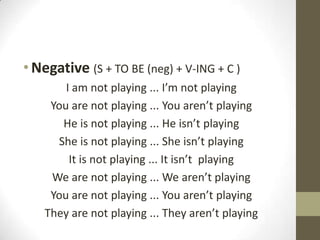
• Negative (S + TO BE (neg) + V-ING + C )
        I am not playing ... I’m not playing
     You are not playing ... You aren’t playing
       He is not playing ... He isn’t playing
      She is not playing ... She isn’t playing
         It is not playing ... It isn’t playing
     We are not playing ... We aren’t playing
     You are not playing ... You aren’t playing
    They are not playing ... They aren’t playing
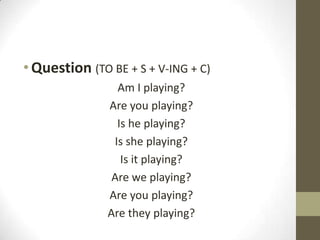
• Question (TO BE + S + V-ING + C)
                 Am I playing?
               Are you playing?
                 Is he playing?
                Is she playing?
                  Is it playing?
                Are we playing?
               Are you playing?
               Are they playing?
USE
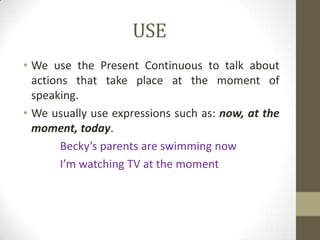
• We use the Present Continuous to talk about
  actions that take place at the moment of
  speaking.
• We usually use expressions such as: now, at the
  moment, today.
        Becky’s parents are swimming now
        I’m watching TV at the moment
-ING SPELLING RULES
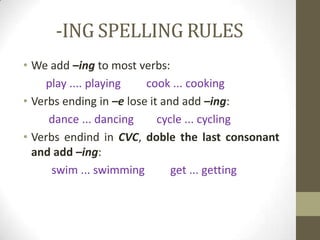
• We add –ing to most verbs:
    play .... playing    cook ... cooking
• Verbs ending in –e lose it and add –ing:
     dance ... dancing      cycle ... cycling
• Verbs endind in CVC, doble the last consonant
  and add –ing:
      swim ... swimming        get ... getting
EXCEPTION
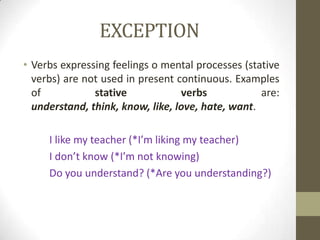
• Verbs expressing feelings o mental processes (stative
  verbs) are not used in present continuous. Examples
  of           stative            verbs            are:
  understand, think, know, like, love, hate, want.

     I like my teacher (*I’m liking my teacher)
     I don’t know (*I’m not knowing)
     Do you understand? (*Are you understanding?)

Present Continuous

  • 1.
  • 2.
    FORM • Affirmative (S+ TO BE + V-ING + C) I am playing ... I’m playing You are playing ... You’re playing He is playing ... He’s playing She is playing ... She’s playing It is playing ... It’s playing We are playing ... We’re playing You are playing ... You’re playing They are playing ... They’re playing
  • 3.
    • Negative (S+ TO BE (neg) + V-ING + C ) I am not playing ... I’m not playing You are not playing ... You aren’t playing He is not playing ... He isn’t playing She is not playing ... She isn’t playing It is not playing ... It isn’t playing We are not playing ... We aren’t playing You are not playing ... You aren’t playing They are not playing ... They aren’t playing
  • 4.
    • Question (TOBE + S + V-ING + C) Am I playing? Are you playing? Is he playing? Is she playing? Is it playing? Are we playing? Are you playing? Are they playing?
  • 5.
    USE • We usethe Present Continuous to talk about actions that take place at the moment of speaking. • We usually use expressions such as: now, at the moment, today. Becky’s parents are swimming now I’m watching TV at the moment
  • 6.
    -ING SPELLING RULES •We add –ing to most verbs: play .... playing cook ... cooking • Verbs ending in –e lose it and add –ing: dance ... dancing cycle ... cycling • Verbs endind in CVC, doble the last consonant and add –ing: swim ... swimming get ... getting
  • 7.
    EXCEPTION • Verbs expressingfeelings o mental processes (stative verbs) are not used in present continuous. Examples of stative verbs are: understand, think, know, like, love, hate, want. I like my teacher (*I’m liking my teacher) I don’t know (*I’m not knowing) Do you understand? (*Are you understanding?)