English Literature
Elements of literature
THE FIRST THINGS TO ANALYSE BEFORE
READING A BOOK!
• Who is the author of the book?
• What is the purpose behind the book?
• What is the genre of the text? (is it drama, poetry or prose)
NB: you can answer these questions by doing background research
on who the author is, which will be a link to the common themes
related to the author most writings. this will help in answering what
the purpose behind writing the particular book is.
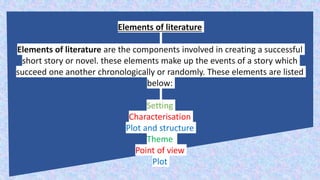
Elements of literature
Elements of literature are the components involved in creating a successful
short story or novel. these elements make up the events of a story which
succeed one another chronologically or randomly. These elements are listed
below:
Setting
Characterisation
Plot and structure
Theme
Point of view
Plot
Setting(Place and Time)
 Setting is the environment in which the story takes place. Short stories haveone major
setting while while novels involve more settings
 A story setting can have both physical and phsycological effects on the action and
characters of the story. A story turns out differently in different settings, for instance;
in aa crowded city instead of a desserted island.
 Setting consists of the elements of time, place physical and social environment.
Characterisation: It is the description and
construction of a character.
• Direct Characterisation
Occurs when the author tells
readers about the character
directly.
• Dramatisation
Characters are shown speaking
and behaving as in a play
• Indirect characterisation
Lets readers draw their own
conclusions on how a character in
a story is. readers make their
own judgements.
Elements of a PLOT
• The plot are the events which take place in a story. This is the order
how everything else in the story happens chronologically in a
sequence.
• This is how the story is planned
• It is the way in which an author arranges the action towards a specific
structure.
• Elements of a plot consist of what is termed as : Exposition,rising,
action,climax,falling action and resolution which will be explained in
the following slide…
Continuation(Elements of plot)…
3.Climax: This is
the turning point
5.Resolution:End
of the story
where the
problems are
solved
4.Falling action:
Actions and
events that occur
after the climax
1.Exposition:
Beginning of the
story which
introduces
conflict, character
and setting
2.Rising action:
Events before the
climax
Point of view
• The point of view in a story is the perspective the story is being told
in, It is someones side of the story and the way they see things.
• A story can be told in first person,omniscient narrator,limited
narrator or third person. Look at illustrations below pronouns used in
each as examples.
1st person(I, We,
Our)
3rd Person (He,She, It,
They)
2nd person(You)
Theme
The theme is the controlling idea or central
insight of a story.
Not all stories have significant themes.
Themes are not equal to moral, message or
lesson
Focusing on the protagonist, central conflict,
and other pieces make the task of uncovering
a theme easier.
References
• https://www.slideshare.net/Vahidjami/Elements-of-Fiction (Accessed
19 August 2020)
• https://www.slideshare.net/jschultz/Elements-of-literature (Accessed
18 August 2020)
• https//www.slideshare.net/christinabentheim/Elements-of-literature
(Accessed 18 August 2020)
• http//www.slideshare.net/nulikiadami/literature-elements-of-
literature (Accessed 17 August 2020)
• http//www.slideshare.net/khifmuamarmiranda/Elements-of-
literature (Accessed 19 August 2020)

Presenation slidesharefinal

  • 1.
  • 2.
    THE FIRST THINGSTO ANALYSE BEFORE READING A BOOK! • Who is the author of the book? • What is the purpose behind the book? • What is the genre of the text? (is it drama, poetry or prose) NB: you can answer these questions by doing background research on who the author is, which will be a link to the common themes related to the author most writings. this will help in answering what the purpose behind writing the particular book is.
  • 3.
    Elements of literature Elementsof literature are the components involved in creating a successful short story or novel. these elements make up the events of a story which succeed one another chronologically or randomly. These elements are listed below: Setting Characterisation Plot and structure Theme Point of view Plot
  • 4.
    Setting(Place and Time) Setting is the environment in which the story takes place. Short stories haveone major setting while while novels involve more settings  A story setting can have both physical and phsycological effects on the action and characters of the story. A story turns out differently in different settings, for instance; in aa crowded city instead of a desserted island.  Setting consists of the elements of time, place physical and social environment.
  • 5.
    Characterisation: It isthe description and construction of a character. • Direct Characterisation Occurs when the author tells readers about the character directly. • Dramatisation Characters are shown speaking and behaving as in a play • Indirect characterisation Lets readers draw their own conclusions on how a character in a story is. readers make their own judgements.
  • 6.
    Elements of aPLOT • The plot are the events which take place in a story. This is the order how everything else in the story happens chronologically in a sequence. • This is how the story is planned • It is the way in which an author arranges the action towards a specific structure. • Elements of a plot consist of what is termed as : Exposition,rising, action,climax,falling action and resolution which will be explained in the following slide…
  • 7.
    Continuation(Elements of plot)… 3.Climax:This is the turning point 5.Resolution:End of the story where the problems are solved 4.Falling action: Actions and events that occur after the climax 1.Exposition: Beginning of the story which introduces conflict, character and setting 2.Rising action: Events before the climax
  • 8.
    Point of view •The point of view in a story is the perspective the story is being told in, It is someones side of the story and the way they see things. • A story can be told in first person,omniscient narrator,limited narrator or third person. Look at illustrations below pronouns used in each as examples. 1st person(I, We, Our) 3rd Person (He,She, It, They) 2nd person(You)
  • 9.
    Theme The theme isthe controlling idea or central insight of a story. Not all stories have significant themes. Themes are not equal to moral, message or lesson Focusing on the protagonist, central conflict, and other pieces make the task of uncovering a theme easier.
  • 10.
    References • https://www.slideshare.net/Vahidjami/Elements-of-Fiction (Accessed 19August 2020) • https://www.slideshare.net/jschultz/Elements-of-literature (Accessed 18 August 2020) • https//www.slideshare.net/christinabentheim/Elements-of-literature (Accessed 18 August 2020) • http//www.slideshare.net/nulikiadami/literature-elements-of- literature (Accessed 17 August 2020) • http//www.slideshare.net/khifmuamarmiranda/Elements-of- literature (Accessed 19 August 2020)