Prepared by
Mohammad Alauddin
Pharmacist – United Hospital LTD.
MEDICATION
DURING PREGNANCY

During pregnancy, some medications
are safe and some are not. Some
require a higher than usual dose, and
some doses change with the
advancing pregnancy. Drugs should
be given only if the potential
benefit justifies the potential risk to
the fetus."
CATEGORIES
The pregnancy category of a drug
is an assessment of the risk of
fetal injury occurred by that drug.
CATEGORIES
The U.S. Food and Drug
Administration has generated a
grading system for medications
used during pregnancy. The
categories are A, B, C, D, and X.
The significance of these
categories are :-
CATEGORY A
Definitions

Drugs that have been tested for
safety during pregnancy and have
been found to be safe.
CATEGORY A
Clinical Application

For all practical purposes, there are
no Category A drugs. Drugs, and
some multivitamins This includes folic
acid, vitamin B6, and thyroid
medicine classified as Category A.
CATEGORY B
Definitions

Drugs that have been used a lot
during pregnancy and do not appear
to cause major birth defects or other
problems.
CATEGORY B
Clinical Application

• Category
B
drugs
include
vitamins,
acetaminophen
(Napa),
famotidine
(famotid),
prednisolone
(cortan), insulin (for diabetes), and
ibuprofan (inflam) before third
trimester, ibuprofen should not take
during the last three months of
CATEGORY C
Definitions

• Drugs that are more likely to cause
problems for the mother or fetus.
Also includes drugs for which safety
studies have not been finished.
Drugs should be given only if the
potential benefit justifies the
potential risk to the fetus.
CATEGORY C
Clinical Application

• There are some reasons to be more
concerned about these drugs than
Category B drugs. If the pregnant
patient will benefit from a Category
C drug, it is generally used. These
drugs
include
fluconazole
(Fluda),
and
ciprofloxacin
(Xirocip), some antidepressants are
also included in this group.
CATEGORY D
Definitions

• Drugs that have clear health risks for
the fetus. but the benefits from use
in pregnant woman may be
acceptable despite the risk (e.g., if
the drug is needed in a lifethreatening situation or for a
serious disease.)
CATEGORY D
Clinical Application

• Category D drugs includes alcohol, lithium (used to treat manic
depression), phenytoin (eptoin), and
most chemotherapy drugs to treat
cancer. They should be used during
pregnancy only when no alternatives
available.
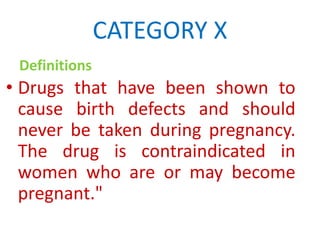
CATEGORY X
Definitions

• Drugs that have been shown to
cause birth defects and should
never be taken during pregnancy.
The drug is contraindicated in
women who are or may become
pregnant."
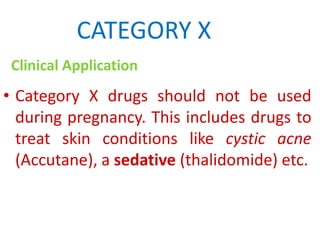
CATEGORY X
Clinical Application

• Category X drugs should not be used
during pregnancy. This includes drugs to
treat skin conditions like cystic acne
(Accutane), a sedative (thalidomide) etc.
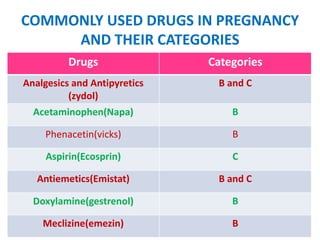
COMMONLY USED DRUGS IN PREGNANCY
AND THEIR CATEGORIES
Drugs

Categories

Analgesics and Antipyretics
(zydol)

B and C

Acetaminophen(Napa)

B

Phenacetin(vicks)

B

Aspirin(Ecosprin)

C

Antiemetics(Emistat)

B and C

Doxylamine(gestrenol)

B

Meclizine(emezin)

B
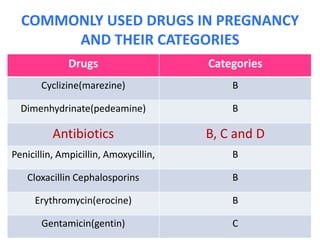
COMMONLY USED DRUGS IN PREGNANCY
AND THEIR CATEGORIES
Drugs

Categories

Cyclizine(marezine)

B

Dimenhydrinate(pedeamine)

B

Antibiotics

B, C and D

Penicillin, Ampicillin, Amoxycillin,

B

Cloxacillin Cephalosporins

B

Erythromycin(erocine)

B

Gentamicin(gentin)

C
COMMONLY USED DRUGS IN PREGNANCY
AND THEIR CATEGORIES
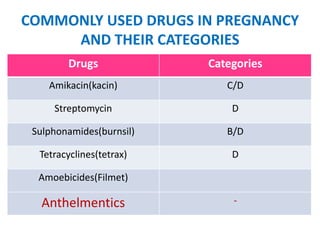
Drugs

Categories

Amikacin(kacin)

C/D

Streptomycin

D

Sulphonamides(burnsil)

B/D

Tetracyclines(tetrax)

D

Amoebicides(Filmet)

Anthelmentics

-
COMMONLY USED DRUGS IN PREGNANCY
AND THEIR CATEGORIES
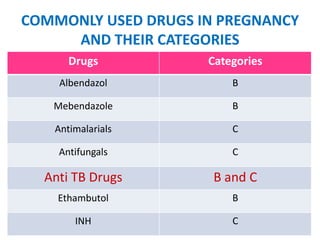
Drugs

Categories

Albendazol

B

Mebendazole

B

Antimalarials

C

Antifungals

C

Anti TB Drugs

B and C

Ethambutol

B

INH

C
COMMONLY USED DRUGS IN PREGNANCY
AND THEIR CATEGORIES
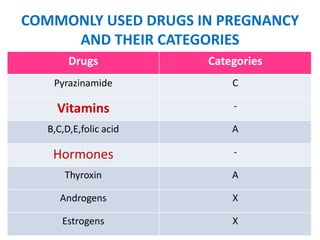
Drugs

Categories

Pyrazinamide

C

Vitamins

-

B,C,D,E,folic acid

A

Hormones

-

Thyroxin

A

Androgens

X

Estrogens

X
COMMONLY USED DRUGS IN PREGNANCY
AND THEIR CATEGORIES
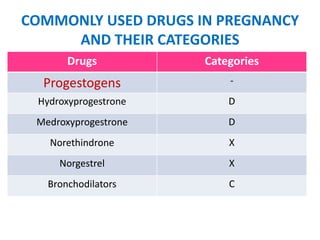
Drugs

Categories

Progestogens

-

Hydroxyprogestrone

D

Medroxyprogestrone

D

Norethindrone

X

Norgestrel

X

Bronchodilators

C
COMMONLY USED DRUGS IN PREGNANCY
AND THEIR CATEGORIES

Since it is not a complete
list, patients are advised to
check the drug label of each
drug before taking them during
pregnancy.
SAFE MEDICATION TO TREAT DURING
PREGNANY
• Allergy

Benadryl (diphenhydramine).

• Cold and Flu

Tylenol (acetaminophen)
Saline nasal drops or spray
Warm salt/water gargle

• Constipation
Colace
Metamucil
SAFE MEDICATION TO TREAT DURING
PREGNANY
• First Aid Ointment
Bacitracin
J&J First-Aid Cream
Neosporin
Polysporin.

• Rashes
Benadryl cream
Caladryl lotion or cream
Hydrocortisone cream or ointment.
WHAT CAN I EAT IF I AM NOT FEELING
WELL?

Pregnancy symptoms vary.
Some woman may have difficulty
with morning sickness, diarrhea, or
constipation. Here are a few
suggestions on how to deal with
these symptoms.
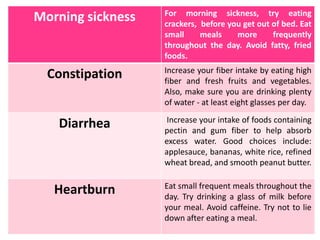
Morning sickness

For morning sickness, try eating
crackers, before you get out of bed. Eat
small
meals
more
frequently
throughout the day. Avoid fatty, fried
foods.

Constipation

Increase your fiber intake by eating high
fiber and fresh fruits and vegetables.
Also, make sure you are drinking plenty
of water - at least eight glasses per day.

Diarrhea

Increase your intake of foods containing
pectin and gum fiber to help absorb
excess water. Good choices include:
applesauce, bananas, white rice, refined
wheat bread, and smooth peanut butter.

Heartburn

Eat small frequent meals throughout the
day. Try drinking a glass of milk before
your meal. Avoid caffeine. Try not to lie
down after eating a meal.
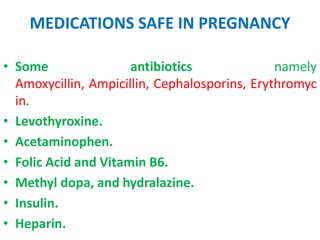
MEDICATIONS SAFE IN PREGNANCY
• Some
antibiotics
namely
Amoxycillin, Ampicillin, Cephalosporins, Erythromyc
in.
• Levothyroxine.
• Acetaminophen.
• Folic Acid and Vitamin B6.
• Methyl dopa, and hydralazine.
• Insulin.
• Heparin.
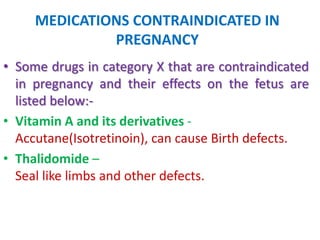
MEDICATIONS CONTRAINDICATED IN
PREGNANCY
• Some drugs in category X that are contraindicated
in pregnancy and their effects on the fetus are
listed below:• Vitamin A and its derivatives Accutane(Isotretinoin), can cause Birth defects.
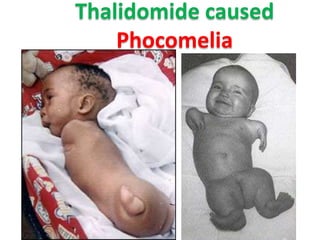
• Thalidomide –
Seal like limbs and other defects.
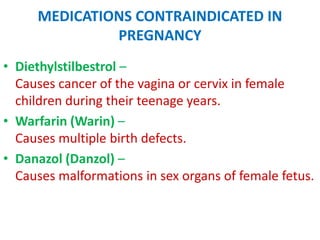
MEDICATIONS CONTRAINDICATED IN
PREGNANCY
• Diethylstilbestrol –
Causes cancer of the vagina or cervix in female
children during their teenage years.
• Warfarin (Warin) –
Causes multiple birth defects.
• Danazol (Danzol) –
Causes malformations in sex organs of female fetus.
MEDICATIONS CONTRAINDICATED IN
PREGNANCY
• Simvastatin (Avastin)and other statins –
Cholesterol is needed for fetal growth and its
reduction by statins could harm the fetus
• Finasteride (pronor) –
Though finasteride is normally not prescribed
to women, pregnant women should not
handle broken or crushed tablets since it can
get absorbed through the skin and affect the
sex organ.
MEDICATIONS CONTRAINDICATED IN
PREGNANCY

• Testosterone (Testanon) –
Can cause birth defects.
• Oral contraceptivesCan cause birth defects.
• Dutasteride (Urodart) –
Affects the sex organ development of the fetus.
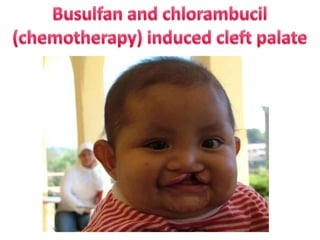
• Methotrexate (Trexonate)–
Causes cleft palate along with multiple defects.
MEDICATIONS CONTRAINDICATED IN
PREGNANCY
• Aspirin –

Aspirin and other drugs containing
salicylate are not recommended during
pregnancy, especially during the last three
months. Acetylsalicylate, a common
ingredient in many OTC painkillers, may
make a pregnancy last longer and may
cause severe bleeding before and after
delivery.
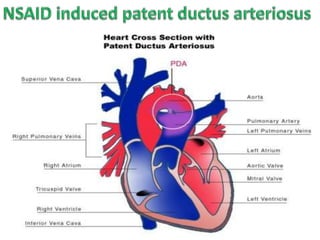
NSAIDs causes patent ductus
arteriosus (PDA).

(PDA)- failure of closure of
ductus Arteriosus usually
present in every fetus before
birth, infants after birth.
Lithium salts (Lithosan SR)
causes
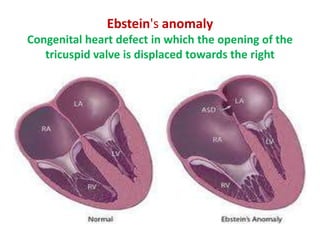
Ebstein's anomaly
Congenital heart defect in which the opening of the
tricuspid valve is displaced towards the right
Thalidomide
causes
Thalidomide caused
Phocomelia
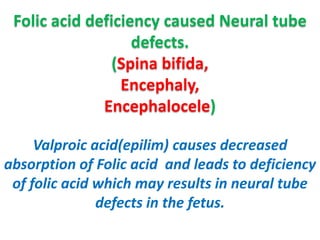
Folic acid deficiency caused Neural tube
defects.
(Spina bifida,
Encephaly,
Encephalocele)
Valproic acid(epilim) causes decreased
absorption of Folic acid and leads to deficiency
of folic acid which may results in neural tube
defects in the fetus.
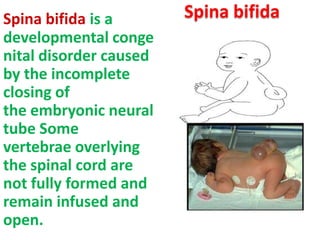
Spina bifida is a
developmental conge
nital disorder caused
by the incomplete
closing of
the embryonic neural
tube Some
vertebrae overlying
the spinal cord are
not fully formed and
remain infused and
open.

Spina bifida
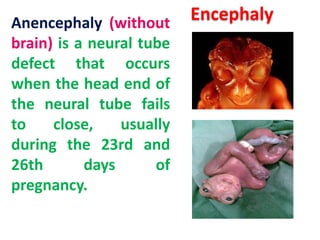
Anencephaly (without
brain) is a neural tube
defect that occurs
when the head end of
the neural tube fails
to
close,
usually
during the 23rd and
26th
days
of
pregnancy.

Encephaly
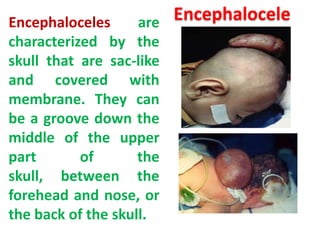
Encephalocele
are

Encephaloceles
characterized by the
skull that are sac-like
and covered with
membrane. They can
be a groove down the
middle of the upper
part
of
the
skull, between the
forehead and nose, or
the back of the skull.
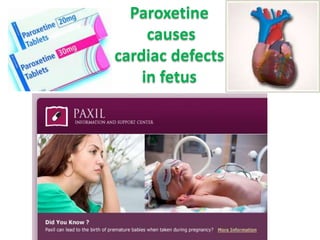
Paroxetine (oxat)
(Selective serotonin re-uptake
inhibitor).

Causes cardiac defects.
Paroxetine
causes
cardiac defects
in fetus
Alcohol induced
Fetal Alcohol Syndrome
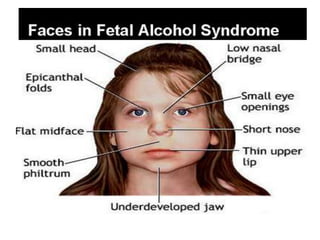
Fetal alcohol syndrome (FAS) is a pattern of
mental and physical defects that can develop in
a fetus in association with high levels of alcohol
consumption during pregnancy. Alcohol crosses
the placental barrier and can stunt fetal
growth or weight, create distinctive facial
stigmata, damage neurons and brain structures,
which can result in psychological or behavioral
problems, and cause other physical damage.
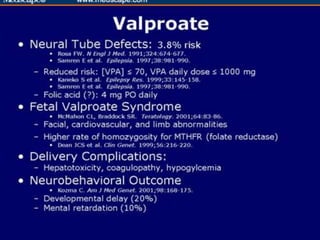
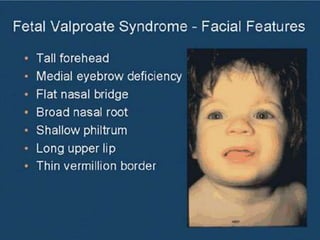
Valproic acid induced
Fetal Valproate Syndrome
Valproate syndrome include facial
features, tall forehead, medial deficiency
of
eyebrows,
lat
nasal
bridge,
broad nasal root.
Valproic acid is contraindicated in
pregnancy, as it decreases the intestinal
reabsorption of folate (folic acid), which
leads to neural tube defects.
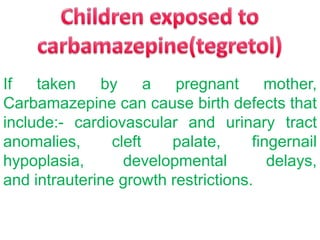
If
taken
by
a
pregnant
mother,
Carbamazepine can cause birth defects that
include:- cardiovascular and urinary tract
anomalies,
cleft
palate,
fingernail
hypoplasia,
developmental
delays,
and intrauterine growth restrictions.
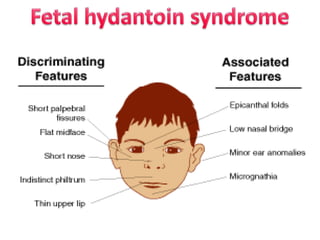
Phenytoin induced
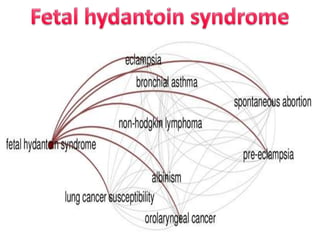
Fetal Hydantoin Syndrome
Fetal hydantoin syndrome, also
called fetal dilantin syndrome is a
group of defects caused to the
developing fetus by exposure to the
teratogenic effects of phenytoin or
carbamazepine.
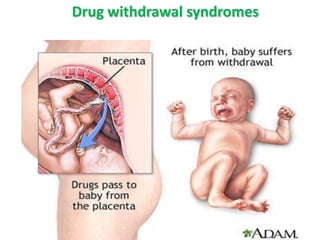
Opoid analgesic induced
Drug withdrawal syndromes
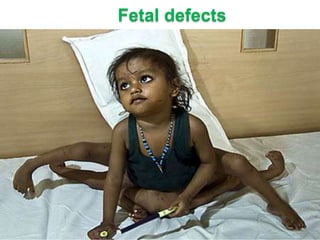
Isotretinoin (Vitamin A derivative)
induced

Fetal defects
Fetal defects
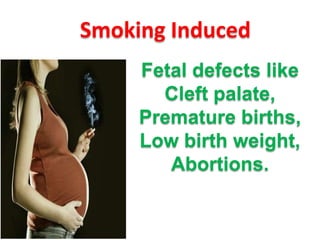
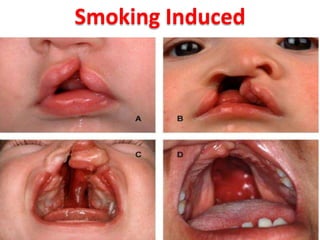
Smoking Induced
Fetal defects like
Cleft palate,
Premature births,
Low birth weight,
Abortions.
Smoking Induced
This Presentation is
Dedicated to
My Mother
Medication during pregnancy

Medication during pregnancy

  • 1.
  • 2.
    MEDICATION DURING PREGNANCY During pregnancy,some medications are safe and some are not. Some require a higher than usual dose, and some doses change with the advancing pregnancy. Drugs should be given only if the potential benefit justifies the potential risk to the fetus."
  • 3.
    CATEGORIES The pregnancy categoryof a drug is an assessment of the risk of fetal injury occurred by that drug.
  • 4.
    CATEGORIES The U.S. Foodand Drug Administration has generated a grading system for medications used during pregnancy. The categories are A, B, C, D, and X. The significance of these categories are :-
  • 5.
    CATEGORY A Definitions Drugs thathave been tested for safety during pregnancy and have been found to be safe.
  • 6.
    CATEGORY A Clinical Application Forall practical purposes, there are no Category A drugs. Drugs, and some multivitamins This includes folic acid, vitamin B6, and thyroid medicine classified as Category A.
  • 7.
    CATEGORY B Definitions Drugs thathave been used a lot during pregnancy and do not appear to cause major birth defects or other problems.
  • 8.
    CATEGORY B Clinical Application •Category B drugs include vitamins, acetaminophen (Napa), famotidine (famotid), prednisolone (cortan), insulin (for diabetes), and ibuprofan (inflam) before third trimester, ibuprofen should not take during the last three months of
  • 9.
    CATEGORY C Definitions • Drugsthat are more likely to cause problems for the mother or fetus. Also includes drugs for which safety studies have not been finished. Drugs should be given only if the potential benefit justifies the potential risk to the fetus.
  • 10.
    CATEGORY C Clinical Application •There are some reasons to be more concerned about these drugs than Category B drugs. If the pregnant patient will benefit from a Category C drug, it is generally used. These drugs include fluconazole (Fluda), and ciprofloxacin (Xirocip), some antidepressants are also included in this group.
  • 11.
    CATEGORY D Definitions • Drugsthat have clear health risks for the fetus. but the benefits from use in pregnant woman may be acceptable despite the risk (e.g., if the drug is needed in a lifethreatening situation or for a serious disease.)
  • 12.
    CATEGORY D Clinical Application •Category D drugs includes alcohol, lithium (used to treat manic depression), phenytoin (eptoin), and most chemotherapy drugs to treat cancer. They should be used during pregnancy only when no alternatives available.
  • 13.
    CATEGORY X Definitions • Drugsthat have been shown to cause birth defects and should never be taken during pregnancy. The drug is contraindicated in women who are or may become pregnant."
  • 14.
    CATEGORY X Clinical Application •Category X drugs should not be used during pregnancy. This includes drugs to treat skin conditions like cystic acne (Accutane), a sedative (thalidomide) etc.
  • 15.
    COMMONLY USED DRUGSIN PREGNANCY AND THEIR CATEGORIES Drugs Categories Analgesics and Antipyretics (zydol) B and C Acetaminophen(Napa) B Phenacetin(vicks) B Aspirin(Ecosprin) C Antiemetics(Emistat) B and C Doxylamine(gestrenol) B Meclizine(emezin) B
  • 16.
    COMMONLY USED DRUGSIN PREGNANCY AND THEIR CATEGORIES Drugs Categories Cyclizine(marezine) B Dimenhydrinate(pedeamine) B Antibiotics B, C and D Penicillin, Ampicillin, Amoxycillin, B Cloxacillin Cephalosporins B Erythromycin(erocine) B Gentamicin(gentin) C
  • 17.
    COMMONLY USED DRUGSIN PREGNANCY AND THEIR CATEGORIES Drugs Categories Amikacin(kacin) C/D Streptomycin D Sulphonamides(burnsil) B/D Tetracyclines(tetrax) D Amoebicides(Filmet) Anthelmentics -
  • 18.
    COMMONLY USED DRUGSIN PREGNANCY AND THEIR CATEGORIES Drugs Categories Albendazol B Mebendazole B Antimalarials C Antifungals C Anti TB Drugs B and C Ethambutol B INH C
  • 19.
    COMMONLY USED DRUGSIN PREGNANCY AND THEIR CATEGORIES Drugs Categories Pyrazinamide C Vitamins - B,C,D,E,folic acid A Hormones - Thyroxin A Androgens X Estrogens X
  • 20.
    COMMONLY USED DRUGSIN PREGNANCY AND THEIR CATEGORIES Drugs Categories Progestogens - Hydroxyprogestrone D Medroxyprogestrone D Norethindrone X Norgestrel X Bronchodilators C
  • 21.
    COMMONLY USED DRUGSIN PREGNANCY AND THEIR CATEGORIES Since it is not a complete list, patients are advised to check the drug label of each drug before taking them during pregnancy.
  • 22.
    SAFE MEDICATION TOTREAT DURING PREGNANY • Allergy Benadryl (diphenhydramine). • Cold and Flu Tylenol (acetaminophen) Saline nasal drops or spray Warm salt/water gargle • Constipation Colace Metamucil
  • 23.
    SAFE MEDICATION TOTREAT DURING PREGNANY • First Aid Ointment Bacitracin J&J First-Aid Cream Neosporin Polysporin. • Rashes Benadryl cream Caladryl lotion or cream Hydrocortisone cream or ointment.
  • 24.
    WHAT CAN IEAT IF I AM NOT FEELING WELL? Pregnancy symptoms vary. Some woman may have difficulty with morning sickness, diarrhea, or constipation. Here are a few suggestions on how to deal with these symptoms.
  • 25.
    Morning sickness For morningsickness, try eating crackers, before you get out of bed. Eat small meals more frequently throughout the day. Avoid fatty, fried foods. Constipation Increase your fiber intake by eating high fiber and fresh fruits and vegetables. Also, make sure you are drinking plenty of water - at least eight glasses per day. Diarrhea Increase your intake of foods containing pectin and gum fiber to help absorb excess water. Good choices include: applesauce, bananas, white rice, refined wheat bread, and smooth peanut butter. Heartburn Eat small frequent meals throughout the day. Try drinking a glass of milk before your meal. Avoid caffeine. Try not to lie down after eating a meal.
  • 26.
    MEDICATIONS SAFE INPREGNANCY • Some antibiotics namely Amoxycillin, Ampicillin, Cephalosporins, Erythromyc in. • Levothyroxine. • Acetaminophen. • Folic Acid and Vitamin B6. • Methyl dopa, and hydralazine. • Insulin. • Heparin.
  • 27.
    MEDICATIONS CONTRAINDICATED IN PREGNANCY •Some drugs in category X that are contraindicated in pregnancy and their effects on the fetus are listed below:• Vitamin A and its derivatives Accutane(Isotretinoin), can cause Birth defects. • Thalidomide – Seal like limbs and other defects.
  • 28.
    MEDICATIONS CONTRAINDICATED IN PREGNANCY •Diethylstilbestrol – Causes cancer of the vagina or cervix in female children during their teenage years. • Warfarin (Warin) – Causes multiple birth defects. • Danazol (Danzol) – Causes malformations in sex organs of female fetus.
  • 29.
    MEDICATIONS CONTRAINDICATED IN PREGNANCY •Simvastatin (Avastin)and other statins – Cholesterol is needed for fetal growth and its reduction by statins could harm the fetus • Finasteride (pronor) – Though finasteride is normally not prescribed to women, pregnant women should not handle broken or crushed tablets since it can get absorbed through the skin and affect the sex organ.
  • 30.
    MEDICATIONS CONTRAINDICATED IN PREGNANCY •Testosterone (Testanon) – Can cause birth defects. • Oral contraceptivesCan cause birth defects. • Dutasteride (Urodart) – Affects the sex organ development of the fetus. • Methotrexate (Trexonate)– Causes cleft palate along with multiple defects.
  • 31.
    MEDICATIONS CONTRAINDICATED IN PREGNANCY •Aspirin – Aspirin and other drugs containing salicylate are not recommended during pregnancy, especially during the last three months. Acetylsalicylate, a common ingredient in many OTC painkillers, may make a pregnancy last longer and may cause severe bleeding before and after delivery.
  • 32.
    NSAIDs causes patentductus arteriosus (PDA). (PDA)- failure of closure of ductus Arteriosus usually present in every fetus before birth, infants after birth.
  • 34.
  • 35.
    Ebstein's anomaly Congenital heartdefect in which the opening of the tricuspid valve is displaced towards the right
  • 36.
  • 37.
  • 38.
    Folic acid deficiencycaused Neural tube defects. (Spina bifida, Encephaly, Encephalocele) Valproic acid(epilim) causes decreased absorption of Folic acid and leads to deficiency of folic acid which may results in neural tube defects in the fetus.
  • 39.
    Spina bifida isa developmental conge nital disorder caused by the incomplete closing of the embryonic neural tube Some vertebrae overlying the spinal cord are not fully formed and remain infused and open. Spina bifida
  • 40.
    Anencephaly (without brain) isa neural tube defect that occurs when the head end of the neural tube fails to close, usually during the 23rd and 26th days of pregnancy. Encephaly
  • 41.
    Encephalocele are Encephaloceles characterized by the skullthat are sac-like and covered with membrane. They can be a groove down the middle of the upper part of the skull, between the forehead and nose, or the back of the skull.
  • 42.
    Paroxetine (oxat) (Selective serotoninre-uptake inhibitor). Causes cardiac defects.
  • 43.
  • 44.
    Alcohol induced Fetal AlcoholSyndrome Fetal alcohol syndrome (FAS) is a pattern of mental and physical defects that can develop in a fetus in association with high levels of alcohol consumption during pregnancy. Alcohol crosses the placental barrier and can stunt fetal growth or weight, create distinctive facial stigmata, damage neurons and brain structures, which can result in psychological or behavioral problems, and cause other physical damage.
  • 46.
    Valproic acid induced FetalValproate Syndrome Valproate syndrome include facial features, tall forehead, medial deficiency of eyebrows, lat nasal bridge, broad nasal root. Valproic acid is contraindicated in pregnancy, as it decreases the intestinal reabsorption of folate (folic acid), which leads to neural tube defects.
  • 49.
    If taken by a pregnant mother, Carbamazepine can causebirth defects that include:- cardiovascular and urinary tract anomalies, cleft palate, fingernail hypoplasia, developmental delays, and intrauterine growth restrictions.
  • 50.
    Phenytoin induced Fetal HydantoinSyndrome Fetal hydantoin syndrome, also called fetal dilantin syndrome is a group of defects caused to the developing fetus by exposure to the teratogenic effects of phenytoin or carbamazepine.
  • 54.
    Opoid analgesic induced Drugwithdrawal syndromes
  • 55.
  • 56.
    Isotretinoin (Vitamin Aderivative) induced Fetal defects
  • 57.
  • 58.
    Smoking Induced Fetal defectslike Cleft palate, Premature births, Low birth weight, Abortions.
  • 59.
  • 65.