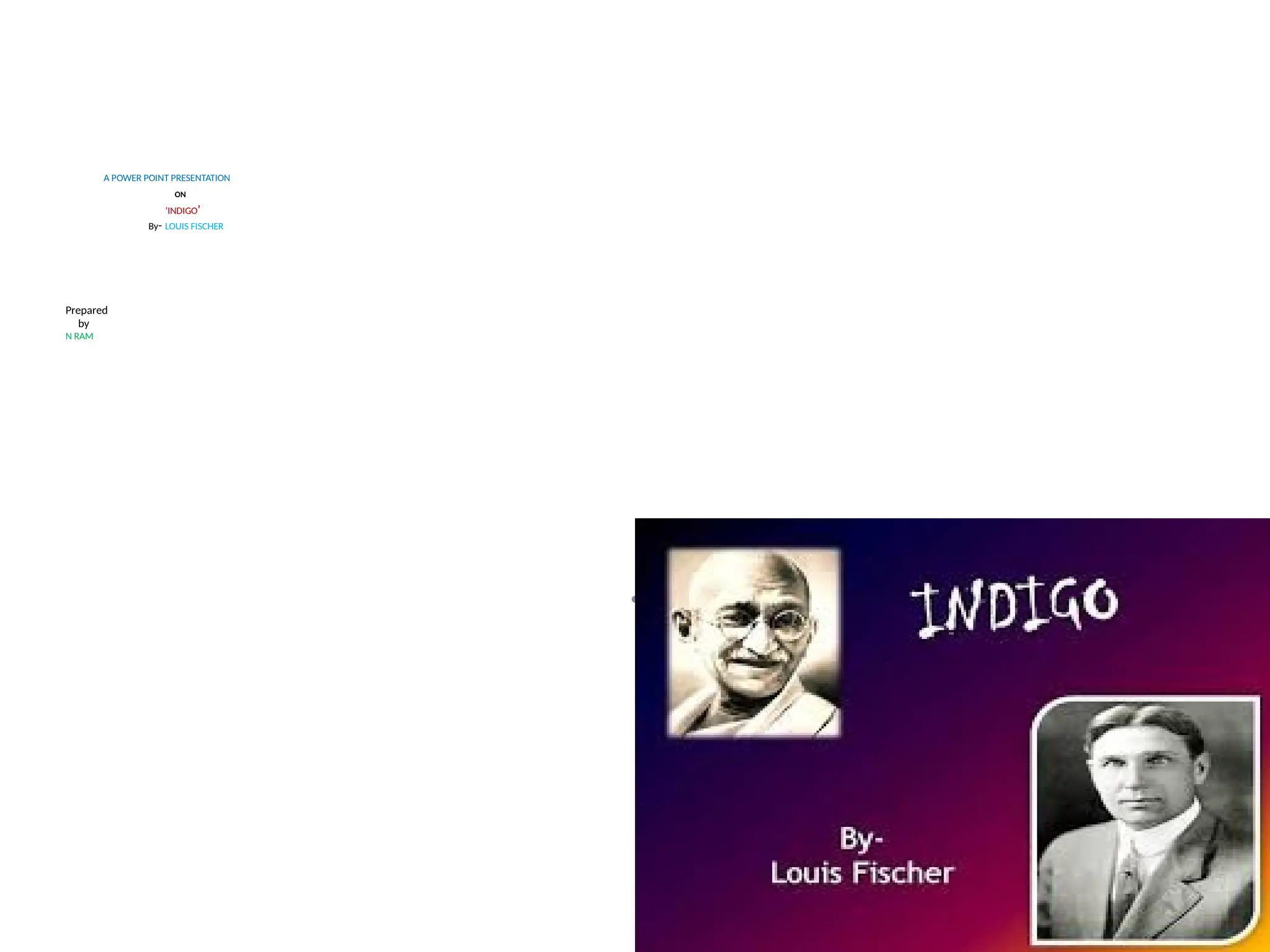
A POWER POINT PRESENTATION
ON
‘INDIGO’
By- LOUIS FISCHER
Prepared
by
N RAM
.
Gandhi in Lucknow
December1916
During annual convention
of the Indian National
Congress party, a peasant
came to meet him
looking like any other Indian National Congress
peasant in India.
He was Rajkumar Kumar Shukla.
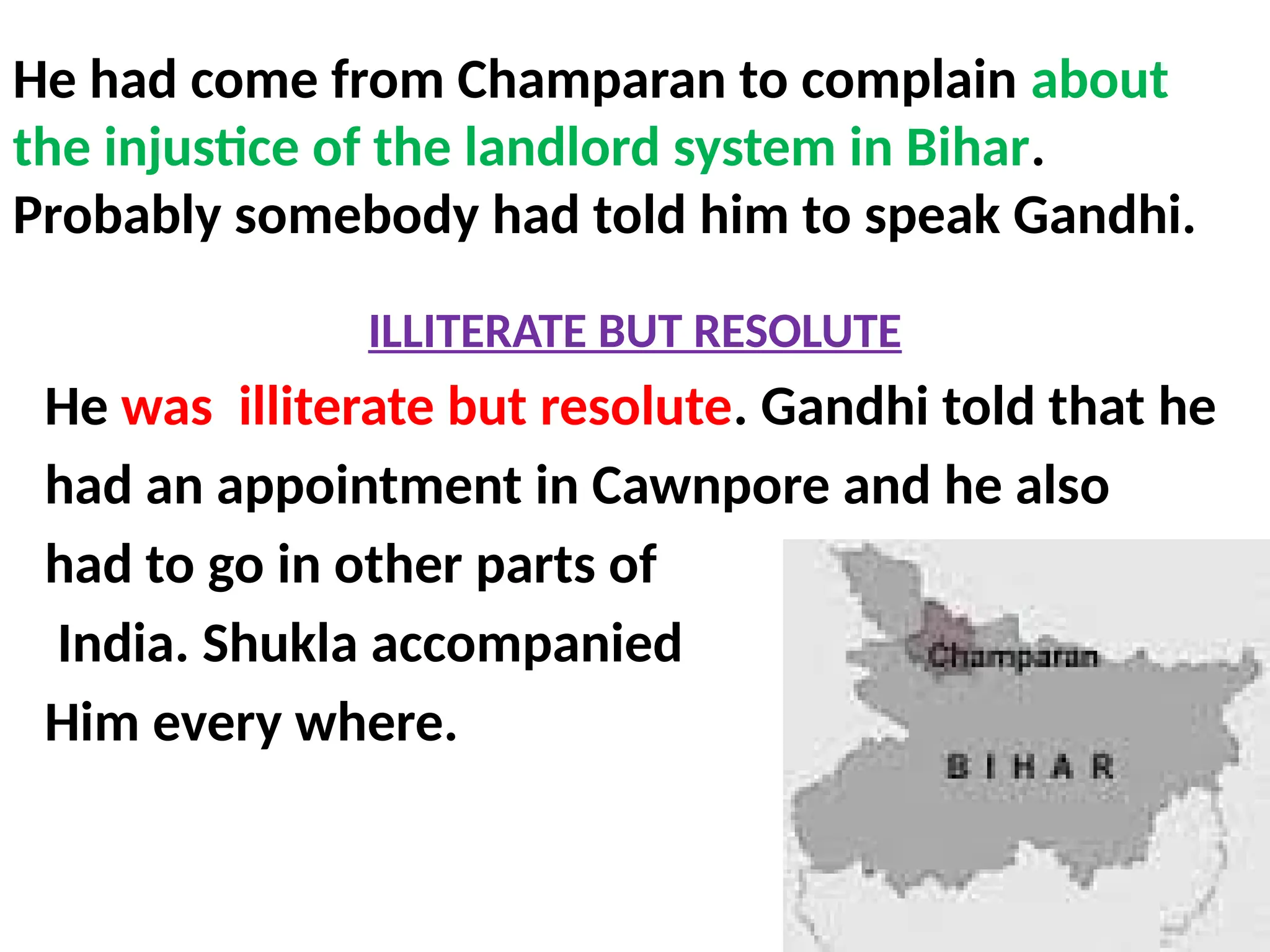
He had come from Champaran to complain about
the injustice of the landlord system in Bihar.
Probably somebody had told him to speak Gandhi.
ILLITERATE BUT RESOLUTE
He was illiterate but resolute. Gandhi told that he
had an appointment in Cawnpore and he also
had to go in other parts of
India. Shukla accompanied
Him every where.
Shukla followed him to the ashram near
Ahmedabad. For weeks he never left his
side and begged to fix a date.
.
Sewagram ashram
Impressed by his tenacity and story Gandhi
said,
• “I have to be in Calcutta on such-and such
a date. Come there and meet me and take
me from there.”
*Shukla met him in Calcutta on the
appointed date. When Gandhi was free,
both boarded in a train for the city of
Patna.
Shukla led him to the house of a
famous lawyer Rajendra Prasad.
Rajendra Prasad was out of town.
The servants knew Shukla as a poor yeoman
who pestered their master to help the indigo
sharecroppers. Gandhi was treated as poor
Peasant .The servants let Gandhi stay on the
ground with his companion. Gandhi was not
permitted to draw water from the well lest
drops from his bucket pollute the entire source.
Wanted to obtain more complete information :
Gandhi decided to go to Muzaffarpur, which was en
route to Champaran, to obtain more complete
information about conditions than Shukla was capable of
imparting.
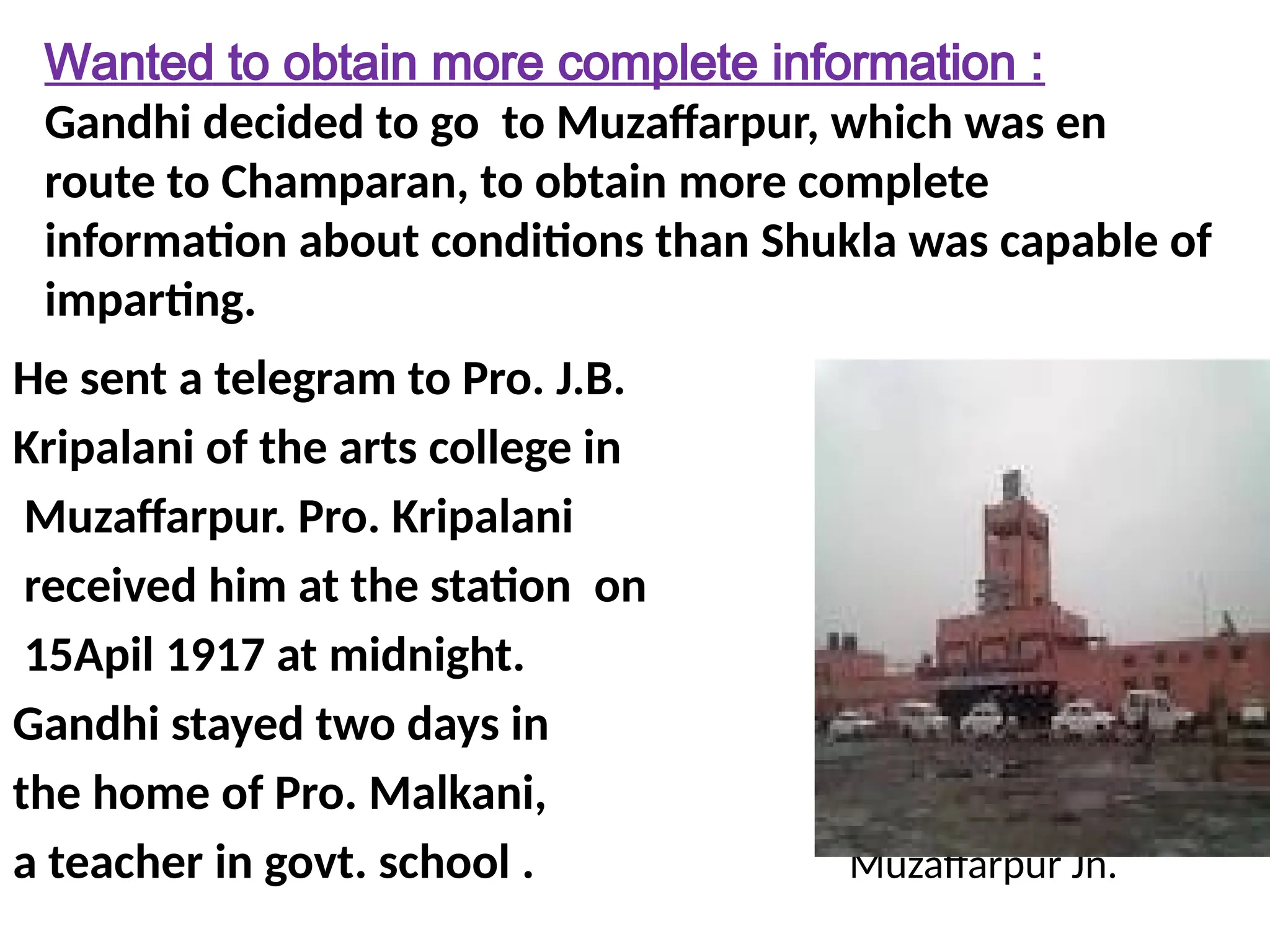
He sent a telegram to Pro. J.B.
Kripalani of the arts college in
Muzaffarpur. Pro. Kripalani
received him at the station on
15Apil 1917 at midnight.
Gandhi stayed two days in
the home of Pro. Malkani,
a teacher in govt. school . Muzaffarpur Jn.
“It was an extraordinary thing in those days for a
govt. professor to harbour a man like Gandhi.”
The news of Gandhi’s advent and
of the nature of his mission spread
quickly Muzaffarpur lawyers
called on Gandhi to brief him:
they frequently represented
peasant groups in courts.
Pro. J.B. Kriplani
.
Gandhi chided the lawyers-
for collecting big fees from
the sharecroppers.
“I have come to the conclusion that we should stop
going to the law courts. Peasants are so crushed
and fear stricken, law courts are useless. The real
relief for them is to be free from fear.”
INJUSTICE
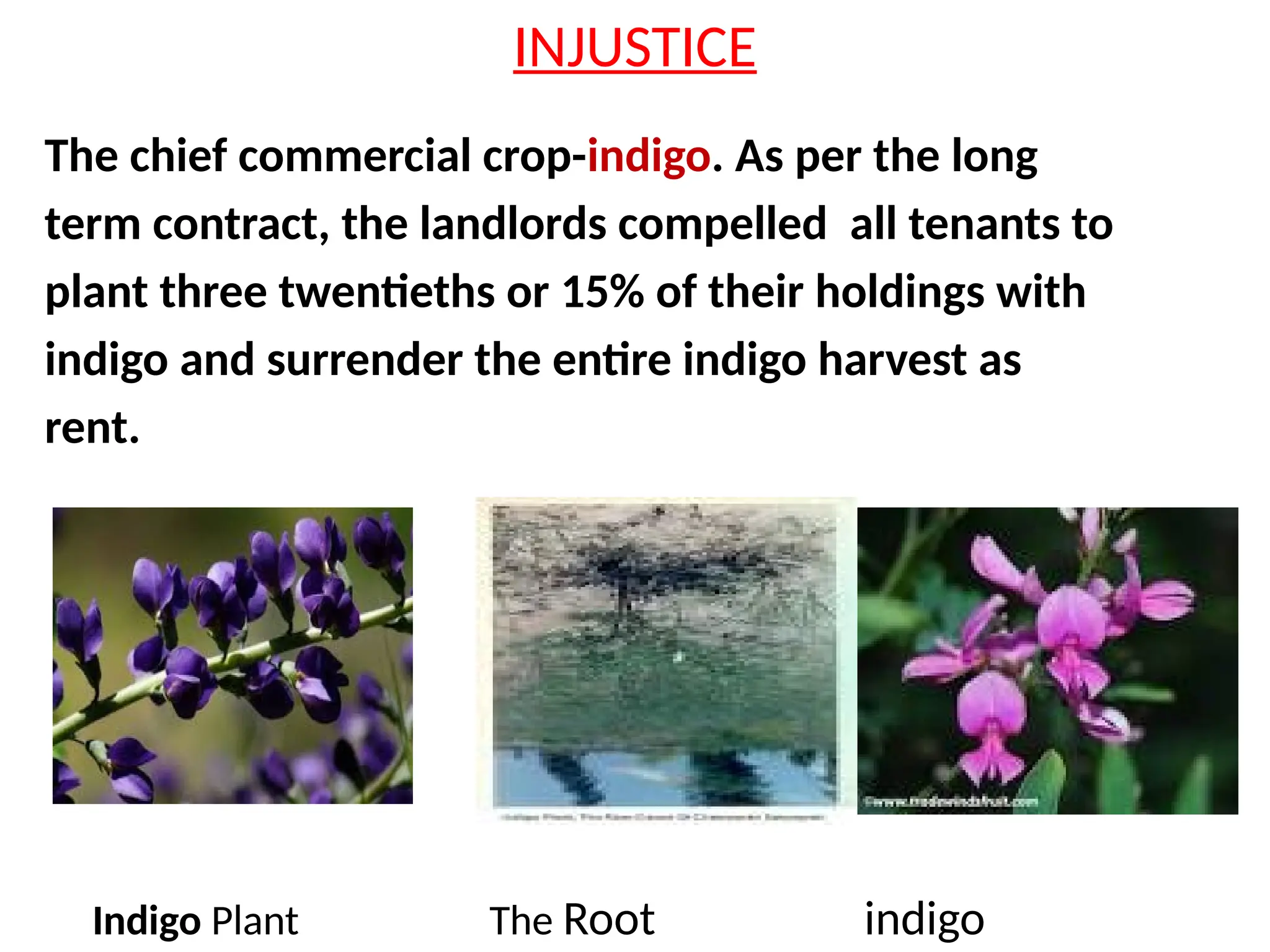
The chief commercial crop-indigo. As per the long
term contract, the landlords compelled all tenants to
plant three twentieths or 15% of their holdings with
indigo and surrender the entire indigo harvest as
rent.
Indigo Plant The Root indigo
Presently the landlords learned that Germany had
developed synthetic indigo.
synthetic indigo Natural vs synthetic indigo
They thereupon, obtained agreements from the
sharecroppers to pay them compensation for
being released from the 15% arrangement.
*The sharecropping arrangement was irksome to
the peasants so many signed willingly.
INDIGO CULTIVATION, TIRHUT
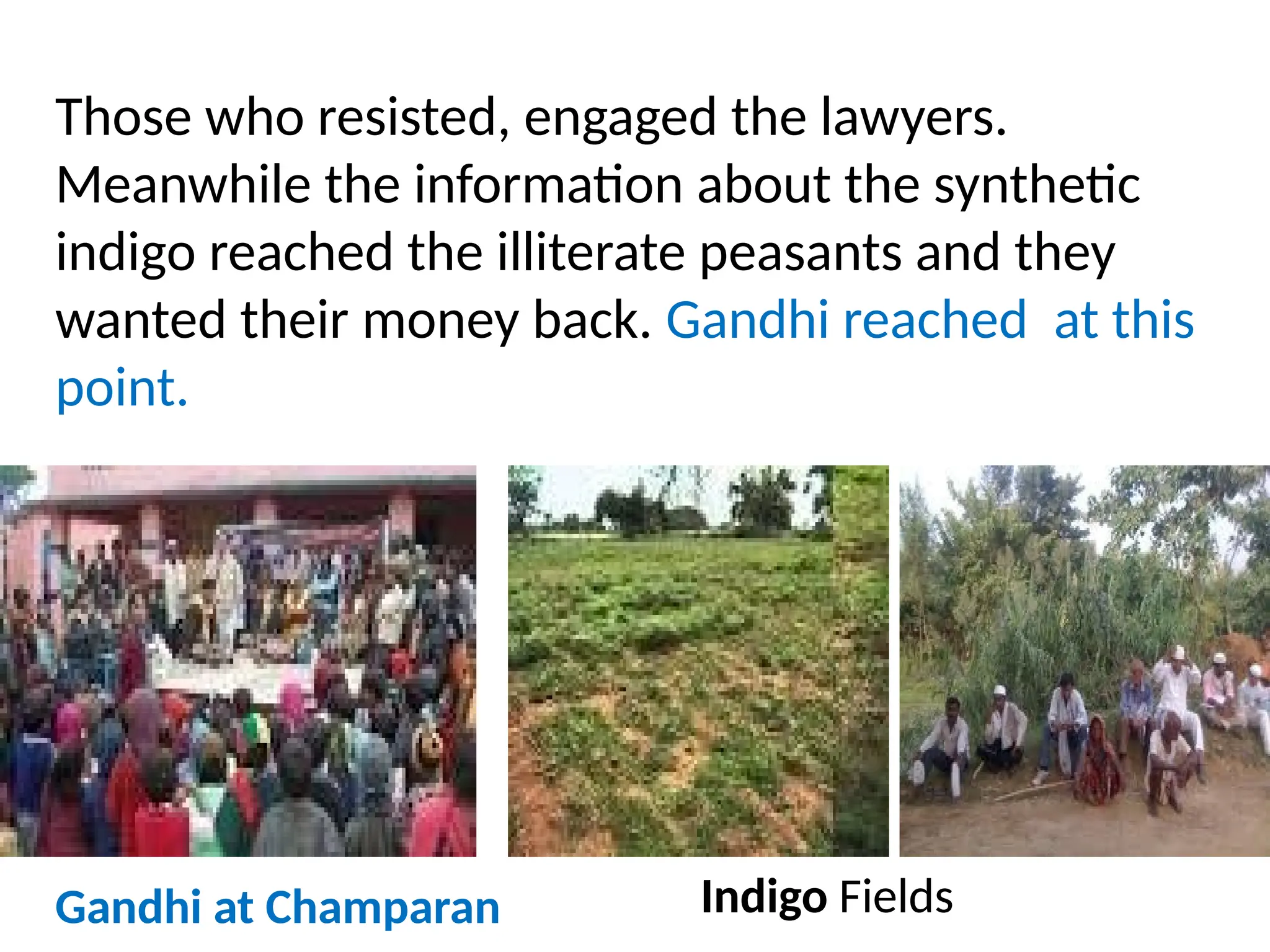
Those who resisted, engaged the lawyers.
Meanwhile the information about the synthetic
indigo reached the illiterate peasants and they
wanted their money back. Gandhi reached at this
point.
Gandhi at Champaran Indigo Fields
Gandhi began by trying to get the fact. The
secretary of Britishlandlord’s association did not
give information to an outsider.
*The commissioner of the Tirhut division advised
him to leave Tirhut. Gandhi did not. Instead he
proceeded to Motihari. At the railway station,
a vast multitude greeted Gandhi. He was
informed that a peasant had been maltreated
in a nearby village. Gandhi decided to go there
and see.
The next morning he started out on the back of an
elephant.
GANDHI SMARAK, MOTIHARI
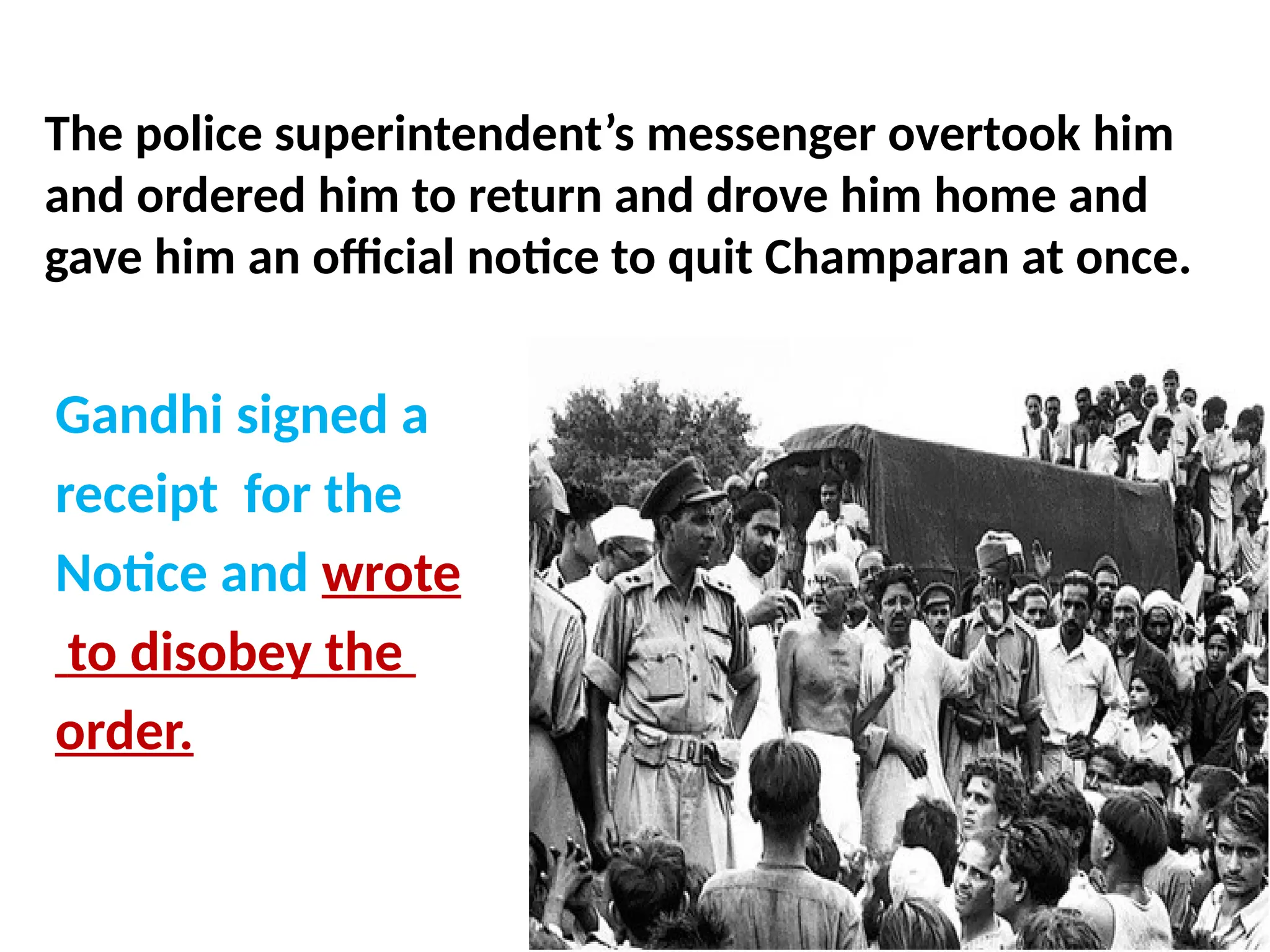
The police superintendent’s messenger overtook him
and ordered him to return and drove him home and
gave him an official notice to quit Champaran at once.
Gandhi signed a
receipt for the
Notice and wrote
to disobey the
order.
In consequence, he received a summon to
appear in the court the next day.
All night he awake and called Rajendra Prasad
with influential friends.
-sent instructions to ashram
-wired a full report to the Voiceroy.
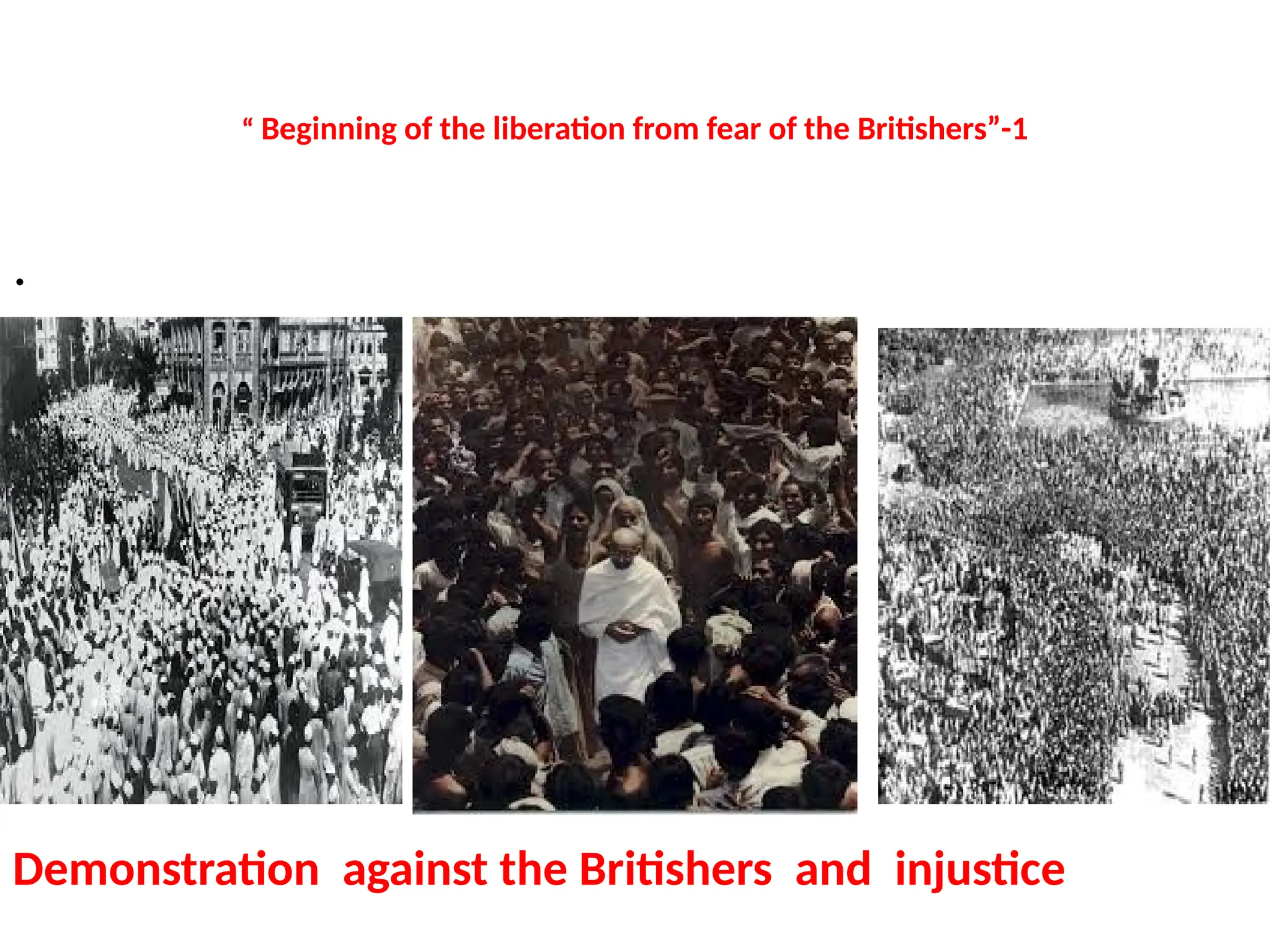
Morning found the town of Motihari black with
peasants. Their spontaneous demonstration in
thousands around the court house was the
beginning of the liberation from fear of the
Britishers.
Demonstration around the court house
.
“ Beginning of the liberation from fear of the Britishers”-1
.
Demonstration against the Britishers and injustice
“Beginning of the liberation from fear of the Britishers”-2
.
Demonstration against the Britishers and injustice
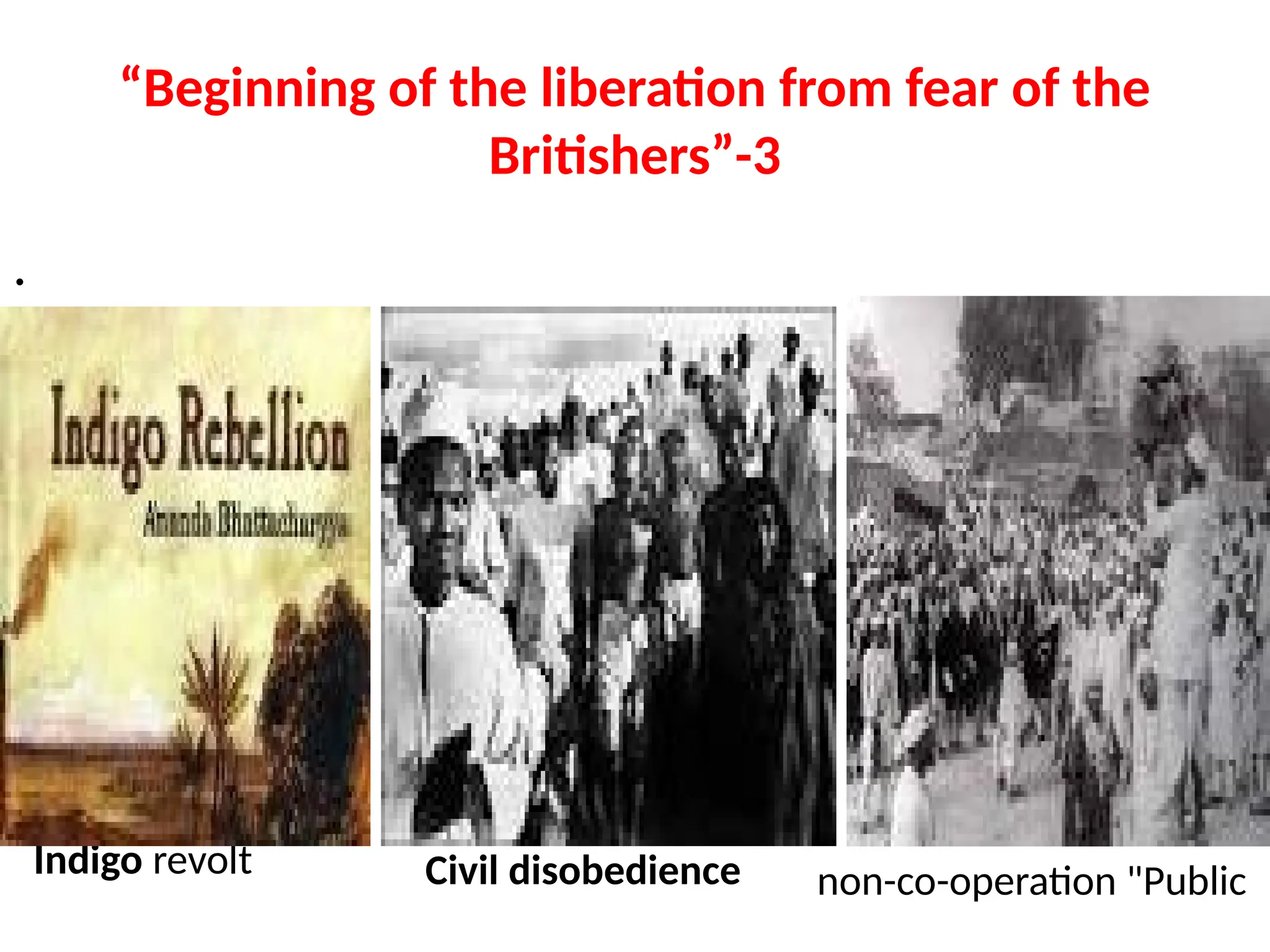
“Beginning of the liberation from fear of the
Britishers”-3
.
Indigo revolt Civil disobedience non-co-operation "Public
The officials felt powerless, Gandhi helped them to
regulate the crowd. The govt. was baffled-the prosecutor
requested to postpone the trial.
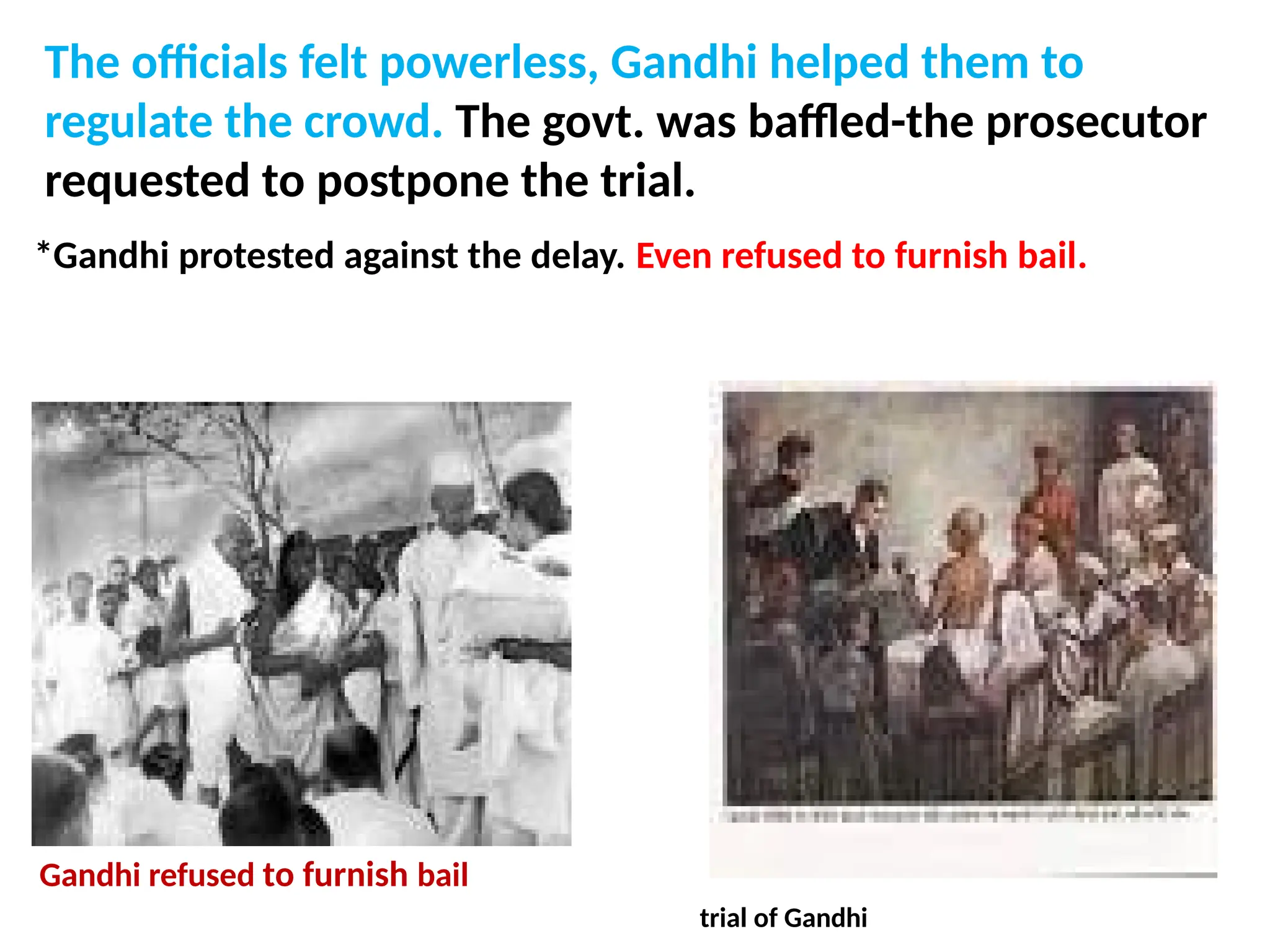
*Gandhi protested against the delay. Even refused to furnish bail.
Gandhi refused bail
Gandhi refused to furnish bail
trial of Gandhi
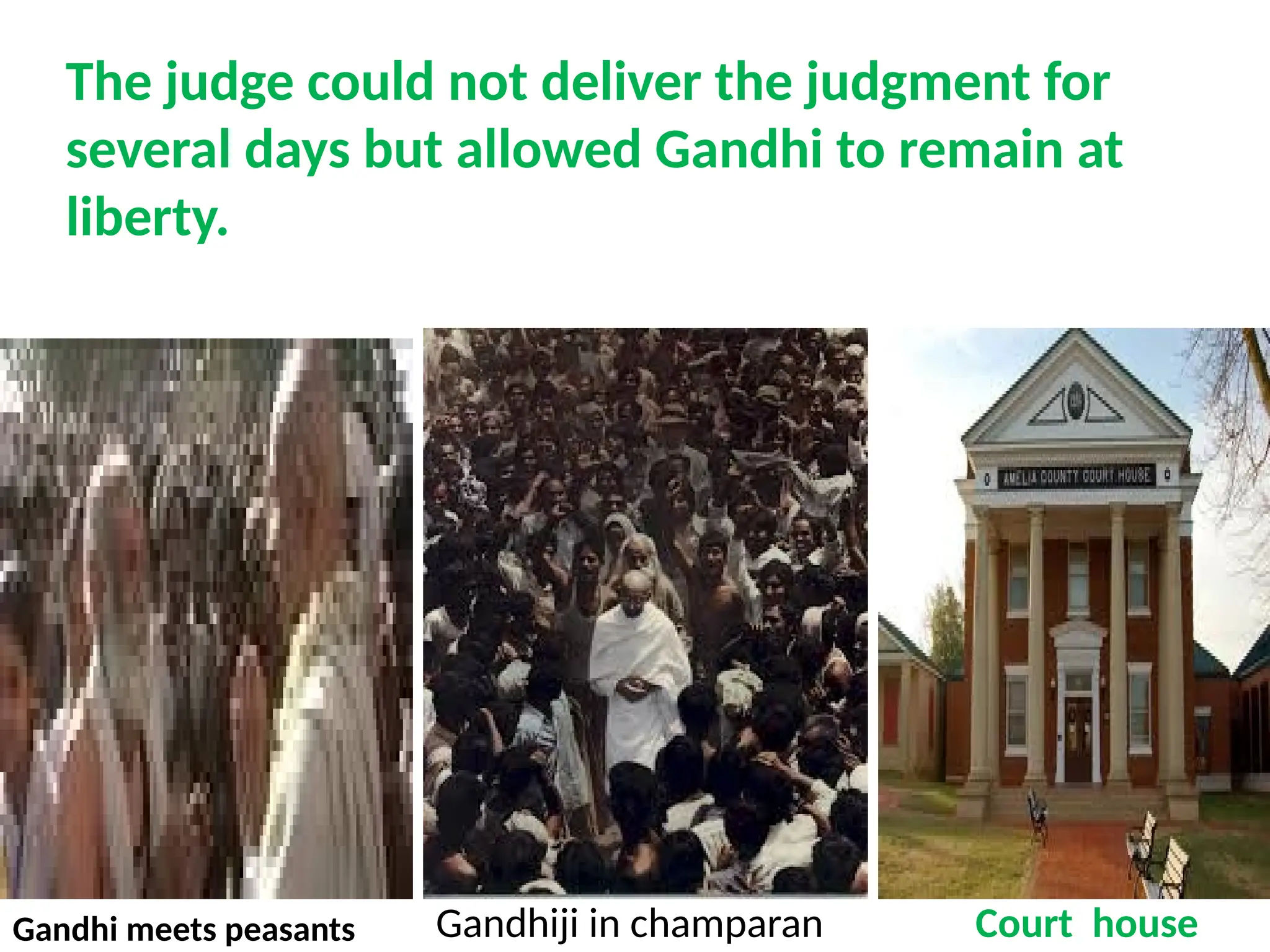
The judge could not deliver the judgment for
several days but allowed Gandhi to remain at
liberty.
Gandhi meets peasants Gandhiji in champaran Court house
Lawyers –ashamed, realised their mistake…
*Gandhi asked –if he was sentenced to jail ,what
would they do. The senior lawyer replied, they had
come to advise and help him ; if he went to jail,
they would go home. “What about the injustice to
the sharecroppers”, Gandhi demanded.
the lawyers realised their
mistake, were ashamed,
and ready to follow him into
jail if he was arrested.
Victory of civil disobedience
• Several days later, Gandhi received a written
communication from the magistrate informing him
that the Lieutenant-governor of the province had
ordered the case to be dropped. Civil disobedience
had triumphed, the first time in modern India.
• A far –flung inquiry was conducted .Gandhi had
four interviews with the Lieutenant Governor, then
an official commission was appointed to enquire
the matter. Nearly after one year the Britishers
offered to refund to the 25%, and Gandhi agreed.
The peasant saw that he had rights and defenders
.He learned courage.
• Why 25%? Gandhi explained- the amount of the
refund was less important than the fact that the
landlords had been obliged to surrender part of
the money and with the part of their prestige.
Now the peasant saw that he had rights and
defenders .He learned courage.
Questions
1-Why did R.K. Shukla meet Gandhi? Where and
when?
2. Why is R.K.Shukla considered as resolute?
3. Why did Gandhi chide the lawyers?
4.How was Gandhi able to influence lawyers?
Give examples.
5.Why did Gandhi agree to a settlement of 25%
refund to the farmers?
THE REST OF IT- THE NEXT DAY.
THANK YOU.

ppt=indigo==XII.pptx class 12 indigo . flamingo

  • 1.
    A POWER POINTPRESENTATION ON ‘INDIGO’ By- LOUIS FISCHER Prepared by N RAM .
  • 2.
    Gandhi in Lucknow December1916 Duringannual convention of the Indian National Congress party, a peasant came to meet him looking like any other Indian National Congress peasant in India. He was Rajkumar Kumar Shukla.
  • 3.
    He had comefrom Champaran to complain about the injustice of the landlord system in Bihar. Probably somebody had told him to speak Gandhi. ILLITERATE BUT RESOLUTE He was illiterate but resolute. Gandhi told that he had an appointment in Cawnpore and he also had to go in other parts of India. Shukla accompanied Him every where.
  • 4.
    Shukla followed himto the ashram near Ahmedabad. For weeks he never left his side and begged to fix a date. . Sewagram ashram
  • 5.
    Impressed by histenacity and story Gandhi said, • “I have to be in Calcutta on such-and such a date. Come there and meet me and take me from there.” *Shukla met him in Calcutta on the appointed date. When Gandhi was free, both boarded in a train for the city of Patna.
  • 6.
    Shukla led himto the house of a famous lawyer Rajendra Prasad. Rajendra Prasad was out of town. The servants knew Shukla as a poor yeoman who pestered their master to help the indigo sharecroppers. Gandhi was treated as poor Peasant .The servants let Gandhi stay on the ground with his companion. Gandhi was not permitted to draw water from the well lest drops from his bucket pollute the entire source.
  • 7.
    Wanted to obtainmore complete information : Gandhi decided to go to Muzaffarpur, which was en route to Champaran, to obtain more complete information about conditions than Shukla was capable of imparting. He sent a telegram to Pro. J.B. Kripalani of the arts college in Muzaffarpur. Pro. Kripalani received him at the station on 15Apil 1917 at midnight. Gandhi stayed two days in the home of Pro. Malkani, a teacher in govt. school . Muzaffarpur Jn.
  • 8.
    “It was anextraordinary thing in those days for a govt. professor to harbour a man like Gandhi.” The news of Gandhi’s advent and of the nature of his mission spread quickly Muzaffarpur lawyers called on Gandhi to brief him: they frequently represented peasant groups in courts. Pro. J.B. Kriplani .
  • 9.
    Gandhi chided thelawyers- for collecting big fees from the sharecroppers. “I have come to the conclusion that we should stop going to the law courts. Peasants are so crushed and fear stricken, law courts are useless. The real relief for them is to be free from fear.”
  • 10.
    INJUSTICE The chief commercialcrop-indigo. As per the long term contract, the landlords compelled all tenants to plant three twentieths or 15% of their holdings with indigo and surrender the entire indigo harvest as rent. Indigo Plant The Root indigo
  • 11.
    Presently the landlordslearned that Germany had developed synthetic indigo. synthetic indigo Natural vs synthetic indigo
  • 12.
    They thereupon, obtainedagreements from the sharecroppers to pay them compensation for being released from the 15% arrangement. *The sharecropping arrangement was irksome to the peasants so many signed willingly. INDIGO CULTIVATION, TIRHUT
  • 13.
    Those who resisted,engaged the lawyers. Meanwhile the information about the synthetic indigo reached the illiterate peasants and they wanted their money back. Gandhi reached at this point. Gandhi at Champaran Indigo Fields
  • 14.
    Gandhi began bytrying to get the fact. The secretary of Britishlandlord’s association did not give information to an outsider. *The commissioner of the Tirhut division advised him to leave Tirhut. Gandhi did not. Instead he proceeded to Motihari. At the railway station, a vast multitude greeted Gandhi. He was informed that a peasant had been maltreated in a nearby village. Gandhi decided to go there and see.
  • 15.
    The next morninghe started out on the back of an elephant. GANDHI SMARAK, MOTIHARI
  • 16.
    The police superintendent’smessenger overtook him and ordered him to return and drove him home and gave him an official notice to quit Champaran at once. Gandhi signed a receipt for the Notice and wrote to disobey the order.
  • 17.
    In consequence, hereceived a summon to appear in the court the next day. All night he awake and called Rajendra Prasad with influential friends. -sent instructions to ashram -wired a full report to the Voiceroy. Morning found the town of Motihari black with peasants. Their spontaneous demonstration in thousands around the court house was the beginning of the liberation from fear of the Britishers.
  • 18.
  • 19.
    “ Beginning ofthe liberation from fear of the Britishers”-1 . Demonstration against the Britishers and injustice
  • 20.
    “Beginning of theliberation from fear of the Britishers”-2 . Demonstration against the Britishers and injustice
  • 21.
    “Beginning of theliberation from fear of the Britishers”-3 . Indigo revolt Civil disobedience non-co-operation "Public
  • 22.
    The officials feltpowerless, Gandhi helped them to regulate the crowd. The govt. was baffled-the prosecutor requested to postpone the trial. *Gandhi protested against the delay. Even refused to furnish bail. Gandhi refused bail Gandhi refused to furnish bail trial of Gandhi
  • 23.
    The judge couldnot deliver the judgment for several days but allowed Gandhi to remain at liberty. Gandhi meets peasants Gandhiji in champaran Court house
  • 24.
    Lawyers –ashamed, realisedtheir mistake… *Gandhi asked –if he was sentenced to jail ,what would they do. The senior lawyer replied, they had come to advise and help him ; if he went to jail, they would go home. “What about the injustice to the sharecroppers”, Gandhi demanded. the lawyers realised their mistake, were ashamed, and ready to follow him into jail if he was arrested.
  • 25.
    Victory of civildisobedience • Several days later, Gandhi received a written communication from the magistrate informing him that the Lieutenant-governor of the province had ordered the case to be dropped. Civil disobedience had triumphed, the first time in modern India. • A far –flung inquiry was conducted .Gandhi had four interviews with the Lieutenant Governor, then an official commission was appointed to enquire the matter. Nearly after one year the Britishers offered to refund to the 25%, and Gandhi agreed.
  • 26.
    The peasant sawthat he had rights and defenders .He learned courage. • Why 25%? Gandhi explained- the amount of the refund was less important than the fact that the landlords had been obliged to surrender part of the money and with the part of their prestige. Now the peasant saw that he had rights and defenders .He learned courage.
  • 27.
    Questions 1-Why did R.K.Shukla meet Gandhi? Where and when? 2. Why is R.K.Shukla considered as resolute? 3. Why did Gandhi chide the lawyers? 4.How was Gandhi able to influence lawyers? Give examples. 5.Why did Gandhi agree to a settlement of 25% refund to the farmers?
  • 28.
    THE REST OFIT- THE NEXT DAY. THANK YOU.