Seismic analysis of the building structure
•Static analysis – Lumped mass analysis
• Approximate fundamental natural period of vibration
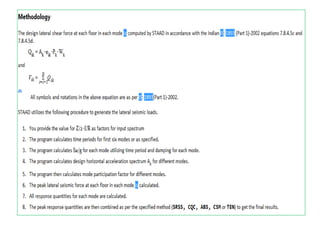
•In staad,
-reference load type definition
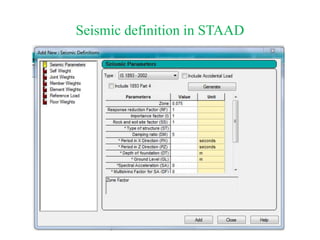
- seismic definition
-calling of seismic force
•Dynamic analysis – Time history analysis/ Response spectrum analysis
•In staad,
- seismic definition
- weight definition
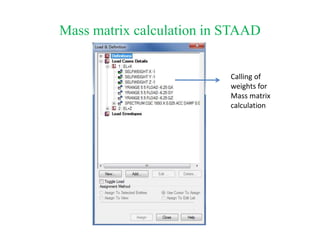
-calling of weight for mass matrix calculation
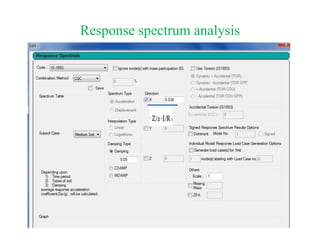
-response spectrum definition
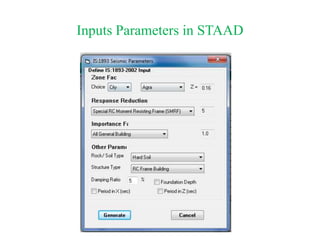
Inputs Parameters in STAAD
Seismic definition in STAAD
Mass matrix calculation in STAAD
Calling of
weights for
Mass matrix
calculation
Response spectrum analysis
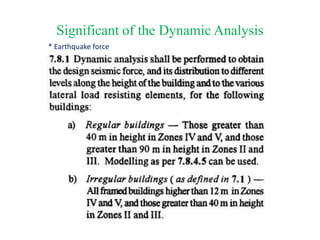
Significant of the Dynamic Analysis
* Earthquake force
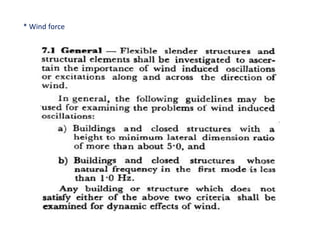
* Wind force
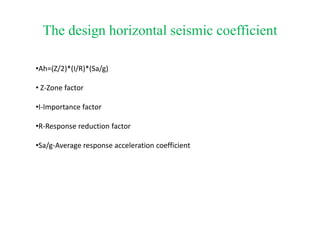
The design horizontal seismic coefficient
•Ah=(Z/2)*(I/R)*(Sa/g)
• Z-Zone factor
•I-Importance factor
•R-Response reduction factor
•Sa/g-Average response acceleration coefficient
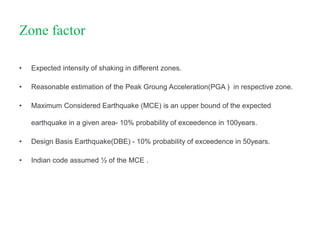
• Expected intensity of shaking in different zones.
• Reasonable estimation of the Peak Groung Acceleration(PGA ) in respective zone.
• Maximum Considered Earthquake (MCE) is an upper bound of the expected
earthquake in a given area- 10% probability of exceedence in 100years.
• Design Basis Earthquake(DBE) - 10% probability of exceedence in 50years.
• Indian code assumed ½ of the MCE .
Zone factor
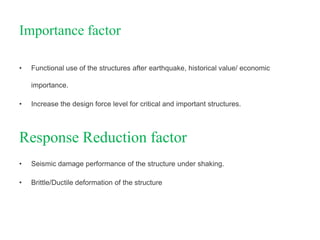
• Functional use of the structures after earthquake, historical value/ economic
importance.
• Increase the design force level for critical and important structures.
Response Reduction factor
• Seismic damage performance of the structure under shaking.
• Brittle/Ductile deformation of the structure
Importance factor
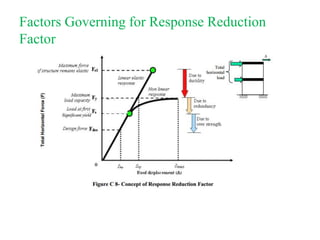
Factors Governing for Response Reduction
Factor
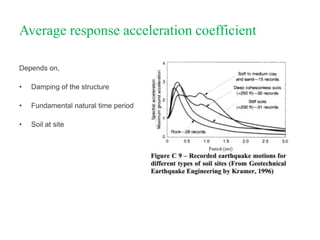
Average response acceleration coefficient
Depends on,
• Damping of the structure
• Fundamental natural time period
• Soil at site
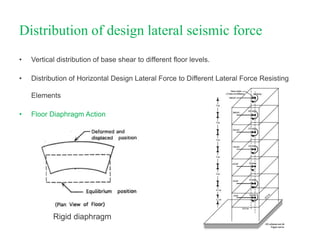
• Vertical distribution of base shear to different floor levels.
• Distribution of Horizontal Design Lateral Force to Different Lateral Force Resisting
Elements
• Floor Diaphragm Action
Distribution of design lateral seismic force
Rigid diaphragm

PPT - Dynamic analysis of building structure.pptx

  • 1.
    Seismic analysis ofthe building structure •Static analysis – Lumped mass analysis • Approximate fundamental natural period of vibration •In staad, -reference load type definition - seismic definition -calling of seismic force •Dynamic analysis – Time history analysis/ Response spectrum analysis •In staad, - seismic definition - weight definition -calling of weight for mass matrix calculation -response spectrum definition
  • 3.
  • 4.
  • 5.
    Mass matrix calculationin STAAD Calling of weights for Mass matrix calculation
  • 6.
  • 7.
    Significant of theDynamic Analysis * Earthquake force
  • 8.
  • 9.
    The design horizontalseismic coefficient •Ah=(Z/2)*(I/R)*(Sa/g) • Z-Zone factor •I-Importance factor •R-Response reduction factor •Sa/g-Average response acceleration coefficient
  • 10.
    • Expected intensityof shaking in different zones. • Reasonable estimation of the Peak Groung Acceleration(PGA ) in respective zone. • Maximum Considered Earthquake (MCE) is an upper bound of the expected earthquake in a given area- 10% probability of exceedence in 100years. • Design Basis Earthquake(DBE) - 10% probability of exceedence in 50years. • Indian code assumed ½ of the MCE . Zone factor
  • 11.
    • Functional useof the structures after earthquake, historical value/ economic importance. • Increase the design force level for critical and important structures. Response Reduction factor • Seismic damage performance of the structure under shaking. • Brittle/Ductile deformation of the structure Importance factor
  • 12.
    Factors Governing forResponse Reduction Factor
  • 13.
    Average response accelerationcoefficient Depends on, • Damping of the structure • Fundamental natural time period • Soil at site
  • 14.
    • Vertical distributionof base shear to different floor levels. • Distribution of Horizontal Design Lateral Force to Different Lateral Force Resisting Elements • Floor Diaphragm Action Distribution of design lateral seismic force Rigid diaphragm