
Business RiskMay 3, 2010
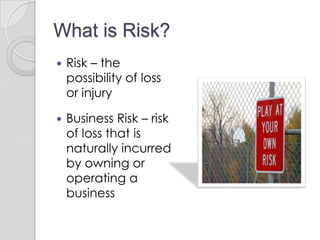
What is Risk?Risk – the possibility of loss or injuryBusiness Risk – risk of loss that is naturally incurred by owning or operating a business
Risk Management	the systematic process of managing risk to achieve your business objectives	Risk cannot be totally eliminated, but it can be reduced and managed.
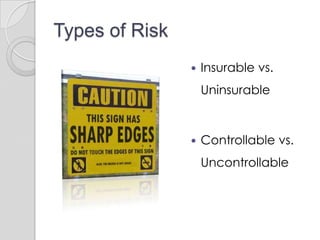
Types of RiskInsurable vs. UninsurableControllable vs. Uncontrollable
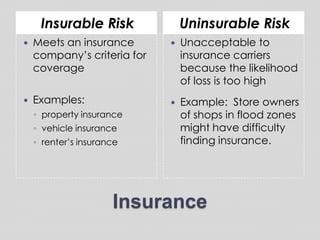
InsuranceInsurable RiskUninsurable RiskMeets an insurance company’s criteria for coverageExamples: property insurancevehicle insurancerenter’s insuranceUnacceptable to insurance carriers because the likelihood of loss is too highExample:  Store owners of shops in flood zones might have difficulty finding insurance.
Out of Control?Controllable RiskUncontrollable RiskOccurs when conditions can be controlled to minimize the chance of harmExample:  	Environmental damage can often be prevented.Cannot be reduced or preventedExample: The risks of doing business in a global marketplace cannot be controlled.
Other Types of RiskPure Risk
Economic Risk
Human Risk
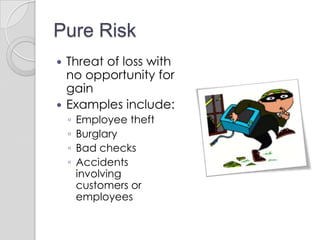
Natural RiskPure RiskThreat of loss with no opportunity for gainExamples include:Employee theftBurglaryBad checksAccidents involving customers or employees
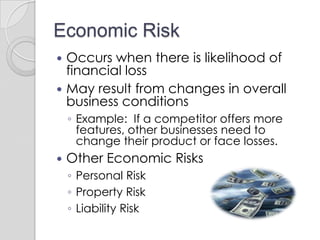
Economic RiskOccurs when there is likelihood of financial lossMay result from changes in overall business conditionsExample:  If a competitor offers more features, other businesses need to change their product or face losses.Other Economic RisksPersonal RiskProperty RiskLiability Risk
Human Risk	Risk of harm caused by human mistakes, dishonesty, or other factors attributed to people.Customer Dishonestytheft, fraudulent payment, non paymentEmployee Riskincompetence, shoplifting, accidents, fraud, computer-related crimes
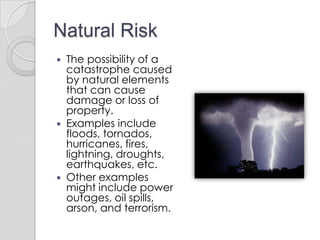
Natural RiskThe possibility of a catastrophe caused by natural elements that can cause damage or loss of property.Examples include floods, tornados, hurricanes, fires, lightning, droughts, earthquakes, etc.Other examples might include power outages, oil spills, arson, and terrorism.
Think about human risk.  What are the biggest concerns a business like your training station might have?  How does your training station handle it?Think about it!
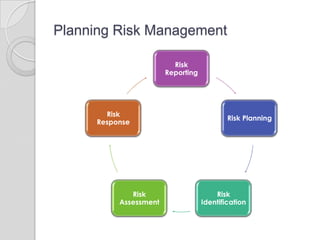
Planning Risk Management
GAME TIME!Divide into three groups (4 to 6 students per group).  You will be taking risks in either The Game of Life or Monopoly!Your daily participation grade for today will be based on your participation in the game.  Have some fun!  The winner in each group will receive 10 points of extra credit… yay!
Handling RiskThere are 4 ways to handle risk.  Most businesses use a combination of these methods.
Risk AvoidanceInvolves thinking about the consequences of decisionsBusinesses avoid risk by not engaging in hazardous activities.Example:  Market research can lead a business to conclude that investment in a product or service is not worth the economic risk.
Risk ReductionRetail stores place electronic tags on expensive merchandise to discourage theft.Business owners reduce risk by designing work areas to lower the chances of accidents or fires.Managers educate their employees about the safe use of equipment.
Reducing Hiring RiskHow do businesses reduce risk from employee carelessness and incompetence?Hiring sometimes involves:Employee screeningEmployee orientation / trainingBackground checksDrug testing

Ppt business risk

  • 1.
  • 2.
    What is Risk?Risk– the possibility of loss or injuryBusiness Risk – risk of loss that is naturally incurred by owning or operating a business
  • 3.
    Risk Management the systematicprocess of managing risk to achieve your business objectives Risk cannot be totally eliminated, but it can be reduced and managed.
  • 4.
    Types of RiskInsurablevs. UninsurableControllable vs. Uncontrollable
  • 5.
    InsuranceInsurable RiskUninsurable RiskMeetsan insurance company’s criteria for coverageExamples: property insurancevehicle insurancerenter’s insuranceUnacceptable to insurance carriers because the likelihood of loss is too highExample: Store owners of shops in flood zones might have difficulty finding insurance.
  • 6.
    Out of Control?ControllableRiskUncontrollable RiskOccurs when conditions can be controlled to minimize the chance of harmExample: Environmental damage can often be prevented.Cannot be reduced or preventedExample: The risks of doing business in a global marketplace cannot be controlled.
  • 7.
    Other Types ofRiskPure Risk
  • 8.
  • 9.
  • 10.
    Natural RiskPure RiskThreatof loss with no opportunity for gainExamples include:Employee theftBurglaryBad checksAccidents involving customers or employees
  • 11.
    Economic RiskOccurs whenthere is likelihood of financial lossMay result from changes in overall business conditionsExample: If a competitor offers more features, other businesses need to change their product or face losses.Other Economic RisksPersonal RiskProperty RiskLiability Risk
  • 12.
    Human Risk Risk ofharm caused by human mistakes, dishonesty, or other factors attributed to people.Customer Dishonestytheft, fraudulent payment, non paymentEmployee Riskincompetence, shoplifting, accidents, fraud, computer-related crimes
  • 13.
    Natural RiskThe possibilityof a catastrophe caused by natural elements that can cause damage or loss of property.Examples include floods, tornados, hurricanes, fires, lightning, droughts, earthquakes, etc.Other examples might include power outages, oil spills, arson, and terrorism.
  • 14.
    Think about humanrisk. What are the biggest concerns a business like your training station might have? How does your training station handle it?Think about it!
  • 15.
  • 16.
    GAME TIME!Divide intothree groups (4 to 6 students per group). You will be taking risks in either The Game of Life or Monopoly!Your daily participation grade for today will be based on your participation in the game. Have some fun! The winner in each group will receive 10 points of extra credit… yay!
  • 17.
    Handling RiskThere are4 ways to handle risk. Most businesses use a combination of these methods.
  • 18.
    Risk AvoidanceInvolves thinkingabout the consequences of decisionsBusinesses avoid risk by not engaging in hazardous activities.Example: Market research can lead a business to conclude that investment in a product or service is not worth the economic risk.
  • 19.
    Risk ReductionRetail storesplace electronic tags on expensive merchandise to discourage theft.Business owners reduce risk by designing work areas to lower the chances of accidents or fires.Managers educate their employees about the safe use of equipment.
  • 20.
    Reducing Hiring RiskHowdo businesses reduce risk from employee carelessness and incompetence?Hiring sometimes involves:Employee screeningEmployee orientation / trainingBackground checksDrug testing