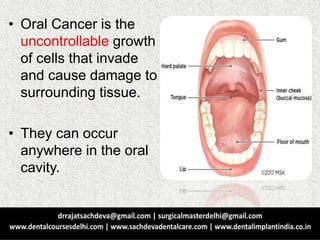
• Oral Cancer is the
uncontrollable growth
of cells that invade
and cause damage to
surrounding tissue.
• They can occur
anywhere in the oral
cavity.
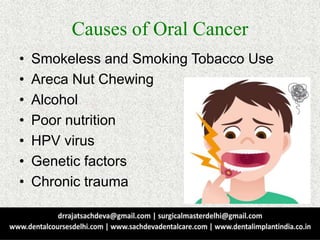
Causes of Oral Cancer
• Smokeless and Smoking Tobacco Use
• Areca Nut Chewing
• Alcohol
• Poor nutrition
• HPV virus
• Genetic factors
• Chronic trauma
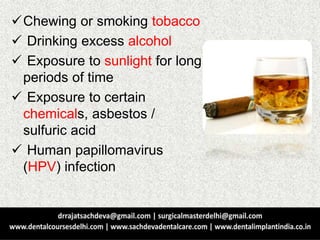
Chewing or smoking tobacco
 Drinking excess alcohol
 Exposure to sunlight for long
periods of time
 Exposure to certain
chemicals, asbestos /
sulfuric acid
 Human papillomavirus
(HPV) infection
 Weakened immunity due to certain
medications
 Consumption of diet rich in processed
meat, and fried foods
 Skin disease lichen planus
 Certain inherited conditions of the blood.
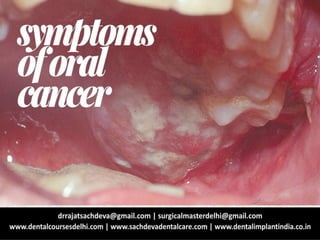
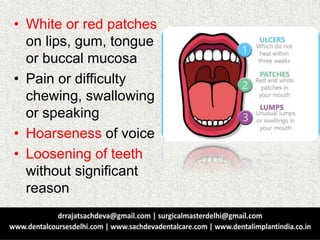
• White or red patches
on lips, gum, tongue
or buccal mucosa
• Pain or difficulty
chewing, swallowing
or speaking
• Hoarseness of voice
• Loosening of teeth
without significant
reason
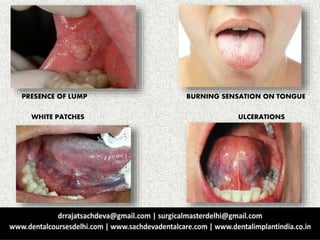
PRESENCE OF LUMP BURNING SENSATION ON TONGUE
WHITE PATCHES ULCERATIONS
• Numbness or pain in any area of the mouth
that do not subsides
• Bleeding in the mouth
• A lump which can be felt inside the mouth or
on the neck
• Jaw pain or stiffness
• Sore throat
• Difficulty wearing dentures
• A sore on the lips or in the mouth that does
not heal
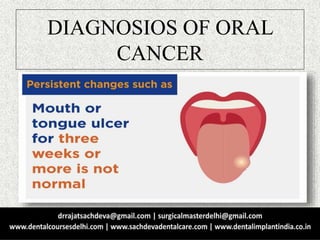
DIAGNOSIOS OF ORAL
CANCER
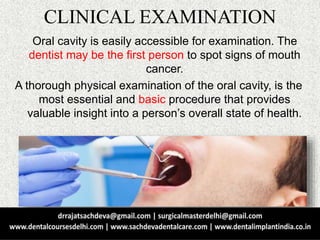
CLINICAL EXAMINATION
Oral cavity is easily accessible for examination. The
dentist may be the first person to spot signs of mouth
cancer.
A thorough physical examination of the oral cavity, is the
most essential and basic procedure that provides
valuable insight into a person’s overall state of health.
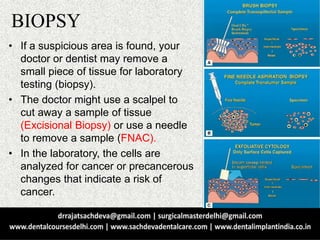
BIOPSY
• If a suspicious area is found, your
doctor or dentist may remove a
small piece of tissue for laboratory
testing (biopsy).
• The doctor might use a scalpel to
cut away a sample of tissue
(Excisional Biopsy) or use a needle
to remove a sample (FNAC).
• In the laboratory, the cells are
analyzed for cancer or precancerous
changes that indicate a risk of
cancer.
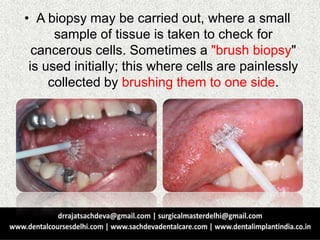
• A biopsy may be carried out, where a small
sample of tissue is taken to check for
cancerous cells. Sometimes a "brush biopsy"
is used initially; this where cells are painlessly
collected by brushing them to one side.
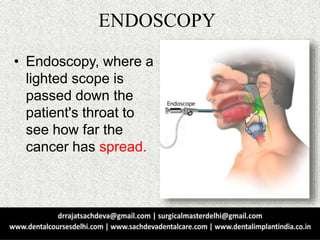
ENDOSCOPY
• Endoscopy, where a
lighted scope is
passed down the
patient's throat to
see how far the
cancer has spread.
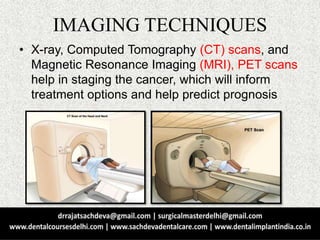
IMAGING TECHNIQUES
• X-ray, Computed Tomography (CT) scans, and
Magnetic Resonance Imaging (MRI), PET scans
help in staging the cancer, which will inform
treatment options and help predict prognosis
TREATMENT OF ORAL CANCER
• Treatment depends on
the location and stage of
the cancer, and the
patient's general health
and personal
preferences.
SURGERY
• It involves resection of the tumor and a
margin of healthy tissue around it.
• A small tumor will require minor surgery,
but for larger tumors, surgery may involve
removing some of the tongue or the
jawbone.
• If the cancer has spread to the lymph
nodes in the neck, the cancerous lymph
nodes and related tissue in the neck will
be surgically removed.
• Reconstruction may be required for major
surgery cases. This involves using
transplanted grafts of skin, muscle, or
bone from other parts of the body. Dental
implants may be needed.
RADIATION THERAPY
It may be used alone or in
combination with
chemotherapy or surgery.
It involves beams of high-
energy X-rays or radiation
particles to damage the
DNA inside the tumor cells,
destroying their ability to
reproduce.
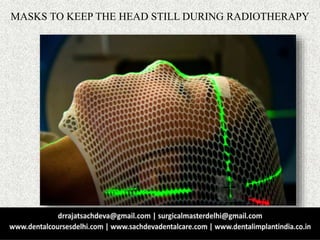
MASKS TO KEEP THE HEAD STILL DURING RADIOTHERAPY
• External beam radiation delivers radiation from
outside, while in brachytherapy, radioactive
seeds and wires can be placed near the cancer
inside the body.
• It is useful for the patients in the early stages of
oral cancer.
• Radiotherapy combined with other treatment
options may also increase the adverse effects .
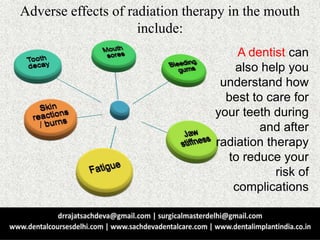
Adverse effects of radiation therapy in the mouth
include:
A dentist can
also help you
understand how
best to care for
your teeth during
and after
radiation therapy
to reduce your
risk of
complications
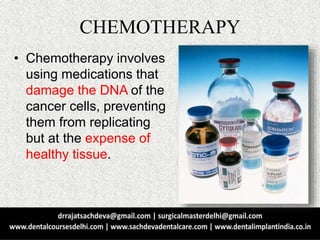
CHEMOTHERAPY
• Chemotherapy involves
using medications that
damage the DNA of the
cancer cells, preventing
them from replicating
but at the expense of
healthy tissue.
The following adverse effects may occur:
 Fatigue
 Nausea / vomiting
 Hair loss
 Weakened immune system, increasing
the risk of infection
• Although, these effects usually subsides
after finishing treatment.
TARGETED DRUG THERAPY
• It uses drugs known as monoclonal antibodies to
change aspects of cancer cells that help them grow
and may be combined with radiotherapy or
chemotherapy. For example - Cetuximab or Erbitux .
• The following mild adverse effects are possible:
• Nausea / vomiting
• Breathlessness / Diarrhea
• Conjunctivitis
• Allergy to Cetuximab
HOW TO COPE PSYCHOLOGICALLY WITH
ORAL CANCER
• It is rightfully said that Cancer affects not only a person,
but his entire family. Many people feel depressed and
stressed while dealing with cancer. To help yourself stay
healthier, try to:
• Speak with a counselor or your healthcare team
professional
• Take time for yourself
• Go for spiritual advisory
• You can opt for medications for depression or anxiety.
• Be socially and physically active.
• Eat a healthy diet, with as many healthy
foods
• Drink plenty of water, fruit juices, and other
liquids.
• Rest as much as needed.
• Talk with your healthcare team about ways
to manage treatment side effects.
• Take your medicines as directed by your
team.
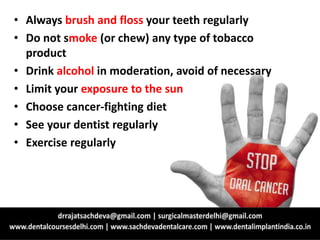
• Always brush and floss your teeth regularly
• Do not smoke (or chew) any type of tobacco
product
• Drink alcohol in moderation, avoid of necessary
• Limit your exposure to the sun
• Choose cancer-fighting diet
• See your dentist regularly
• Exercise regularly
• If you have additional questions you may contact ;
• Dr Sachdeva’s Dental Institute
• Clinic: 011-42464041
• Phone: +91 9818894041
• www.sachdevadentalcare.com
• www.dentalclinicindelhi.com
@dentalcoursesdelhi
drrajatsachdeva
drrajatsachdeva
drrajatsachdeva@surgicalmasterrajat
To book an appmt. contact
Dr.Rajat Sachdeva
Dr Sachdeva’s Dental
Aesthetic & Implant
Institute
I 101, Ashok Vihar Phase 1,
Delhi- 110052
Contact us at
Phone : +919818894041
01142464041
 Oral cancers, Squamous Cell Carcinoma of Oral Cavity

Oral cancers, Squamous Cell Carcinoma of Oral Cavity

  • 2.
    • Oral Canceris the uncontrollable growth of cells that invade and cause damage to surrounding tissue. • They can occur anywhere in the oral cavity.
  • 3.
    Causes of OralCancer • Smokeless and Smoking Tobacco Use • Areca Nut Chewing • Alcohol • Poor nutrition • HPV virus • Genetic factors • Chronic trauma
  • 5.
    Chewing or smokingtobacco  Drinking excess alcohol  Exposure to sunlight for long periods of time  Exposure to certain chemicals, asbestos / sulfuric acid  Human papillomavirus (HPV) infection
  • 6.
     Weakened immunitydue to certain medications  Consumption of diet rich in processed meat, and fried foods  Skin disease lichen planus  Certain inherited conditions of the blood.
  • 8.
    • White orred patches on lips, gum, tongue or buccal mucosa • Pain or difficulty chewing, swallowing or speaking • Hoarseness of voice • Loosening of teeth without significant reason
  • 9.
    PRESENCE OF LUMPBURNING SENSATION ON TONGUE WHITE PATCHES ULCERATIONS
  • 10.
    • Numbness orpain in any area of the mouth that do not subsides • Bleeding in the mouth • A lump which can be felt inside the mouth or on the neck • Jaw pain or stiffness • Sore throat • Difficulty wearing dentures • A sore on the lips or in the mouth that does not heal
  • 11.
  • 12.
    CLINICAL EXAMINATION Oral cavityis easily accessible for examination. The dentist may be the first person to spot signs of mouth cancer. A thorough physical examination of the oral cavity, is the most essential and basic procedure that provides valuable insight into a person’s overall state of health.
  • 13.
    BIOPSY • If asuspicious area is found, your doctor or dentist may remove a small piece of tissue for laboratory testing (biopsy). • The doctor might use a scalpel to cut away a sample of tissue (Excisional Biopsy) or use a needle to remove a sample (FNAC). • In the laboratory, the cells are analyzed for cancer or precancerous changes that indicate a risk of cancer.
  • 14.
    • A biopsymay be carried out, where a small sample of tissue is taken to check for cancerous cells. Sometimes a "brush biopsy" is used initially; this where cells are painlessly collected by brushing them to one side.
  • 15.
    ENDOSCOPY • Endoscopy, wherea lighted scope is passed down the patient's throat to see how far the cancer has spread.
  • 16.
    IMAGING TECHNIQUES • X-ray,Computed Tomography (CT) scans, and Magnetic Resonance Imaging (MRI), PET scans help in staging the cancer, which will inform treatment options and help predict prognosis
  • 17.
    TREATMENT OF ORALCANCER • Treatment depends on the location and stage of the cancer, and the patient's general health and personal preferences.
  • 18.
    SURGERY • It involvesresection of the tumor and a margin of healthy tissue around it. • A small tumor will require minor surgery, but for larger tumors, surgery may involve removing some of the tongue or the jawbone.
  • 19.
    • If thecancer has spread to the lymph nodes in the neck, the cancerous lymph nodes and related tissue in the neck will be surgically removed. • Reconstruction may be required for major surgery cases. This involves using transplanted grafts of skin, muscle, or bone from other parts of the body. Dental implants may be needed.
  • 20.
    RADIATION THERAPY It maybe used alone or in combination with chemotherapy or surgery. It involves beams of high- energy X-rays or radiation particles to damage the DNA inside the tumor cells, destroying their ability to reproduce.
  • 21.
    MASKS TO KEEPTHE HEAD STILL DURING RADIOTHERAPY
  • 22.
    • External beamradiation delivers radiation from outside, while in brachytherapy, radioactive seeds and wires can be placed near the cancer inside the body. • It is useful for the patients in the early stages of oral cancer. • Radiotherapy combined with other treatment options may also increase the adverse effects .
  • 23.
    Adverse effects ofradiation therapy in the mouth include: A dentist can also help you understand how best to care for your teeth during and after radiation therapy to reduce your risk of complications
  • 24.
    CHEMOTHERAPY • Chemotherapy involves usingmedications that damage the DNA of the cancer cells, preventing them from replicating but at the expense of healthy tissue.
  • 25.
    The following adverseeffects may occur:  Fatigue  Nausea / vomiting  Hair loss  Weakened immune system, increasing the risk of infection • Although, these effects usually subsides after finishing treatment.
  • 26.
    TARGETED DRUG THERAPY •It uses drugs known as monoclonal antibodies to change aspects of cancer cells that help them grow and may be combined with radiotherapy or chemotherapy. For example - Cetuximab or Erbitux . • The following mild adverse effects are possible: • Nausea / vomiting • Breathlessness / Diarrhea • Conjunctivitis • Allergy to Cetuximab
  • 27.
    HOW TO COPEPSYCHOLOGICALLY WITH ORAL CANCER • It is rightfully said that Cancer affects not only a person, but his entire family. Many people feel depressed and stressed while dealing with cancer. To help yourself stay healthier, try to: • Speak with a counselor or your healthcare team professional • Take time for yourself • Go for spiritual advisory • You can opt for medications for depression or anxiety.
  • 28.
    • Be sociallyand physically active. • Eat a healthy diet, with as many healthy foods • Drink plenty of water, fruit juices, and other liquids. • Rest as much as needed. • Talk with your healthcare team about ways to manage treatment side effects. • Take your medicines as directed by your team.
  • 30.
    • Always brushand floss your teeth regularly • Do not smoke (or chew) any type of tobacco product • Drink alcohol in moderation, avoid of necessary • Limit your exposure to the sun • Choose cancer-fighting diet • See your dentist regularly • Exercise regularly
  • 31.
    • If youhave additional questions you may contact ; • Dr Sachdeva’s Dental Institute • Clinic: 011-42464041 • Phone: +91 9818894041 • www.sachdevadentalcare.com • www.dentalclinicindelhi.com
  • 32.
  • 33.
    To book anappmt. contact Dr.Rajat Sachdeva Dr Sachdeva’s Dental Aesthetic & Implant Institute I 101, Ashok Vihar Phase 1, Delhi- 110052 Contact us at Phone : +919818894041 01142464041