PLANTS AROUND US
PLANTS AROUND US
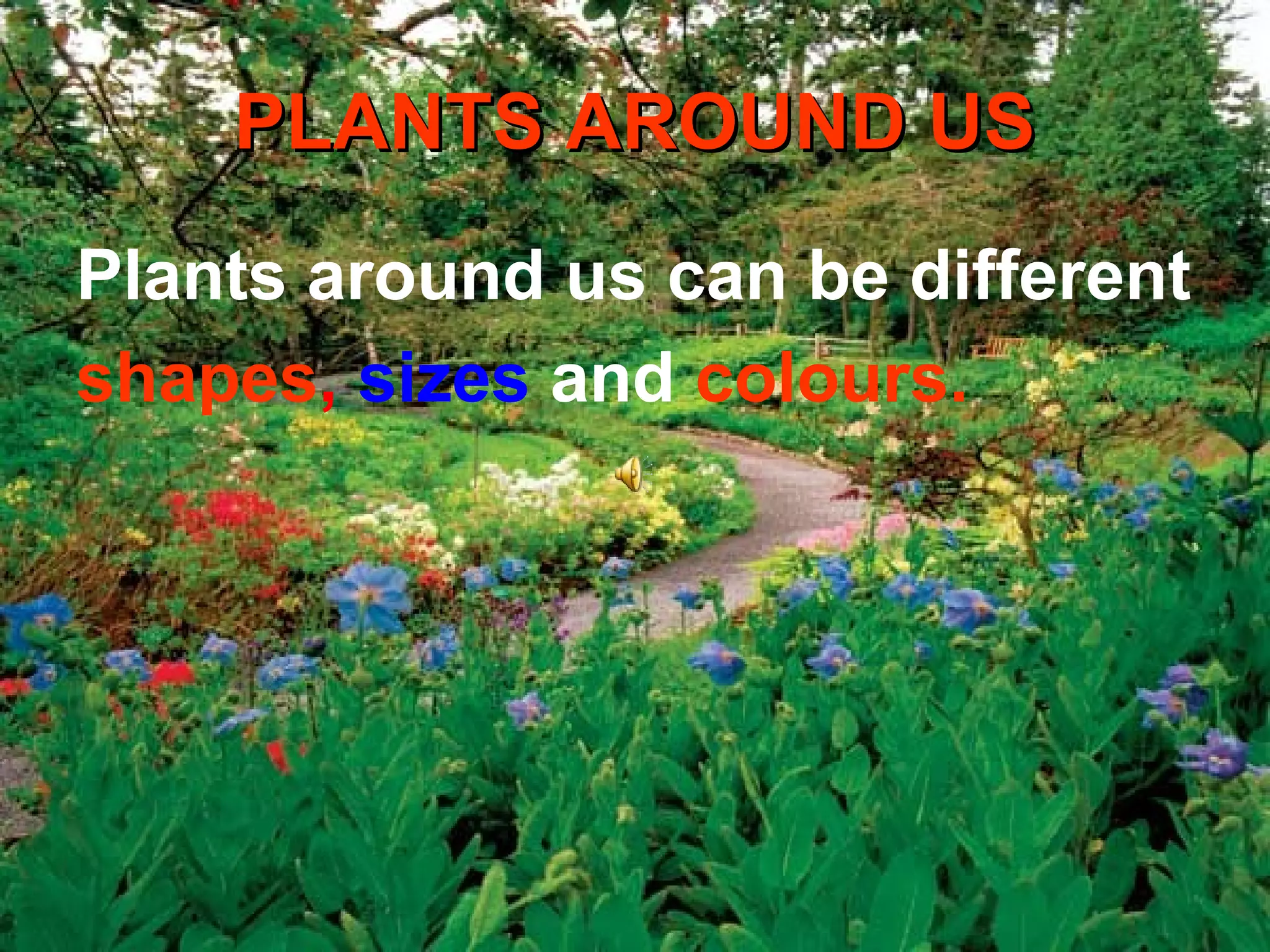
Plants around us can be different
shapes, sizes and colours.
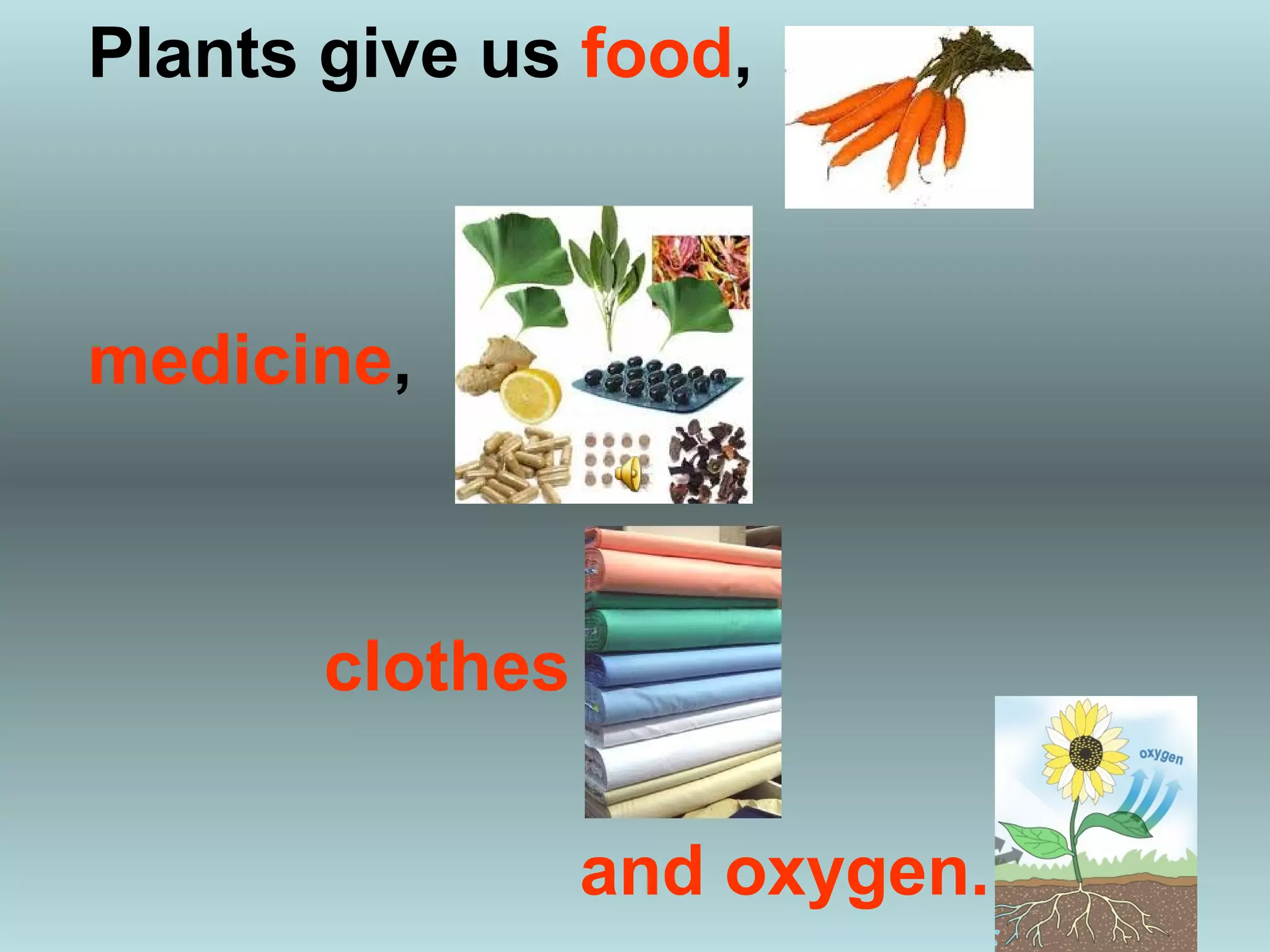
Plants give us food,


medicine,


       clothes

                 and oxygen.
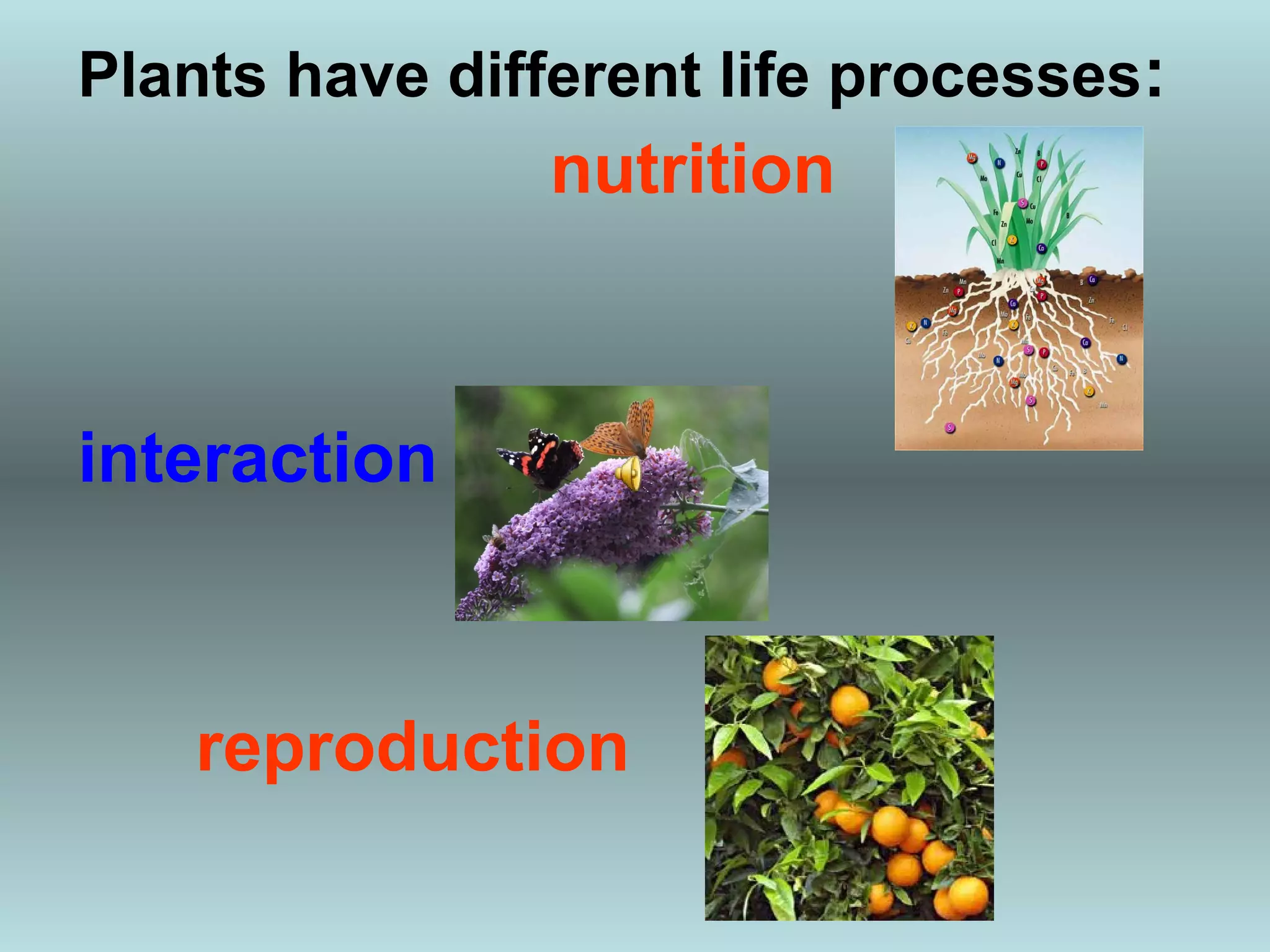
Plants have different life processes:
                nutrition


interaction


    reproduction
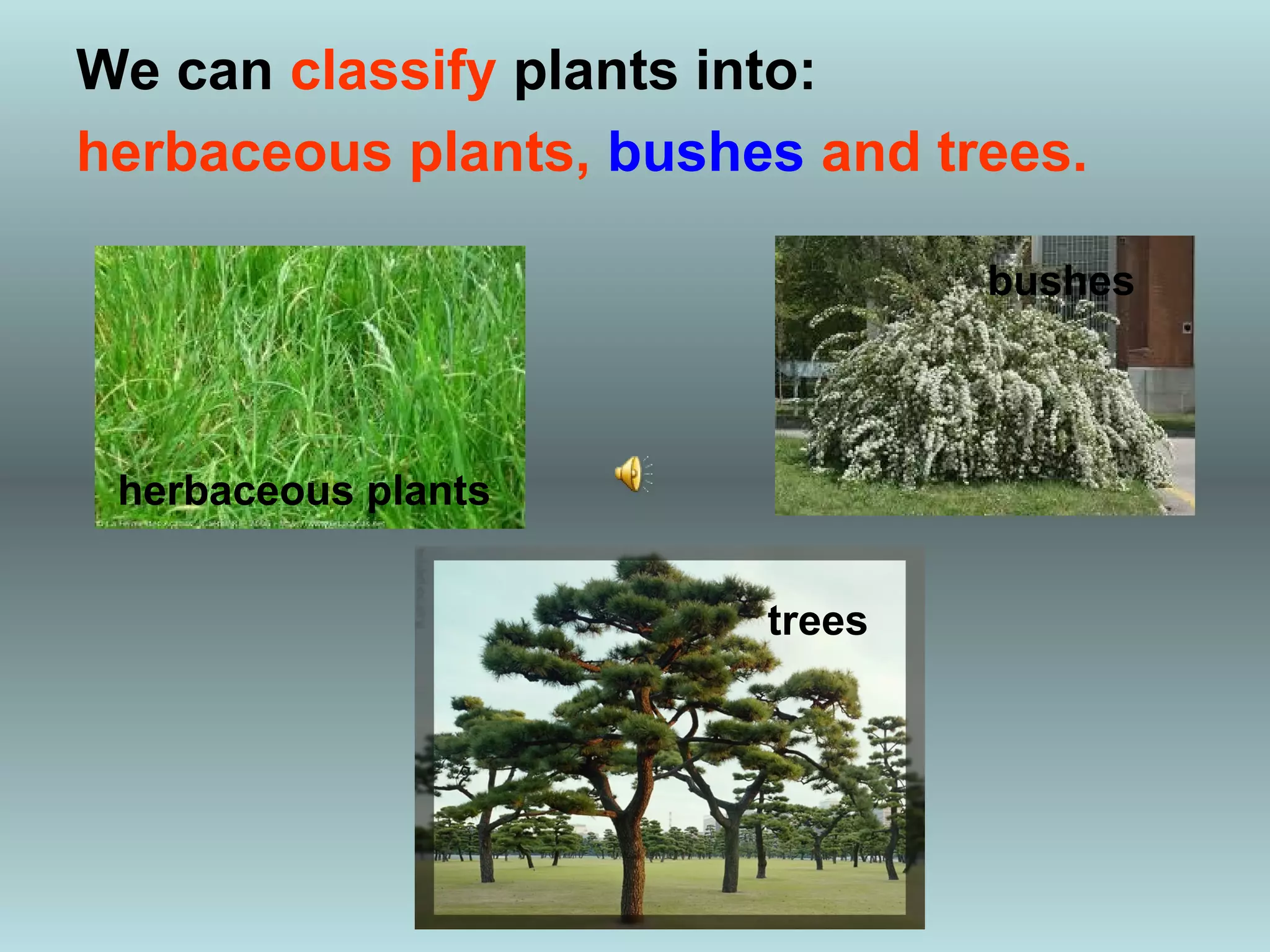
We can classify plants into:
herbaceous plants, bushes and trees.

                                bushes


 herbaceous plants


                        trees
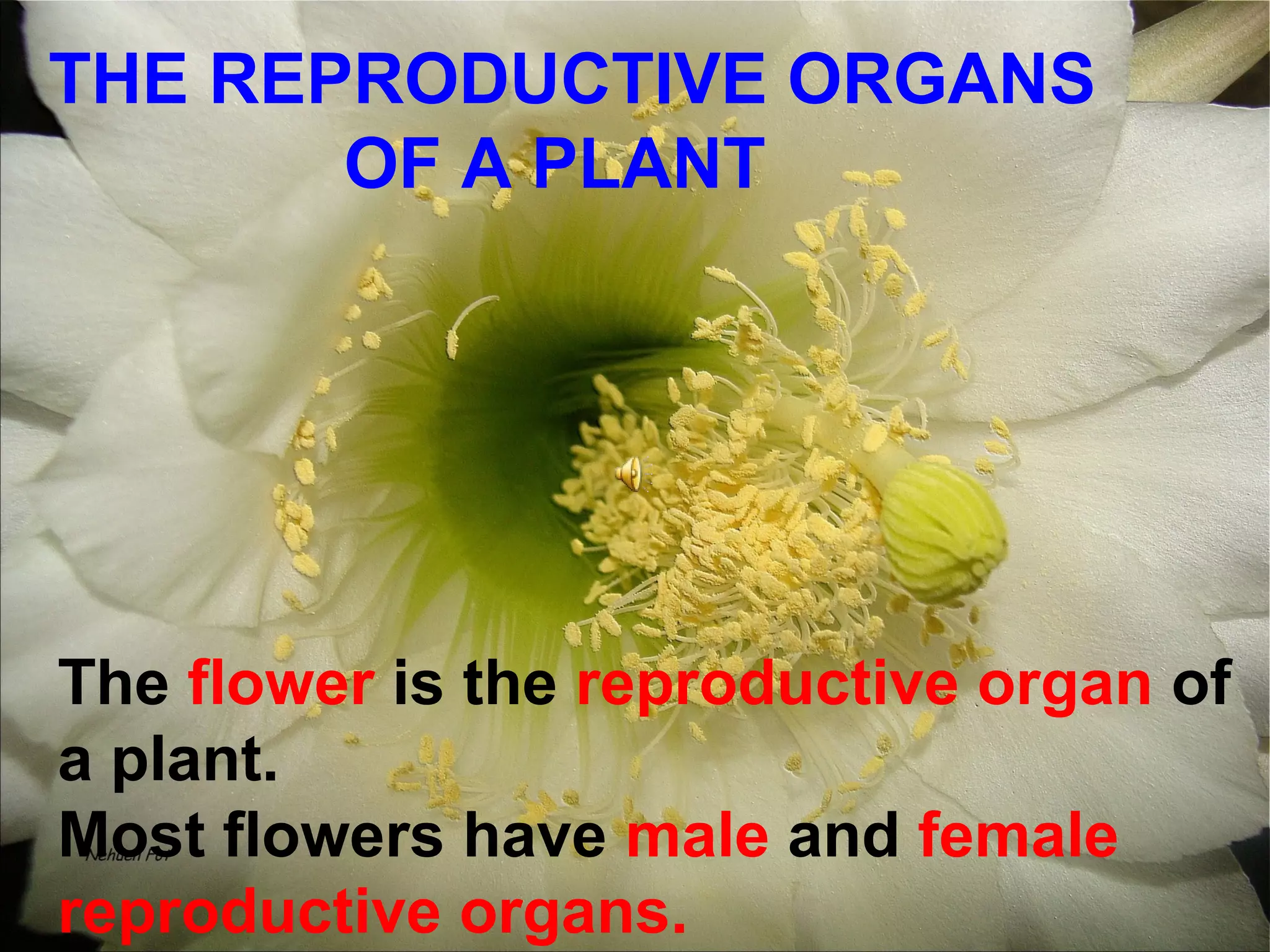
THE REPRODUCTIVE ORGANS
       OF A PLANT


The flower is the reproductive organ of
a plant.
Most flowers have male and female
reproductive organs.
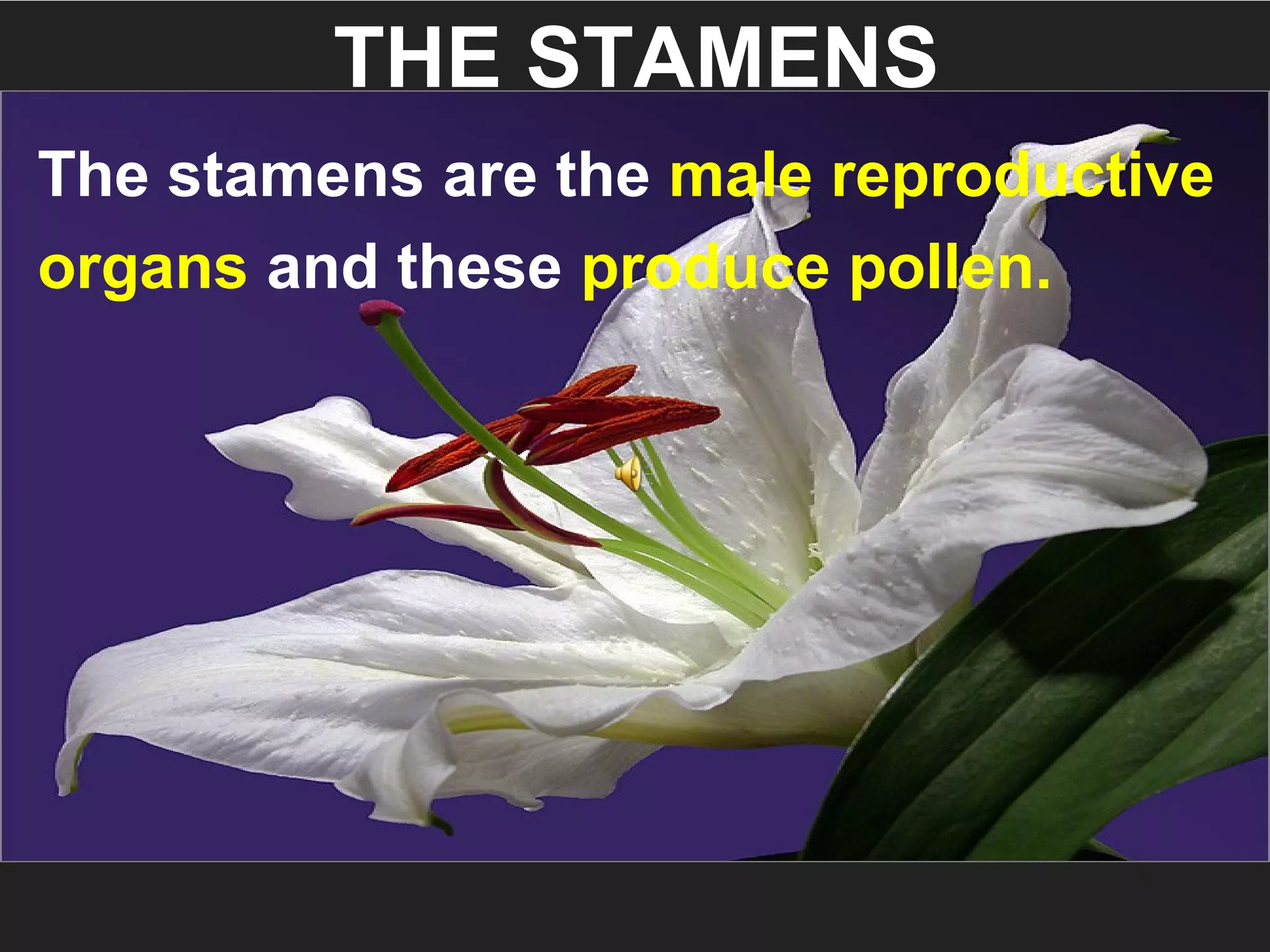
THE STAMENS
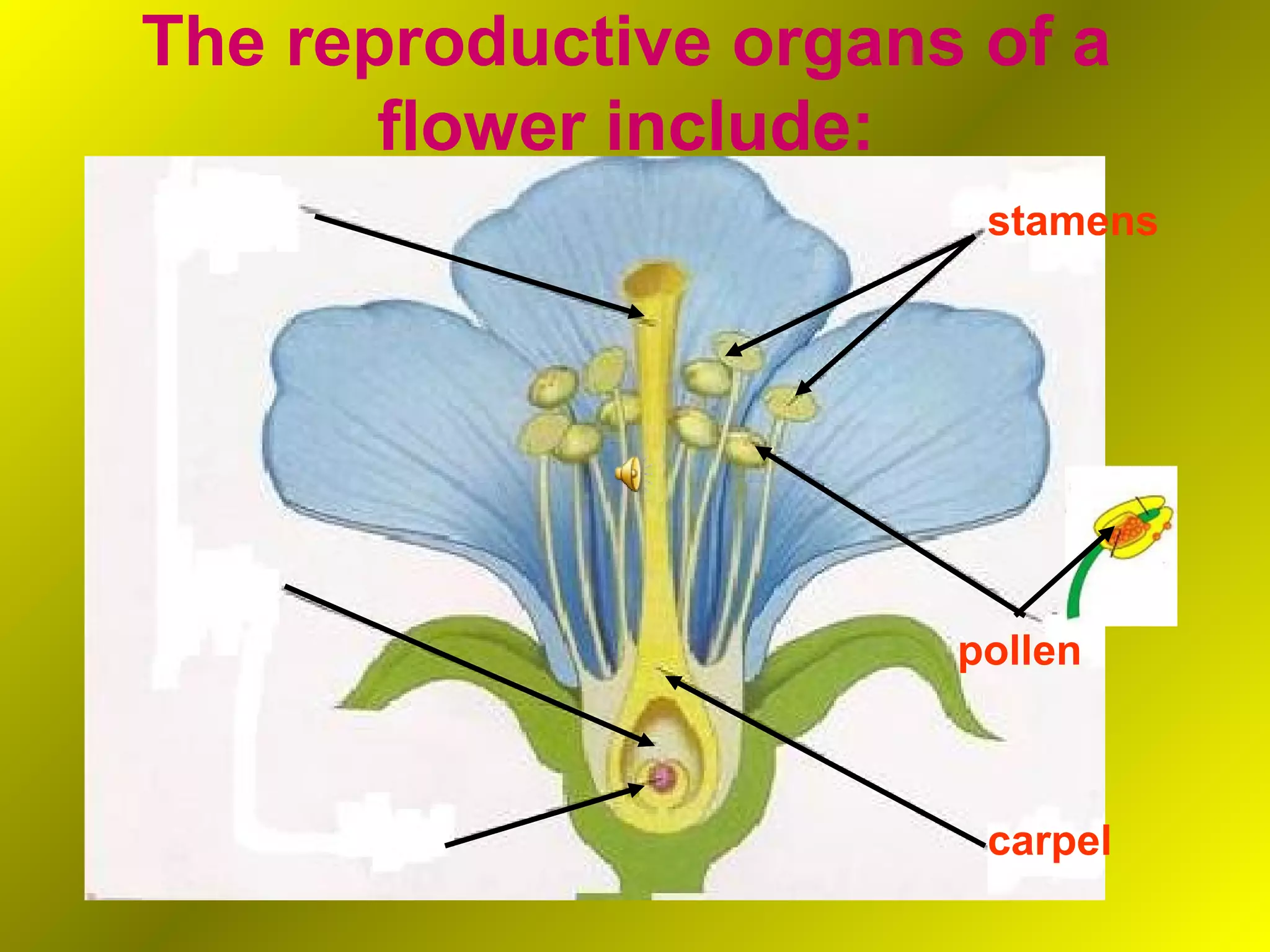
The stamens are the male reproductive
organs and these produce pollen.
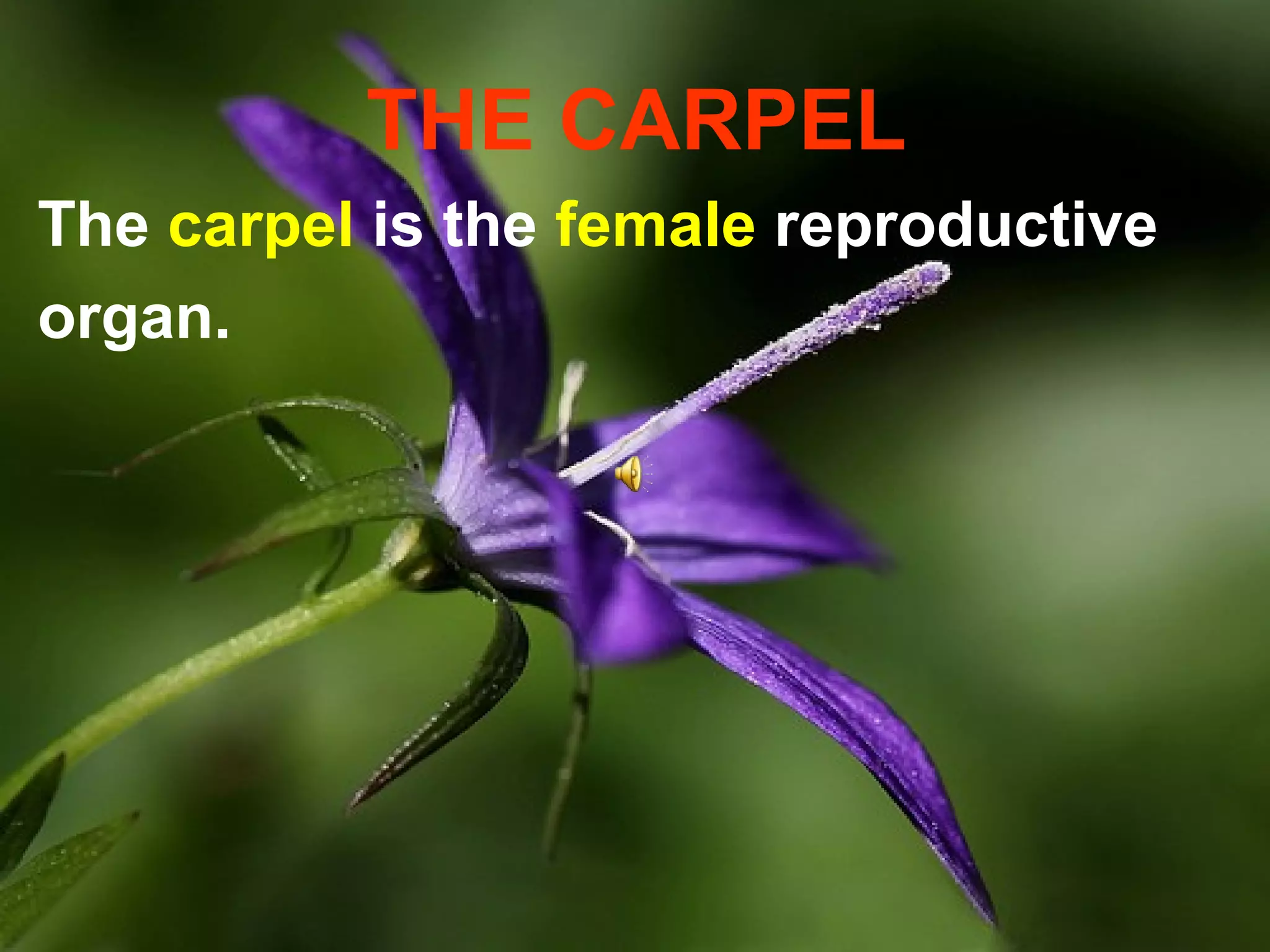
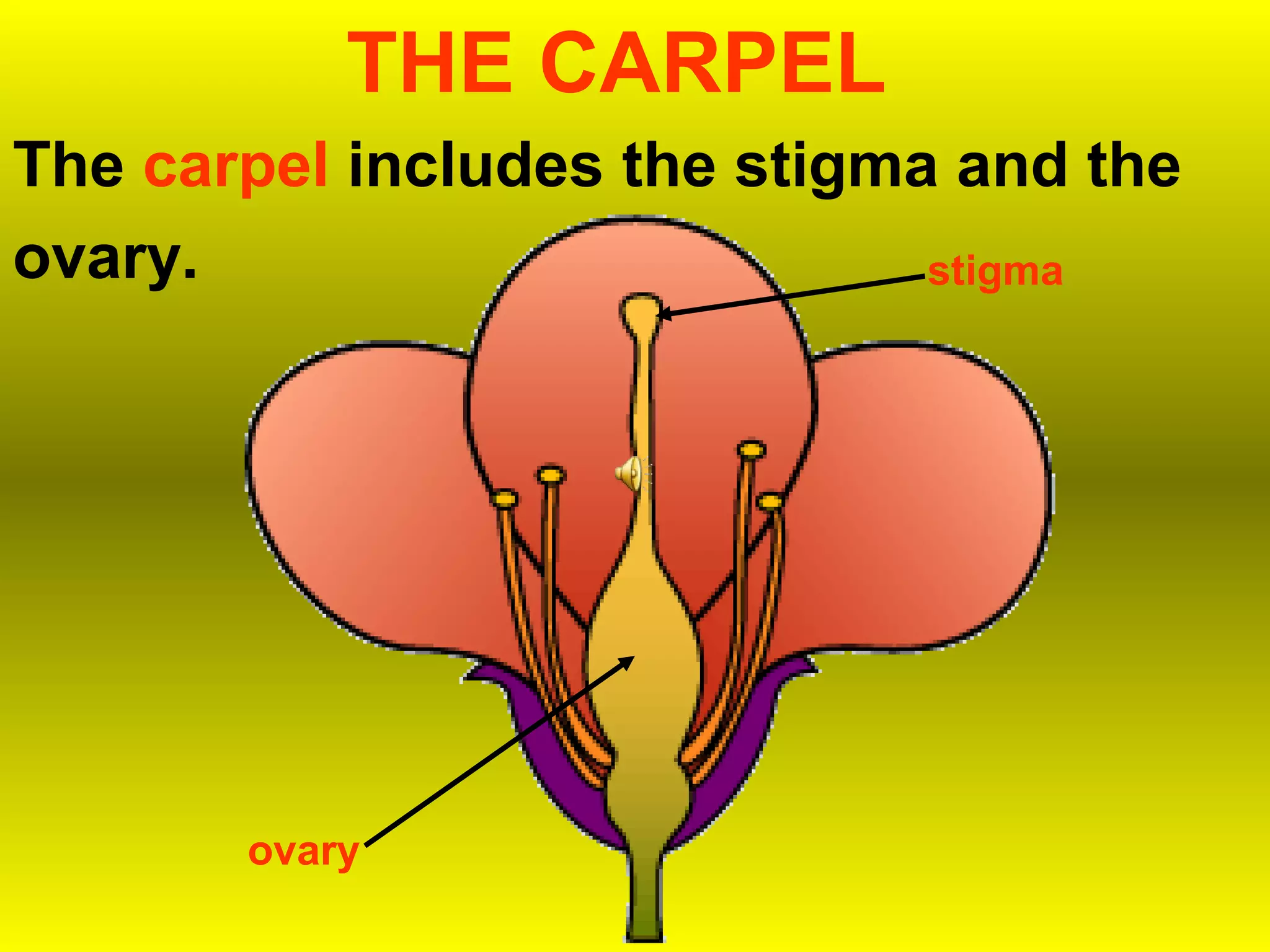
THE CARPEL
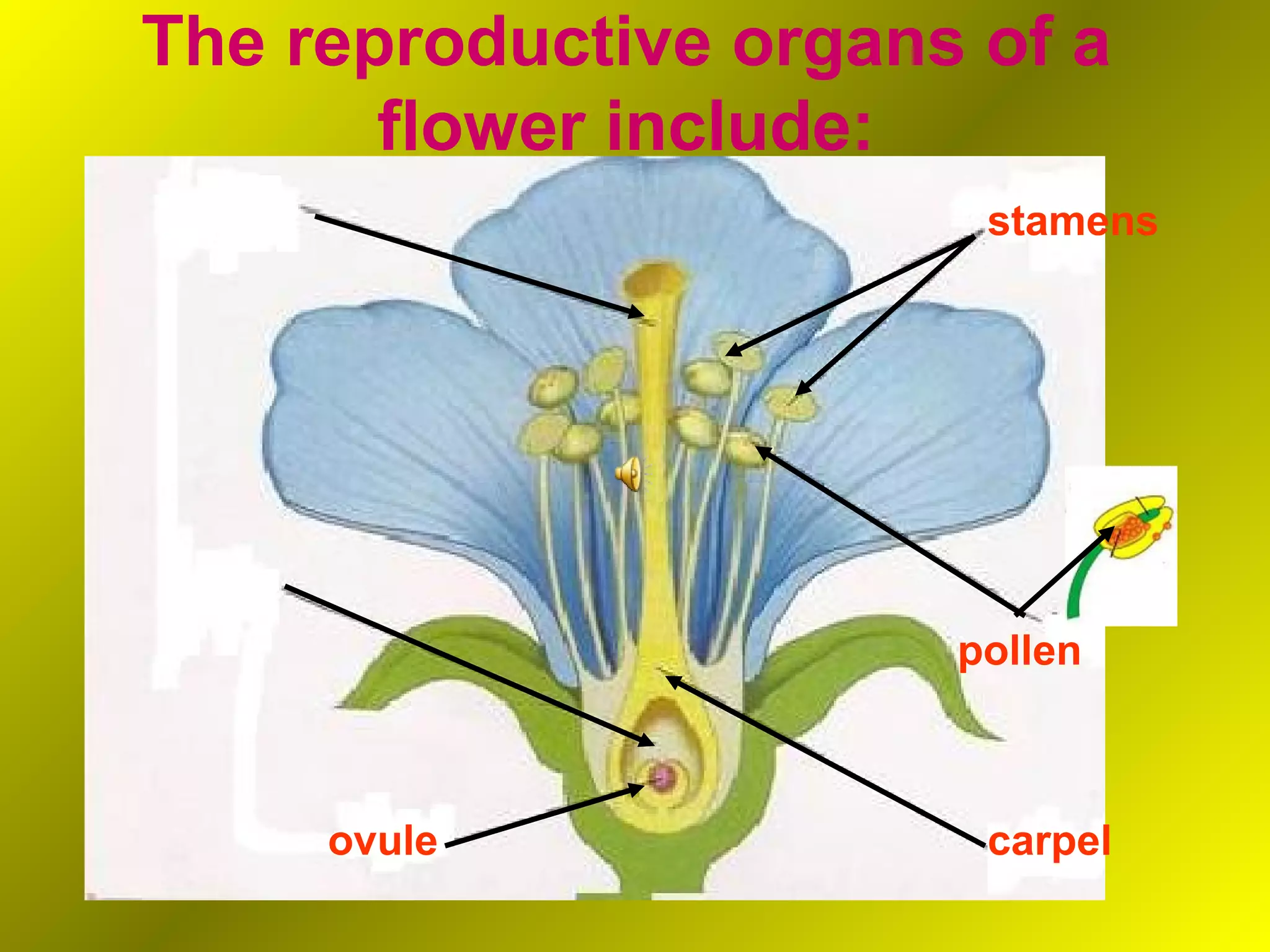
The carpel is the female reproductive
organ.
THE CARPEL
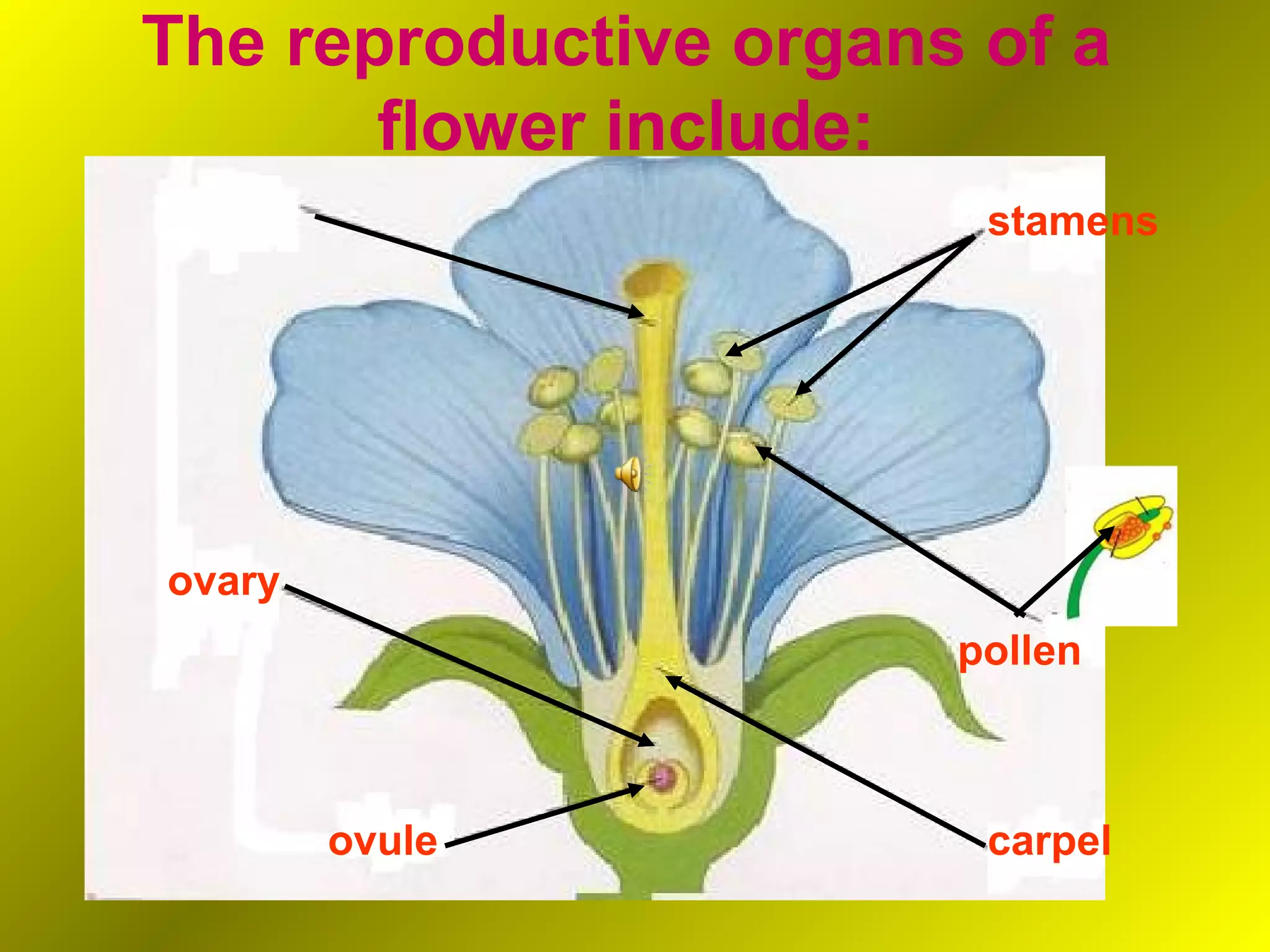
The carpel includes the stigma and the
ovary.                        stigma


       ovary
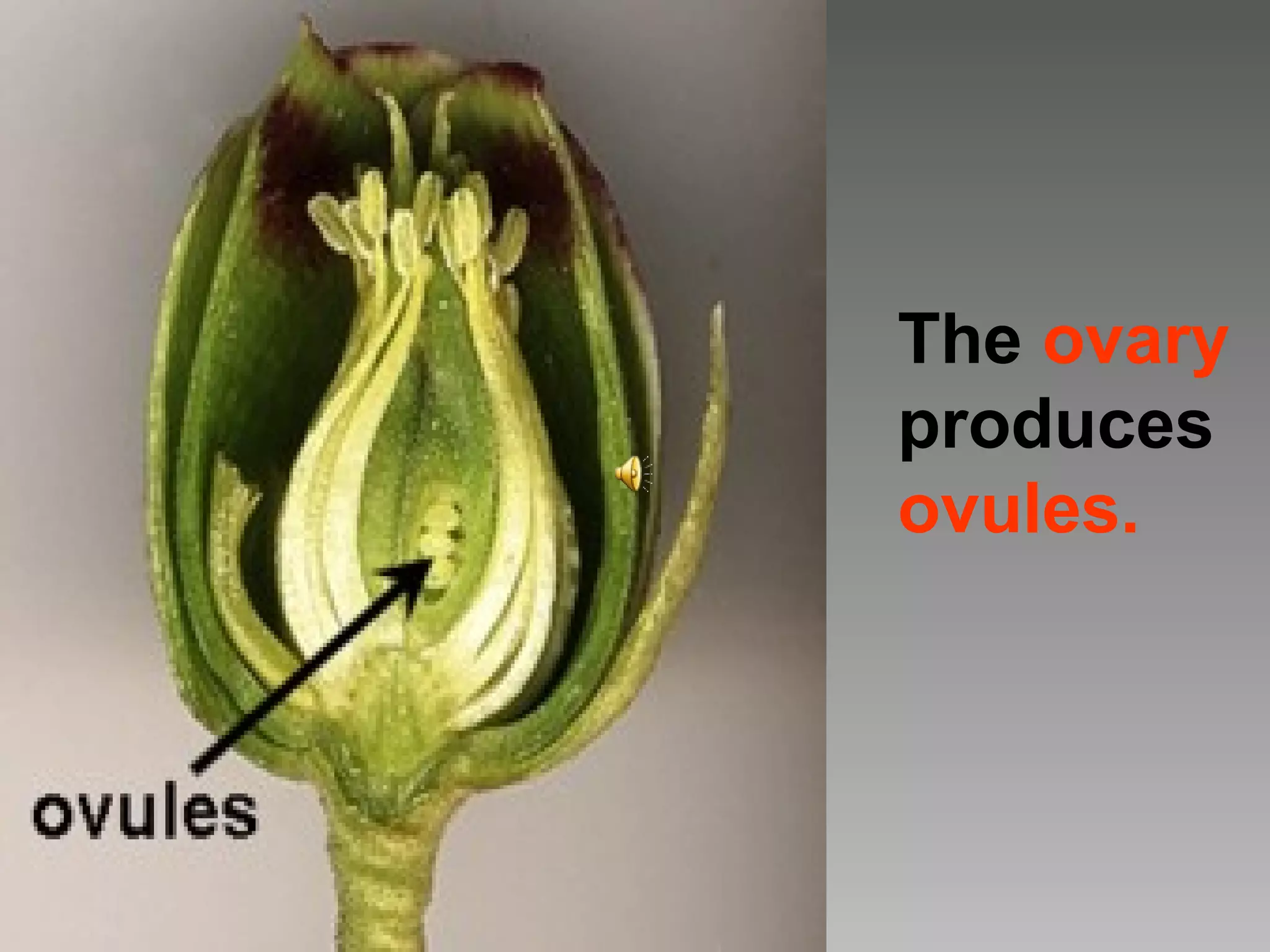
The ovary
produces
ovules.
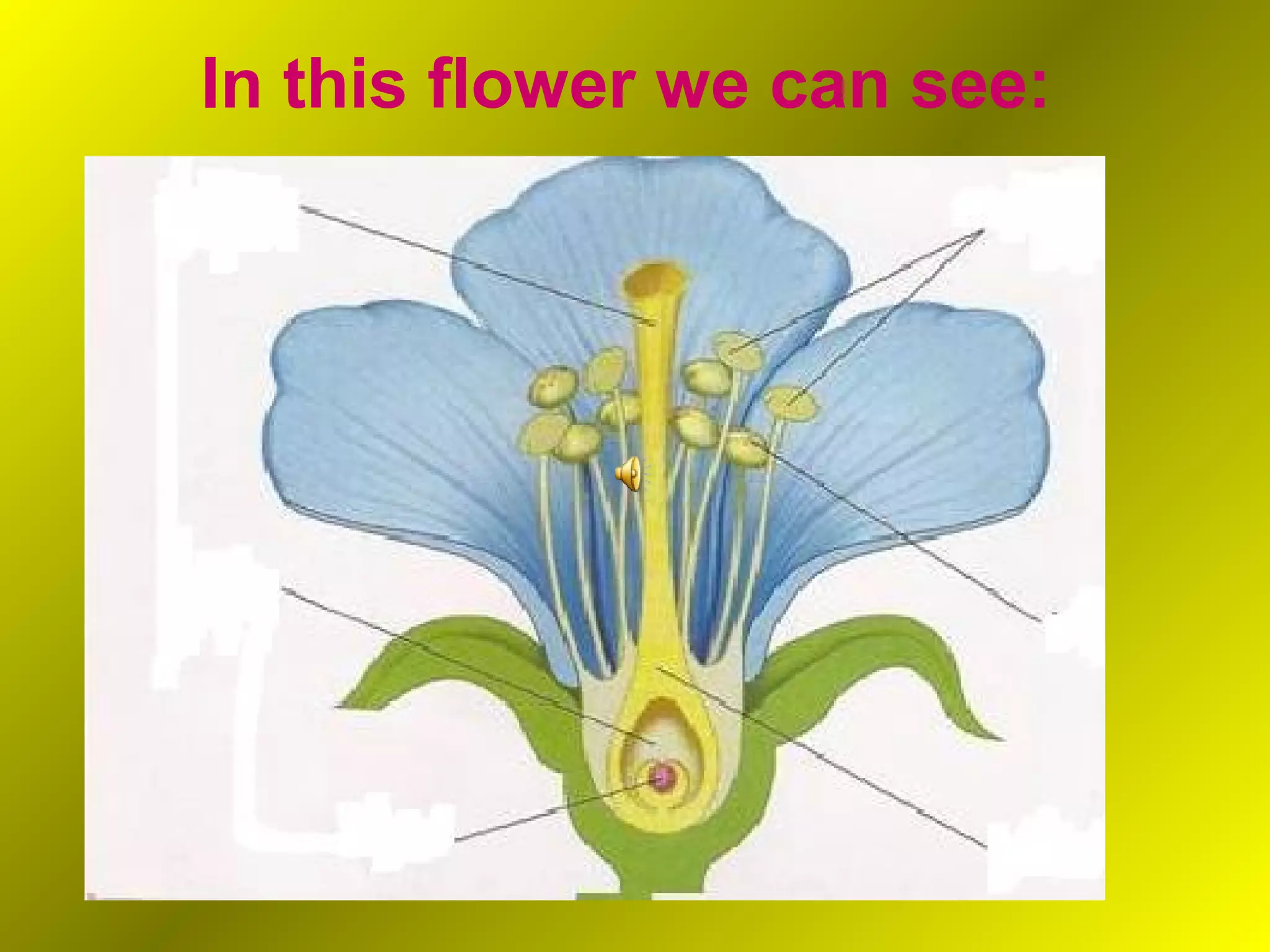
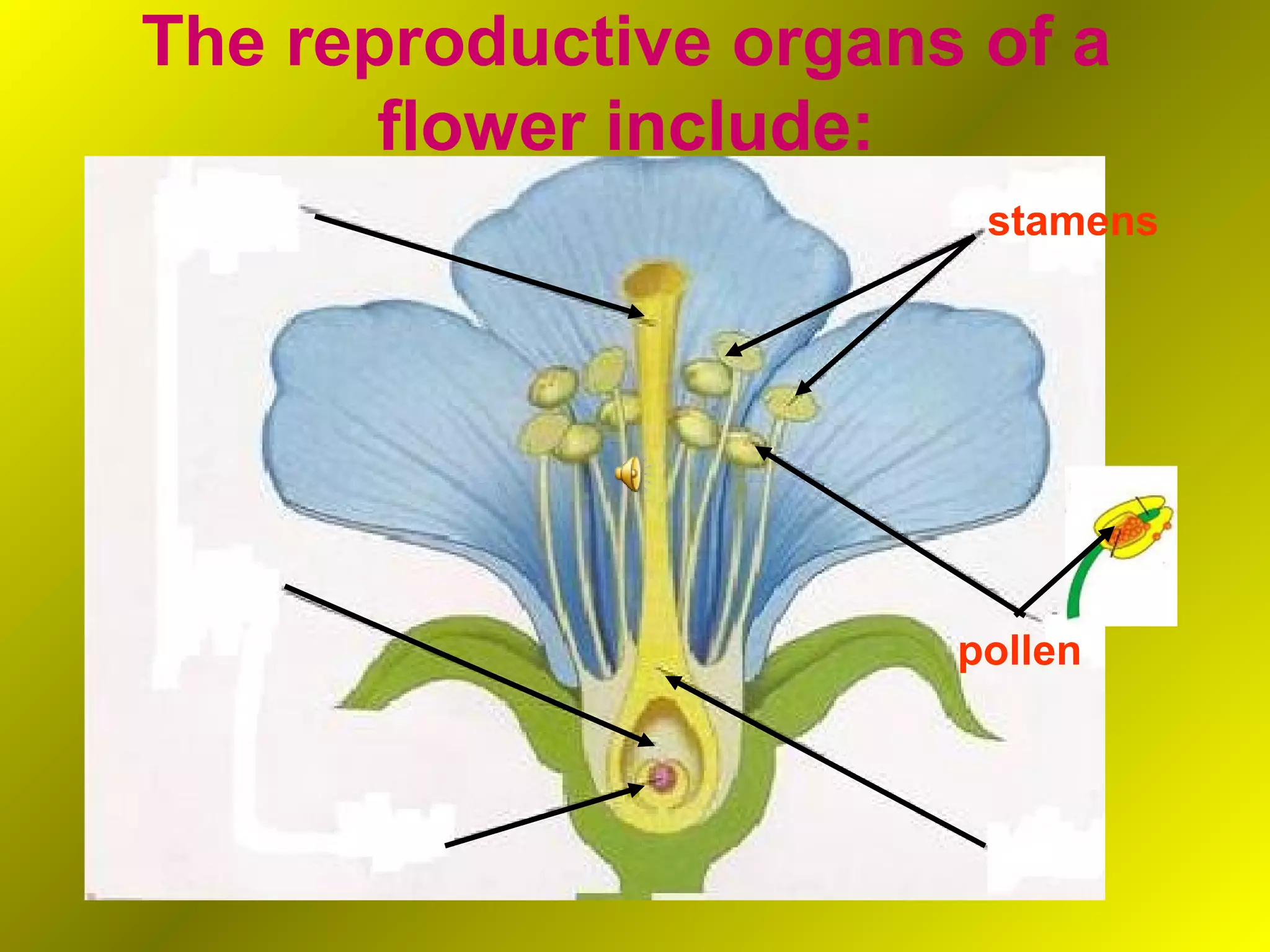
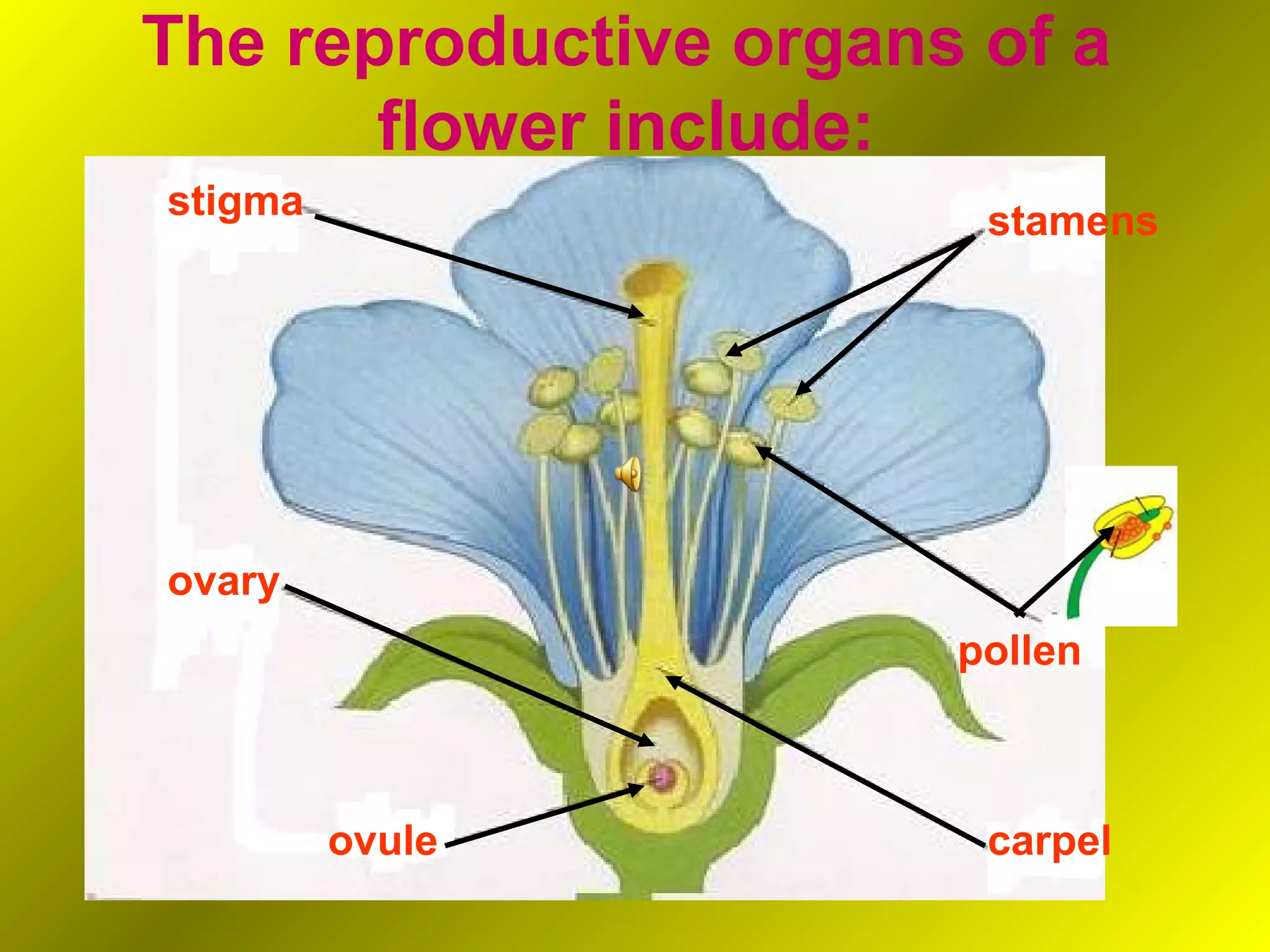
In this flower we can see:
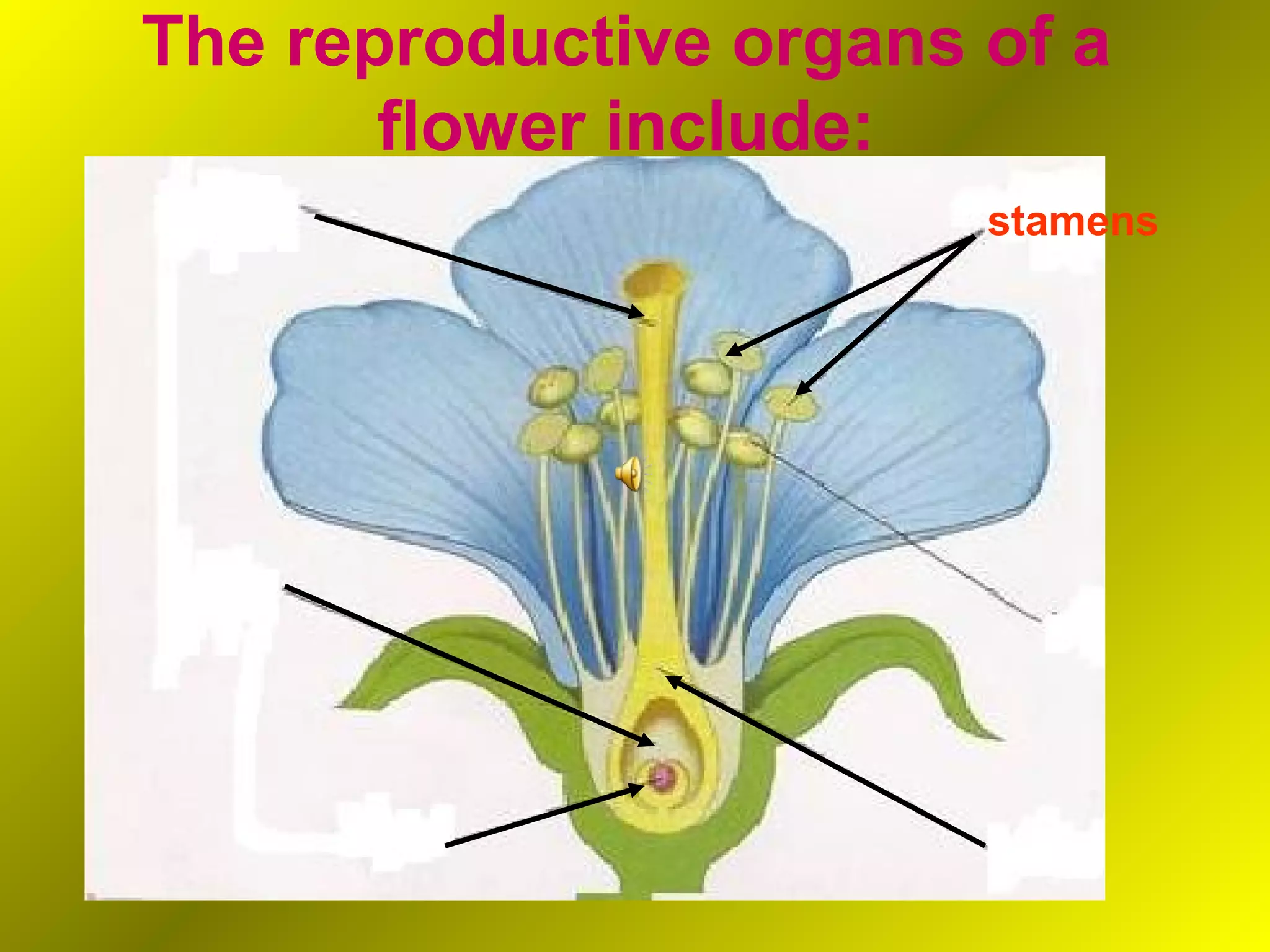
The reproductive organs of a
       flower include:
                        stamens
The reproductive organs of a
       flower include:
                        stamens


                       pollen
The reproductive organs of a
       flower include:
                        stamens


                       pollen


                        carpel
The reproductive organs of a
       flower include:
                        stamens


                       pollen


     ovule              carpel
The reproductive organs of a
       flower include:
                        stamens


ovary
                       pollen


        ovule           carpel
The reproductive organs of a
       flower include:
stigma                  stamens


ovary
                       pollen


         ovule          carpel
POLLINATION
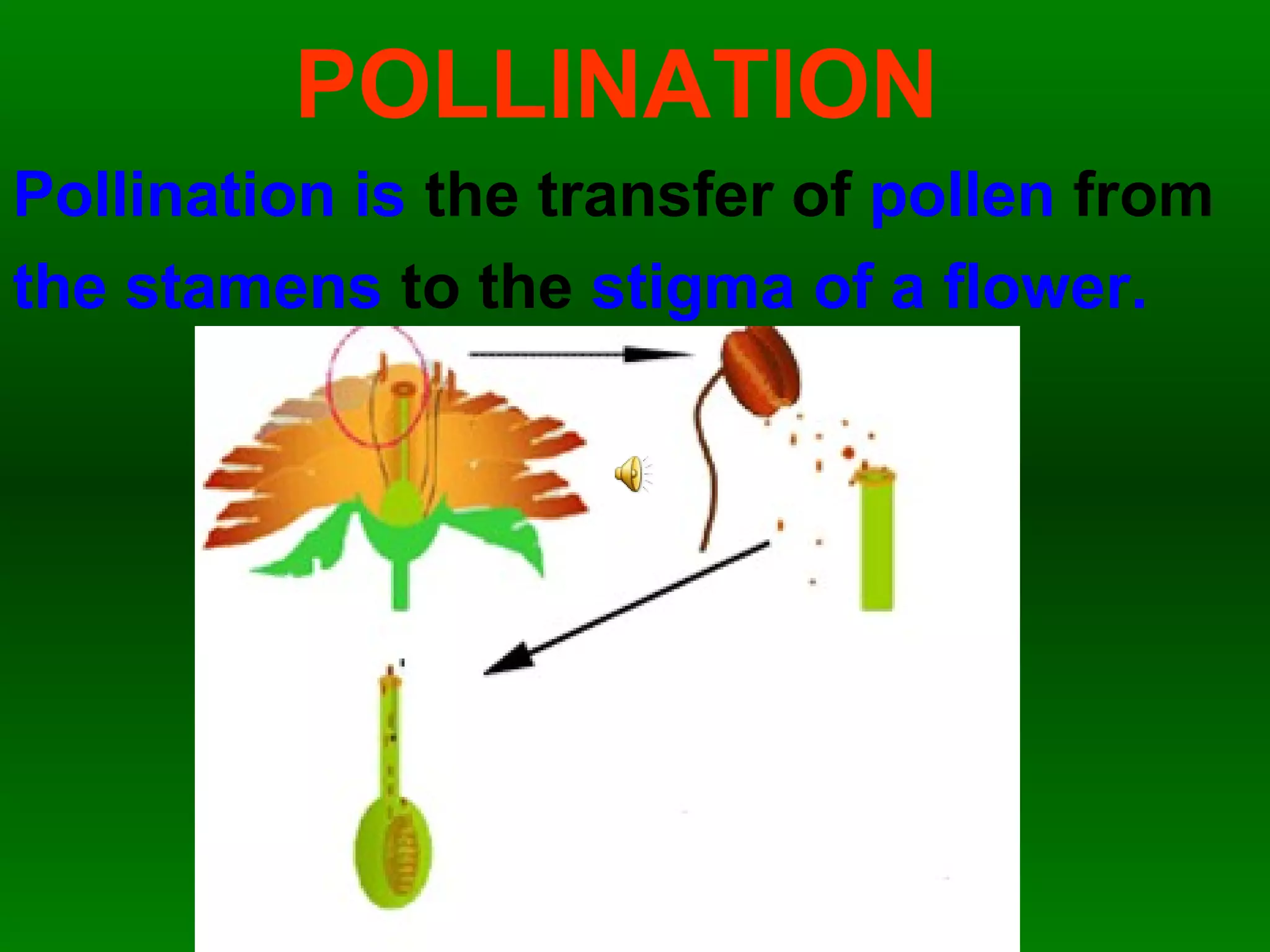
Pollination is the transfer of pollen from
the stamens to the stigma of a flower.
TYPES OF POLLINATION
Pollination can be:

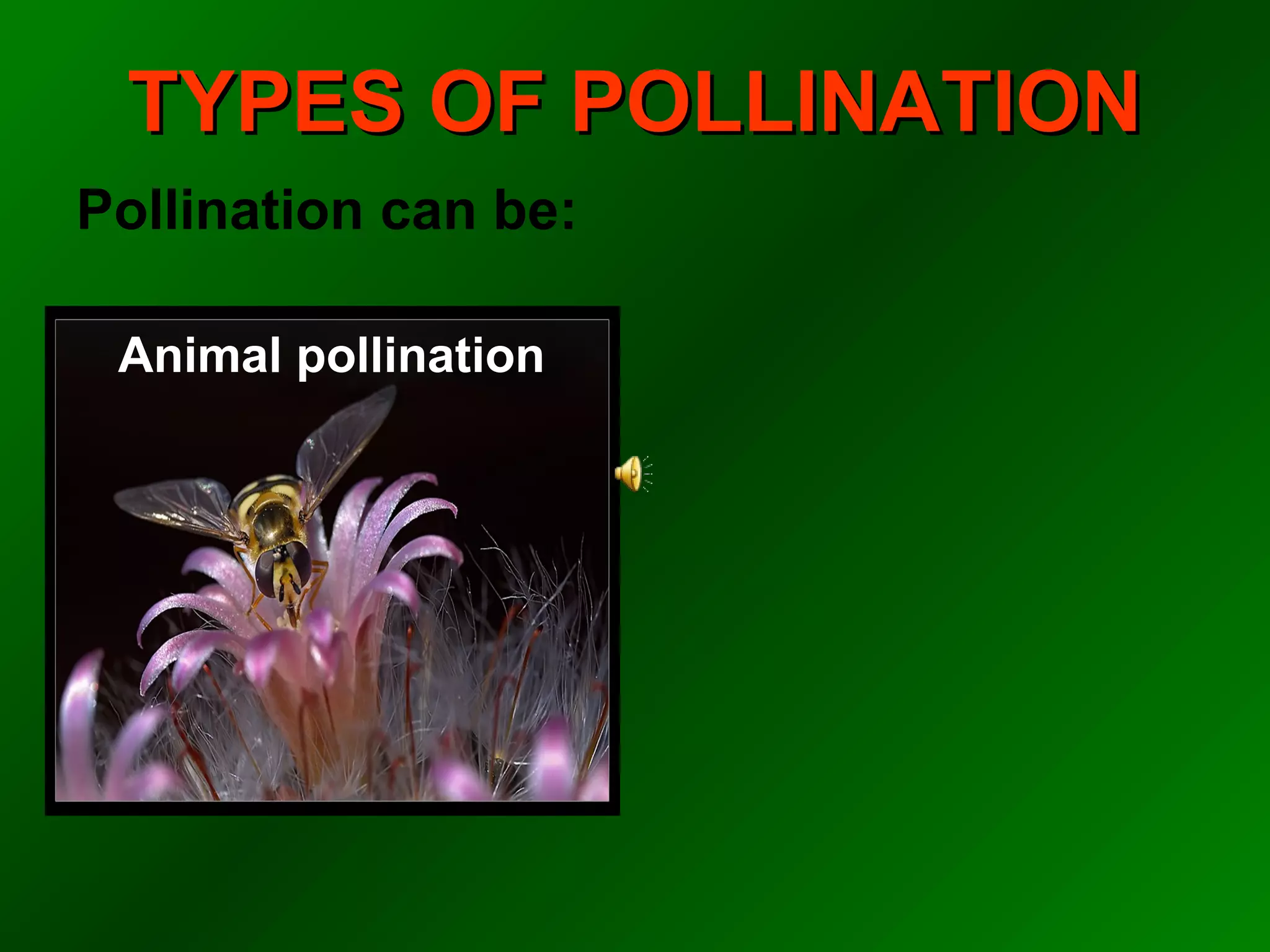
 Animal pollination
TYPES OF POLLINATION
Pollination can be:

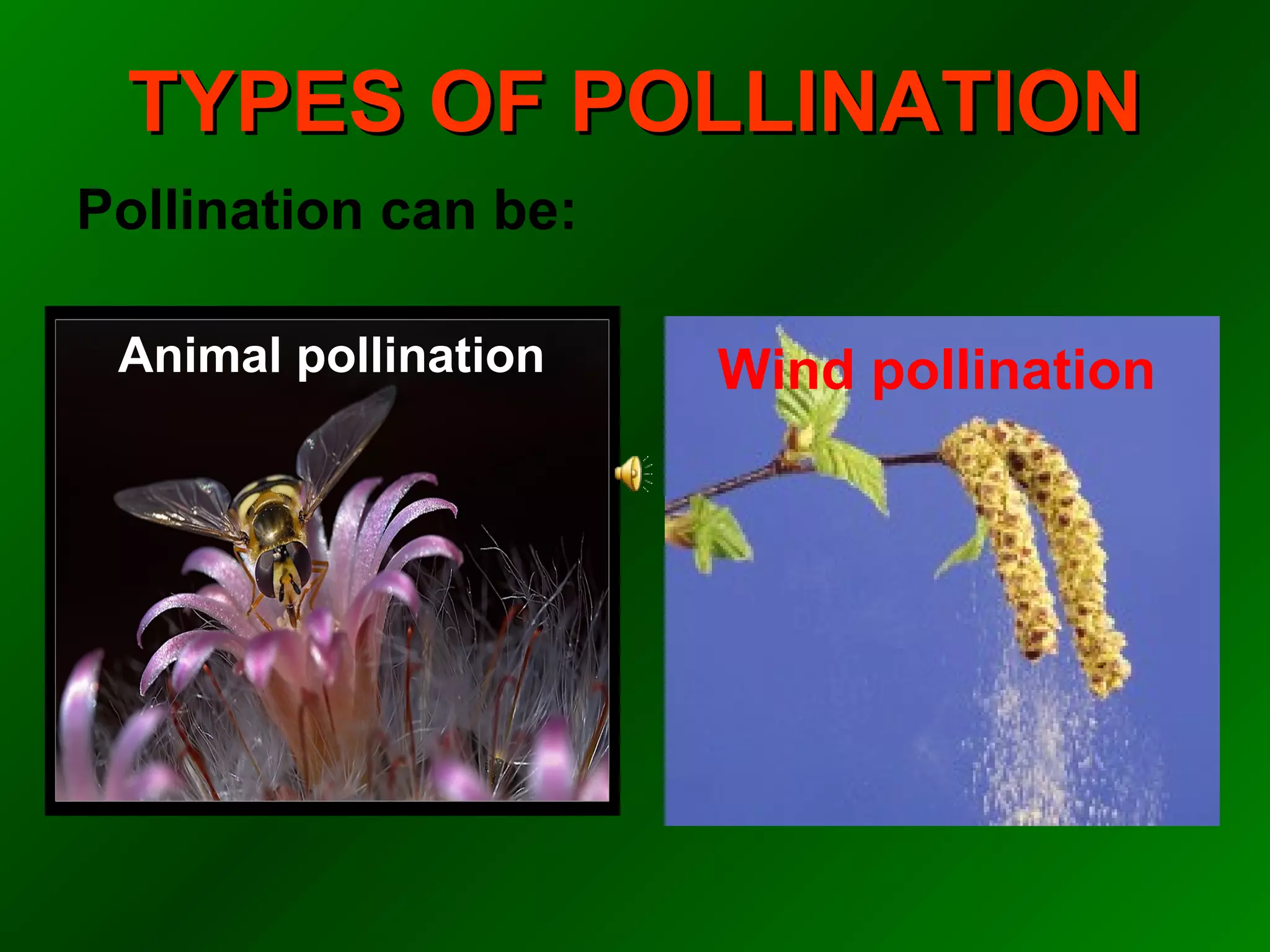
 Animal pollination   Wind pollination
ANIMAL POLLINATION
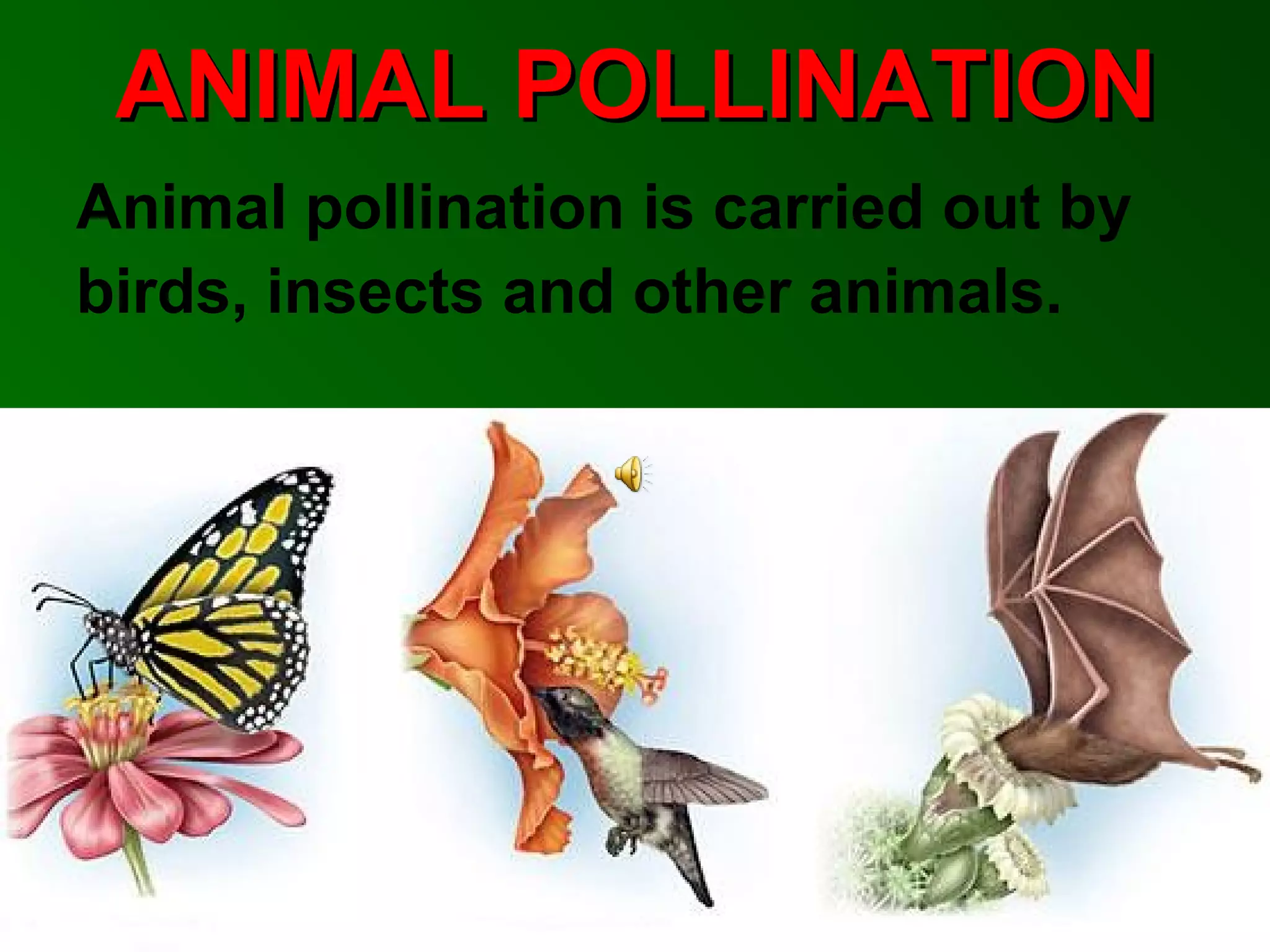
Animal pollination is carried out by
birds, insects and other animals.
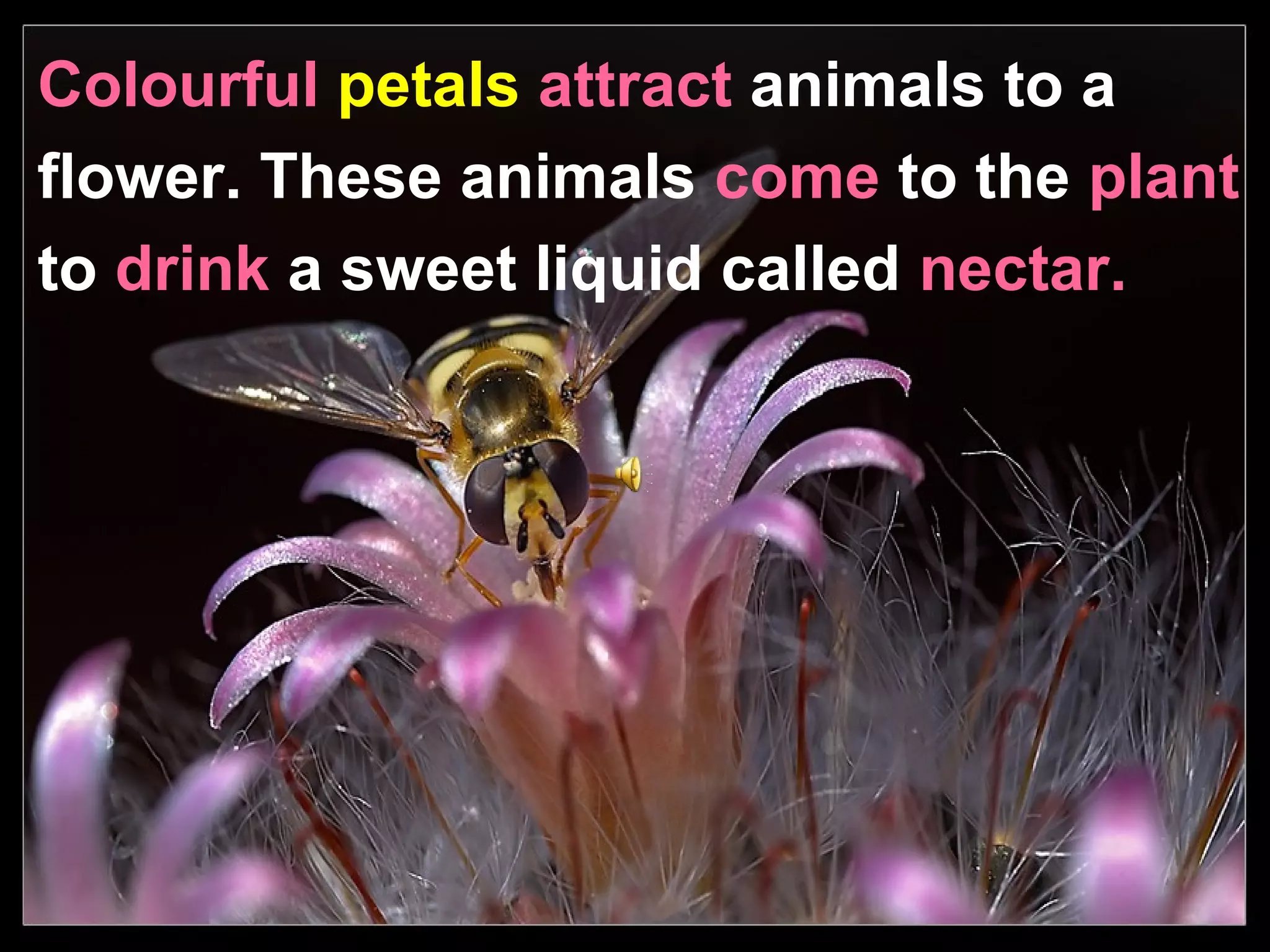
Colourful petals attract animals to a
flower. These animals come to the plant
to drink a sweet liquid called nectar.
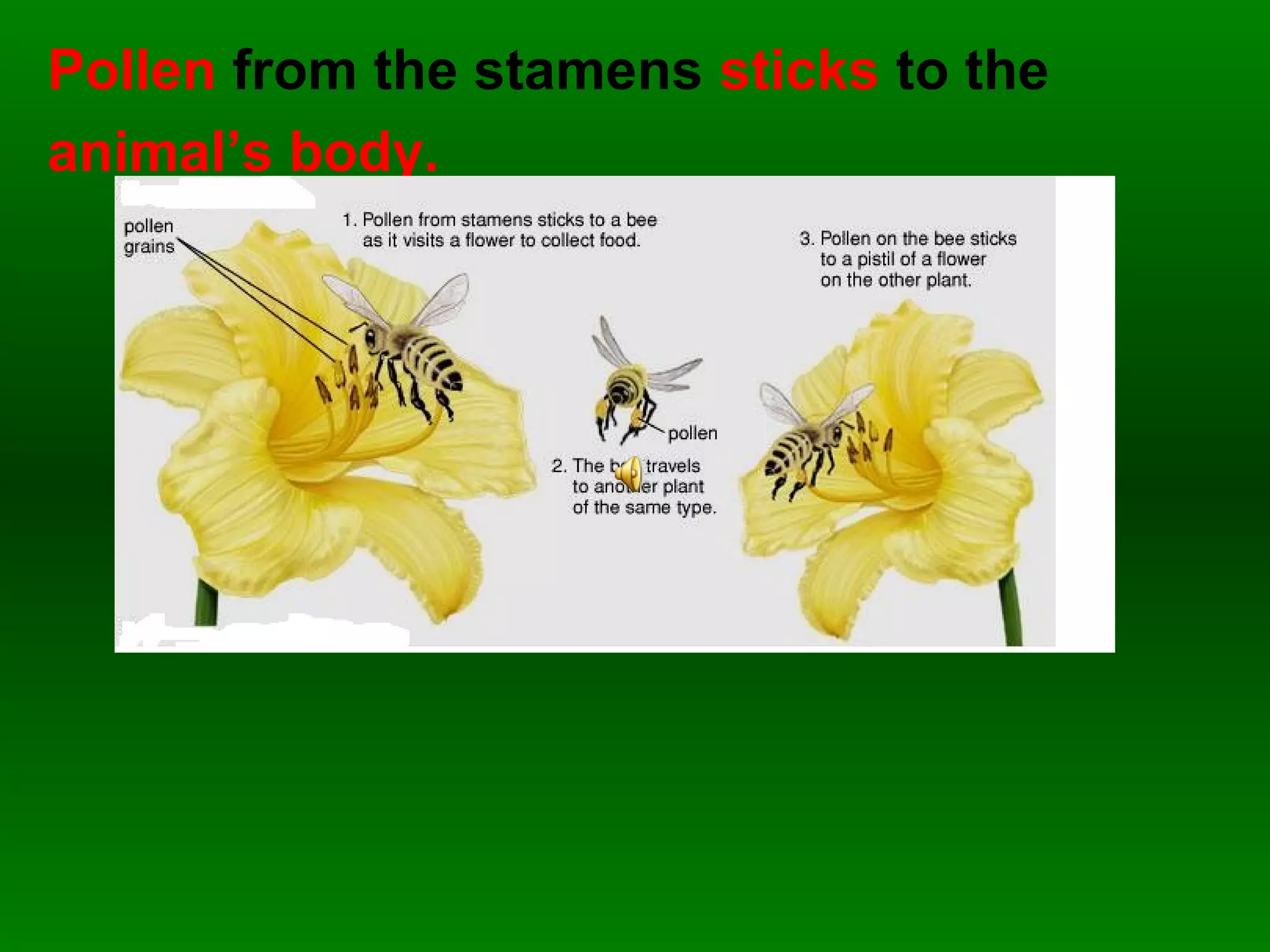
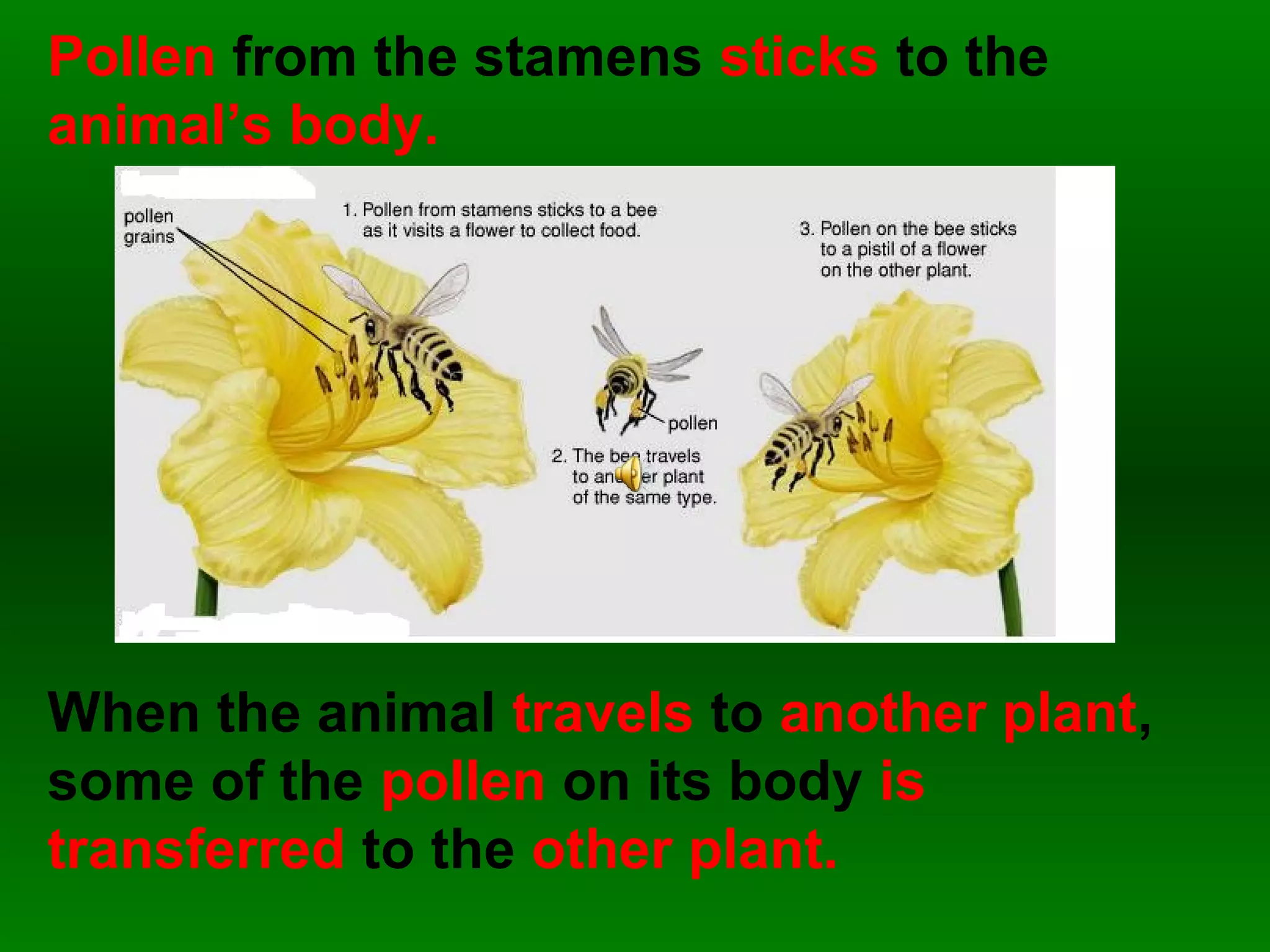
Pollen from the stamens sticks to the
animal’s body.
Pollen from the stamens sticks to the
animal’s body.


When the animal travels to another plant,
some of the pollen on its body is
transferred to the other plant.
WIND POLLINATION
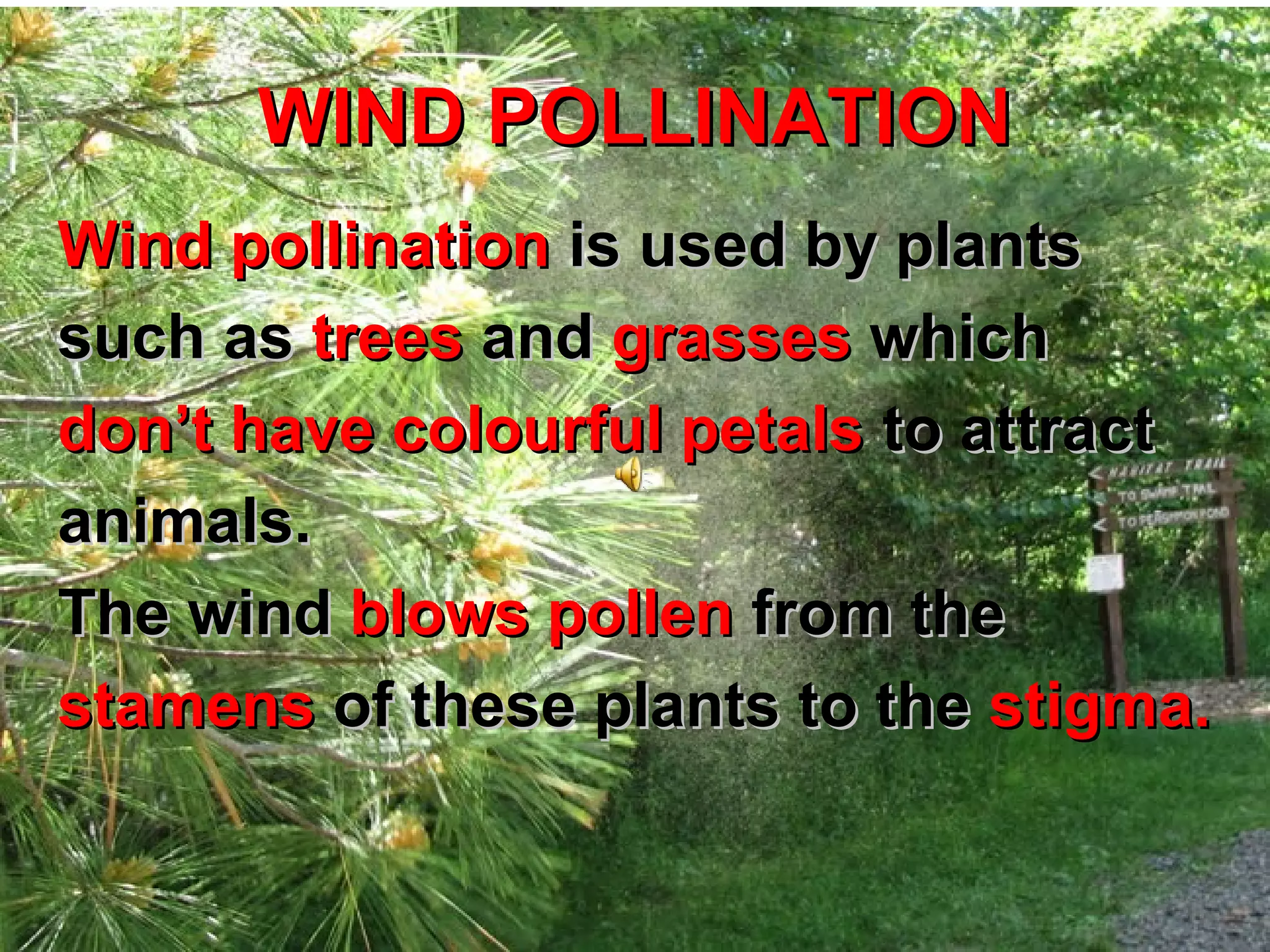
Wind pollination is used by plants
such as trees and grasses which
don’t have colourful petals to attract
animals.
The wind blows pollen from the
stamens of these plants to the stigma.
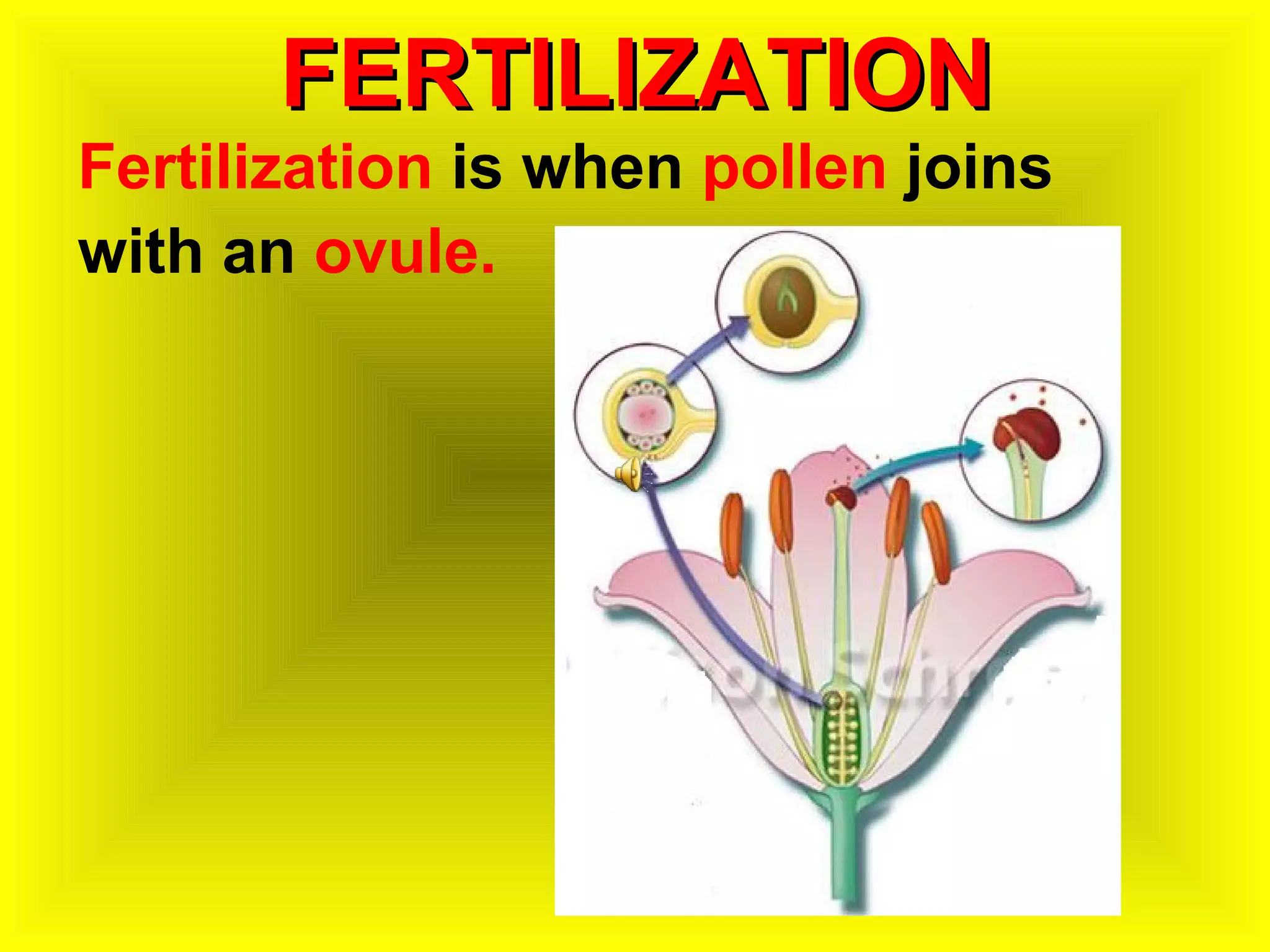
FERTILIZATION
Fertilization is when pollen joins
with an ovule.
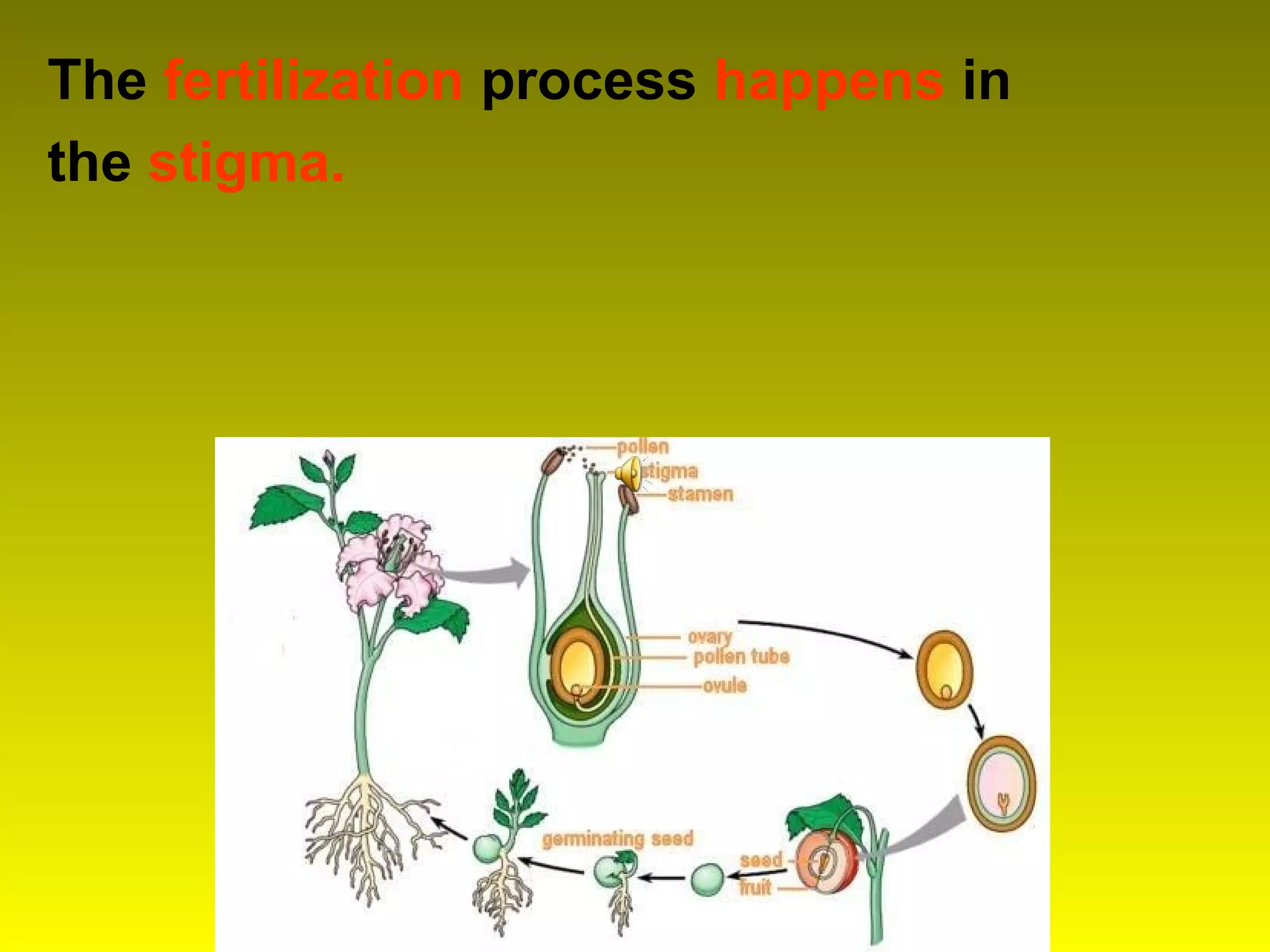
The fertilization process happens in
the stigma.
The fertilization process happens in
the stigma.
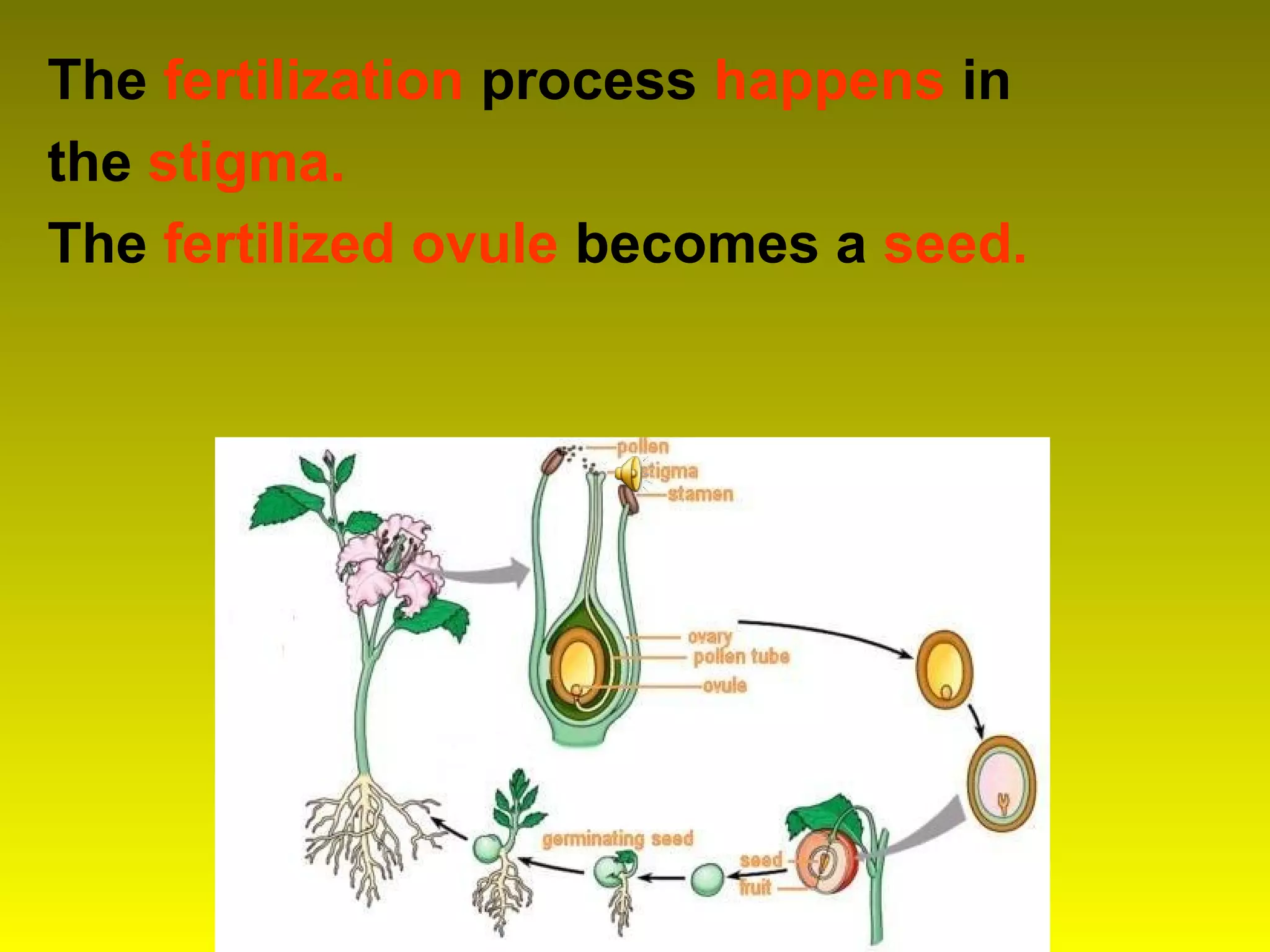
The fertilized ovule becomes a seed.
The fertilization process happens in
the stigma.
The fertilized ovule becomes a seed.
The stigma develops and forms a
fruit around the seed.
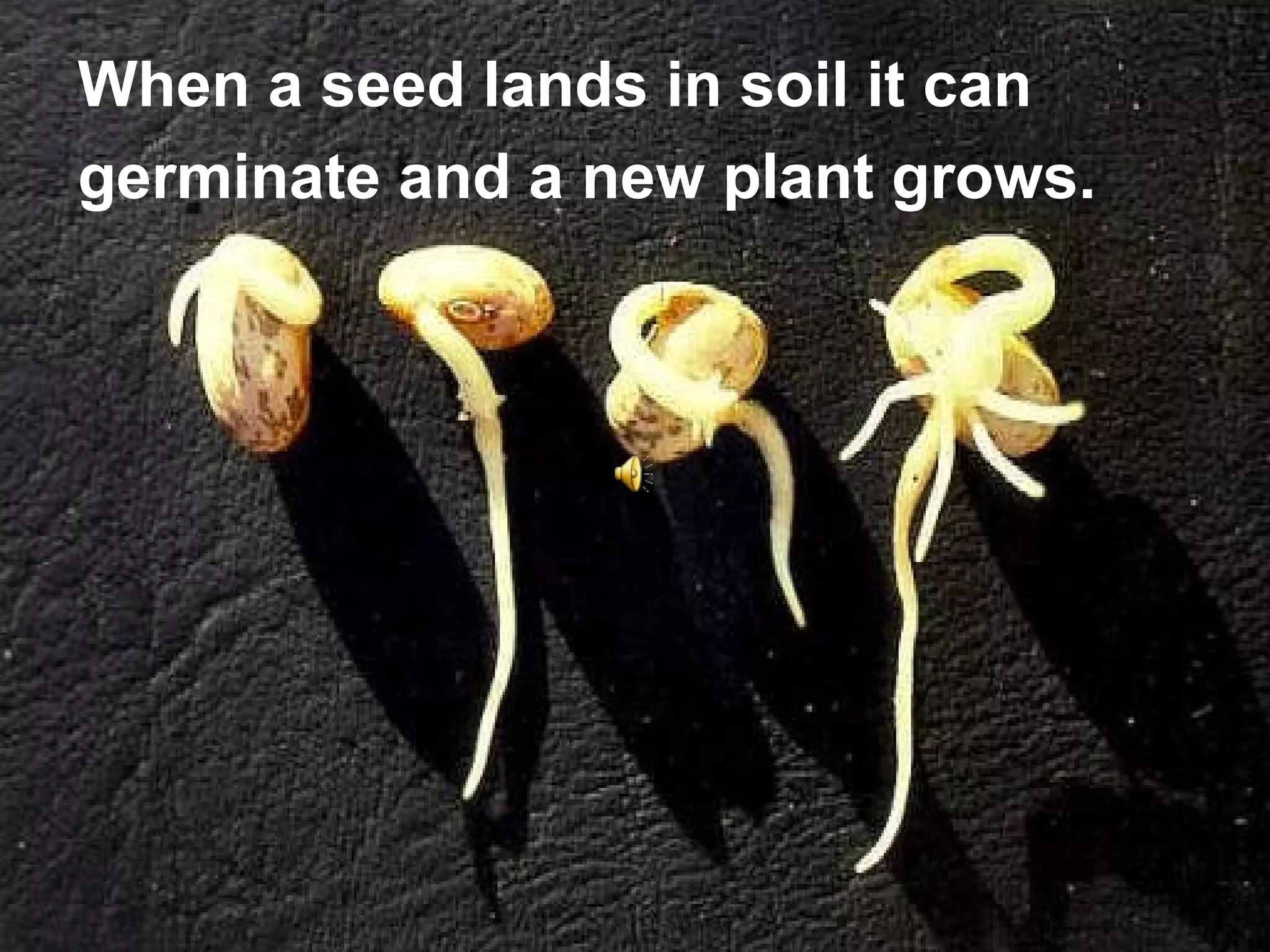
When a seed lands in soil it can
germinate and a new plant grows.
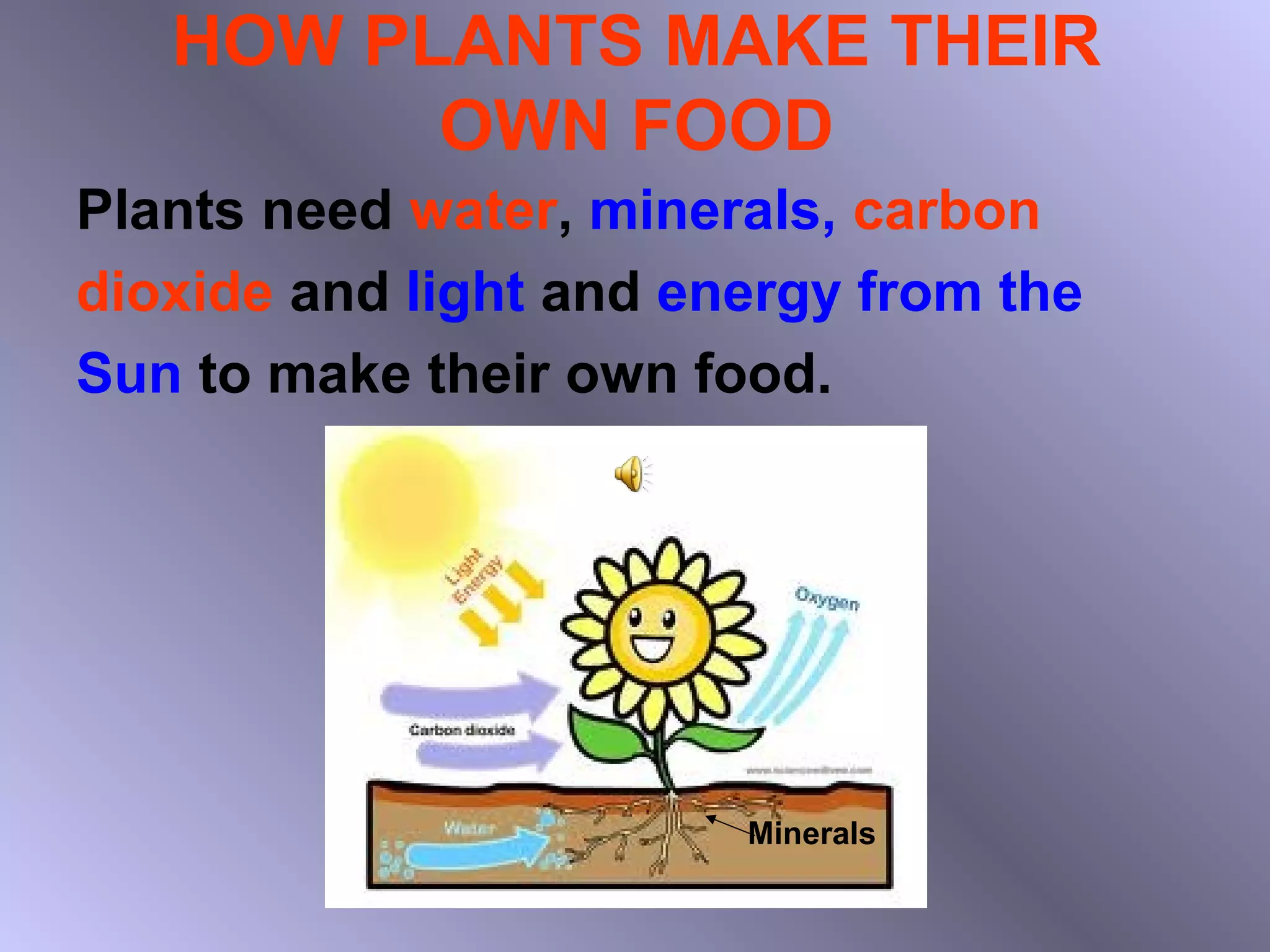
HOW PLANTS MAKE THEIR
         OWN FOOD
Plants need water, minerals, carbon
dioxide and light and energy from the
Sun to make their own food.


                        Minerals
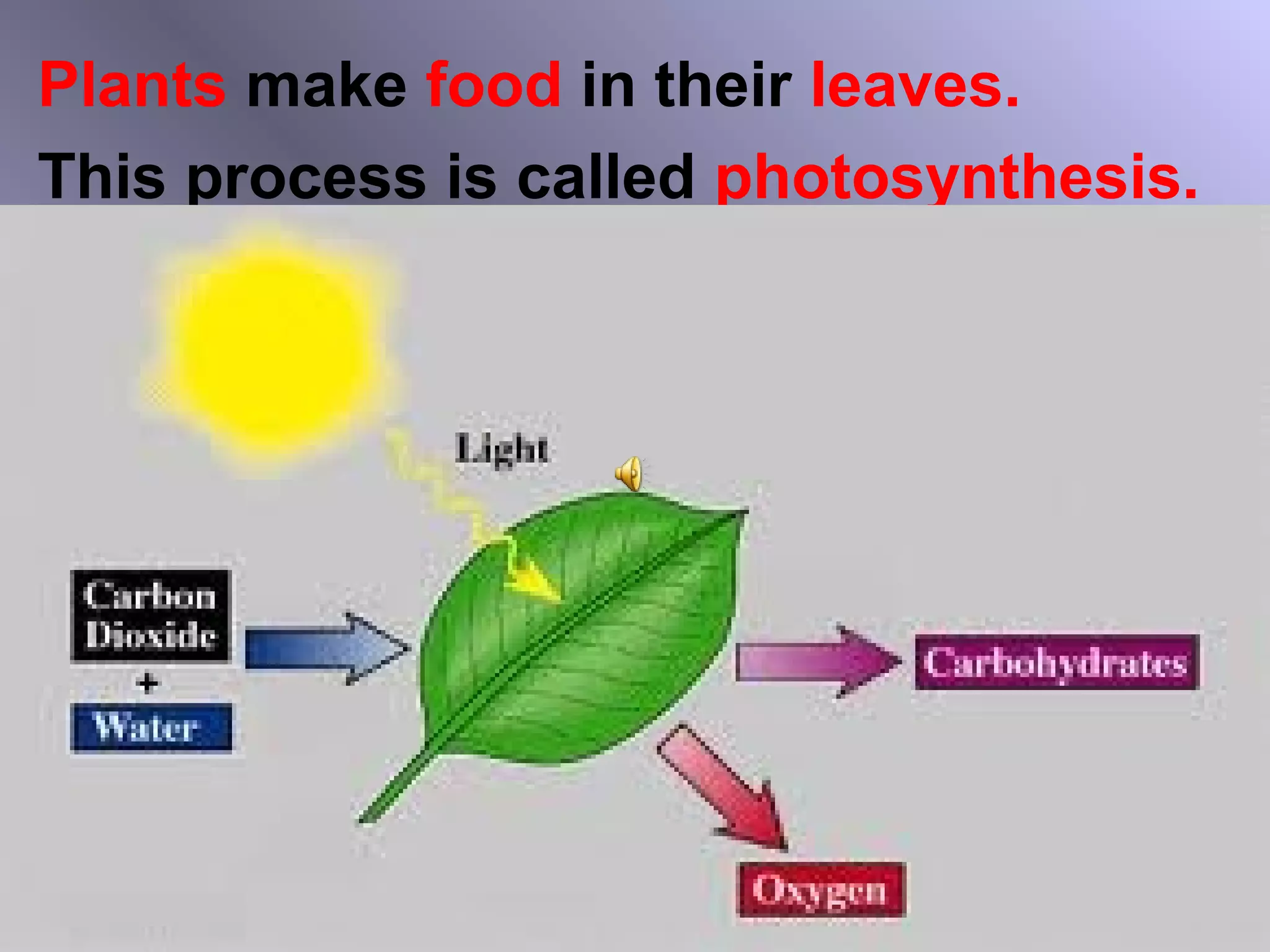
Plants make food in their leaves.
This process is called photosynthesis.
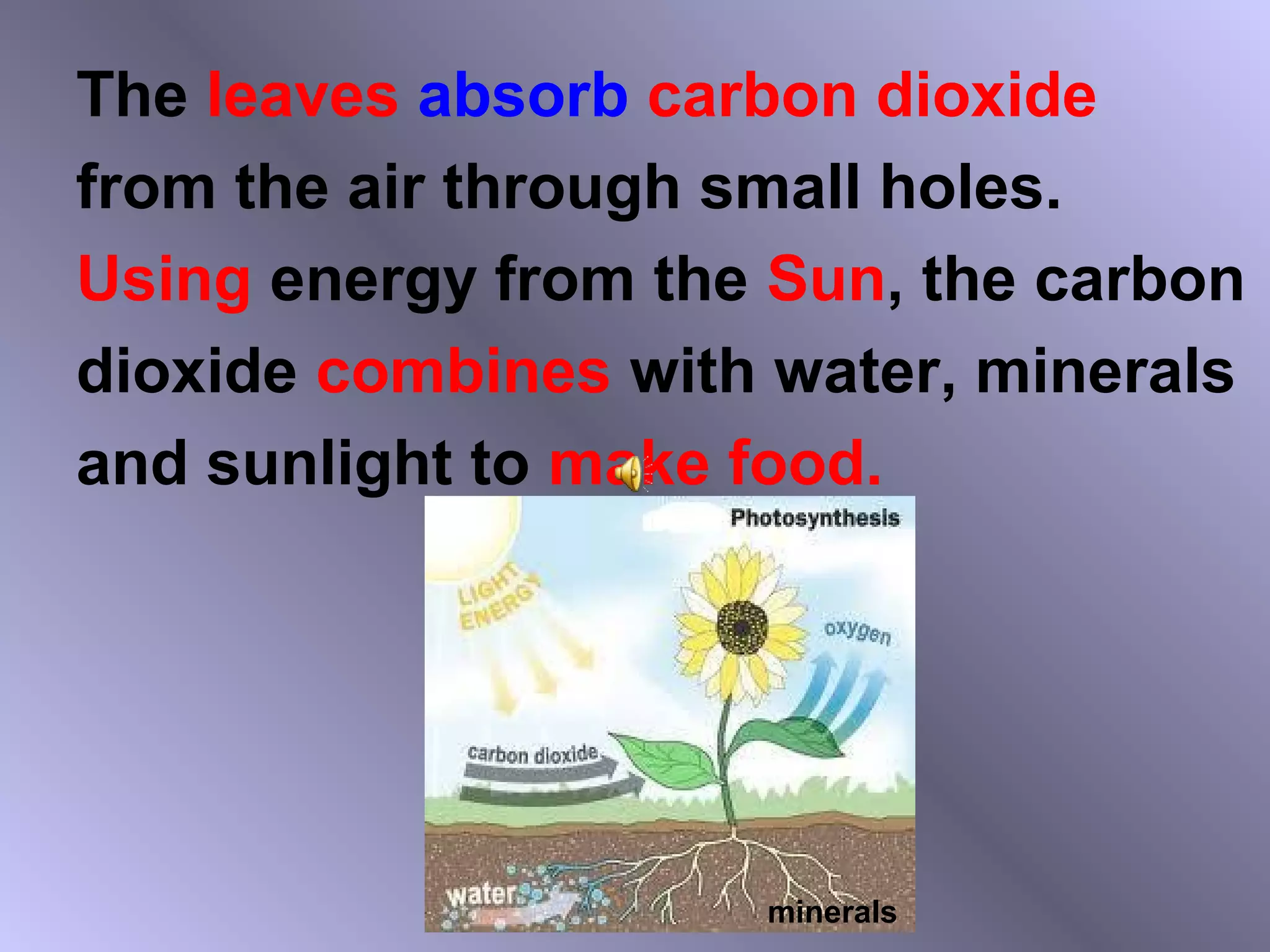
The leaves absorb carbon dioxide
from the air through small holes.
Using energy from the Sun, the carbon
dioxide combines with water, minerals
and sunlight to make food.


                     minerals
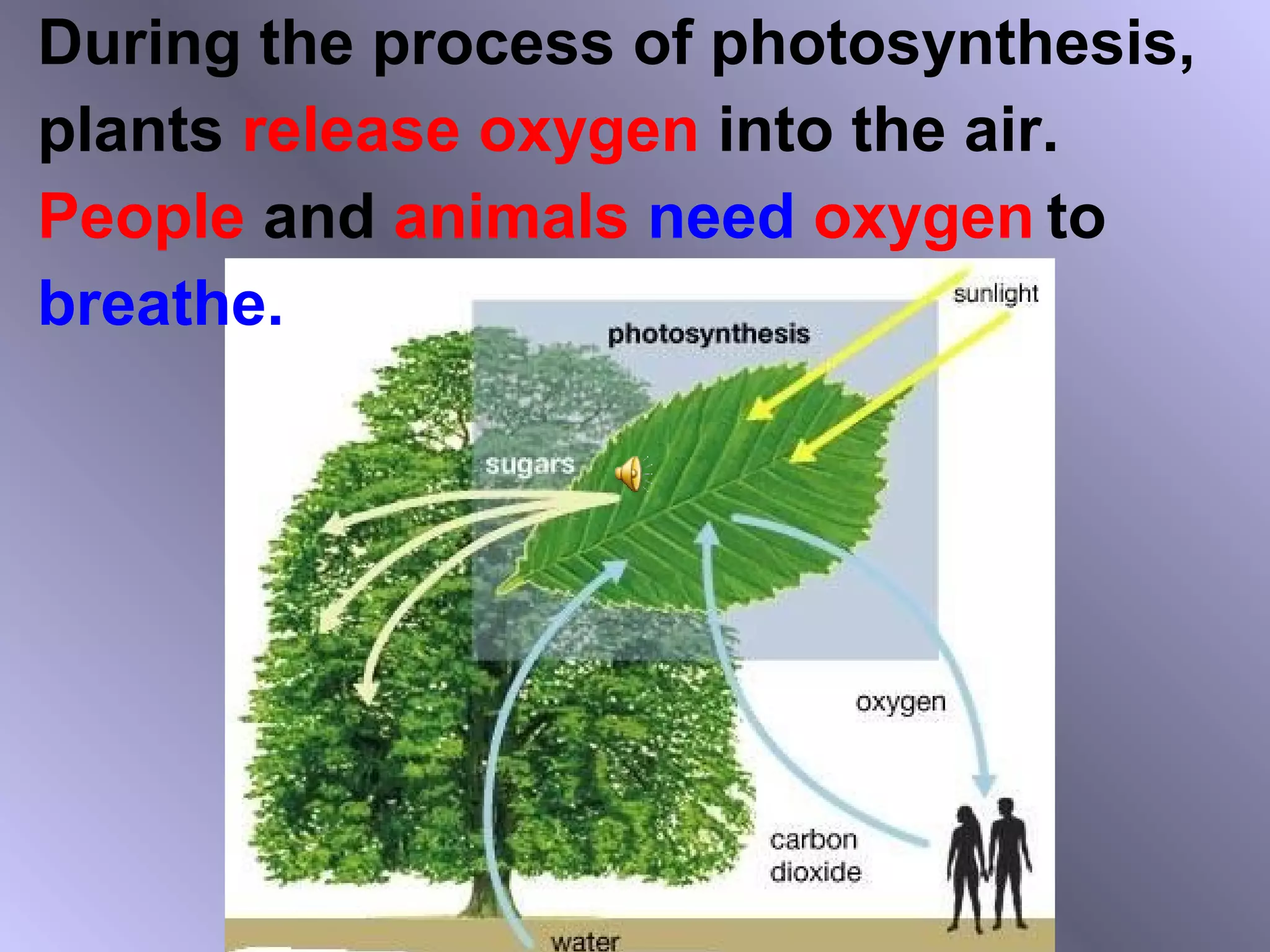
During the process of photosynthesis,
plants release oxygen into the air.
People and animals need oxygen to
breathe.
THE END

Pp4 4º1 w