Functions of Communication
Oral
1. Control
– also known as Regulation.
 This function of communication aims to
guide or control an individual’s behavior.
Examples:
1. The doctor tells you, “Take your
medicine 3 times a day.”
2. Your parents order you to wash the
dishes.
3. Your teacher said, “Please tone
down your voice.”
2. Social Interaction
this function of communication
allows individuals to interact and
socialize with others. It produces
social relationships and develops
intimacy, connections, and bond.
Examples:
1. Someone says, “It’s nice to meet
you/ How do you do?”
2. A friend tells you, “Let’s have some
coffee later after class.”
3. When a person confesses his/her
feelings for another, “ I feel safe and
3. Motivation
– this function of
communication encourages
people to live better and
have a more positive outlook.
Examples:
1. The valedictorian exclaimed, “We
have to be the change our society
needs.”
2. The teacher said that you are doing
great and to keep it up.
3. When your city mayor encouraged
everyone to be the best citizen they can
be
4. Emotional Expression
– this function of
communication facilitates
people’s expression of their
feelings and emotions.
Examples:
1.When your mother tells your
father, “I love you.”
2. “I appreciate that you are my
friend.”
3. “I’ve been feeling down lately.”
5. Information Dissemination
– this function of
communication aims to
acquire and/or convey
information.
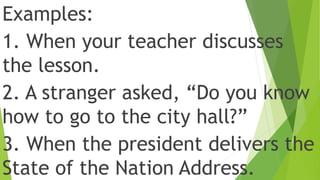
Examples:
1. When your teacher discusses
the lesson.
2. A stranger asked, “Do you know
how to go to the city hall?”
3. When the president delivers the
State of the Nation Address.
Examples:
1. When your teacher discusses
the lesson.
2. A stranger asked, “Do you know
how to go to the city hall?”
3. When the president delivers the
State of the Nation Address.
Examples:
1. When your teacher discusses
the lesson.
2. A stranger asked, “Do you know
how to go to the city hall?”
3. When the president delivers the
State of the Nation Address.
Examples:
1. When your teacher discusses
the lesson.
2. A stranger asked, “Do you know
how to go to the city hall?”
3. When the president delivers the
State of the Nation Address.
Examples:
1. When your teacher discusses
the lesson.
2. A stranger asked, “Do you know
how to go to the city hall?”
3. When the president delivers the
State of the Nation Address.
Examples:
1. When your teacher discusses
the lesson.
2. A stranger asked, “Do you know
how to go to the city hall?”
3. When the president delivers the
State of the Nation Address.
Examples:
1. When your teacher discusses
the lesson.
2. A stranger asked, “Do you know
how to go to the city hall?”
3. When the president delivers the
State of the Nation Address.
Examples:
1. When your teacher discusses
the lesson.
2. A stranger asked, “Do you know
how to go to the city hall?”
3. When the president delivers the
State of the Nation Address.
Examples:
1. When your teacher discusses
the lesson.
2. A stranger asked, “Do you know
how to go to the city hall?”
3. When the president delivers the
State of the Nation Address.
Examples:
1. When your teacher discusses
the lesson.
2. A stranger asked, “Do you know
how to go to the city hall?”
3. When the president delivers the
State of the Nation Address.
Examples:
1. When your teacher discusses
the lesson.
2. A stranger asked, “Do you know
how to go to the city hall?”
3. When the president delivers the
State of the Nation Address.
Examples:
1. When your teacher discusses
the lesson.
2. A stranger asked, “Do you know
how to go to the city hall?”
3. When the president delivers the
State of the Nation Address.
Examples:
1. When your teacher discusses
the lesson.
2. A stranger asked, “Do you know
how to go to the city hall?”
3. When the president delivers the
State of the Nation Address.
Examples:
1. When your teacher discusses
the lesson.
2. A stranger asked, “Do you know
how to go to the city hall?”
3. When the president delivers the
State of the Nation Address.
Examples:
1. When your teacher discusses
the lesson.
2. A stranger asked, “Do you know
how to go to the city hall?”
3. When the president delivers the
State of the Nation Address.

PowerPoint presentation on function on oral communication

  • 1.
    Functions of Communication Oral 1.Control – also known as Regulation.  This function of communication aims to guide or control an individual’s behavior.
  • 2.
    Examples: 1. The doctortells you, “Take your medicine 3 times a day.” 2. Your parents order you to wash the dishes. 3. Your teacher said, “Please tone down your voice.”
  • 3.
    2. Social Interaction thisfunction of communication allows individuals to interact and socialize with others. It produces social relationships and develops intimacy, connections, and bond.
  • 4.
    Examples: 1. Someone says,“It’s nice to meet you/ How do you do?” 2. A friend tells you, “Let’s have some coffee later after class.” 3. When a person confesses his/her feelings for another, “ I feel safe and
  • 5.
    3. Motivation – thisfunction of communication encourages people to live better and have a more positive outlook.
  • 6.
    Examples: 1. The valedictorianexclaimed, “We have to be the change our society needs.” 2. The teacher said that you are doing great and to keep it up. 3. When your city mayor encouraged everyone to be the best citizen they can be
  • 7.
    4. Emotional Expression –this function of communication facilitates people’s expression of their feelings and emotions.
  • 8.
    Examples: 1.When your mothertells your father, “I love you.” 2. “I appreciate that you are my friend.” 3. “I’ve been feeling down lately.”
  • 9.
    5. Information Dissemination –this function of communication aims to acquire and/or convey information.
  • 10.
    Examples: 1. When yourteacher discusses the lesson. 2. A stranger asked, “Do you know how to go to the city hall?” 3. When the president delivers the State of the Nation Address.
  • 11.
    Examples: 1. When yourteacher discusses the lesson. 2. A stranger asked, “Do you know how to go to the city hall?” 3. When the president delivers the State of the Nation Address.
  • 12.
    Examples: 1. When yourteacher discusses the lesson. 2. A stranger asked, “Do you know how to go to the city hall?” 3. When the president delivers the State of the Nation Address.
  • 13.
    Examples: 1. When yourteacher discusses the lesson. 2. A stranger asked, “Do you know how to go to the city hall?” 3. When the president delivers the State of the Nation Address.
  • 14.
    Examples: 1. When yourteacher discusses the lesson. 2. A stranger asked, “Do you know how to go to the city hall?” 3. When the president delivers the State of the Nation Address.
  • 15.
    Examples: 1. When yourteacher discusses the lesson. 2. A stranger asked, “Do you know how to go to the city hall?” 3. When the president delivers the State of the Nation Address.
  • 16.
    Examples: 1. When yourteacher discusses the lesson. 2. A stranger asked, “Do you know how to go to the city hall?” 3. When the president delivers the State of the Nation Address.
  • 17.
    Examples: 1. When yourteacher discusses the lesson. 2. A stranger asked, “Do you know how to go to the city hall?” 3. When the president delivers the State of the Nation Address.
  • 18.
    Examples: 1. When yourteacher discusses the lesson. 2. A stranger asked, “Do you know how to go to the city hall?” 3. When the president delivers the State of the Nation Address.
  • 19.
    Examples: 1. When yourteacher discusses the lesson. 2. A stranger asked, “Do you know how to go to the city hall?” 3. When the president delivers the State of the Nation Address.
  • 20.
    Examples: 1. When yourteacher discusses the lesson. 2. A stranger asked, “Do you know how to go to the city hall?” 3. When the president delivers the State of the Nation Address.
  • 21.
    Examples: 1. When yourteacher discusses the lesson. 2. A stranger asked, “Do you know how to go to the city hall?” 3. When the president delivers the State of the Nation Address.
  • 22.
    Examples: 1. When yourteacher discusses the lesson. 2. A stranger asked, “Do you know how to go to the city hall?” 3. When the president delivers the State of the Nation Address.
  • 23.
    Examples: 1. When yourteacher discusses the lesson. 2. A stranger asked, “Do you know how to go to the city hall?” 3. When the president delivers the State of the Nation Address.
  • 24.
    Examples: 1. When yourteacher discusses the lesson. 2. A stranger asked, “Do you know how to go to the city hall?” 3. When the president delivers the State of the Nation Address.