Educational
Technology 2
Rhythmic Fundamentals
• In the field of dance, there are certain
fundamental knowledge and rhythmic skills
considered important for proficiency and
efficiency in bodily movements. These
facilitate the learning of dances,
improvisation of movements and
interpretation of creative works. One of
these are the elements of rhythm.
ELEMENTS
of
RHYTHM
Underlying Beat or Pulse Beat
• The underlying beat is the steady continuous
sound that is heard or felt throughout any
rhythmical sequence. This constant steady
pulsation is sometimes called pulse beat. It exists in
all movements. It is this steady sound which serves
as the constant unit of measure upon which all
rhythmic structure or relationship depends.
• The underlying beat determines the time
signature of a piece of music or movements.
Representation of constant sounds
divided or grouped together :
Measure
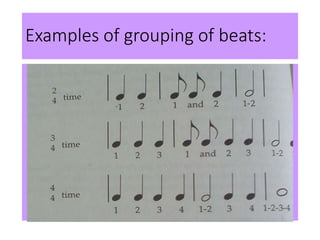
• Measure refers to the
identical grouping of
underlying beat. This
group of notes is between
two bar lines.
Examples of grouping of beats:
Rhythmic Pattern
• A rhythmic pattern is a definite grouping of
sounds or beats related to the underlying
beat. A particular pattern of unequal sounds
or beats must fit with a unit of underlying
beats. Sometimes the rhythmic pattern is also
called melody pattern because the rhythmic
pattern follows the words of melody. There is
a relationship between the word pattern,
rhythmic pattern, and underlying beat.
Example:
Phrasing
• A musical phrase is a group of
measures that gives the feeling of unity.
It can be likened to a sentence or an
idea in itself. Learning to identify or
recognize phrases is essential to
learning and creating dances. The end
of a phrase may suggest a change in
direction or movement.
Examples:
Accent
• Accent is the form or
emphasis given to
anyone beat in a series
of pulse beats in a
measure.
Examples:
Tempo
• Tempo is the
speed at which a
musical piece is
played or sung.
Intensity
• Intensity is the quality
of the movement or
music, it means
dynamics or force such
as heavy or light.
• Those elements affects the
movement of rhythm which could
be learned and understood in
relation to dance.
•Thank you for watching!

Powerpoint presentation.

  • 1.
  • 2.
    Rhythmic Fundamentals • Inthe field of dance, there are certain fundamental knowledge and rhythmic skills considered important for proficiency and efficiency in bodily movements. These facilitate the learning of dances, improvisation of movements and interpretation of creative works. One of these are the elements of rhythm.
  • 3.
  • 4.
    Underlying Beat orPulse Beat • The underlying beat is the steady continuous sound that is heard or felt throughout any rhythmical sequence. This constant steady pulsation is sometimes called pulse beat. It exists in all movements. It is this steady sound which serves as the constant unit of measure upon which all rhythmic structure or relationship depends. • The underlying beat determines the time signature of a piece of music or movements.
  • 5.
    Representation of constantsounds divided or grouped together :
  • 6.
    Measure • Measure refersto the identical grouping of underlying beat. This group of notes is between two bar lines.
  • 7.
  • 8.
    Rhythmic Pattern • Arhythmic pattern is a definite grouping of sounds or beats related to the underlying beat. A particular pattern of unequal sounds or beats must fit with a unit of underlying beats. Sometimes the rhythmic pattern is also called melody pattern because the rhythmic pattern follows the words of melody. There is a relationship between the word pattern, rhythmic pattern, and underlying beat.
  • 9.
  • 10.
    Phrasing • A musicalphrase is a group of measures that gives the feeling of unity. It can be likened to a sentence or an idea in itself. Learning to identify or recognize phrases is essential to learning and creating dances. The end of a phrase may suggest a change in direction or movement.
  • 11.
  • 12.
    Accent • Accent isthe form or emphasis given to anyone beat in a series of pulse beats in a measure.
  • 13.
  • 14.
    Tempo • Tempo isthe speed at which a musical piece is played or sung.
  • 15.
    Intensity • Intensity isthe quality of the movement or music, it means dynamics or force such as heavy or light.
  • 16.
    • Those elementsaffects the movement of rhythm which could be learned and understood in relation to dance.
  • 17.