Power Tools
Workingwith power tools, you can get an
electric shock, lose a finger, lose an eye, or
go deaf. It's especially dangerous to use a
tool that's defective, that's been modified,
or that's not designed for the job. Of
course, you can also get injured if you use
any tool carelessly.
3.
Power Tool Safety
Power tools are very common to any
production facility.They can expose
employees to multiple hazards if they
are not maintained and used
properly.
It is critical that you know how to
maintain, test and operate any power
tool you intend to use.
4.
Hazardous Conditions andUnsafe Acts
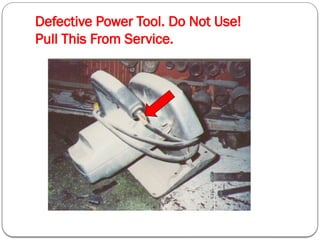
Broken and defective tools
Missing guards, exposed belts and
blades
Bad electrical cords
Misuse of tools
Cracked and split handles
Not using required PPE
5.
Hazard
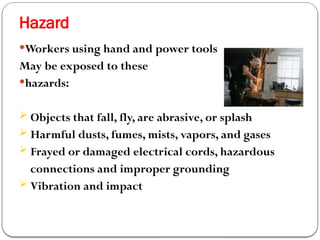
Workers using handand power tools
May be exposed to these
hazards:
Objects that fall, fly, are abrasive, or splash
Harmful dusts, fumes, mists, vapors, and gases
Frayed or damaged electrical cords, hazardous
connections and improper grounding
Vibration and impact
6.
Potential Outcomes
Bruises,sprains and strains
Struck by projectiles
Lacerations and amputations
Entanglement
Eye and face injuries due to flying objects
Shocks and electrocutions
Precautions to beTaken
•Maintain regularly inspection
before use
•Use the right tool for the right
job
• Operate according to
manufacturers’ instructions
• Use the right Personal Protective
Equipment (PPE)
• Use guarding
9.
Precautions
Do notuse defective tools
Use tied-off containers to keep tools from falling
off of molds or work platforms.
Return tools to their storage places after use.
Floors should be kept as clean and dry as possible
to prevent accidental slips with or around
dangerous tools.
Keep tools away from aisle areas and other
employees working in close proximity.
10.
Tips
Do notcarry tools in your hand when climbing,
or by the cord.
Do not throw tools from one location to
another, from one employee to another, from
scaffolds or other elevated platforms.
Do not remove or bypass guards
11.
Things To Do
Watch your hands and fingers.
Keep your mind on your work.
Grip tools firmly.
Operate according to the manufacturer's
instructions.
Never carry a tool by the cord or hose.
Never yank the cord or the hose to disconnect it
from the receptacle.
Disconnect tools when not in use, before
servicing, and when changing accessories such
as blades, bits and cutters.
12.
Things To Do
Ground all tools unless double insulated.
Avoid dangerous environments. Do not use
power tools in a damp, wet and/or explosive
atmosphere -- fumes, dust or flammable
materials.
Secure work with clamps or a vise, freeing both
hands to operate the tool.
Do not hold a finger on the switch button while
carrying a plugged-in tool.
13.
Things To Do
Be sure to keep good footing and maintain good
balance.
The proper apparel should be worn. Loose
clothing, or jewelry can become caught in
moving parts.
Don't use an accessory or attachment unless the
power tool manufacturer recommends its use on
the product
Keep cords and hoses away from heat, oil, and
sharp edges.
Personal Protective Equipment
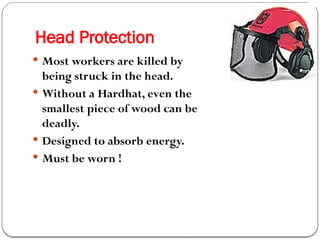
A hard hat protects the head from falling limbs
or branches.
A mesh full-face shield prevents injury from
flying wood chips and twigs.
Protect ears from the high level of noise by using
earplugs.
Chainsaw safety boots and chaps, protect the
feet and legs in the event of accidental contact
18.
Head Protection
Mostworkers are killed by
being struck in the head.
Without a Hardhat, even the
smallest piece of wood can be
deadly.
Designed to absorb energy.
Must be worn !
19.
Operator’s Manual
Keepthe operator’s manual with the Power
tools.
If the manual is missing, contact the
manufacturer for a replacement.
Periodically review the manual for safe
operating procedures.
20.
Preventive Maintenance
KeepPowerTools in good repair.
Consult the operator’s manual and check for
needed maintenance before each use.
The operator’s manual can be the best source of
information for this procedure.
Editor's Notes
#14 Inspect cords for defects: check the power cord for cracking, fraying, and other signs of wear or faults in the cord insulation.
#16 Water and electricity don’t mix. Avoid standing in wet areas when using portable electrical tools. Do not let extension cords drag through water when using them. Have tools inspected by a qualified electrician if the tools have gotten wet before reenergizing them.