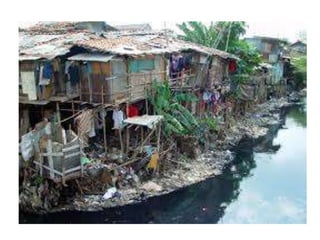
Poverty as a Challenge
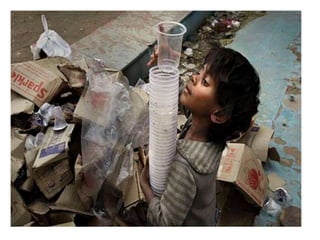
In our daily life, we come across many people who we think
are poor. They could be landless labourers in villages or
people living in overcrowded jhuggis in cities. They could be
daily wage workers at construction sites or child workers in
Chapter Poverty as a Challenge dhabas. They could also be
beggars with children in tatters. We see poverty all around us.
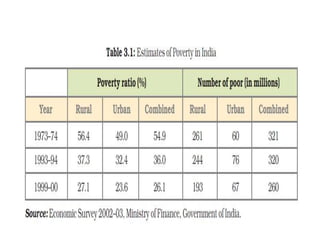
In fact, every fourth person in India is poor. This means,
roughly 260 million (or 26 crore) people in India live in
poverty. This also means that India has the largest single
concentration of the poor in the world. This llustrates the
seriousness of the challenge.
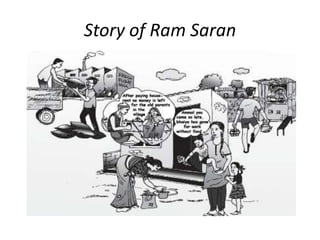
Story of Ram Saran
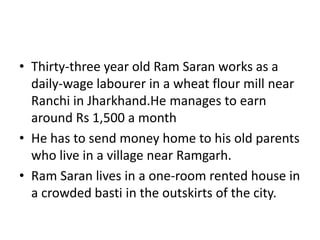
• Thirty-three year old Ram Saran works as a
daily-wage labourer in a wheat flour mill near
Ranchi in Jharkhand.He manages to earn
around Rs 1,500 a month
• He has to send money home to his old parents
who live in a village near Ramgarh.
• Ram Saran lives in a one-room rented house in
a crowded basti in the outskirts of the city.
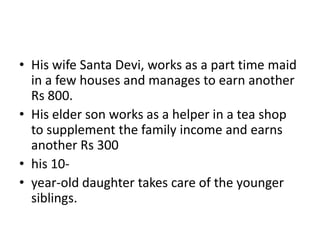
• His wife Santa Devi, works as a part time maid
in a few houses and manages to earn another
Rs 800.
• His elder son works as a helper in a tea shop
to supplement the family income and earns
another Rs 300
• his 10-
• year-old daughter takes care of the younger
siblings.
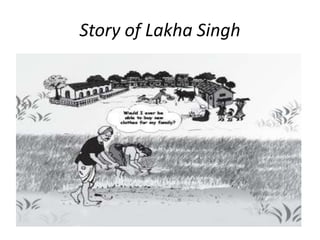
Story of Lakha Singh
• Lakha Singh belongs to a small village near
Meerut in Uttar Pradesh. His family doesn’t own
any land, so they do odd jobs for the big
farmersAt times
• they get paid Rs 50 for a hard day’s work..
• The family of eight cannot always manage two
square meals a day.
• The women of the family spend the day chopping
fodder and collecting firewood in the fields.
• He had to start earning when he was 10 years
old.
• His father a TB patient, passed away two years
ago due to lack of medication. His mother
now suffers from the same disease and life is
slowly ebbing away
Introduction
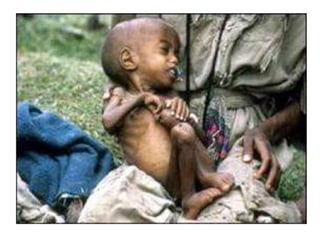
1.They show that poverty means hunger and
lack of shelter.
2.Poverty also means lack of clean water and
sanitation facilities.
3.Poor people are in a situation in which they
are ill-treated at almost every place
4.It also means lack of a regular job at a
minimum decent level.
Poverty as seen by social scientists
poverty is looked through other social indicators
like illiteracy level, lack of general resistance
due to malnutrition, lack of access to
healthcare, lack of job opportunities, lack of
access to safe drinking water, sanitation etc.
Analysis of poverty based on social exclusion
and vulnerability is now becoming very
common
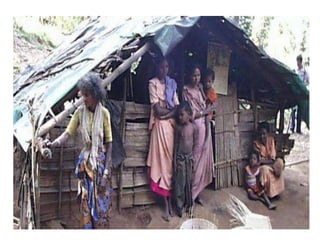
Social exclusion
• According to this concept, poverty must be
seen in terms of the poor having to live only in
a poor surrounding with other poor people,
excluded from enjoying social equality of
better -off people in better surroundings.
Vulnerability
• Vulnerability to poverty is a measure, which
describes the greater probability of certain
communities (say, members of a backward
caste) or individuals (such as a widow or a
physically handicapped person) of becoming,
or remaining, poor in the coming years.
Poverty Line
• A common method used to measure poverty is
based on the income or 32 Economics
consumption levels. A person is considered poor
if his or her income or consumption level falls
below a given “minimum level” necessary to
fulfill basic needs. What is necessary to satisfy
basic needs is different at different times and in
different countries. The present formula for food
requirement while estimating the poverty line is
based on the desired calorie requirement.
The accepted average calorie requirement in
India is 2400 calories per person per day in
rural areas and 2100 calories per person per
day in urban areas. Since people living in rural
areas engage themselves in more physical
work, calorie requirements in rural areas are
considered to be higher than urban areas.
Causes of Poverty
• low level of economic development under the
British colonial administration.
• The failure at both the fronts: promotion of
economic growth and population control
perpetuated the cycle of poverty.
• irregular small incomes
• huge income inequalities.
• Many other socio-cultural and
• economic factors also are responsible for poverty.
Anti-Poverty Measures
• The current anti-poverty strategy of the
government is based broadly on two planks
(1) promotion of economic growth
(2) targeted anti-poverty programmes.
Anti-Poverty Measures by the
Government
• National Rural Employment Guarantee Act (NREGA) 2005
• National Food for Work Programme (NFWP), which was
launched in 2004
• Prime Minister Rozgar Yozana (PMRY) is another scheme
which was started in 1993.
• Rural Employment Generation Programme (REGP) was
launched in 1995.
• Swarnajayanti Gram Swarozgar Yojana (SGSY) was
launched in 1999.
• Pradhan Mantri Gramodaya Yozana (PMGY) launched in
2000
• Antyodaya Anna Yozana (AAY)
The Challenges Ahead
• challenges that still remain: providing health
care, education and job security for all, and
achieving gender equality and dignity for the
poor. These will be even bigger tasks.
• But despite the progress, poverty reduction remains
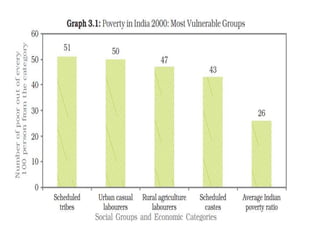
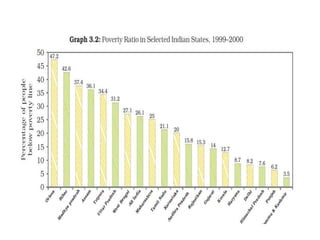
India’s most compelling challenge. Wide disparities in
poverty are visible between rural and urban areas and
among different states. Certain social and economic
groups are more vulnerable to poverty. Poverty
reduction is expected to make better progress in the
next ten to fifteen years. This would be possible mainly
due to higher economic growth, increasing stress on
universal free elementary education, declining
population growth, increasing empowerment of the
women and the economically weaker sections of
society.
THANK YOU

povertyasachallenge-131019095025-phpapp02.pdf

  • 1.
    Poverty as aChallenge
  • 3.
    Poverty as aChallenge In our daily life, we come across many people who we think are poor. They could be landless labourers in villages or people living in overcrowded jhuggis in cities. They could be daily wage workers at construction sites or child workers in Chapter Poverty as a Challenge dhabas. They could also be beggars with children in tatters. We see poverty all around us. In fact, every fourth person in India is poor. This means, roughly 260 million (or 26 crore) people in India live in poverty. This also means that India has the largest single concentration of the poor in the world. This llustrates the seriousness of the challenge.
  • 5.
  • 6.
    • Thirty-three yearold Ram Saran works as a daily-wage labourer in a wheat flour mill near Ranchi in Jharkhand.He manages to earn around Rs 1,500 a month • He has to send money home to his old parents who live in a village near Ramgarh. • Ram Saran lives in a one-room rented house in a crowded basti in the outskirts of the city.
  • 7.
    • His wifeSanta Devi, works as a part time maid in a few houses and manages to earn another Rs 800. • His elder son works as a helper in a tea shop to supplement the family income and earns another Rs 300 • his 10- • year-old daughter takes care of the younger siblings.
  • 8.
  • 9.
    • Lakha Singhbelongs to a small village near Meerut in Uttar Pradesh. His family doesn’t own any land, so they do odd jobs for the big farmersAt times • they get paid Rs 50 for a hard day’s work.. • The family of eight cannot always manage two square meals a day. • The women of the family spend the day chopping fodder and collecting firewood in the fields.
  • 10.
    • He hadto start earning when he was 10 years old. • His father a TB patient, passed away two years ago due to lack of medication. His mother now suffers from the same disease and life is slowly ebbing away
  • 11.
    Introduction 1.They show thatpoverty means hunger and lack of shelter. 2.Poverty also means lack of clean water and sanitation facilities. 3.Poor people are in a situation in which they are ill-treated at almost every place 4.It also means lack of a regular job at a minimum decent level.
  • 13.
    Poverty as seenby social scientists poverty is looked through other social indicators like illiteracy level, lack of general resistance due to malnutrition, lack of access to healthcare, lack of job opportunities, lack of access to safe drinking water, sanitation etc. Analysis of poverty based on social exclusion and vulnerability is now becoming very common
  • 14.
    Social exclusion • Accordingto this concept, poverty must be seen in terms of the poor having to live only in a poor surrounding with other poor people, excluded from enjoying social equality of better -off people in better surroundings.
  • 16.
    Vulnerability • Vulnerability topoverty is a measure, which describes the greater probability of certain communities (say, members of a backward caste) or individuals (such as a widow or a physically handicapped person) of becoming, or remaining, poor in the coming years.
  • 18.
    Poverty Line • Acommon method used to measure poverty is based on the income or 32 Economics consumption levels. A person is considered poor if his or her income or consumption level falls below a given “minimum level” necessary to fulfill basic needs. What is necessary to satisfy basic needs is different at different times and in different countries. The present formula for food requirement while estimating the poverty line is based on the desired calorie requirement.
  • 19.
    The accepted averagecalorie requirement in India is 2400 calories per person per day in rural areas and 2100 calories per person per day in urban areas. Since people living in rural areas engage themselves in more physical work, calorie requirements in rural areas are considered to be higher than urban areas.
  • 24.
    Causes of Poverty •low level of economic development under the British colonial administration. • The failure at both the fronts: promotion of economic growth and population control perpetuated the cycle of poverty. • irregular small incomes • huge income inequalities. • Many other socio-cultural and • economic factors also are responsible for poverty.
  • 25.
    Anti-Poverty Measures • Thecurrent anti-poverty strategy of the government is based broadly on two planks (1) promotion of economic growth (2) targeted anti-poverty programmes.
  • 26.
    Anti-Poverty Measures bythe Government • National Rural Employment Guarantee Act (NREGA) 2005 • National Food for Work Programme (NFWP), which was launched in 2004 • Prime Minister Rozgar Yozana (PMRY) is another scheme which was started in 1993. • Rural Employment Generation Programme (REGP) was launched in 1995. • Swarnajayanti Gram Swarozgar Yojana (SGSY) was launched in 1999. • Pradhan Mantri Gramodaya Yozana (PMGY) launched in 2000 • Antyodaya Anna Yozana (AAY)
  • 27.
    The Challenges Ahead •challenges that still remain: providing health care, education and job security for all, and achieving gender equality and dignity for the poor. These will be even bigger tasks.
  • 28.
    • But despitethe progress, poverty reduction remains India’s most compelling challenge. Wide disparities in poverty are visible between rural and urban areas and among different states. Certain social and economic groups are more vulnerable to poverty. Poverty reduction is expected to make better progress in the next ten to fifteen years. This would be possible mainly due to higher economic growth, increasing stress on universal free elementary education, declining population growth, increasing empowerment of the women and the economically weaker sections of society.
  • 30.