


Postman for Enterprise
Build API-First Products and Businesses
PRESENTED BY
Kin Lane
Chief Evangelist, Postman
“Every piece of software
built today either uses an
API or is an API”
Abhinav Asthana
Co-Founder & CEO of Postman
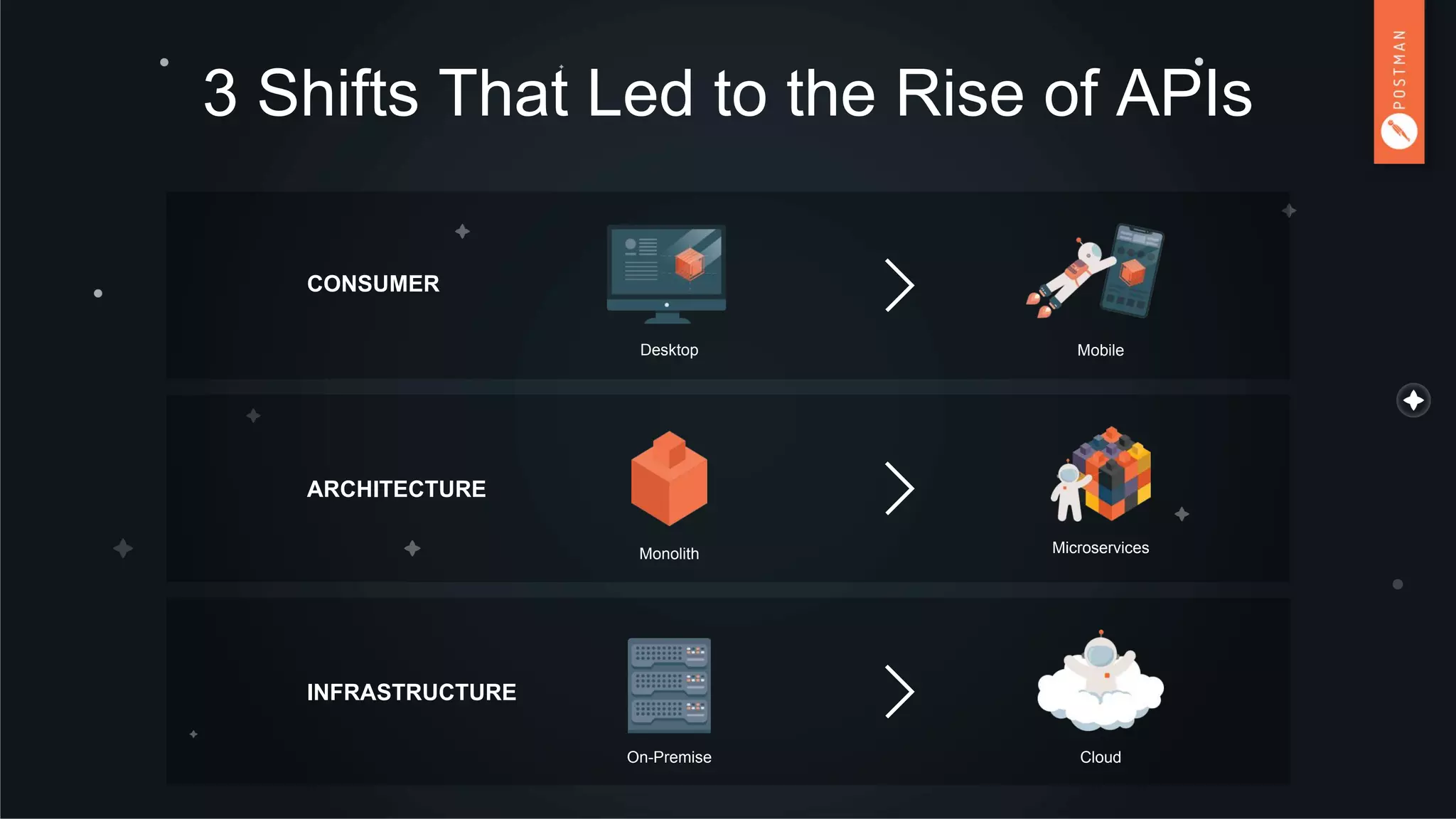
3 Shifts That Led to the Rise of APIs
MobileDesktop
CONSUMER
INFRASTRUCTURE
On-Premise Cloud
Monolith Microservices
ARCHITECTURE
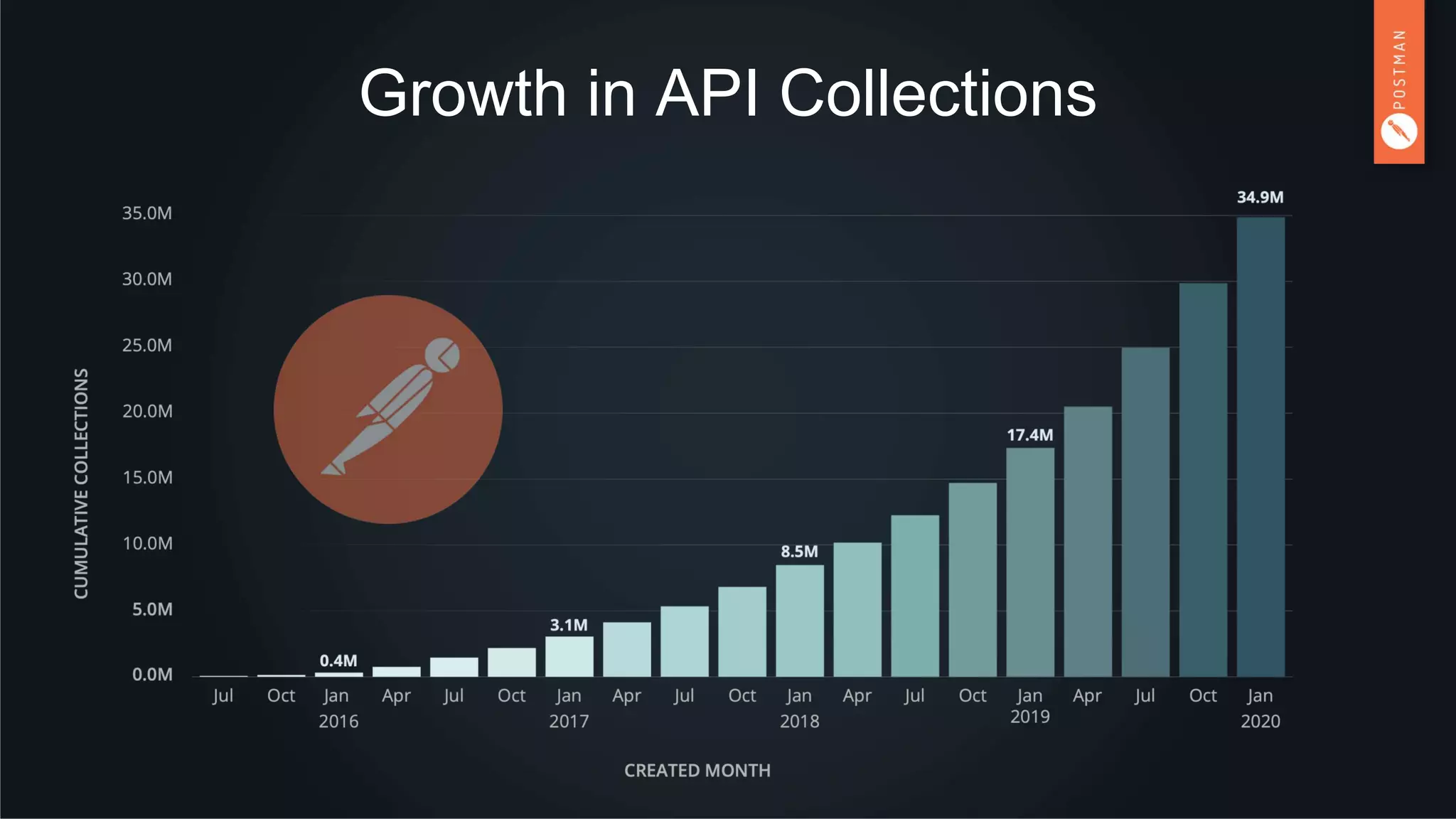
Growth in API Collections
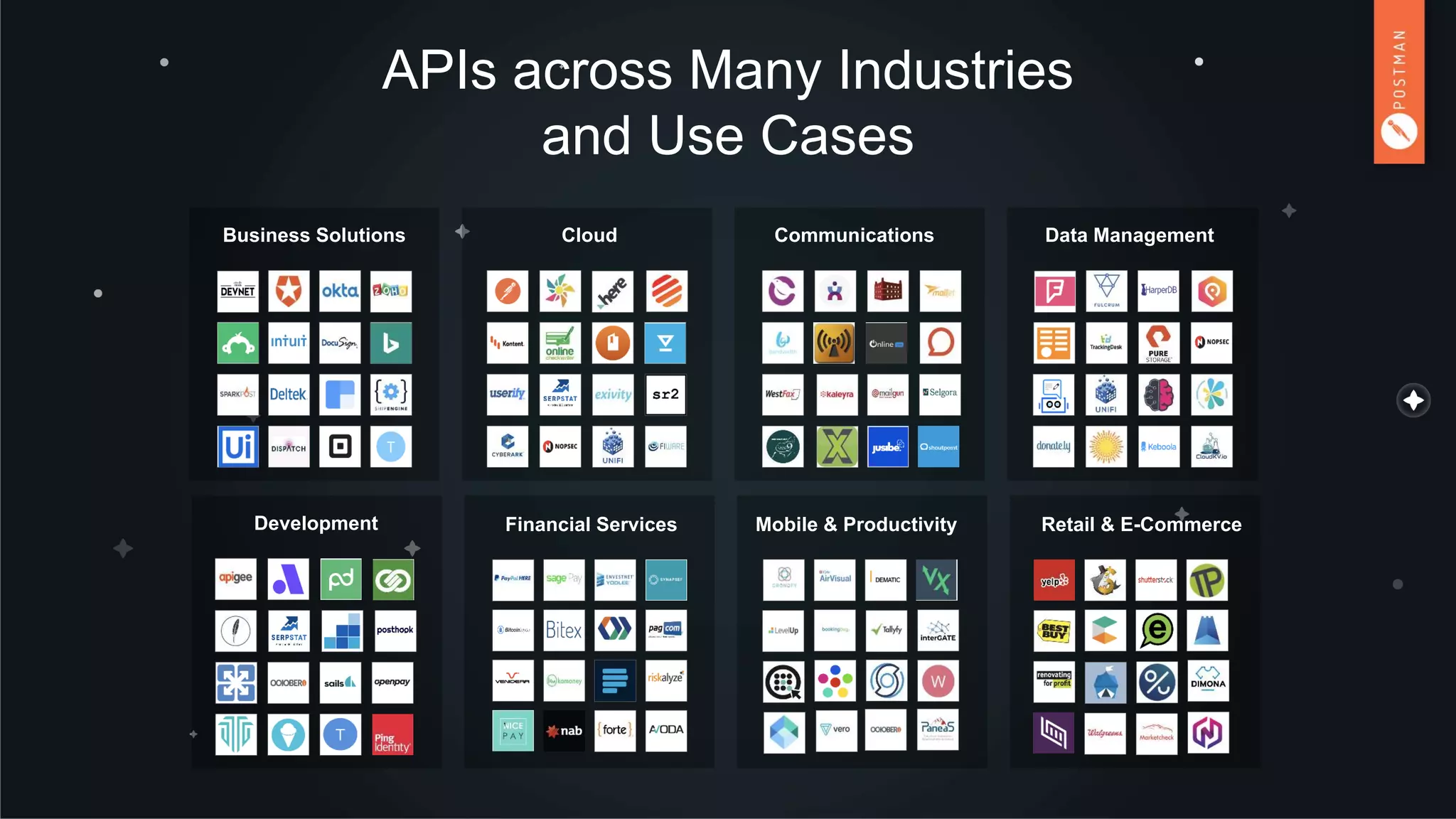
APIs across Many Industries
and Use Cases
Business Solutions Cloud Communications Data Management
Financial Services Mobile & Productivity Retail & E-CommerceDevelopment
Emergence of
API-First Businesses
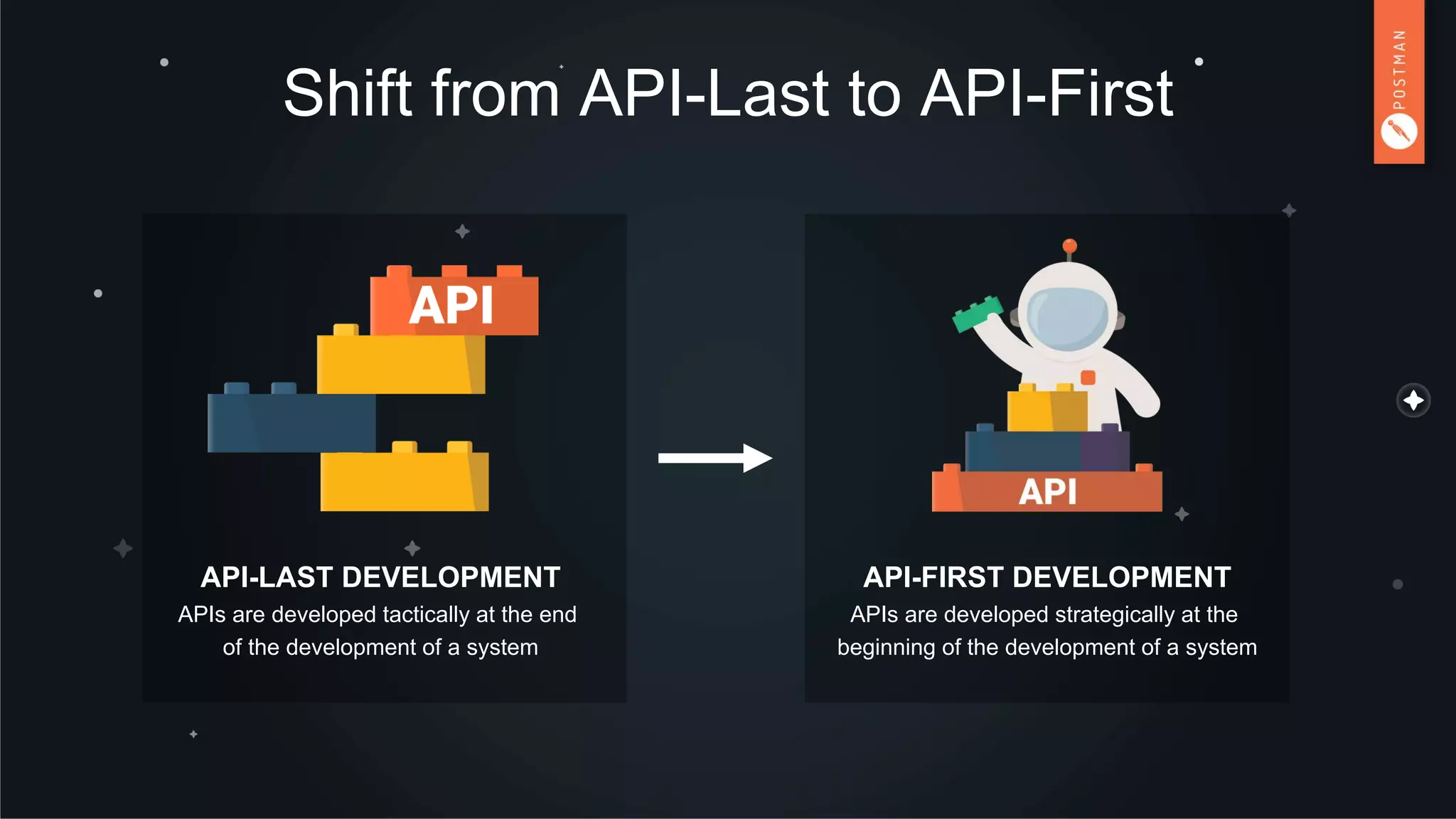
Shift from API-Last to API-First
API-FIRST DEVELOPMENT
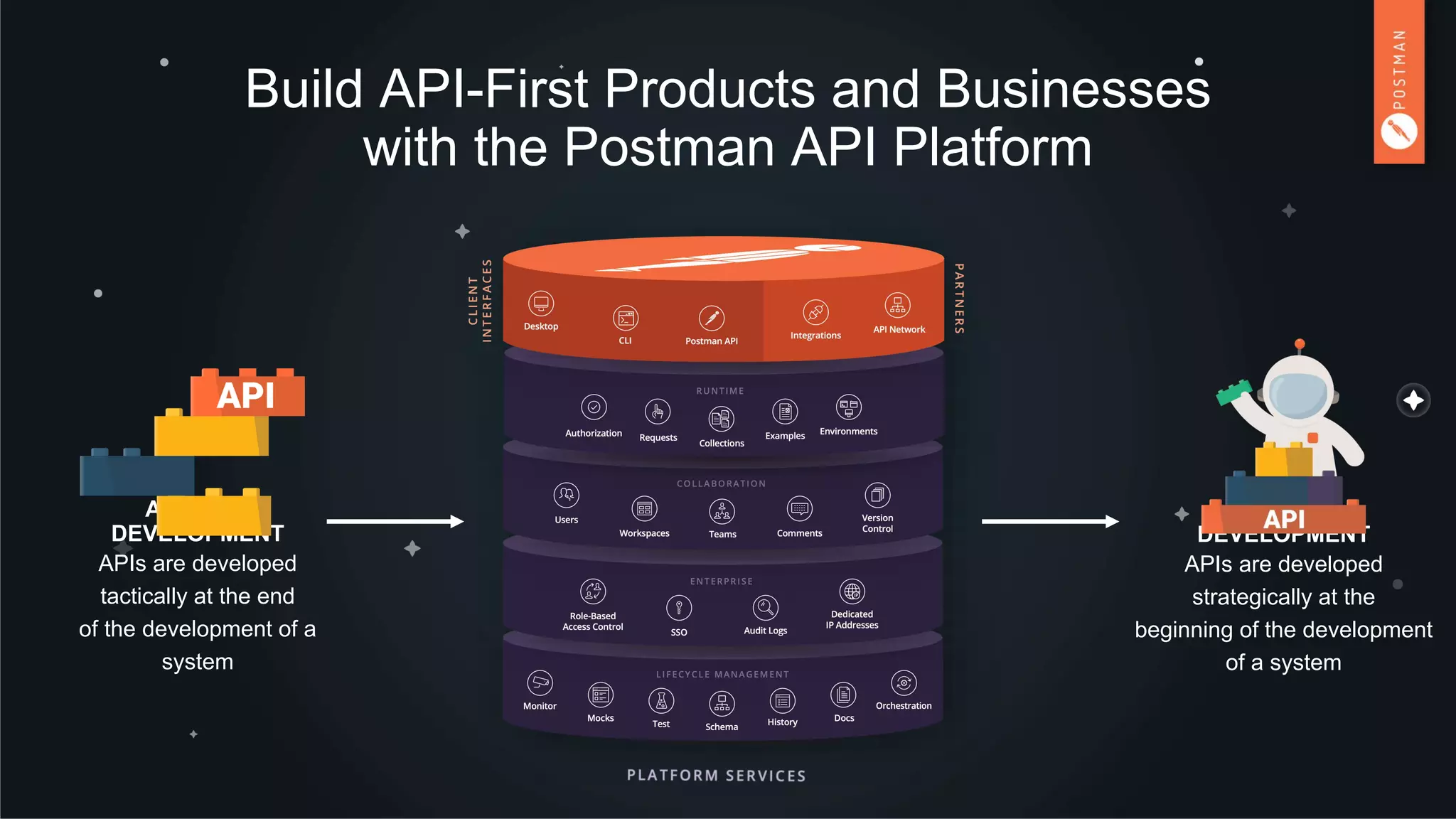
APIs are developed strategically at the
beginning of the development of a system
API-LAST DEVELOPMENT
APIs are developed tactically at the end
of the development of a system
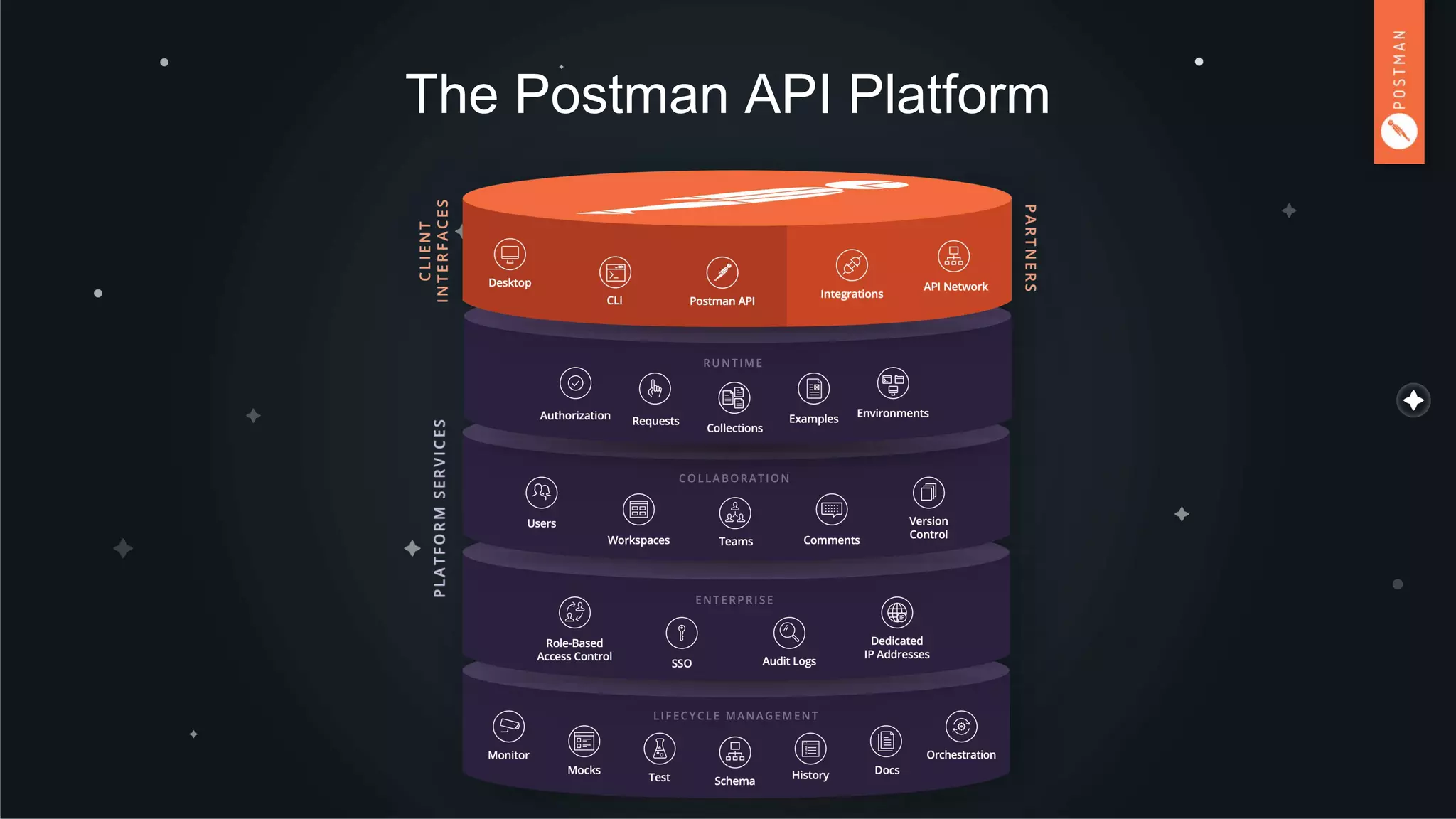
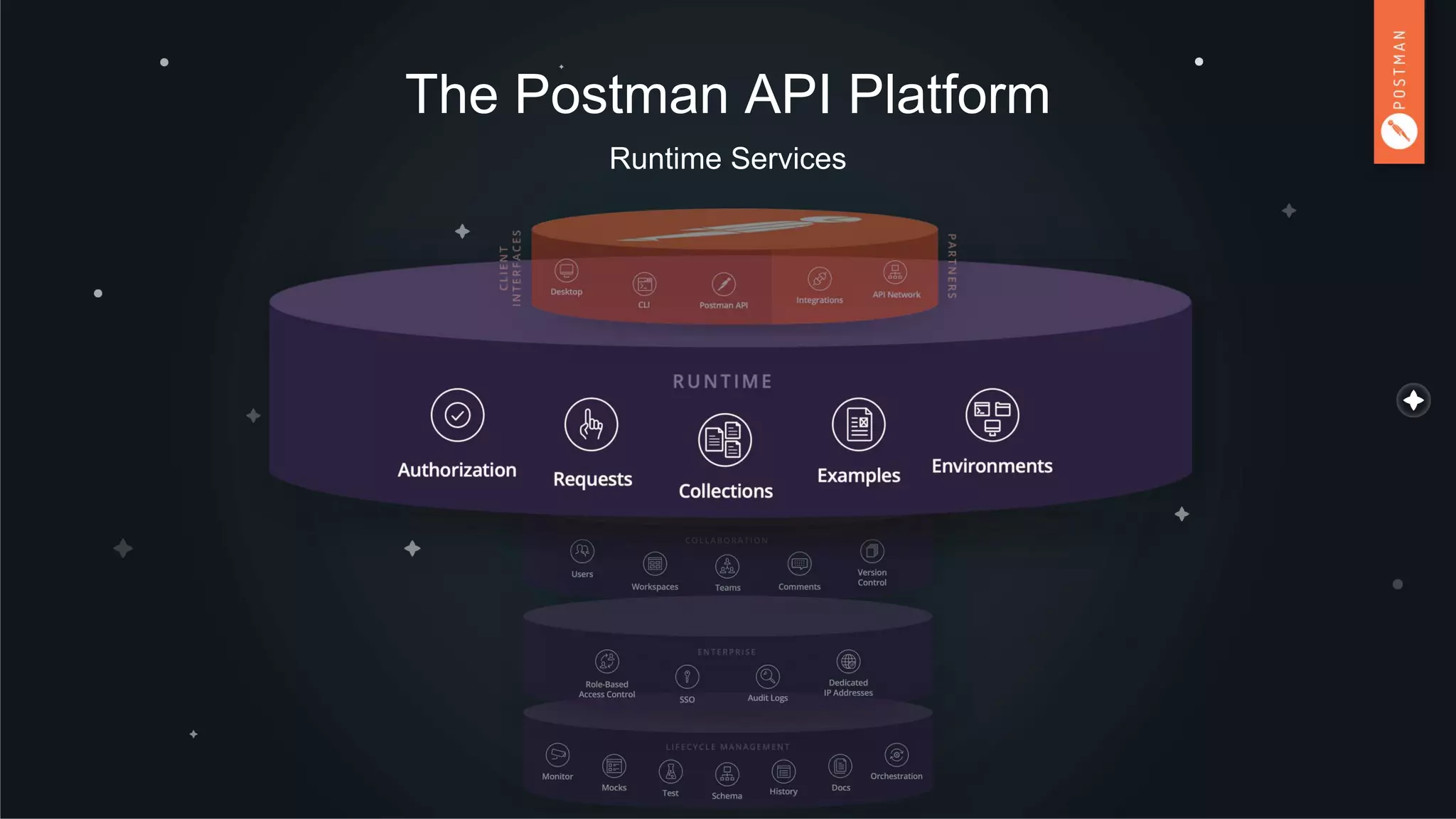
The Postman API Platform
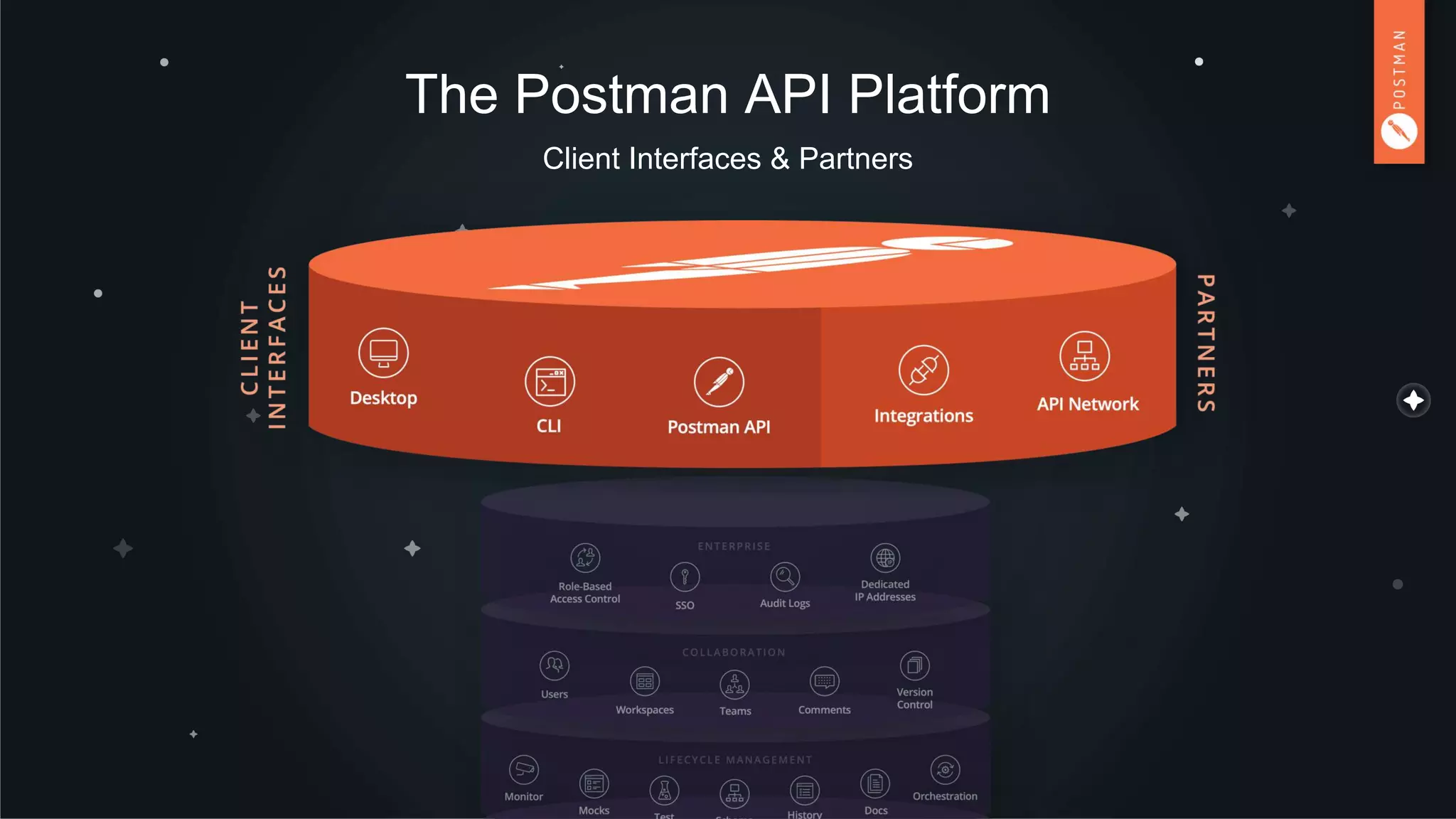
Client Interfaces & Partners
Runtime Services
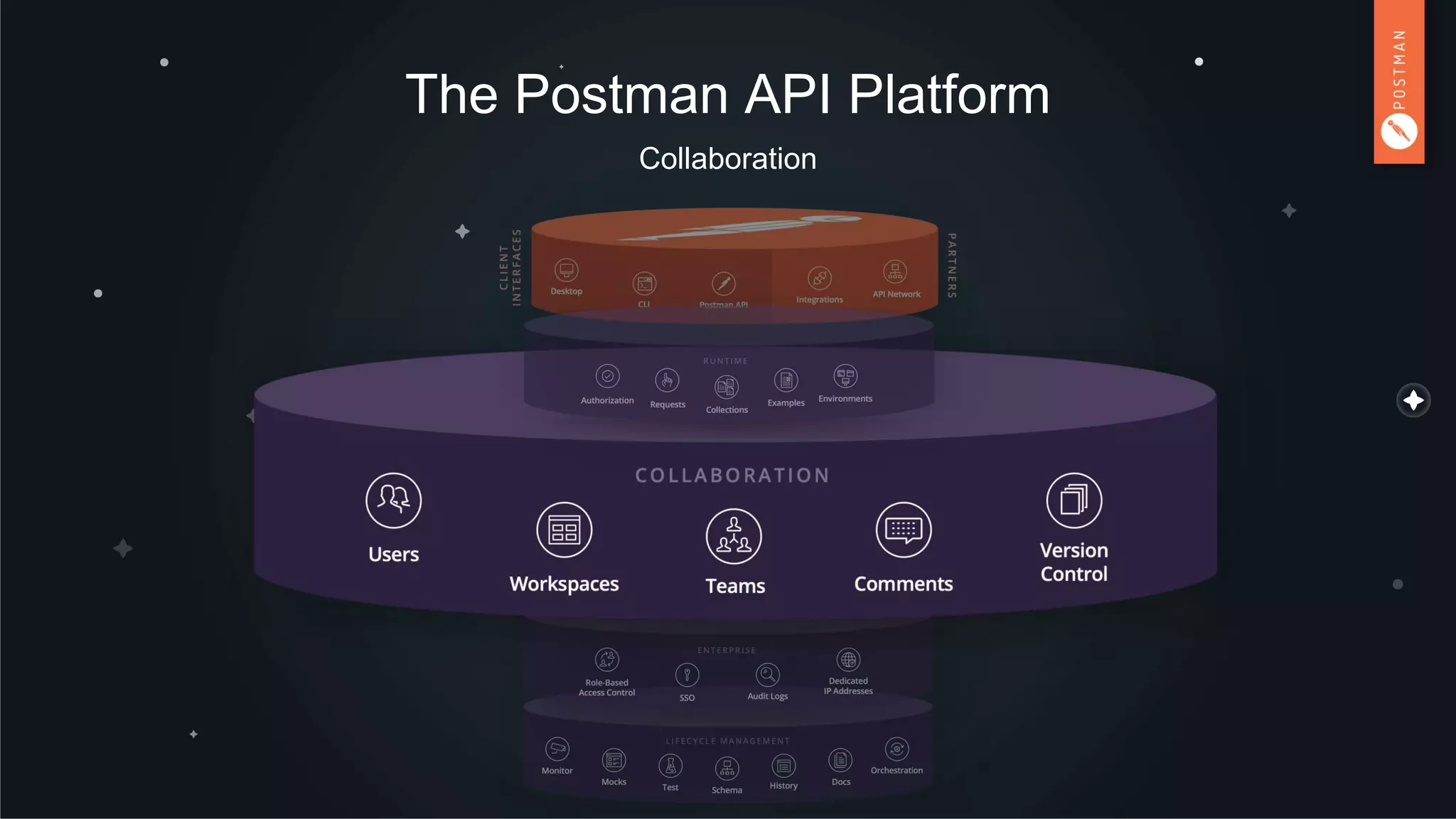
The Postman API Platform
Collaboration
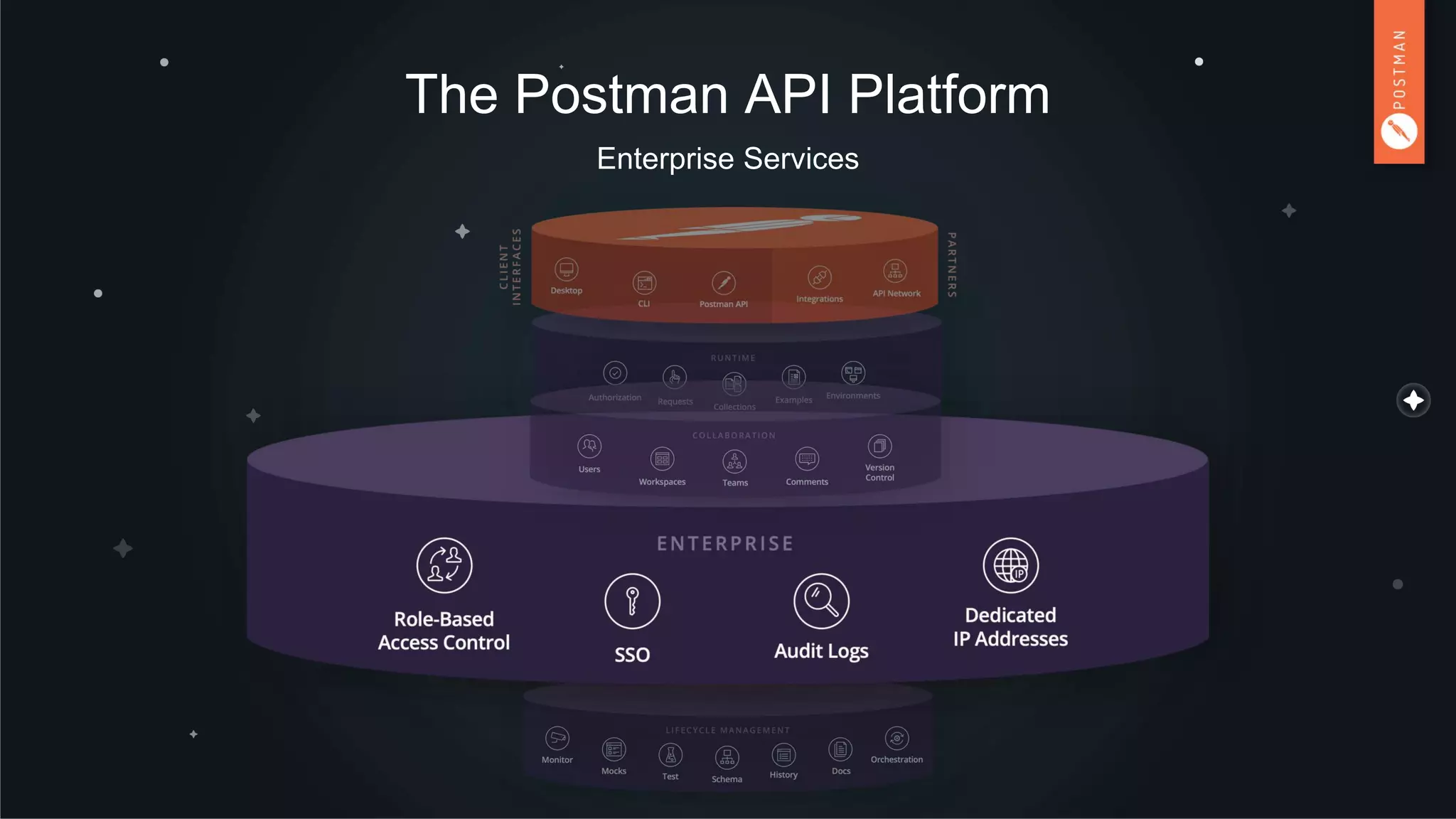
The Postman API Platform
Enterprise Services
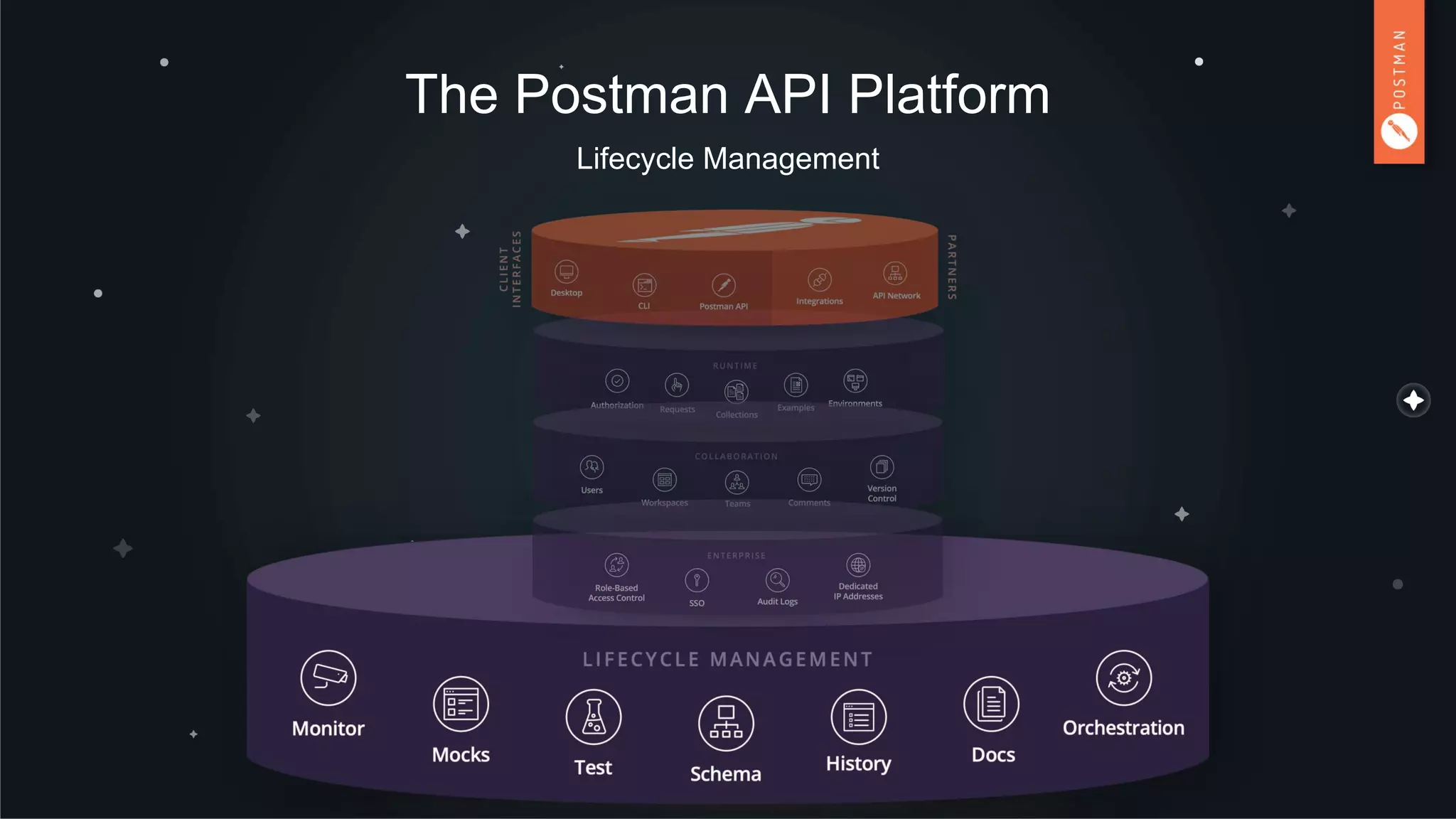
The Postman API Platform
Lifecycle Management
Build API-First Products and Businesses
with the Postman API Platform
API-FIRST
DEVELOPMENT
APIs are developed
strategically at the
beginning of the development
of a system
API-LAST
DEVELOPMENT
APIs are developed
tactically at the end
of the development of a
system
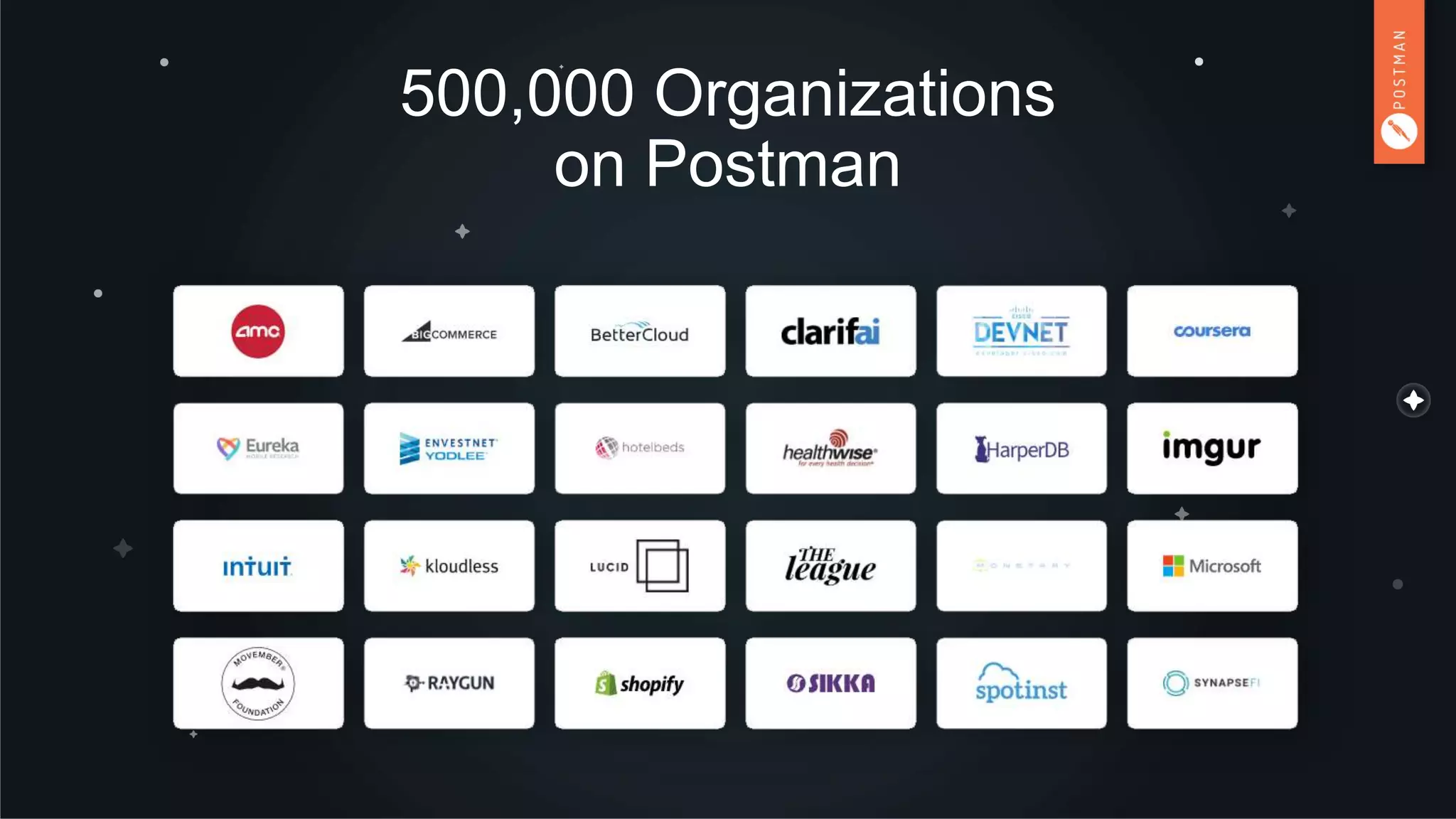
500,000 Organizations
on Postman
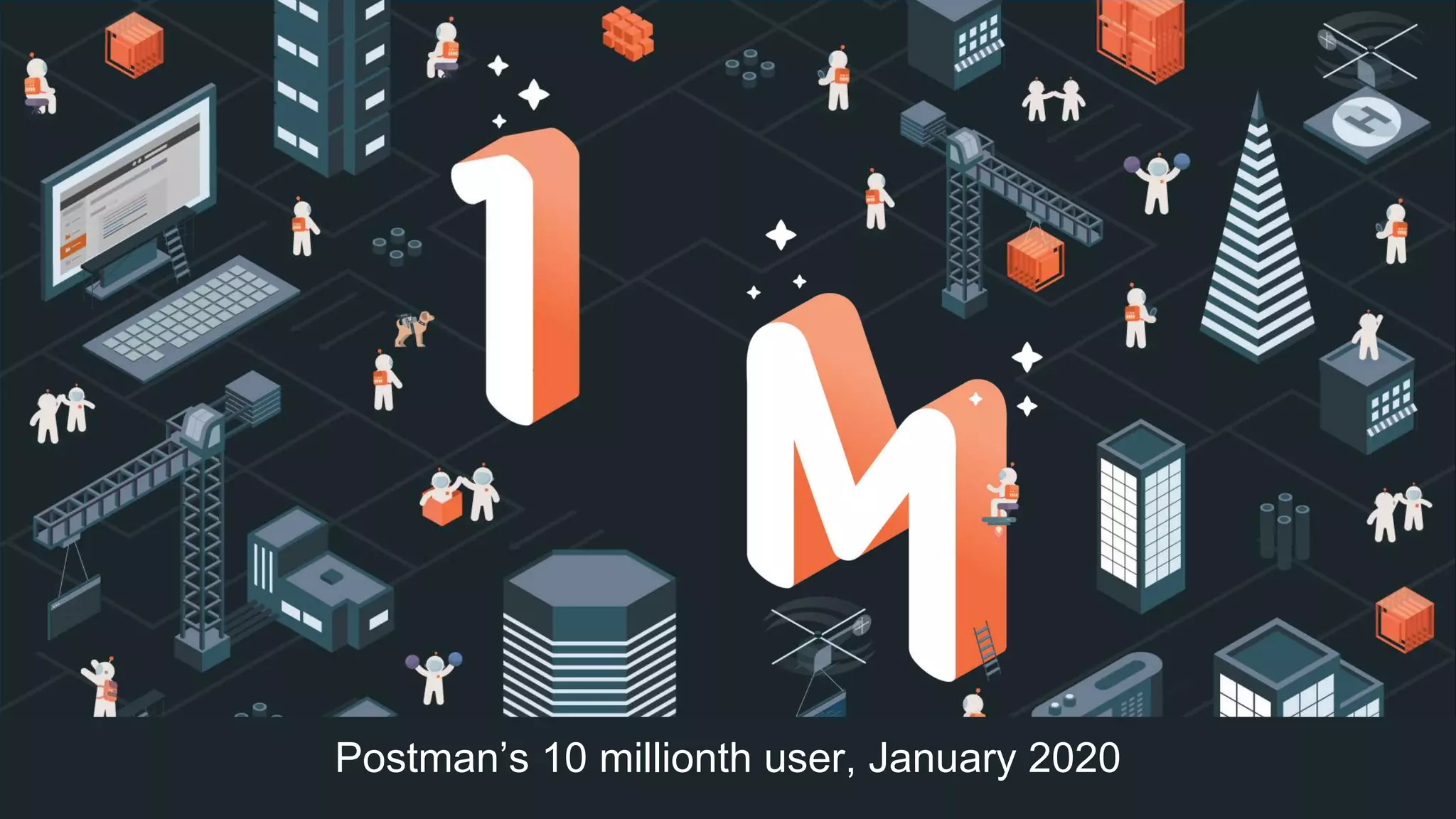
Postman’s 10 millionth user, January 2020
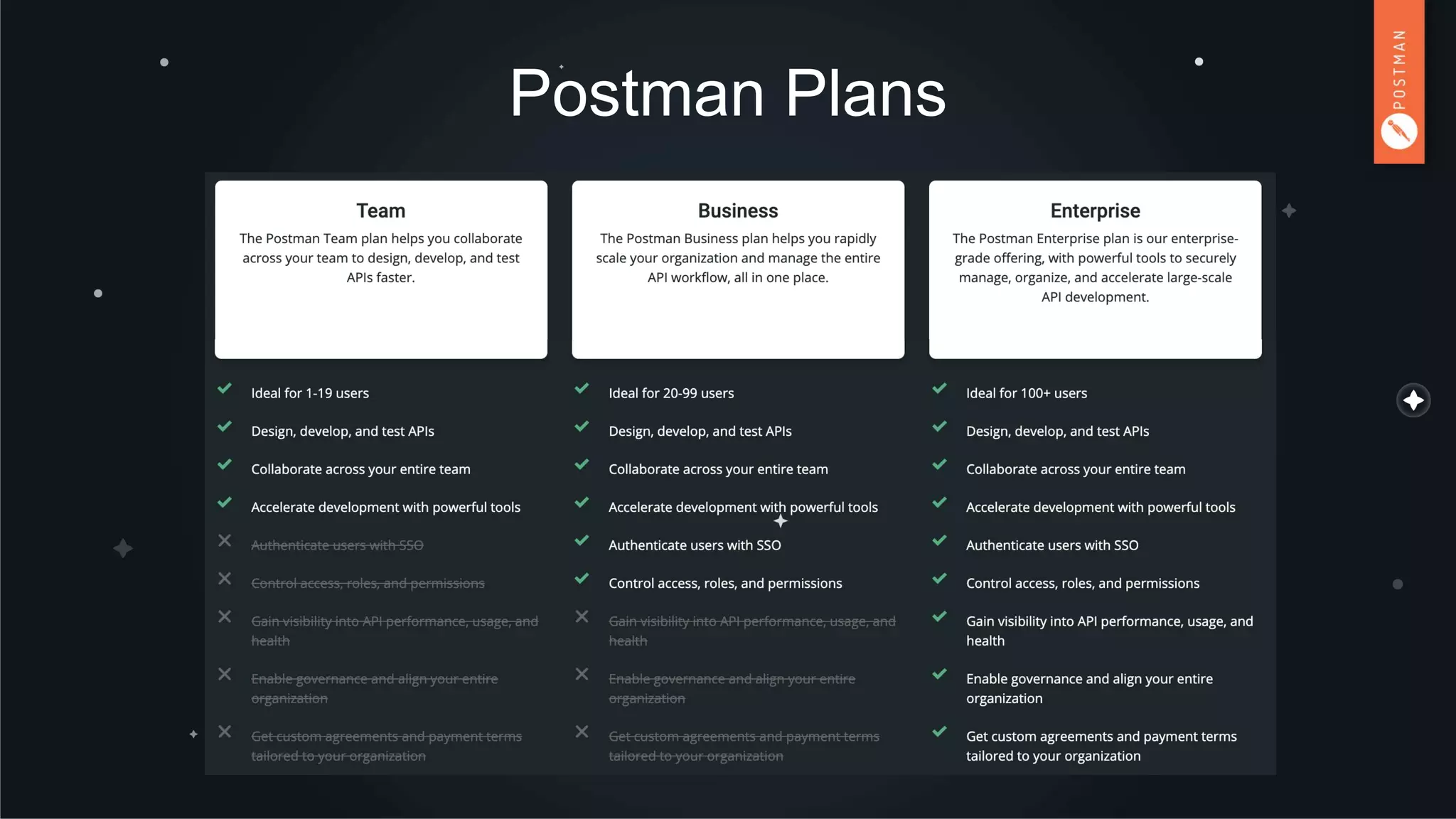
Postman Plans
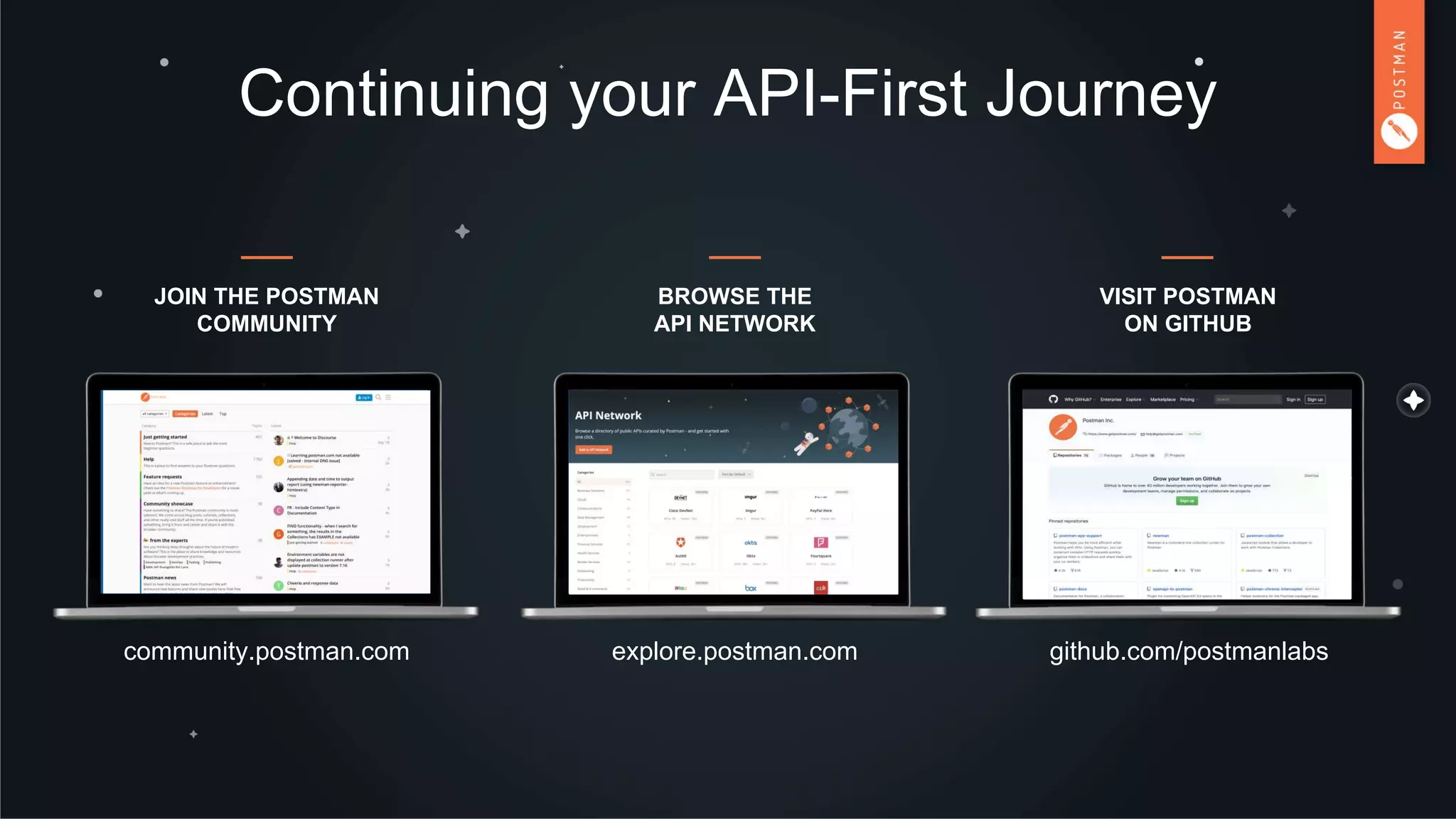
Continuing your API-First Journey
JOIN THE POSTMAN
COMMUNITY
BROWSE THE
API NETWORK
community.postman.com explore.postman.com github.com/postmanlabs
VISIT POSTMAN
ON GITHUB
Complete the
Post-Webinar Survey
http://bit.ly/PostmanSurvey
@getpostmanpostman.com
Q&A

Postman Enterprise Webinar

Editor's Notes

  • #23 ... Postman API Platform The Postman API Platform gives you all the tools you need to become an API-First developer Let’s take a look under the hood and I’ll give you a walkthrough of the main components of the platform
  • #24  This first layer shows our Client Interfaces and our Partner Solutions Starting on the left side of the layer You all are probably very familiar with the Postman Desktop client Audience question: How many people here already use the Postman Desktop client? The Postman Desktop client is the main interface that you use to interact with Postman. The Desktop client is available on Mac, Windows and Linux. The Postman Desktop client is quick and easy to install and then in seconds you’re able to start making requests of endpoints. The second client interface is Postman’s Command Line Interface called Newman Audience question: How many people out there are using Newman? Anyone find the funny in its code name <wink, postman, newman, seinfeld fans?> Newman gives you a command line interface to run collections of requests and to integrate into your CI/CD processes Lastly Postman also has it’s own API. Being an API-First company, Postman allows you to of course connect to the platform with an API On the right hand side, we have our partner solutions Postman has a pre-built library of integrations into hundreds of other applications like GitHub, GitLab and Slack. These integrations make it easier to connect Postman into the rest of your systems and workflows. And the last building block on this layer is the API Network. The API Network is a curated directory of hundreds of public APIs for you to discover and get started with quickly. You can search for a public API, and use the “Run in Postman” button to get started with the API right away. While the Client Interfaces and maybe the Partner Solutions are probably what you are familiar with about Postman …. But underneath these client interfaces is a bunch of other great tools that you probably aren’t aware of yet. Let’s drill down into the set of Platform Services that power the Client Interfaces
  • #25 The core of the Postman API Platform is a set of Runtime Services that allow you to develop and manage your APIs Audience question: How many of you have made a request in Postman before <pause - assuming a lot - say - yeah, thats how we get to almost 35 million collections>? Requests are the fundamental building block of Postman, allowing you to store and manage API requests, and view formatted responses Collections allow you to group and organize requests to make them easier to re-use and share Environments allow you to run collections against different data sets in environments for staging, development, and production These Runtime Services are the core executable constructs that you will interact with when using Postman
  • #26 The next layer of the Postman API Platform is the collaboration layer These are the tools that we built into Postman to facilitate better collaboration on APIs between developers… remember that pain in copy paste of snippets? Workspaces allow you to organize all of your API information, collections, and requests, making it easier to manage your APIs Teams allows you to organize your users into groups to make it easier to share workspaces with a whole team Comments allows you to make comments with Postman so that you can collaborate in the context of your API data, and not in Email In Postman, you can bring together your back-end and front-end developers, technical writers, QA engineers and architects around a single source of truth for your API development Postman’s Collaboration tools allow you to bring together your whole team to stay on the same page when it comes to API development
  • #27 The next layer of tools in the Postman Platform is Enterprise Services These enterprise services are tools that we are building into the platform to help you build more secure and more compliant APIs Role-based authentication allows you to set granular permissions around your API data to make sure that only the right users have access Single-Sign On allows you to setup SSO single-click login into Postman to avoid password theft and provide your users with an easy login experience Audit Logs give you historical logs of changes made to APIs to that you can stay compliant with internal best practices and external regulations Dedicated IP Addresses allow you to restrict access to your Postman environment to approved IP Addresses within your network Postman’s Enterprise Services tools allow you to build APIs that are highly secure and ready to adapt to compliance regulations
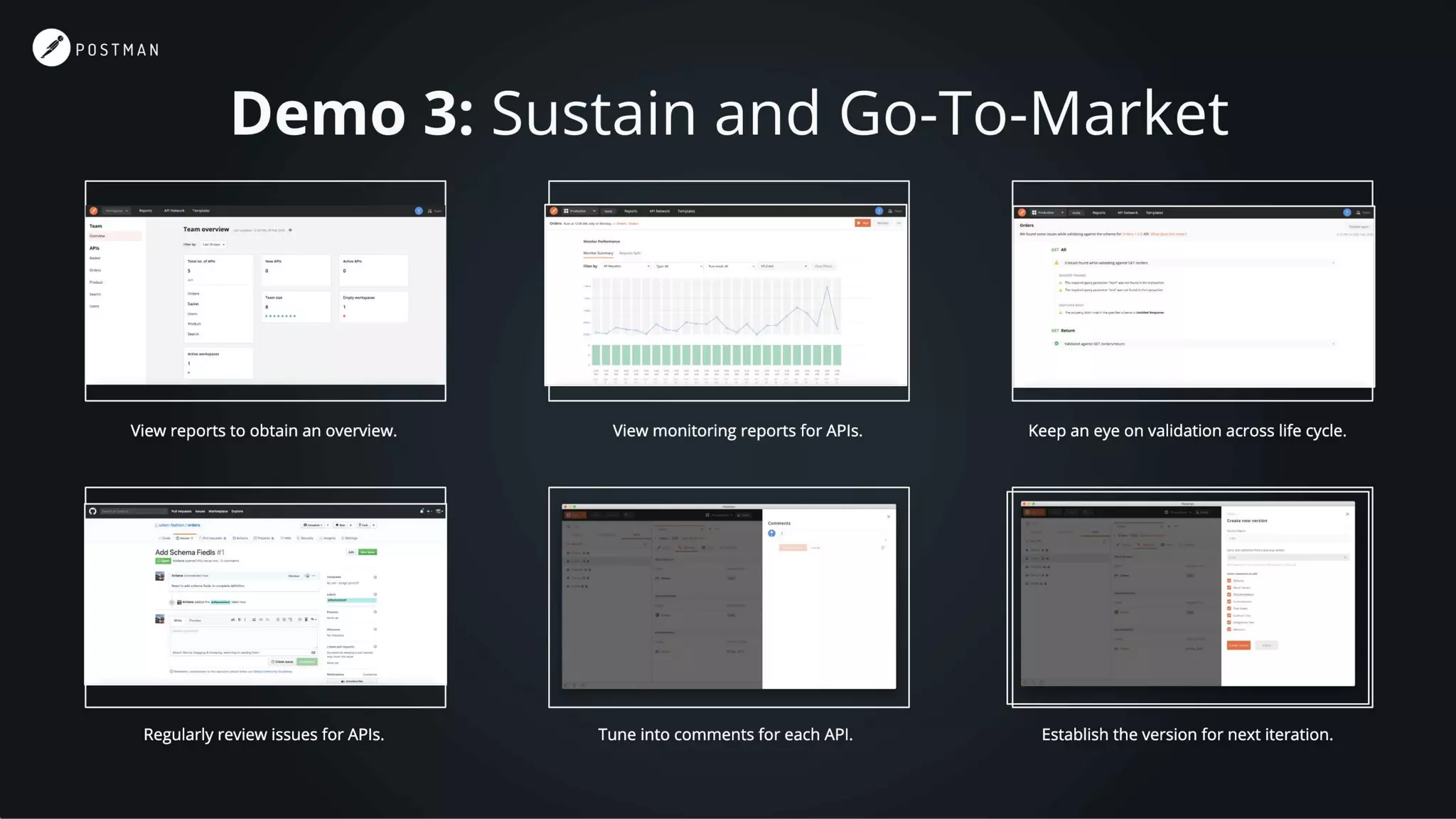
  • #28 The last layer of the Postman Platform is the Lifecycle Management Layer These Lifecycle Management tools help you adapt your APIs across time in a consistent lifecycle Mocks allow you to start the API design process early by creating fake endpoints with dummy responses to test your API before you build it Testing allows you to write scripts that can run before and after requests are sent, so you can build logic around your requests and automate and speed up testing Docs allow you to automatically generate documentation from your Postman data, making it faster to publish, and easier for developers to consume These Lifecycle Management tools are designed to help you support both the API Consumer and API Producer Lifecycles
  • #29 The Postman Platform is designed to help you make the shift from API-Last Development to API-First Development With the Postman Platform, we are giving you a set of tools that can help you embrace API-First Development, and build API-First Products and API-First Businesses These features on this diagram are just the beginning though….
  • #34 To continue your API-First journey, make sure you Join the Postman community to connect with other API developers and to get support Browse the API Network and see what public APIs you can start using Visit Postman on GitHub and access our open source projects and a feature request tracker
  • #35 To continue your API-First journey, make sure you Join the Postman community to connect with other API developers and to get support Browse the API Network and see what public APIs you can start using Visit Postman on GitHub and access our open source projects and a feature request tracker