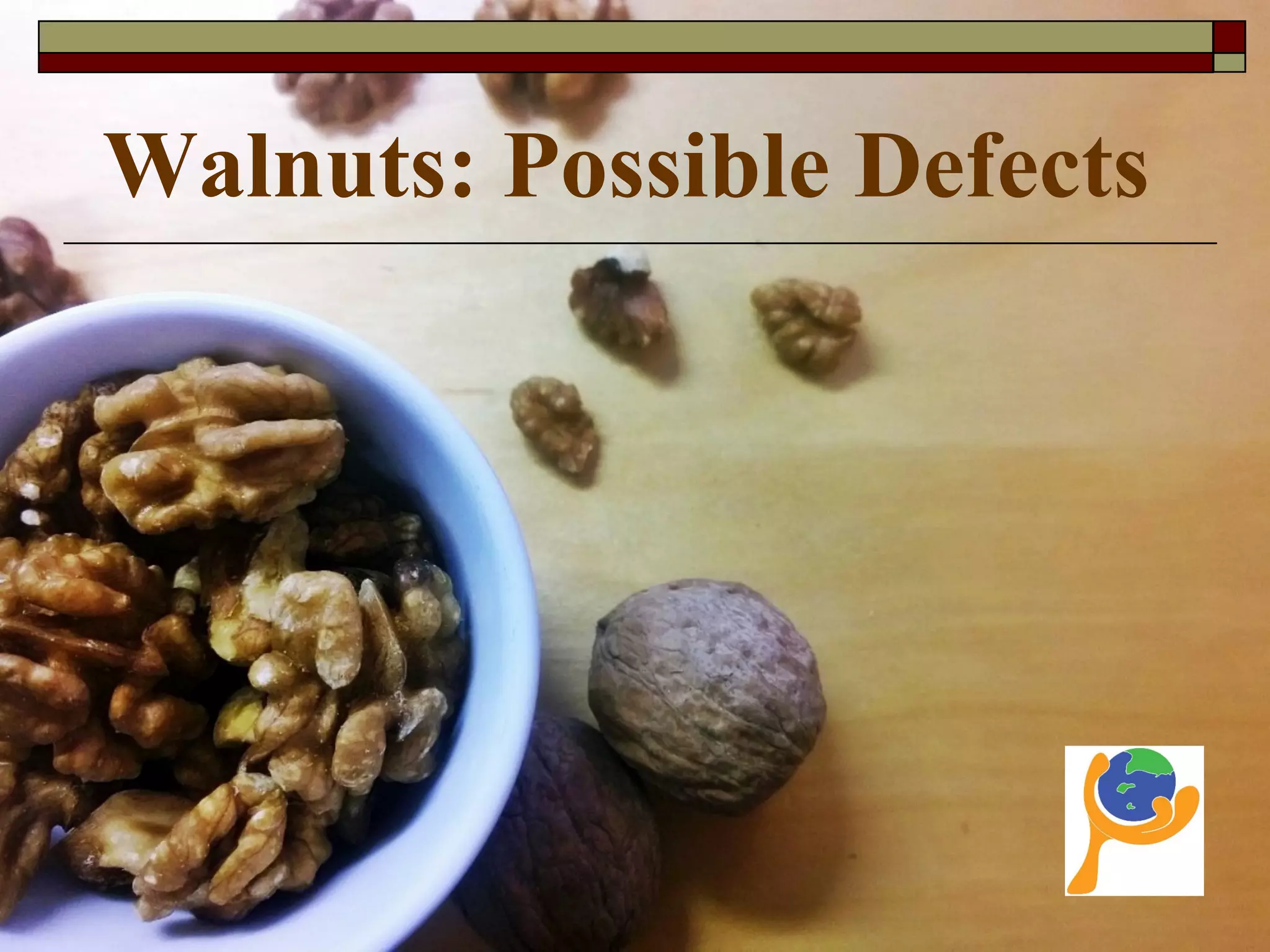
Walnuts: Possible Defects
Reception
 Upon receiving the goods, we recommend
that you carry out an inspection of the
walnuts as infestation is possible at any
stage.
 How much to sample?
1. Randomly select 2 cartons per pallet
2. Upturn to check the corners and bottom for
webbing, shell fragments, etc.
3. Sample 500g from each cartons
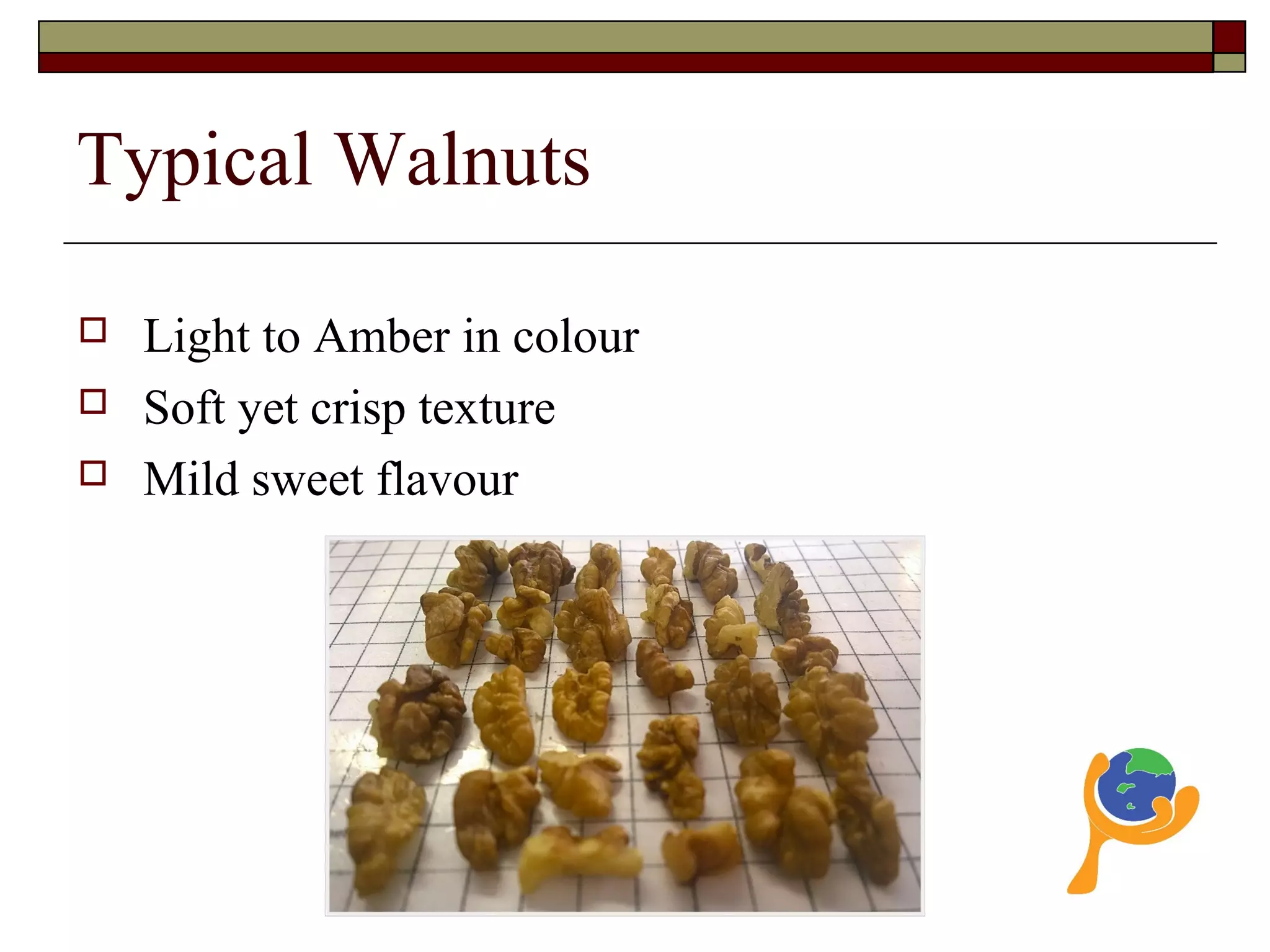
Typical Walnuts
 Light to Amber in colour
 Soft yet crisp texture
 Mild sweet flavour
Typical Walnut Colour
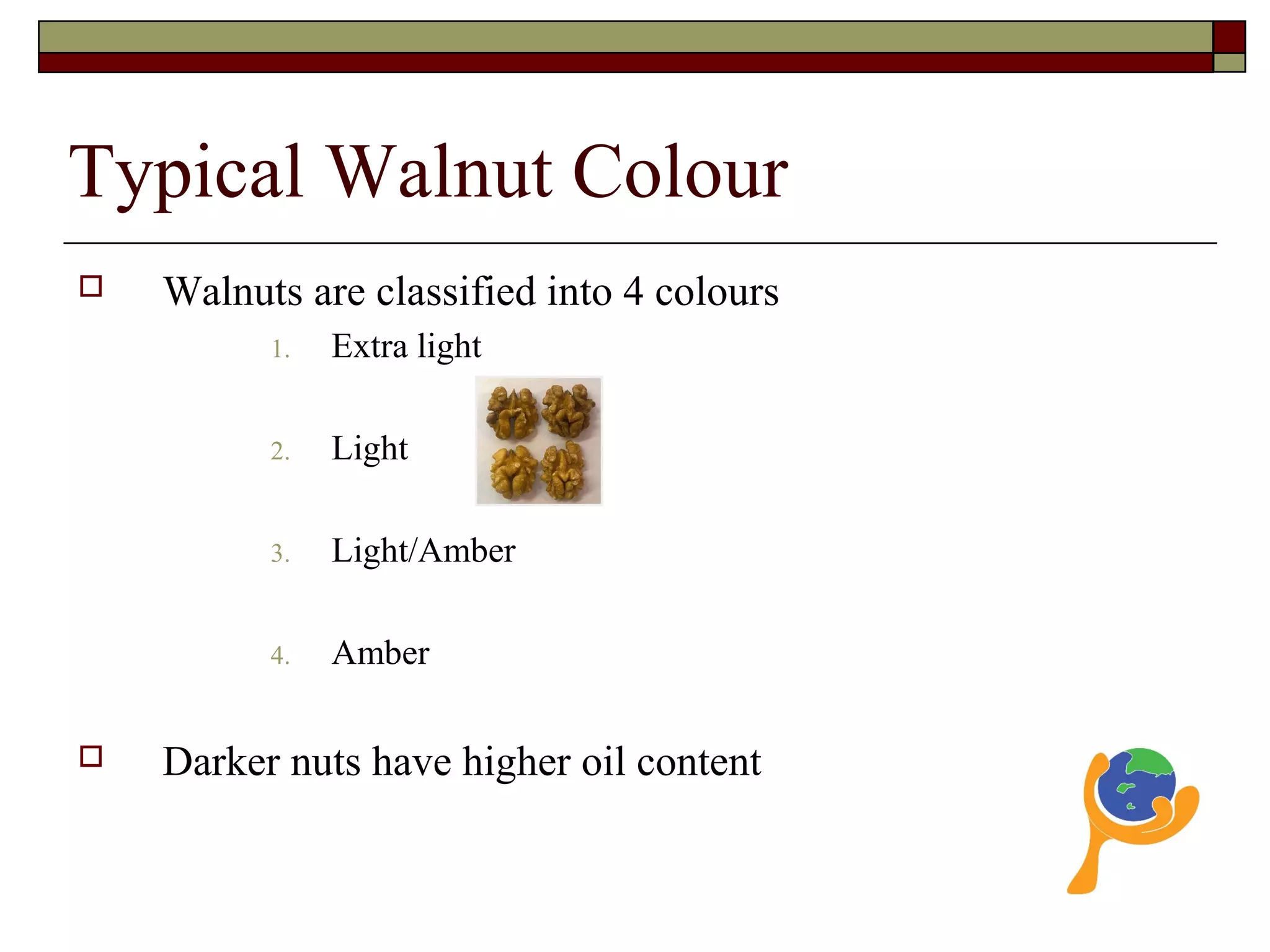
 Walnuts are classified into 4 colours
1. Extra light
2. Light
3. Light/Amber
4. Amber
 Darker nuts have higher oil content
Discolouration
 Abnormal colouration that covers more than 1/8th
of the surface of
the kernel and is of a colour in pronounced contrast with the colour
of the rest of the kernel [dark blemishes or areas of discolouration]
(UNECE)
 Can be caused by a fungus (Xanthomonas campestris) that thrives
in prolonged wet weather and hull injury
Discoloured Typical Typical
Insect Damage
 Visible damage caused by insects or other animal parasites the presence
of dead insects or insect debris (UNECE)
 Navel Orange worm presents the biggest threat
 Internal damage and can be difficult to spot early on (inspect a random
sample for signs of internal damage)
 Serious infestation causes webbing (check corners of containers for this)
 Look for damage (ie. holes, discolouration) to the nut ‘meat’
 Refer to Reception slide for advise on inspecting goods
Mould Damage
 Mould filaments that are plainly visible to the naked eye
(UNECE)
 Mould damage can occur when moisture levels are too high
 Can lead to growth of aflatoxins caused by Aspergillus
 Control with proper storage conditions
 Dry, cool, air tight containers
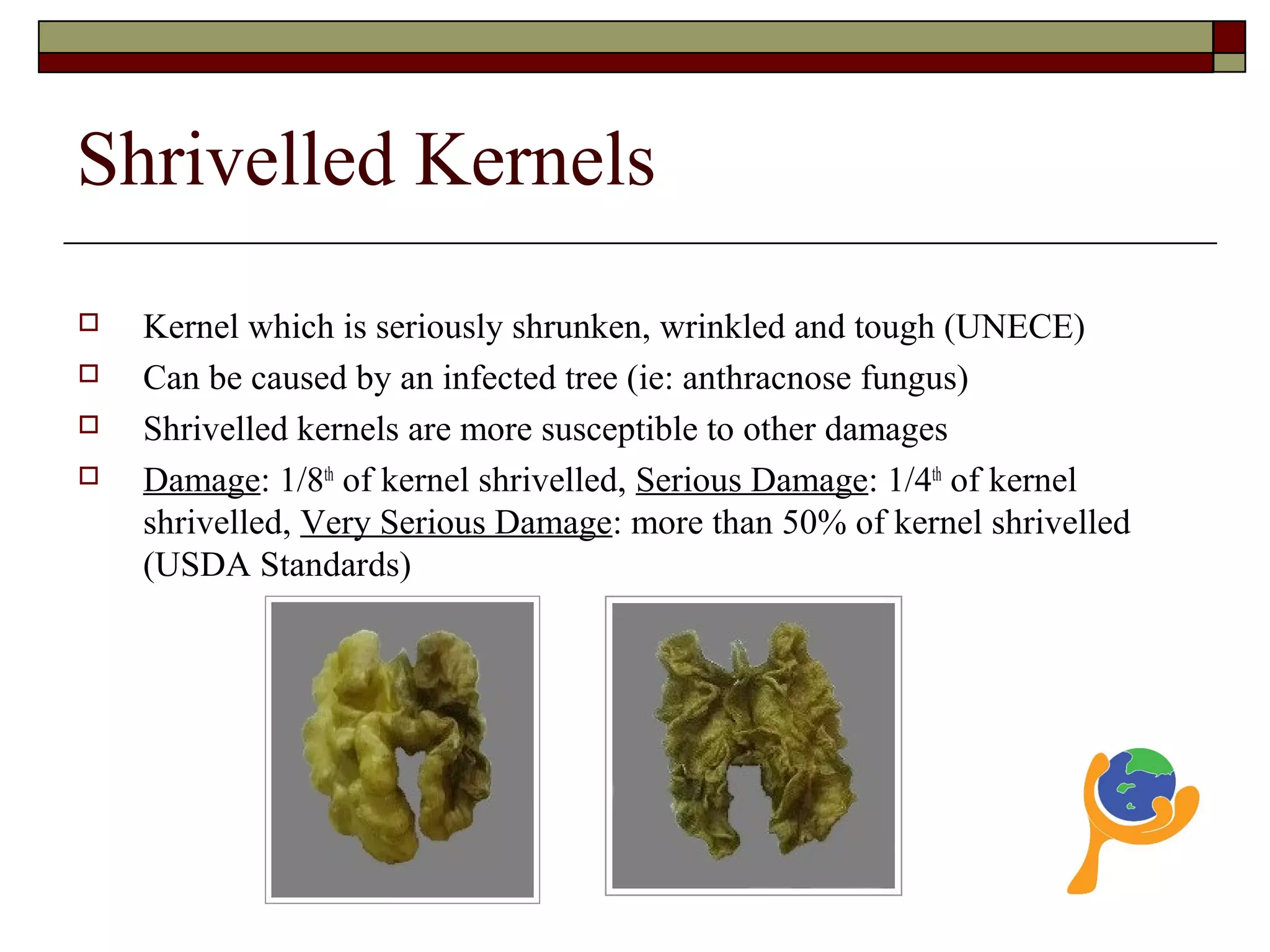
Shrivelled Kernels
 Kernel which is seriously shrunken, wrinkled and tough (UNECE)
 Can be caused by an infected tree (ie: anthracnose fungus)
 Shrivelled kernels are more susceptible to other damages
 Damage: 1/8th
of kernel shrivelled, Serious Damage: 1/4th
of kernel
shrivelled, Very Serious Damage: more than 50% of kernel shrivelled
(USDA Standards)
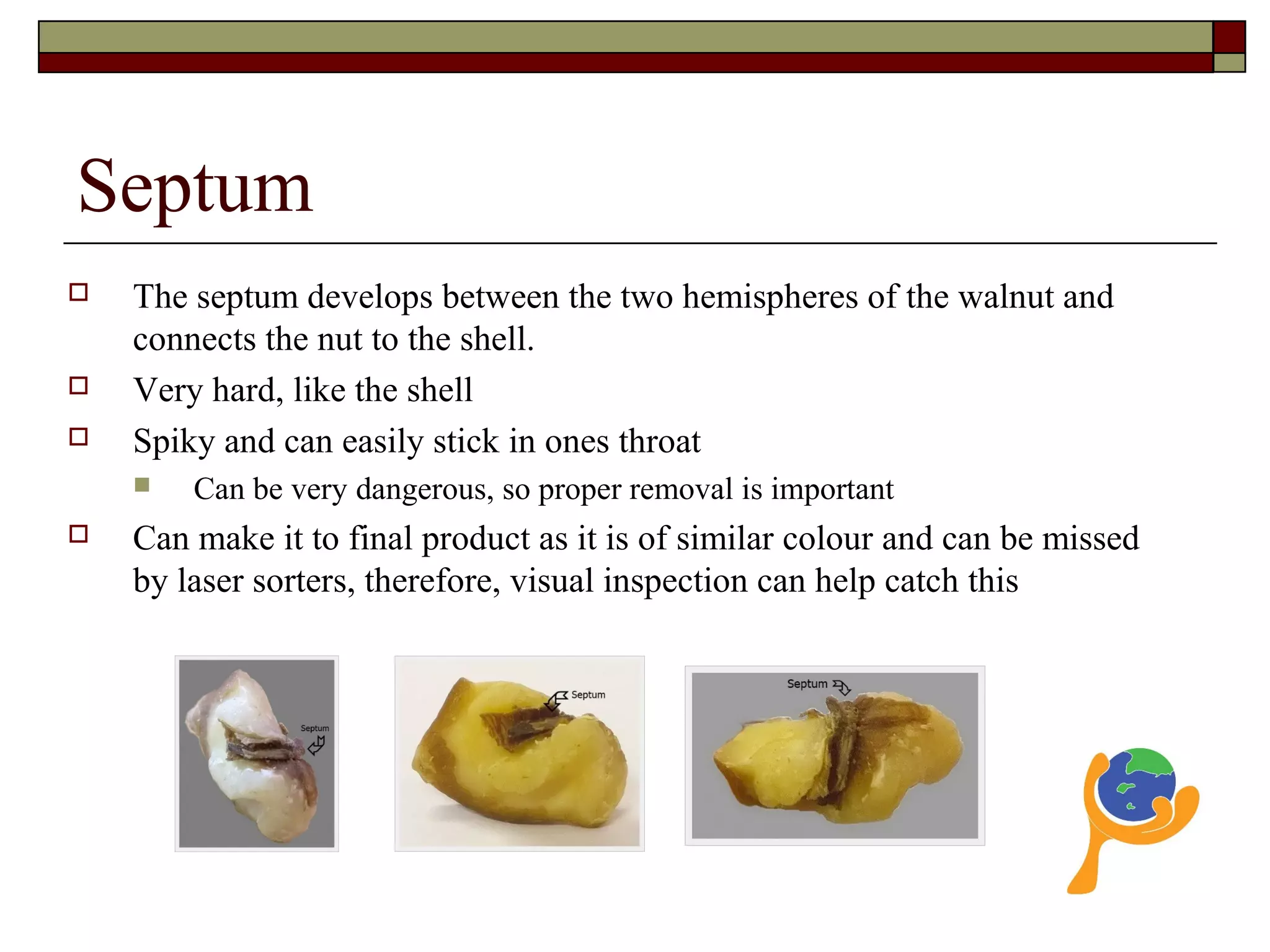
Septum
 The septum develops between the two hemispheres of the walnut and
connects the nut to the shell.
 Very hard, like the shell
 Spiky and can easily stick in ones throat
 Can be very dangerous, so proper removal is important
 Can make it to final product as it is of similar colour and can be missed
by laser sorters, therefore, visual inspection can help catch this
Foreign Matter
 Any matter or material not usually associated with the
product [ie: Adhering Shell, Hull, Dirt, dust] (UNECE)
 USDA classified foreign material as serious damage
 USDA Standards: http://ucfoodsafety.ucdavis.edu/files/175751.pdf
 UNECE Standards:
http://www.unece.org/fileadmin/DAM/trade/agr/standard/dry/Standards/DDP02
Be Sure to Take A Look at
Our Other Product
Overviews by Clicking on the
Product Tabs!

Possible defects

  • 1.
  • 2.
    Reception  Upon receivingthe goods, we recommend that you carry out an inspection of the walnuts as infestation is possible at any stage.  How much to sample? 1. Randomly select 2 cartons per pallet 2. Upturn to check the corners and bottom for webbing, shell fragments, etc. 3. Sample 500g from each cartons
  • 3.
    Typical Walnuts  Lightto Amber in colour  Soft yet crisp texture  Mild sweet flavour
  • 4.
    Typical Walnut Colour Walnuts are classified into 4 colours 1. Extra light 2. Light 3. Light/Amber 4. Amber  Darker nuts have higher oil content
  • 5.
    Discolouration  Abnormal colourationthat covers more than 1/8th of the surface of the kernel and is of a colour in pronounced contrast with the colour of the rest of the kernel [dark blemishes or areas of discolouration] (UNECE)  Can be caused by a fungus (Xanthomonas campestris) that thrives in prolonged wet weather and hull injury Discoloured Typical Typical
  • 6.
    Insect Damage  Visibledamage caused by insects or other animal parasites the presence of dead insects or insect debris (UNECE)  Navel Orange worm presents the biggest threat  Internal damage and can be difficult to spot early on (inspect a random sample for signs of internal damage)  Serious infestation causes webbing (check corners of containers for this)  Look for damage (ie. holes, discolouration) to the nut ‘meat’  Refer to Reception slide for advise on inspecting goods
  • 7.
    Mould Damage  Mouldfilaments that are plainly visible to the naked eye (UNECE)  Mould damage can occur when moisture levels are too high  Can lead to growth of aflatoxins caused by Aspergillus  Control with proper storage conditions  Dry, cool, air tight containers
  • 8.
    Shrivelled Kernels  Kernelwhich is seriously shrunken, wrinkled and tough (UNECE)  Can be caused by an infected tree (ie: anthracnose fungus)  Shrivelled kernels are more susceptible to other damages  Damage: 1/8th of kernel shrivelled, Serious Damage: 1/4th of kernel shrivelled, Very Serious Damage: more than 50% of kernel shrivelled (USDA Standards)
  • 9.
    Septum  The septumdevelops between the two hemispheres of the walnut and connects the nut to the shell.  Very hard, like the shell  Spiky and can easily stick in ones throat  Can be very dangerous, so proper removal is important  Can make it to final product as it is of similar colour and can be missed by laser sorters, therefore, visual inspection can help catch this
  • 10.
    Foreign Matter  Anymatter or material not usually associated with the product [ie: Adhering Shell, Hull, Dirt, dust] (UNECE)  USDA classified foreign material as serious damage  USDA Standards: http://ucfoodsafety.ucdavis.edu/files/175751.pdf  UNECE Standards: http://www.unece.org/fileadmin/DAM/trade/agr/standard/dry/Standards/DDP02
  • 11.
    Be Sure toTake A Look at Our Other Product Overviews by Clicking on the Product Tabs!