Almonds: Possible defects
Almonds reception
 When you receive your Californian almonds, they have been inspected by
the USDA and their inspection is final. However, you should also carry
out an inspection as the risk of infestation extends throughout the supply
chain.
 How much of the product received has to be inspected? While the product
is being processed at the plant, samples are taken frequently to confirm
the production adheres to the parameters required. When the product is
received at your warehouse we know that it is not possible to open and
inspect every carton, so we recommend to randomly take 2 cartons per
pallet and sample 1kg from each.
Infestation
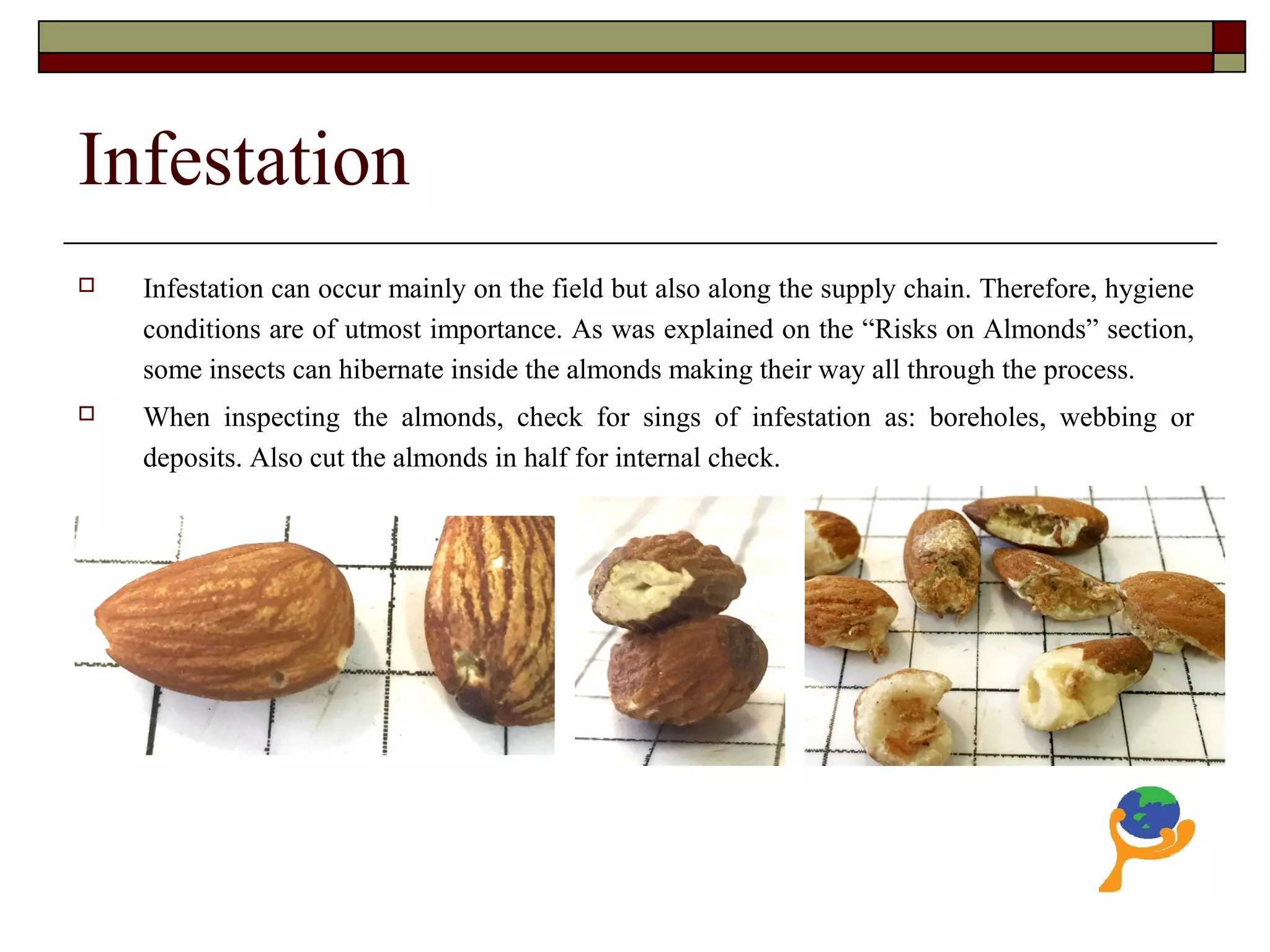
 Infestation can occur mainly on the field but also along the supply chain. Therefore, hygiene
conditions are of utmost importance. As was explained on the “Risks on Almonds” section,
some insects can hibernate inside the almonds making their way all through the process.
 When inspecting the almonds, check for sings of infestation as: boreholes, webbing or
deposits. Also cut the almonds in half for internal check.
Dissimilar
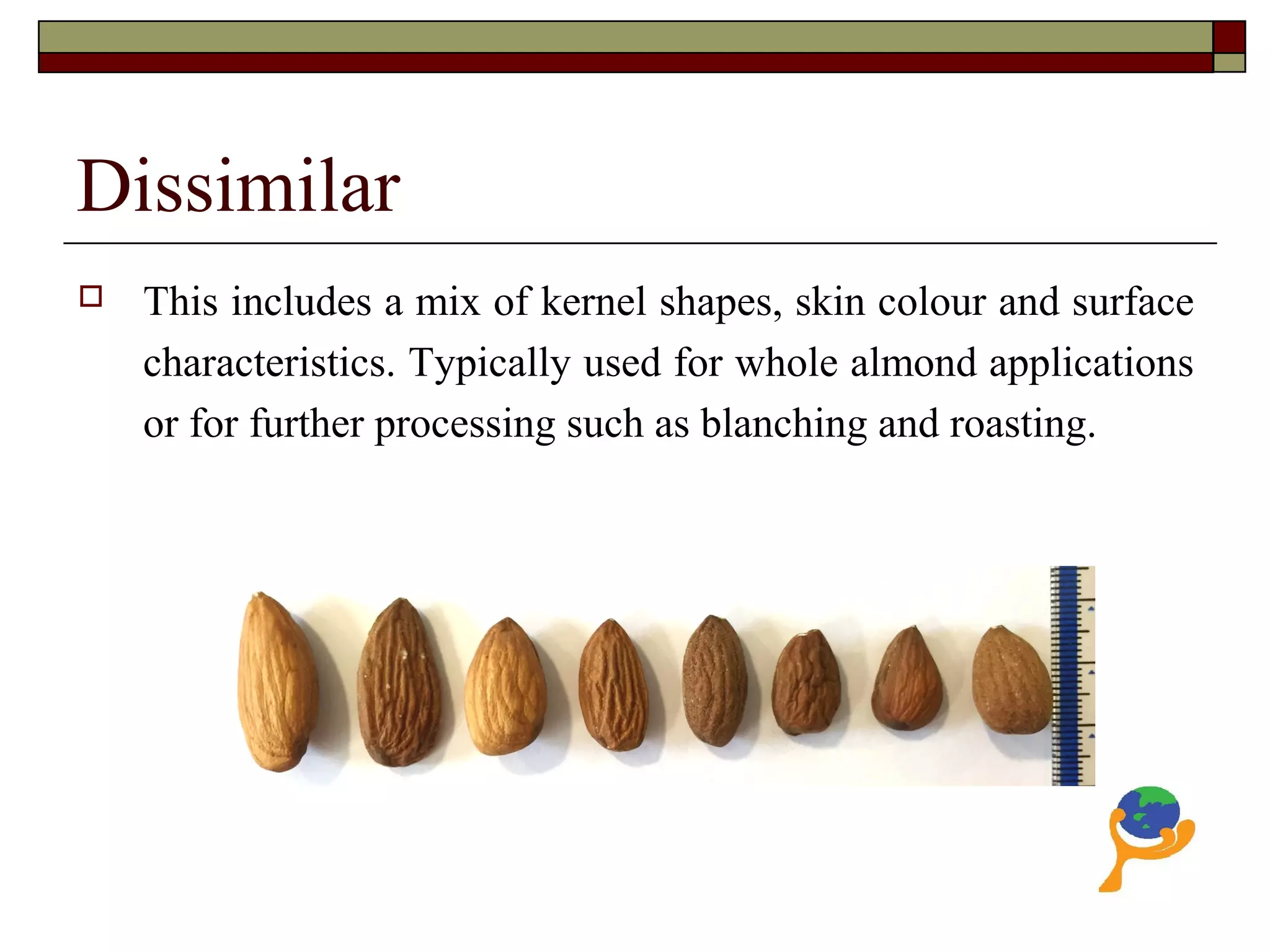
 This includes a mix of kernel shapes, skin colour and surface
characteristics. Typically used for whole almond applications
or for further processing such as blanching and roasting.
Doubles
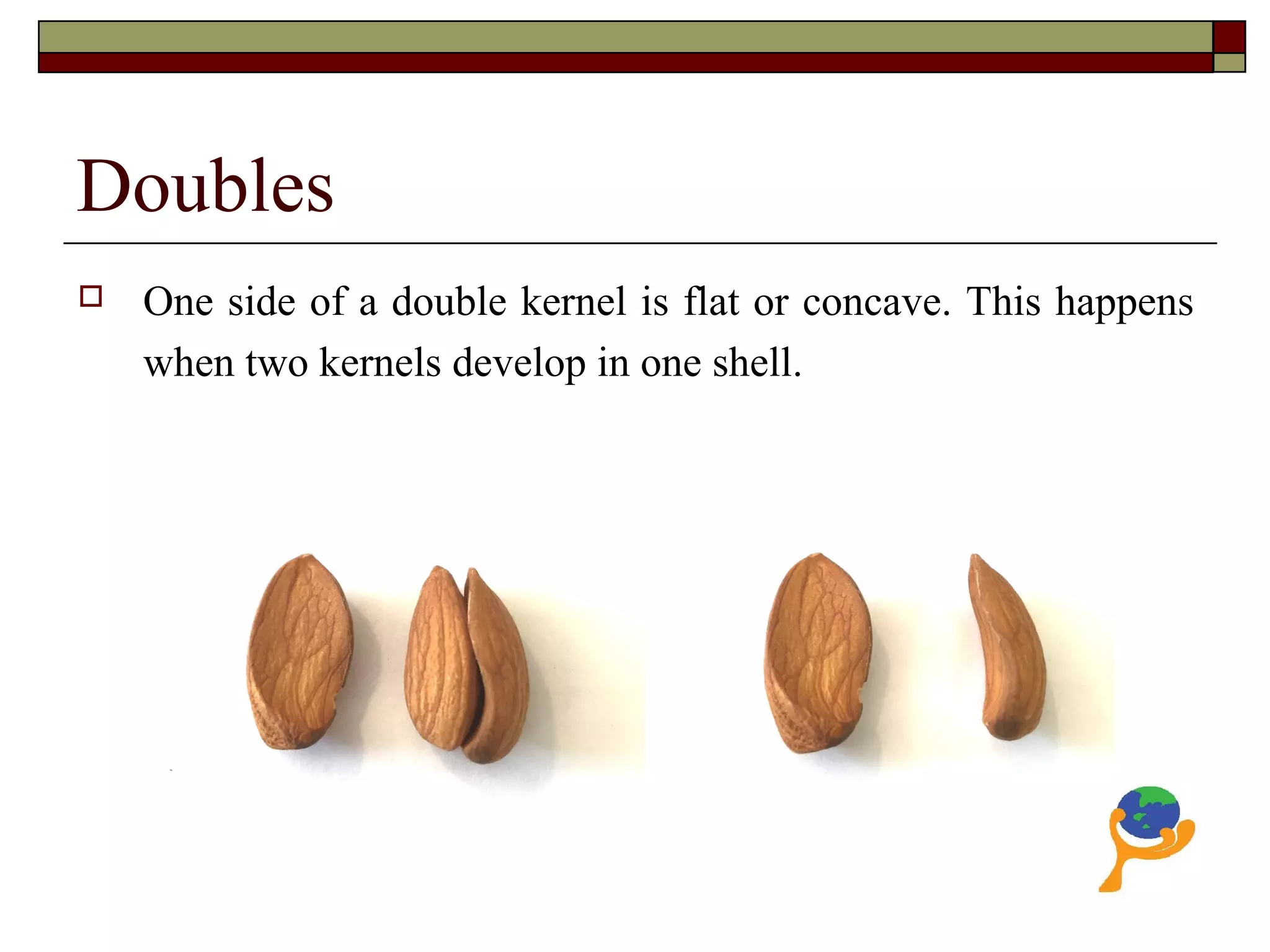
 One side of a double kernel is flat or concave. This happens
when two kernels develop in one shell.
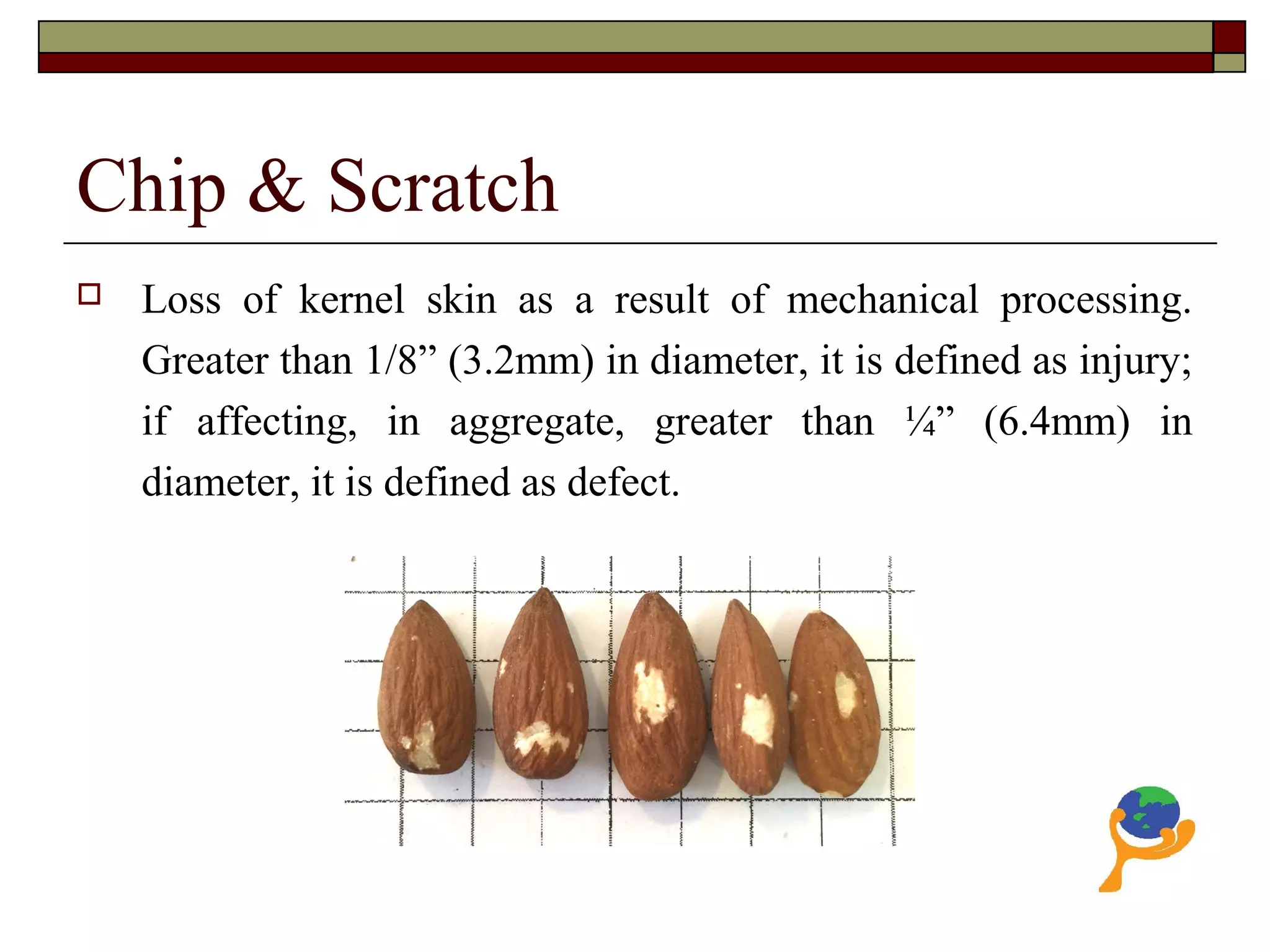
Chip & Scratch
 Loss of kernel skin as a result of mechanical processing.
Greater than 1/8” (3.2mm) in diameter, it is defined as injury;
if affecting, in aggregate, greater than ¼” (6.4mm) in
diameter, it is defined as defect.
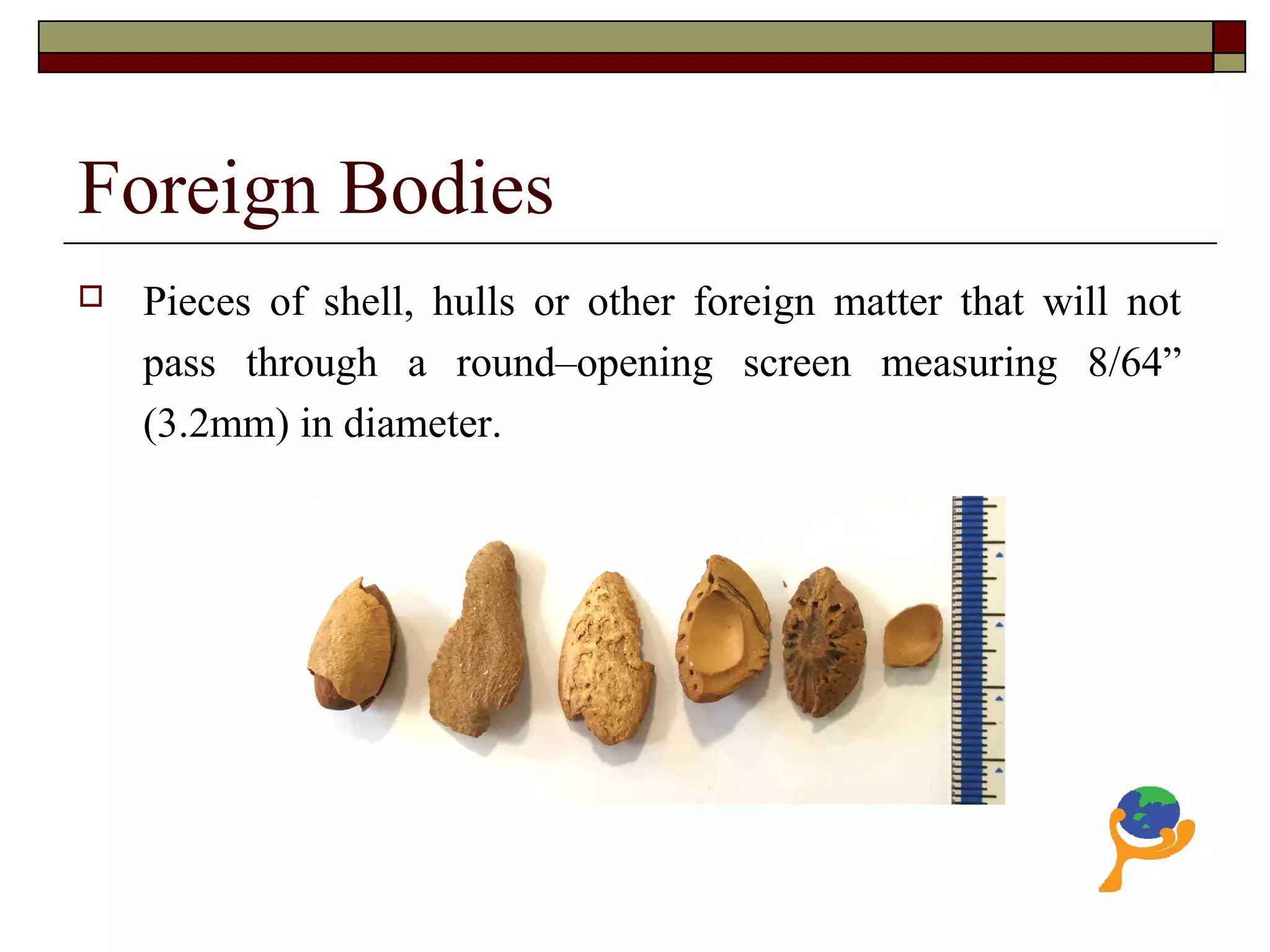
Foreign Bodies
 Pieces of shell, hulls or other foreign matter that will not
pass through a round–opening screen measuring 8/64”
(3.2mm) in diameter.
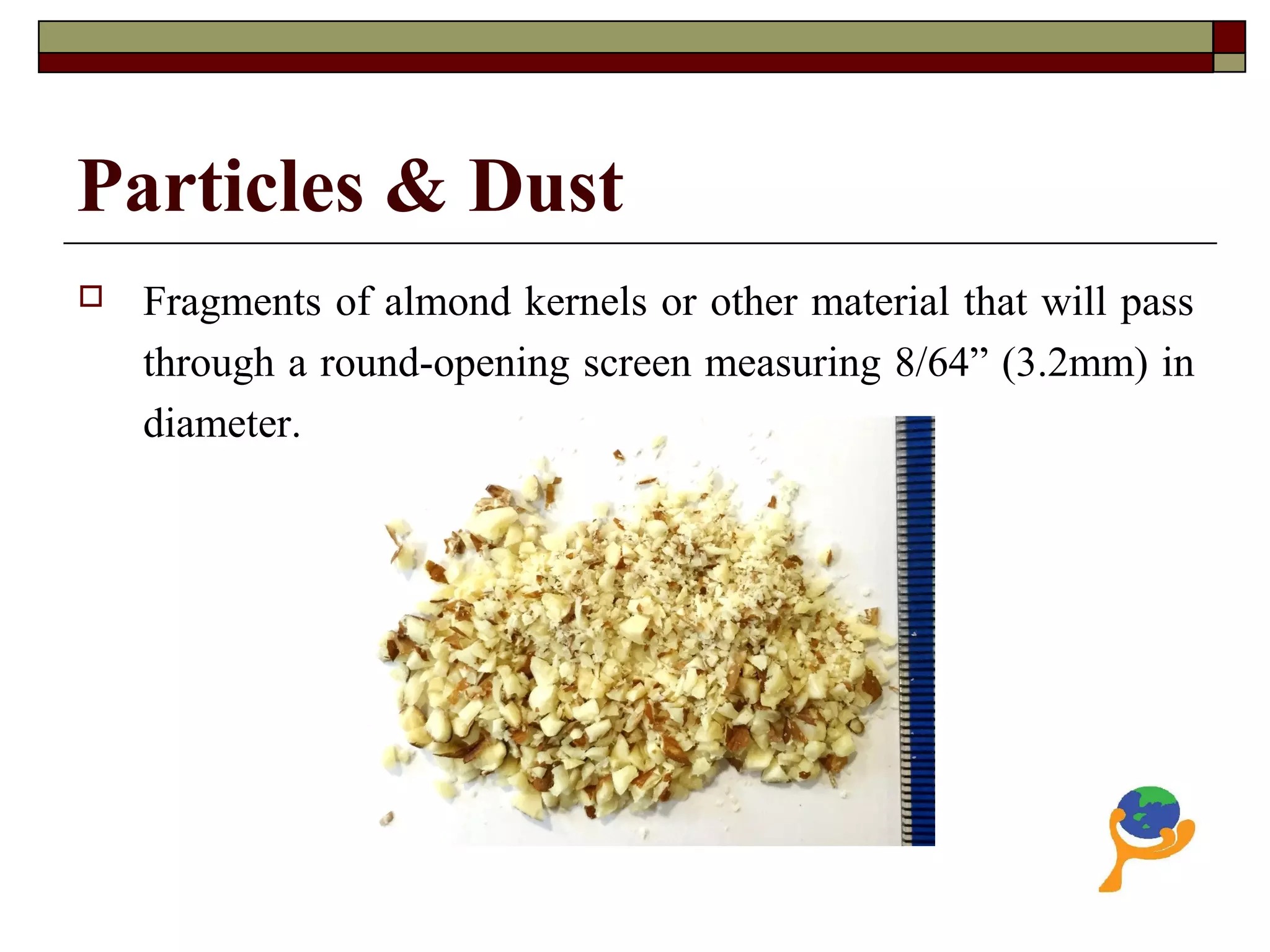
Particles & Dust
 Fragments of almond kernels or other material that will pass
through a round-opening screen measuring 8/64” (3.2mm) in
diameter.
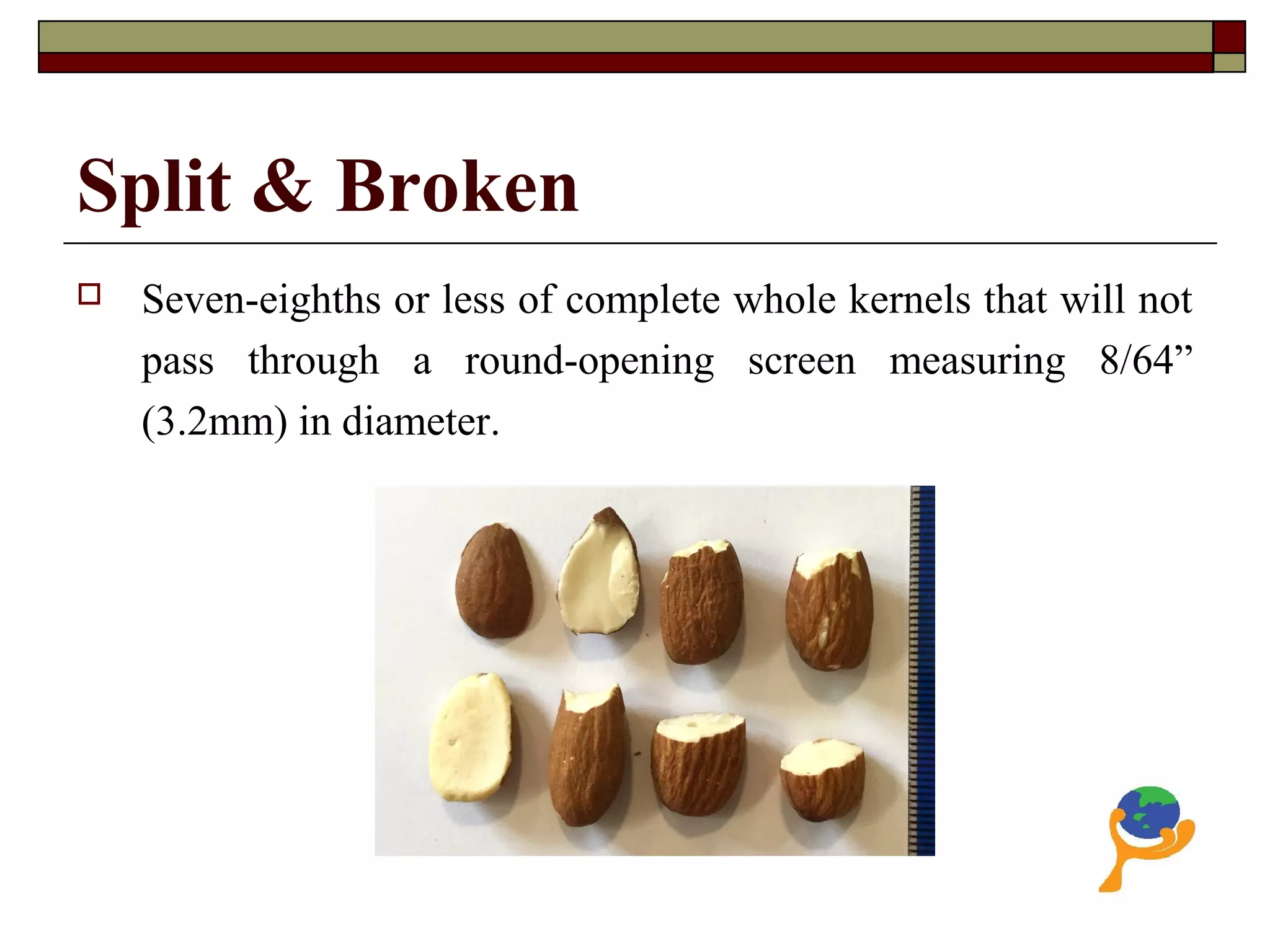
Split & Broken
 Seven-eighths or less of complete whole kernels that will not
pass through a round-opening screen measuring 8/64”
(3.2mm) in diameter.
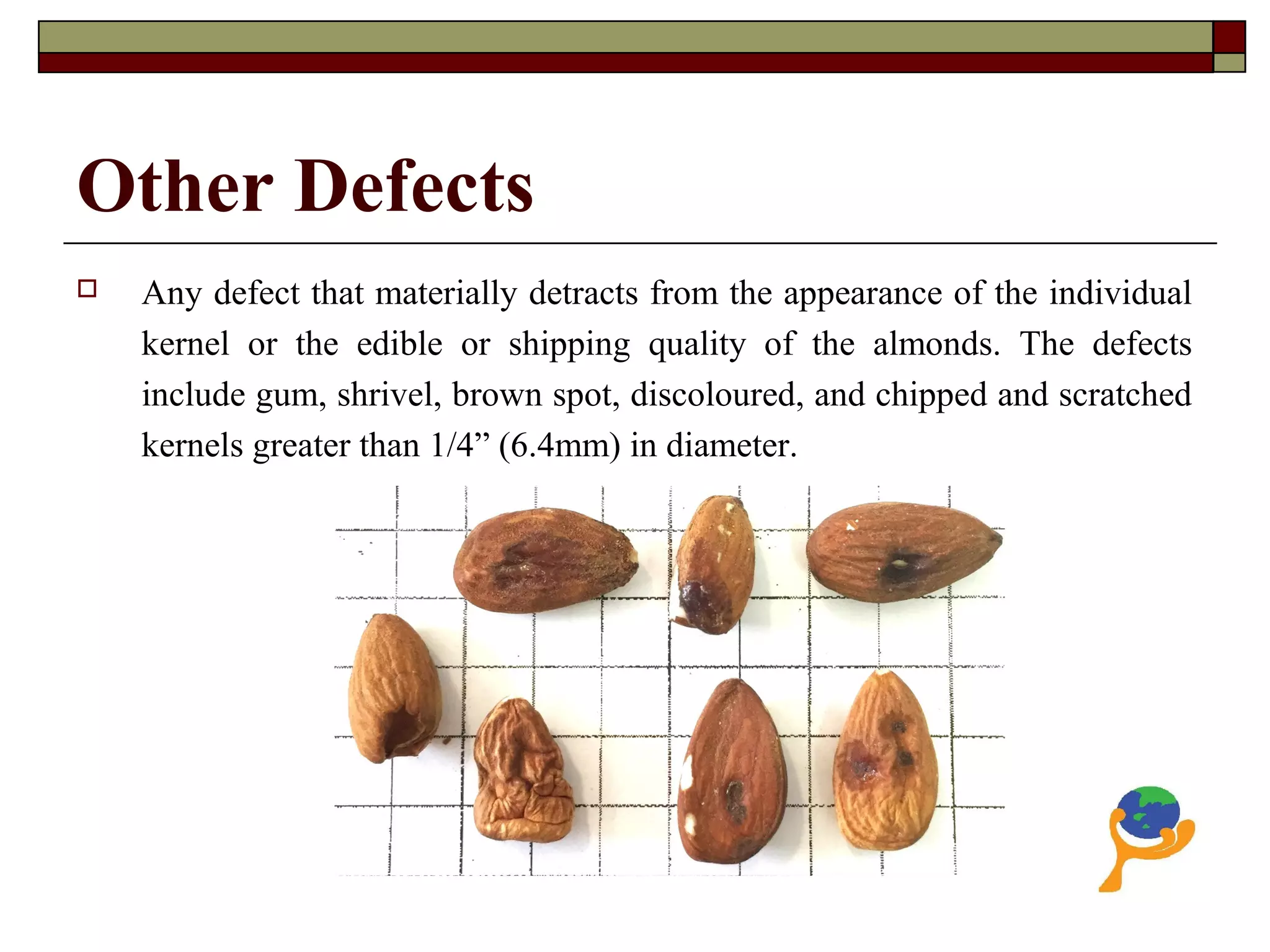
Other Defects
 Any defect that materially detracts from the appearance of the individual
kernel or the edible or shipping quality of the almonds. The defects
include gum, shrivel, brown spot, discoloured, and chipped and scratched
kernels greater than 1/4” (6.4mm) in diameter.
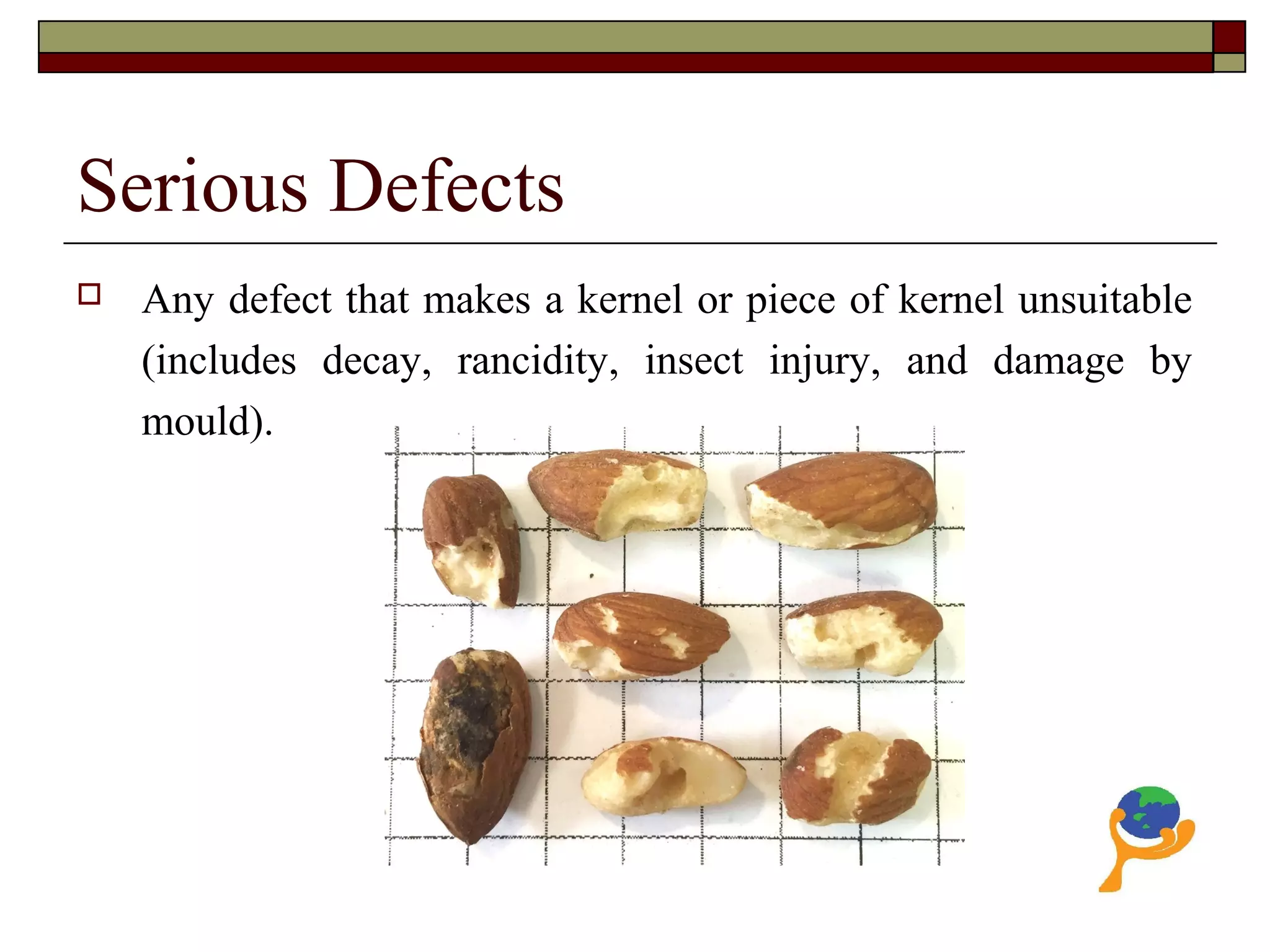
Serious Defects
 Any defect that makes a kernel or piece of kernel unsuitable
(includes decay, rancidity, insect injury, and damage by
mould).
Be Sure to Take A Look at Our
Other Product Overviews by
Clicking on the Product Tabs!

Defects on almonds

  • 1.
  • 2.
    Almonds reception  Whenyou receive your Californian almonds, they have been inspected by the USDA and their inspection is final. However, you should also carry out an inspection as the risk of infestation extends throughout the supply chain.  How much of the product received has to be inspected? While the product is being processed at the plant, samples are taken frequently to confirm the production adheres to the parameters required. When the product is received at your warehouse we know that it is not possible to open and inspect every carton, so we recommend to randomly take 2 cartons per pallet and sample 1kg from each.

  • 3.
    Infestation  Infestation canoccur mainly on the field but also along the supply chain. Therefore, hygiene conditions are of utmost importance. As was explained on the “Risks on Almonds” section, some insects can hibernate inside the almonds making their way all through the process.  When inspecting the almonds, check for sings of infestation as: boreholes, webbing or deposits. Also cut the almonds in half for internal check.
  • 4.
    Dissimilar  This includesa mix of kernel shapes, skin colour and surface characteristics. Typically used for whole almond applications or for further processing such as blanching and roasting.
  • 5.
    Doubles  One sideof a double kernel is flat or concave. This happens when two kernels develop in one shell.
  • 6.
    Chip & Scratch Loss of kernel skin as a result of mechanical processing. Greater than 1/8” (3.2mm) in diameter, it is defined as injury; if affecting, in aggregate, greater than ¼” (6.4mm) in diameter, it is defined as defect.
  • 7.
    Foreign Bodies  Piecesof shell, hulls or other foreign matter that will not pass through a round–opening screen measuring 8/64” (3.2mm) in diameter.
  • 8.
    Particles & Dust Fragments of almond kernels or other material that will pass through a round-opening screen measuring 8/64” (3.2mm) in diameter.
  • 9.
    Split & Broken Seven-eighths or less of complete whole kernels that will not pass through a round-opening screen measuring 8/64” (3.2mm) in diameter.
  • 10.
    Other Defects  Anydefect that materially detracts from the appearance of the individual kernel or the edible or shipping quality of the almonds. The defects include gum, shrivel, brown spot, discoloured, and chipped and scratched kernels greater than 1/4” (6.4mm) in diameter.
  • 11.
    Serious Defects  Anydefect that makes a kernel or piece of kernel unsuitable (includes decay, rancidity, insect injury, and damage by mould).
  • 12.
    Be Sure toTake A Look at Our Other Product Overviews by Clicking on the Product Tabs!