Welcome to Pose-
Based Gaming
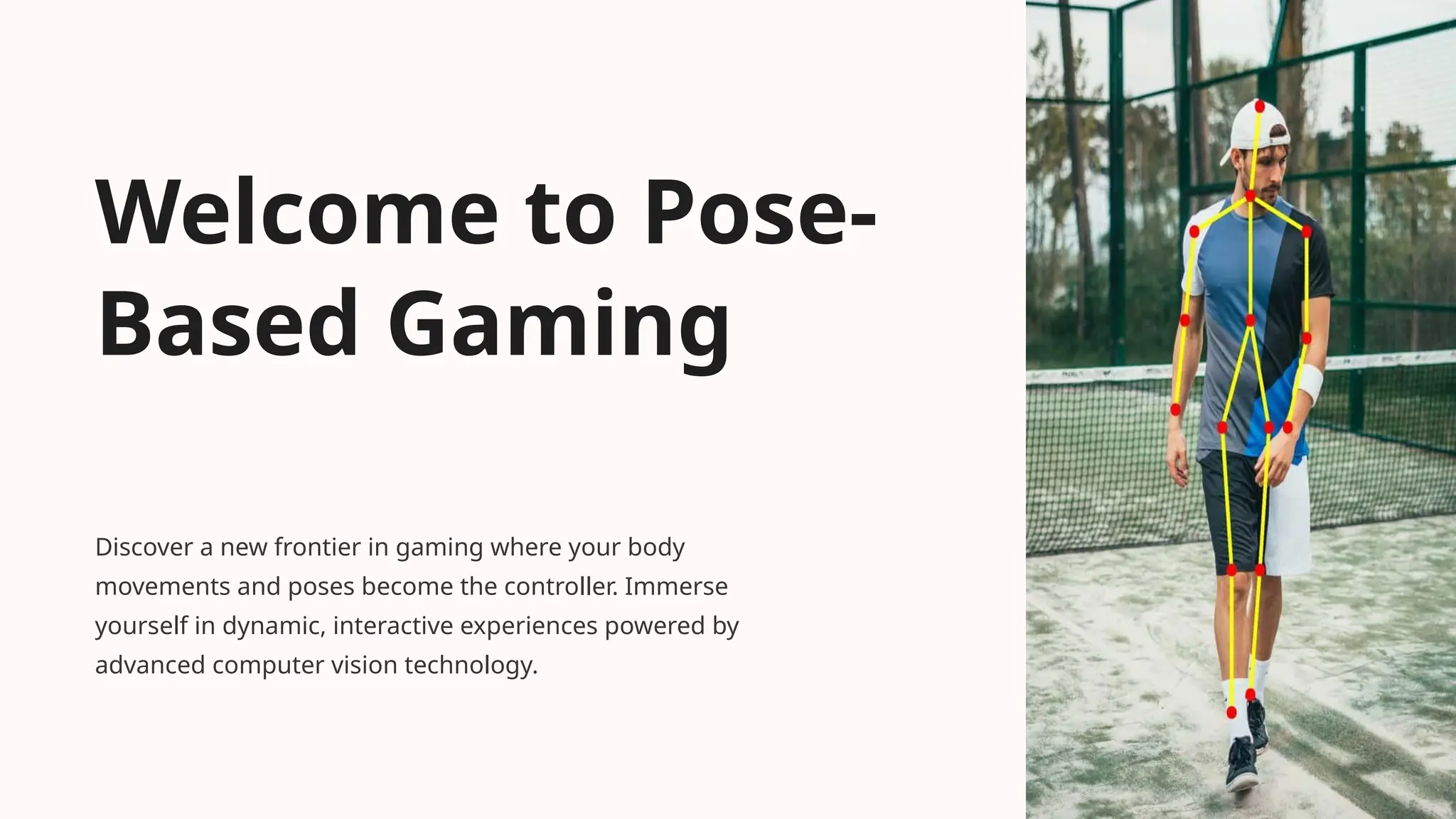
Discover a new frontier in gaming where your body
movements and poses become the controller. Immerse
yourself in dynamic, interactive experiences powered by
advanced computer vision technology.
Introduction to
Pose-Based
Gaming
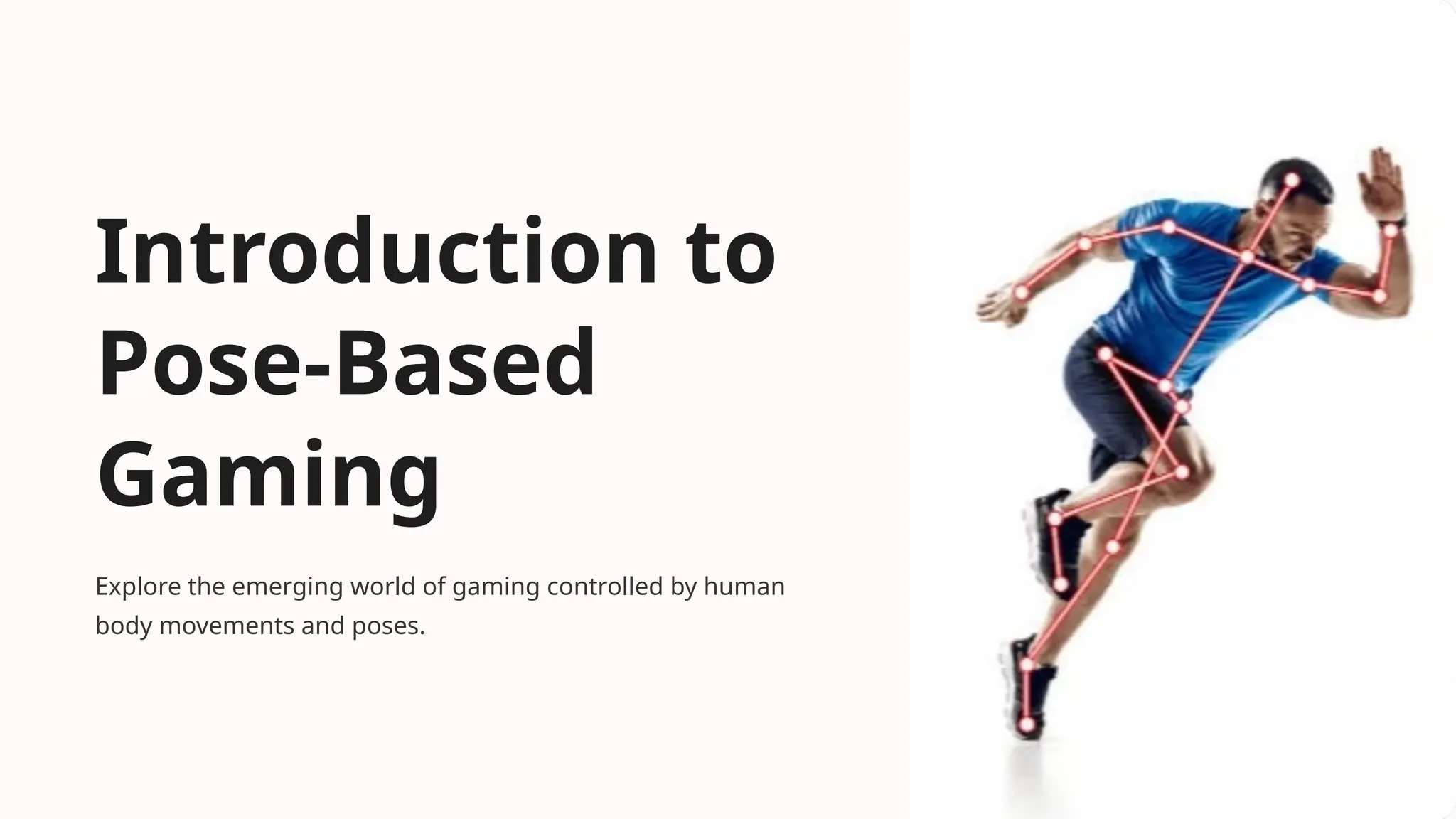
Explore the emerging world of gaming controlled by human
body movements and poses.
Abstract
This project presents a novel approach to game control using computer
vision techniques for pose detection. By leveraging machine learning
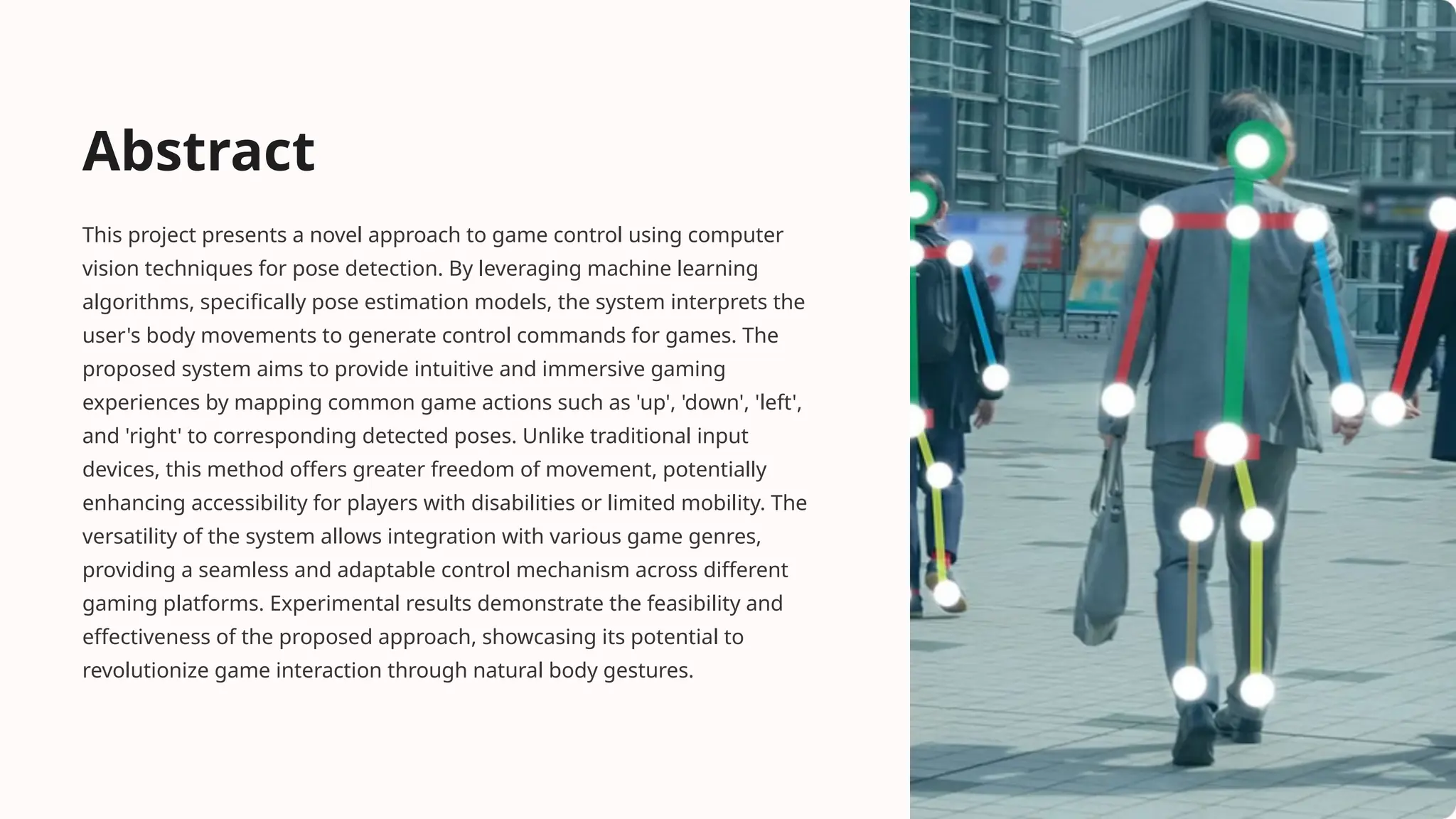
algorithms, specifically pose estimation models, the system interprets the
user's body movements to generate control commands for games. The
proposed system aims to provide intuitive and immersive gaming
experiences by mapping common game actions such as 'up', 'down', 'left',
and 'right' to corresponding detected poses. Unlike traditional input
devices, this method offers greater freedom of movement, potentially
enhancing accessibility for players with disabilities or limited mobility. The
versatility of the system allows integration with various game genres,
providing a seamless and adaptable control mechanism across different
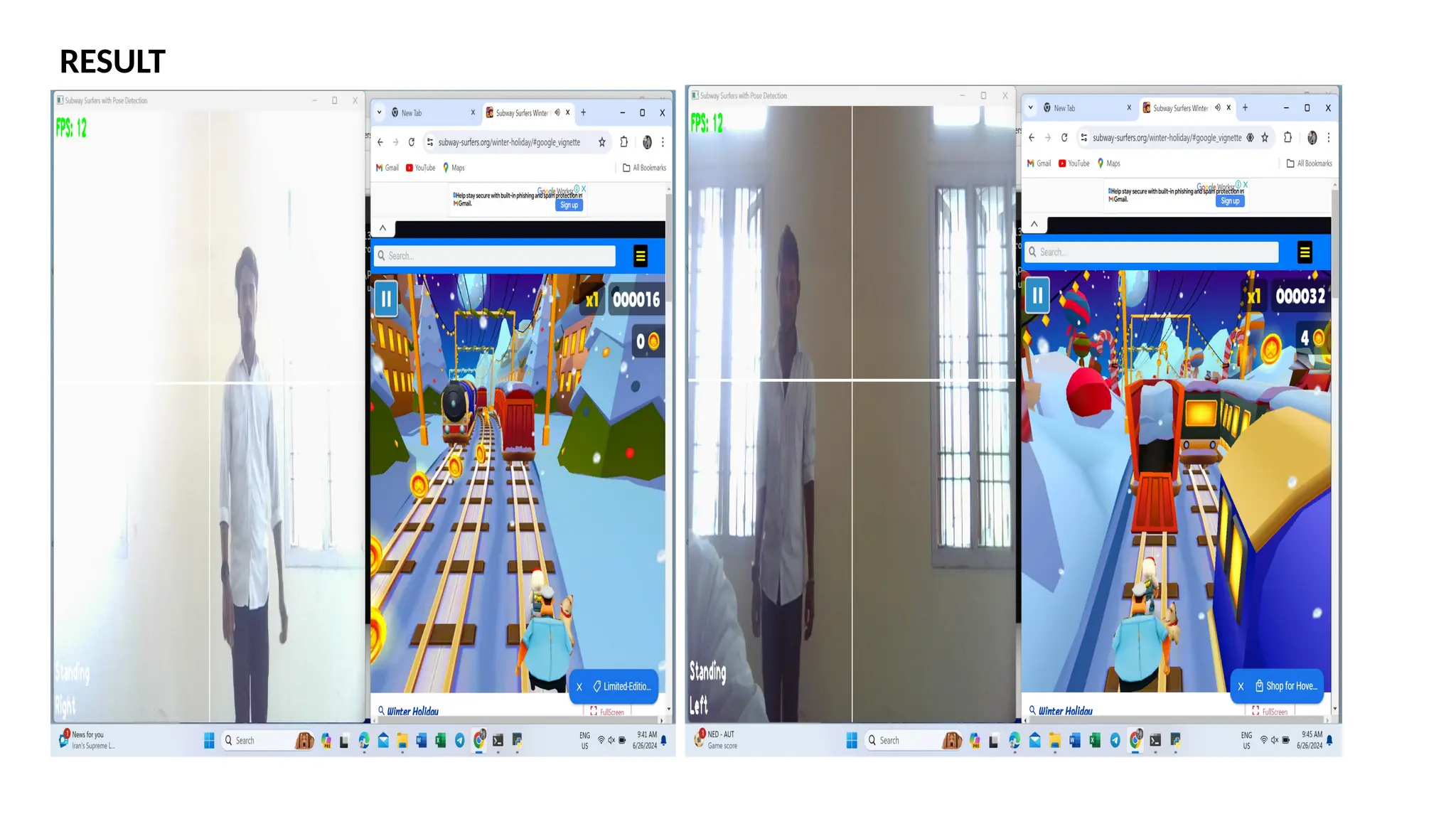
gaming platforms. Experimental results demonstrate the feasibility and
effectiveness of the proposed approach, showcasing its potential to
revolutionize game interaction through natural body gestures.
Existing System
Current gaming systems rely heavily on traditional input devices such as controllers, keyboards, and mice.
These input methods can be limiting, as they require users to master complex button combinations and
movements. This can present challenges for players with disabilities or those seeking more natural and
intuitive control schemes.
• Conventional input devices often require a high degree of fine motor skills and coordination
• Limited accessibility for users with physical limitations or mobility impairments
• Lack of seamless integration with the player's natural body movements and poses
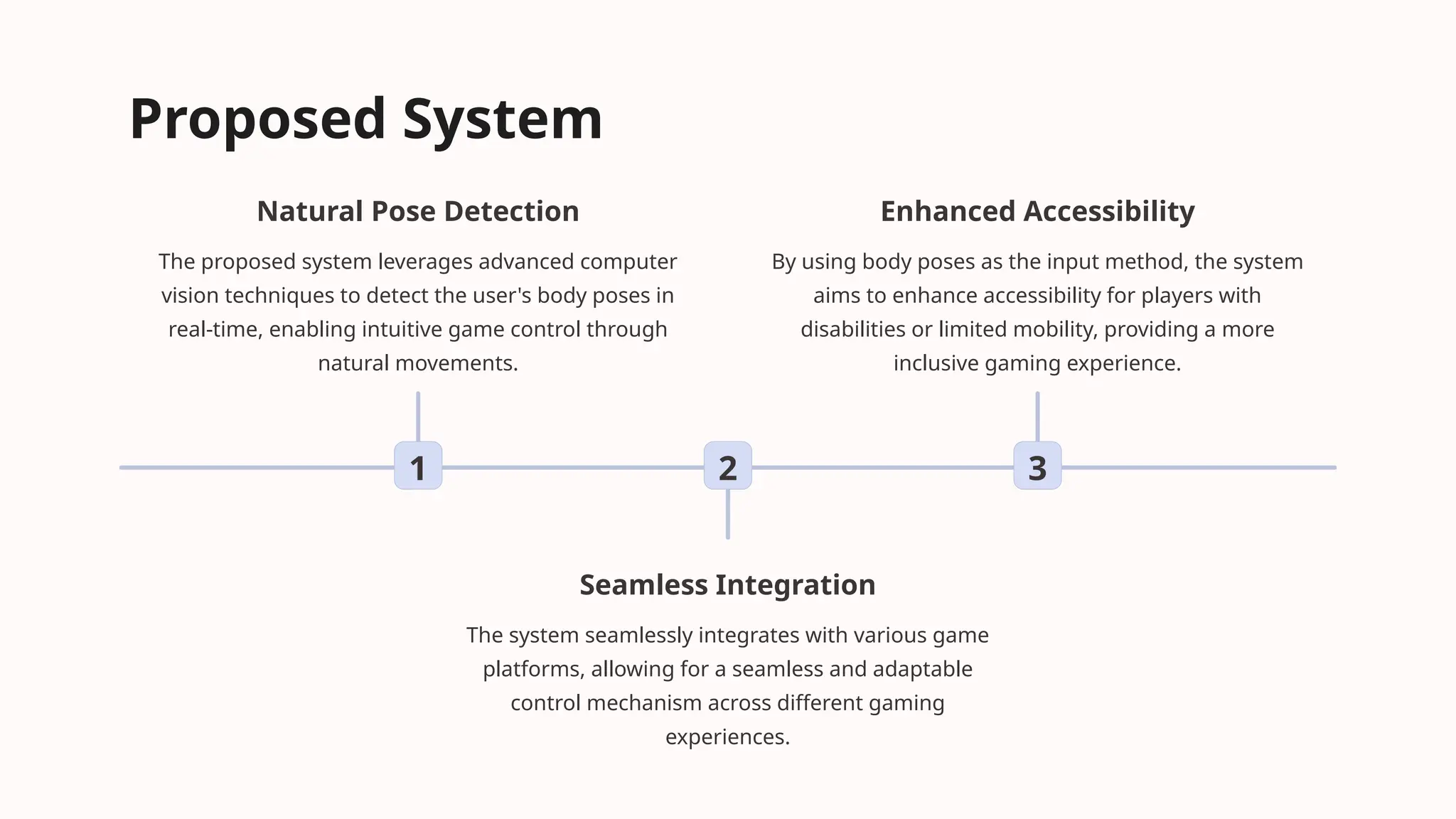
Proposed System
1
Natural Pose Detection
The proposed system leverages advanced computer
vision techniques to detect the user's body poses in
real-time, enabling intuitive game control through
natural movements.
2
Seamless Integration
The system seamlessly integrates with various game
platforms, allowing for a seamless and adaptable
control mechanism across different gaming
experiences.
3
Enhanced Accessibility
By using body poses as the input method, the system
aims to enhance accessibility for players with
disabilities or limited mobility, providing a more
inclusive gaming experience.
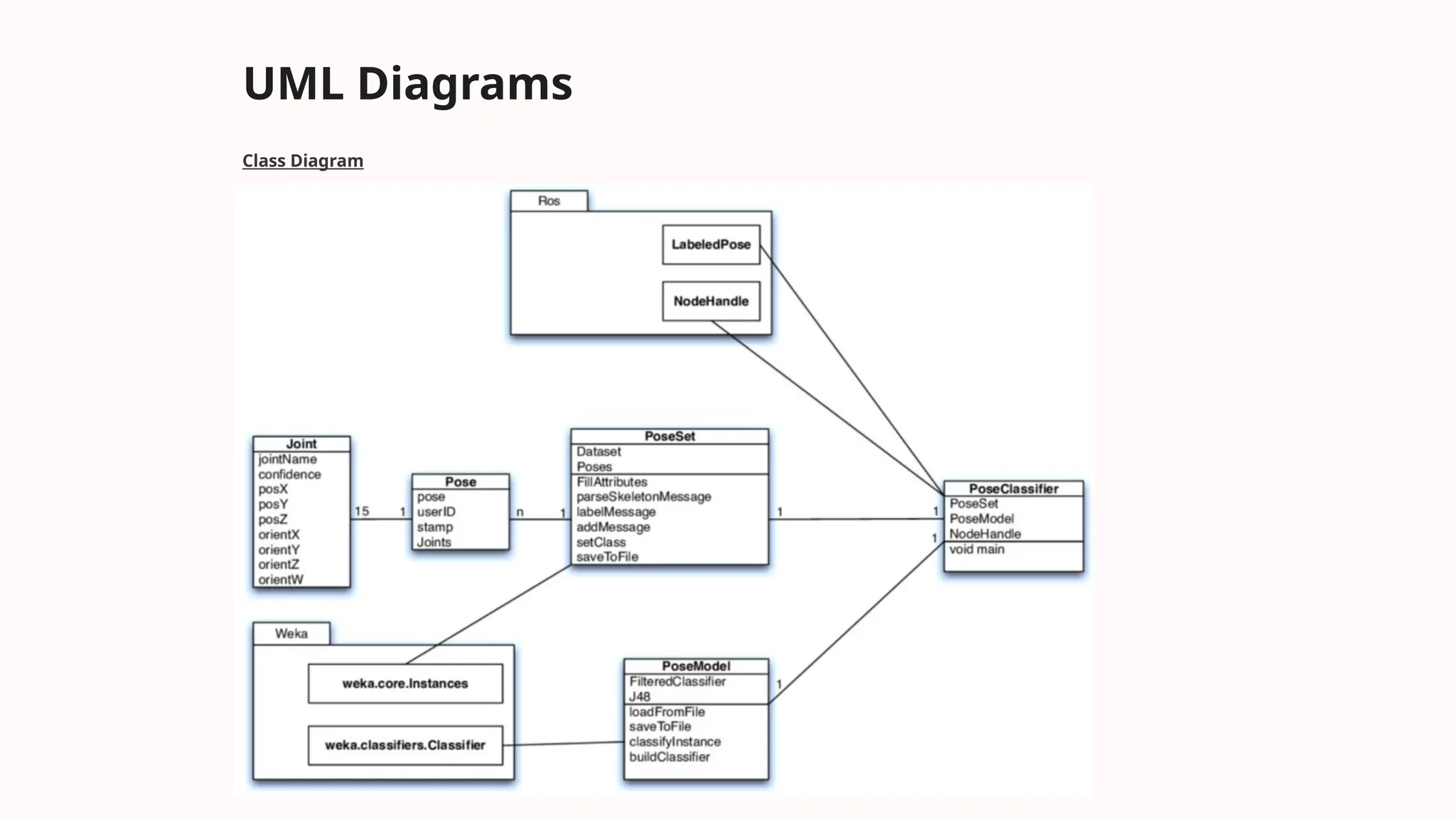
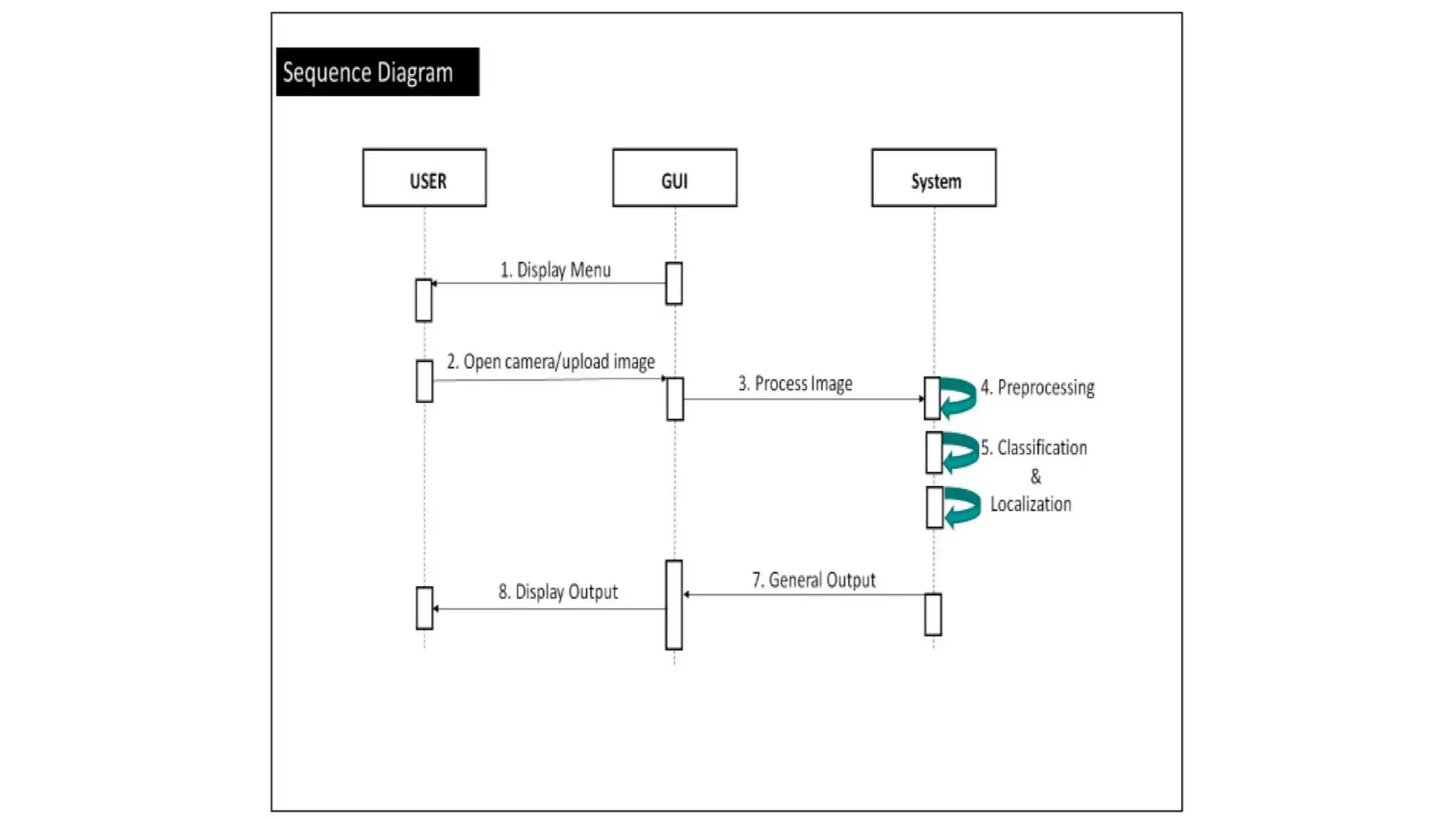
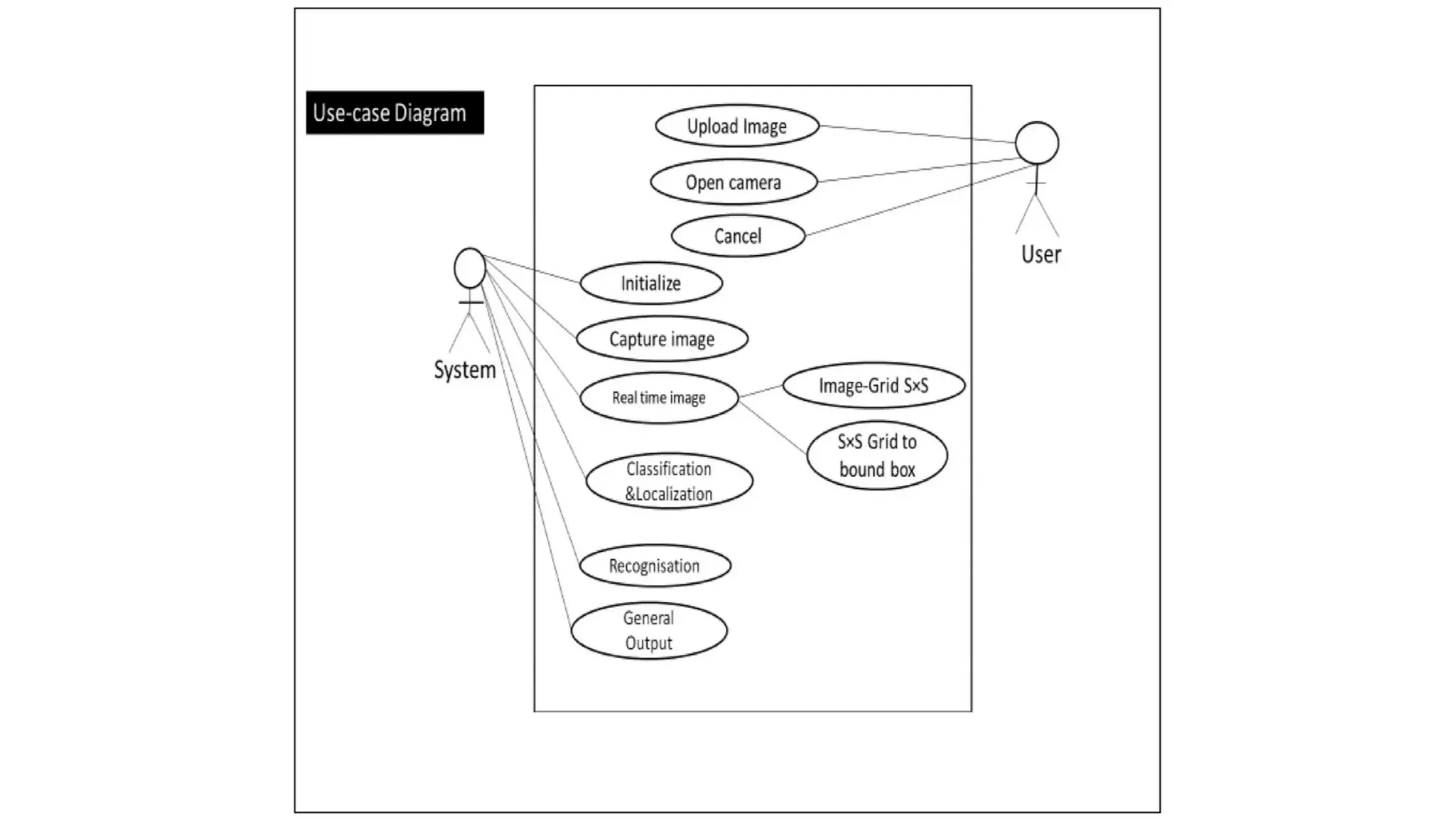
UML Diagrams
Class Diagram
RESULT
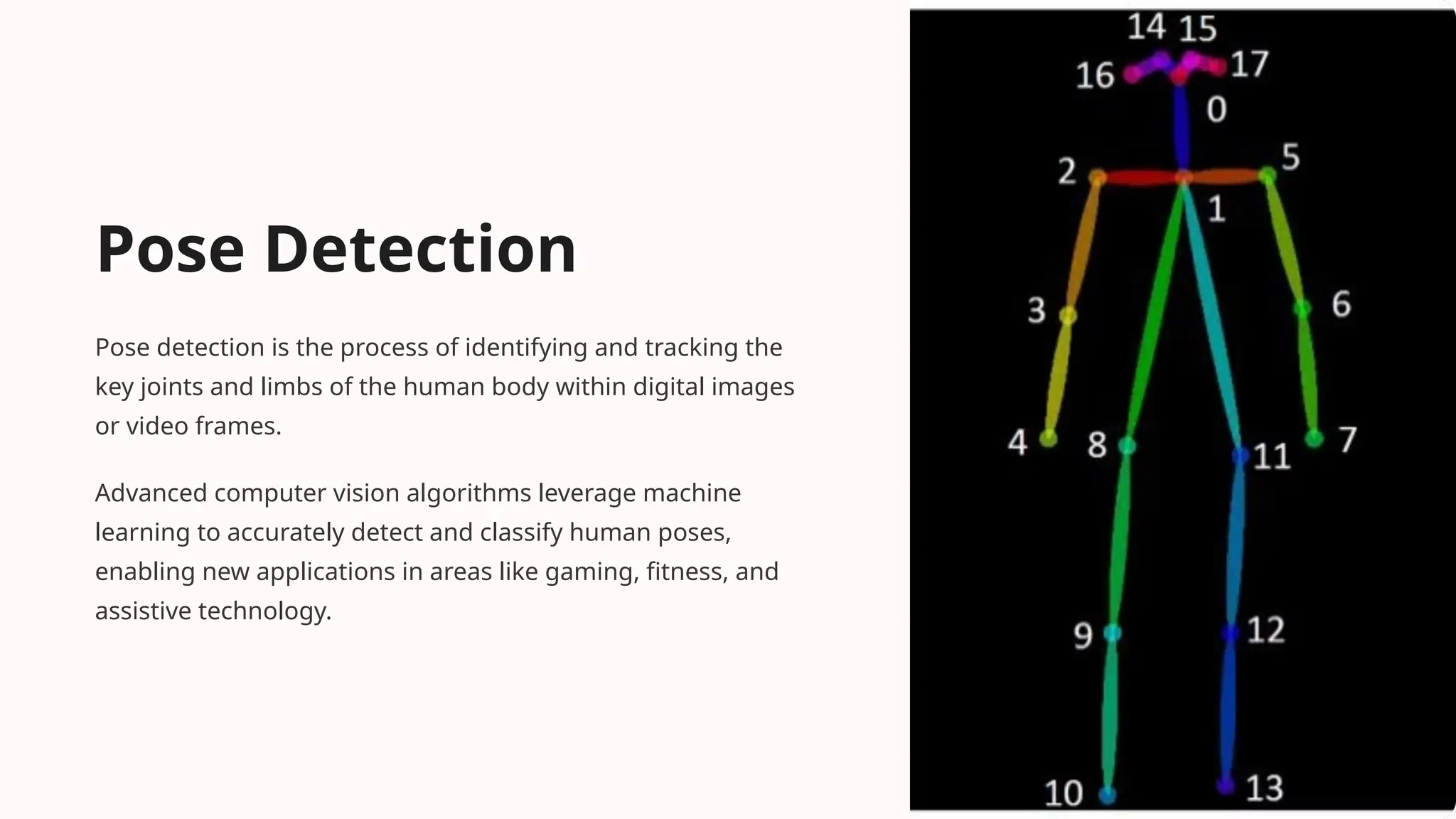
Pose Detection
Pose detection is the process of identifying and tracking the
key joints and limbs of the human body within digital images
or video frames.
Advanced computer vision algorithms leverage machine
learning to accurately detect and classify human poses,
enabling new applications in areas like gaming, fitness, and
assistive technology.
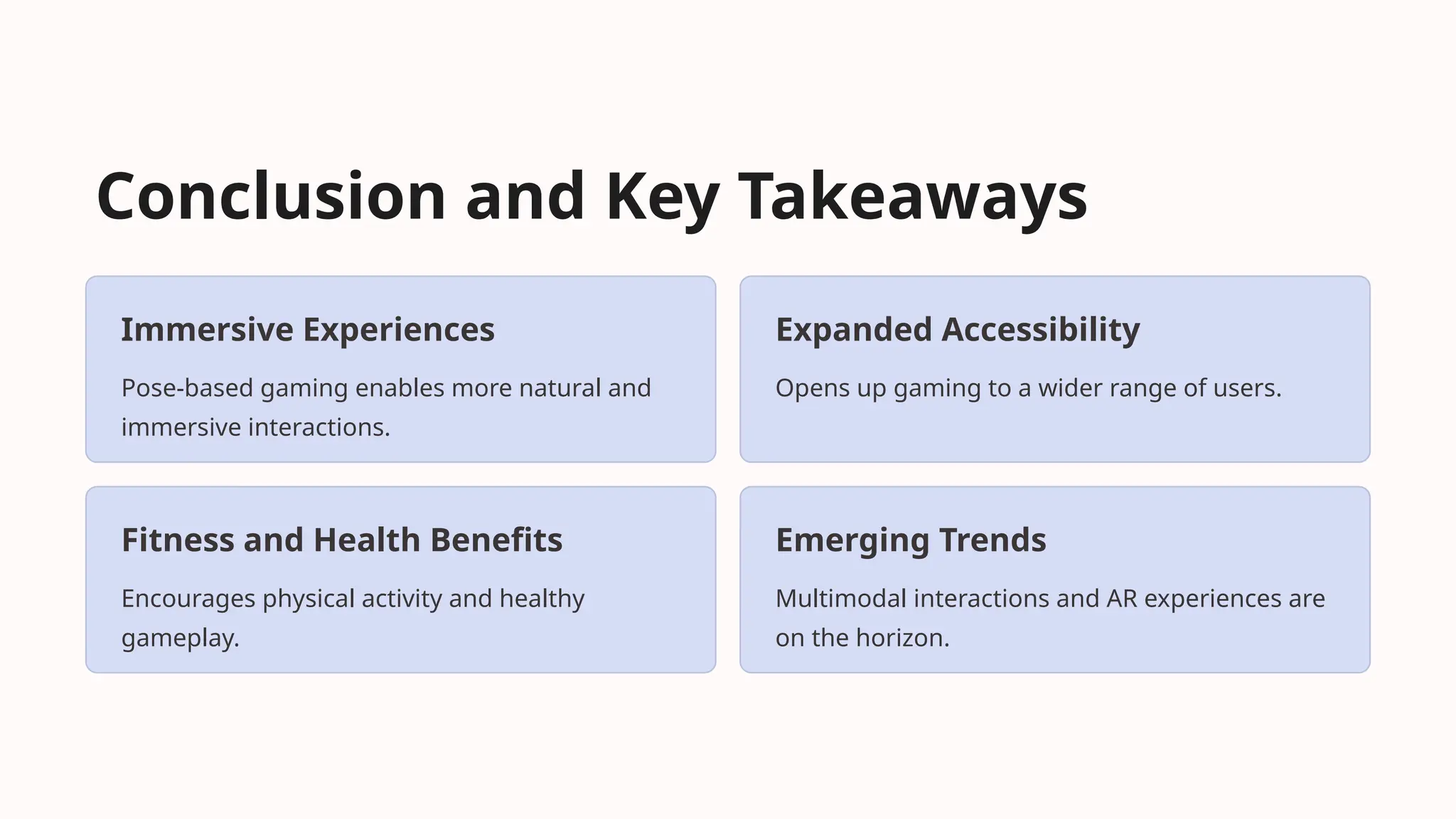
Conclusion and Key Takeaways
Immersive Experiences
Pose-based gaming enables more natural and
immersive interactions.
Expanded Accessibility
Opens up gaming to a wider range of users.
Fitness and Health Benefits
Encourages physical activity and healthy
gameplay.
Emerging Trends
Multimodal interactions and AR experiences are
on the horizon.
Thank
you

Pose Based Computer Vision Controls For Generic Game Interaction.pptx

  • 1.
    Welcome to Pose- BasedGaming Discover a new frontier in gaming where your body movements and poses become the controller. Immerse yourself in dynamic, interactive experiences powered by advanced computer vision technology.
  • 2.
    Introduction to Pose-Based Gaming Explore theemerging world of gaming controlled by human body movements and poses.
  • 3.
    Abstract This project presentsa novel approach to game control using computer vision techniques for pose detection. By leveraging machine learning algorithms, specifically pose estimation models, the system interprets the user's body movements to generate control commands for games. The proposed system aims to provide intuitive and immersive gaming experiences by mapping common game actions such as 'up', 'down', 'left', and 'right' to corresponding detected poses. Unlike traditional input devices, this method offers greater freedom of movement, potentially enhancing accessibility for players with disabilities or limited mobility. The versatility of the system allows integration with various game genres, providing a seamless and adaptable control mechanism across different gaming platforms. Experimental results demonstrate the feasibility and effectiveness of the proposed approach, showcasing its potential to revolutionize game interaction through natural body gestures.
  • 4.
    Existing System Current gamingsystems rely heavily on traditional input devices such as controllers, keyboards, and mice. These input methods can be limiting, as they require users to master complex button combinations and movements. This can present challenges for players with disabilities or those seeking more natural and intuitive control schemes. • Conventional input devices often require a high degree of fine motor skills and coordination • Limited accessibility for users with physical limitations or mobility impairments • Lack of seamless integration with the player's natural body movements and poses
  • 5.
    Proposed System 1 Natural PoseDetection The proposed system leverages advanced computer vision techniques to detect the user's body poses in real-time, enabling intuitive game control through natural movements. 2 Seamless Integration The system seamlessly integrates with various game platforms, allowing for a seamless and adaptable control mechanism across different gaming experiences. 3 Enhanced Accessibility By using body poses as the input method, the system aims to enhance accessibility for players with disabilities or limited mobility, providing a more inclusive gaming experience.
  • 6.
  • 9.
  • 10.
    Pose Detection Pose detectionis the process of identifying and tracking the key joints and limbs of the human body within digital images or video frames. Advanced computer vision algorithms leverage machine learning to accurately detect and classify human poses, enabling new applications in areas like gaming, fitness, and assistive technology.
  • 11.
    Conclusion and KeyTakeaways Immersive Experiences Pose-based gaming enables more natural and immersive interactions. Expanded Accessibility Opens up gaming to a wider range of users. Fitness and Health Benefits Encourages physical activity and healthy gameplay. Emerging Trends Multimodal interactions and AR experiences are on the horizon.
  • 12.