Unit 57: Photography and
 Photographic Practice
    Research of other
  photographers work
Photographer:
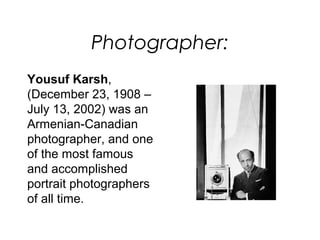
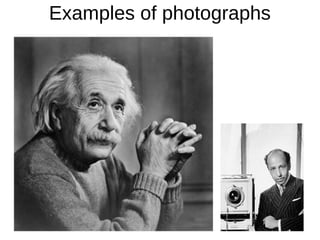
Yousuf Karsh,
(December 23, 1908 –
July 13, 2002) was an
Armenian-Canadian
photographer, and one
of the most famous
and accomplished
portrait photographers
of all time.
Photographer:

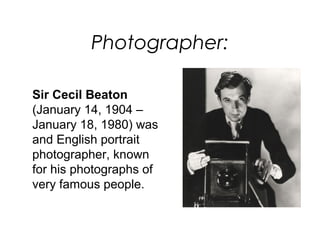
Sir Cecil Beaton
(January 14, 1904 –
January 18, 1980) was
and English portrait
photographer, known
for his photographs of
very famous people.
Photographer:
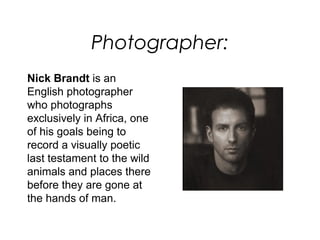
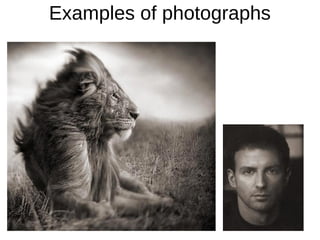
Nick Brandt is an
English photographer
who photographs
exclusively in Africa, one
of his goals being to
record a visually poetic
last testament to the wild
animals and places there
before they are gone at
the hands of man.
Examples of photographs
Cecil Beaton is known for his photographs of very
famous people, such as Pablo Picasso, Winston
Churchill, Marlon Brando, Elizabeth Taylor, Grace Kelly,
Marilyn Monroe, Audrey Hepburn, Andy Warhol, Mick
Jagger, Barbra Streisand, the Queen and many more.

His photo’s convey the famous person at their most
intimate, getting the photo’s that not many other
photographers could. This is because he built a
reputation as a trustworthy person who was very good
at his job.

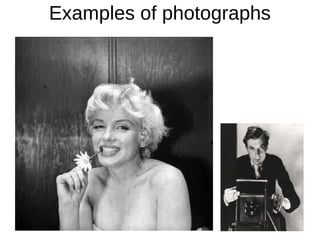
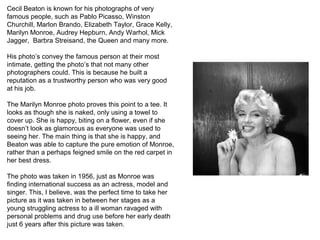
The Marilyn Monroe photo proves this point to a tee. It
looks as though she is naked, only using a towel to
cover up. She is happy, biting on a flower, even if she
doesn’t look as glamorous as everyone was used to
seeing her. The main thing is that she is happy, and
Beaton was able to capture the pure emotion of Monroe,
rather than a perhaps feigned smile on the red carpet in
her best dress.

The photo was taken in 1956, just as Monroe was
finding international success as an actress, model and
singer. This, I believe, was the perfect time to take her
picture as it was taken in between her stages as a
young struggling actress to a ill woman ravaged with
personal problems and drug use before her early death
just 6 years after this picture was taken.
Composition
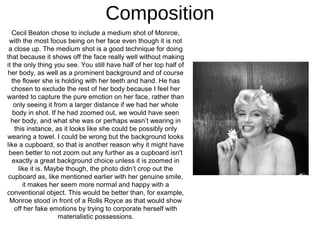
   Cecil Beaton chose to include a medium shot of Monroe,
 with the most focus being on her face even though it is not
 a close up. The medium shot is a good technique for doing
that because it shows off the face really well without making
it the only thing you see. You still have half of her top half of
her body, as well as a prominent background and of course
  the flower she is holding with her teeth and hand. He has
  chosen to exclude the rest of her body because I feel her
wanted to capture the pure emotion on her face, rather than
   only seeing it from a larger distance if we had her whole
   body in shot. If he had zoomed out, we would have seen
  her body, and what she was or perhaps wasn’t wearing in
    this instance, as it looks like she could be possibly only
wearing a towel. I could be wrong but the background looks
like a cupboard, so that is another reason why it might have
 been better to not zoom out any further as a cupboard isn't
   exactly a great background choice unless it is zoomed in
      like it is. Maybe though, the photo didn’t crop out the
 cupboard as, like mentioned earlier with her genuine smile,
        it makes her seem more normal and happy with a
conventional object. This would be better than, for example,
 Monroe stood in front of a Rolls Royce as that would show
    off her fake emotions by trying to corporate herself with
                     materialistic possessions.
Techniques used
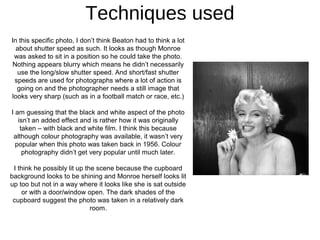
In this specific photo, I don’t think Beaton had to think a lot
  about shutter speed as such. It looks as though Monroe
 was asked to sit in a position so he could take the photo.
Nothing appears blurry which means he didn’t necessarily
  use the long/slow shutter speed. And short/fast shutter
 speeds are used for photographs where a lot of action is
  going on and the photographer needs a still image that
looks very sharp (such as in a football match or race, etc.)

I am guessing that the black and white aspect of the photo
   isn’t an added effect and is rather how it was originally
    taken – with black and white film. I think this because
 although colour photography was available, it wasn’t very
  popular when this photo was taken back in 1956. Colour
     photography didn’t get very popular until much later.

 I think he possibly lit up the scene because the cupboard
background looks to be shining and Monroe herself looks lit
up too but not in a way where it looks like she is sat outside
    or with a door/window open. The dark shades of the
 cupboard suggest the photo was taken in a relatively dark
                              room.
Strengths & Weaknesses

I like Cecil Beaton’s work. He was obviously hard-working
  and had to earn the right to take the photographs of the
                calibre of people that he did.

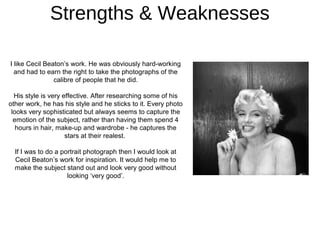
  His style is very effective. After researching some of his
other work, he has his style and he sticks to it. Every photo
 looks very sophisticated but always seems to capture the
  emotion of the subject, rather than having them spend 4
   hours in hair, make-up and wardrobe - he captures the
                     stars at their realest.

  If I was to do a portrait photograph then I would look at
  Cecil Beaton’s work for inspiration. It would help me to
  make the subject stand out and look very good without
                     looking ‘very good’.

Portrait Photographers

  • 1.
    Unit 57: Photographyand Photographic Practice Research of other photographers work
  • 2.
    Photographer: Yousuf Karsh, (December 23,1908 – July 13, 2002) was an Armenian-Canadian photographer, and one of the most famous and accomplished portrait photographers of all time.
  • 3.
    Photographer: Sir Cecil Beaton (January14, 1904 – January 18, 1980) was and English portrait photographer, known for his photographs of very famous people.
  • 4.
    Photographer: Nick Brandt isan English photographer who photographs exclusively in Africa, one of his goals being to record a visually poetic last testament to the wild animals and places there before they are gone at the hands of man.
  • 5.
  • 6.
  • 7.
  • 8.
    Cecil Beaton isknown for his photographs of very famous people, such as Pablo Picasso, Winston Churchill, Marlon Brando, Elizabeth Taylor, Grace Kelly, Marilyn Monroe, Audrey Hepburn, Andy Warhol, Mick Jagger, Barbra Streisand, the Queen and many more. His photo’s convey the famous person at their most intimate, getting the photo’s that not many other photographers could. This is because he built a reputation as a trustworthy person who was very good at his job. The Marilyn Monroe photo proves this point to a tee. It looks as though she is naked, only using a towel to cover up. She is happy, biting on a flower, even if she doesn’t look as glamorous as everyone was used to seeing her. The main thing is that she is happy, and Beaton was able to capture the pure emotion of Monroe, rather than a perhaps feigned smile on the red carpet in her best dress. The photo was taken in 1956, just as Monroe was finding international success as an actress, model and singer. This, I believe, was the perfect time to take her picture as it was taken in between her stages as a young struggling actress to a ill woman ravaged with personal problems and drug use before her early death just 6 years after this picture was taken.
  • 9.
    Composition Cecil Beaton chose to include a medium shot of Monroe, with the most focus being on her face even though it is not a close up. The medium shot is a good technique for doing that because it shows off the face really well without making it the only thing you see. You still have half of her top half of her body, as well as a prominent background and of course the flower she is holding with her teeth and hand. He has chosen to exclude the rest of her body because I feel her wanted to capture the pure emotion on her face, rather than only seeing it from a larger distance if we had her whole body in shot. If he had zoomed out, we would have seen her body, and what she was or perhaps wasn’t wearing in this instance, as it looks like she could be possibly only wearing a towel. I could be wrong but the background looks like a cupboard, so that is another reason why it might have been better to not zoom out any further as a cupboard isn't exactly a great background choice unless it is zoomed in like it is. Maybe though, the photo didn’t crop out the cupboard as, like mentioned earlier with her genuine smile, it makes her seem more normal and happy with a conventional object. This would be better than, for example, Monroe stood in front of a Rolls Royce as that would show off her fake emotions by trying to corporate herself with materialistic possessions.
  • 10.
    Techniques used In thisspecific photo, I don’t think Beaton had to think a lot about shutter speed as such. It looks as though Monroe was asked to sit in a position so he could take the photo. Nothing appears blurry which means he didn’t necessarily use the long/slow shutter speed. And short/fast shutter speeds are used for photographs where a lot of action is going on and the photographer needs a still image that looks very sharp (such as in a football match or race, etc.) I am guessing that the black and white aspect of the photo isn’t an added effect and is rather how it was originally taken – with black and white film. I think this because although colour photography was available, it wasn’t very popular when this photo was taken back in 1956. Colour photography didn’t get very popular until much later. I think he possibly lit up the scene because the cupboard background looks to be shining and Monroe herself looks lit up too but not in a way where it looks like she is sat outside or with a door/window open. The dark shades of the cupboard suggest the photo was taken in a relatively dark room.
  • 11.
    Strengths & Weaknesses Ilike Cecil Beaton’s work. He was obviously hard-working and had to earn the right to take the photographs of the calibre of people that he did. His style is very effective. After researching some of his other work, he has his style and he sticks to it. Every photo looks very sophisticated but always seems to capture the emotion of the subject, rather than having them spend 4 hours in hair, make-up and wardrobe - he captures the stars at their realest. If I was to do a portrait photograph then I would look at Cecil Beaton’s work for inspiration. It would help me to make the subject stand out and look very good without looking ‘very good’.