



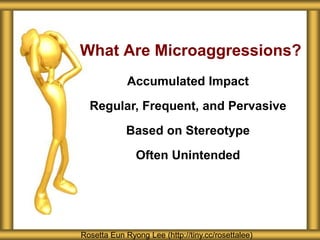

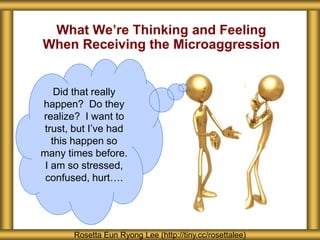
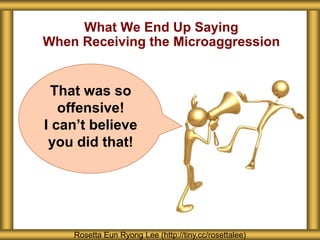

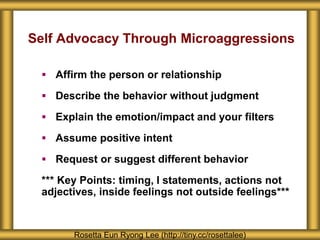


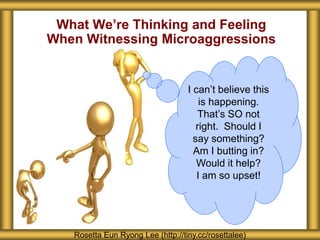

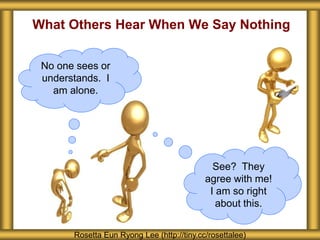

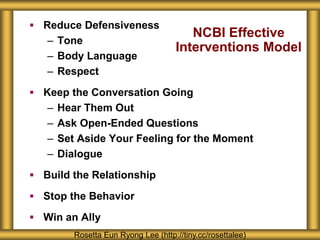
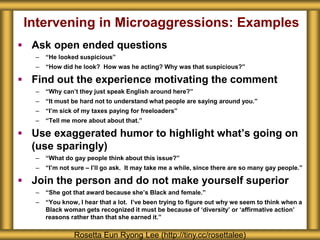

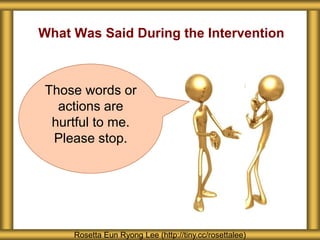
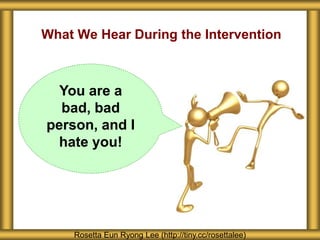
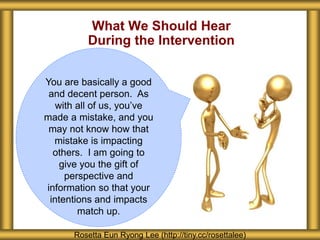

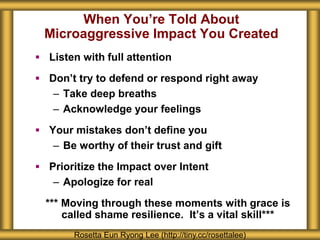
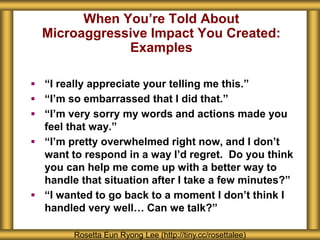









The document discusses tools for navigating microaggressions and having courageous conversations about unintended hurtful comments. It defines microaggressions and provides examples of what people think and feel when receiving or witnessing them. The document offers guidance on self-advocacy when receiving microaggressions using the DEAR method of describing the behavior, explaining the impact, and requesting different behavior. It also provides suggestions for how to effectively intervene as a witness and how to listen and respond when told you caused a microaggressive impact. The goal is to have respectful and thoughtful discussions to build understanding and more inclusive communities.


