Activation of the opioidergic descending pain control system underlies placebo analgesia. Eippert F, Bingel U, Schoell ED, Yacubian J, Klinger R, Lorenz J, Büchel C. Neuron. 2009 Aug 27. Direct evidence for spinal cord involvement in placebo analgesia. Eippert F, Finsterbusch J, Bingel U, Büchel C. Science. 2009 Oct 16. By  Helran
Introduction Placebo analgesia :  ineffective substance has a pain-relieving effect, caused by the subject's expectation to receive an analgesic substance. Imaging studies shown : ->  Release of endogenous opioids under placebo in pain-related regions (PAG, rACC). ->  Increase or decrease of responses in pain-related regions (PAG, rACC ; dACC, Insula, thalamus). Hypothesis :  Placebo analgesia recruits the opioidergic descending pain control system.
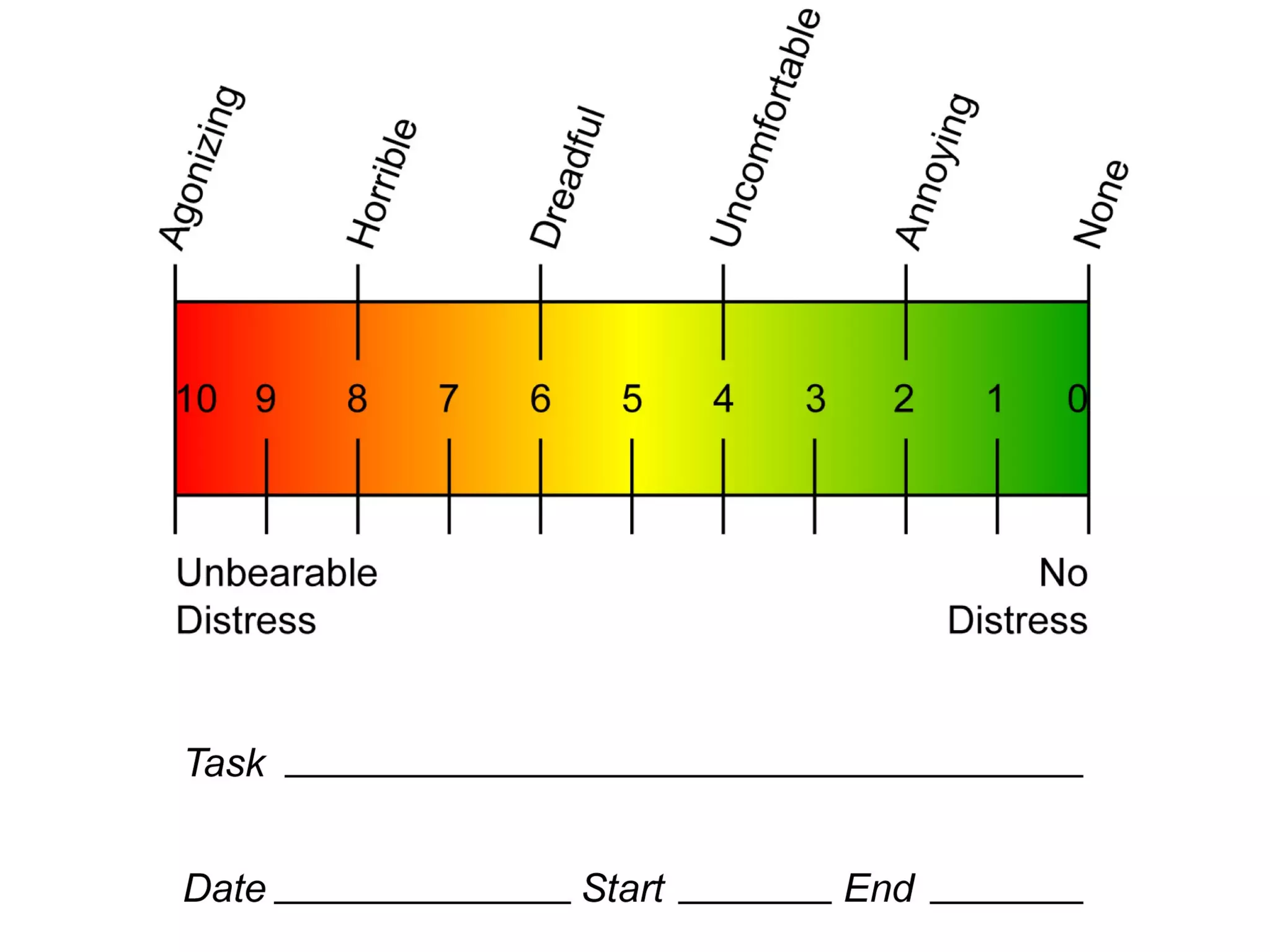
Materials and Methods Subjects :  40 Germans male (20-40 years old) divided in “naloxone group” and “saline group”. Drug :  Naloxone : Antagonist of opioid receptor. By intravenous in antecubital vein of left arm. Parameters : ->  Pain rating : Pain score on the scale VAS (visual analog scale). ->  BOLD responses = Blood-oxygen-level-dependent responses. Measured by pharmacological fMRI.
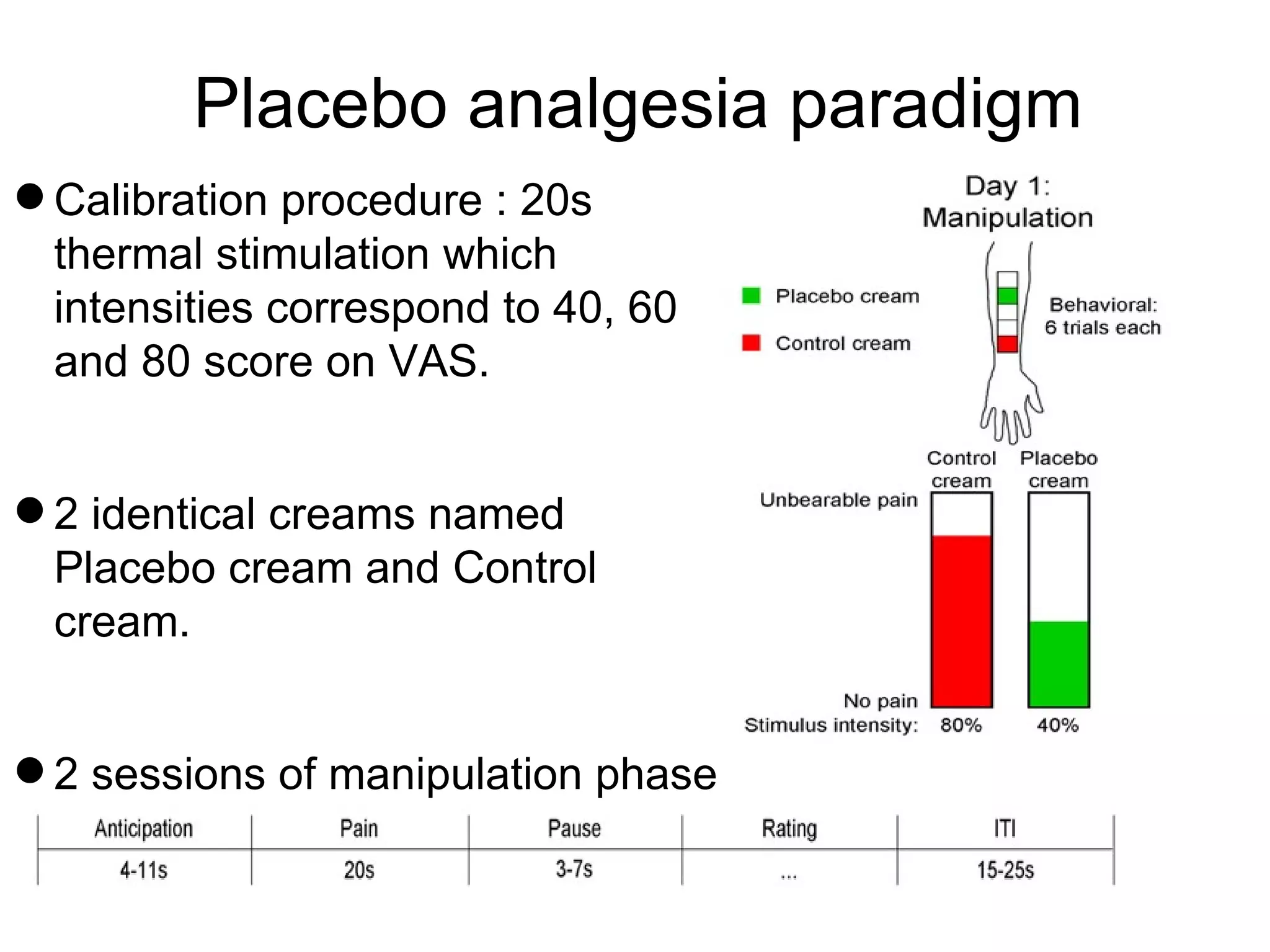
Placebo analgesia paradigm Calibration procedure : 20s thermal stimulation which intensities correspond to 40, 60 and 80 score on VAS. 2 identical creams named Placebo cream and Control cream. 2 sessions of manipulation phase : 6 trials thermal stimulation.
Placebo analgesia paradigm Subjects think : Placebo cream is a “lidocaïne cream”. During manipulations phases, both cream areas are stimulated whit the same thermal intensity (80 on VAS). Reality : Placebo and control cream are the same. Intensity thermal stimulation correspond to 40 on Placebo cream skin area and 80 on Control cream skin area.
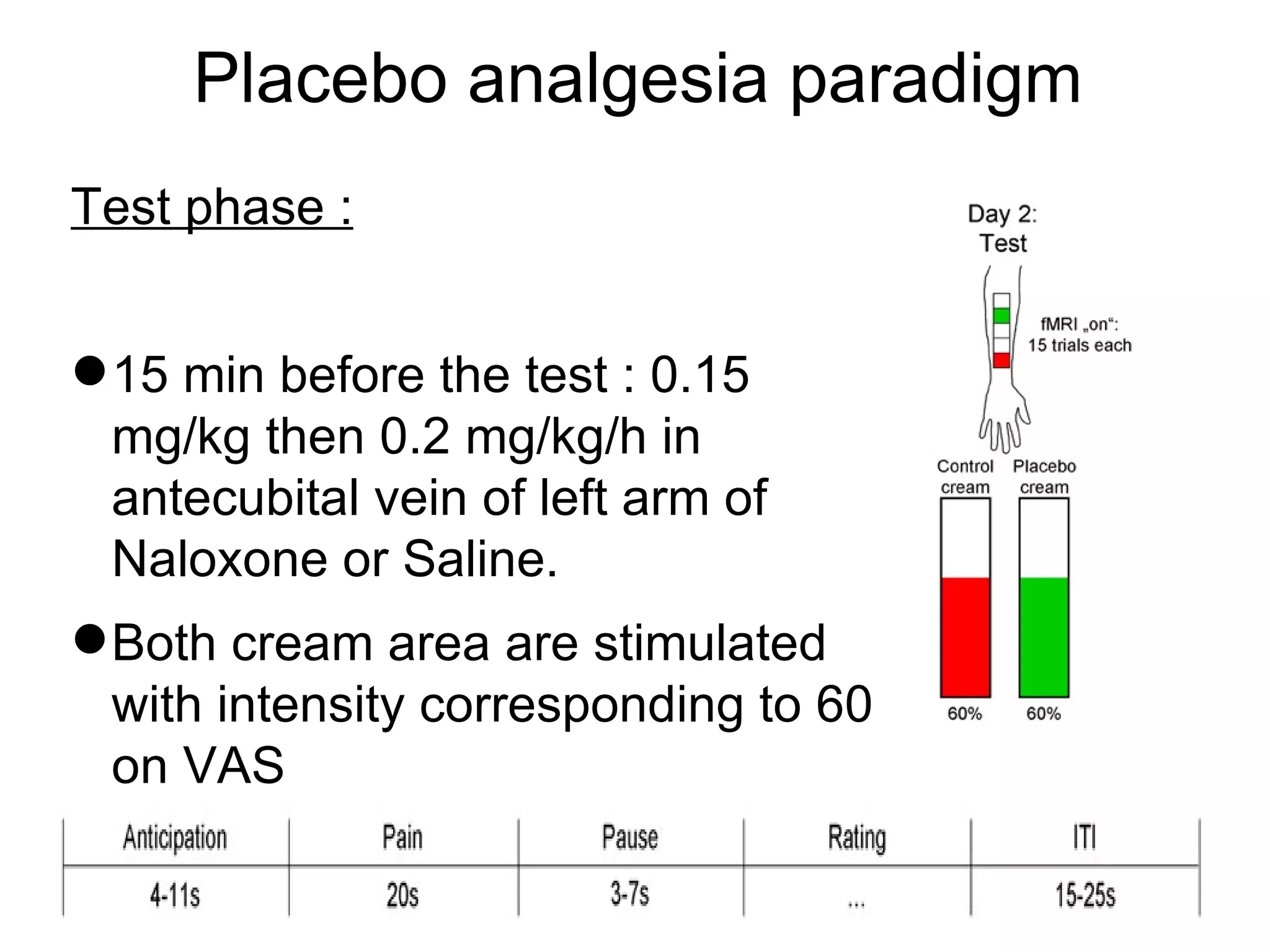
Placebo analgesia paradigm Test phase : 15 min before the test : 0.15 mg/kg then 0.2 mg/kg/h in antecubital vein of left arm of Naloxone or Saline. Both cream area are stimulated with intensity corresponding to 60 on VAS
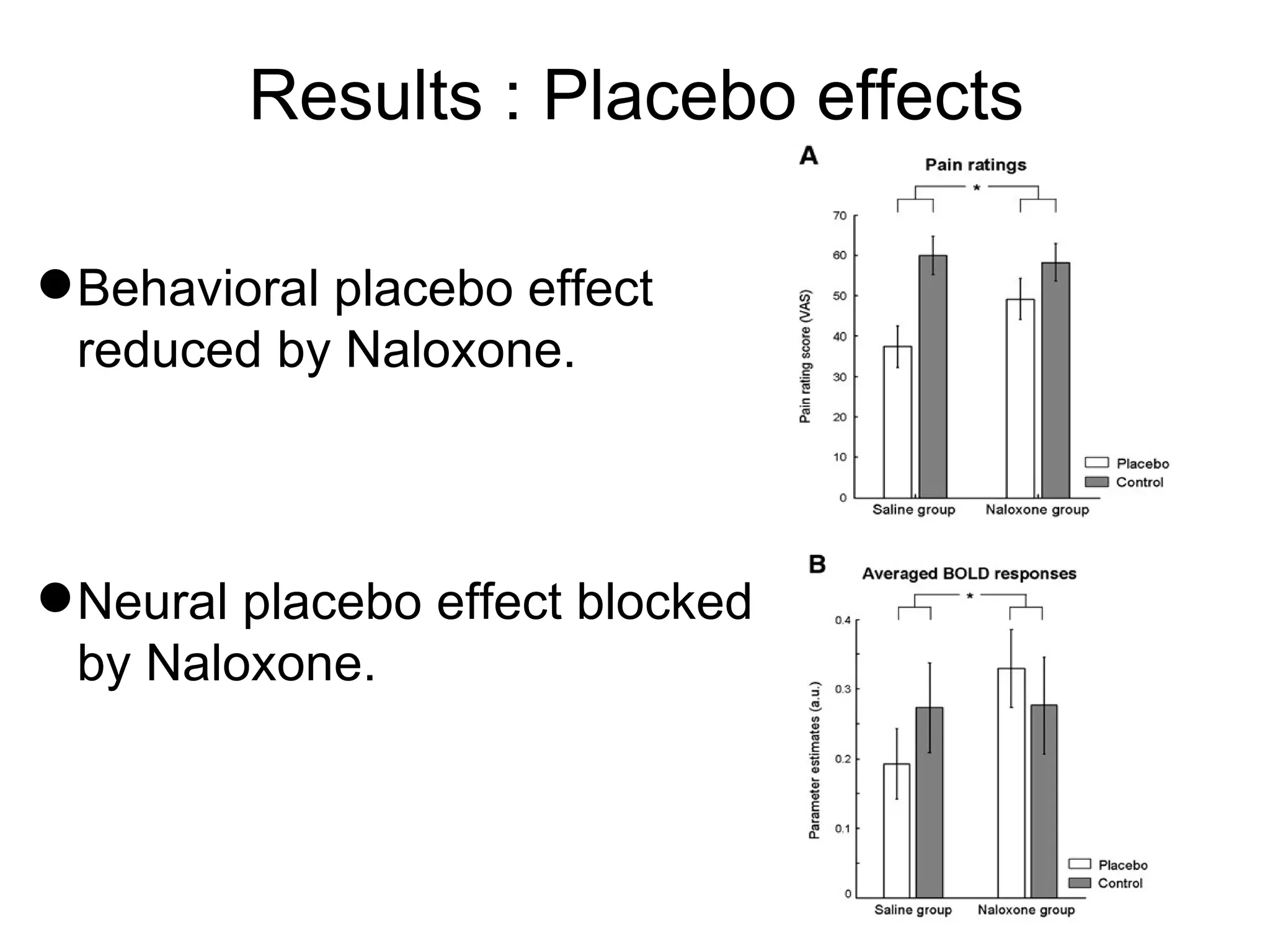
Results : Placebo effects Behavioral placebo effect reduced by Naloxone. Neural placebo effect blocked by Naloxone.
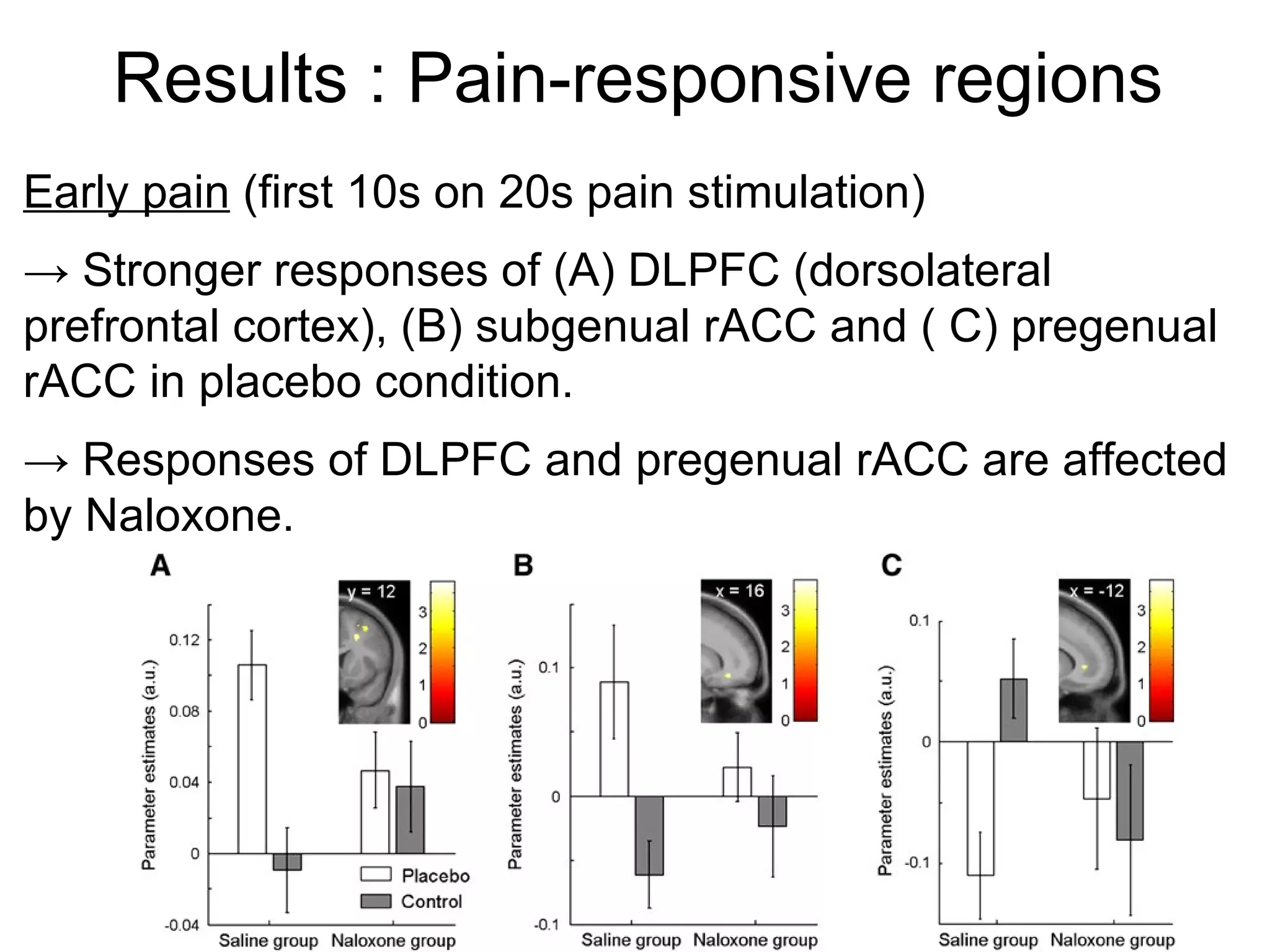
Results : Pain-responsive regions Early pain  (first 10s on 20s pain stimulation) ->  Stronger responses of (A) DLPFC (dorsolateral prefrontal cortex), (B) subgenual rACC and ( C) pregenual rACC in placebo condition. ->  Responses of DLPFC and pregenual rACC are affected by Naloxone.
Results : Pain-responsive regions Hypothalamus, PAG and RVM are involved in descending pain control system. In early and late pain, theses threes regions show a stronger responses in placebo condition which are modulated by Naloxone. Stronger correlation between pain ratings and bold responses in saline group than in naloxone group.
Results : connectivity between rACC and PAG (A) In saline group, rACC-PAG coupling is enhanced under placebo which is abolished in naloxone group. (B) Controlateral secondary somatosensory cortex BOLD responses are negatively influenced by rACC-PAG coupling. rACC-PAG coupling predicted RVM BLOD responses under placebo
Results : Spinal cord involvement Pain-related BOLD responses in the segment C6 of spinal cord. Pain rating and BOLD Responses are reduced under placebo.
Conclusion In placebo analgesia ->  There is a correlation between pain behavior and BOLD responses in pain-related regions (rACC, PAG, RVM, Spinal cord). ->  Involvement of opioidergic descending pain control system. Under placebo : RVM BLOD responses is related to the strength rACC-PAG coupling, which is opioid dependant. Main descending pathway : PAG -> RVM -> Spinal Cord.
By  Helran
http://z.about.com/d/ergonomics/1/0/C/-/-/-/painscale.jpg

Placebo effect presentation

  • 1.
    Activation of theopioidergic descending pain control system underlies placebo analgesia. Eippert F, Bingel U, Schoell ED, Yacubian J, Klinger R, Lorenz J, Büchel C. Neuron. 2009 Aug 27. Direct evidence for spinal cord involvement in placebo analgesia. Eippert F, Finsterbusch J, Bingel U, Büchel C. Science. 2009 Oct 16. By Helran
  • 2.
    Introduction Placebo analgesia: ineffective substance has a pain-relieving effect, caused by the subject's expectation to receive an analgesic substance. Imaging studies shown : -> Release of endogenous opioids under placebo in pain-related regions (PAG, rACC). -> Increase or decrease of responses in pain-related regions (PAG, rACC ; dACC, Insula, thalamus). Hypothesis : Placebo analgesia recruits the opioidergic descending pain control system.
  • 3.
    Materials and MethodsSubjects : 40 Germans male (20-40 years old) divided in “naloxone group” and “saline group”. Drug : Naloxone : Antagonist of opioid receptor. By intravenous in antecubital vein of left arm. Parameters : -> Pain rating : Pain score on the scale VAS (visual analog scale). -> BOLD responses = Blood-oxygen-level-dependent responses. Measured by pharmacological fMRI.
  • 4.
    Placebo analgesia paradigmCalibration procedure : 20s thermal stimulation which intensities correspond to 40, 60 and 80 score on VAS. 2 identical creams named Placebo cream and Control cream. 2 sessions of manipulation phase : 6 trials thermal stimulation.
  • 5.
    Placebo analgesia paradigmSubjects think : Placebo cream is a “lidocaïne cream”. During manipulations phases, both cream areas are stimulated whit the same thermal intensity (80 on VAS). Reality : Placebo and control cream are the same. Intensity thermal stimulation correspond to 40 on Placebo cream skin area and 80 on Control cream skin area.
  • 6.
    Placebo analgesia paradigmTest phase : 15 min before the test : 0.15 mg/kg then 0.2 mg/kg/h in antecubital vein of left arm of Naloxone or Saline. Both cream area are stimulated with intensity corresponding to 60 on VAS
  • 7.
    Results : Placeboeffects Behavioral placebo effect reduced by Naloxone. Neural placebo effect blocked by Naloxone.
  • 8.
    Results : Pain-responsiveregions Early pain (first 10s on 20s pain stimulation) -> Stronger responses of (A) DLPFC (dorsolateral prefrontal cortex), (B) subgenual rACC and ( C) pregenual rACC in placebo condition. -> Responses of DLPFC and pregenual rACC are affected by Naloxone.
  • 9.
    Results : Pain-responsiveregions Hypothalamus, PAG and RVM are involved in descending pain control system. In early and late pain, theses threes regions show a stronger responses in placebo condition which are modulated by Naloxone. Stronger correlation between pain ratings and bold responses in saline group than in naloxone group.
  • 10.
    Results : connectivitybetween rACC and PAG (A) In saline group, rACC-PAG coupling is enhanced under placebo which is abolished in naloxone group. (B) Controlateral secondary somatosensory cortex BOLD responses are negatively influenced by rACC-PAG coupling. rACC-PAG coupling predicted RVM BLOD responses under placebo
  • 11.
    Results : Spinalcord involvement Pain-related BOLD responses in the segment C6 of spinal cord. Pain rating and BOLD Responses are reduced under placebo.
  • 12.
    Conclusion In placeboanalgesia -> There is a correlation between pain behavior and BOLD responses in pain-related regions (rACC, PAG, RVM, Spinal cord). -> Involvement of opioidergic descending pain control system. Under placebo : RVM BLOD responses is related to the strength rACC-PAG coupling, which is opioid dependant. Main descending pathway : PAG -> RVM -> Spinal Cord.
  • 13.
  • 14.

Editor's Notes

  • #4 pharmacological fMRI = fMRI + Drug administration
  • #7 4*4 cm square drawn