DR.CHRISTINAL V
ASSISTANT PROFESSOR
DEPARTMENT OF MICROBIOLOGY
GANGA INSTITUTE OF HEALTH SCIENCES
PIN WORMS
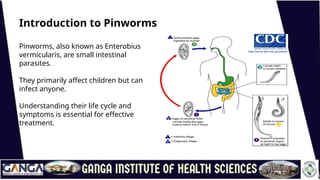
Introduction to Pinworms
Pinworms, also known as Enterobius
vermicularis, are small intestinal
parasites.
They primarily affect children but can
infect anyone.
Understanding their life cycle and
symptoms is essential for effective
treatment.
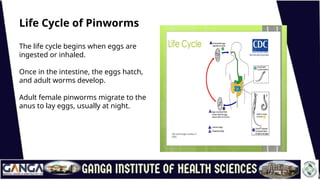
Life Cycle of Pinworms
The life cycle begins when eggs are
ingested or inhaled.
Once in the intestine, the eggs hatch,
and adult worms develop.
Adult female pinworms migrate to the
anus to lay eggs, usually at night.
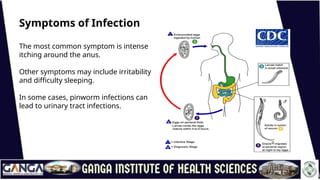
Symptoms of Infection
The most common symptom is intense
itching around the anus.
Other symptoms may include irritability
and difficulty sleeping.
In some cases, pinworm infections can
lead to urinary tract infections.
Transmission Methods
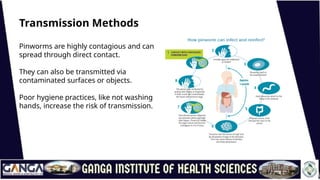
Pinworms are highly contagious and can
spread through direct contact.
They can also be transmitted via
contaminated surfaces or objects.
Poor hygiene practices, like not washing
hands, increase the risk of transmission.
Risk Factors
Children aged 5 to 10 years are at higher
risk due to close contact in schools.
Living in crowded conditions can
facilitate the spread of pinworms.
Lack of proper sanitation and hygiene
practices contributes to infections.
Diagnosis of Pinworm Infection
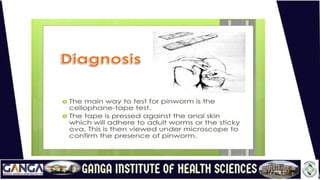
Diagnosis typically involves a tape test to
collect eggs.
Healthcare providers may also use visual
inspection of the anal area.
Symptoms and history of exposure can
aid in diagnosis as well.
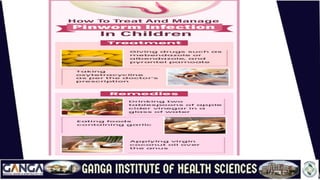
Treatment Options
Over-the-counter medications like mebendazole are commonly used.
Prescription medications may be necessary for severe cases or recurring
infections.
Treatment often involves a second dose after two weeks to eliminate any
remaining eggs.
Home Remedies and Prevention
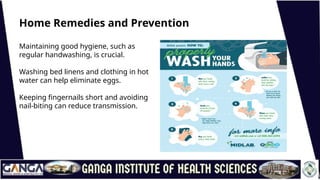
Maintaining good hygiene, such as
regular handwashing, is crucial.
Washing bed linens and clothing in hot
water can help eliminate eggs.
Keeping fingernails short and avoiding
nail-biting can reduce transmission.
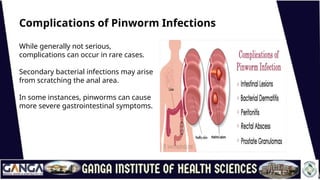
Complications of Pinworm Infections
While generally not serious,
complications can occur in rare cases.
Secondary bacterial infections may arise
from scratching the anal area.
In some instances, pinworms can cause
more severe gastrointestinal symptoms.
Pinworms in Adults
Though primarily a childhood infection, adults can also be affected.
In adults, symptoms may be less pronounced and often
overlooked.
Awareness and treatment are important to prevent re-infection
within households.
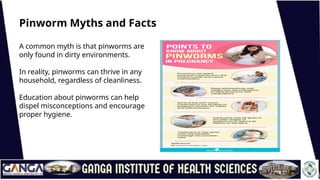
Pinworm Myths and Facts
A common myth is that pinworms are
only found in dirty environments.
In reality, pinworms can thrive in any
household, regardless of cleanliness.
Education about pinworms can help
dispel misconceptions and encourage
proper hygiene.
Role of Family in Prevention
Families should work together to
practice good hygiene habits.
Educating children about the importance
of handwashing is vital.
Regularly checking for symptoms in
family members can aid in early
detection.
Pinworms and the Immune System
Pinworms do not usually cause significant immune response in
healthy individuals.
However, repeated infections may lead to heightened
sensitivity and irritation.
Individuals with compromised immune systems may
experience more severe symptoms.
Global Prevalence
Pinworms are one of the most common parasitic infections
worldwide.
They are particularly prevalent in areas with poor sanitation.
Understanding global trends can help inform public health
strategies.
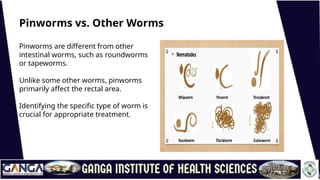
Pinworms vs. Other Worms
Pinworms are different from other
intestinal worms, such as roundworms
or tapeworms.
Unlike some other worms, pinworms
primarily affect the rectal area.
Identifying the specific type of worm is
crucial for appropriate treatment.
Pinworms in Schools
Schools are common places for pinworm transmission due to close
contact.
Awareness programs can help reduce the incidence of infections among
children.
Encouraging children to practice good hygiene at school is essential.
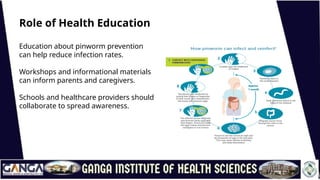
Role of Health Education
Education about pinworm prevention
can help reduce infection rates.
Workshops and informational materials
can inform parents and caregivers.
Schools and healthcare providers should
collaborate to spread awareness.
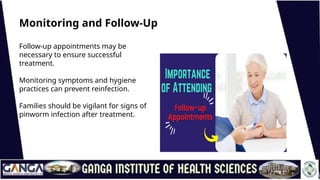
Monitoring and Follow-Up
Follow-up appointments may be
necessary to ensure successful
treatment.
Monitoring symptoms and hygiene
practices can prevent reinfection.
Families should be vigilant for signs of
pinworm infection after treatment.
Conclusion
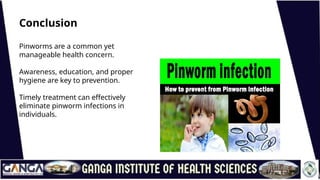
Pinworms are a common yet
manageable health concern.
Awareness, education, and proper
hygiene are key to prevention.
Timely treatment can effectively
eliminate pinworm infections in
individuals.
THANK YOU
Pin Worms lifecycle, diagnostic method.pptx

Pin Worms lifecycle, diagnostic method.pptx

  • 1.
    DR.CHRISTINAL V ASSISTANT PROFESSOR DEPARTMENTOF MICROBIOLOGY GANGA INSTITUTE OF HEALTH SCIENCES
  • 2.
  • 3.
    Introduction to Pinworms Pinworms,also known as Enterobius vermicularis, are small intestinal parasites. They primarily affect children but can infect anyone. Understanding their life cycle and symptoms is essential for effective treatment.
  • 4.
    Life Cycle ofPinworms The life cycle begins when eggs are ingested or inhaled. Once in the intestine, the eggs hatch, and adult worms develop. Adult female pinworms migrate to the anus to lay eggs, usually at night.
  • 5.
    Symptoms of Infection Themost common symptom is intense itching around the anus. Other symptoms may include irritability and difficulty sleeping. In some cases, pinworm infections can lead to urinary tract infections.
  • 6.
    Transmission Methods Pinworms arehighly contagious and can spread through direct contact. They can also be transmitted via contaminated surfaces or objects. Poor hygiene practices, like not washing hands, increase the risk of transmission.
  • 7.
    Risk Factors Children aged5 to 10 years are at higher risk due to close contact in schools. Living in crowded conditions can facilitate the spread of pinworms. Lack of proper sanitation and hygiene practices contributes to infections.
  • 8.
    Diagnosis of PinwormInfection Diagnosis typically involves a tape test to collect eggs. Healthcare providers may also use visual inspection of the anal area. Symptoms and history of exposure can aid in diagnosis as well.
  • 10.
    Treatment Options Over-the-counter medicationslike mebendazole are commonly used. Prescription medications may be necessary for severe cases or recurring infections. Treatment often involves a second dose after two weeks to eliminate any remaining eggs.
  • 11.
    Home Remedies andPrevention Maintaining good hygiene, such as regular handwashing, is crucial. Washing bed linens and clothing in hot water can help eliminate eggs. Keeping fingernails short and avoiding nail-biting can reduce transmission.
  • 12.
    Complications of PinwormInfections While generally not serious, complications can occur in rare cases. Secondary bacterial infections may arise from scratching the anal area. In some instances, pinworms can cause more severe gastrointestinal symptoms.
  • 13.
    Pinworms in Adults Thoughprimarily a childhood infection, adults can also be affected. In adults, symptoms may be less pronounced and often overlooked. Awareness and treatment are important to prevent re-infection within households.
  • 15.
    Pinworm Myths andFacts A common myth is that pinworms are only found in dirty environments. In reality, pinworms can thrive in any household, regardless of cleanliness. Education about pinworms can help dispel misconceptions and encourage proper hygiene.
  • 16.
    Role of Familyin Prevention Families should work together to practice good hygiene habits. Educating children about the importance of handwashing is vital. Regularly checking for symptoms in family members can aid in early detection.
  • 17.
    Pinworms and theImmune System Pinworms do not usually cause significant immune response in healthy individuals. However, repeated infections may lead to heightened sensitivity and irritation. Individuals with compromised immune systems may experience more severe symptoms.
  • 19.
    Global Prevalence Pinworms areone of the most common parasitic infections worldwide. They are particularly prevalent in areas with poor sanitation. Understanding global trends can help inform public health strategies.
  • 20.
    Pinworms vs. OtherWorms Pinworms are different from other intestinal worms, such as roundworms or tapeworms. Unlike some other worms, pinworms primarily affect the rectal area. Identifying the specific type of worm is crucial for appropriate treatment.
  • 21.
    Pinworms in Schools Schoolsare common places for pinworm transmission due to close contact. Awareness programs can help reduce the incidence of infections among children. Encouraging children to practice good hygiene at school is essential.
  • 22.
    Role of HealthEducation Education about pinworm prevention can help reduce infection rates. Workshops and informational materials can inform parents and caregivers. Schools and healthcare providers should collaborate to spread awareness.
  • 23.
    Monitoring and Follow-Up Follow-upappointments may be necessary to ensure successful treatment. Monitoring symptoms and hygiene practices can prevent reinfection. Families should be vigilant for signs of pinworm infection after treatment.
  • 24.
    Conclusion Pinworms are acommon yet manageable health concern. Awareness, education, and proper hygiene are key to prevention. Timely treatment can effectively eliminate pinworm infections in individuals.
  • 25.

Editor's Notes

  • #3 Image source: https://thelifetree.com/pages/pinworms
  • #4 Image source: https://studyschoolviscerate.z5.web.core.windows.net/human-pinworm-life-cycle.html
  • #5 Image source: https://healthjade.com/pinworm-infection/
  • #6 Image source: https://www.emverm.com/protection-against-pinworm/
  • #7 Image source: https://www.mentallyhealthyschools.org.uk/risks-and-protective-factors/
  • #8 Image source: https://www.slideserve.com/finna/pinworm
  • #10 Image source: http://helenheavirland.com/453-albendazole-for-humans
  • #11 Image source: https://guidemanualbumble.z21.web.core.windows.net/guide-to-hand-washing.html
  • #12 Image source: https://www.medindia.net/patientinfo/pinworm-infection.htm
  • #13 Image source: https://ar.inspiredpencil.com/pictures-2023/pinworms-in-adults
  • #15 Image source: https://www.momjunction.com/articles/pinworm-infection-during-pregnancy_00359408/
  • #16 Image source: https://www.top10homeremedies.com/news-facts/10-good-hygiene-habits-teach-kids-early.html
  • #17 Image source: https://ar.inspiredpencil.com/pictures-2023/pin-worms-rash
  • #19 Image source: https://www.researchgate.net/figure/Map-of-814-world-ecoregions-coded-by-the-number-of-parasite-species-found-in-ungulate_fig1_333455885
  • #20 Image source: http://www.slideshare.net/HyeWonCho6/pinwormshye-won
  • #21 Image source: https://ar.inspiredpencil.com/pictures-2023/pin-worms-rash
  • #22 Image source: https://www.emverm.com/protection-against-pinworm/
  • #23 Image source: https://brandsurgical.com/blog/follow-up/
  • #24 Image source: https://www.youtube.com/watch?v=2bH5Nc-h4V0