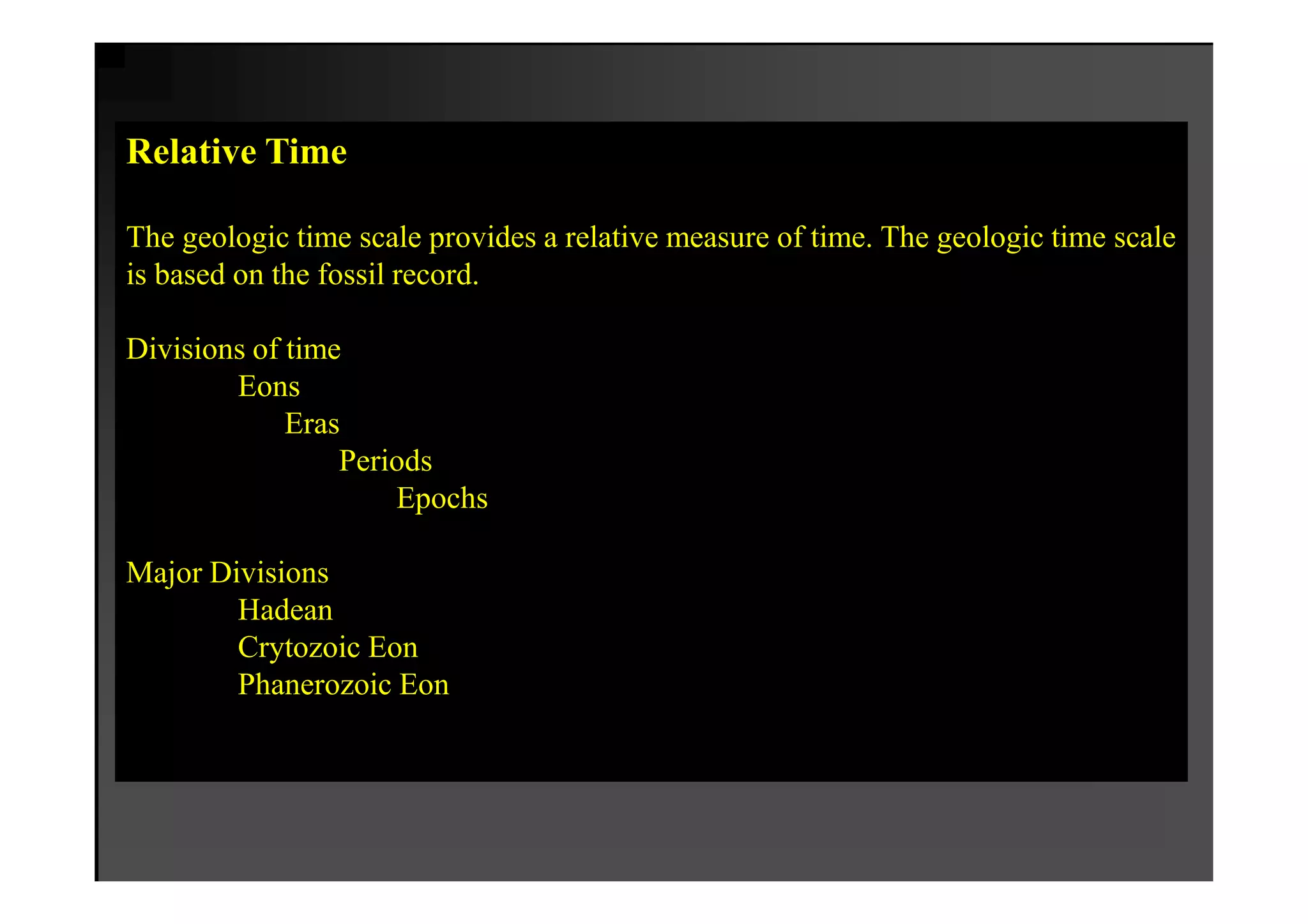
Relative Time
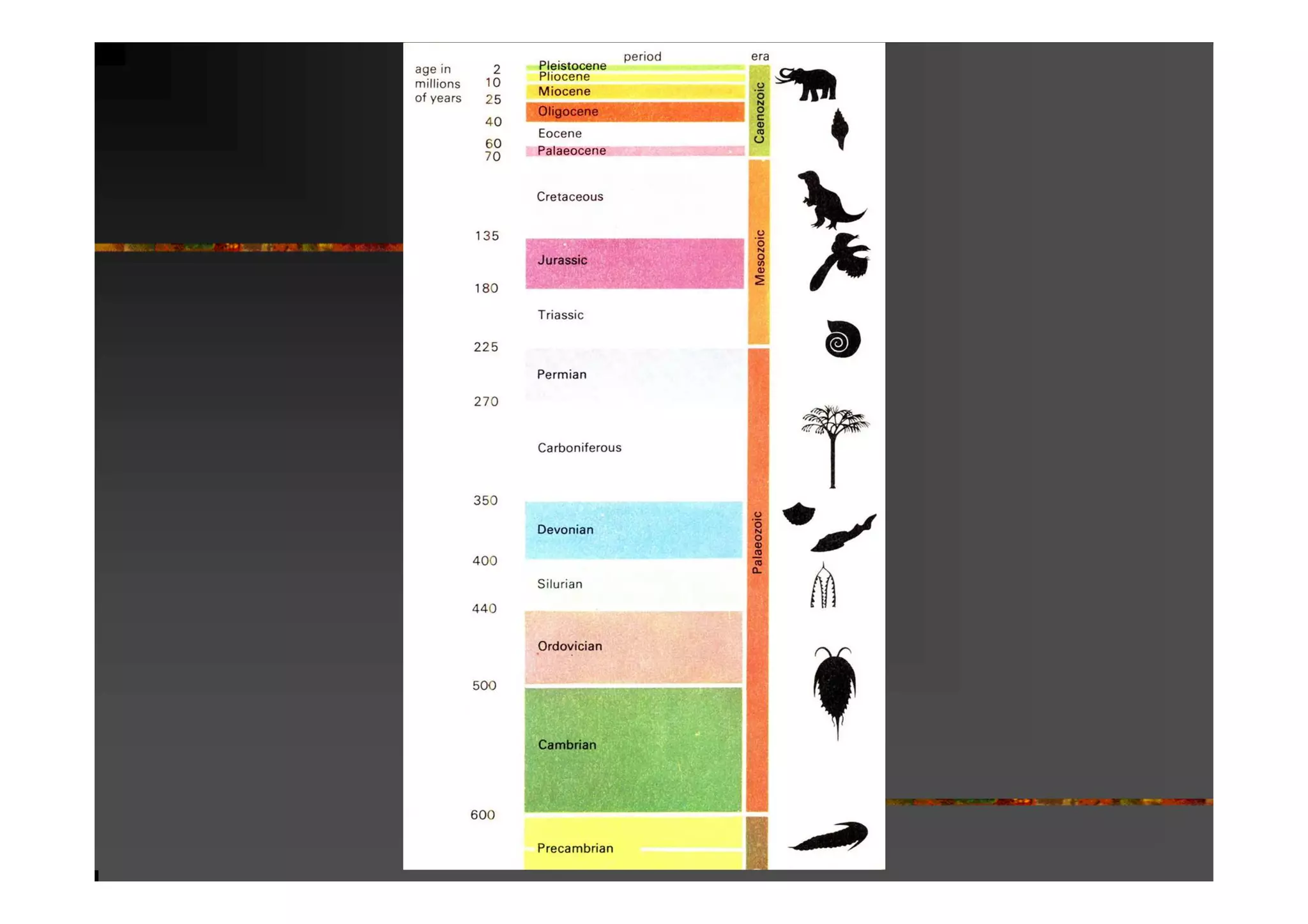
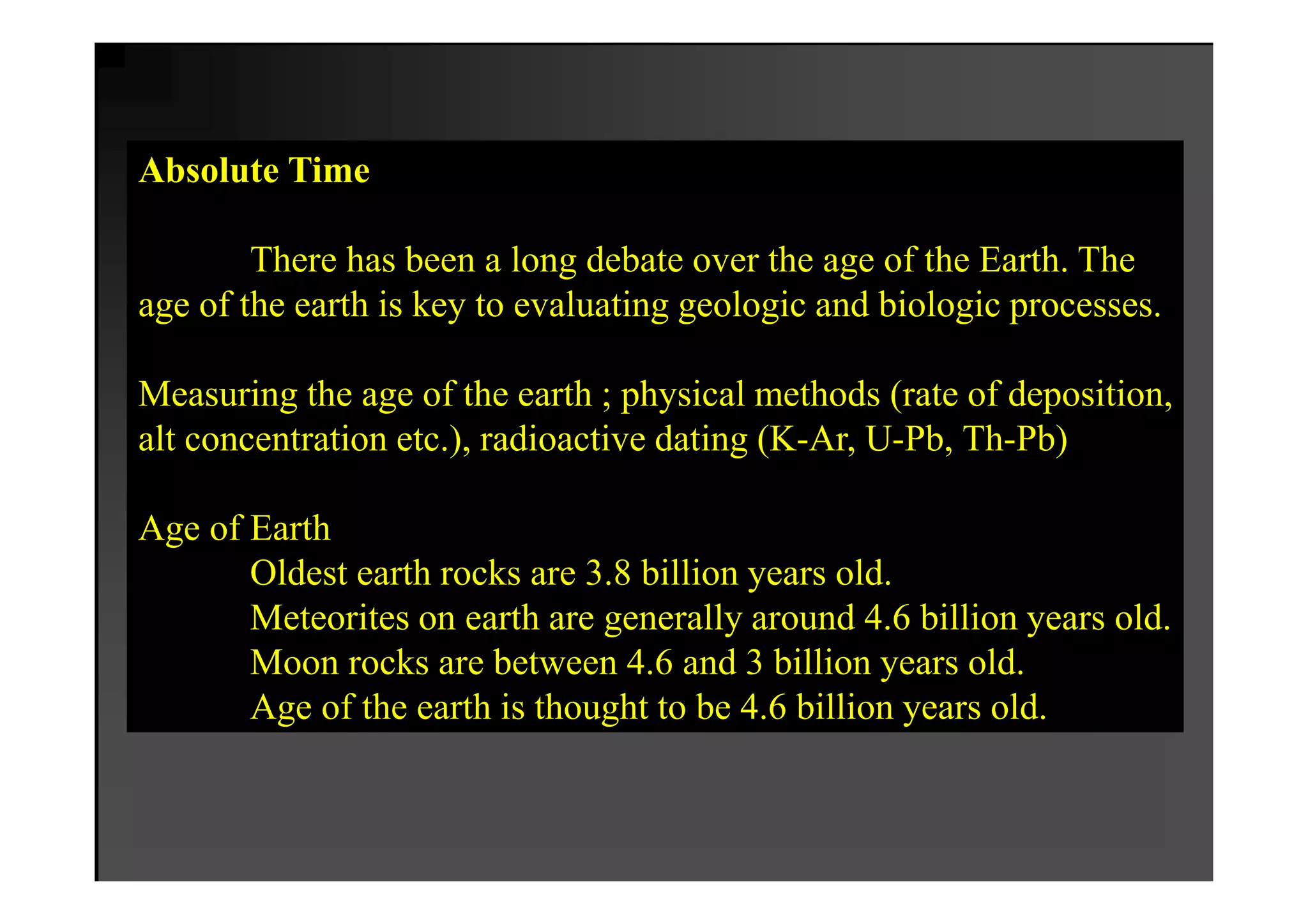
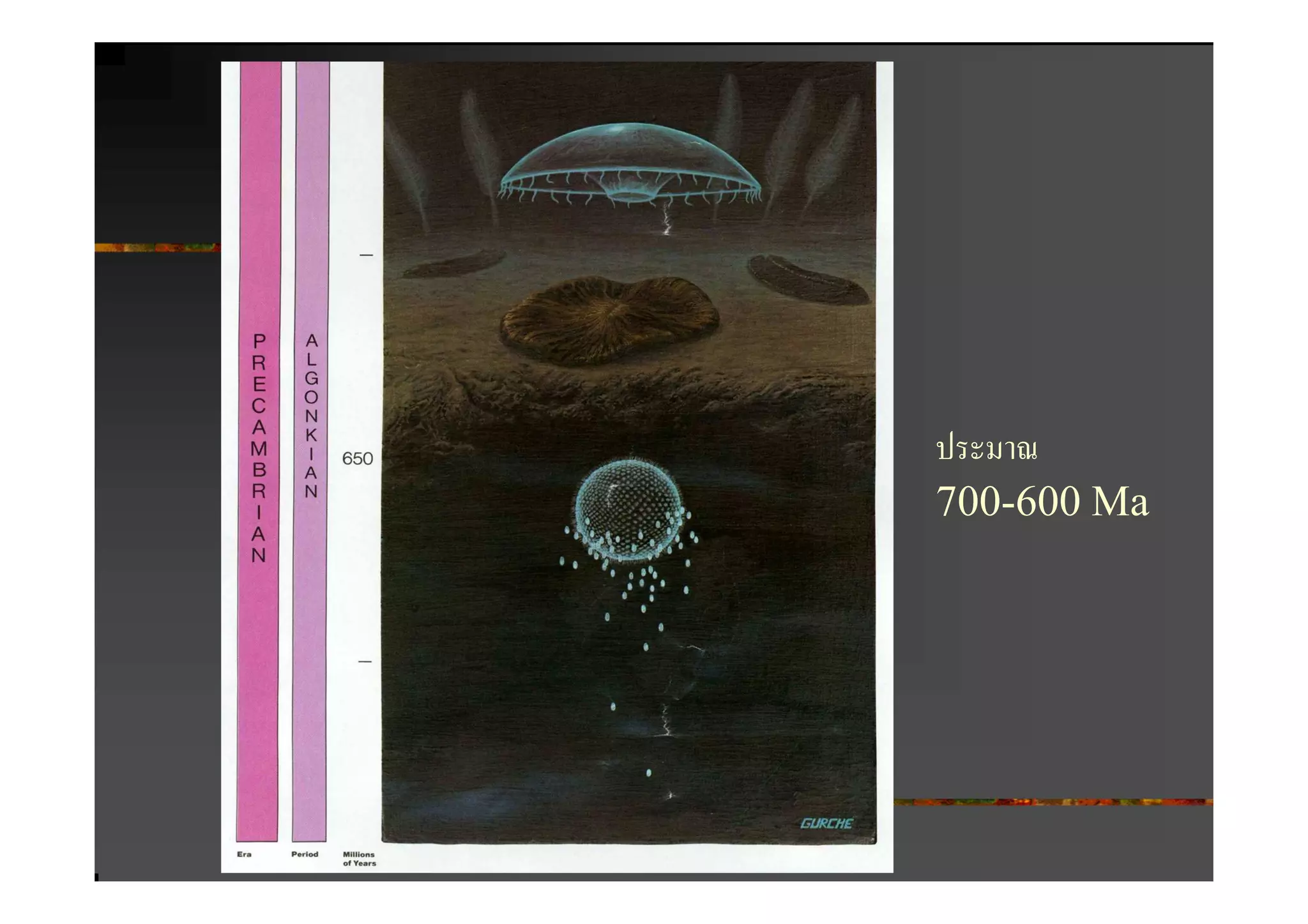
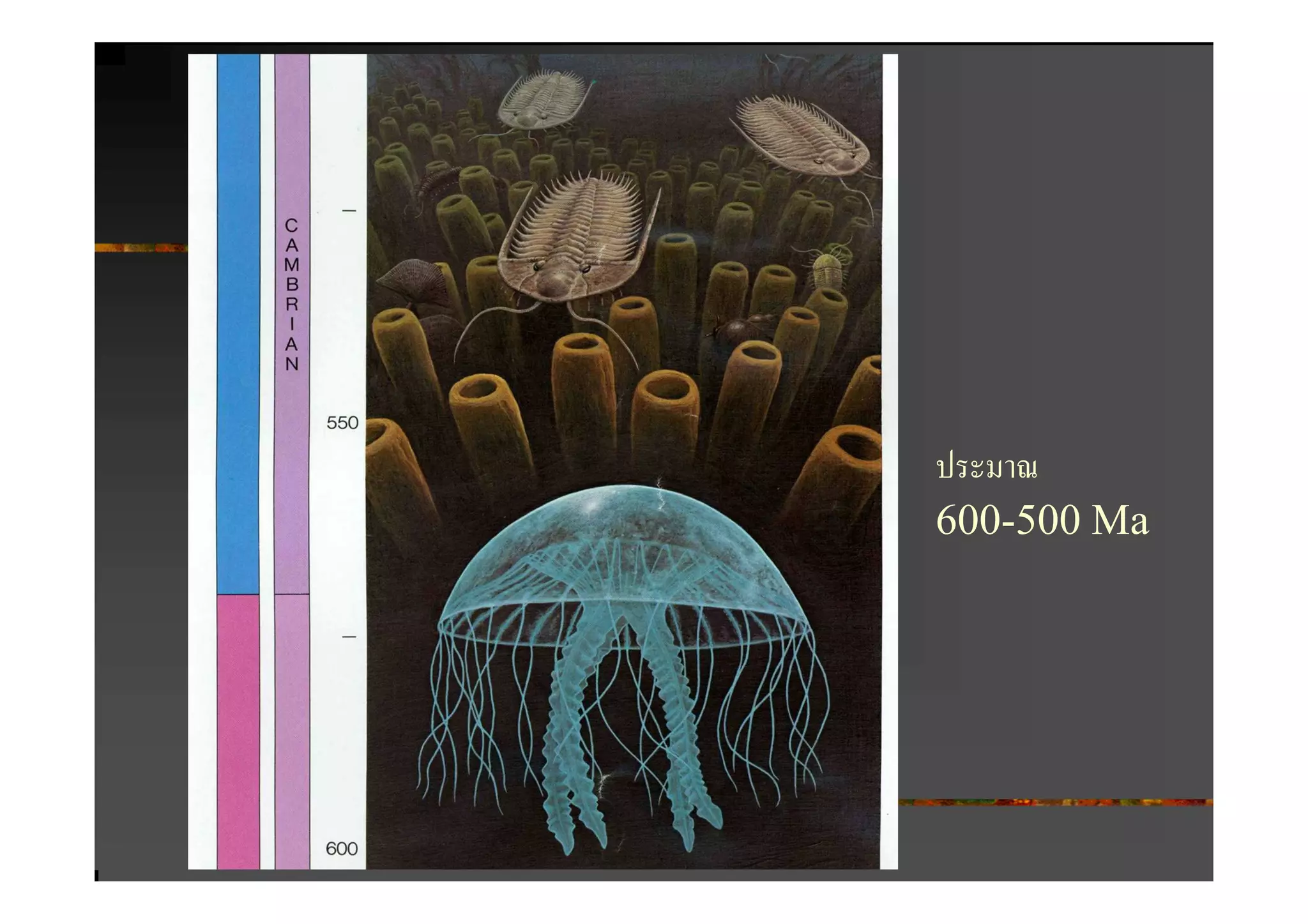
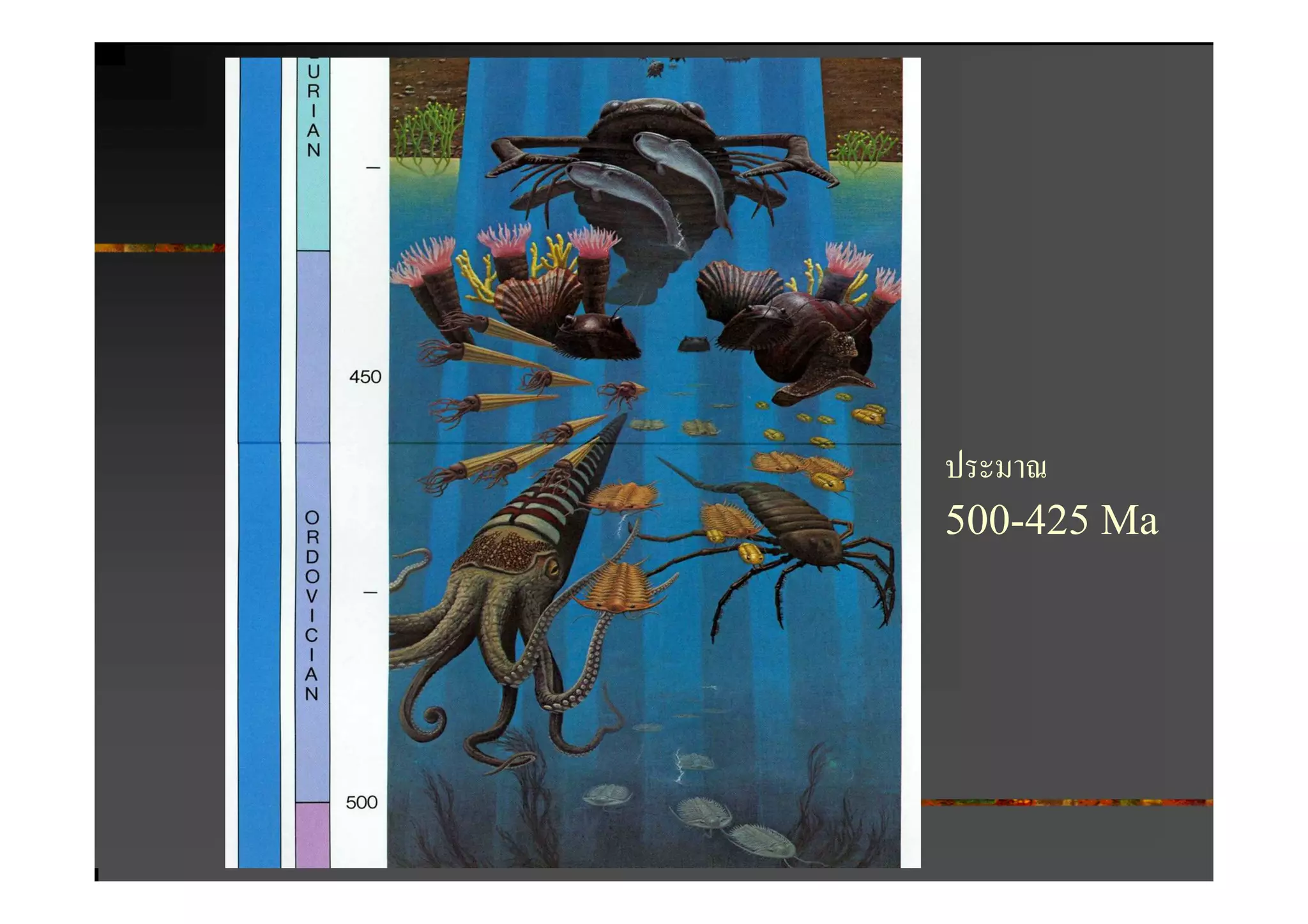
The geologictime scale provides a relative measure of time. The geologic time scale
is based on the fossil record.
Divisions of time
Eons
Eras
Periods
Epochs
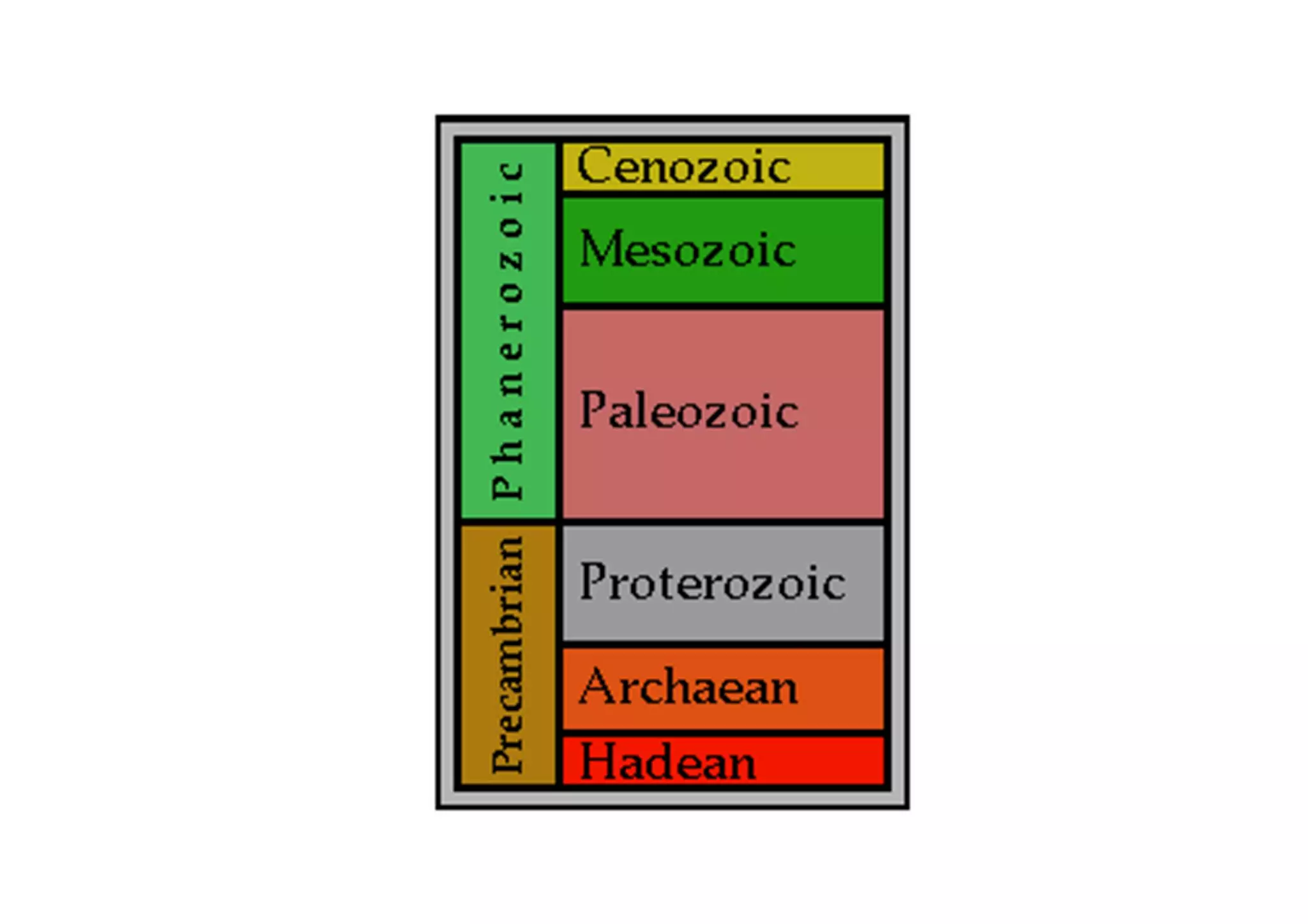
Major Divisions
Hadean
Crytozoic Eon
Phanerozoic Eon
17.
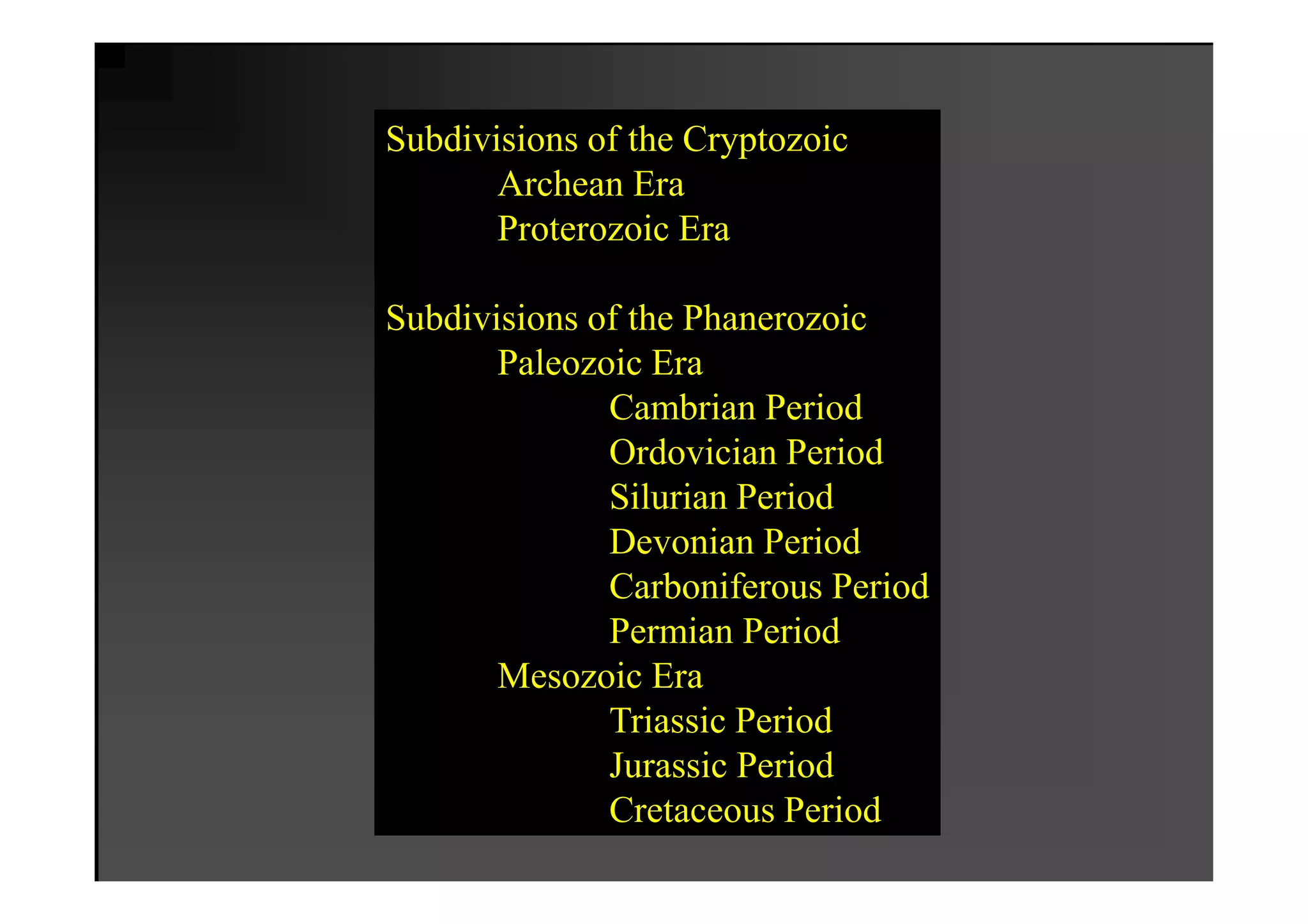
Subdivisions of theCryptozoic
Archean Era
Proterozoic Era
Subdivisions of the Phanerozoic
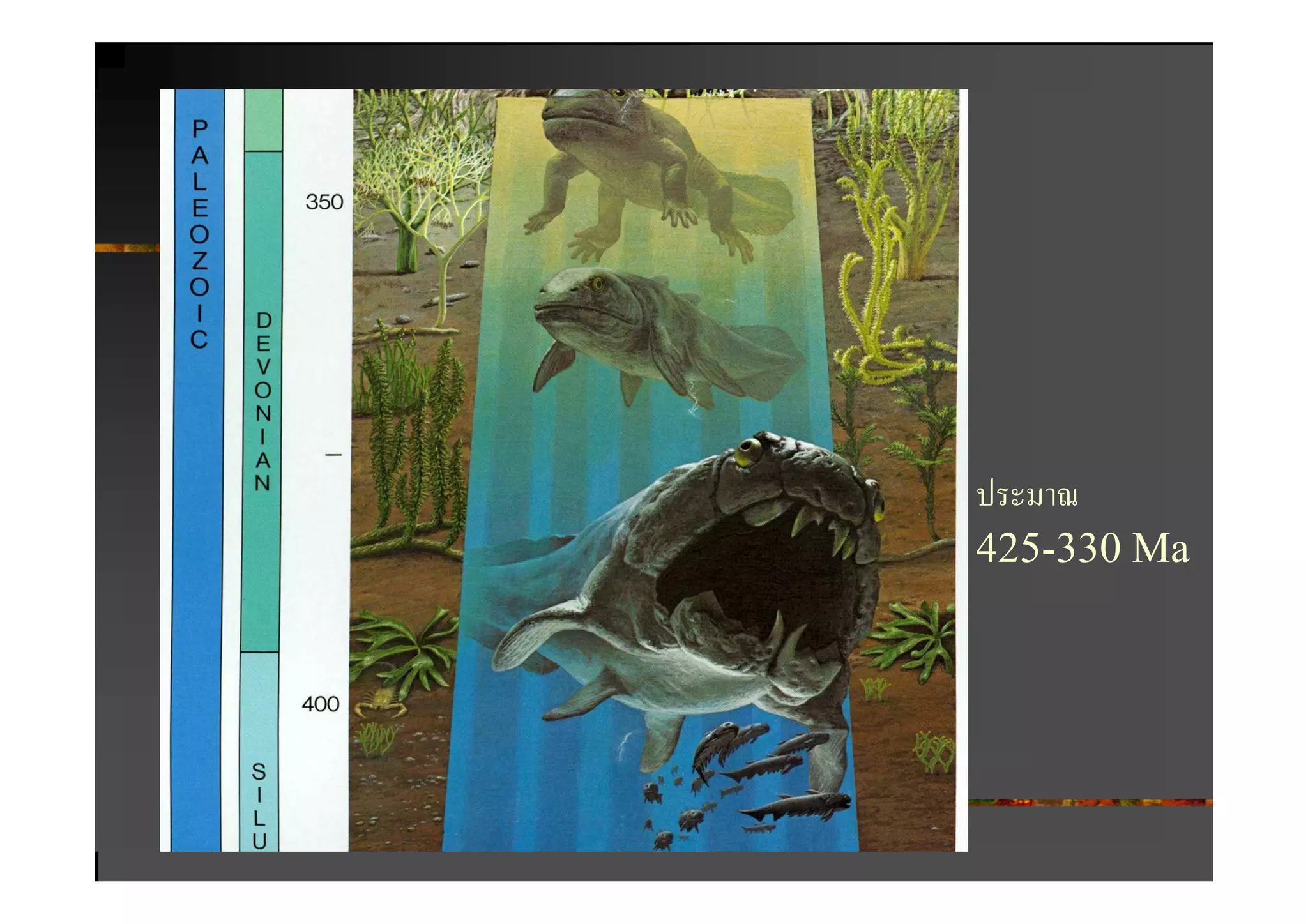
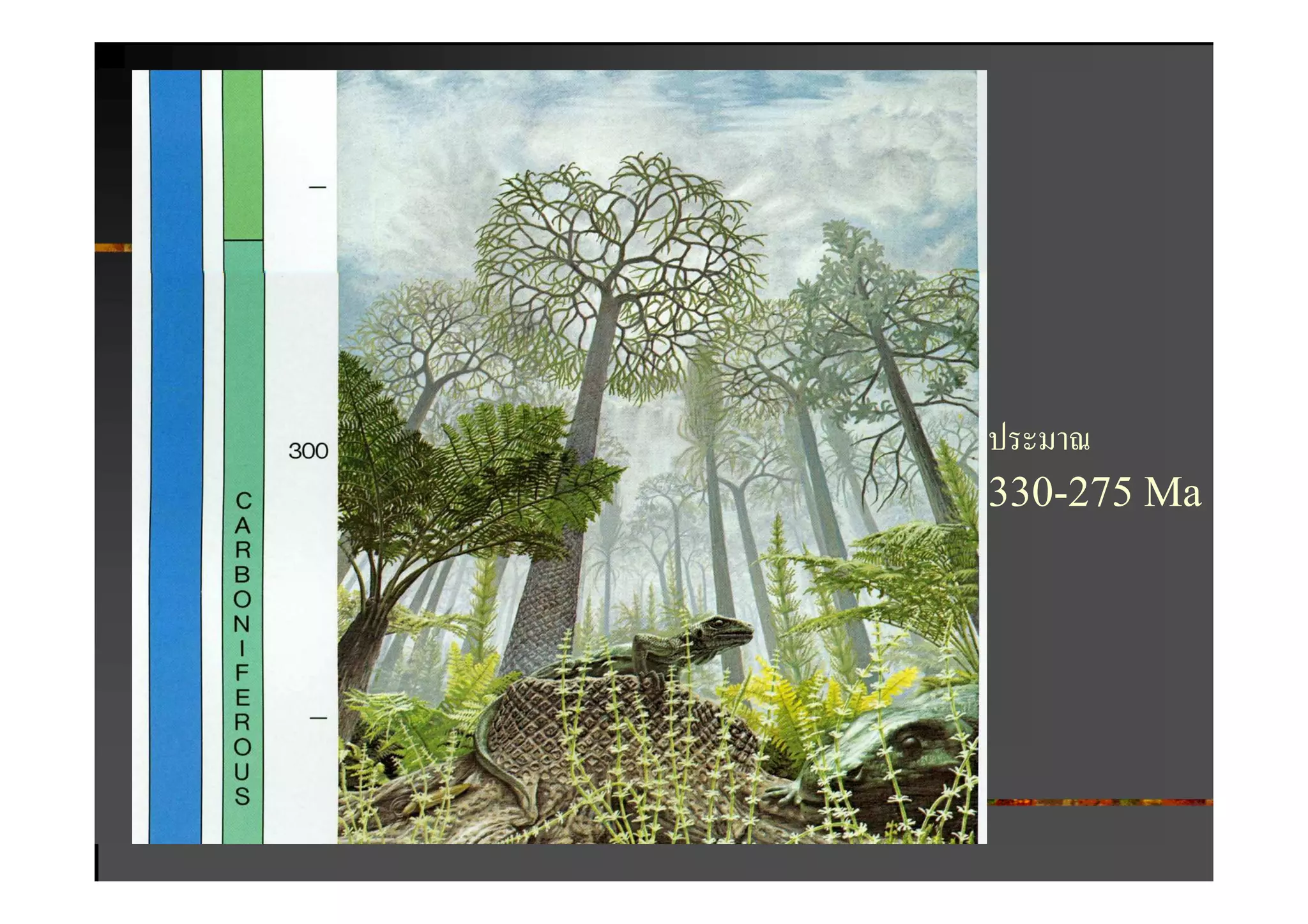
Paleozoic Era
Cambrian Period
Ordovician Period
Silurian Period
Devonian Period
Carboniferous Period
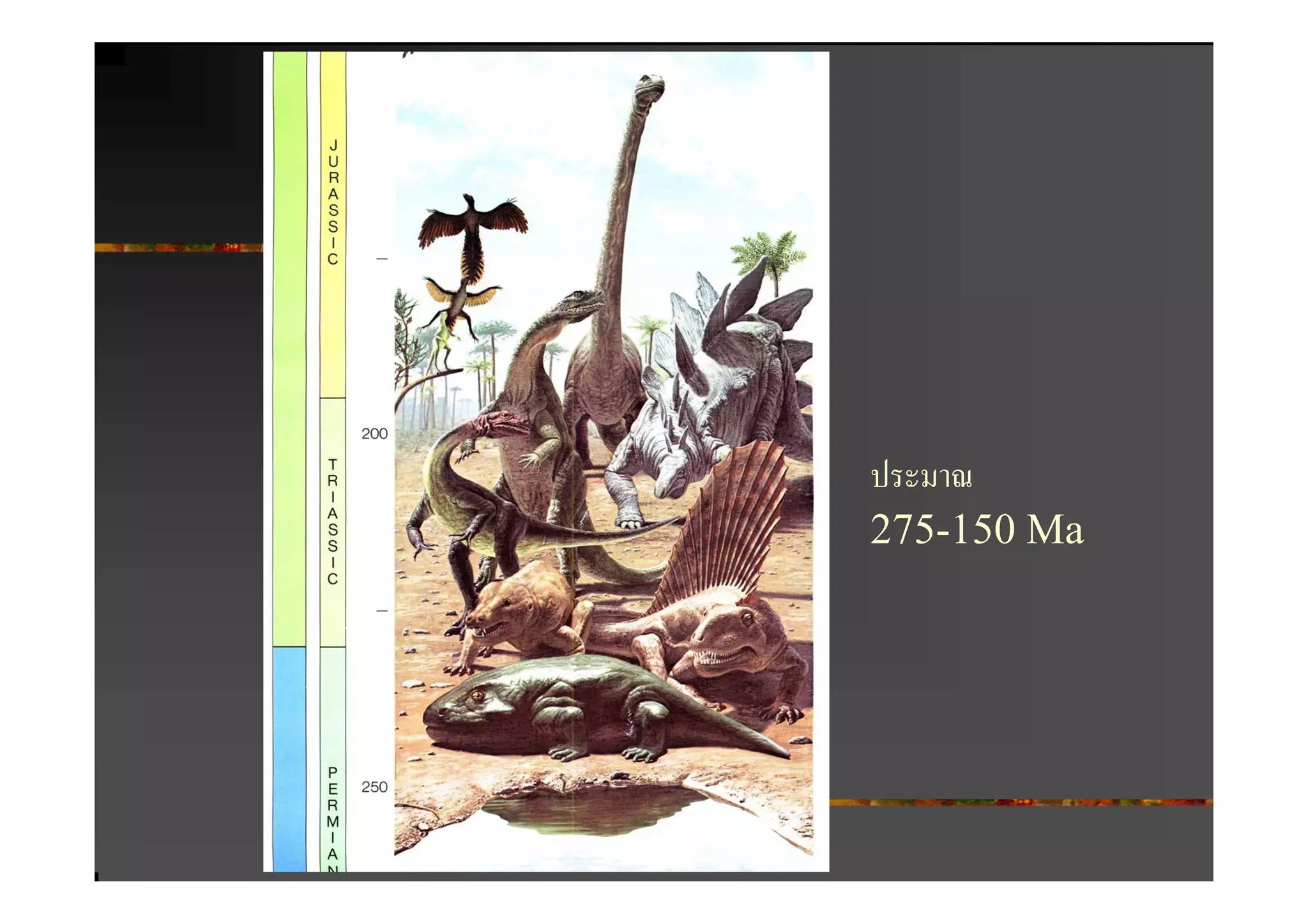
Permian Period
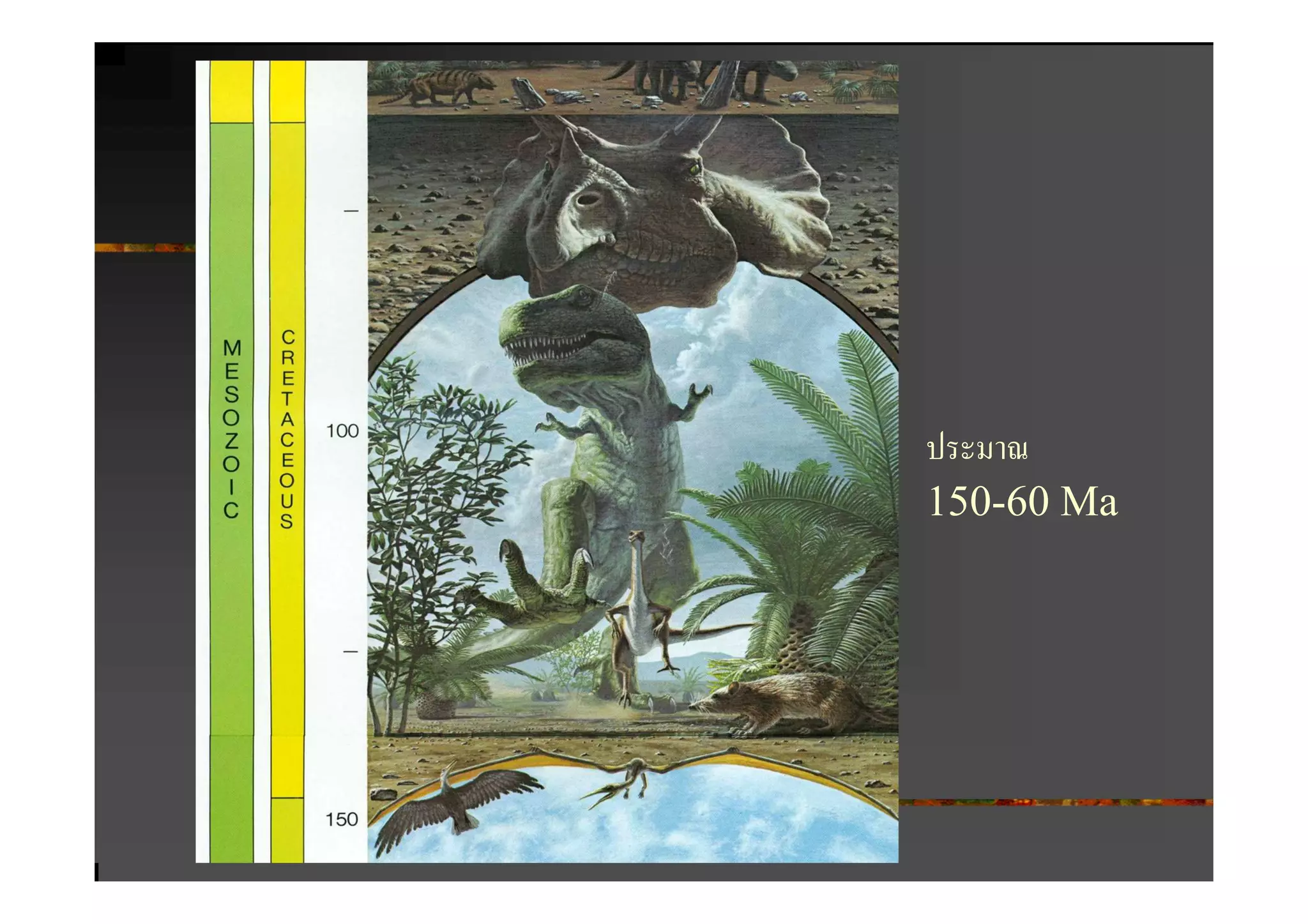
Mesozoic Era
Triassic Period
Jurassic Period
Cretaceous Period
18.
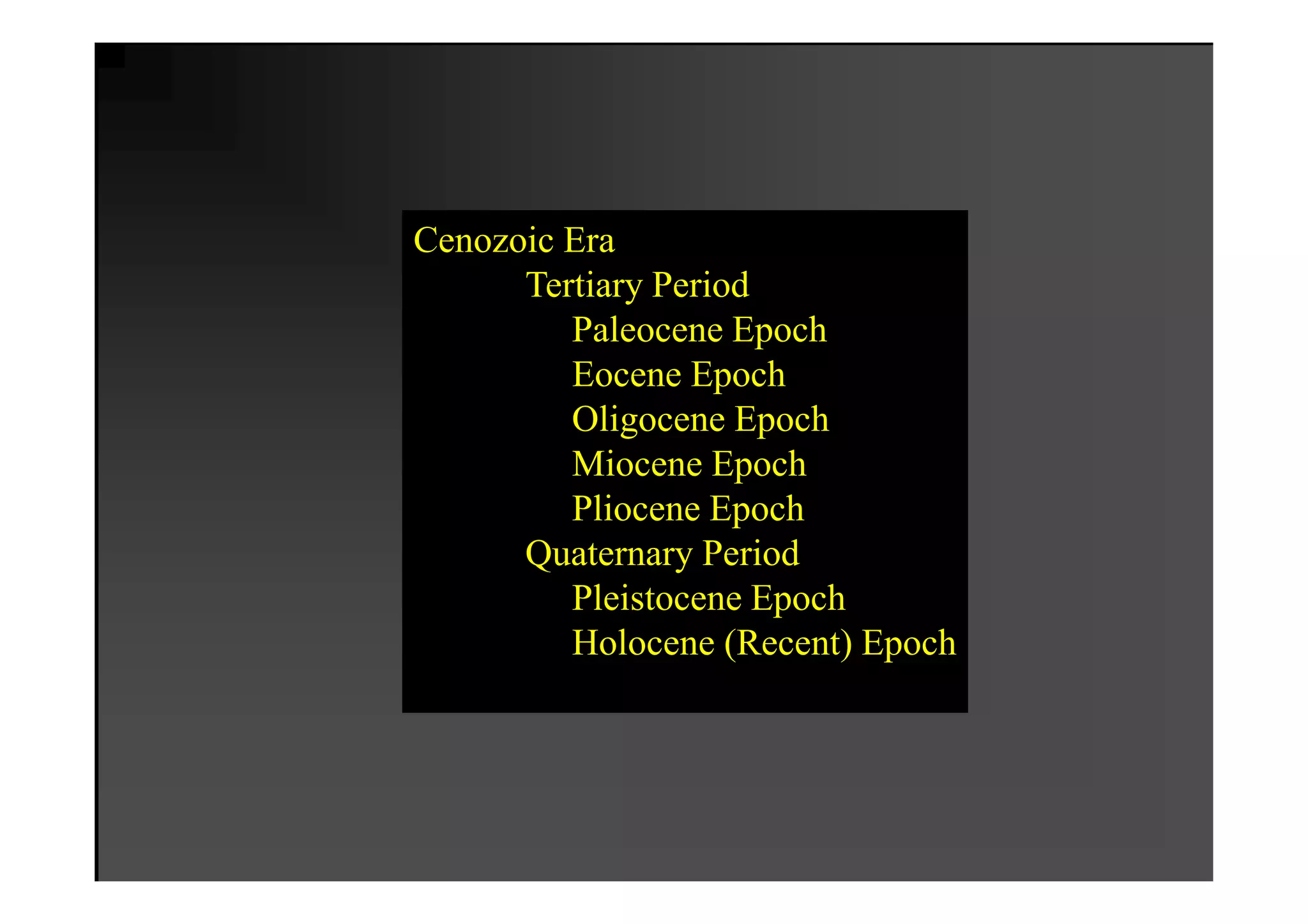
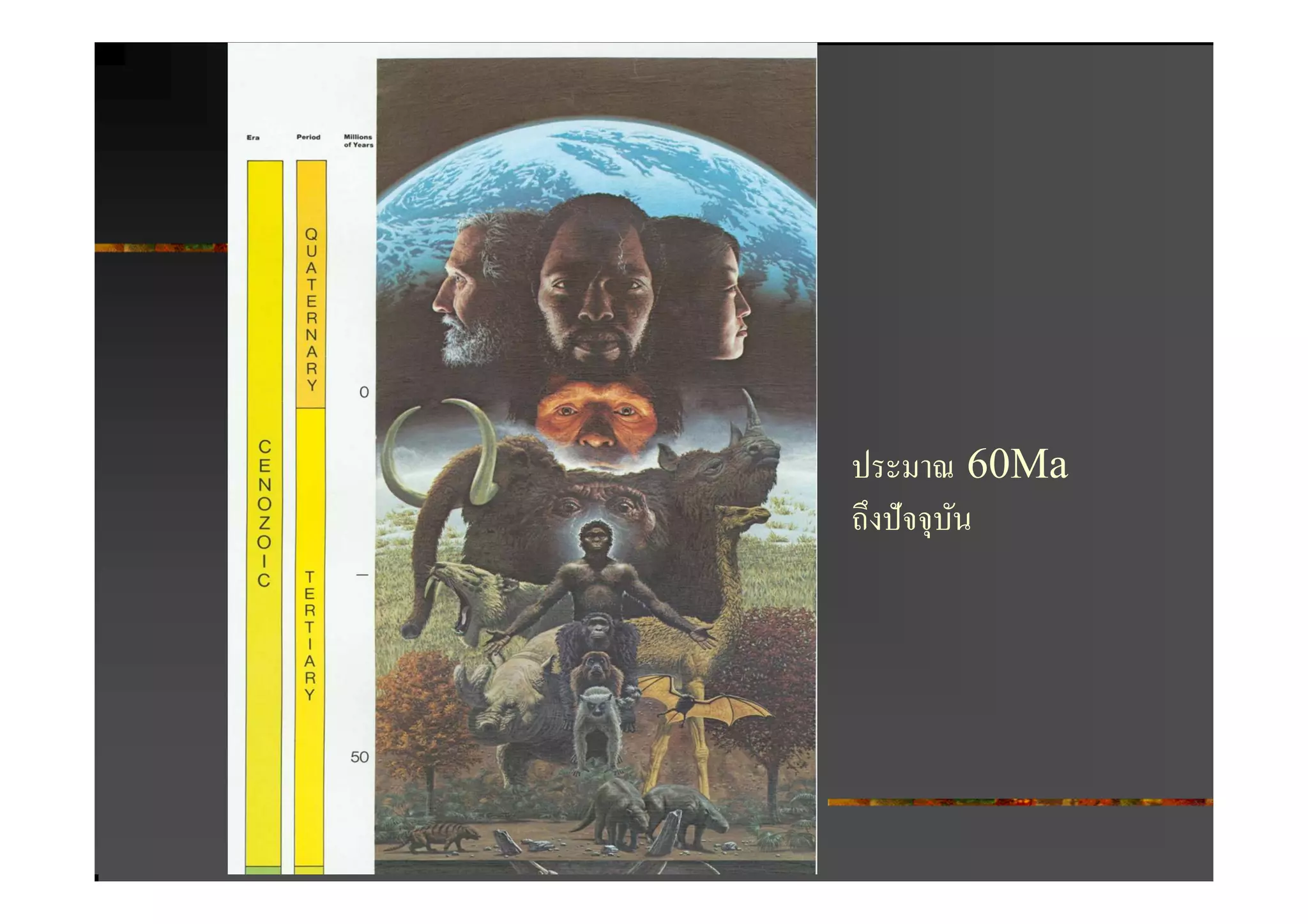
Cenozoic Era
Tertiary Period
Paleocene Epoch
Eocene Epoch
Oligocene Epoch
Miocene Epoch
Pliocene Epoch
Quaternary Period
Pleistocene Epoch
Holocene (Recent) Epoch
19.
Absolute Time
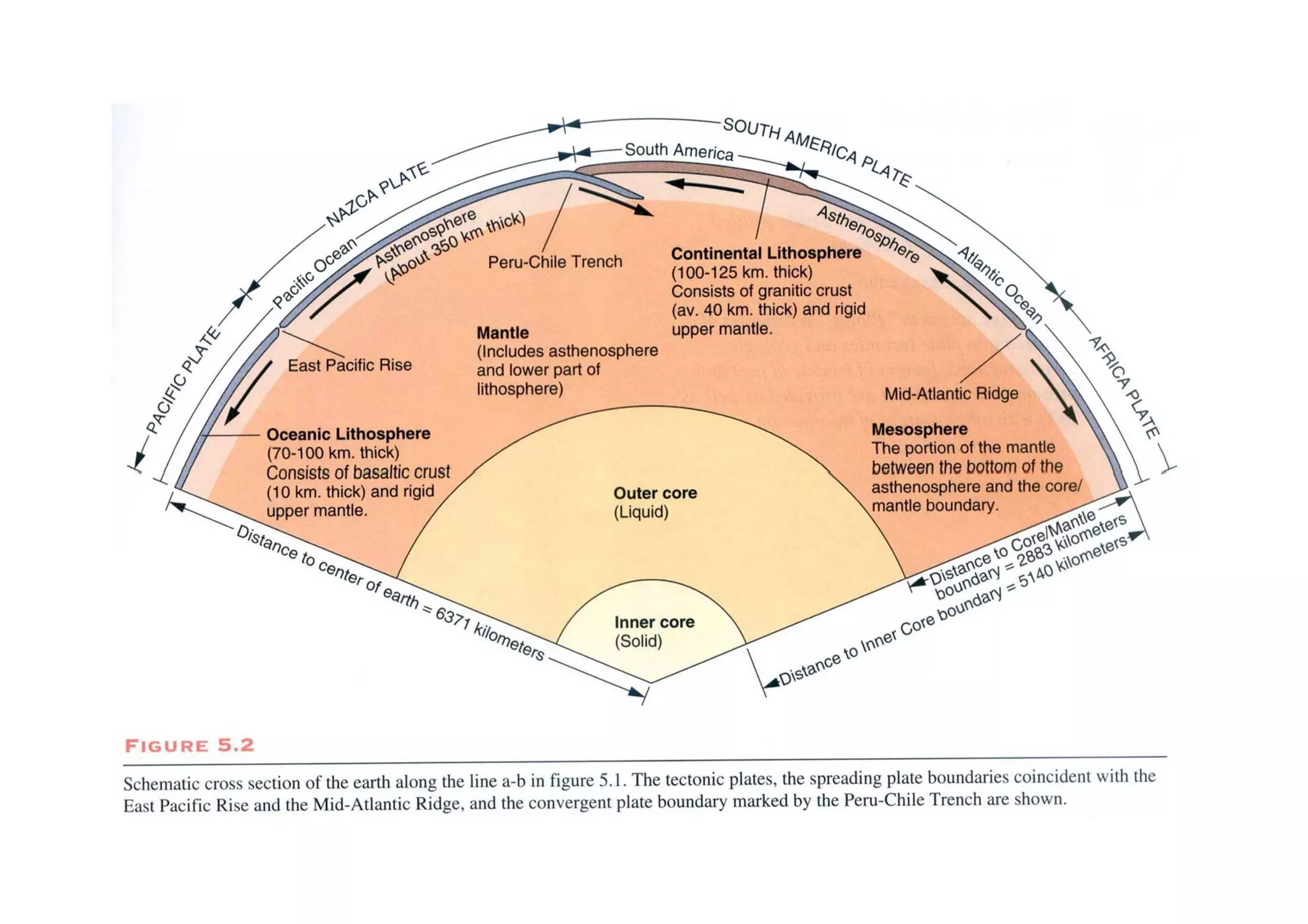
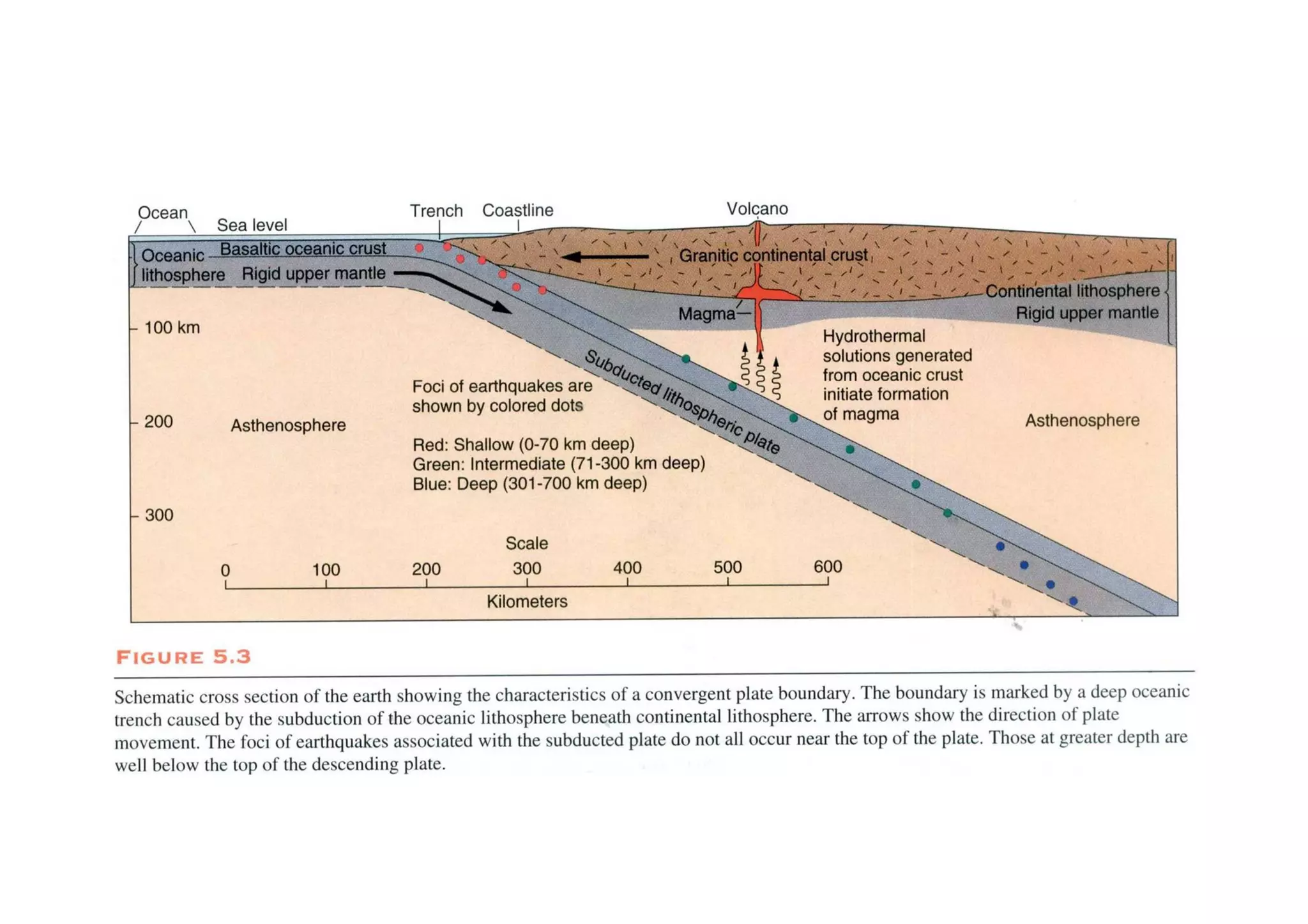
There has been a long debate over the age of the Earth. The
age of the earth is key to evaluating geologic and biologic processes.
Measuring the age of the earth ; physical methods (rate of deposition,
alt concentration etc.), radioactive dating (K-Ar, U-Pb, Th-Pb)
Age of Earth
Oldest earth rocks are 3.8 billion years old.
Meteorites on earth are generally around 4.6 billion years old.
Moon rocks are between 4.6 and 3 billion years old.
Age of the earth is thought to be 4.6 billion years old.
Geologic Principles
Three principlesform the basis for stratigraphic and paleontologic studies.
These are principle, not laws. There are limitations. Development of the
geologic time scale relied heavily on these principles and their limitations.
29.
กฎและแนวคิดสําคัญของธรณี วิทยา (GeologicPrinciples)
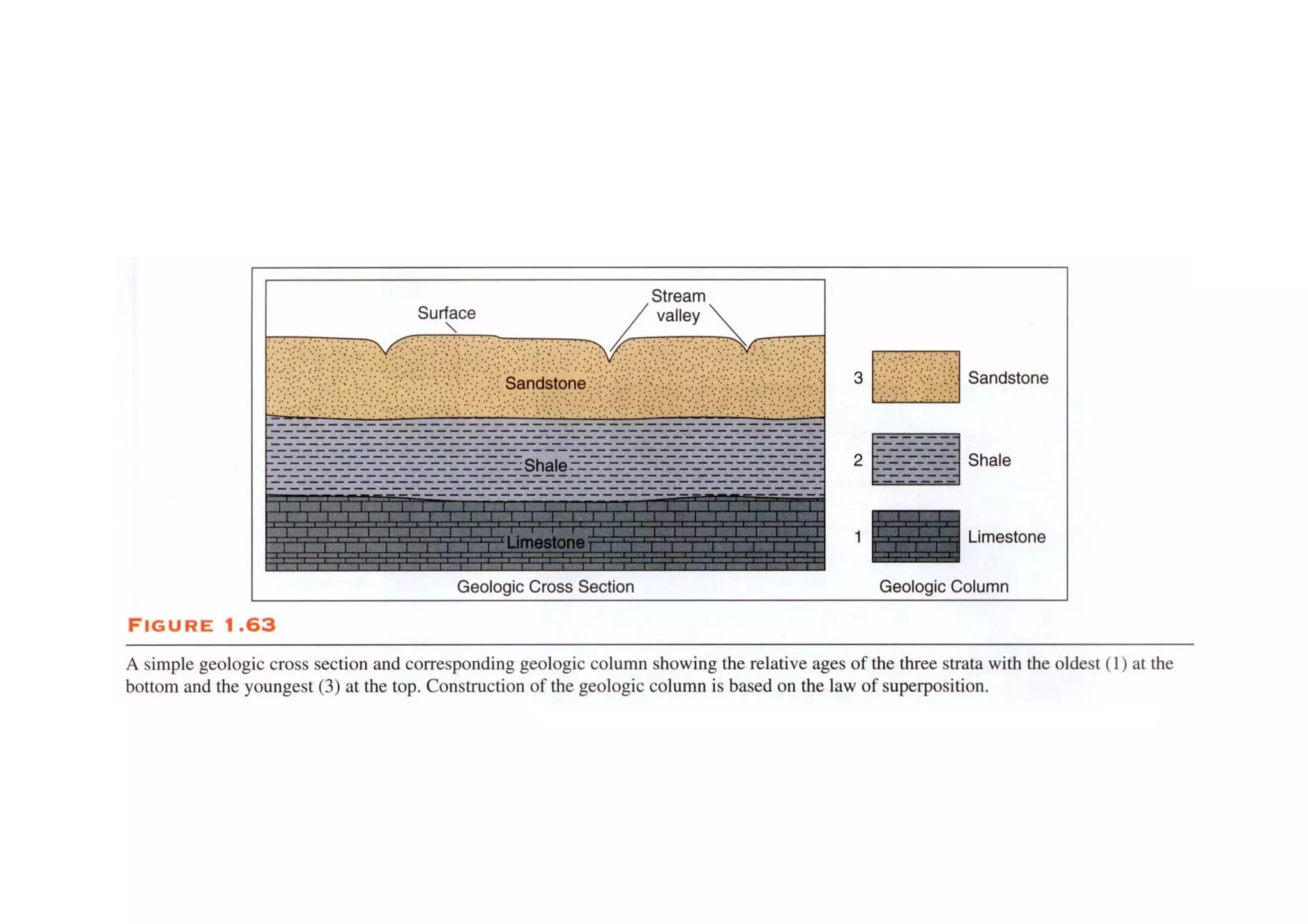
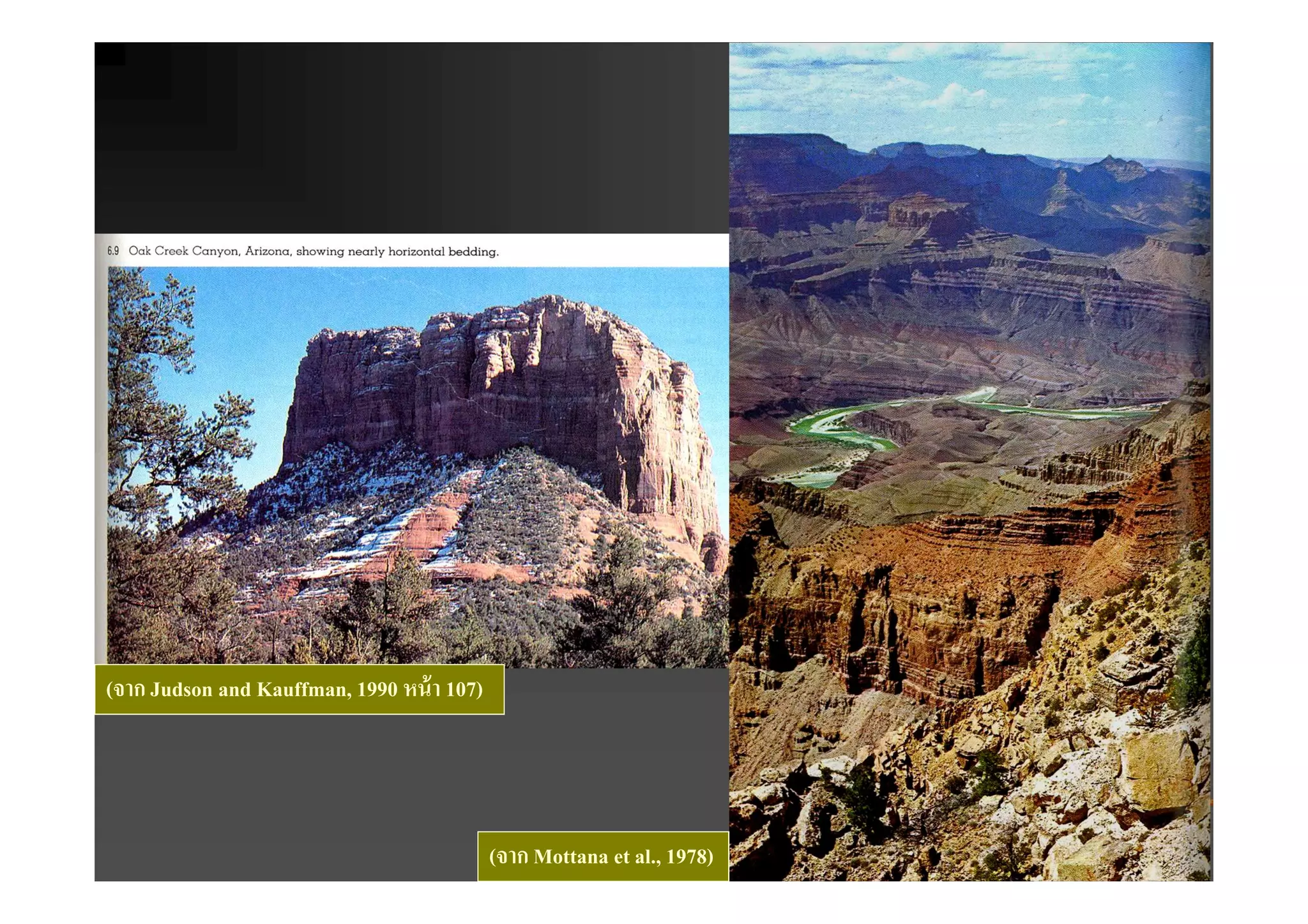
1. Superposition
- original horizontality,
- lateral continuity
2. Uniformitarianism
- The present is the key to the past.
- Modern processes operating over long periods of time
produced the earth features.
3. Faunal succession
- Fossil or groups of fossils occur in distinct intervals of rock.
- Correlation is possible based on fossil.
- Subdivision of the rock record is possible based on fossil
assemblage.