
Picture This 
Based on the work of 
Molly Bang 
Reilly & Cohen
Molly Bang began with the 
question: 
“How does the structure of a picture 
affect our emotional response?"
• These are 10 (though by no means all) of Bang's 
insights (all are direct quotations from Bang): 
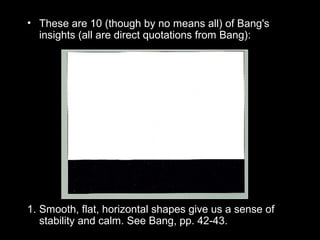
1. Smooth, flat, horizontal shapes give us a sense of 
stability and calm. See Bang, pp. 42-43.
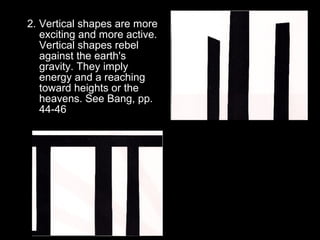
2. Vertical shapes are more 
exciting and more active. 
Vertical shapes rebel 
against the earth's 
gravity. They imply 
energy and a reaching 
toward heights or the 
heavens. See Bang, pp. 
44-46
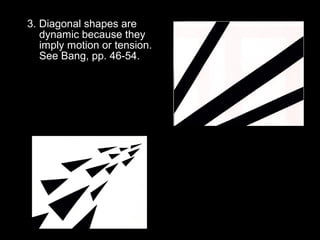
3. Diagonal shapes are 
dynamic because they 
imply motion or tension. 
See Bang, pp. 46-54.
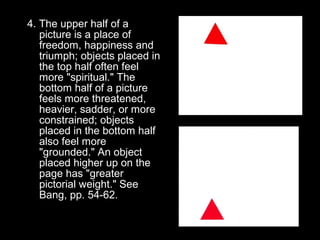
4. The upper half of a 
picture is a place of 
freedom, happiness and 
triumph; objects placed in 
the top half often feel 
more "spiritual." The 
bottom half of a picture 
feels more threatened, 
heavier, sadder, or more 
constrained; objects 
placed in the bottom half 
also feel more 
"grounded." An object 
placed higher up on the 
page has "greater 
pictorial weight." See 
Bang, pp. 54-62.
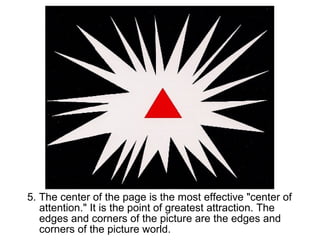
5. The center of the page is the most effective "center of 
attention." It is the point of greatest attraction. The 
edges and corners of the picture are the edges and 
corners of the picture world.
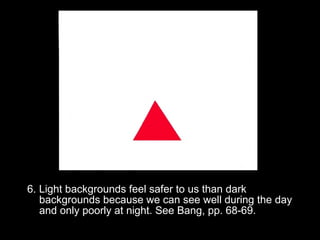
6. Light backgrounds feel safer to us than dark 
backgrounds because we can see well during the day 
and only poorly at night. See Bang, pp. 68-69.
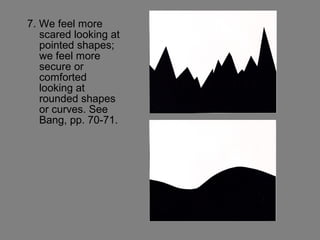
7. We feel more 
scared looking at 
pointed shapes; 
we feel more 
secure or 
comforted 
looking at 
rounded shapes 
or curves. See 
Bang, pp. 70-71.
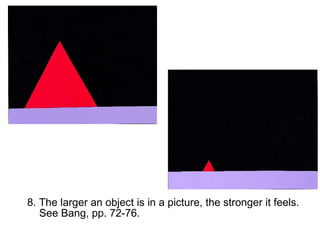
8. The larger an object is in a picture, the stronger it feels. 
See Bang, pp. 72-76.
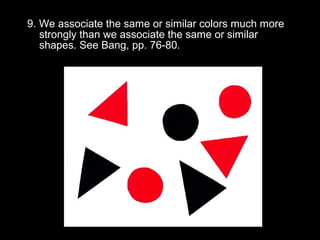
9. We associate the same or similar colors much more 
strongly than we associate the same or similar 
shapes. See Bang, pp. 76-80.
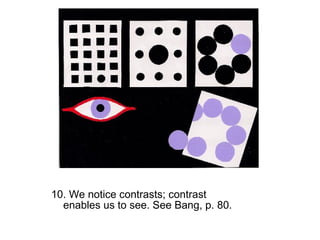
10. We notice contrasts; contrast 
enables us to see. See Bang, p. 80.
Engagement 
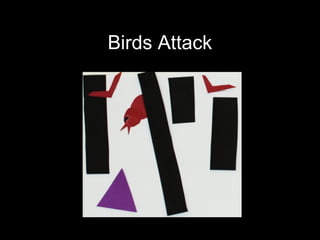
1. Create a picture illustrating the sentence, “Birds attack.” 
1. Combine in some fashion up to, but no more than, four colors 
(including background) and distinctive shapes in order to illustrate 
some aspect of Bang's principles. 
1. Strong emotions are easier to depict than weak ones. Don't be too 
realistic. Use construction paper -- experiment with different sizes, 
shapes, colors and arrangement. Tape it together. 
1. Write a brief explanation of what you did and why.
Birds Attack
Sleeping Beauty 
by Shannon Winter

Picture This

  • 1.
    Picture This Basedon the work of Molly Bang Reilly & Cohen
  • 2.
    Molly Bang beganwith the question: “How does the structure of a picture affect our emotional response?"
  • 3.
    • These are10 (though by no means all) of Bang's insights (all are direct quotations from Bang): 1. Smooth, flat, horizontal shapes give us a sense of stability and calm. See Bang, pp. 42-43.
  • 4.
    2. Vertical shapesare more exciting and more active. Vertical shapes rebel against the earth's gravity. They imply energy and a reaching toward heights or the heavens. See Bang, pp. 44-46
  • 5.
    3. Diagonal shapesare dynamic because they imply motion or tension. See Bang, pp. 46-54.
  • 6.
    4. The upperhalf of a picture is a place of freedom, happiness and triumph; objects placed in the top half often feel more "spiritual." The bottom half of a picture feels more threatened, heavier, sadder, or more constrained; objects placed in the bottom half also feel more "grounded." An object placed higher up on the page has "greater pictorial weight." See Bang, pp. 54-62.
  • 7.
    5. The centerof the page is the most effective "center of attention." It is the point of greatest attraction. The edges and corners of the picture are the edges and corners of the picture world.
  • 8.
    6. Light backgroundsfeel safer to us than dark backgrounds because we can see well during the day and only poorly at night. See Bang, pp. 68-69.
  • 9.
    7. We feelmore scared looking at pointed shapes; we feel more secure or comforted looking at rounded shapes or curves. See Bang, pp. 70-71.
  • 10.
    8. The largeran object is in a picture, the stronger it feels. See Bang, pp. 72-76.
  • 11.
    9. We associatethe same or similar colors much more strongly than we associate the same or similar shapes. See Bang, pp. 76-80.
  • 12.
    10. We noticecontrasts; contrast enables us to see. See Bang, p. 80.
  • 13.
    Engagement 1. Createa picture illustrating the sentence, “Birds attack.” 1. Combine in some fashion up to, but no more than, four colors (including background) and distinctive shapes in order to illustrate some aspect of Bang's principles. 1. Strong emotions are easier to depict than weak ones. Don't be too realistic. Use construction paper -- experiment with different sizes, shapes, colors and arrangement. Tape it together. 1. Write a brief explanation of what you did and why.
  • 14.
  • 15.
    Sleeping Beauty byShannon Winter