PICK CHART
What is pick chart
• A PICK chart is a strategic tool used in various Quality
Assurance methodologies to prioritize improvement ideas
based on their potential impact and ease of implementation.
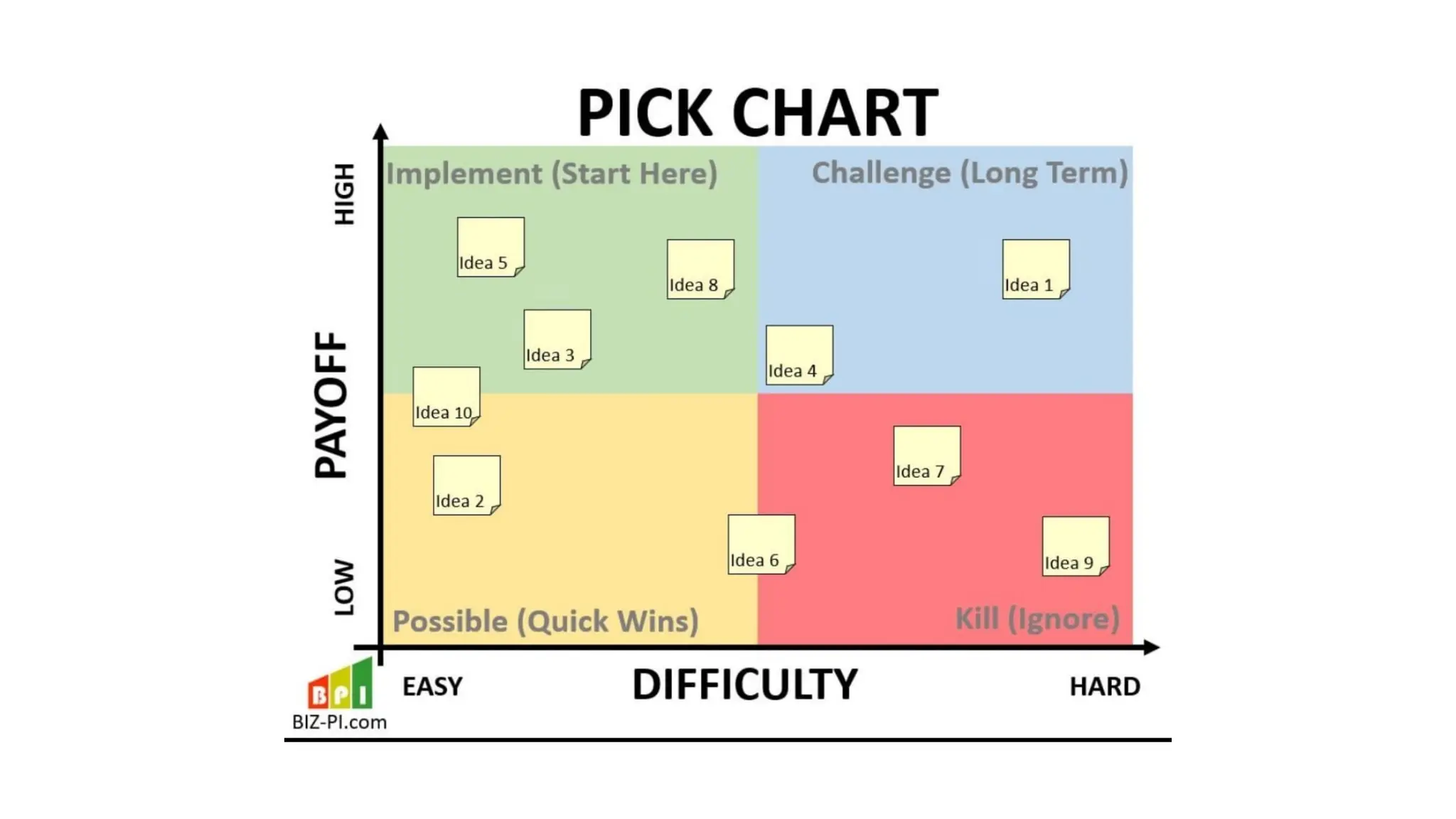
• "PICK" stands for Possible, Implement, Challenge, and Kill,
which categorize ideas into four distinct quadrants on a 2x2
matrix.
• Structure of the PICK Chart
• The PICK chart consists of two axes: Vertical Axis (Impact): Represents the
potential benefits or impact of an idea.
• Horizontal Axis (Ease of Implementation): Measures the level of effort, cost, or
difficulty required to execute the idea.
It helps …
• Identify and Prioritize Opportunities
• Teams can quickly assess which ideas offer the best return
• Decision Making: By categorizing ideas, teams can focus on
high-impact, low-effort initiatives first, ensuring efficient use
of resources.
• Team Engagement: Encourages discussion among team
members about the feasibility and potential benefits of
various improvement initiatives.
Implementation Steps
1.Brainstorm Ideas: Gather all potential improvement ideas
from team members.
2.Assess Each Idea: Evaluate each idea based on its expected
impact and ease of implementation.
3.Plot Ideas on the Chart: Place each idea in the appropriate
quadrant based on its assessment.
4.Prioritize Actions: Focus on implementing ideas in the
"Implement" quadrant while considering "Challenge"
projects for future planning.
Thanks

PICK Chart for nqas for health facilities

  • 1.
  • 2.
    What is pickchart • A PICK chart is a strategic tool used in various Quality Assurance methodologies to prioritize improvement ideas based on their potential impact and ease of implementation. • "PICK" stands for Possible, Implement, Challenge, and Kill, which categorize ideas into four distinct quadrants on a 2x2 matrix. • Structure of the PICK Chart • The PICK chart consists of two axes: Vertical Axis (Impact): Represents the potential benefits or impact of an idea. • Horizontal Axis (Ease of Implementation): Measures the level of effort, cost, or difficulty required to execute the idea.
  • 4.
    It helps … •Identify and Prioritize Opportunities • Teams can quickly assess which ideas offer the best return • Decision Making: By categorizing ideas, teams can focus on high-impact, low-effort initiatives first, ensuring efficient use of resources. • Team Engagement: Encourages discussion among team members about the feasibility and potential benefits of various improvement initiatives.
  • 5.
    Implementation Steps 1.Brainstorm Ideas:Gather all potential improvement ideas from team members. 2.Assess Each Idea: Evaluate each idea based on its expected impact and ease of implementation. 3.Plot Ideas on the Chart: Place each idea in the appropriate quadrant based on its assessment. 4.Prioritize Actions: Focus on implementing ideas in the "Implement" quadrant while considering "Challenge" projects for future planning.
  • 6.