2.11 Photosynthesis and the
environment
Photosynthesis & Respiration
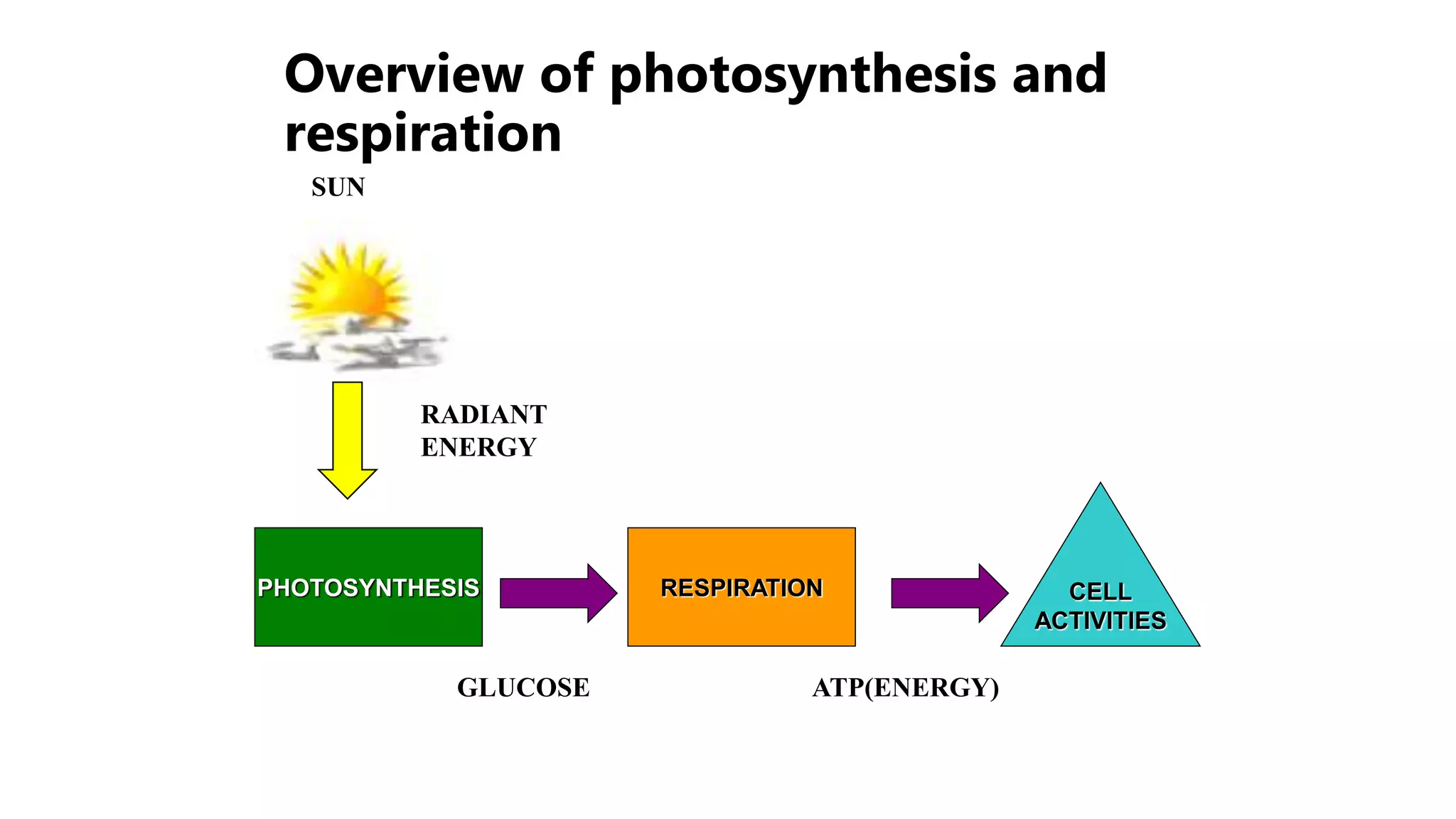
Overview of photosynthesis and
respiration
PHOTOSYNTHESIS CELL
ACTIVITIES
RESPIRATION
SUN
RADIANT
ENERGY
GLUCOSE ATP(ENERGY)
What is Photosynthesis?
The process of photosynthesis is a chemical reaction.
It is the most important
chemical reaction on our planet.
What is the Equation for the Chemical
Reaction of Photosynthesis?
What is the equation for the chemical
reaction of photosynthesis?
EQUATION FOR PHOTOSYNTHESIS
6CO2 + 6H2O + ENERGY C6H12O6 + 6O2
CARBON
DIOXIDE
WATER
GLUCOSE
OXYGEN
What is Cellular Respiration?
The release of chemical energy for use by cells.
Cellular Respiration:
Cellular respiration is the process by which the energy of
glucose is released in the cell to be used for life processes
(movement, breathing, blood circulation, etc…)
Describe Cellular Respiration
• The breakdown of glucose molecules to release
energy
• Turns glucose into ATP
• Takes place in all living things
• Is a step by step process
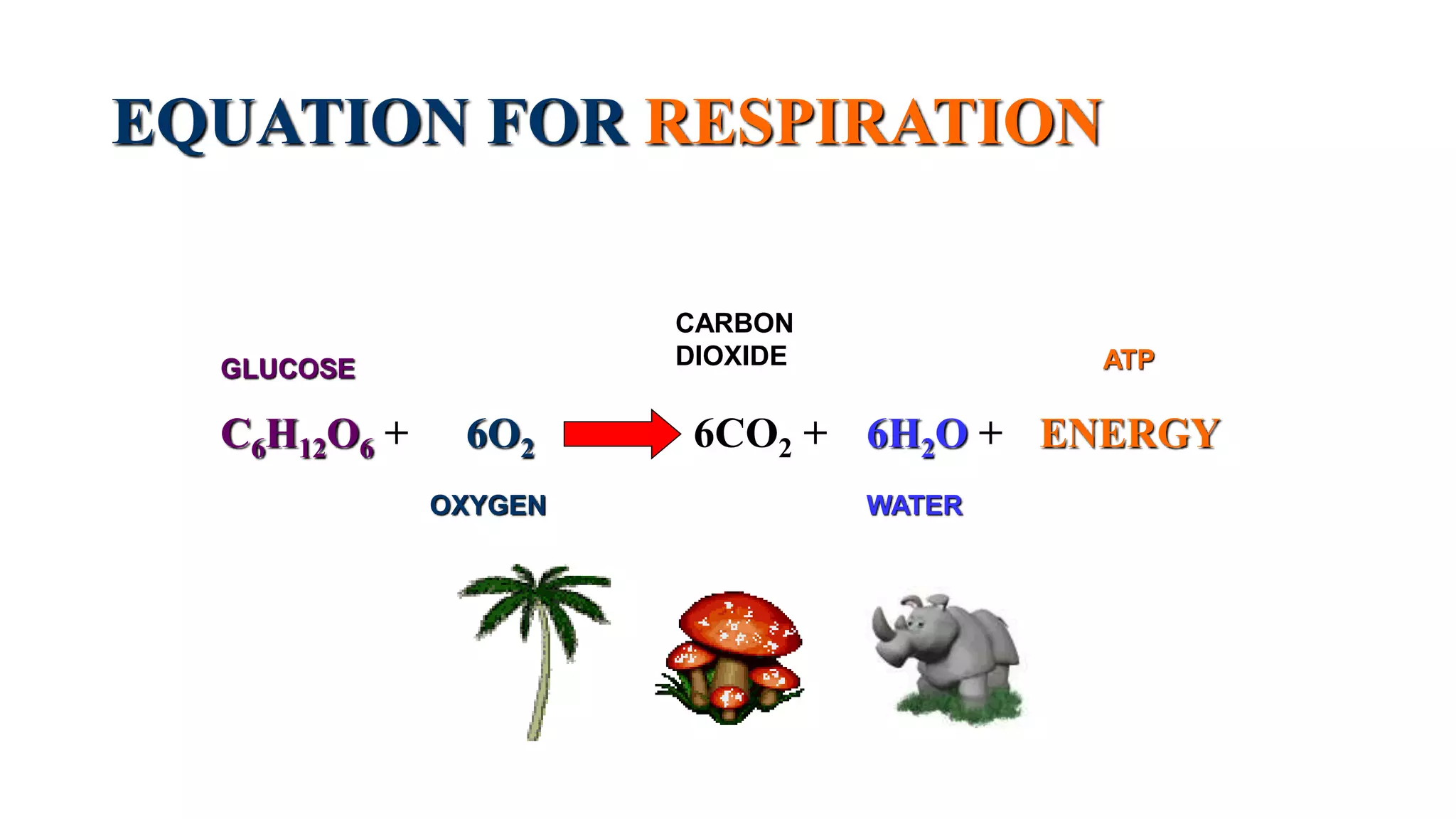
EQUATION FOR RESPIRATION
C6H12O6 +
GLUCOSE
6O2
OXYGEN
6CO2 +
CARBON
DIOXIDE
6H2O + ENERGY
WATER
ATP
Green plants both photosynthesize and respire
• If photosynthesis exceeds respiration (in light) plants will remove
carbon dioxide and release oxygen.
• If photosynthesis is less than respiration(in the dark), plants will
remove oxygen and add carbon dioxide.
Photosynthesis and respiration
• Photosynthesis removes carbon dioxide from the environment and at
the same time releases oxygen.
• Carbon dioxide and oxygen diffuse in and out of leaves through the
stomata.
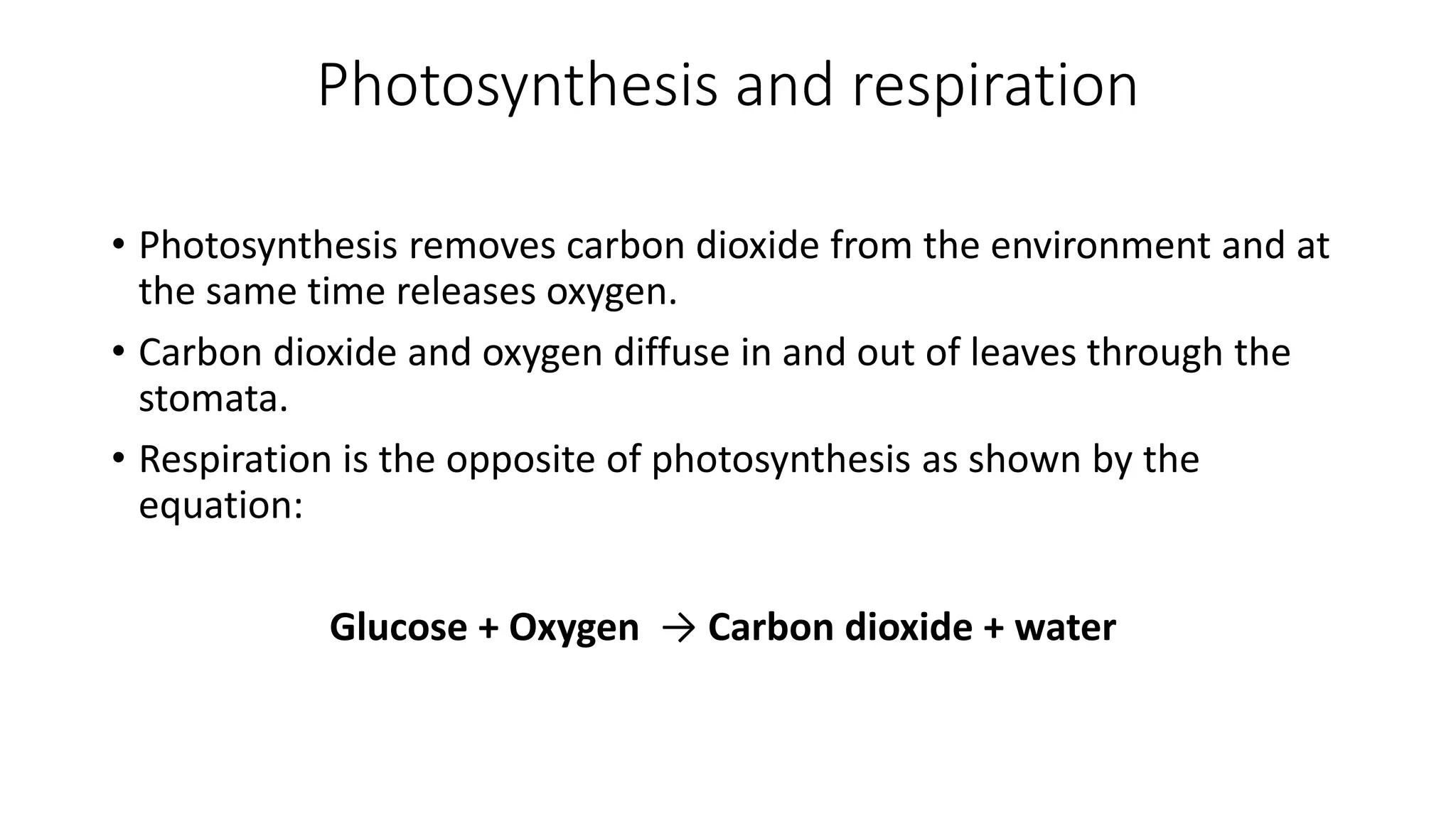
• Respiration is the opposite of photosynthesis as shown by the
equation:
Glucose + Oxygen → Carbon dioxide + water
The two processes (photosynthesis and respiration)
both occur in green plants.
• During the day photosynthesis exceeds respiration thus there is
a net removal of carbon dioxide and addition of oxygen into the
atmosphere.
• In the dark, photosynthesis is less than respiration and there is
a net removal of oxygen and addition of carbon dioxide into the
atmosphere.
• The amount of glucose used up in respiration is nearly constant
whereas amount of glucose produced in photosynthesis varies.
• Compensation point is the point where the rates of respiration and
photosynthesis exactly balance such that there is no net uptake or
loss of carbon dioxide or oxygen.
• At compensation point glucose consumed by respiration equals
glucose produced by photosynthesis.
• Carbon dioxide produces a weak acid in water, carbonic acid, which
has a low pH than water.
• Overall change in atmospheric carbon dioxide can be demonstrated
using bicarbonate indicator or named hydrogen carbonate indicator.
• The indicator is sensitive to changes in pH caused by the carbonic
acid.
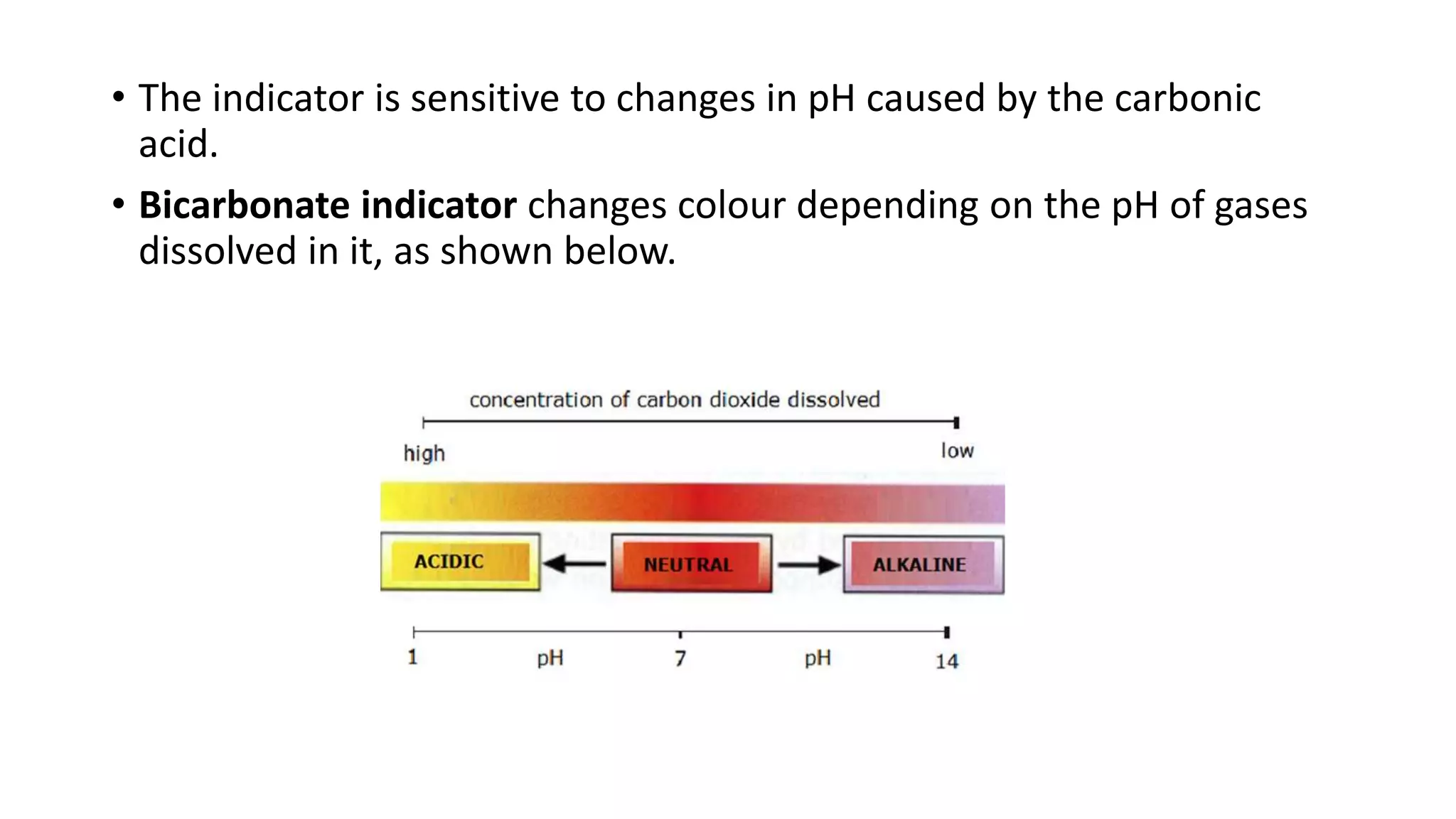
• Bicarbonate indicator changes colour depending on the pH of gases
dissolved in it, as shown below.
Gaseous exchange in plants using
bicarbonate indicator
• 4 test tubes with corks
• bicarbonate indicator solution
• test tube rack
• 4 equal sizes of fresh leaves
• beaker
• strings
• tissue paper
• aluminium foil
Procedure:
• Tie the leaf stalk with a string long enough to hang it
in the test tube midway.
• Completely cover two test tubes with aluminium foil
and the other with tissue paper.
• Boil one of the fresh leaves for 3 minutes.
• Add 2ml of bicarbonate indicator to all the 4 test
tubes.
• Hang the leaves in the test tube and close with a
cork and place on a test tube rack.
• Place the test tube rack in sunlight for 6 hours.
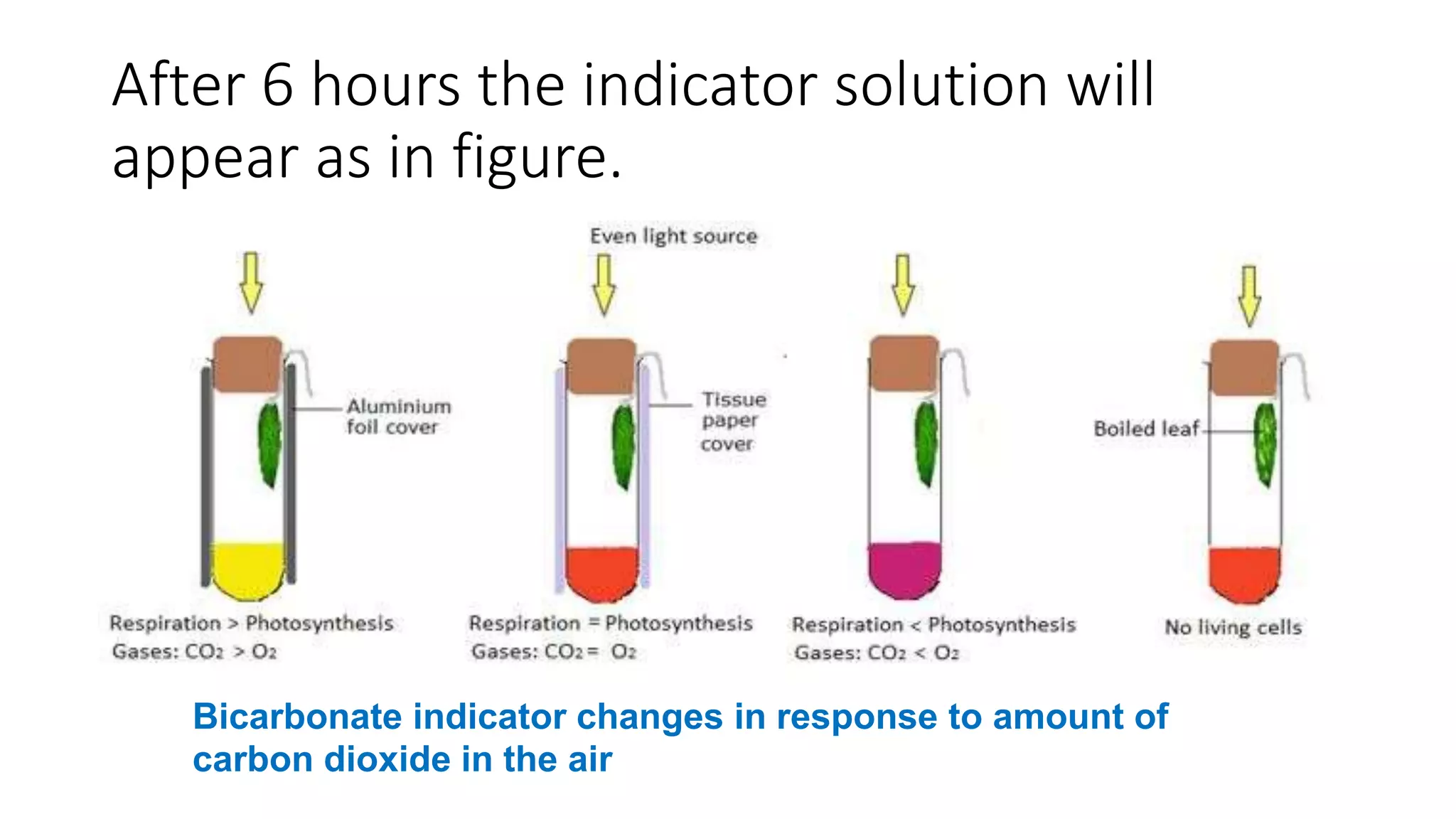
After 6 hours the indicator solution will
appear as in figure.
Bicarbonate indicator changes in response to amount of
carbon dioxide in the air
The products of photosynthesis

Photosynthesis and environment.pptx

  • 1.
    2.11 Photosynthesis andthe environment
  • 2.
  • 4.
    Overview of photosynthesisand respiration PHOTOSYNTHESIS CELL ACTIVITIES RESPIRATION SUN RADIANT ENERGY GLUCOSE ATP(ENERGY)
  • 5.
    What is Photosynthesis? Theprocess of photosynthesis is a chemical reaction. It is the most important chemical reaction on our planet.
  • 6.
    What is theEquation for the Chemical Reaction of Photosynthesis?
  • 7.
    What is theequation for the chemical reaction of photosynthesis?
  • 8.
    EQUATION FOR PHOTOSYNTHESIS 6CO2+ 6H2O + ENERGY C6H12O6 + 6O2 CARBON DIOXIDE WATER GLUCOSE OXYGEN
  • 9.
    What is CellularRespiration? The release of chemical energy for use by cells.
  • 10.
    Cellular Respiration: Cellular respirationis the process by which the energy of glucose is released in the cell to be used for life processes (movement, breathing, blood circulation, etc…)
  • 11.
    Describe Cellular Respiration •The breakdown of glucose molecules to release energy • Turns glucose into ATP • Takes place in all living things • Is a step by step process
  • 12.
    EQUATION FOR RESPIRATION C6H12O6+ GLUCOSE 6O2 OXYGEN 6CO2 + CARBON DIOXIDE 6H2O + ENERGY WATER ATP
  • 14.
    Green plants bothphotosynthesize and respire • If photosynthesis exceeds respiration (in light) plants will remove carbon dioxide and release oxygen. • If photosynthesis is less than respiration(in the dark), plants will remove oxygen and add carbon dioxide.
  • 15.
    Photosynthesis and respiration •Photosynthesis removes carbon dioxide from the environment and at the same time releases oxygen. • Carbon dioxide and oxygen diffuse in and out of leaves through the stomata. • Respiration is the opposite of photosynthesis as shown by the equation: Glucose + Oxygen → Carbon dioxide + water
  • 16.
    The two processes(photosynthesis and respiration) both occur in green plants. • During the day photosynthesis exceeds respiration thus there is a net removal of carbon dioxide and addition of oxygen into the atmosphere. • In the dark, photosynthesis is less than respiration and there is a net removal of oxygen and addition of carbon dioxide into the atmosphere.
  • 17.
    • The amountof glucose used up in respiration is nearly constant whereas amount of glucose produced in photosynthesis varies.
  • 18.
    • Compensation pointis the point where the rates of respiration and photosynthesis exactly balance such that there is no net uptake or loss of carbon dioxide or oxygen. • At compensation point glucose consumed by respiration equals glucose produced by photosynthesis.
  • 19.
    • Carbon dioxideproduces a weak acid in water, carbonic acid, which has a low pH than water. • Overall change in atmospheric carbon dioxide can be demonstrated using bicarbonate indicator or named hydrogen carbonate indicator.
  • 20.
    • The indicatoris sensitive to changes in pH caused by the carbonic acid. • Bicarbonate indicator changes colour depending on the pH of gases dissolved in it, as shown below.
  • 21.
    Gaseous exchange inplants using bicarbonate indicator • 4 test tubes with corks • bicarbonate indicator solution • test tube rack • 4 equal sizes of fresh leaves • beaker • strings • tissue paper • aluminium foil
  • 22.
    Procedure: • Tie theleaf stalk with a string long enough to hang it in the test tube midway. • Completely cover two test tubes with aluminium foil and the other with tissue paper. • Boil one of the fresh leaves for 3 minutes. • Add 2ml of bicarbonate indicator to all the 4 test tubes. • Hang the leaves in the test tube and close with a cork and place on a test tube rack. • Place the test tube rack in sunlight for 6 hours.
  • 23.
    After 6 hoursthe indicator solution will appear as in figure. Bicarbonate indicator changes in response to amount of carbon dioxide in the air
  • 24.
    The products ofphotosynthesis