PHOSPHORUS
• It is 6 th most abundant constituting 1% of
body weight
• It works in close association with calcium
• 85% of phosphorus is present in bones and
remaining is found in cells , cell membranes,
and extracellular fluids.
• It is intergal compound of
phospholipids,Nucleic acids , ATP
•Phosphate ions in body fluids are regulated by
insulin, growth hormone, and steroid hormones,
all of which act on the kidneys.
• Most of the phosphate is excreted through urine
and kidneys are important for extracellular
homeostasis of phosphate ions by either
reabsorption or allowing its excretion.
• Excretion is also influenced by dietary intake.
Low intakes of phosphorus or hypophosphatemia
increase reabsorption.
• Excretion of phosphate by kidney is also
regulated by phosphatonins.In foods, phosphorus
is present as phosphate salts (inorganic form),
nucleotides, and phospholipids (organic form).
Phosphorus is also a component of many food
additives.
FUNCTIONS OF PHOSPHORUS
• Phosphorus plays essential roles in cellular functions and
bone mineralisation for which the organic form is utilized.
• Inhuman blood, 70% of the phosphorus is organic and the
remaining 30%is inorganic.
• Phosphorus is essential for the growth , maintenance, and
repair of all tissues andcells for the production DNA and
RNA and metabolism/utilization of vitamins and other
minerals like iodine, magnesium , and zinc.
• As a part of the molecule2,3-diphosphoglycerate (2,3-
DPG) phosphorus is important for deliverying oxygen to
cells
• DPG binds with hemoglobin in the red blood cells and thus
regulates oxygen delivery.
• COMPONENT OF CELL MEMBRANE:
• Phosphorus is an integral component of
phospholipids which are present in all cell
membrane including brain cells. Hence, it
provides structural stability to the cell and
performs myraid functions in the body and brain .
Phophatidylcholine that is present in cell
membranesis a phosopholipid.
• Component of biological compounds: It is a
component of many organic compounds of
biological importance such as phosphatides,
nucleotides, DNA/RNA and many enzymes like
phosphatase, kinase, etc. It is also a component
of lecithin, which helps to break down and
emulsify the fat.
• Energy metabolism and high energy phosphate
bond:
• Phosphorus is a component of high energy
phosphate bonds (chemical energy) which are
present in ADP and ATP, the predominant
sources of metabolic energy used in energy
metabolism. It is also present in specialized
forms such as creatine phosphate, GTP, and
arginine phosphate. These are essential building
blocks for DNA and RNA synthesis.
• Bone mineralization: Phosphate is present in the bone as
calcium phosphate and as a component of hydroxyapatite
that is deposited in bone matrix.
• Phosphorylation: It is a process of combining phosphate
group with protein, glucose or glycerol for metabolic
reactions. Oxidative phosphorylation is a metabolic
pathway, where nutrients are oxidized to release ATP.
Phosphorylation is necessary for intestinal absorption,
glycolysis, oxidation of carbohydrates, transport of fatty
acids, exchange of amino acids, and renal excretion.
Activity of several proteins is regulated by
phosphorylation and dephosphorylation.Phosphorylation
is an important and critical step for activation of
enzymes, hormones, and cell-signaling molecules.
Regulation of phosphorus levels:
• Maintaining the physiological balance for phosphate is
extremely important for bone health.
• Body homeostasis for this mineral depends on the intake
and absorption, reabsorption by the kidneys and excretion
as well as between the phosphate in extracellular pool and
the bone storage.
• Phosphate homeostasis is regulated by transporters called
phosphatonins that are present in the gastrointestinal tract,
bone, and kidney.
• Excess phosphorus is excreted by the kidneys whose
functioning is regulated by vitamin D, parathyroid hormone
(like calcium), and fibroblast growth factor 23 (FGF-23).
• Besides these, there is evidence that other factors like
epidermal growth factor, glucocorticoids, estrogens, and
secreted frizzled related protein 4 (sFRP-4) influence
intestinal absorption.
RECOMMENDED DIETARY
ALLOWANCES FOR PHOSPHORUS
• Since calcium:phosphorus ratio of 1:1 is found
to be beneficial and Indian dietary pattern has
not shown the deficiency of phosphorus,
ICMR-NIN (2020) has given same RDA for
phosphorus as calcium for different population
groups except for infants. Infants need little
higher than calcium, i.e., for infants adequate
intake recommended is 450 mg/ day, i.e., 1.5
times the value recommended for calcium.
FOOD SOURCES OF PHOSPHORUS
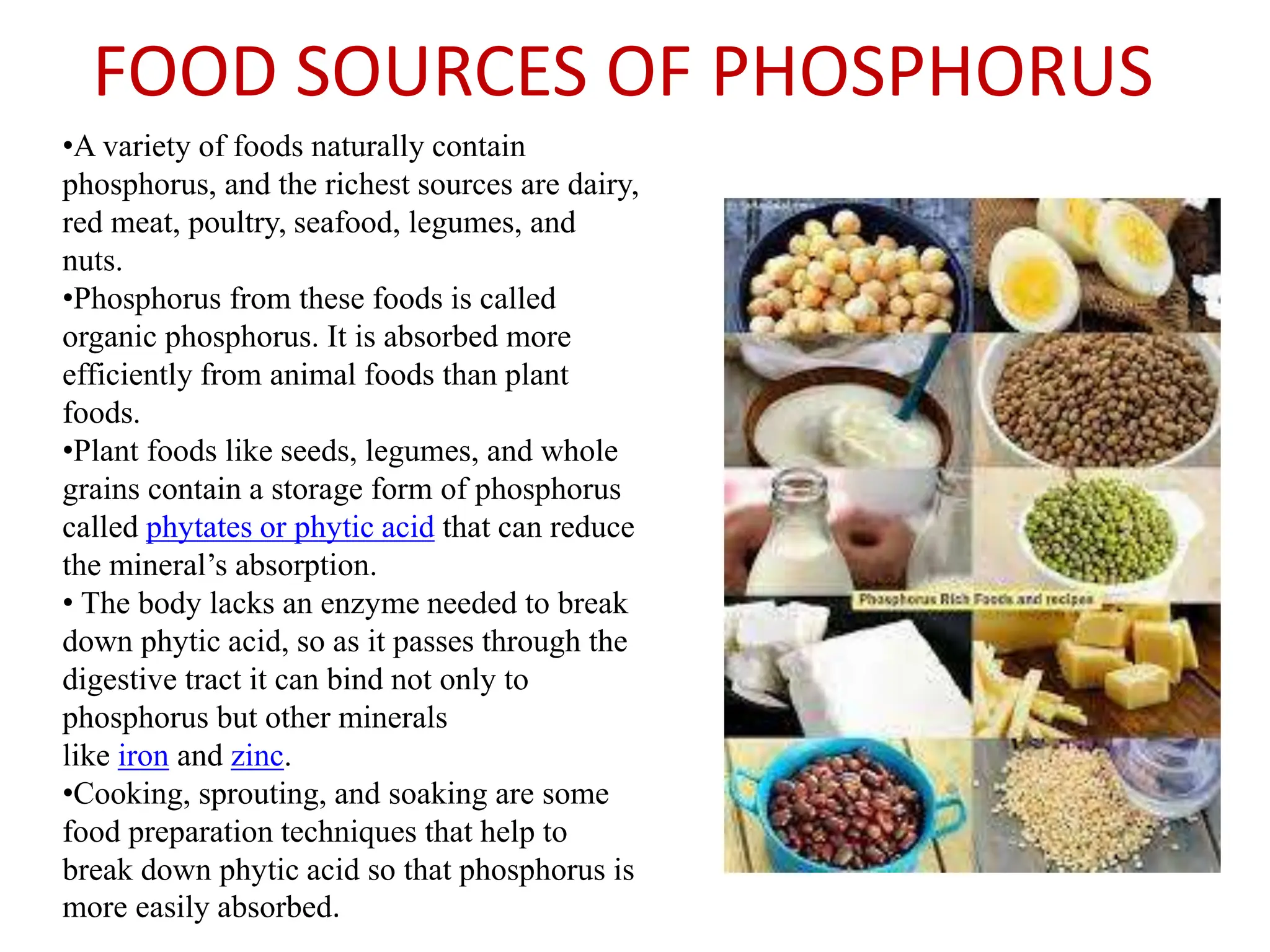
•A variety of foods naturally contain
phosphorus, and the richest sources are dairy,
red meat, poultry, seafood, legumes, and
nuts.
•Phosphorus from these foods is called
organic phosphorus. It is absorbed more
efficiently from animal foods than plant
foods.
•Plant foods like seeds, legumes, and whole
grains contain a storage form of phosphorus
called phytates or phytic acid that can reduce
the mineral’s absorption.
• The body lacks an enzyme needed to break
down phytic acid, so as it passes through the
digestive tract it can bind not only to
phosphorus but other minerals
like iron and zinc.
•Cooking, sprouting, and soaking are some
food preparation techniques that help to
break down phytic acid so that phosphorus is
more easily absorbed.
DEFICIENCY
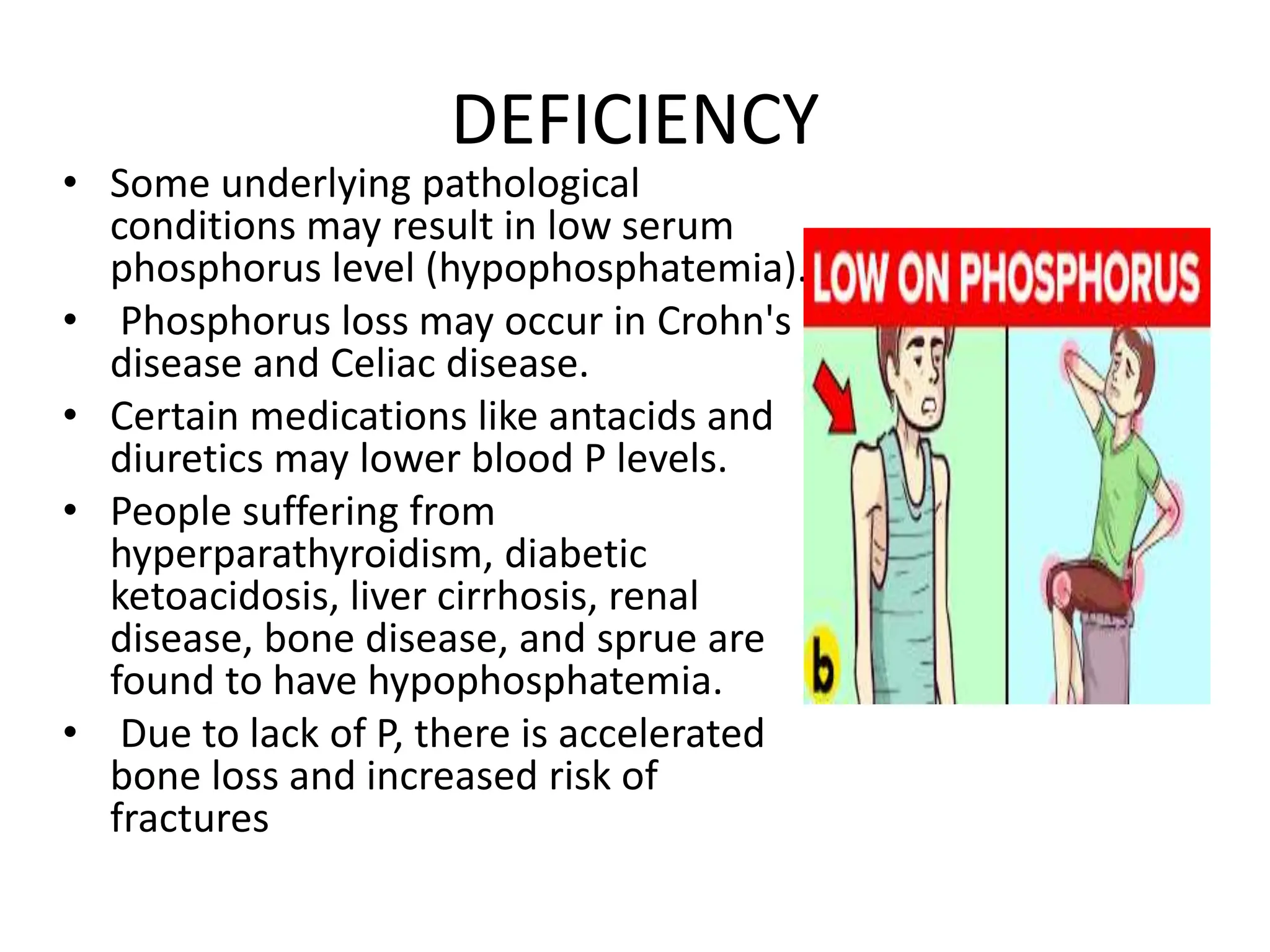
• Some underlying pathological
conditions may result in low serum
phosphorus level (hypophosphatemia).
• Phosphorus loss may occur in Crohn's
disease and Celiac disease.
• Certain medications like antacids and
diuretics may lower blood P levels.
• People suffering from
hyperparathyroidism, diabetic
ketoacidosis, liver cirrhosis, renal
disease, bone disease, and sprue are
found to have hypophosphatemia.
• Due to lack of P, there is accelerated
bone loss and increased risk of
fractures
PHOSPHORUS and its uses in human body with its properties

PHOSPHORUS and its uses in human body with its properties

  • 1.
    PHOSPHORUS • It is6 th most abundant constituting 1% of body weight • It works in close association with calcium • 85% of phosphorus is present in bones and remaining is found in cells , cell membranes, and extracellular fluids. • It is intergal compound of phospholipids,Nucleic acids , ATP
  • 2.
    •Phosphate ions inbody fluids are regulated by insulin, growth hormone, and steroid hormones, all of which act on the kidneys. • Most of the phosphate is excreted through urine and kidneys are important for extracellular homeostasis of phosphate ions by either reabsorption or allowing its excretion.
  • 3.
    • Excretion isalso influenced by dietary intake. Low intakes of phosphorus or hypophosphatemia increase reabsorption. • Excretion of phosphate by kidney is also regulated by phosphatonins.In foods, phosphorus is present as phosphate salts (inorganic form), nucleotides, and phospholipids (organic form). Phosphorus is also a component of many food additives.
  • 4.
    FUNCTIONS OF PHOSPHORUS •Phosphorus plays essential roles in cellular functions and bone mineralisation for which the organic form is utilized. • Inhuman blood, 70% of the phosphorus is organic and the remaining 30%is inorganic. • Phosphorus is essential for the growth , maintenance, and repair of all tissues andcells for the production DNA and RNA and metabolism/utilization of vitamins and other minerals like iodine, magnesium , and zinc. • As a part of the molecule2,3-diphosphoglycerate (2,3- DPG) phosphorus is important for deliverying oxygen to cells • DPG binds with hemoglobin in the red blood cells and thus regulates oxygen delivery.
  • 5.
    • COMPONENT OFCELL MEMBRANE: • Phosphorus is an integral component of phospholipids which are present in all cell membrane including brain cells. Hence, it provides structural stability to the cell and performs myraid functions in the body and brain . Phophatidylcholine that is present in cell membranesis a phosopholipid.
  • 6.
    • Component ofbiological compounds: It is a component of many organic compounds of biological importance such as phosphatides, nucleotides, DNA/RNA and many enzymes like phosphatase, kinase, etc. It is also a component of lecithin, which helps to break down and emulsify the fat.
  • 7.
    • Energy metabolismand high energy phosphate bond: • Phosphorus is a component of high energy phosphate bonds (chemical energy) which are present in ADP and ATP, the predominant sources of metabolic energy used in energy metabolism. It is also present in specialized forms such as creatine phosphate, GTP, and arginine phosphate. These are essential building blocks for DNA and RNA synthesis.
  • 8.
    • Bone mineralization:Phosphate is present in the bone as calcium phosphate and as a component of hydroxyapatite that is deposited in bone matrix. • Phosphorylation: It is a process of combining phosphate group with protein, glucose or glycerol for metabolic reactions. Oxidative phosphorylation is a metabolic pathway, where nutrients are oxidized to release ATP. Phosphorylation is necessary for intestinal absorption, glycolysis, oxidation of carbohydrates, transport of fatty acids, exchange of amino acids, and renal excretion. Activity of several proteins is regulated by phosphorylation and dephosphorylation.Phosphorylation is an important and critical step for activation of enzymes, hormones, and cell-signaling molecules.
  • 9.
    Regulation of phosphoruslevels: • Maintaining the physiological balance for phosphate is extremely important for bone health. • Body homeostasis for this mineral depends on the intake and absorption, reabsorption by the kidneys and excretion as well as between the phosphate in extracellular pool and the bone storage. • Phosphate homeostasis is regulated by transporters called phosphatonins that are present in the gastrointestinal tract, bone, and kidney. • Excess phosphorus is excreted by the kidneys whose functioning is regulated by vitamin D, parathyroid hormone (like calcium), and fibroblast growth factor 23 (FGF-23). • Besides these, there is evidence that other factors like epidermal growth factor, glucocorticoids, estrogens, and secreted frizzled related protein 4 (sFRP-4) influence intestinal absorption.
  • 10.
    RECOMMENDED DIETARY ALLOWANCES FORPHOSPHORUS • Since calcium:phosphorus ratio of 1:1 is found to be beneficial and Indian dietary pattern has not shown the deficiency of phosphorus, ICMR-NIN (2020) has given same RDA for phosphorus as calcium for different population groups except for infants. Infants need little higher than calcium, i.e., for infants adequate intake recommended is 450 mg/ day, i.e., 1.5 times the value recommended for calcium.
  • 11.
    FOOD SOURCES OFPHOSPHORUS •A variety of foods naturally contain phosphorus, and the richest sources are dairy, red meat, poultry, seafood, legumes, and nuts. •Phosphorus from these foods is called organic phosphorus. It is absorbed more efficiently from animal foods than plant foods. •Plant foods like seeds, legumes, and whole grains contain a storage form of phosphorus called phytates or phytic acid that can reduce the mineral’s absorption. • The body lacks an enzyme needed to break down phytic acid, so as it passes through the digestive tract it can bind not only to phosphorus but other minerals like iron and zinc. •Cooking, sprouting, and soaking are some food preparation techniques that help to break down phytic acid so that phosphorus is more easily absorbed.
  • 12.
    DEFICIENCY • Some underlyingpathological conditions may result in low serum phosphorus level (hypophosphatemia). • Phosphorus loss may occur in Crohn's disease and Celiac disease. • Certain medications like antacids and diuretics may lower blood P levels. • People suffering from hyperparathyroidism, diabetic ketoacidosis, liver cirrhosis, renal disease, bone disease, and sprue are found to have hypophosphatemia. • Due to lack of P, there is accelerated bone loss and increased risk of fractures