21st Century Literature from the Philippines and the World
PHILIPPINE THEATER
An Ocean of Emotions
Philippine Theater
Philippine theater is the sum total of
mimetic performances developed and
presented through history on occasions
and for purposes determined by social
purpose and need.
HISTORICAL ACCOUNTS OF
PHILIPPINE THEATER
INDIGENOUS THEATRE
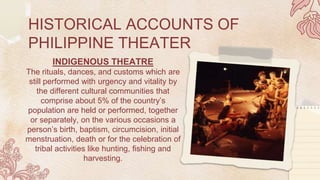
The rituals, dances, and customs which are
still performed with urgency and vitality by
the different cultural communities that
comprise about 5% of the country’s
population are held or performed, together
or separately, on the various occasions a
person’s birth, baptism, circumcision, initial
menstruation, death or for the celebration of
tribal activities like hunting, fishing and
harvesting.
HISTORICAL ACCOUNTS OF
PHILIPPINE THEATER
SPANISH COLONIAL THEATRE
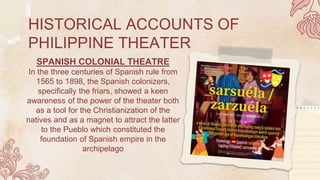
In the three centuries of Spanish rule from
1565 to 1898, the Spanish colonizers,
specifically the friars, showed a keen
awareness of the power of the theater both
as a tool for the Christianization of the
natives and as a magnet to attract the latter
to the Pueblo which constituted the
foundation of Spanish empire in the
archipelago
HISTORICAL ACCOUNTS OF
PHILIPPINE THEATER
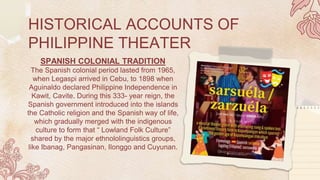
SPANISH COLONIAL TRADITION
The Spanish colonial period lasted from 1965,
when Legaspi arrived in Cebu, to 1898 when
Aguinaldo declared Philippine Independence in
Kawit, Cavite. During this 333- year reign, the
Spanish government introduced into the islands
the Catholic religion and the Spanish way of life,
which gradually merged with the indigenous
culture to form that “ Lowland Folk Culture”
shared by the major ethnololinguistics groups,
like Ibanag, Pangasinan, Ilonggo and Cuyunan.
HISTORICAL ACCOUNTS OF
PHILIPPINE THEATER
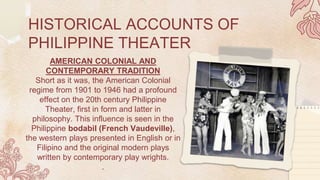
AMERICAN COLONIAL AND
CONTEMPORARY TRADITION
Short as it was, the American Colonial
regime from 1901 to 1946 had a profound
effect on the 20th century Philippine
Theater, first in form and latter in
philosophy. This influence is seen in the
Philippine bodabil (French Vaudeville),
the western plays presented in English or in
Filipino and the original modern plays
written by contemporary play wrights.
.
Forms and Types
of Philippine
Theater
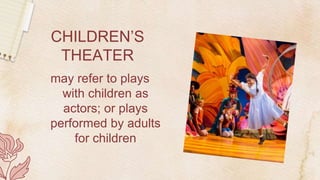
CHILDREN’S
THEATER
may refer to plays
with children as
actors; or plays
performed by adults
for children
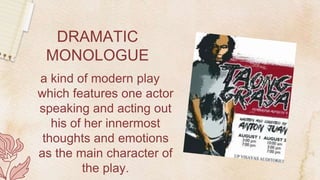
DRAMATIC
MONOLOGUE
a kind of modern play
which features one actor
speaking and acting out
his of her innermost
thoughts and emotions
as the main character of
the play.
DULA-TULA
literally “play- poem,”
refers to a minimalist
form of theater
developed in the early
1970s by UP Repertory.
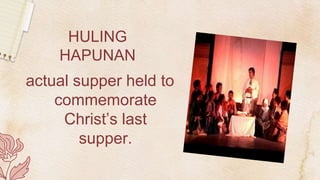
HULING
HAPUNAN
actual supper held to
commemorate
Christ’s last
supper.
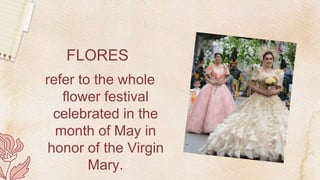
FLORES
refer to the whole
flower festival
celebrated in the
month of May in
honor of the Virgin
Mary.
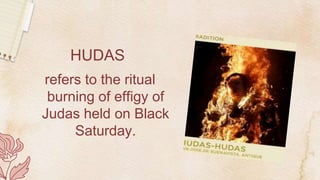
HUDAS
refers to the ritual
burning of effigy of
Judas held on Black
Saturday.
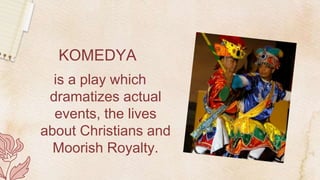
KOMEDYA
is a play which
dramatizes actual
events, the lives
about Christians and
Moorish Royalty.
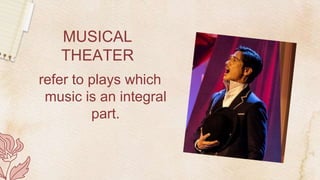
MUSICAL
THEATER
refer to plays which
music is an integral
part.
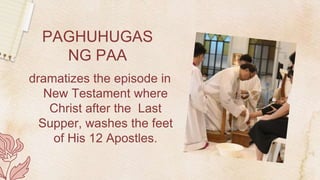
PAGHUHUGAS
NG PAA
dramatizes the episode in
New Testament where
Christ after the Last
Supper, washes the feet
of His 12 Apostles.
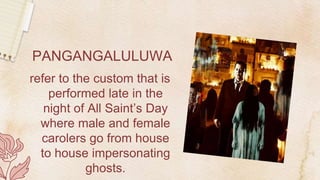
PANGANGALULUWA
refer to the custom that is
performed late in the
night of All Saint’s Day
where male and female
carolers go from house
to house impersonating
ghosts.
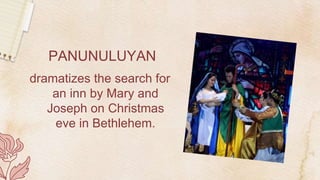
PANUNULUYAN
dramatizes the search for
an inn by Mary and
Joseph on Christmas
eve in Bethlehem.
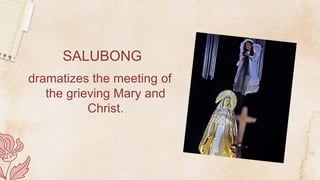
SALUBONG
dramatizes the meeting of
the grieving Mary and
Christ.
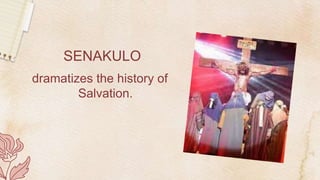
SENAKULO
dramatizes the history of
Salvation.
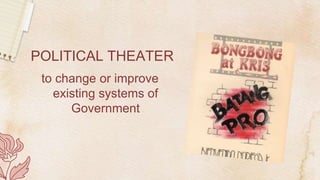
POLITICAL THEATER
to change or improve
existing systems of
Government
ASPECTS OF
PRODUCTION
SET
refers to the scenery and properties of
the physical context created for a
theater performance includes the
setting.
DIRECTING
refers to the over-all supervision and
coordination of the elements of
theatrical production, including acting
and the design of sets, props,
costumes, lights and sounds.
SCRIPT
or play script is the text of the play.
TRAINING
is done in workshops, seminars, training
programs, and academic programs.
LIGHTING
in theater involves the use of lights and
other related equipment for the
purpose of illuminating the stage,
creating atmosphere and mood, and
highlighting character and action.
ACTING
is the art of representing a character.
MUSIC
in theater includes background music.
COSTUME
for the theater refers to the distinctive
clothes used by an actor in order to
authenticate a role in a performance
AWARDS
Awards refer to the forms of recognition
to the achievements in theater.
Grants refer to venues or funds given
to theater artists to support or finance
all kinds of theatrical work.
CRITICISM
is the written valuation of the texts and
of the theater performances by
informed and schooled critics.
CREDITS: This presentation template was created by Slidesgo, and
includes icons by Flaticon, and infographics & images by Freepik
THANKS!
Do you have any questions?
youremail@freepik.com
+34 654 321 432
yourwebsite.com
Please keep this slide for attribution

PHILIPPINE THEATER.pptx

  • 1.
    21st Century Literaturefrom the Philippines and the World PHILIPPINE THEATER An Ocean of Emotions
  • 2.
    Philippine Theater Philippine theateris the sum total of mimetic performances developed and presented through history on occasions and for purposes determined by social purpose and need.
  • 3.
    HISTORICAL ACCOUNTS OF PHILIPPINETHEATER INDIGENOUS THEATRE The rituals, dances, and customs which are still performed with urgency and vitality by the different cultural communities that comprise about 5% of the country’s population are held or performed, together or separately, on the various occasions a person’s birth, baptism, circumcision, initial menstruation, death or for the celebration of tribal activities like hunting, fishing and harvesting.
  • 4.
    HISTORICAL ACCOUNTS OF PHILIPPINETHEATER SPANISH COLONIAL THEATRE In the three centuries of Spanish rule from 1565 to 1898, the Spanish colonizers, specifically the friars, showed a keen awareness of the power of the theater both as a tool for the Christianization of the natives and as a magnet to attract the latter to the Pueblo which constituted the foundation of Spanish empire in the archipelago
  • 5.
    HISTORICAL ACCOUNTS OF PHILIPPINETHEATER SPANISH COLONIAL TRADITION The Spanish colonial period lasted from 1965, when Legaspi arrived in Cebu, to 1898 when Aguinaldo declared Philippine Independence in Kawit, Cavite. During this 333- year reign, the Spanish government introduced into the islands the Catholic religion and the Spanish way of life, which gradually merged with the indigenous culture to form that “ Lowland Folk Culture” shared by the major ethnololinguistics groups, like Ibanag, Pangasinan, Ilonggo and Cuyunan.
  • 6.
    HISTORICAL ACCOUNTS OF PHILIPPINETHEATER AMERICAN COLONIAL AND CONTEMPORARY TRADITION Short as it was, the American Colonial regime from 1901 to 1946 had a profound effect on the 20th century Philippine Theater, first in form and latter in philosophy. This influence is seen in the Philippine bodabil (French Vaudeville), the western plays presented in English or in Filipino and the original modern plays written by contemporary play wrights. .
  • 7.
    Forms and Types ofPhilippine Theater
  • 8.
    CHILDREN’S THEATER may refer toplays with children as actors; or plays performed by adults for children
  • 9.
    DRAMATIC MONOLOGUE a kind ofmodern play which features one actor speaking and acting out his of her innermost thoughts and emotions as the main character of the play.
  • 10.
    DULA-TULA literally “play- poem,” refersto a minimalist form of theater developed in the early 1970s by UP Repertory.
  • 12.
    HULING HAPUNAN actual supper heldto commemorate Christ’s last supper.
  • 13.
    FLORES refer to thewhole flower festival celebrated in the month of May in honor of the Virgin Mary.
  • 14.
    HUDAS refers to theritual burning of effigy of Judas held on Black Saturday.
  • 15.
    KOMEDYA is a playwhich dramatizes actual events, the lives about Christians and Moorish Royalty.
  • 16.
    MUSICAL THEATER refer to playswhich music is an integral part.
  • 17.
    PAGHUHUGAS NG PAA dramatizes theepisode in New Testament where Christ after the Last Supper, washes the feet of His 12 Apostles.
  • 18.
    PANGANGALULUWA refer to thecustom that is performed late in the night of All Saint’s Day where male and female carolers go from house to house impersonating ghosts.
  • 19.
    PANUNULUYAN dramatizes the searchfor an inn by Mary and Joseph on Christmas eve in Bethlehem.
  • 20.
    SALUBONG dramatizes the meetingof the grieving Mary and Christ.
  • 21.
  • 22.
    POLITICAL THEATER to changeor improve existing systems of Government
  • 23.
  • 24.
    SET refers to thescenery and properties of the physical context created for a theater performance includes the setting.
  • 25.
    DIRECTING refers to theover-all supervision and coordination of the elements of theatrical production, including acting and the design of sets, props, costumes, lights and sounds.
  • 26.
    SCRIPT or play scriptis the text of the play.
  • 27.
    TRAINING is done inworkshops, seminars, training programs, and academic programs.
  • 28.
    LIGHTING in theater involvesthe use of lights and other related equipment for the purpose of illuminating the stage, creating atmosphere and mood, and highlighting character and action.
  • 29.
    ACTING is the artof representing a character.
  • 30.
    MUSIC in theater includesbackground music.
  • 31.
    COSTUME for the theaterrefers to the distinctive clothes used by an actor in order to authenticate a role in a performance
  • 32.
    AWARDS Awards refer tothe forms of recognition to the achievements in theater. Grants refer to venues or funds given to theater artists to support or finance all kinds of theatrical work.
  • 33.
    CRITICISM is the writtenvaluation of the texts and of the theater performances by informed and schooled critics.
  • 34.
    CREDITS: This presentationtemplate was created by Slidesgo, and includes icons by Flaticon, and infographics & images by Freepik THANKS! Do you have any questions? youremail@freepik.com +34 654 321 432 yourwebsite.com Please keep this slide for attribution