Pharmaceutical Aqueous Solution Treatment
Content
● Introduction
● Literature Review
● Knowledge Gap
● Objective
● Work plan
● Reference
Abstract
● Pharmaceutical products have become a necessary part of life. Several studies have demonstrated that indirect
exposure of humans to pharmaceuticals through the water could cause negative effects. Raw sewage and wastewater
effluents are the major sources of pharmaceuticals found in surface waters and drinking water. Therefore, it is
important to consider and characterize the efficiency of pharmaceutical removal during wastewater and drinking-water
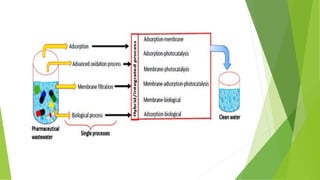
treatment processes. Various treatment options have been investigated for the removal/reduction of drugs (e.g.,
antibiotics, NSAIDs, analgesics) using conventional or biological treatments, such as activated sludge processes or bio-
filtration, respectively. The efficiency of these processes ranges from 20–90%. Comparatively, advanced wastewater
treatment processes, such as reverse osmosis, zonation and advanced oxidation technologies, can achieve higher
removal rates for drugs. Pharmaceuticals and their metabolites undergo natural attenuation by adsorption and solar
oxidation. Therefore, pharmaceuticals in water sources even at trace concentrations would have undergone removal
through biological processes and, if applicable, combined adsorption and photocatalytic degradation wastewater
treatment processes. This review provides an overview of the conventional and advanced technologies for the removal
of pharmaceutical compounds from water sources. It also sheds light on the key points behind adsorption and photo
catalysis.
Introduction
Pharmaceutical aqueous systems are dosage forms in which water serves as the principal
solvent or dispersion medium. They play a vital role in modern drug delivery due to water’s
safety, biocompatibility, and availability. Aqueous formulations encompass a wide range of
products, including oral solutions, parenteral injections, ophthalmic drops, and topical
preparations. Their widespread use is attributed to ease of administration, rapid absorption,
and patient acceptability. However, challenges such as limited solubility of many active
pharmaceutical ingredients, susceptibility to hydrolytic degradation, and risk of microbial
contamination necessitate careful formulation strategies. Stabilizers, preservatives, and pH
adjustments are commonly employed to ensure therapeutic efficacy and product safety. Thus,
aqueous systems remain a cornerstone of pharmaceutical technology, balancing convenience
with the need for rigorous quality control.
Aqueous pharmaceutical solutions are particularly important because they enable rapid onset
of action, precise dosing, and suitability for patients who have difficulty swallowing solid
dosage forms. However, they require careful formulation to prevent microbial growth and
degradation of the active ingredients.
The formulation of aqueous solutions involves careful consideration of solubility, pH, stability, iso
tonicity, and compatibility of excipients. Common additives include flavoring agents,
preservatives, stabilizers, buffers, and viscosity enhancers to ensure the product’s efficacy,
safety, and shelf-life.
Aqueous solutions are preferred for their ease of administration, rapid absorption, and flexibility
in adjusting concentrations for different patient needs. They provide a uniform distribution of the
dissolved drug, ensuring accurate dosing and faster therapeutic action compared to solid
dosage forms. Moreover, they can be flavored, colored, or sweetened to improve patient
compliance, particularly in pediatric and geriatric populations.
Literature review
No. Topic Key Focus Findings / Summary Reference Example
1
Solubility of drugs in
aqueous solutions
Study of factors affecting
solubility like temperature,
pH, and solvents.
Solubility increases with
temperature and suitable pH
adjustment.
Savjani et al., 2012
2
Stability of aqueous
formulations
Examines chemical
degradation in water-based
drugs.
Drug stability depends on
pH, light, and storage
temperature.
Jangid et al., 2018
3
Use of buffers in
pharmaceutical solutions
Importance of pH control in
aqueous preparations.
Proper buffer maintains
drug stability and activity.
Samu elsen et al., 2019
4
Role of excipients in
aqueous drug solubility
Studies how excipients like
surfactants or cyclodextrins
enhance solubility.
Excipients improve solubility
and drug absorption.
Bárdos et al., 2025
5
Hydrotropy and co-solvency
techniques
Techniques used to improve
solubility of poorly soluble
drugs.
Hydrotropes and co-
solvents increase solubility
without affecting safety.
Silva et al., 2023
Knowledge gap
● Limited combination studies – Most research focuses on single factors like temperature or pH, but few explore how
multiple factors together affect solubility and stability.
● Lack of long-term data – Stability studies often test for short durations, not enough to predict real shelf life in practical
conditions.
● Insufficient comparison of excipients – There is limited data comparing how different excipients (like surfactants and
cyclodextrins ) perform under similar conditions
● Safety and toxicity data gaps – Many solubility enhancement methods (e.g., co-solvency, hydrotropy. ) lack full
evaluation of safety for human use.
● Need for formulation optimization – There is still no universal method to optimize aqueous formulations for both
maximum solubility and long-term stability.
Objective
● To understand the concept and types of pharmaceutical aqueous solutions.
● To study the role of water as a solvent in pharmaceutical formulations.
● To analyze the methods of preparation, purification, and sterilization of aqueous solutions.
● To identify the factors affecting the stability and quality of aqueous pharmaceutical preparations.
● To explore the therapeutic applications and treatment importance of aqueous solutions in pharmaceuticals.
.
● To evaluate the advantages and limitations of using aqueous systems in drug delivery.
Work plan
● Collected background information on pharmaceutical aqueous solutions and their importance in drug formulation.
● Reviewed literature from textbooks, research papers, and online sources about different treatment and purification
techniques.
● Studied types of aqueous solutions (e.g., syrups, injections, eye drops) and their required quality standards.
● Identified treatment methods such as filtration, distillation, ion exchange, and sterilization used in pharmaceutical
industries.
● Analyzed different purification processes for water used in formulation, including purified water and water for injection.
● Compared effectiveness of treatment methods based on purity level, cost, and suitability for various pharmaceutical
uses.
● Identified knowledge gaps such as limited research on eco-friendly and energy-efficient treatment techniques.
● Prepared summary and conclusions highlighting best treatment methods and areas for improvement.
● Developed presentation slides showing objectives, methods, results, and recommendations for future research.
reference
● U.S. Food and Drug Administration (FDA) – Guidance for Industry: Pharmaceutical Development
https://www.fda.gov
● World Health Organization (WHO) – Guidelines for Stability Testing of Pharmaceutical Products Containing Well Established
Drug Substances in Conventional Dosage Forms
https://www.who.int
● PubChem – Data on Solubility and Aqueous Behavior of Pharmaceutical Compounds
https://pubchem.ncbi.nlm.nih.gov
Thank you

Pharmaceuticals aqueous PPT presentation

  • 1.
  • 2.
    Content ● Introduction ● LiteratureReview ● Knowledge Gap ● Objective ● Work plan ● Reference
  • 3.
    Abstract ● Pharmaceutical productshave become a necessary part of life. Several studies have demonstrated that indirect exposure of humans to pharmaceuticals through the water could cause negative effects. Raw sewage and wastewater effluents are the major sources of pharmaceuticals found in surface waters and drinking water. Therefore, it is important to consider and characterize the efficiency of pharmaceutical removal during wastewater and drinking-water treatment processes. Various treatment options have been investigated for the removal/reduction of drugs (e.g., antibiotics, NSAIDs, analgesics) using conventional or biological treatments, such as activated sludge processes or bio- filtration, respectively. The efficiency of these processes ranges from 20–90%. Comparatively, advanced wastewater treatment processes, such as reverse osmosis, zonation and advanced oxidation technologies, can achieve higher removal rates for drugs. Pharmaceuticals and their metabolites undergo natural attenuation by adsorption and solar oxidation. Therefore, pharmaceuticals in water sources even at trace concentrations would have undergone removal through biological processes and, if applicable, combined adsorption and photocatalytic degradation wastewater treatment processes. This review provides an overview of the conventional and advanced technologies for the removal of pharmaceutical compounds from water sources. It also sheds light on the key points behind adsorption and photo catalysis.
  • 4.
    Introduction Pharmaceutical aqueous systemsare dosage forms in which water serves as the principal solvent or dispersion medium. They play a vital role in modern drug delivery due to water’s safety, biocompatibility, and availability. Aqueous formulations encompass a wide range of products, including oral solutions, parenteral injections, ophthalmic drops, and topical preparations. Their widespread use is attributed to ease of administration, rapid absorption, and patient acceptability. However, challenges such as limited solubility of many active pharmaceutical ingredients, susceptibility to hydrolytic degradation, and risk of microbial contamination necessitate careful formulation strategies. Stabilizers, preservatives, and pH adjustments are commonly employed to ensure therapeutic efficacy and product safety. Thus, aqueous systems remain a cornerstone of pharmaceutical technology, balancing convenience with the need for rigorous quality control. Aqueous pharmaceutical solutions are particularly important because they enable rapid onset of action, precise dosing, and suitability for patients who have difficulty swallowing solid dosage forms. However, they require careful formulation to prevent microbial growth and degradation of the active ingredients.
  • 5.
    The formulation ofaqueous solutions involves careful consideration of solubility, pH, stability, iso tonicity, and compatibility of excipients. Common additives include flavoring agents, preservatives, stabilizers, buffers, and viscosity enhancers to ensure the product’s efficacy, safety, and shelf-life. Aqueous solutions are preferred for their ease of administration, rapid absorption, and flexibility in adjusting concentrations for different patient needs. They provide a uniform distribution of the dissolved drug, ensuring accurate dosing and faster therapeutic action compared to solid dosage forms. Moreover, they can be flavored, colored, or sweetened to improve patient compliance, particularly in pediatric and geriatric populations.
  • 8.
    Literature review No. TopicKey Focus Findings / Summary Reference Example 1 Solubility of drugs in aqueous solutions Study of factors affecting solubility like temperature, pH, and solvents. Solubility increases with temperature and suitable pH adjustment. Savjani et al., 2012 2 Stability of aqueous formulations Examines chemical degradation in water-based drugs. Drug stability depends on pH, light, and storage temperature. Jangid et al., 2018 3 Use of buffers in pharmaceutical solutions Importance of pH control in aqueous preparations. Proper buffer maintains drug stability and activity. Samu elsen et al., 2019 4 Role of excipients in aqueous drug solubility Studies how excipients like surfactants or cyclodextrins enhance solubility. Excipients improve solubility and drug absorption. Bárdos et al., 2025 5 Hydrotropy and co-solvency techniques Techniques used to improve solubility of poorly soluble drugs. Hydrotropes and co- solvents increase solubility without affecting safety. Silva et al., 2023
  • 9.
    Knowledge gap ● Limitedcombination studies – Most research focuses on single factors like temperature or pH, but few explore how multiple factors together affect solubility and stability. ● Lack of long-term data – Stability studies often test for short durations, not enough to predict real shelf life in practical conditions. ● Insufficient comparison of excipients – There is limited data comparing how different excipients (like surfactants and cyclodextrins ) perform under similar conditions ● Safety and toxicity data gaps – Many solubility enhancement methods (e.g., co-solvency, hydrotropy. ) lack full evaluation of safety for human use. ● Need for formulation optimization – There is still no universal method to optimize aqueous formulations for both maximum solubility and long-term stability.
  • 10.
    Objective ● To understandthe concept and types of pharmaceutical aqueous solutions. ● To study the role of water as a solvent in pharmaceutical formulations. ● To analyze the methods of preparation, purification, and sterilization of aqueous solutions. ● To identify the factors affecting the stability and quality of aqueous pharmaceutical preparations. ● To explore the therapeutic applications and treatment importance of aqueous solutions in pharmaceuticals. . ● To evaluate the advantages and limitations of using aqueous systems in drug delivery.
  • 11.
    Work plan ● Collectedbackground information on pharmaceutical aqueous solutions and their importance in drug formulation. ● Reviewed literature from textbooks, research papers, and online sources about different treatment and purification techniques. ● Studied types of aqueous solutions (e.g., syrups, injections, eye drops) and their required quality standards. ● Identified treatment methods such as filtration, distillation, ion exchange, and sterilization used in pharmaceutical industries. ● Analyzed different purification processes for water used in formulation, including purified water and water for injection. ● Compared effectiveness of treatment methods based on purity level, cost, and suitability for various pharmaceutical uses. ● Identified knowledge gaps such as limited research on eco-friendly and energy-efficient treatment techniques. ● Prepared summary and conclusions highlighting best treatment methods and areas for improvement. ● Developed presentation slides showing objectives, methods, results, and recommendations for future research.
  • 12.
    reference ● U.S. Foodand Drug Administration (FDA) – Guidance for Industry: Pharmaceutical Development https://www.fda.gov ● World Health Organization (WHO) – Guidelines for Stability Testing of Pharmaceutical Products Containing Well Established Drug Substances in Conventional Dosage Forms https://www.who.int ● PubChem – Data on Solubility and Aqueous Behavior of Pharmaceutical Compounds https://pubchem.ncbi.nlm.nih.gov
  • 13.