Sunita Sharma | A033 | Minor Assignment
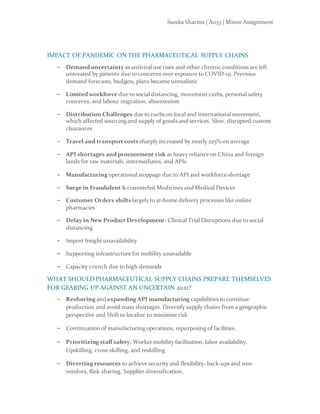
IMPACT OF PANDEMIC ON THE PHARMACEUTICAL SUPPLY CHAINS
− Demand uncertainty as antiviral use rises and other chronic conditions are left
untreated by patients due to concerns over exposure to COVID-19. Previous
demand forecasts, budgets, plans became unrealistic
− Limited workforce due to social distancing, movement curbs, personal safety
concerns, and labour migration, absenteeism
− Distribution Challenges due to curbs on local and international movement,
which affected sourcing and supply of goods and services. Slow, disrupted custom
clearances
− Travel and transport costs sharply increased by nearly 225% on average
− API shortages and procurement risk as heavy reliance on China and foreign
lands for raw materials, intermediates, and APIs
− Manufacturing operational stoppage due to API and workforce shortage
− Surge in Fraudulent & counterfeit Medicines and Medical Devices
− Customer Orders shiftslargely to at-home delivery processes like online
pharmacies
− Delay in New Product Development- Clinical Trial Disruptions due to social
distancing
− Import freight unavailability
− Supporting infrastructure for mobility unavailable
− Capacity crunch due to high demands
WHAT SHOULD PHARMACEUTICAL SUPPLY CHAINS PREPARE THEMSELVES
FOR GEARING UP AGAINST AN UNCERTAIN 2021?
− Reshoring and expanding API manufacturing capabilities to continue
production and avoid mass shortages. Diversify supply chains from a geographic
perspective and Shift to localize to minimise risk
− Continuation of manufacturing operations, repurposing of facilities.
− Prioritizing staff safety, Workermobility facilitation, labor availability,
Upskilling, cross-skilling, and reskilling
− Diverting resources to achieve security and flexibility- back-ups and new
vendors, Risk sharing, Supplier diversification,
PAGE 1
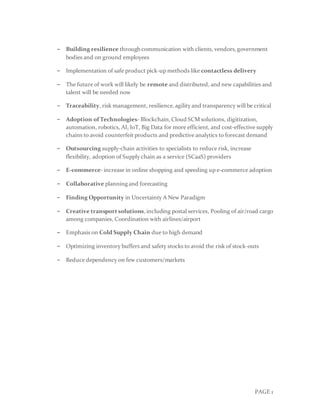
− Building resilience through communication with clients, vendors,government
bodies and on ground employees
− Implementation of safe product pick-up methods like contactless delivery
− The future of work will likely be remote and distributed, and new capabilities and
talent will be needed now
− Traceability, risk management, resilience,agility and transparency will be critical
− Adoption of Technologies- Blockchain,Cloud SCM solutions, digitization,
automation, robotics, AI, IoT, Big Data for more efficient, and cost-effective supply
chains to avoid counterfeit products and predictive analytics to forecast demand
− Outsourcing supply-chain activities to specialists to reduce risk, increase
flexibility, adoption of Supply chain as a service (SCaaS) providers
− E-commerce- increase in online shopping and speeding up e-commerce adoption
− Collaborative planning and forecasting
− Finding Opportunity in Uncertainty A New Paradigm
− Creative transportsolutions,including postal services, Pooling of air/road cargo
among companies, Coordination with airlines/airport
− Emphasis on Cold Supply Chain due to high demand
− Optimizing inventory buffers and safety stocks to avoid the risk of stock-outs
− Reduce dependency on few customers/markets

Pharmaceutical supply chain

  • 1.
    Sunita Sharma |A033 | Minor Assignment IMPACT OF PANDEMIC ON THE PHARMACEUTICAL SUPPLY CHAINS − Demand uncertainty as antiviral use rises and other chronic conditions are left untreated by patients due to concerns over exposure to COVID-19. Previous demand forecasts, budgets, plans became unrealistic − Limited workforce due to social distancing, movement curbs, personal safety concerns, and labour migration, absenteeism − Distribution Challenges due to curbs on local and international movement, which affected sourcing and supply of goods and services. Slow, disrupted custom clearances − Travel and transport costs sharply increased by nearly 225% on average − API shortages and procurement risk as heavy reliance on China and foreign lands for raw materials, intermediates, and APIs − Manufacturing operational stoppage due to API and workforce shortage − Surge in Fraudulent & counterfeit Medicines and Medical Devices − Customer Orders shiftslargely to at-home delivery processes like online pharmacies − Delay in New Product Development- Clinical Trial Disruptions due to social distancing − Import freight unavailability − Supporting infrastructure for mobility unavailable − Capacity crunch due to high demands WHAT SHOULD PHARMACEUTICAL SUPPLY CHAINS PREPARE THEMSELVES FOR GEARING UP AGAINST AN UNCERTAIN 2021? − Reshoring and expanding API manufacturing capabilities to continue production and avoid mass shortages. Diversify supply chains from a geographic perspective and Shift to localize to minimise risk − Continuation of manufacturing operations, repurposing of facilities. − Prioritizing staff safety, Workermobility facilitation, labor availability, Upskilling, cross-skilling, and reskilling − Diverting resources to achieve security and flexibility- back-ups and new vendors, Risk sharing, Supplier diversification,
  • 2.
    PAGE 1 − Buildingresilience through communication with clients, vendors,government bodies and on ground employees − Implementation of safe product pick-up methods like contactless delivery − The future of work will likely be remote and distributed, and new capabilities and talent will be needed now − Traceability, risk management, resilience,agility and transparency will be critical − Adoption of Technologies- Blockchain,Cloud SCM solutions, digitization, automation, robotics, AI, IoT, Big Data for more efficient, and cost-effective supply chains to avoid counterfeit products and predictive analytics to forecast demand − Outsourcing supply-chain activities to specialists to reduce risk, increase flexibility, adoption of Supply chain as a service (SCaaS) providers − E-commerce- increase in online shopping and speeding up e-commerce adoption − Collaborative planning and forecasting − Finding Opportunity in Uncertainty A New Paradigm − Creative transportsolutions,including postal services, Pooling of air/road cargo among companies, Coordination with airlines/airport − Emphasis on Cold Supply Chain due to high demand − Optimizing inventory buffers and safety stocks to avoid the risk of stock-outs − Reduce dependency on few customers/markets