Plasmids of Bacterial Origins
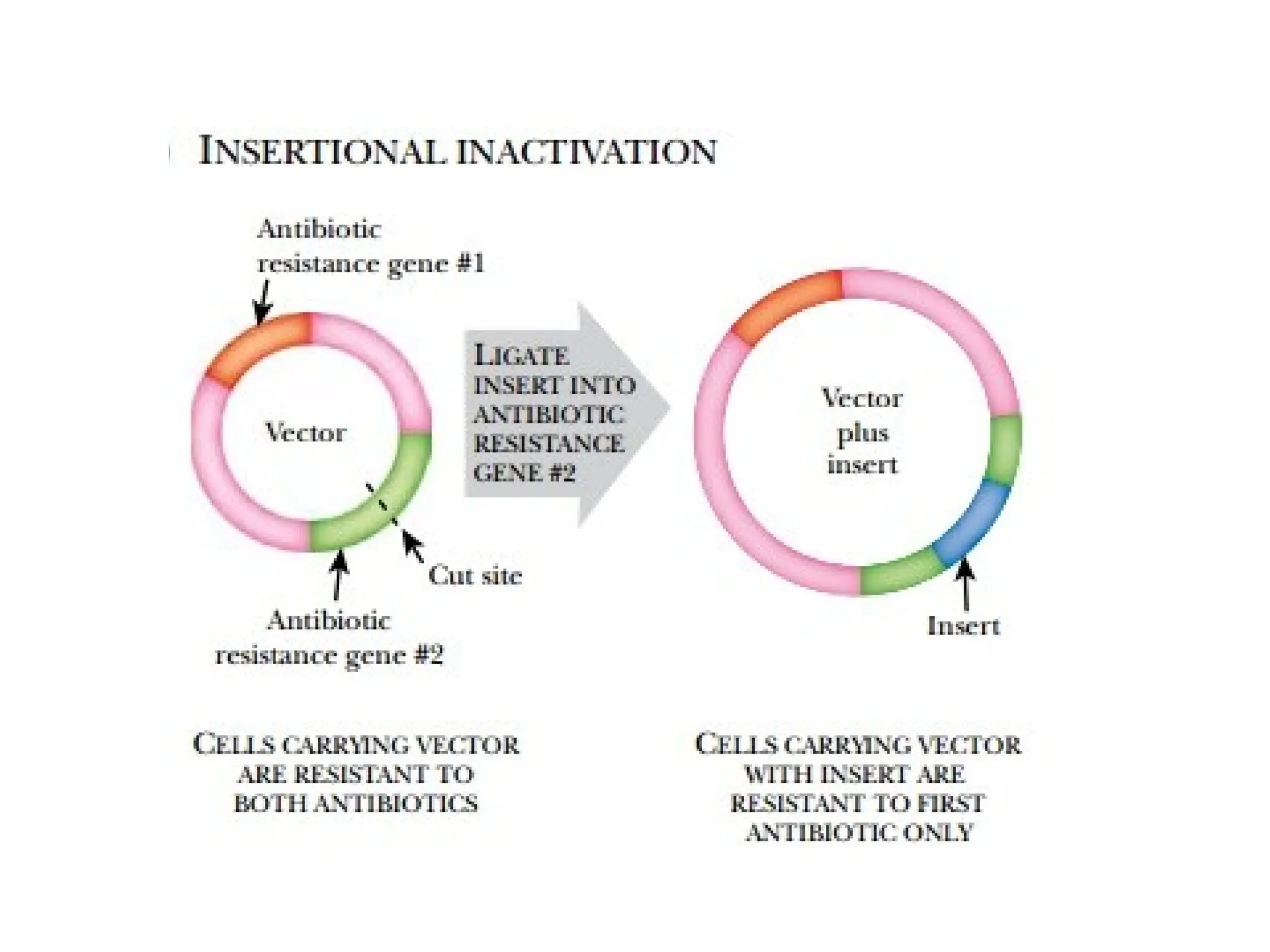
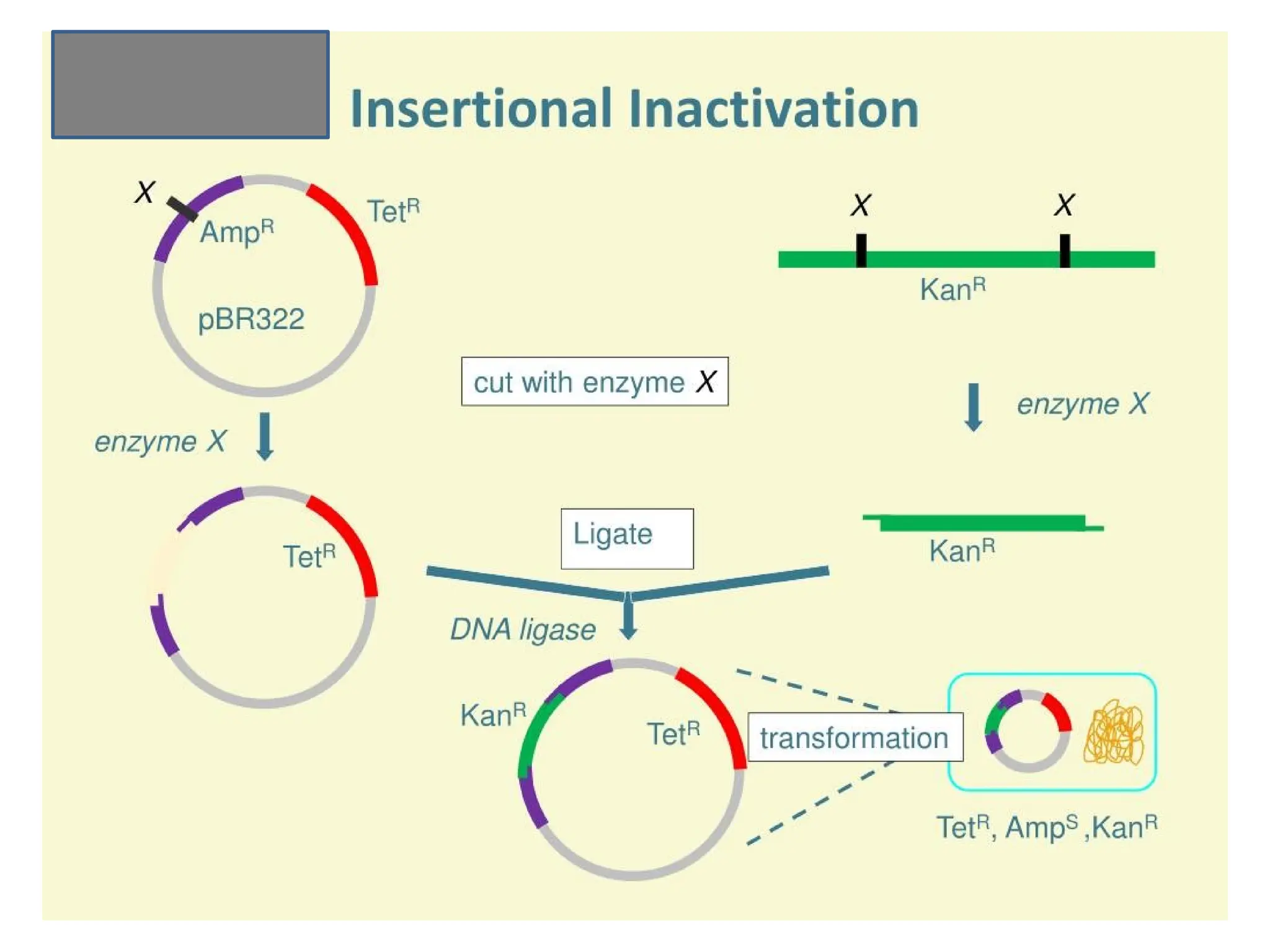
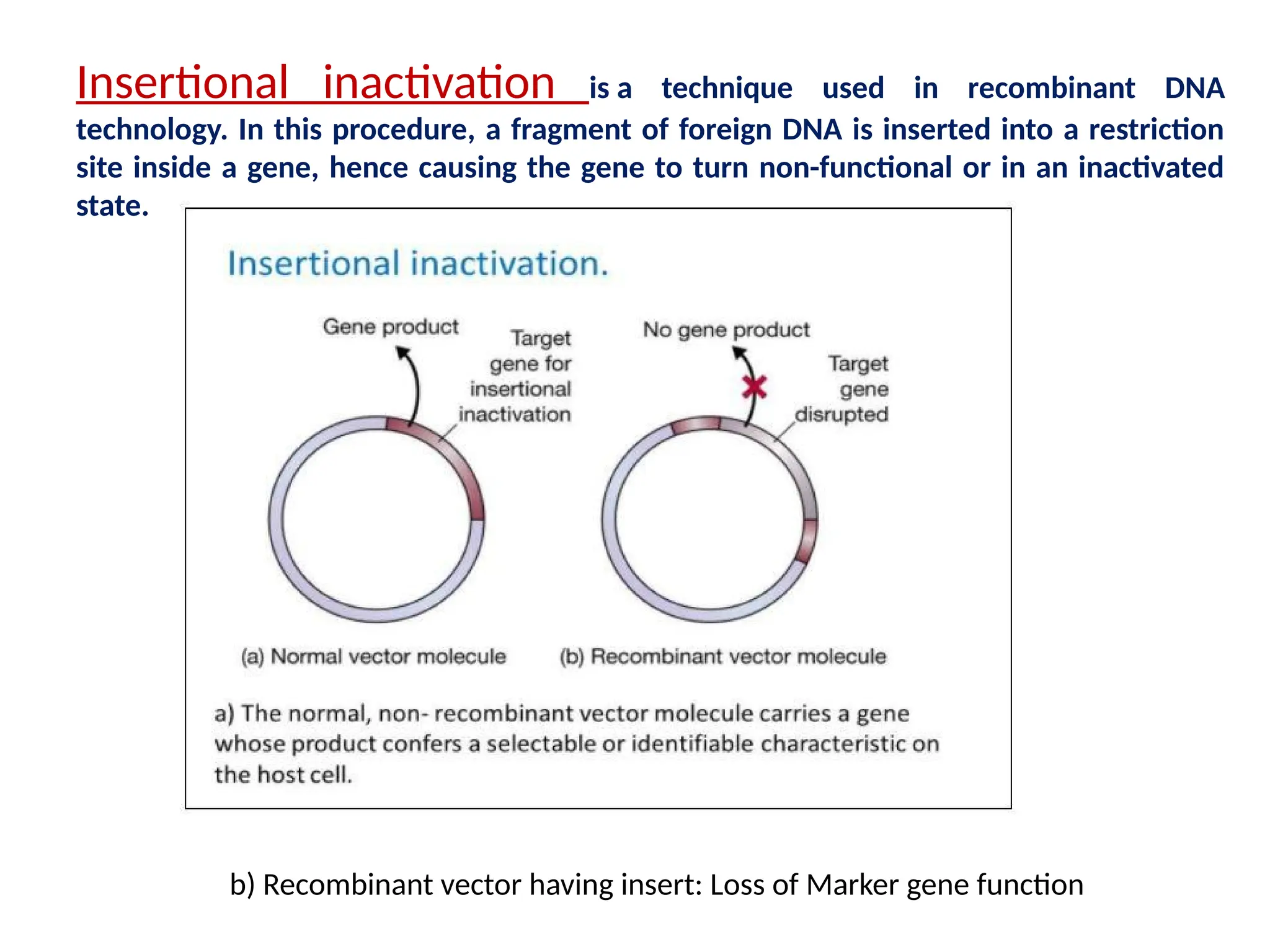
Insertional inactivation is a technique used in recombinant DNA
technology. In this procedure, a fragment of foreign DNA is inserted into a restriction
site inside a gene, hence causing the gene to turn non-functional or in an inactivated
state.
b) Recombinant vector having insert: Loss of Marker gene function
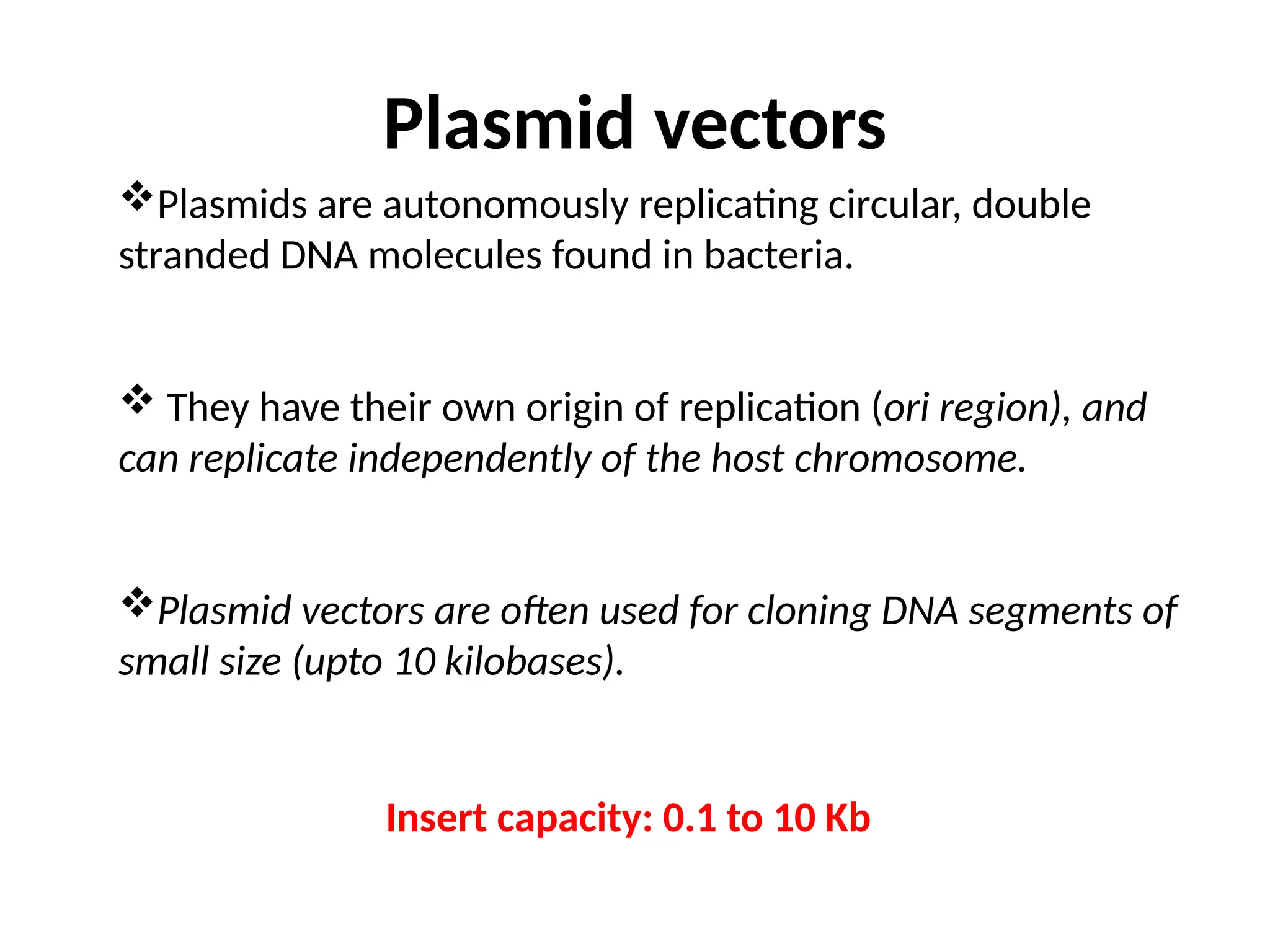
Plasmid vectors
Plasmids are autonomously replicating circular, double
stranded DNA molecules found in bacteria.
 They have their own origin of replication (ori region), and
can replicate independently of the host chromosome.
Plasmid vectors are often used for cloning DNA segments of
small size (upto 10 kilobases).
Insert capacity: 0.1 to 10 Kb
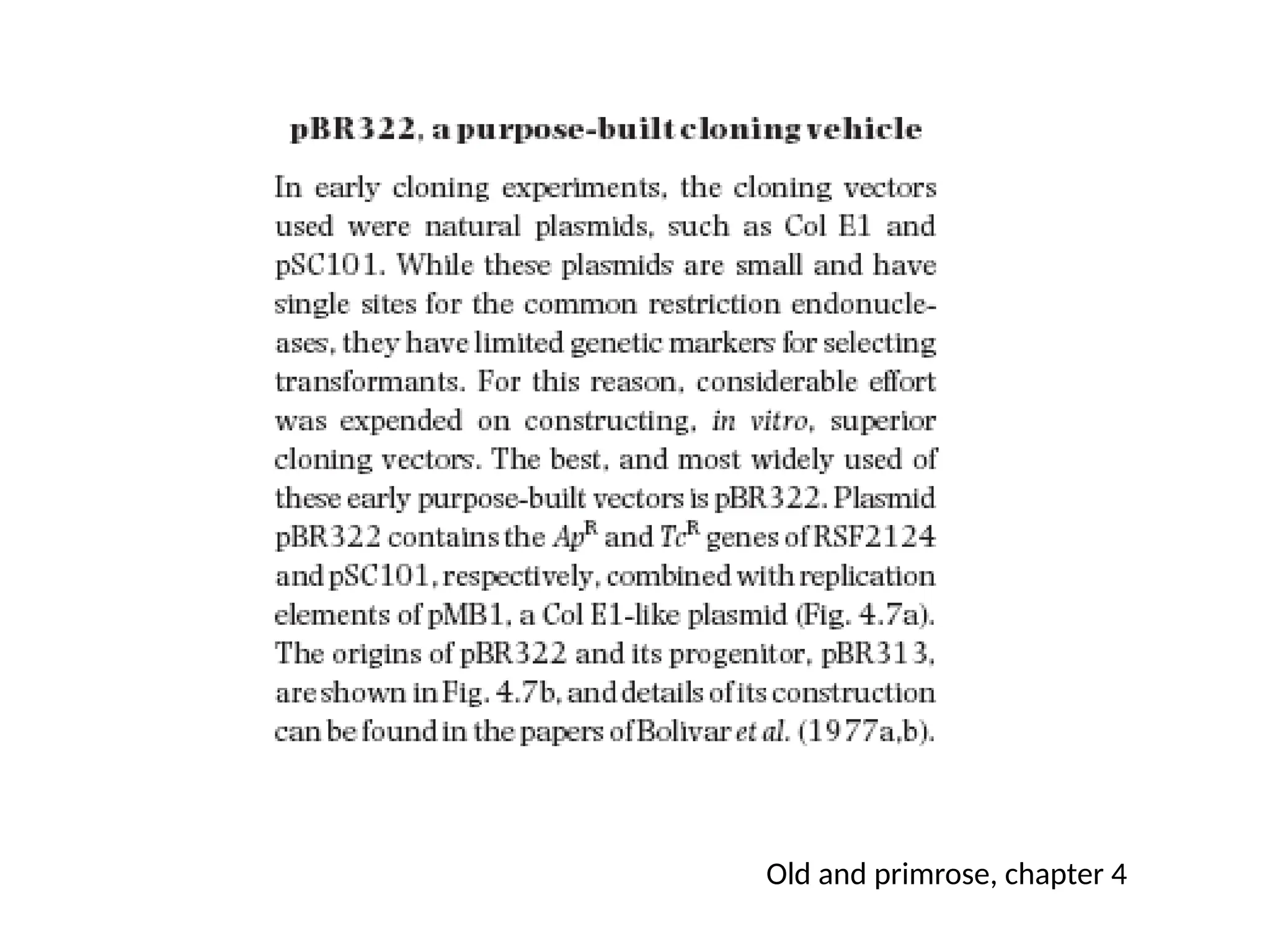
Old and primrose, chapter 4
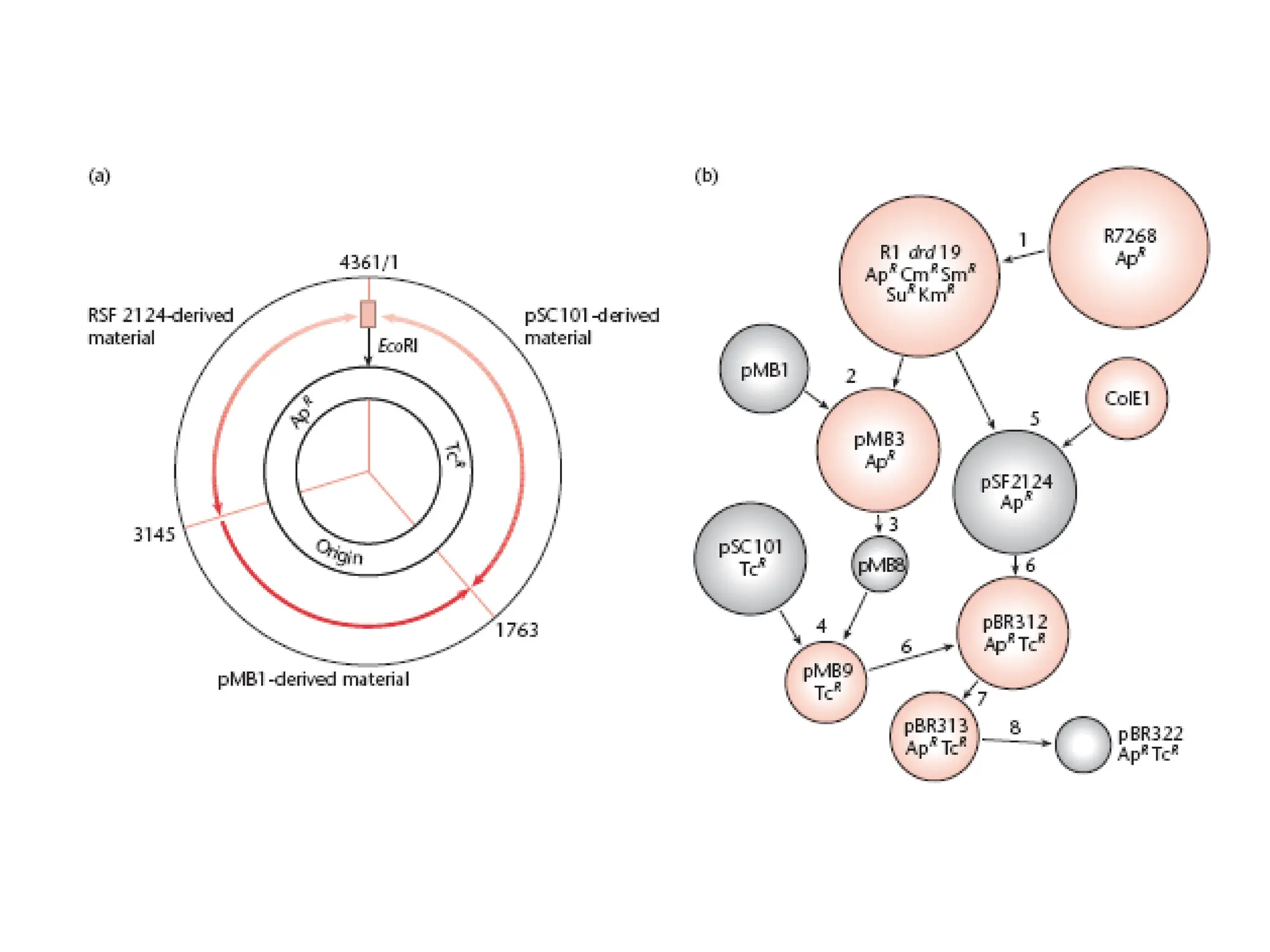
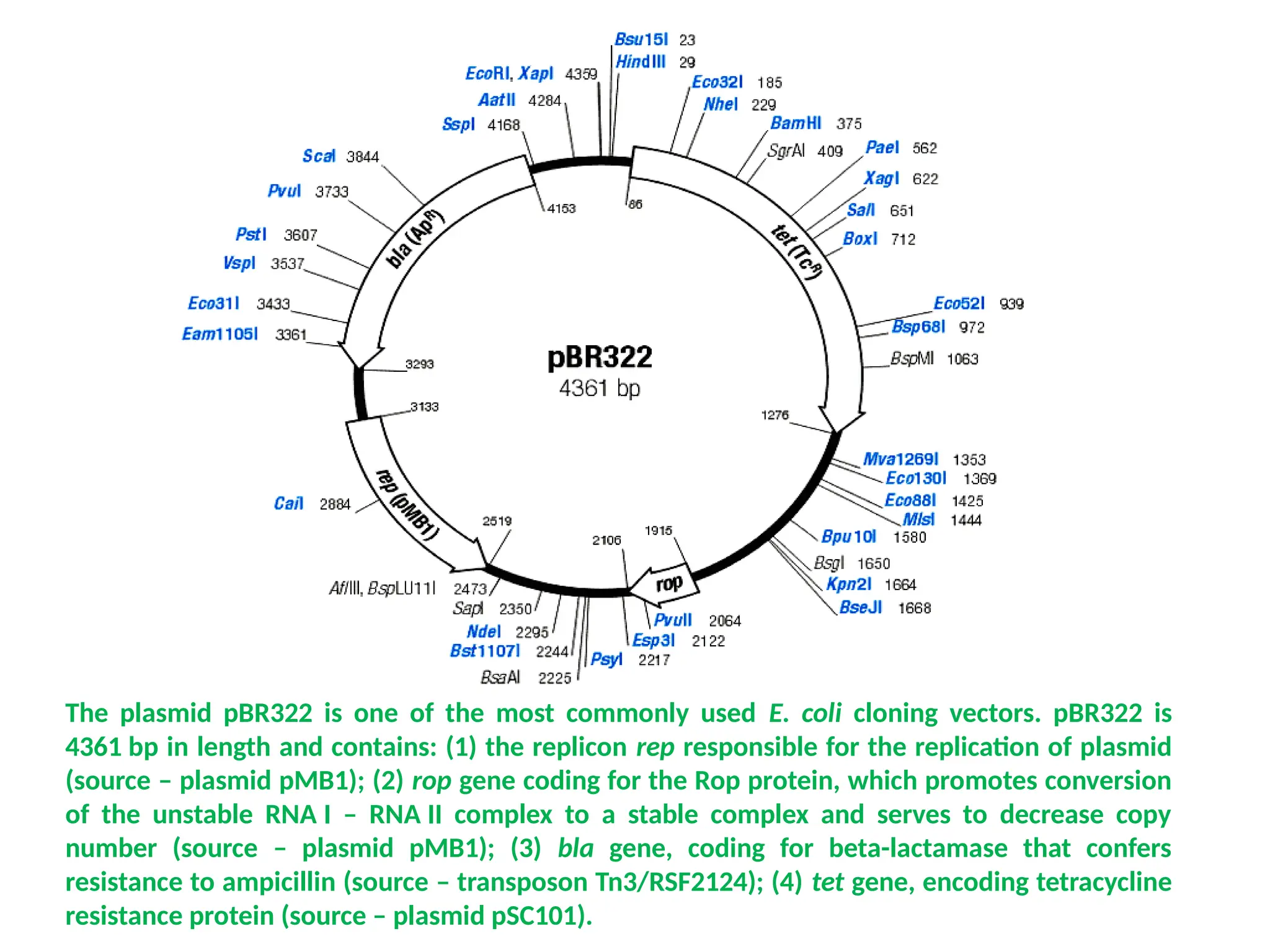
The plasmid pBR322 is one of the most commonly used E. coli cloning vectors. pBR322 is
4361 bp in length and contains: (1) the replicon rep responsible for the replication of plasmid
(source – plasmid pMB1); (2) rop gene coding for the Rop protein, which promotes conversion
of the unstable RNA I – RNA II complex to a stable complex and serves to decrease copy
number (source – plasmid pMB1); (3) bla gene, coding for beta-lactamase that confers
resistance to ampicillin (source – transposon Tn3/RSF2124); (4) tet gene, encoding tetracycline
resistance protein (source – plasmid pSC101).
pBR322
The first plasmid vector that has been constructed
artificially is pBR322.
 It is named after the scientists Bolivar and Rodriguez who
constructed it in 1977.
 It is 4361bp in size and most widely used cloning vector.
 It has an origin of replication derived from a colicin-
resistance plasmid (ColE1).
Medium copy Number (around 20 copies per cell)
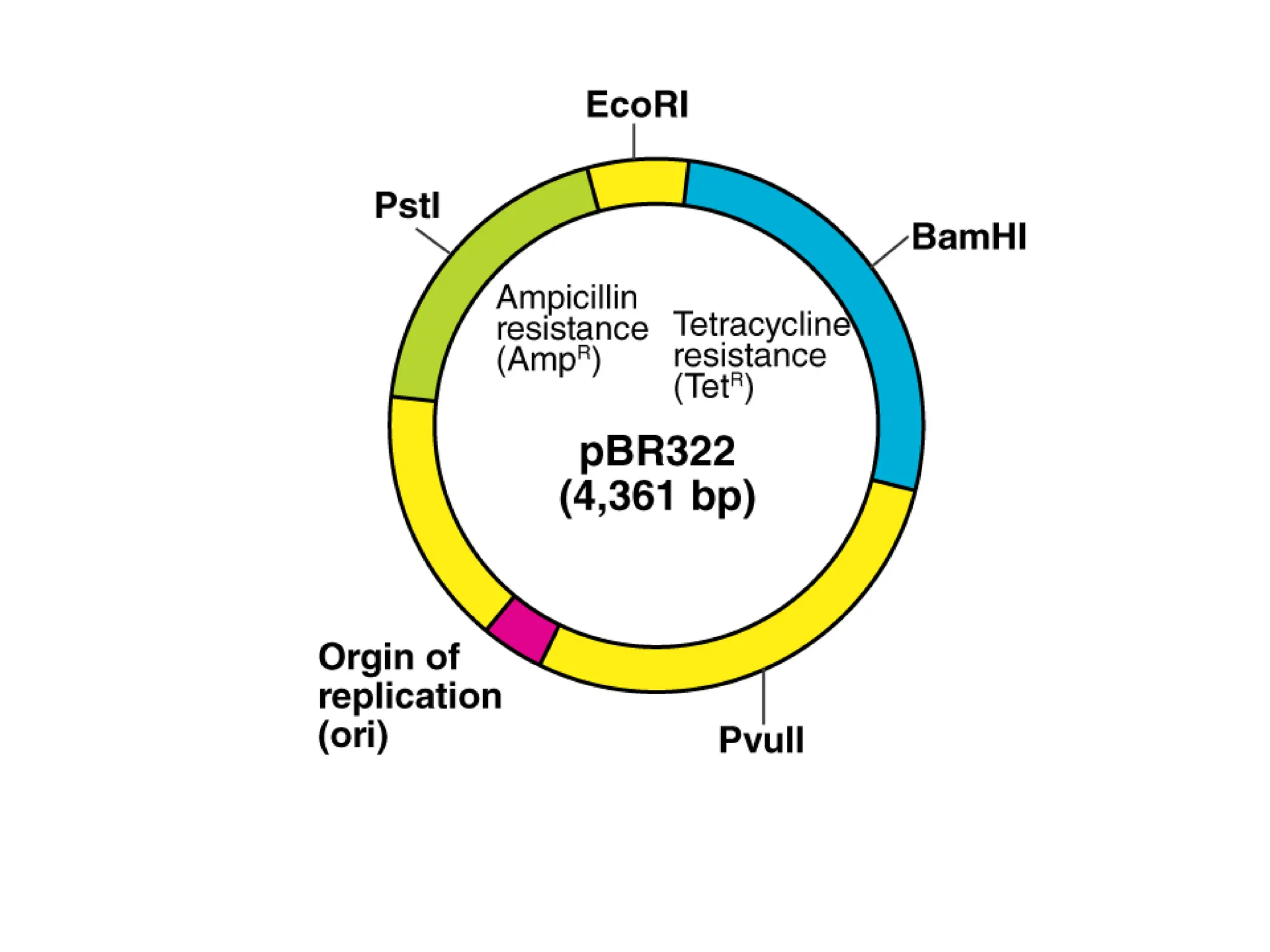
 Plasmid pBR322 carries two selectable markers viz. genes
for resistance to ampicillin (Apr)
and tetracycline (Tcr
).
Several (over 40 enzymes) unique RE sites are present in pBR322
plasmid vector.
 A total of 11 unique restriction sites (Example: EcoRV, BamHI,
SphI, SalI, and NruI are present within the gene coding for
tetracycline resistance, two sites (HindIII and ClaI) within the
promoter of the tetracycline resistance gene and the six sites
(Example: PstI, PvuI and ScaI) within the β lactamase gene that
provide resistance to ampicillin.
When a foreign DNA segment is inserted in any of these genes,
the antibiotic resistance by that particular gene is lost. This is
called insertional inactivation.
For instance, insertion of a restriction fragment in the SalI site of
the Tcr
gene inactivates that gene.
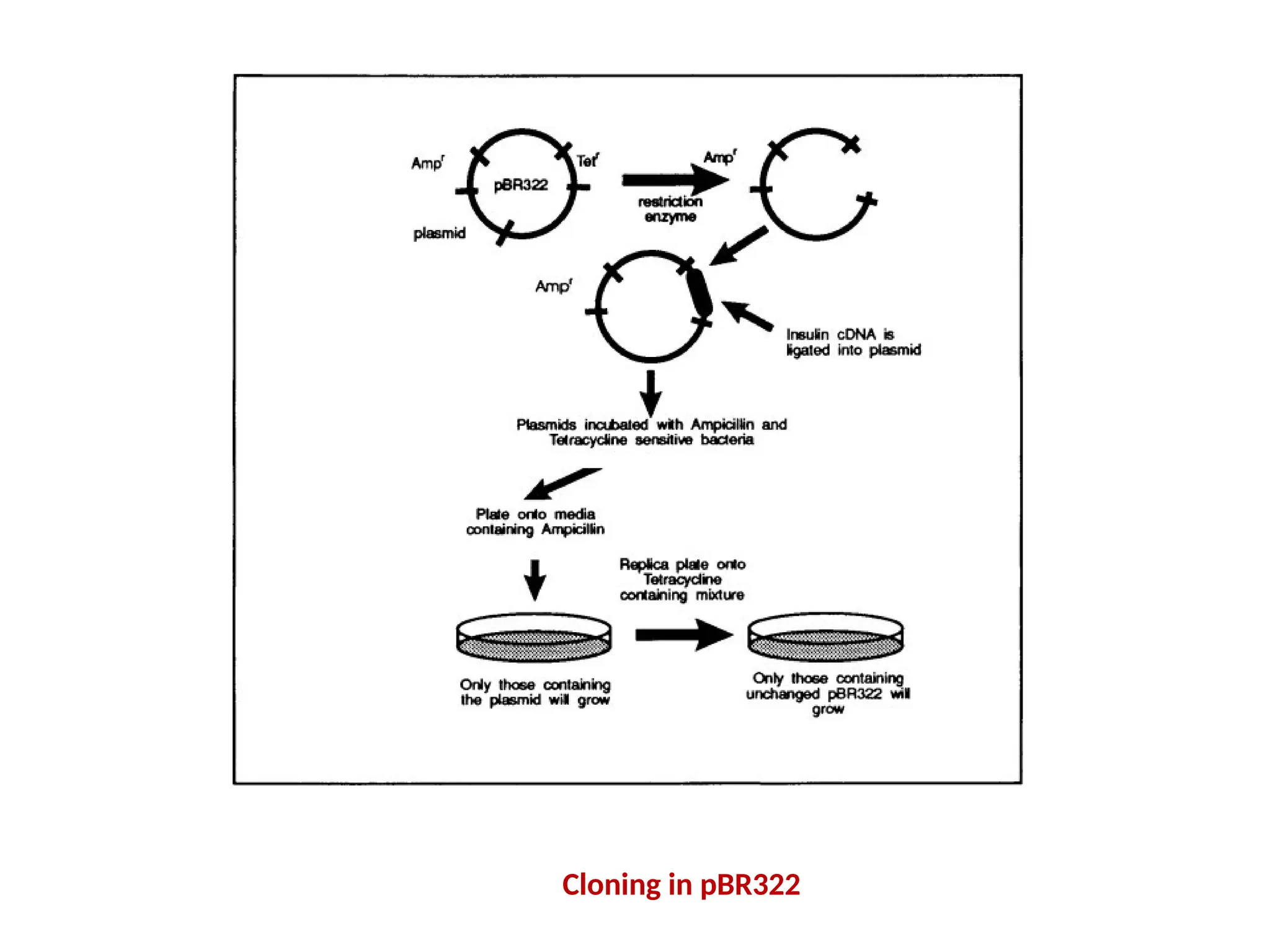
One can still select for Apr
colonies, and then screen to see which
ones have lost Tcr
.
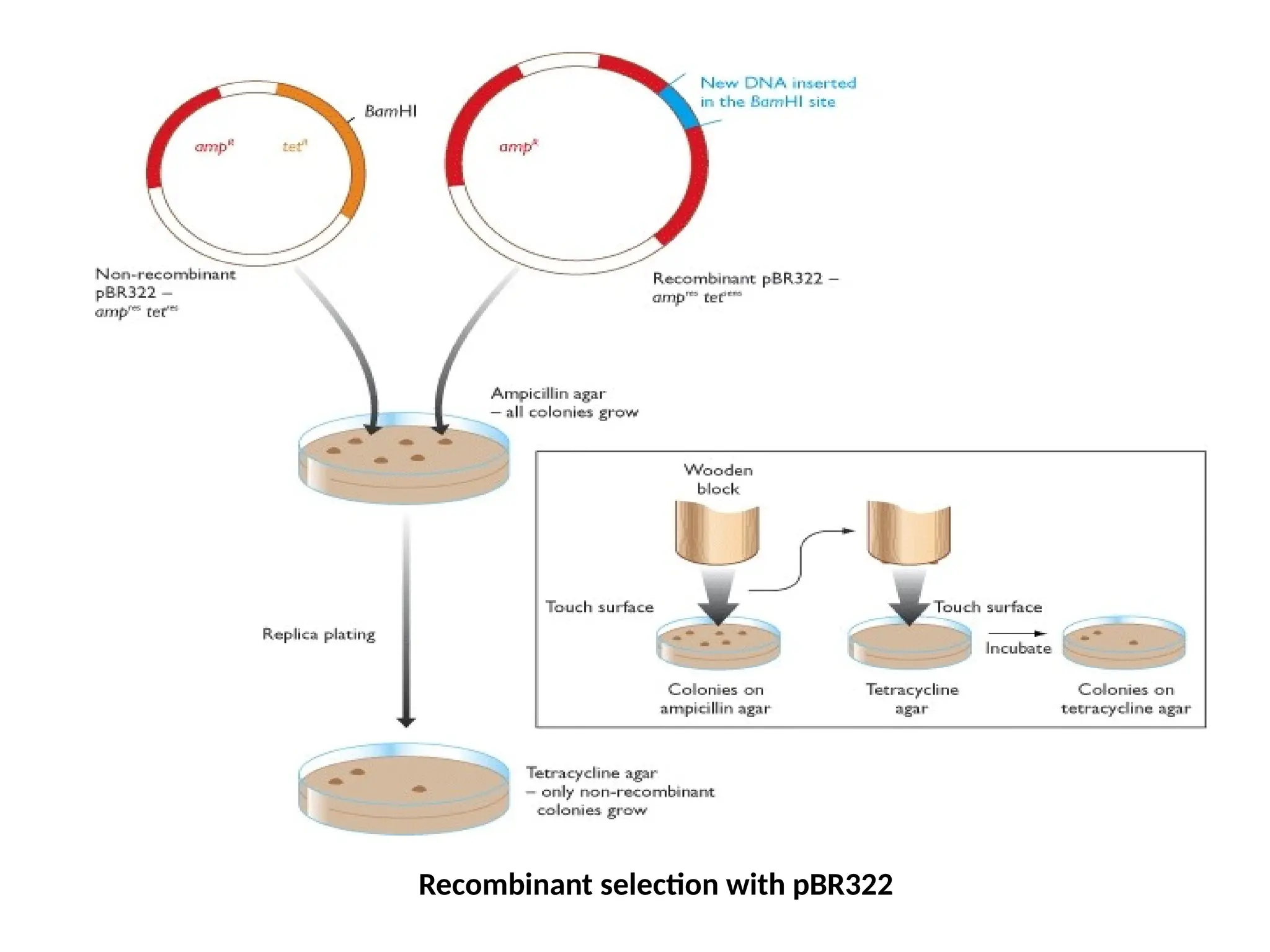
Recombinant selection with pBR322
Cloning in pBR322
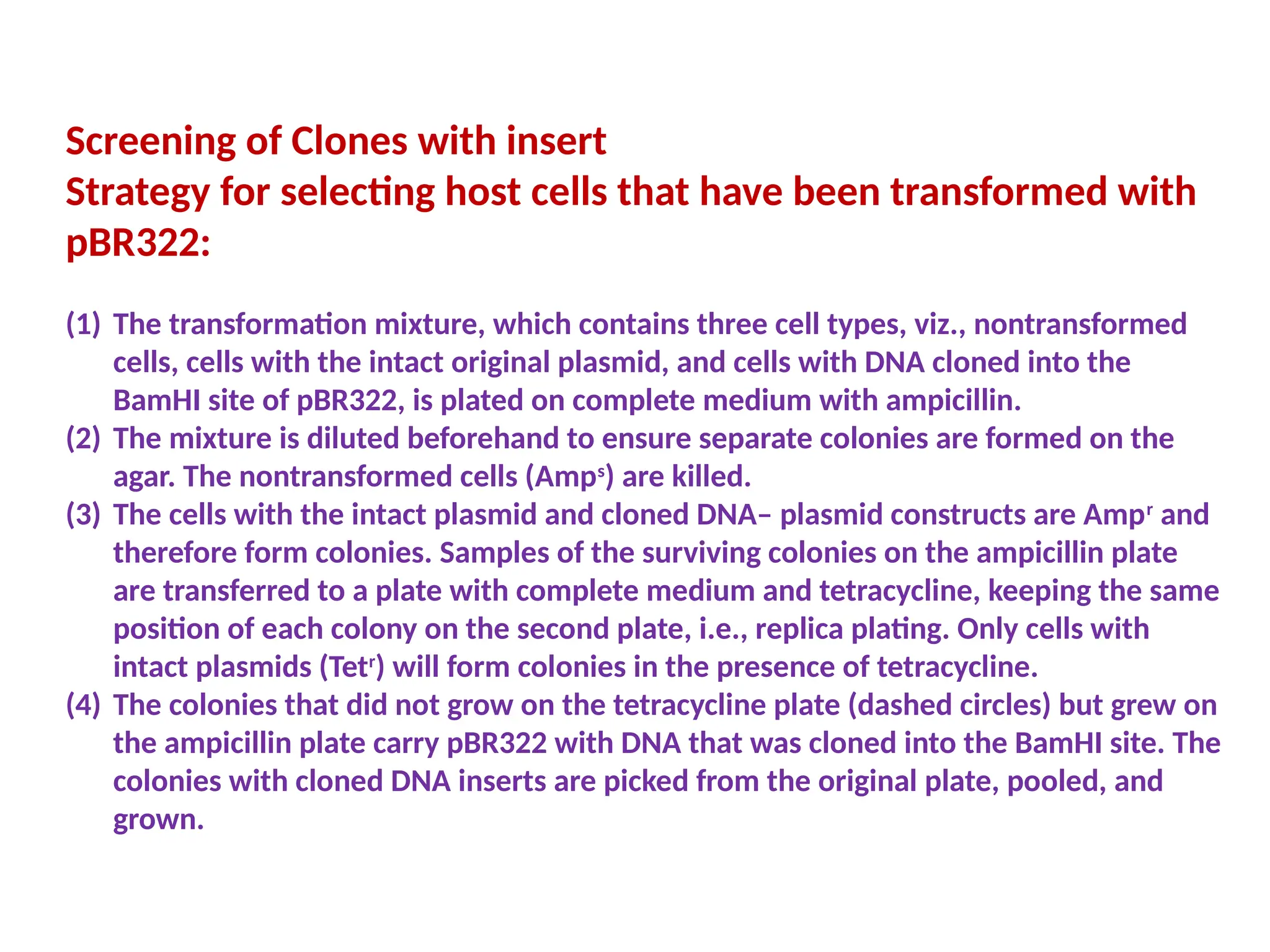
Screening of Clones with insert
Strategy for selecting host cells that have been transformed with
pBR322:
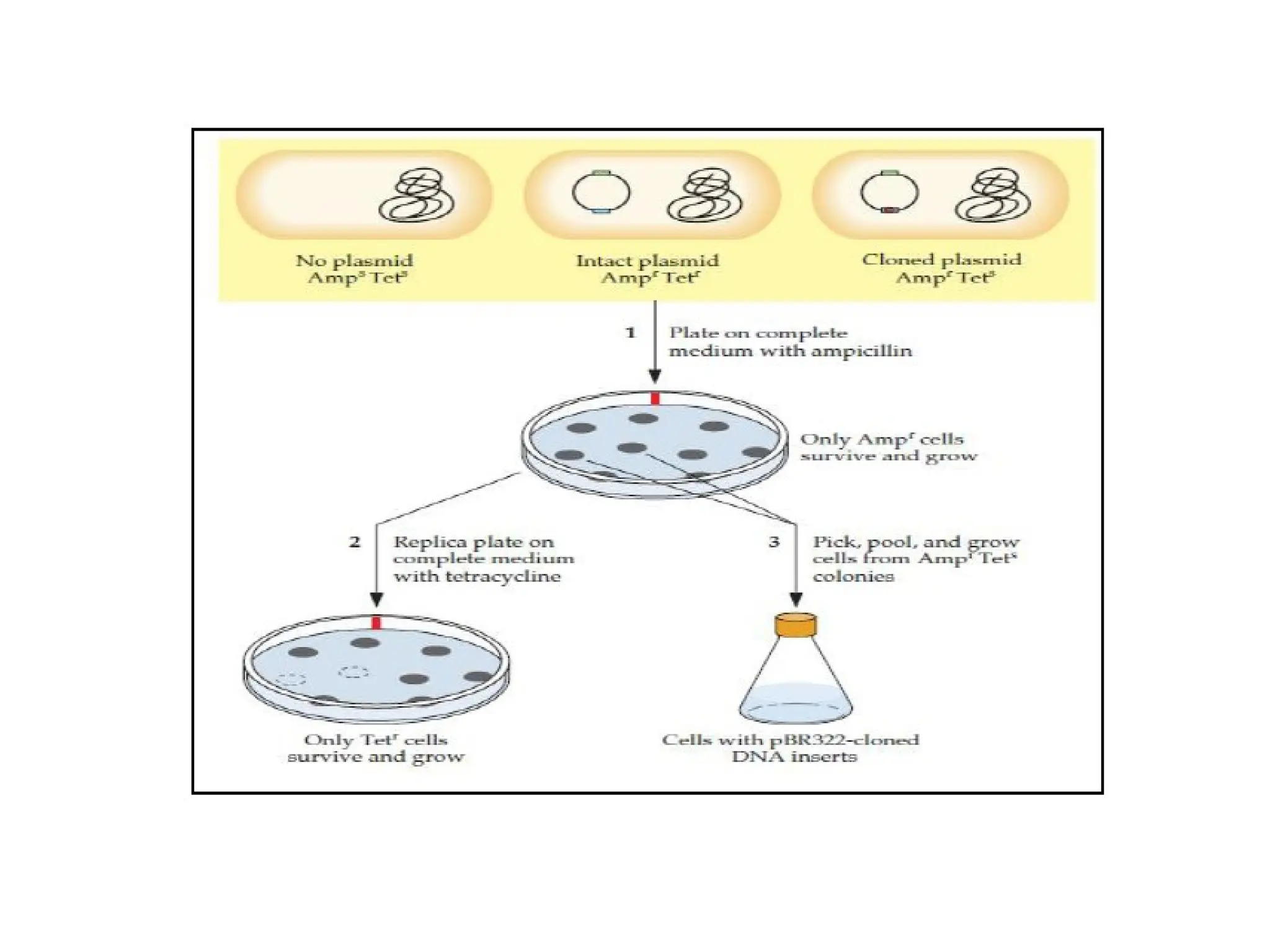
(1) The transformation mixture, which contains three cell types, viz., nontransformed
cells, cells with the intact original plasmid, and cells with DNA cloned into the
BamHI site of pBR322, is plated on complete medium with ampicillin.
(2) The mixture is diluted beforehand to ensure separate colonies are formed on the
agar. The nontransformed cells (Amps
) are killed.
(3) The cells with the intact plasmid and cloned DNA– plasmid constructs are Ampr
and
therefore form colonies. Samples of the surviving colonies on the ampicillin plate
are transferred to a plate with complete medium and tetracycline, keeping the same
position of each colony on the second plate, i.e., replica plating. Only cells with
intact plasmids (Tetr
) will form colonies in the presence of tetracycline.
(4) The colonies that did not grow on the tetracycline plate (dashed circles) but grew on
the ampicillin plate carry pBR322 with DNA that was cloned into the BamHI site. The
colonies with cloned DNA inserts are picked from the original plate, pooled, and
grown.
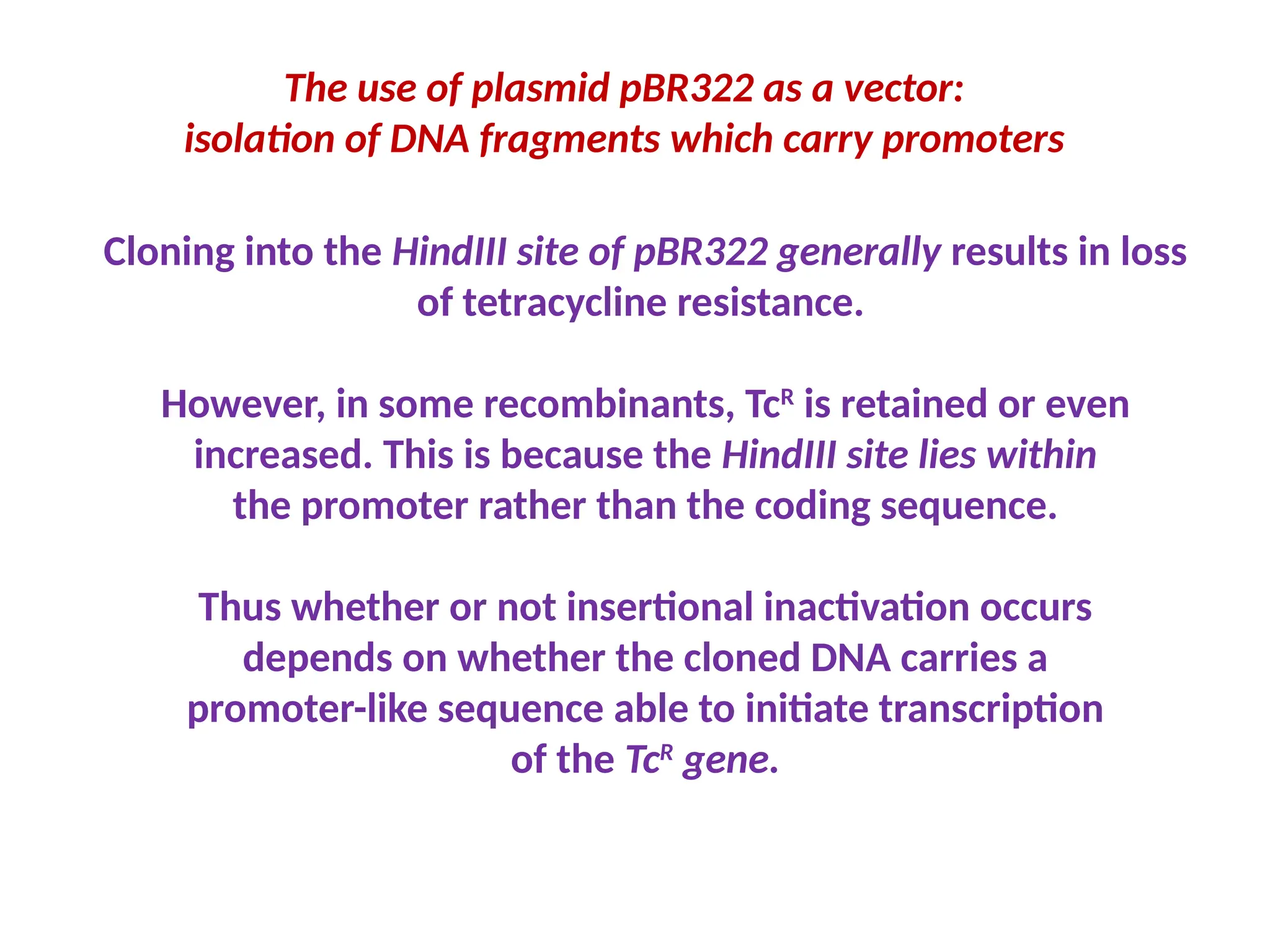
The use of plasmid pBR322 as a vector:
isolation of DNA fragments which carry promoters
Cloning into the HindIII site of pBR322 generally results in loss
of tetracycline resistance.
However, in some recombinants, TcR
is retained or even
increased. This is because the HindIII site lies within
the promoter rather than the coding sequence.
Thus whether or not insertional inactivation occurs
depends on whether the cloned DNA carries a
promoter-like sequence able to initiate transcription
of the TcR
gene.

PGE-20092022.pptx plasmid vectors origin

  • 1.
  • 2.
    Insertional inactivation isa technique used in recombinant DNA technology. In this procedure, a fragment of foreign DNA is inserted into a restriction site inside a gene, hence causing the gene to turn non-functional or in an inactivated state. b) Recombinant vector having insert: Loss of Marker gene function
  • 4.
    Plasmid vectors Plasmids areautonomously replicating circular, double stranded DNA molecules found in bacteria.  They have their own origin of replication (ori region), and can replicate independently of the host chromosome. Plasmid vectors are often used for cloning DNA segments of small size (upto 10 kilobases). Insert capacity: 0.1 to 10 Kb
  • 5.
  • 7.
    The plasmid pBR322is one of the most commonly used E. coli cloning vectors. pBR322 is 4361 bp in length and contains: (1) the replicon rep responsible for the replication of plasmid (source – plasmid pMB1); (2) rop gene coding for the Rop protein, which promotes conversion of the unstable RNA I – RNA II complex to a stable complex and serves to decrease copy number (source – plasmid pMB1); (3) bla gene, coding for beta-lactamase that confers resistance to ampicillin (source – transposon Tn3/RSF2124); (4) tet gene, encoding tetracycline resistance protein (source – plasmid pSC101).
  • 8.
    pBR322 The first plasmidvector that has been constructed artificially is pBR322.  It is named after the scientists Bolivar and Rodriguez who constructed it in 1977.  It is 4361bp in size and most widely used cloning vector.  It has an origin of replication derived from a colicin- resistance plasmid (ColE1). Medium copy Number (around 20 copies per cell)  Plasmid pBR322 carries two selectable markers viz. genes for resistance to ampicillin (Apr) and tetracycline (Tcr ).
  • 10.
    Several (over 40enzymes) unique RE sites are present in pBR322 plasmid vector.  A total of 11 unique restriction sites (Example: EcoRV, BamHI, SphI, SalI, and NruI are present within the gene coding for tetracycline resistance, two sites (HindIII and ClaI) within the promoter of the tetracycline resistance gene and the six sites (Example: PstI, PvuI and ScaI) within the β lactamase gene that provide resistance to ampicillin. When a foreign DNA segment is inserted in any of these genes, the antibiotic resistance by that particular gene is lost. This is called insertional inactivation. For instance, insertion of a restriction fragment in the SalI site of the Tcr gene inactivates that gene. One can still select for Apr colonies, and then screen to see which ones have lost Tcr .
  • 11.
  • 13.
  • 14.
    Screening of Cloneswith insert Strategy for selecting host cells that have been transformed with pBR322: (1) The transformation mixture, which contains three cell types, viz., nontransformed cells, cells with the intact original plasmid, and cells with DNA cloned into the BamHI site of pBR322, is plated on complete medium with ampicillin. (2) The mixture is diluted beforehand to ensure separate colonies are formed on the agar. The nontransformed cells (Amps ) are killed. (3) The cells with the intact plasmid and cloned DNA– plasmid constructs are Ampr and therefore form colonies. Samples of the surviving colonies on the ampicillin plate are transferred to a plate with complete medium and tetracycline, keeping the same position of each colony on the second plate, i.e., replica plating. Only cells with intact plasmids (Tetr ) will form colonies in the presence of tetracycline. (4) The colonies that did not grow on the tetracycline plate (dashed circles) but grew on the ampicillin plate carry pBR322 with DNA that was cloned into the BamHI site. The colonies with cloned DNA inserts are picked from the original plate, pooled, and grown.
  • 16.
    The use ofplasmid pBR322 as a vector: isolation of DNA fragments which carry promoters Cloning into the HindIII site of pBR322 generally results in loss of tetracycline resistance. However, in some recombinants, TcR is retained or even increased. This is because the HindIII site lies within the promoter rather than the coding sequence. Thus whether or not insertional inactivation occurs depends on whether the cloned DNA carries a promoter-like sequence able to initiate transcription of the TcR gene.