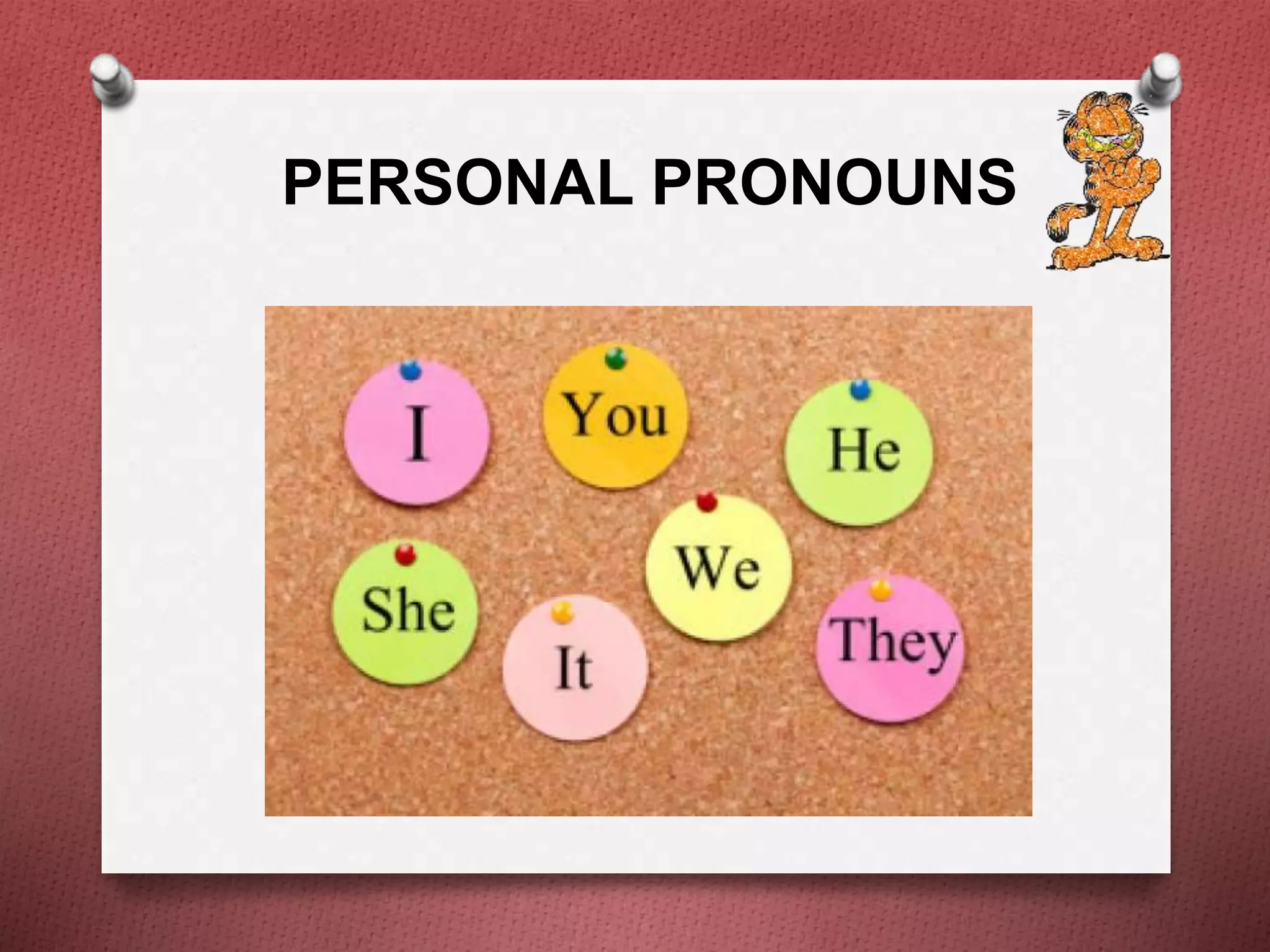
PERSONAL PRONOUNS
Presentado por : Juan Esteban Bareño Uribe 
Presentado a :Lic Olivia Lloreda Zúñiga 
Colegio Militar General Santander 
Grado 8-1 
Octubre 19 de 2014
PERSONAL PRONOUNS 
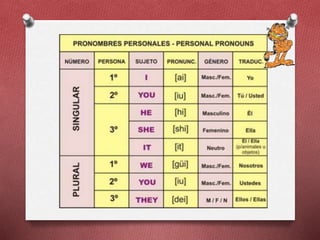
Personal pronouns in English are 
also known as personal pronouns 
subject or nominal. They are those 
who refer to the grammatical 
persons. They are: I, you, he, she, it, 
we, you, they. Here are examples 
translated into Spanish.
EXAMPLES 
* I am a teacher. (I) am a teacher. 
* I live in Argentina. (I) live in Argentina. 
* You are not a teacher. (You) are not a teacher. 
* You do not live in Argentina. (You) do not live in * Argentina. Bill 
is married. Bill is married. 
* I have two children. (El) has two children. 
* Mary is not married. Mary is not married. 
* She does not have any available any children. (She) has no 
children. 
* It is late already. It is late. (based on time) 
* I have a house. It is big. I have a house. (She) is large. 
* We are here to learn. (We) are here to learn. 
* We want to learn soon. (We) want to learn soon. 
* You are students. (You / You) are students. 
* You study Inglés. (You / You) study English. 
* They live in Italy. (They) live in Italy. 
* They do not speak Inglés. (They) do not speak English.
Thank 
you

Personal pronouns

  • 1.
  • 2.
    Presentado por :Juan Esteban Bareño Uribe Presentado a :Lic Olivia Lloreda Zúñiga Colegio Militar General Santander Grado 8-1 Octubre 19 de 2014
  • 3.
    PERSONAL PRONOUNS Personalpronouns in English are also known as personal pronouns subject or nominal. They are those who refer to the grammatical persons. They are: I, you, he, she, it, we, you, they. Here are examples translated into Spanish.
  • 4.
    EXAMPLES * Iam a teacher. (I) am a teacher. * I live in Argentina. (I) live in Argentina. * You are not a teacher. (You) are not a teacher. * You do not live in Argentina. (You) do not live in * Argentina. Bill is married. Bill is married. * I have two children. (El) has two children. * Mary is not married. Mary is not married. * She does not have any available any children. (She) has no children. * It is late already. It is late. (based on time) * I have a house. It is big. I have a house. (She) is large. * We are here to learn. (We) are here to learn. * We want to learn soon. (We) want to learn soon. * You are students. (You / You) are students. * You study Inglés. (You / You) study English. * They live in Italy. (They) live in Italy. * They do not speak Inglés. (They) do not speak English.
  • 6.