Third Form Literature
Literature Periods and
Movements
Maria Jose Galleno
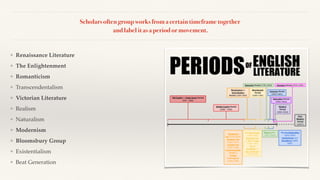
Scholars often group works from a certain timeframe together
and label it as a period or movement.
❖ Renaissance Literature
❖ The Enlightenment
❖ Romanticism
❖ Transcendentalism
❖ Victorian Literature
❖ Realism
❖ Naturalism
❖ Modernism
❖ Bloomsbury Group
❖ Existentialism
❖ Beat Generation
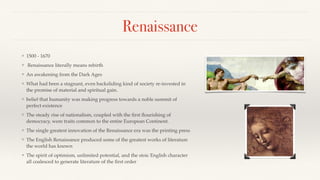
Renaissance
❖ 1500 - 1670
❖ Renaissance literally means rebirth
❖ An awakening from the Dark Ages
❖ What had been a stagnant, even backsliding kind of society re-invested in
the promise of material and spiritual gain.
❖ belief that humanity was making progress towards a noble summit of
perfect existence
❖ The steady rise of nationalism, coupled with the first flourishing of
democracy, were traits common to the entire European Continent.
❖ The single greatest innovation of the Renaissance era was the printing press
❖ The English Renaissance produced some of the greatest works of literature
the world has known
❖ The spirit of optimism, unlimited potential, and the stoic English character
all coalesced to generate literature of the first order
Renaissance Literature
❖ Characteristics
❖ increased interest in literatures of the Greek and Romans (e.g. Shakespeare)
❖ Humanism
❖ humans as superior beings and distinguished
❖ Concepts of hierarchy
❖ Literature as imitation of reality
❖ People began to question the Pope
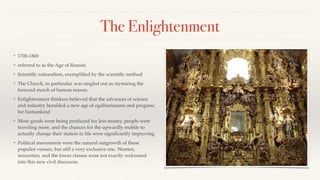
The Enlightenment
❖ 1700-1800
❖ referred to as the Age of Reason
❖ Scientific rationalism, exemplified by the scientific method
❖ The Church, in particular, was singled out as stymieing the
forward march of human reason.
❖ Enlightenment thinkers believed that the advances of science
and industry heralded a new age of egalitarianism and progress
for humankind
❖ More goods were being produced for less money, people were
traveling more, and the chances for the upwardly mobile to
actually change their station in life were significantly improving
❖ Political movements were the natural outgrowth of these
populist venues, but still a very exclusive one. Women,
minorities, and the lower classes were not exactly welcomed
into this new civil discourse.
Enlightenment Literature
❖ Characteristics
❖ most was nonfiction
❖ realistic
❖ it aimed to instruct, enlighten and make people think
❖ reason shows life as it is wheras imagination shows life as people wish it
were or fear it may be
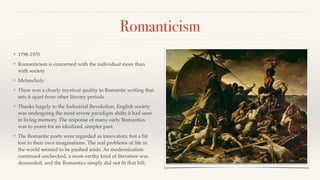
Romanticism
❖ 1798-1970
❖ Romanticism is concerned with the individual more than
with society
❖ Melancholy
❖ There was a clearly mystical quality to Romantic writing that
sets it apart from other literary periods
❖ Thanks largely to the Industrial Revolution, English society
was undergoing the most severe paradigm shifts it had seen
in living memory. The response of many early Romantics
was to yearn for an idealized, simpler past.
❖ The Romantic poets were regarded as innovators, but a bit
lost in their own imaginations. The real problems of life in
the world seemed to be pushed aside. As modernization
continued unchecked, a more earthy kind of literature was
demanded, and the Romantics simply did not fit that bill.
Romanticism Literature
❖ Characteristics
❖ imagination and emotion more important than reason and formal rules
❖ intuition and reliance on natural feelings as guide of conduct instead of
control and rationality
❖ emphasise:
❖ love of nature, respect for primitivism, country life
❖ interested in the Medieval past, supernatural, mystical, gothic and exotic
Source: http://www.odessa.edu/dept/english/dsmith/rom.lit.char.pdf
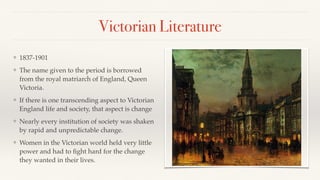
Victorian Literature
❖ 1837-1901
❖ The name given to the period is borrowed
from the royal matriarch of England, Queen
Victoria.
❖ If there is one transcending aspect to Victorian
England life and society, that aspect is change
❖ Nearly every institution of society was shaken
by rapid and unpredictable change.
❖ Women in the Victorian world held very little
power and had to fight hard for the change
they wanted in their lives.
Victorian Literature
❖ Characteristics
❖ Christianity and God, personal duty and morals
❖ novels reinforced class hierarchy and traditional domestic roles of women
❖ Poetry long and follow an adventure story about a hero
❖ follow rigid structures in terms of rhyme and rhythm.
Source: http://classroom.synonym.com/characteristics-early-victorian-literature-4428.html
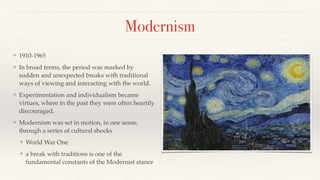
Modernism
❖ 1910-1965
❖ In broad terms, the period was marked by
sudden and unexpected breaks with traditional
ways of viewing and interacting with the world.
❖ Experimentation and individualism became
virtues, where in the past they were often heartily
discouraged.
❖ Modernism was set in motion, in one sense,
through a series of cultural shocks
❖ World War One
❖ a break with traditions is one of the
fundamental constants of the Modernist stance
Modern Literature
❖ Characteristics:
❖ spoke of the inner self and consciousness
❖ saw a decline in civilisation
❖ writers saw cold machinery and increased capitalism, alienating the individual,
leading to loneliness
❖ written in the first person
❖ stories were a stream of consciousness
❖ irony, satire and comparisons
Source: http://www.cliffsnotes.com/cliffsnotes/literature/what-are-characteristics-of-modernist-literature-fiction-in-particular

Periods in literature

  • 1.
    Third Form Literature LiteraturePeriods and Movements Maria Jose Galleno
  • 2.
    Scholars often groupworks from a certain timeframe together and label it as a period or movement. ❖ Renaissance Literature ❖ The Enlightenment ❖ Romanticism ❖ Transcendentalism ❖ Victorian Literature ❖ Realism ❖ Naturalism ❖ Modernism ❖ Bloomsbury Group ❖ Existentialism ❖ Beat Generation
  • 4.
    Renaissance ❖ 1500 -1670 ❖ Renaissance literally means rebirth ❖ An awakening from the Dark Ages ❖ What had been a stagnant, even backsliding kind of society re-invested in the promise of material and spiritual gain. ❖ belief that humanity was making progress towards a noble summit of perfect existence ❖ The steady rise of nationalism, coupled with the first flourishing of democracy, were traits common to the entire European Continent. ❖ The single greatest innovation of the Renaissance era was the printing press ❖ The English Renaissance produced some of the greatest works of literature the world has known ❖ The spirit of optimism, unlimited potential, and the stoic English character all coalesced to generate literature of the first order
  • 5.
    Renaissance Literature ❖ Characteristics ❖increased interest in literatures of the Greek and Romans (e.g. Shakespeare) ❖ Humanism ❖ humans as superior beings and distinguished ❖ Concepts of hierarchy ❖ Literature as imitation of reality ❖ People began to question the Pope
  • 6.
    The Enlightenment ❖ 1700-1800 ❖referred to as the Age of Reason ❖ Scientific rationalism, exemplified by the scientific method ❖ The Church, in particular, was singled out as stymieing the forward march of human reason. ❖ Enlightenment thinkers believed that the advances of science and industry heralded a new age of egalitarianism and progress for humankind ❖ More goods were being produced for less money, people were traveling more, and the chances for the upwardly mobile to actually change their station in life were significantly improving ❖ Political movements were the natural outgrowth of these populist venues, but still a very exclusive one. Women, minorities, and the lower classes were not exactly welcomed into this new civil discourse.
  • 7.
    Enlightenment Literature ❖ Characteristics ❖most was nonfiction ❖ realistic ❖ it aimed to instruct, enlighten and make people think ❖ reason shows life as it is wheras imagination shows life as people wish it were or fear it may be
  • 8.
    Romanticism ❖ 1798-1970 ❖ Romanticismis concerned with the individual more than with society ❖ Melancholy ❖ There was a clearly mystical quality to Romantic writing that sets it apart from other literary periods ❖ Thanks largely to the Industrial Revolution, English society was undergoing the most severe paradigm shifts it had seen in living memory. The response of many early Romantics was to yearn for an idealized, simpler past. ❖ The Romantic poets were regarded as innovators, but a bit lost in their own imaginations. The real problems of life in the world seemed to be pushed aside. As modernization continued unchecked, a more earthy kind of literature was demanded, and the Romantics simply did not fit that bill.
  • 9.
    Romanticism Literature ❖ Characteristics ❖imagination and emotion more important than reason and formal rules ❖ intuition and reliance on natural feelings as guide of conduct instead of control and rationality ❖ emphasise: ❖ love of nature, respect for primitivism, country life ❖ interested in the Medieval past, supernatural, mystical, gothic and exotic Source: http://www.odessa.edu/dept/english/dsmith/rom.lit.char.pdf
  • 10.
    Victorian Literature ❖ 1837-1901 ❖The name given to the period is borrowed from the royal matriarch of England, Queen Victoria. ❖ If there is one transcending aspect to Victorian England life and society, that aspect is change ❖ Nearly every institution of society was shaken by rapid and unpredictable change. ❖ Women in the Victorian world held very little power and had to fight hard for the change they wanted in their lives.
  • 11.
    Victorian Literature ❖ Characteristics ❖Christianity and God, personal duty and morals ❖ novels reinforced class hierarchy and traditional domestic roles of women ❖ Poetry long and follow an adventure story about a hero ❖ follow rigid structures in terms of rhyme and rhythm. Source: http://classroom.synonym.com/characteristics-early-victorian-literature-4428.html
  • 12.
    Modernism ❖ 1910-1965 ❖ Inbroad terms, the period was marked by sudden and unexpected breaks with traditional ways of viewing and interacting with the world. ❖ Experimentation and individualism became virtues, where in the past they were often heartily discouraged. ❖ Modernism was set in motion, in one sense, through a series of cultural shocks ❖ World War One ❖ a break with traditions is one of the fundamental constants of the Modernist stance
  • 13.
    Modern Literature ❖ Characteristics: ❖spoke of the inner self and consciousness ❖ saw a decline in civilisation ❖ writers saw cold machinery and increased capitalism, alienating the individual, leading to loneliness ❖ written in the first person ❖ stories were a stream of consciousness ❖ irony, satire and comparisons Source: http://www.cliffsnotes.com/cliffsnotes/literature/what-are-characteristics-of-modernist-literature-fiction-in-particular