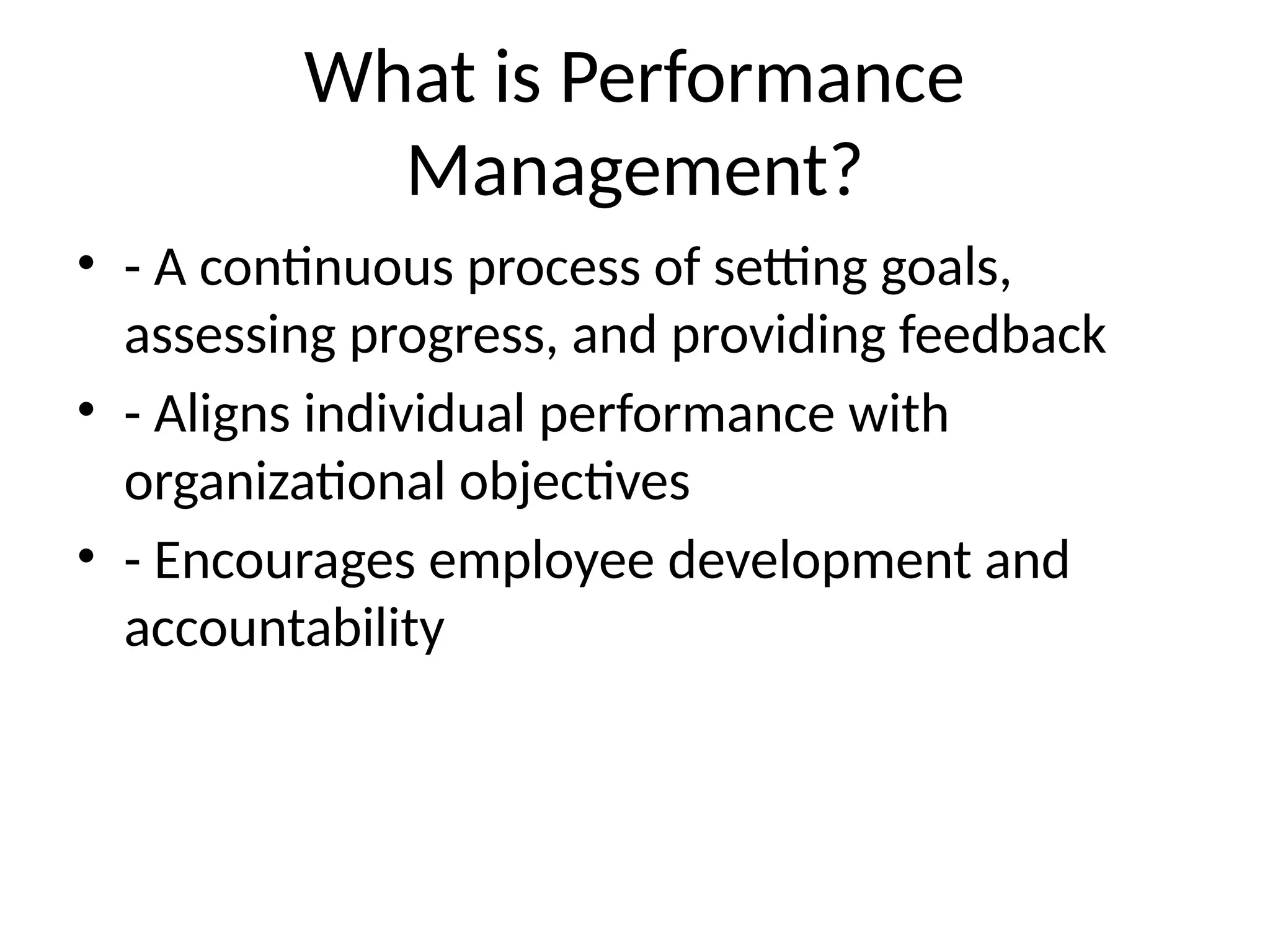
What is Performance
Management?
•- A continuous process of setting goals,
assessing progress, and providing feedback
• - Aligns individual performance with
organizational objectives
• - Encourages employee development and
accountability
3.
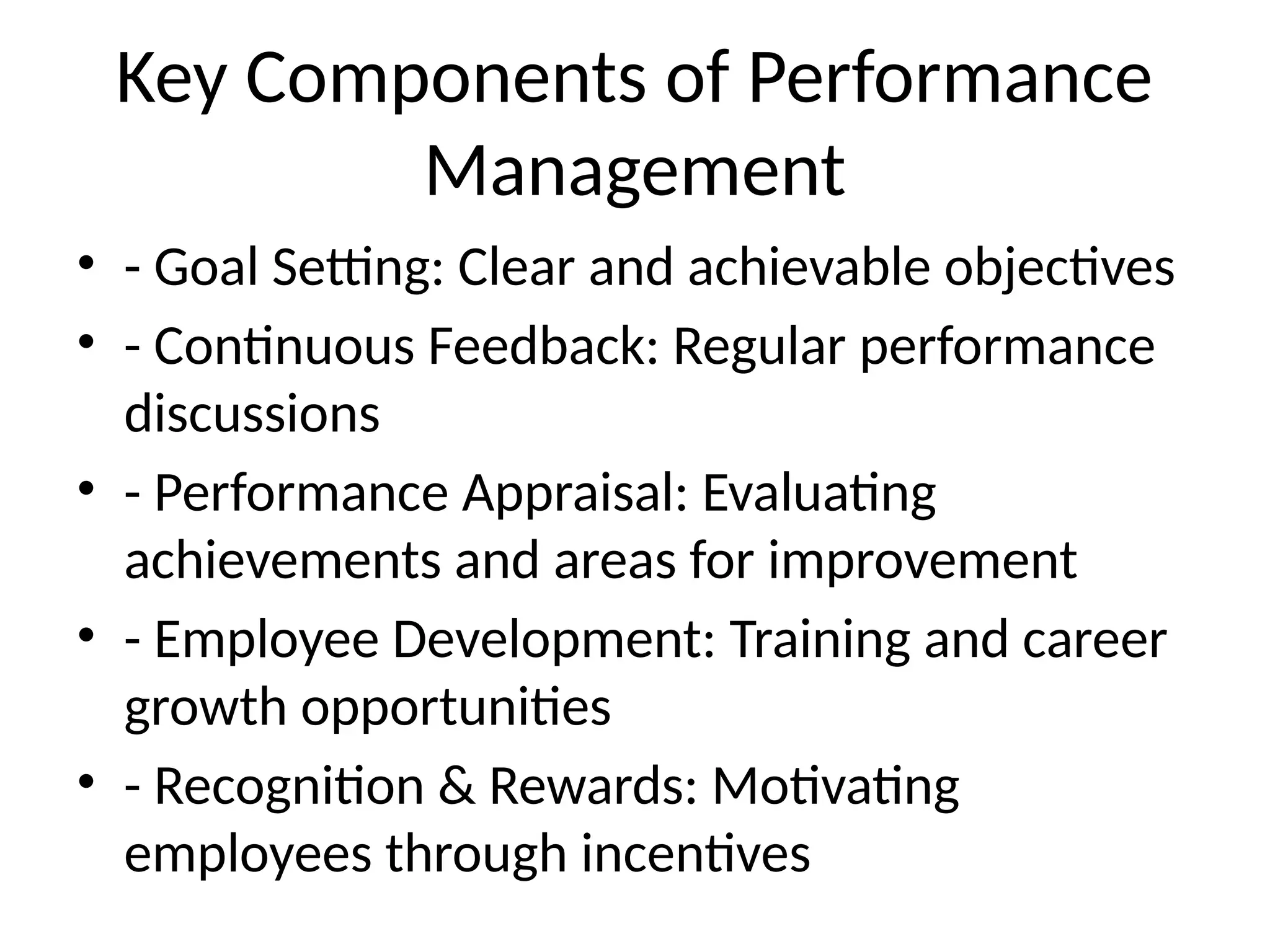
Key Components ofPerformance
Management
• - Goal Setting: Clear and achievable objectives
• - Continuous Feedback: Regular performance
discussions
• - Performance Appraisal: Evaluating
achievements and areas for improvement
• - Employee Development: Training and career
growth opportunities
• - Recognition & Rewards: Motivating
employees through incentives
4.
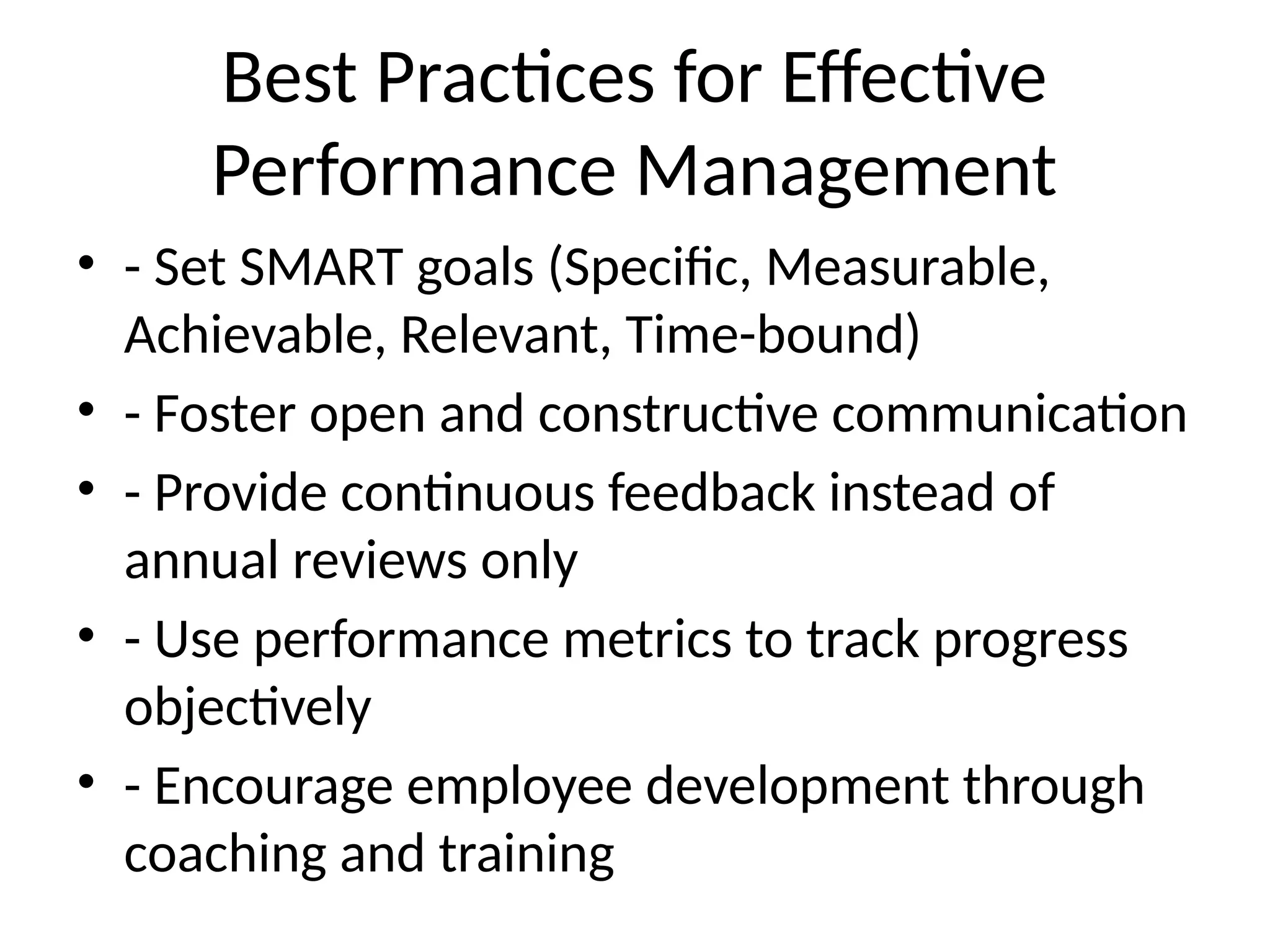
Best Practices forEffective
Performance Management
• - Set SMART goals (Specific, Measurable,
Achievable, Relevant, Time-bound)
• - Foster open and constructive communication
• - Provide continuous feedback instead of
annual reviews only
• - Use performance metrics to track progress
objectively
• - Encourage employee development through
coaching and training
5.
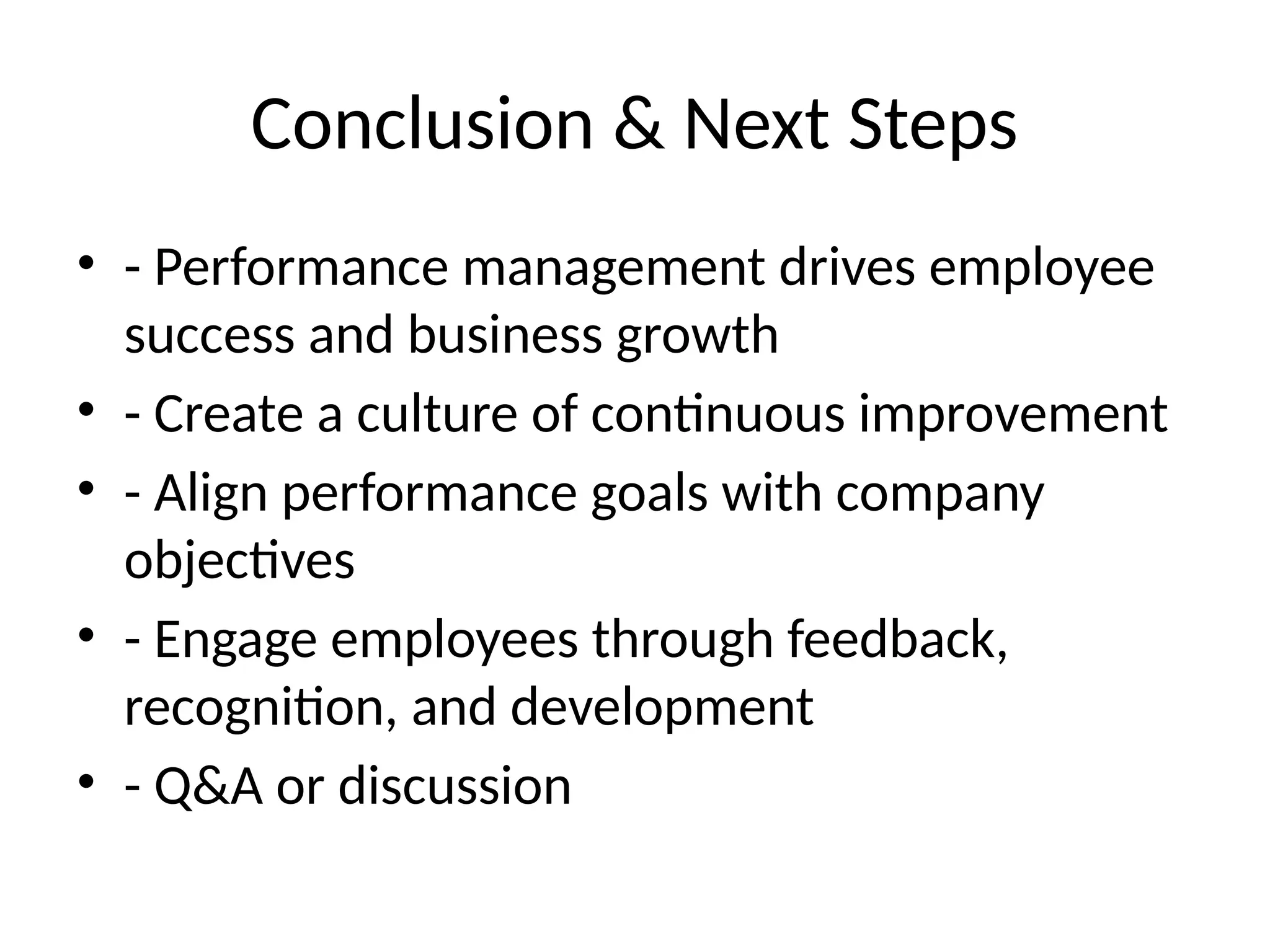
Conclusion & NextSteps
• - Performance management drives employee
success and business growth
• - Create a culture of continuous improvement
• - Align performance goals with company
objectives
• - Engage employees through feedback,
recognition, and development
• - Q&A or discussion