Introduction to Text Structure 14
How do peregrine
falcons raise their young?
They start by making a nest in
a high place. Long ago, most
peregrines had nests on cliffs.
Some peregrines still have
their nests in these places. But
others have been able to get
used to nesting close to
people. They make their nests
on skyscrapers, bridges, and
towers.
Peregrine falcons don’t build
their nests like other birds. Instead,
they make a nest that is called a
scrape by pushing down on gravel
with a foot. In North America, most
peregrine falcons make their
scrapes in February or March.
The female peregrine falcon
lays eggs over three days. Usually,
there are 3-5 eggs. The female
keeps the eggs warm, while the
male catches food for her. After
about 30 days, the eggs hatch!
When the babies are born, they are
Raising Babies
USFWSPhotos
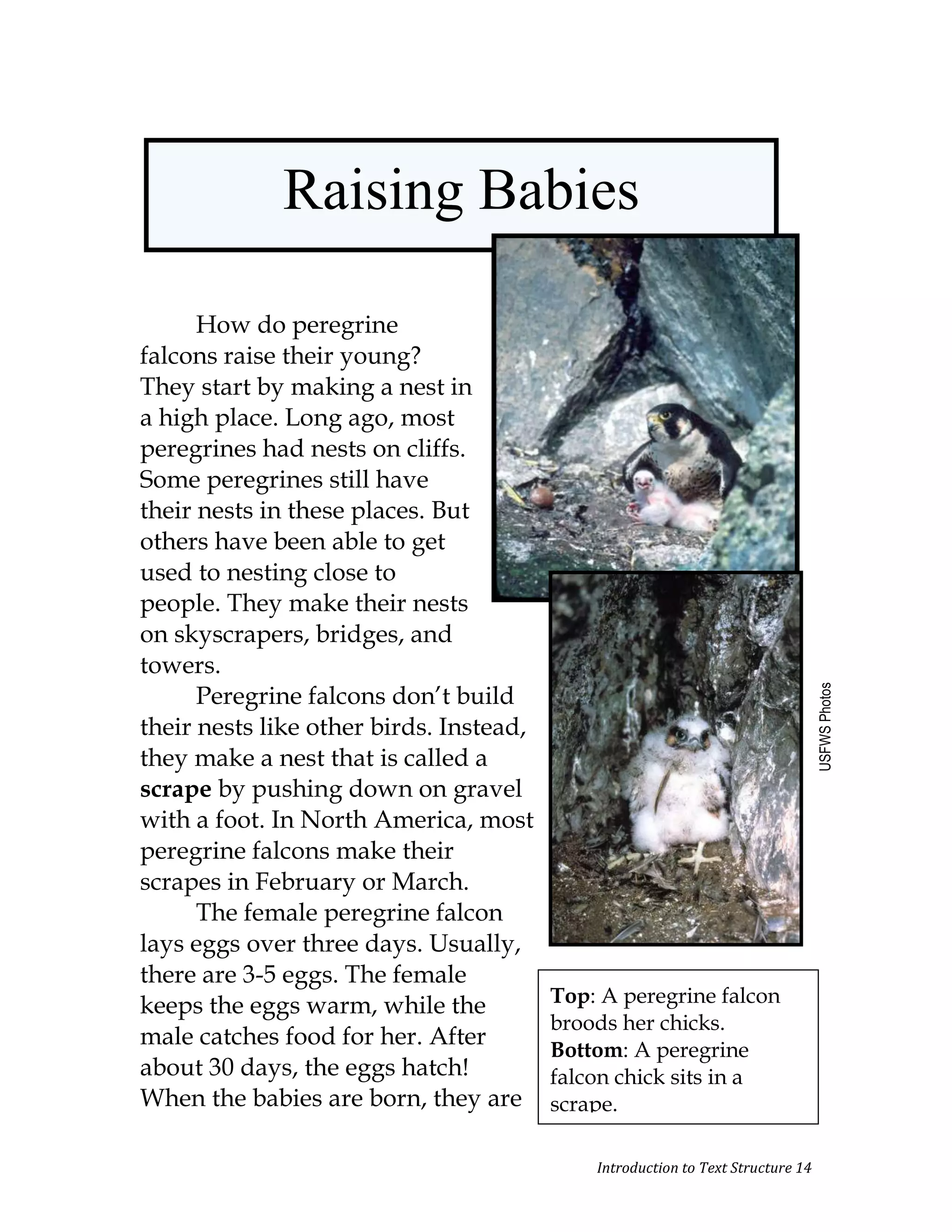
Top: A peregrine falcon
broods her chicks.
Bottom: A peregrine
falcon chick sits in a
scrape.
Introduction to Text Structure 14
covered with fluffy down. Their eyes
are closed. They are helpless.
The female takes care of the
young chicks at first. The male catches
prey and brings food for the whole
family. As the babies get bigger, the
female starts to leave the nest for short
hunting trips.
After 4-6 weeks, the nestlings are
no longer helpless chicks. They move
out of the nest and start to sit on
nearby ledges. Soon they fledge, or
start to fly. But they stay close to their
parents. And their parents keep giving
the fledglings food! The young birds
improve their flight skills by chasing
each other. They even start to capture
small birds and insects.
Finally, the young peregrine
falcons leave the nest for good. They will face many dangers
in their early months. Owls eat some young falcons. Others
run into obstacles and are badly injured. But many young
peregrine falcons survive. In just a few short months, they
have changed from helpless chicks into amazingly fast birds.
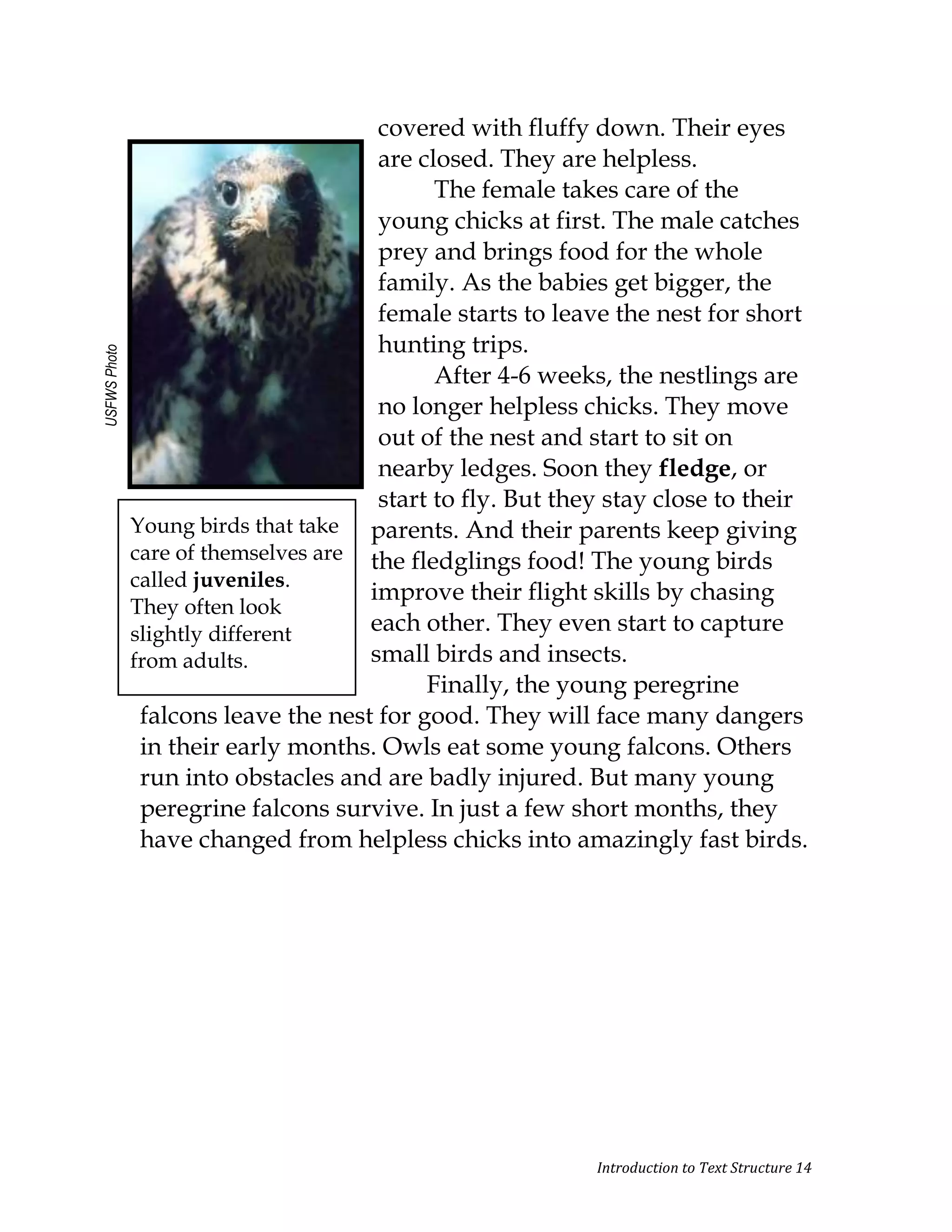
Young birds that take
care of themselves are
called juveniles.
They often look
slightly different
from adults.
USFWSPhoto

Peregrine Falcon Chronological Order

  • 1.
    Introduction to TextStructure 14 How do peregrine falcons raise their young? They start by making a nest in a high place. Long ago, most peregrines had nests on cliffs. Some peregrines still have their nests in these places. But others have been able to get used to nesting close to people. They make their nests on skyscrapers, bridges, and towers. Peregrine falcons don’t build their nests like other birds. Instead, they make a nest that is called a scrape by pushing down on gravel with a foot. In North America, most peregrine falcons make their scrapes in February or March. The female peregrine falcon lays eggs over three days. Usually, there are 3-5 eggs. The female keeps the eggs warm, while the male catches food for her. After about 30 days, the eggs hatch! When the babies are born, they are Raising Babies USFWSPhotos Top: A peregrine falcon broods her chicks. Bottom: A peregrine falcon chick sits in a scrape.
  • 2.
    Introduction to TextStructure 14 covered with fluffy down. Their eyes are closed. They are helpless. The female takes care of the young chicks at first. The male catches prey and brings food for the whole family. As the babies get bigger, the female starts to leave the nest for short hunting trips. After 4-6 weeks, the nestlings are no longer helpless chicks. They move out of the nest and start to sit on nearby ledges. Soon they fledge, or start to fly. But they stay close to their parents. And their parents keep giving the fledglings food! The young birds improve their flight skills by chasing each other. They even start to capture small birds and insects. Finally, the young peregrine falcons leave the nest for good. They will face many dangers in their early months. Owls eat some young falcons. Others run into obstacles and are badly injured. But many young peregrine falcons survive. In just a few short months, they have changed from helpless chicks into amazingly fast birds. Young birds that take care of themselves are called juveniles. They often look slightly different from adults. USFWSPhoto