Pediatric training
Child Development
How child plays, learns, speaks, acts, and moves offers important clues
about child’s development. Developmental milestones are things most
children (75% or more) can do by a certain age. Psychological changes
develop in the mind as well as in child’s behavior.
Everyone will go through the same stages of development during their
lives, but no two children are alike, the rate at which one develops is
individual.
Development stages
I N F A N C Y ( B I R T H T O 1 2 M O N T H S )
• Infants grow and develop quickly
• Development is from head down
(infants gain control of the muscle neck
before lower extremities)
Development stages
T O D D L E R H O O D ( A G E S 1 T O 3 )
• Formerly dependent, now gains independence and body control
• Learns to speak, gains coordination, bladder and bowel control
• May have tantrums or whine to get their way
Childproof the house for safety!!
Development stages
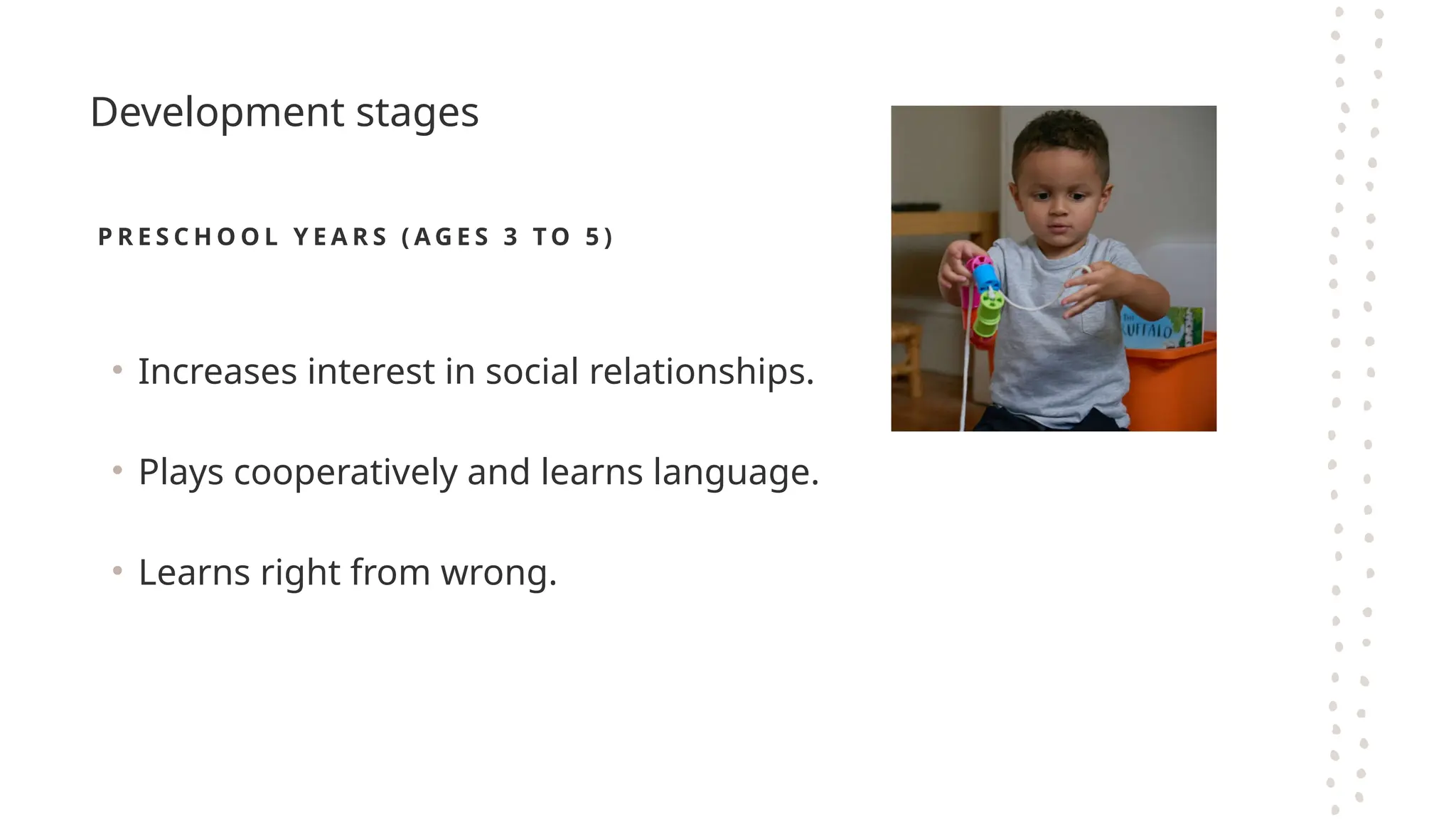
P R E S C H O O L Y E A R S ( A G E S 3 T O 5 )
• Increases interest in social relationships.
• Plays cooperatively and learns language.
• Learns right from wrong.
Developmental Stage
S C H O O L - A G E C H I L D R E N ( A G E S 5 T O 1 0 )
• Cognitive development (thinking and learning).
• Builds relationships with others in peer groups.
• Develops conscience and self-esteem.
Development stages
P R E A D O L E S C E N C E ( A G E S 1 0 T O 1 2 )
• Girls may reach *puberty in later years of this stage.
• Grow sense of identity.
• Strongly identifies with peers.
• Relatively calm period.
• Imaginary fears give way to fears based in real world.
*Puberty- when a person develops secondary sex characteristics, such as body hair, breasts and hips
Development stages
• Boys usually reach puberty during this stage.
• Concern for body image and peer acceptance.
• Unstable moods.
• Need to express themselves socially and sexually.
A D O L E S C E N C E ( A G E S 1 2 T O 1 8 )
Common
disorders
Infancy
Common infancy disorders:
Premature-babies that are born before 37
weeks of gestation
Low Birth Weight-a full term babies
weighting less than 5lb are usually cared
for the same way as for premature babies.
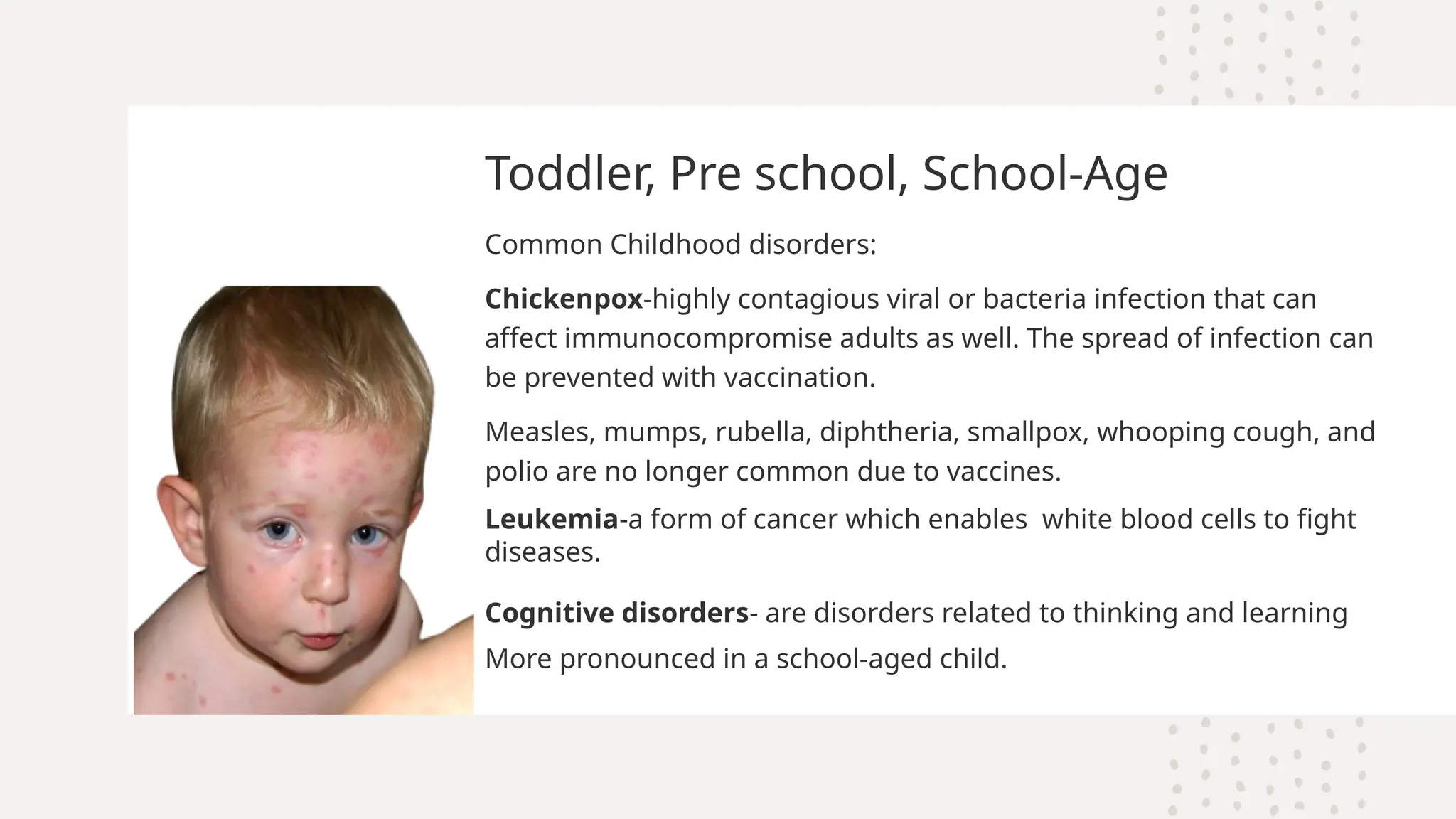
Toddler, Pre school, School-Age
Common Childhood disorders:
Chickenpox-highly contagious viral or bacteria infection that can
affect immunocompromise adults as well. The spread of infection can
be prevented with vaccination.
Measles, mumps, rubella, diphtheria, smallpox, whooping cough, and
polio are no longer common due to vaccines.
Leukemia-a form of cancer which enables white blood cells to fight
diseases.
Cognitive disorders- are disorders related to thinking and learning
More pronounced in a school-aged child.
Infancy
Birth Defect –a physical or structural defect that affects an infant from birth. Can be
inherited, gestational disease or injury during pregnancy. Examples: Cystic fibrosis, Down
Syndrome.
Viral or Bacterial infections
Sudden Infant Death Syndrome (SIDS)- when a baby stops breathing and dies for no
reason. Common contribution to SIDS is smoking at home, premature and low birth
weight babies.
To decrease chances of (SIDS)- PLACE THE BABY ON THE BACK TO SLEEP.
Adolescence
Anorexia- eating disorder where one does not eat or exercise excessively to
lose weight.
Bulimia, Binges-eating a huge amount of food or very fattening foods and
then Purge or eliminate the food by vomiting, using laxative or over
exercising.
Sexually Transmitted Disease (STD) -condoms can reduce spread of
diseases and prevent Teenage Pregnancy. Teenagers that are sexually active,
should be educated on contraceptives.
Teenage pregnancy can cause terrible consequences for adolescent, family, and the baby. It is common for
teenage mother’s to give birth to premature babies due to their own undeveloped bodies.
Child Abuse-refers to a physical emotional and
sexual mistreatment.
Child Neglect- is not providing enough food,
clothing, or support.
ALL Health care personnel are responsible by law to
immediately report suspected abuse to the
supervisor and state agency (Mandatory Reporter).
TO REPORT ABUSE :
1-800-342-3720 or 911
ChildAbuse
Child Abuse Symptoms
Child has burns, cuts, bruises abrasion or
fractured bones.
Child stares vacantly or watches intensely.
Child is extremely quiet.
Child avoids eye contact. However, in some
cultures, it is norm to costumery not to an eye
contact.
Child is afraid of adults.
Child behaves aggressively.
Child exhibits excessive activity or hyperactivity.
Child tells you that someone is abusing him or her.
The most common developmental disability.
Children develop at a below-average rate and
have below-average mental functioning.
Causes difficulty in learning, communicating,
moving, and may cause problems with social
interactions
Intellectua
l Disability
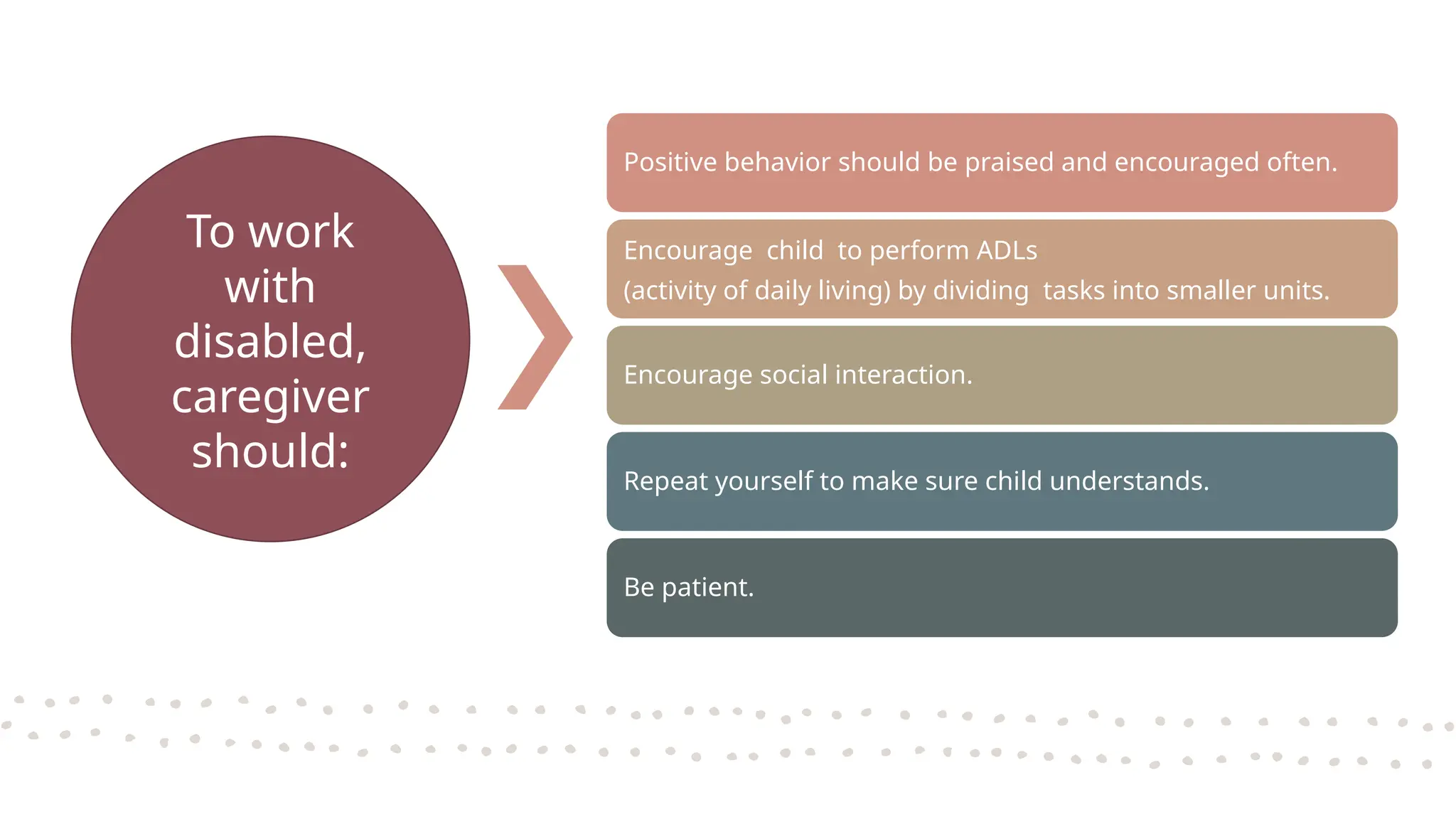
To work
with
disabled,
caregiver
should:
Positive behavior should be praised and encouraged often.
Encourage child to perform ADLs
(activity of daily living) by dividing tasks into smaller units.
Encourage social interaction.
Repeat yourself to make sure child understands.
Be patient.
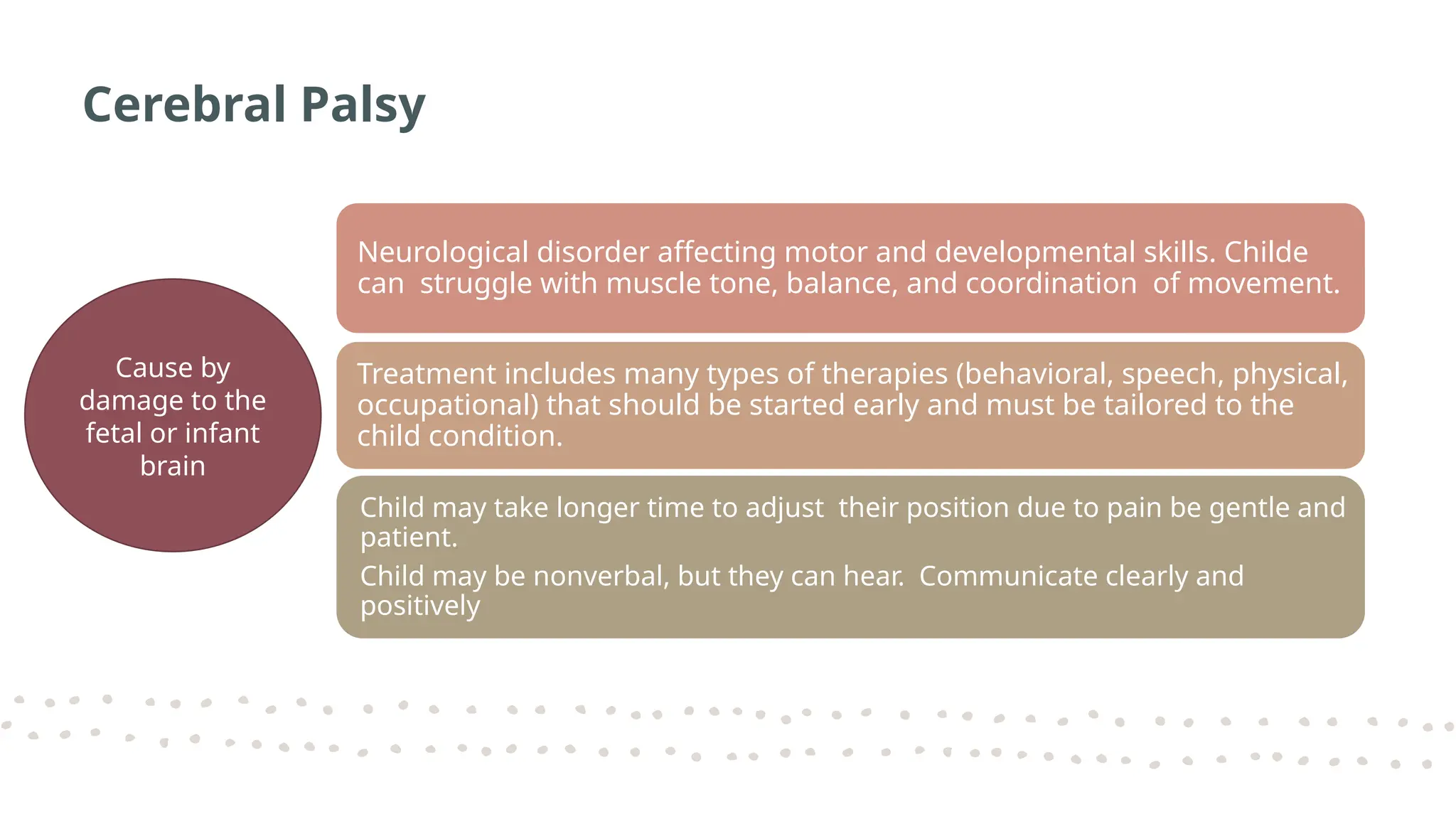
Neurological disorder affecting motor and developmental skills. Childe
can struggle with muscle tone, balance, and coordination of movement.
Treatment includes many types of therapies (behavioral, speech, physical,
occupational) that should be started early and must be tailored to the
child condition.
Child may take longer time to adjust their position due to pain be gentle and
patient.
Child may be nonverbal, but they can hear. Communicate clearly and
positively
Cerebral Palsy
Cause by
damage to the
fetal or infant
brain
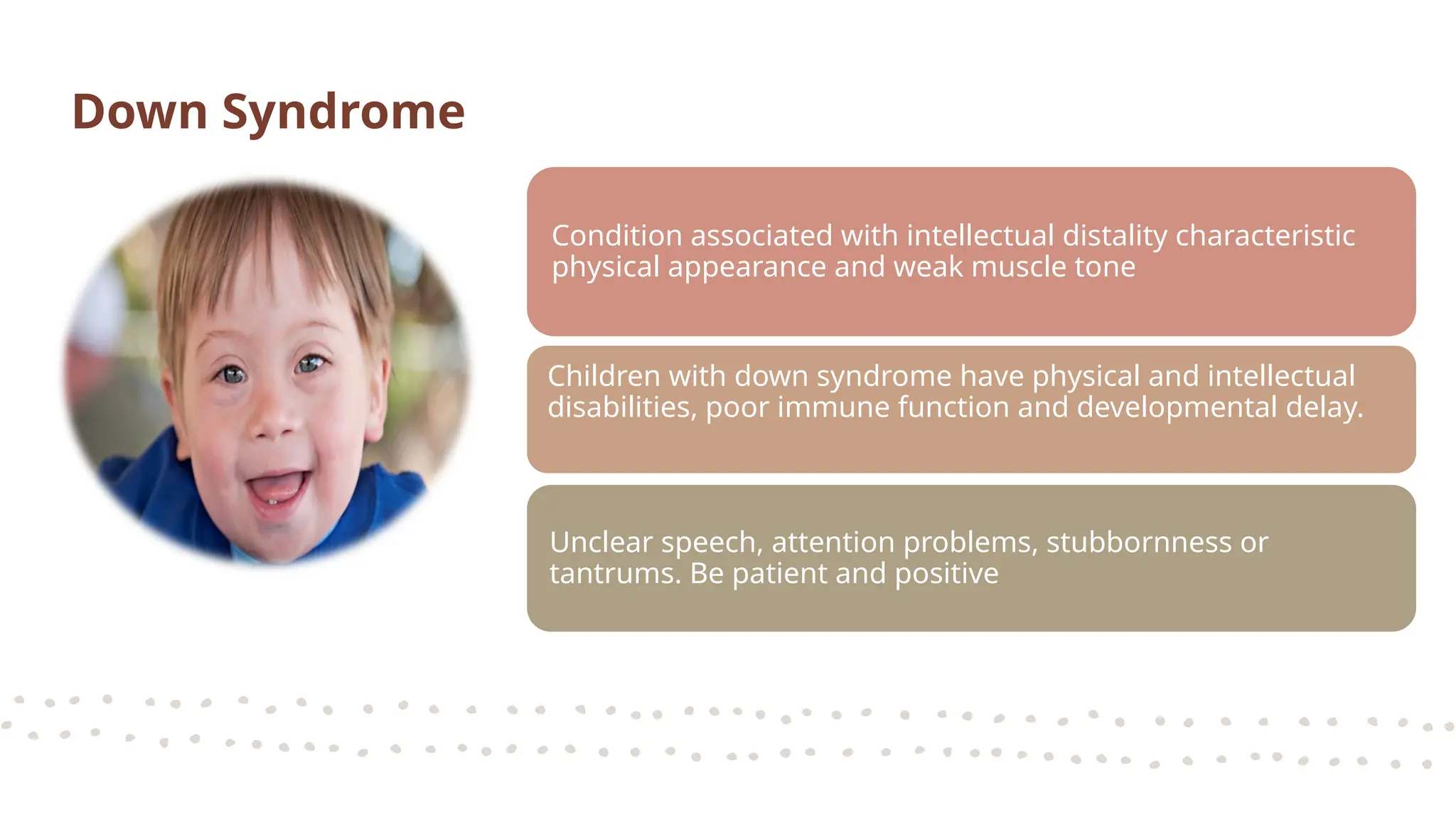
Condition associated with intellectual distality characteristic
physical appearance and weak muscle tone
Children with down syndrome have physical and intellectual
disabilities, poor immune function and developmental delay.
Unclear speech, attention problems, stubbornness or
tantrums. Be patient and positive
Down Syndrome
Various health issues . Mobility could be affected, skin problems,
allergy to latex and rubber .
Physical activity is important.
Be a positive role model for the family and child. Assist with skin
care physical exercise and promote health habits.
Spinal Bifida
Treatment includes many types of therapies (behavioral, speech, and
occupational therapies) that should be started early and must be
tailored to the child.
It appears in early childhood, usually by age 3.
Lacking social skills. Inability to communicate using words, being
withdrawn. Inability to make eye contact. Intense tantrums,
aggression, short attention span and repetitive body movements.
Autism Spectrum Disorder
Cause:
unknown, but
genetics may
be a factor
Important
Observation to
Report
When caring for a sick child, caregiver must pay attention
to
Infant’s daily patterns of eating, sleeping, and diaper
changes.
Safety of home environment
Family interactions
New mother’s mental state (postpartum depression)
Infant’s home environment (temperature, bedding)
*The only safe place to leave a baby is in the crib or in
adults' arms*
Proper Baby Holding
- Upright Hold when baby is held against the chest. Babies'
head, neck, and back must be supported with one hand, while keeping
the other under baby bottom.
-Football Hold when baby’s head is in one hand, supporting
the baby back with the arm on the same side of the body.
-Cardel Hold when the baby’s head and neck resting in the
crook of ones’ elbow and legs in the other arm.
Breast Feeding
All women have different breast-feeding styles some maybe comfortable with
others in the room and some are not. Provide privacy.
Change baby’s diapers if needed, before giving the baby to the mother for
breastfeeding
If necessary, remind the mother how to hold the nipple and areola between
the thumb and forefinger to allow baby to latch. If the baby does not latch on
the right way have the mother stroke the baby’s cheek with her nipple
To break the suction mother must press down on the breast above the nipple
and gently putting her nipples in baby’s mouth
Assist with burping the baby
When baby properly leached on baby’s mouth covers the whole areola.
How do I know if a newborn is eating enough ?
• Baby wets at least 5-6 and 3-4 poops
• Baby is gaining weight
• Baby is content and happy
Bottle Feeding
Ready-to-use Formula – often sold in a bottle
should not be diluted or mixed.
Concentrated Formula – sold in cans or
bottles. Must be mixed with tap, sterile, or
bottled water. Follow the care plan for mixing
directions. Shake well after mixing.
Powdered Formula- sold in cans of various
sizes. A scoop is included that is used for
measuring in the container. Any formula
remaining in the bottle after feeding should
be discarded.
Baby Formula Option
Never use a microwave oven for
heating infant formulas or cooking
the formula on a stove top.
Microwaving may cause the bottle to
remain cool while hot spots develop in
the formula.
Before bottle feeding, warm the formula
by placing the bottle under warm water.
Shake the bottle and check the
temperature of the formula by placing
few drops on the inside of the wrist.
Bottle Cleaning Procedure
Cleaning and sterilizing bottle-feeding equipment after
every feed.
Wash your hands with soapy water and dry with a
clean towel.
Check teats for any cracks. Throw away any damaged
teats – bacteria can grow in the cracks.
Wash all bottle-feeding equipment in hot, soapy water.
Use a bottle brush to scrub inside bottles and teats
and around caps and screw top areas. This is where
bacteria are most likely to grow.
Squirt water through teats to clear the hole.
Rinse everything thoroughly.
Place equipment in a pot on the stove and bring it
to boil. Boil for 5 minutes.
Let everything cool in the pot until you can take it
out with tongs or clean hands without scalding
yourself. Shake off excess water.
There’s no need to dry the items.
Burping a Baby
Positions
Rest the baby on your thigh in a sitting
position. As you do this, be sure to
support baby's head and neck. If you
so choose, place a burp cloth over your
and the baby's thighs to catch any spit.
Support the baby's chest with your
hands. *This position is best for babies
who have breathing problems.
Hold the baby over your shoulder. Be
sure to support babies head and neck
while you do this.
Baby Bath Time
Bath Guidelines
Given baby a bath you can encounter body fluids, so wear
disposable gloves. Gloves can make hands slippery, be careful
when handling a baby during bath.
Have your supplies ready.
Give baby bath in a warm place.
Always test the water temperature on the inside of the wrist
before placing the baby in the water.
Uncover only the area that you are washing. Always keep one
hand on the baby.
Wipe baby’s eyes by using warm water, wipe the eyes from the
inner to the outer area.
Baby ‘s head and neck must be always supported.
Dry baby’s hair immediately after washing
After bath dry the skin to prevent rash
Don’t use baby powder, it can cause breathing problems
Diaper Change
Lay the baby down on the back and remove the used diaper. Wrap it up and stick the tapes down to seal the
bundle. Toss the diaper in the diaper pail or set it aside to throw out later in the garbage can. If you’re
throwing the diaper into a garbage can, place it in a plastic bag first to reduce odors.
Gently clean baby’s diaper area, clean baby between the folds of skin. You can use gentle diaper wipes, or a
wetted washcloth.
For girls wipe from front to back and spread the labia to clean as needed.
Let air circulate on the bottom for the moment, exposure to air helps to prevent diaper rash.
Measuring Weight and Length
the baby
W E I G H T M E A S U R I N G
Wash hands.
For accurate weight of infant remove clothing or accessors
such as hats.
Use the same scale.
Place paper towel on the scale.
Place the baby on the scale protecting the sides so baby
does not roll over.
Lock the weight.
Remove the baby from the scale, dress the baby.
Document the weight .
L E N G T H M E A S U R I N G
Wash hands.
Place a baby on clean, firm service with a clean paper
under with inch marking on it.
Always hold the baby at least with one hand.
Place a mark by the baby head
Straighten the knees and place a mark by baby’s feet
Remove the baby, dress the baby.
Measure the distance between marks
Document the length .
As part of HHA duties you may be asked to measure a baby’s weight and length
Umbilical Cord
Keep the stump or *Umbilical Cord
dry.
Keep the front of baby's diaper folded
down to avoid covering the stump. This
will prevent irritation.
Stick with sponge baths. While there's
no harm in getting the stump, wet
sponge baths, might make it easier to
keep the stump dry.
Let the stump fall off on its own. Resist
the temptation to pull off the stump
yourself.
*Umbilical Cord – that connects the baby to the placenta inside mother
uterus
Circumcision
Circumcision- is the surgical removal of the skin covering
the tip of the penis. Commonly performed in male babies
for religious reason or parents' choice.
HHA responsibilities does not include changing the
dressing at the circumcision site.
HHA is responsible to make sure the baby is clean and dry
to prevent infections and reenforce the dressing with
gauze, if needed after change.
Baby in Distress
If the baby has oxygen equipment in the house.
HHA is not allowed to change the oxygen setting
Apnea- a state of not breathing
Guidelines for working with school-age children
Introduce yourself.
Maintain a routine.
Give comfort if the child is angry or hurt.
Offer encouragement and praise.
Do not compare to other children.
Use positive phrases such as “let's try this”.
Respond to the child.
Don’t force feed.
Encourage child to play.
Recognize individual needs.
Be non-judgmental.

Pediatric Training Presentation slideshow

  • 1.
  • 2.
    Child Development How childplays, learns, speaks, acts, and moves offers important clues about child’s development. Developmental milestones are things most children (75% or more) can do by a certain age. Psychological changes develop in the mind as well as in child’s behavior. Everyone will go through the same stages of development during their lives, but no two children are alike, the rate at which one develops is individual.
  • 3.
    Development stages I NF A N C Y ( B I R T H T O 1 2 M O N T H S ) • Infants grow and develop quickly • Development is from head down (infants gain control of the muscle neck before lower extremities)
  • 4.
    Development stages T OD D L E R H O O D ( A G E S 1 T O 3 ) • Formerly dependent, now gains independence and body control • Learns to speak, gains coordination, bladder and bowel control • May have tantrums or whine to get their way Childproof the house for safety!!
  • 5.
    Development stages P RE S C H O O L Y E A R S ( A G E S 3 T O 5 ) • Increases interest in social relationships. • Plays cooperatively and learns language. • Learns right from wrong.
  • 6.
    Developmental Stage S CH O O L - A G E C H I L D R E N ( A G E S 5 T O 1 0 ) • Cognitive development (thinking and learning). • Builds relationships with others in peer groups. • Develops conscience and self-esteem.
  • 7.
    Development stages P RE A D O L E S C E N C E ( A G E S 1 0 T O 1 2 ) • Girls may reach *puberty in later years of this stage. • Grow sense of identity. • Strongly identifies with peers. • Relatively calm period. • Imaginary fears give way to fears based in real world. *Puberty- when a person develops secondary sex characteristics, such as body hair, breasts and hips
  • 8.
    Development stages • Boysusually reach puberty during this stage. • Concern for body image and peer acceptance. • Unstable moods. • Need to express themselves socially and sexually. A D O L E S C E N C E ( A G E S 1 2 T O 1 8 )
  • 9.
  • 10.
    Infancy Common infancy disorders: Premature-babiesthat are born before 37 weeks of gestation Low Birth Weight-a full term babies weighting less than 5lb are usually cared for the same way as for premature babies.
  • 11.
    Toddler, Pre school,School-Age Common Childhood disorders: Chickenpox-highly contagious viral or bacteria infection that can affect immunocompromise adults as well. The spread of infection can be prevented with vaccination. Measles, mumps, rubella, diphtheria, smallpox, whooping cough, and polio are no longer common due to vaccines. Leukemia-a form of cancer which enables white blood cells to fight diseases. Cognitive disorders- are disorders related to thinking and learning More pronounced in a school-aged child.
  • 12.
    Infancy Birth Defect –aphysical or structural defect that affects an infant from birth. Can be inherited, gestational disease or injury during pregnancy. Examples: Cystic fibrosis, Down Syndrome. Viral or Bacterial infections Sudden Infant Death Syndrome (SIDS)- when a baby stops breathing and dies for no reason. Common contribution to SIDS is smoking at home, premature and low birth weight babies. To decrease chances of (SIDS)- PLACE THE BABY ON THE BACK TO SLEEP.
  • 13.
    Adolescence Anorexia- eating disorderwhere one does not eat or exercise excessively to lose weight. Bulimia, Binges-eating a huge amount of food or very fattening foods and then Purge or eliminate the food by vomiting, using laxative or over exercising. Sexually Transmitted Disease (STD) -condoms can reduce spread of diseases and prevent Teenage Pregnancy. Teenagers that are sexually active, should be educated on contraceptives. Teenage pregnancy can cause terrible consequences for adolescent, family, and the baby. It is common for teenage mother’s to give birth to premature babies due to their own undeveloped bodies.
  • 14.
    Child Abuse-refers toa physical emotional and sexual mistreatment. Child Neglect- is not providing enough food, clothing, or support. ALL Health care personnel are responsible by law to immediately report suspected abuse to the supervisor and state agency (Mandatory Reporter). TO REPORT ABUSE : 1-800-342-3720 or 911 ChildAbuse
  • 15.
    Child Abuse Symptoms Childhas burns, cuts, bruises abrasion or fractured bones. Child stares vacantly or watches intensely. Child is extremely quiet. Child avoids eye contact. However, in some cultures, it is norm to costumery not to an eye contact. Child is afraid of adults. Child behaves aggressively. Child exhibits excessive activity or hyperactivity. Child tells you that someone is abusing him or her.
  • 16.
    The most commondevelopmental disability. Children develop at a below-average rate and have below-average mental functioning. Causes difficulty in learning, communicating, moving, and may cause problems with social interactions Intellectua l Disability
  • 17.
    To work with disabled, caregiver should: Positive behaviorshould be praised and encouraged often. Encourage child to perform ADLs (activity of daily living) by dividing tasks into smaller units. Encourage social interaction. Repeat yourself to make sure child understands. Be patient.
  • 18.
    Neurological disorder affectingmotor and developmental skills. Childe can struggle with muscle tone, balance, and coordination of movement. Treatment includes many types of therapies (behavioral, speech, physical, occupational) that should be started early and must be tailored to the child condition. Child may take longer time to adjust their position due to pain be gentle and patient. Child may be nonverbal, but they can hear. Communicate clearly and positively Cerebral Palsy Cause by damage to the fetal or infant brain
  • 19.
    Condition associated withintellectual distality characteristic physical appearance and weak muscle tone Children with down syndrome have physical and intellectual disabilities, poor immune function and developmental delay. Unclear speech, attention problems, stubbornness or tantrums. Be patient and positive Down Syndrome
  • 20.
    Various health issues. Mobility could be affected, skin problems, allergy to latex and rubber . Physical activity is important. Be a positive role model for the family and child. Assist with skin care physical exercise and promote health habits. Spinal Bifida
  • 21.
    Treatment includes manytypes of therapies (behavioral, speech, and occupational therapies) that should be started early and must be tailored to the child. It appears in early childhood, usually by age 3. Lacking social skills. Inability to communicate using words, being withdrawn. Inability to make eye contact. Intense tantrums, aggression, short attention span and repetitive body movements. Autism Spectrum Disorder Cause: unknown, but genetics may be a factor
  • 22.
    Important Observation to Report When caringfor a sick child, caregiver must pay attention to Infant’s daily patterns of eating, sleeping, and diaper changes. Safety of home environment Family interactions New mother’s mental state (postpartum depression) Infant’s home environment (temperature, bedding) *The only safe place to leave a baby is in the crib or in adults' arms*
  • 23.
    Proper Baby Holding -Upright Hold when baby is held against the chest. Babies' head, neck, and back must be supported with one hand, while keeping the other under baby bottom. -Football Hold when baby’s head is in one hand, supporting the baby back with the arm on the same side of the body. -Cardel Hold when the baby’s head and neck resting in the crook of ones’ elbow and legs in the other arm.
  • 24.
    Breast Feeding All womenhave different breast-feeding styles some maybe comfortable with others in the room and some are not. Provide privacy. Change baby’s diapers if needed, before giving the baby to the mother for breastfeeding If necessary, remind the mother how to hold the nipple and areola between the thumb and forefinger to allow baby to latch. If the baby does not latch on the right way have the mother stroke the baby’s cheek with her nipple To break the suction mother must press down on the breast above the nipple and gently putting her nipples in baby’s mouth Assist with burping the baby When baby properly leached on baby’s mouth covers the whole areola. How do I know if a newborn is eating enough ? • Baby wets at least 5-6 and 3-4 poops • Baby is gaining weight • Baby is content and happy
  • 25.
    Bottle Feeding Ready-to-use Formula– often sold in a bottle should not be diluted or mixed. Concentrated Formula – sold in cans or bottles. Must be mixed with tap, sterile, or bottled water. Follow the care plan for mixing directions. Shake well after mixing. Powdered Formula- sold in cans of various sizes. A scoop is included that is used for measuring in the container. Any formula remaining in the bottle after feeding should be discarded. Baby Formula Option Never use a microwave oven for heating infant formulas or cooking the formula on a stove top. Microwaving may cause the bottle to remain cool while hot spots develop in the formula. Before bottle feeding, warm the formula by placing the bottle under warm water. Shake the bottle and check the temperature of the formula by placing few drops on the inside of the wrist.
  • 26.
    Bottle Cleaning Procedure Cleaningand sterilizing bottle-feeding equipment after every feed. Wash your hands with soapy water and dry with a clean towel. Check teats for any cracks. Throw away any damaged teats – bacteria can grow in the cracks. Wash all bottle-feeding equipment in hot, soapy water. Use a bottle brush to scrub inside bottles and teats and around caps and screw top areas. This is where bacteria are most likely to grow. Squirt water through teats to clear the hole. Rinse everything thoroughly. Place equipment in a pot on the stove and bring it to boil. Boil for 5 minutes. Let everything cool in the pot until you can take it out with tongs or clean hands without scalding yourself. Shake off excess water. There’s no need to dry the items.
  • 27.
    Burping a Baby Positions Restthe baby on your thigh in a sitting position. As you do this, be sure to support baby's head and neck. If you so choose, place a burp cloth over your and the baby's thighs to catch any spit. Support the baby's chest with your hands. *This position is best for babies who have breathing problems. Hold the baby over your shoulder. Be sure to support babies head and neck while you do this.
  • 28.
    Baby Bath Time BathGuidelines Given baby a bath you can encounter body fluids, so wear disposable gloves. Gloves can make hands slippery, be careful when handling a baby during bath. Have your supplies ready. Give baby bath in a warm place. Always test the water temperature on the inside of the wrist before placing the baby in the water. Uncover only the area that you are washing. Always keep one hand on the baby. Wipe baby’s eyes by using warm water, wipe the eyes from the inner to the outer area. Baby ‘s head and neck must be always supported. Dry baby’s hair immediately after washing After bath dry the skin to prevent rash Don’t use baby powder, it can cause breathing problems
  • 29.
    Diaper Change Lay thebaby down on the back and remove the used diaper. Wrap it up and stick the tapes down to seal the bundle. Toss the diaper in the diaper pail or set it aside to throw out later in the garbage can. If you’re throwing the diaper into a garbage can, place it in a plastic bag first to reduce odors. Gently clean baby’s diaper area, clean baby between the folds of skin. You can use gentle diaper wipes, or a wetted washcloth. For girls wipe from front to back and spread the labia to clean as needed. Let air circulate on the bottom for the moment, exposure to air helps to prevent diaper rash.
  • 30.
    Measuring Weight andLength the baby W E I G H T M E A S U R I N G Wash hands. For accurate weight of infant remove clothing or accessors such as hats. Use the same scale. Place paper towel on the scale. Place the baby on the scale protecting the sides so baby does not roll over. Lock the weight. Remove the baby from the scale, dress the baby. Document the weight . L E N G T H M E A S U R I N G Wash hands. Place a baby on clean, firm service with a clean paper under with inch marking on it. Always hold the baby at least with one hand. Place a mark by the baby head Straighten the knees and place a mark by baby’s feet Remove the baby, dress the baby. Measure the distance between marks Document the length . As part of HHA duties you may be asked to measure a baby’s weight and length
  • 31.
    Umbilical Cord Keep thestump or *Umbilical Cord dry. Keep the front of baby's diaper folded down to avoid covering the stump. This will prevent irritation. Stick with sponge baths. While there's no harm in getting the stump, wet sponge baths, might make it easier to keep the stump dry. Let the stump fall off on its own. Resist the temptation to pull off the stump yourself. *Umbilical Cord – that connects the baby to the placenta inside mother uterus
  • 32.
    Circumcision Circumcision- is thesurgical removal of the skin covering the tip of the penis. Commonly performed in male babies for religious reason or parents' choice. HHA responsibilities does not include changing the dressing at the circumcision site. HHA is responsible to make sure the baby is clean and dry to prevent infections and reenforce the dressing with gauze, if needed after change.
  • 33.
    Baby in Distress Ifthe baby has oxygen equipment in the house. HHA is not allowed to change the oxygen setting Apnea- a state of not breathing
  • 34.
    Guidelines for workingwith school-age children Introduce yourself. Maintain a routine. Give comfort if the child is angry or hurt. Offer encouragement and praise. Do not compare to other children. Use positive phrases such as “let's try this”. Respond to the child. Don’t force feed. Encourage child to play. Recognize individual needs. Be non-judgmental.