Karin Byström, Uppsala University Library
Karin Perols, Södertörn University Library
•   Patron Driven Acquisition

•   Method offered by e-book aggregators

•   Show un-owned e-books in the local catalogue

•   Free browsing period

•   Automatic loan/rental or purchase

•   The library only pays for books that
               are actually used
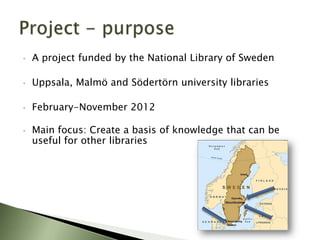
•   A project funded by the National Library of Sweden

•   Uppsala, Malmö and Södertörn university libraries

•   February-November 2012

•   Main focus: Create a basis of knowledge that can be
    useful for other libraries
•   Collect earlier experiences

•   PDA vendor survey (Dawson, EBSCO, ebrary, EBL
    and MyiLibrary)

•   Test period (April-September)

•   Create checklist

•   Report published online in December
•   Malmö: many subjects, ca 13 000 FTE
    PDA-budget £15 000

•   Södertörn: many subjects, ca 8 500 FTE
    PDA-budget £10 000

   Uppsala: two subject libraries;
    economic library ca 6 000 FTE, PDA budget £2 800
    science library, ca 6 000 FTE, PDA budget £6 800
•   Result of experiences during the testperiod

•   Intended to be used by libraries who are
    considering starting PDA

•   By thinking through the prerequisites and demands
    libraries will be better prepared
•   Better collection

•   Better service

•   Replacing manual purchasing

•   Saving money

   Which goals are important to you – where should
    your focus be?
   All these goals probably can’t be achieved at the
    same time.
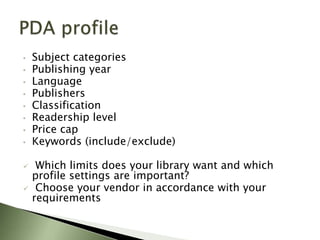
•   Subject categories
•   Publishing year
•   Language
•   Publishers
•   Classification
•   Readership level
•   Price cap
•   Keywords (include/exclude)

    Which limits does your library want and which
    profile settings are important?
    Choose your vendor in accordance with your
    requirements
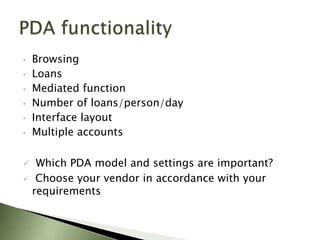
•   Browsing
•   Loans
•   Mediated function
•   Number of loans/person/day
•   Interface layout
•   Multiple accounts

    Which PDA model and settings are important?
    Choose your vendor in accordance with your
    requirements
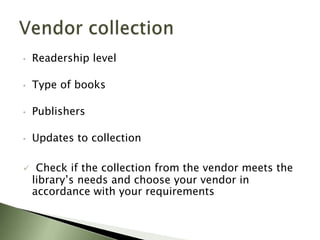
•   Readership level

•   Type of books

•   Publishers

•   Updates to collection

    Check if the collection from the vendor meets the
    library’s needs and choose your vendor in
    accordance with your requirements
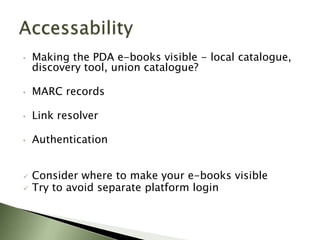
•   Making the PDA e-books visible - local catalogue,
    discovery tool, union catalogue?

•   MARC records

•   Link resolver

•   Authentication


   Consider where to make your e-books visible
   Try to avoid separate platform login
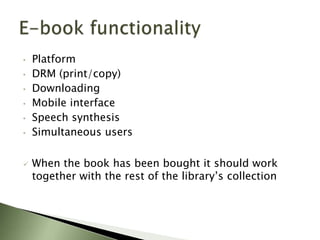
•   Platform
•   DRM (print/copy)
•   Downloading
•   Mobile interface
•   Speech synthesis
•   Simultaneous users

   When the book has been bought it should work
    together with the rest of the library’s collection
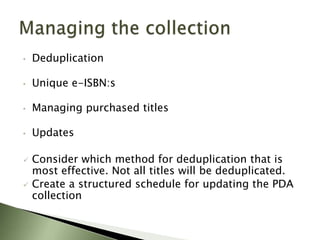
•   Deduplication

•   Unique e-ISBN:s

•   Managing purchased titles

•   Updates

   Consider which method for deduplication that is
    most effective. Not all titles will be deduplicated.
   Create a structured schedule for updating the PDA
    collection
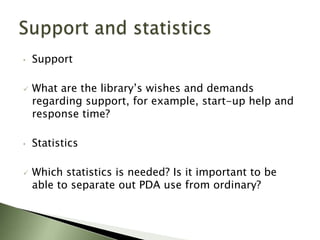
•   Support

   What are the library’s wishes and demands
    regarding support, for example, start-up help and
    response time?

•   Statistics

   Which statistics is needed? Is it important to be
    able to separate out PDA use from ordinary?
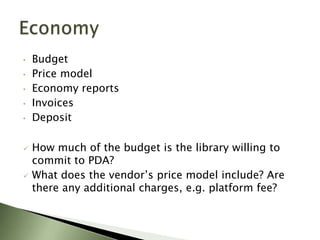
•   Budget
•   Price model
•   Economy reports
•   Invoices
•   Deposit

   How much of the budget is the library willing to
    commit to PDA?
   What does the vendor’s price model include? Are
    there any additional charges, e.g. platform fee?
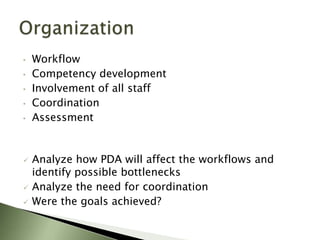
•   Workflow
•   Competency development
•   Involvement of all staff
•   Coordination
•   Assessment


   Analyze how PDA will affect the workflows and
    identify possible bottlenecks
   Analyze the need for coordination
   Were the goals achieved?
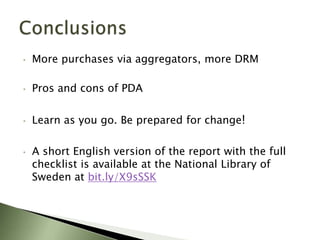
•   More purchases via aggregators, more DRM

•   Pros and cons of PDA

•   Learn as you go. Be prepared for change!

•   A short English version of the report with the full
    checklist is available at the National Library of
    Sweden at bit.ly/X9sSSK
•   Karin Byström
    karin.bystrom@ub.uu.se
•   Karin Perols
    karin.perols@sh.se
•   Ola Tengstam
    ola.tengstam@mah.se
•   Tobias Johansson
    tobias.johansson@mah.se

Pda checklist uksg bystrom perols

  • 1.
    Karin Byström, UppsalaUniversity Library Karin Perols, Södertörn University Library
  • 2.
    Patron Driven Acquisition • Method offered by e-book aggregators • Show un-owned e-books in the local catalogue • Free browsing period • Automatic loan/rental or purchase • The library only pays for books that are actually used
  • 3.
    A project funded by the National Library of Sweden • Uppsala, Malmö and Södertörn university libraries • February-November 2012 • Main focus: Create a basis of knowledge that can be useful for other libraries
  • 4.
    Collect earlier experiences • PDA vendor survey (Dawson, EBSCO, ebrary, EBL and MyiLibrary) • Test period (April-September) • Create checklist • Report published online in December
  • 5.
    Malmö: many subjects, ca 13 000 FTE PDA-budget £15 000 • Södertörn: many subjects, ca 8 500 FTE PDA-budget £10 000  Uppsala: two subject libraries; economic library ca 6 000 FTE, PDA budget £2 800 science library, ca 6 000 FTE, PDA budget £6 800
  • 6.
    Result of experiences during the testperiod • Intended to be used by libraries who are considering starting PDA • By thinking through the prerequisites and demands libraries will be better prepared
  • 7.
    Better collection • Better service • Replacing manual purchasing • Saving money  Which goals are important to you – where should your focus be?  All these goals probably can’t be achieved at the same time.
  • 8.
    Subject categories • Publishing year • Language • Publishers • Classification • Readership level • Price cap • Keywords (include/exclude)  Which limits does your library want and which profile settings are important?  Choose your vendor in accordance with your requirements
  • 9.
    Browsing • Loans • Mediated function • Number of loans/person/day • Interface layout • Multiple accounts  Which PDA model and settings are important?  Choose your vendor in accordance with your requirements
  • 10.
    Readership level • Type of books • Publishers • Updates to collection  Check if the collection from the vendor meets the library’s needs and choose your vendor in accordance with your requirements
  • 11.
    Making the PDA e-books visible - local catalogue, discovery tool, union catalogue? • MARC records • Link resolver • Authentication  Consider where to make your e-books visible  Try to avoid separate platform login
  • 12.
    Platform • DRM (print/copy) • Downloading • Mobile interface • Speech synthesis • Simultaneous users  When the book has been bought it should work together with the rest of the library’s collection
  • 13.
    Deduplication • Unique e-ISBN:s • Managing purchased titles • Updates  Consider which method for deduplication that is most effective. Not all titles will be deduplicated.  Create a structured schedule for updating the PDA collection
  • 14.
    Support  What are the library’s wishes and demands regarding support, for example, start-up help and response time? • Statistics  Which statistics is needed? Is it important to be able to separate out PDA use from ordinary?
  • 16.
    Budget • Price model • Economy reports • Invoices • Deposit  How much of the budget is the library willing to commit to PDA?  What does the vendor’s price model include? Are there any additional charges, e.g. platform fee?
  • 18.
    Workflow • Competency development • Involvement of all staff • Coordination • Assessment  Analyze how PDA will affect the workflows and identify possible bottlenecks  Analyze the need for coordination  Were the goals achieved?
  • 19.
    More purchases via aggregators, more DRM • Pros and cons of PDA • Learn as you go. Be prepared for change! • A short English version of the report with the full checklist is available at the National Library of Sweden at bit.ly/X9sSSK
  • 20.
    Karin Byström karin.bystrom@ub.uu.se • Karin Perols karin.perols@sh.se • Ola Tengstam ola.tengstam@mah.se • Tobias Johansson tobias.johansson@mah.se