
Pattern Matching
                                   - at a glance


Neelkanth Sachdeva

Software Consultant

Knoldus Software LLP , New Delhi

neelkanthsachdeva.wordpress.com

neelkanth@knoldus.com

@NeelSachdeva
What is Case class ?

Before diving in to pattern matching lets talk
about case classes briefly.


Classes with case modifier are called case
Classes. Using the modifier makes the Scala
compiler add some syntactic conveniences to
your class.
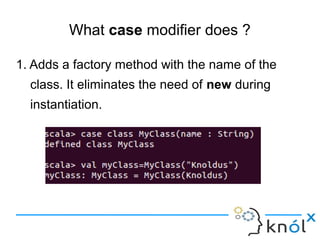
What case modifier does ?

1. Adds a factory method with the name of the
  class. It eliminates the need of new during
  instantiation.
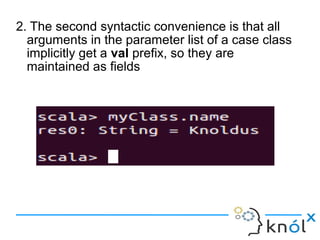
2. The second syntactic convenience is that all
  arguments in the parameter list of a case class
  implicitly get a val prefix, so they are
  maintained as fields
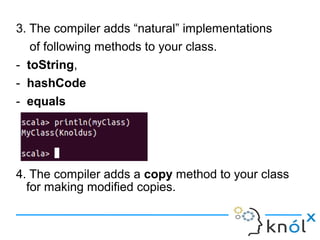
3. The compiler adds “natural” implementations
   of following methods to your class.
- toString,
- hashCode
- equals


4. The compiler adds a copy method to your class
  for making modified copies.
Pattern matching
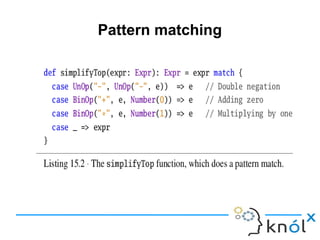
The right-hand side of simplifyTop consists of a
match expression. match corresponds to switch
in Java.

Scala :
selector match { alternatives }

Java :
switch (selector) { alternatives }
- A pattern match includes a sequence of alternatives,
  each starting with the keyword case.

- Each alternative includes a pattern and one or more
  expressions, which will be evaluated if the pattern
  matches.

- An arrow symbol => separates the pattern from the
  expressions.

- A match expression is evaluated by trying each of the
  patterns in the order they are written. The first pattern
  that matches is selected, and the part following the
  arrow is selected and executed.
Kinds of patterns
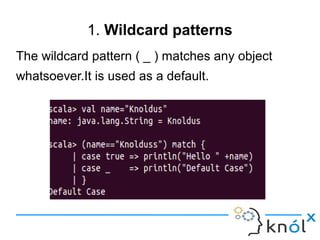
1. Wildcard patterns
The wildcard pattern ( _ ) matches any object
whatsoever.It is used as a default.
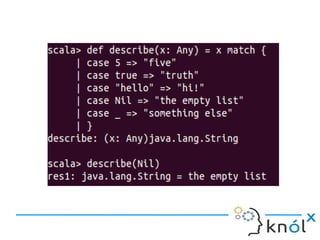
2. Constant patterns

A constant pattern matches only itself. Any literal
may be used as a constant.
For example, 5, true, and "hello" are all constant
patterns. Also, any val or singleton object can be
used as a constant.
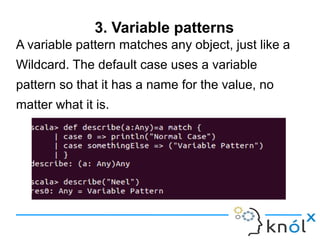
3. Variable patterns
A variable pattern matches any object, just like a
Wildcard. The default case uses a variable
pattern so that it has a name for the value, no
matter what it is.
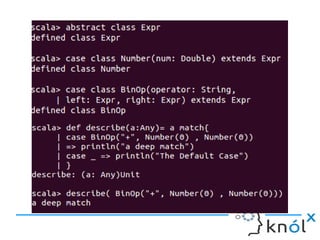
4. Constructor patterns
A constructor pattern looks like :
BinOp("+", Number(0) , Number(0))
It consists of a name BinOp and then a number
of patterns within parenthese. Assuming the name designates a
case class, such a pattern means to first check that the object
is a member of the named case class, and then to check that the
constructor parameters of the object match the extra
patterns supplied.
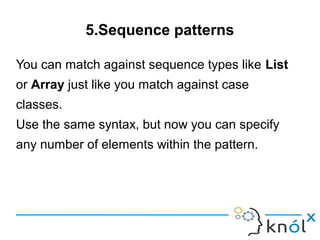
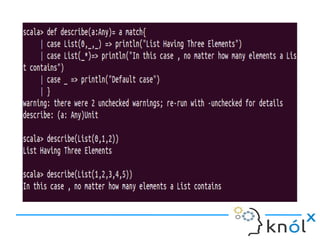
5.Sequence patterns

You can match against sequence types like List
or Array just like you match against case
classes.
Use the same syntax, but now you can specify
any number of elements within the pattern.
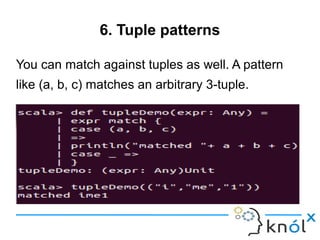
6. Tuple patterns

You can match against tuples as well. A pattern
like (a, b, c) matches an arbitrary 3-tuple.
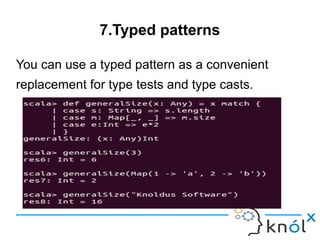
7.Typed patterns

You can use a typed pattern as a convenient
replacement for type tests and type casts.
Patterns in variable definitions

Any time you define a val or a var, you can use a
pattern instead of a simple identifier.
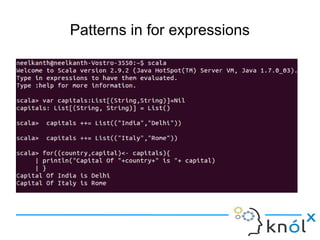
Patterns in for expressions
References

Programming in Scala by Martin Odersky
Pattern Matching - at a glance

Pattern Matching - at a glance

  • 1.
    Pattern Matching - at a glance Neelkanth Sachdeva Software Consultant Knoldus Software LLP , New Delhi neelkanthsachdeva.wordpress.com neelkanth@knoldus.com @NeelSachdeva
  • 2.
    What is Caseclass ? Before diving in to pattern matching lets talk about case classes briefly. Classes with case modifier are called case Classes. Using the modifier makes the Scala compiler add some syntactic conveniences to your class.
  • 3.
    What case modifierdoes ? 1. Adds a factory method with the name of the class. It eliminates the need of new during instantiation.
  • 4.
    2. The secondsyntactic convenience is that all arguments in the parameter list of a case class implicitly get a val prefix, so they are maintained as fields
  • 5.
    3. The compileradds “natural” implementations of following methods to your class. - toString, - hashCode - equals 4. The compiler adds a copy method to your class for making modified copies.
  • 6.
  • 7.
    The right-hand sideof simplifyTop consists of a match expression. match corresponds to switch in Java. Scala : selector match { alternatives } Java : switch (selector) { alternatives }
  • 8.
    - A patternmatch includes a sequence of alternatives, each starting with the keyword case. - Each alternative includes a pattern and one or more expressions, which will be evaluated if the pattern matches. - An arrow symbol => separates the pattern from the expressions. - A match expression is evaluated by trying each of the patterns in the order they are written. The first pattern that matches is selected, and the part following the arrow is selected and executed.
  • 9.
  • 10.
    1. Wildcard patterns Thewildcard pattern ( _ ) matches any object whatsoever.It is used as a default.
  • 11.
    2. Constant patterns Aconstant pattern matches only itself. Any literal may be used as a constant. For example, 5, true, and "hello" are all constant patterns. Also, any val or singleton object can be used as a constant.
  • 13.
    3. Variable patterns Avariable pattern matches any object, just like a Wildcard. The default case uses a variable pattern so that it has a name for the value, no matter what it is.
  • 14.
    4. Constructor patterns Aconstructor pattern looks like : BinOp("+", Number(0) , Number(0)) It consists of a name BinOp and then a number of patterns within parenthese. Assuming the name designates a case class, such a pattern means to first check that the object is a member of the named case class, and then to check that the constructor parameters of the object match the extra patterns supplied.
  • 16.
    5.Sequence patterns You canmatch against sequence types like List or Array just like you match against case classes. Use the same syntax, but now you can specify any number of elements within the pattern.
  • 18.
    6. Tuple patterns Youcan match against tuples as well. A pattern like (a, b, c) matches an arbitrary 3-tuple.
  • 19.
    7.Typed patterns You canuse a typed pattern as a convenient replacement for type tests and type casts.
  • 20.
    Patterns in variabledefinitions Any time you define a val or a var, you can use a pattern instead of a simple identifier.
  • 21.
    Patterns in forexpressions
  • 22.