BY
G.ARUN KUMAR
V.ASHOKKUMAR
 Thermal barrier coatings were originally
  developed for air craft engine applications
  in 1940
 only recently have they been modified and
  tested for use in diesel engines
 This result in reduction of metal
  temperature of the component up to 170
  deg C
 Two   coating techniques are used

         Surfacepreparation and
         Thermal spraying
   Coating of a material on a substance is made to
    serve in the specific environment
    It is possible only if the coating is adherent to
    the surface of the component
    The coating flakes off or leaves the surface,
    the entire effort will go waste
   The adhesion and other properties of the
    coating mainly depend on the surface condition
    of the substrate
 Cleaning
          To remove foreign materials like grease,
        scale, rust, dirt etc from the surface of a
        component
   roughness
       and rough enough to make the mechanical
        bonding, adequate
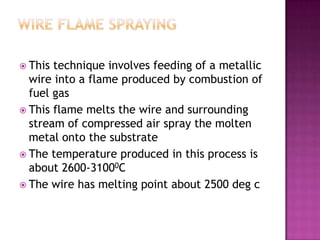
 Wire flame spraying
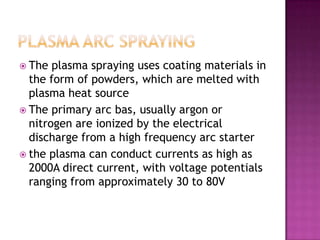
 Plasma arc spraying
 This technique involves feeding of a metallic
  wire into a flame produced by combustion of
  fuel gas
 This flame melts the wire and surrounding
  stream of compressed air spray the molten
  metal onto the substrate
 The temperature produced in this process is
  about 2600-31000C
 The wire has melting point about 2500 deg c
 The  plasma spraying uses coating materials in
  the form of powders, which are melted with
  plasma heat source
 The primary arc bas, usually argon or
  nitrogen are ionized by the electrical
  discharge from a high frequency arc starter
 the plasma can conduct currents as high as
  2000A direct current, with voltage potentials
  ranging from approximately 30 to 80V
 Prolonged  exposure to a higher temperature
  oxidizing environment may lead to coating
  failure
 thermal expansion mismatch between the
  ceramic and metallic layers and failure
  appears to be strongly influenced by bond
  coat oxidation
:


    ENGINE:
     A single cylinder water cooled Kirloskar
      engine is used for our analysis. The water at
      room temperature is allowed to pass through
      the water jacket in the engine.
     A The engine is coupled with the
      mechanical rope dynamometer for leading.
      The specification of the engine is given as
      follows.
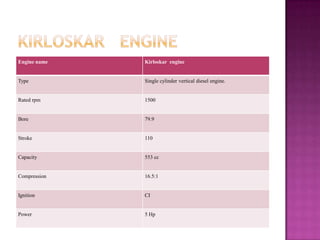
Engine name   Kirloskar engine


Type          Single cylinder vertical diesel engine.


Rated rpm     1500


Bore          79.9


Stroke        110


Capacity      553 cc


Compression   16.5:1


Ignition      CI


Power         5 Hp
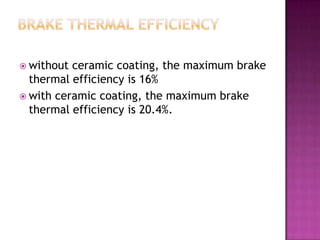
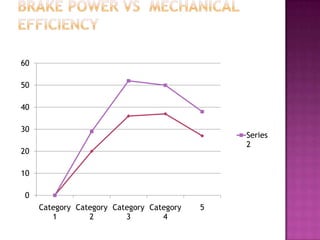
 without ceramic coating, the maximum brake
  thermal efficiency is 16%
 with ceramic coating, the maximum brake
  thermal efficiency is 20.4%.
60

50

40

30
                                               Series
                                               2
20

10

0
     Category Category Category Category   5
        1        2        3        4
 Ceramic  thermal barrier coating is a problem
  solving technology which contributes to
  almost every branch of engineering.
 thermal barrier coating allows engineering to
  improve product and performance, reduce
  maintenance time, cost, save energy and
  reduce production cost.
Paper

Paper

  • 1.
  • 2.
     Thermal barriercoatings were originally developed for air craft engine applications in 1940  only recently have they been modified and tested for use in diesel engines  This result in reduction of metal temperature of the component up to 170 deg C
  • 3.
     Two coating techniques are used Surfacepreparation and Thermal spraying
  • 4.
    Coating of a material on a substance is made to serve in the specific environment  It is possible only if the coating is adherent to the surface of the component  The coating flakes off or leaves the surface, the entire effort will go waste  The adhesion and other properties of the coating mainly depend on the surface condition of the substrate
  • 5.
     Cleaning  To remove foreign materials like grease, scale, rust, dirt etc from the surface of a component  roughness  and rough enough to make the mechanical bonding, adequate
  • 6.
     Wire flamespraying  Plasma arc spraying
  • 7.
     This techniqueinvolves feeding of a metallic wire into a flame produced by combustion of fuel gas  This flame melts the wire and surrounding stream of compressed air spray the molten metal onto the substrate  The temperature produced in this process is about 2600-31000C  The wire has melting point about 2500 deg c
  • 8.
     The plasma spraying uses coating materials in the form of powders, which are melted with plasma heat source  The primary arc bas, usually argon or nitrogen are ionized by the electrical discharge from a high frequency arc starter  the plasma can conduct currents as high as 2000A direct current, with voltage potentials ranging from approximately 30 to 80V
  • 9.
     Prolonged exposure to a higher temperature oxidizing environment may lead to coating failure  thermal expansion mismatch between the ceramic and metallic layers and failure appears to be strongly influenced by bond coat oxidation
  • 10.
    : ENGINE:  A single cylinder water cooled Kirloskar engine is used for our analysis. The water at room temperature is allowed to pass through the water jacket in the engine.  A The engine is coupled with the mechanical rope dynamometer for leading. The specification of the engine is given as follows.
  • 11.
    Engine name Kirloskar engine Type Single cylinder vertical diesel engine. Rated rpm 1500 Bore 79.9 Stroke 110 Capacity 553 cc Compression 16.5:1 Ignition CI Power 5 Hp
  • 12.
     without ceramiccoating, the maximum brake thermal efficiency is 16%  with ceramic coating, the maximum brake thermal efficiency is 20.4%.
  • 13.
    60 50 40 30 Series 2 20 10 0 Category Category Category Category 5 1 2 3 4
  • 14.
     Ceramic thermal barrier coating is a problem solving technology which contributes to almost every branch of engineering.  thermal barrier coating allows engineering to improve product and performance, reduce maintenance time, cost, save energy and reduce production cost.