0zone layer
depletion
Ozone Layer & Depletion Science
Ozone depleting
substances
like chlorofluorocarbons,
hydrocarbon, N2O,
chlorine, etc. are
responsible for the
depletion of ozone layer.
The main reasons for the ozone
hole are chlorofluorocarbons,
carbon tetrachloride, methyl
bromide and
hydrochlorofluorocarbons.
Manufactured chemicals, precisely
manufactured halocarbon solvents,
refrigerants, foam-blowing agents, and
propellants are the ozone-depleting
substances or ODS, known to be the main
cause of depletion of the ozone layer.
In 1987, the United Nations
Environment Programme (UNEP),
succeeded in forging an
agreement to freeze CFC
production at half of the 1986
levels. <br> Yes, by reducing the
continuous use of ozone depleting
chemicals, the size of the hole in
the ozone layer has reduced in
recent years.
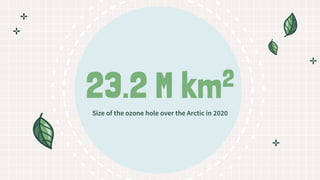
The hole in the ozone layer — the portion of
the stratosphere that protects our planet from
the sun's ultraviolet rays — is continuing to
decrease. The hole over Antarctica had an
average area of 8.91 million square miles (23.2
million square kilometers).
23.2 M km2
Size of the ozone hole over the Arctic in 2020
THANK YOU

Ozone Layer Depletion- activity 15.4.pptx

  • 1.
  • 2.
    Ozone depleting substances like chlorofluorocarbons, hydrocarbon,N2O, chlorine, etc. are responsible for the depletion of ozone layer.
  • 3.
    The main reasonsfor the ozone hole are chlorofluorocarbons, carbon tetrachloride, methyl bromide and hydrochlorofluorocarbons.
  • 4.
    Manufactured chemicals, precisely manufacturedhalocarbon solvents, refrigerants, foam-blowing agents, and propellants are the ozone-depleting substances or ODS, known to be the main cause of depletion of the ozone layer.
  • 5.
    In 1987, theUnited Nations Environment Programme (UNEP), succeeded in forging an agreement to freeze CFC production at half of the 1986 levels. <br> Yes, by reducing the continuous use of ozone depleting chemicals, the size of the hole in the ozone layer has reduced in recent years.
  • 6.
    The hole inthe ozone layer — the portion of the stratosphere that protects our planet from the sun's ultraviolet rays — is continuing to decrease. The hole over Antarctica had an average area of 8.91 million square miles (23.2 million square kilometers).
  • 7.
    23.2 M km2 Sizeof the ozone hole over the Arctic in 2020
  • 8.