WELCOME
TO OUR PRESENTATION
ON
OWN VILLAGE STUDY(OVS) PROGRAM
WE ARE GROUP-12 and
supervised by
mr. swapan kumar nath
deputy director(Research and documentation)
Naem, dhaka.
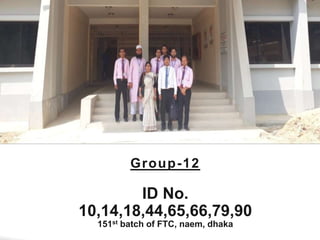
Group-12
ID No.
10,14,18,44,65,66,79,90
151st batch of FTC, naem, dhaka
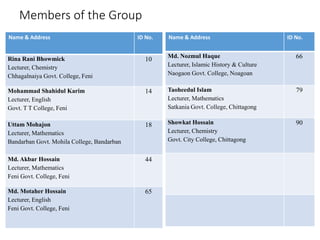
Members of the Group
Name & Address ID No.
Rina Rani Bhowmick
Lecturer, Chemistry
Chhagalnaiya Govt. College, Feni
10
Mohammad Shahidul Karim
Lecturer, English
Govt. T T College, Feni
14
Uttam Mohajon
Lecturer, Mathematics
Bandarban Govt. Mohila College, Bandarban
18
Md. Akbar Hossain
Lecturer, Mathematics
Feni Govt. College, Feni
44
Md. Motaher Hossain
Lecturer, English
Feni Govt. College, Feni
65
Name & Address ID No.
Md. Nozmul Haque
Lecturer, Islamic History & Culture
Naogaon Govt. College, Noagoan
66
Taoheedul Islam
Lecturer, Mathematics
Satkania Govt. College, Chittagong
79
Showkat Hossain
Lecturer, Chemistry
Govt. City College, Chittagong
90
Introduction
Bangladesh is a very small country where nearly 80% of her
people live in village. Though in village most of the people are
not educated but education there can play a vital role in
developing the socio-economic condition, in gender disparity
and in every sector.
Hence this study is conducted mainly to understand and realize
the real situation of our country. As a member of civil service,
we took oath to serve the people and to develop it from
developing to developed country within 2041.
Objectives Of The Study
• To know the influence of education on socio-economic development of
this country.
• To observe the rural development, employment, housing and public
health.
• To know about the recreation and communication facilities of rural
areas.
• To know about the life style of villagers in Bangladesh.
• To know about the attitudes towards women empowerment in the rustic
society.
• To Achieve practical knowledge of writing research paper.
• To identity rural problems and prescribe remedial measures.
• And finally to have a talk with one of the freedom fighters for the
sharing the feelings and experience during the liberation war.
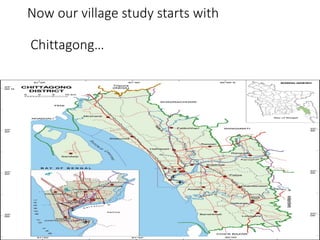
Now our village study starts with
Chittagong…
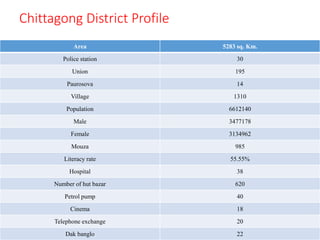
Chittagong District Profile
Area 5283 sq. Km.
Police station 30
Union 195
Paurosova 14
Village 1310
Population 6612140
Male 3477178
Female 3134962
Mouza 985
Literacy rate 55.55%
Hospital 38
Number of hut bazar 620
Petrol pump 40
Cinema 18
Telephone exchange 20
Dak banglo 22
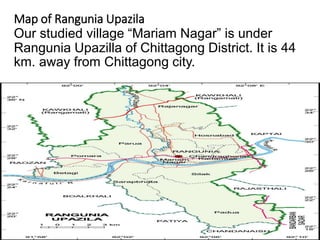
Map of Rangunia Upazila
Our studied village “Mariam Nagar” is under
Rangunia Upazilla of Chittagong District. It is 44
km. away from Chittagong city.
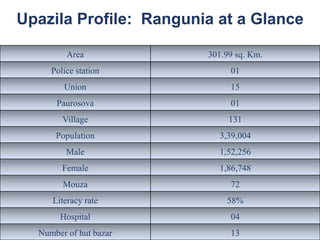
Upazila Profile: Rangunia at a Glance
Area 301.99 sq. Km.
Police station 01
Union 15
Paurosova 01
Village 131
Population 3,39,004
Male 1,52,256
Female 1,86,748
Mouza 72
Literacy rate 58%
Hospital 04
Number of hut bazar 13
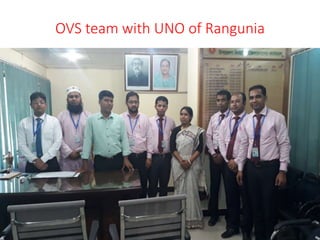
OVS team with UNO of Rangunia
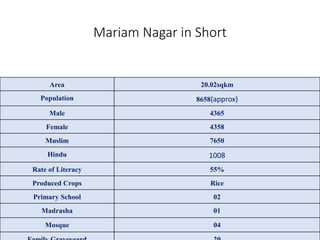
Mariam Nagar in Short
Area 20.02sqkm
Population 8658(approx)
Male 4365
Female 4358
Muslim 7650
Hindu 1008
Rate of Literacy 55%
Produced Crops Rice
Primary School 02
Madrasha 01
Mosque 04
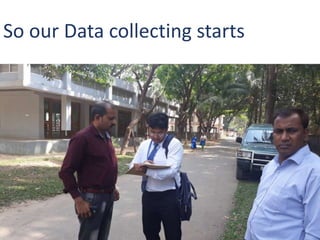
So our Data collecting starts
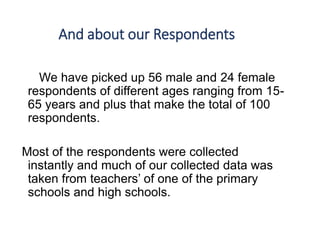
And about our Respondents
We have picked up 56 male and 24 female
respondents of different ages ranging from 15-
65 years and plus that make the total of 100
respondents.
Most of the respondents were collected
instantly and much of our collected data was
taken from teachers’ of one of the primary
schools and high schools.
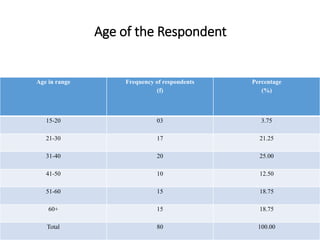
Age in range Frequency of respondents
(f)
Percentage
(%)
15-20 03 3.75
21-30 17 21.25
31-40 20 25.00
41-50 10 12.50
51-60 15 18.75
60+ 15 18.75
Total 80 100.00
Age of the Respondent
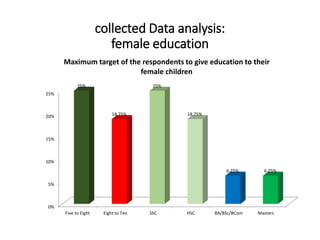
collected Data analysis:
female education
0%
5%
10%
15%
20%
25%
Five to Eight Eight to Ten SSC HSC BA/BSc/BCom Masters
25%
18.75%
25%
18.75%
6.25% 6.25%
Maximum target of the respondents to give education to their
female children
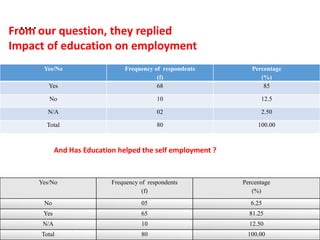
….From our question, they replied
Impact of education on employment
Yes/No Frequency of respondents
(f)
Percentage
(%)
Yes 68 85
No 10 12.5
N/A 02 2.50
Total 80 100.00
And Has Education helped the self employment ?
Yes/No Frequency of respondents
(f)
Percentage
(%)
No 05 6.25
Yes 65 81.25
N/A 10 12.50
Total 80 100.00
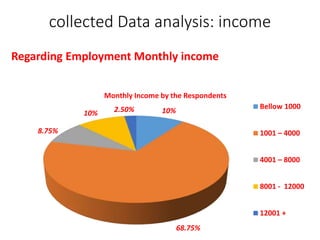
collected Data analysis: income
10%
68.75%
8.75%
10% 2.50%
Monthly Income by the Respondents
Bellow 1000
1001 – 4000
4001 – 8000
8001 - 12000
12001 +
Regarding Employment Monthly income
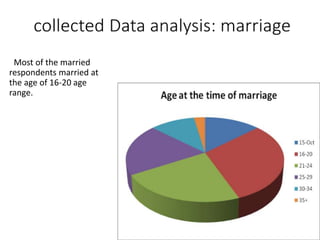
Most of the married
respondents married at
the age of 16-20 age
range.
collected Data analysis:
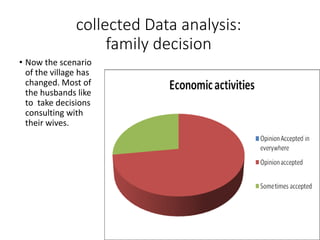
family decision
• Now the scenario
of the village has
changed. Most of
the husbands like
to take decisions
consulting with
their wives.
collected Data analysis:
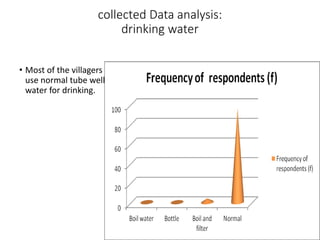
drinking water
• Types of using
drinking water
• Most of the villagers
use normal tube well
water for drinking.
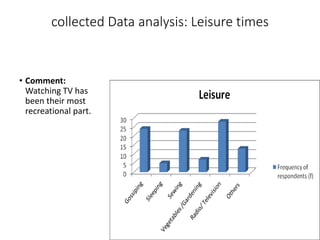
collected Data analysis: Leisure times
• Spending leisure
time:
• Comment:
Watching TV has
been their most
recreational part.
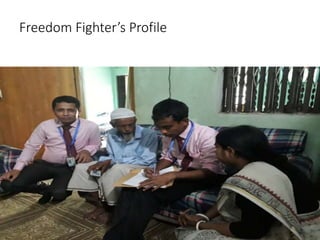
Freedom Fighter’s Profile
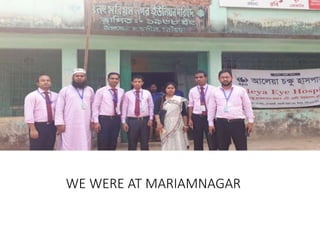
WE WERE AT MARIAMNAGAR
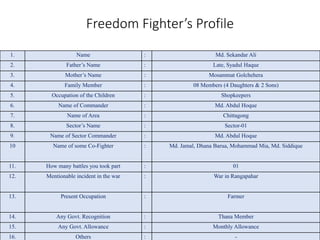
Freedom Fighter’s Profile
1. Name : Md. Sekandar Ali
2. Father’s Name : Late, Syadul Haque
3. Mother’s Name : Mosammat Golchehera
4. Family Member : 08 Members (4 Daughters & 2 Sons)
5. Occupation of the Children : Shopkeepers
6. Name of Commander : Md. Abdul Hoque
7. Name of Area : Chittagong
8. Sector’s Name : Sector-01
9. Name of Sector Commander : Md. Abdul Hoque
10 Name of some Co-Fighter : Md. Jamal, Dhana Barua, Mohammad Mia, Md. Siddique
11. How many battles you took part : 01
12. Mentionable incident in the war : War in Rangapahar
13. Present Occupation : Farmer
14. Any Govt. Recognition : Thana Member
15. Any Govt. Allowance : Monthly Allowance
16. Others : -
Findings from the village
1. Our villagers’ need of education
2. Participation of women in every sector
3. Self employment be highly encouraged
4. Lack of social integration in important sector
5. Dissemination of information among villagers
6. School going children are increasing
7. Tendency not to allow early marriage in both male and female
8. Social security be ensured
9. Knowledge regarding family planning
10. Recreational facilities be focused, ect.
Recommendations
• At least one college should be established immediately in this village.
• A large playground is very essential there.
• Recreational facilities should be increased.
• Availability of doctors and medicine should be enhanced in the village.
• Healthcare of the community clinic in the village should be ensured.
• Income generating activities should be developed.
Recommendations
• Women should be encouraged to take part in social function, local
judiciary system and local political system.
• Women education and empowerment should be increased Various types
of vocational and technical training facilities should be increased for
income generating activities.
• Women should take part in social development activities.
• Family planning activities should be increased
Limitations of the study
• The study is very difficult to conduct only within 05 days. Besides, some
other limitations are as follows:
1. Only 80 villagers were interviewed which couldn't provide a clear
impact.
2. Lack of co-ordination is observed in government and Non-
Government Organizations.
3. As the study was conducted in office time, so service holders were
not available in house.
4. Time constraints also available.
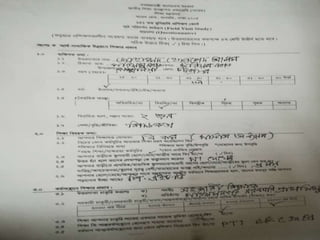
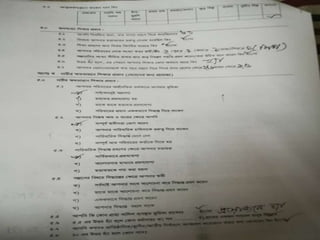
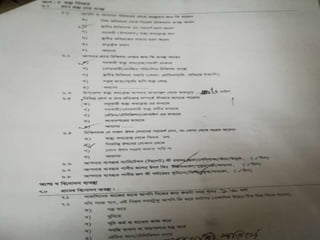
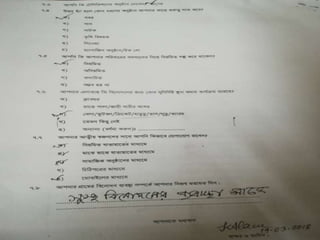
ONE SAMPLE QUESTIONNIARE
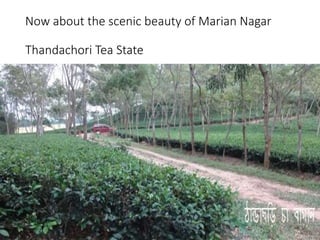
Now about the scenic beauty of Marian Nagar
Thandachori Tea State
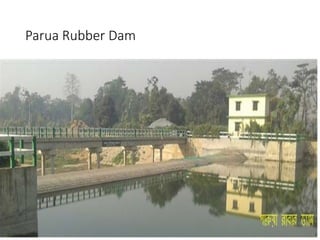
Parua Rubber Dam
Conclusion
Village study program opens the gate to come close with the rural
people. It is a great opportunity for the civil servants like us to come in
touch of nature and simple and easy going rural people. From this
program we have come to know the real picture of a village and its
inhabitants. We think this Mariamnagar village represents the all
villagers of Bangladesh. This is a real chance to be acquainted with the
social, political, economic and cultural life of rural people. These rural
people are deprived of many modern facilities. Women empowerment,
educational facilities, health facilities, recreational facilities should be
increased to improve the socio-economic condition of rural people. We,
the civil servants have moral responsibilities to make the people
conscious and contribute to the overall development of the life of rural
people.
Thank you

Ovsctg [autosaved]

  • 1.
    WELCOME TO OUR PRESENTATION ON OWNVILLAGE STUDY(OVS) PROGRAM
  • 2.
    WE ARE GROUP-12and supervised by mr. swapan kumar nath deputy director(Research and documentation) Naem, dhaka.
  • 3.
  • 4.
    Members of theGroup Name & Address ID No. Rina Rani Bhowmick Lecturer, Chemistry Chhagalnaiya Govt. College, Feni 10 Mohammad Shahidul Karim Lecturer, English Govt. T T College, Feni 14 Uttam Mohajon Lecturer, Mathematics Bandarban Govt. Mohila College, Bandarban 18 Md. Akbar Hossain Lecturer, Mathematics Feni Govt. College, Feni 44 Md. Motaher Hossain Lecturer, English Feni Govt. College, Feni 65 Name & Address ID No. Md. Nozmul Haque Lecturer, Islamic History & Culture Naogaon Govt. College, Noagoan 66 Taoheedul Islam Lecturer, Mathematics Satkania Govt. College, Chittagong 79 Showkat Hossain Lecturer, Chemistry Govt. City College, Chittagong 90
  • 5.
    Introduction Bangladesh is avery small country where nearly 80% of her people live in village. Though in village most of the people are not educated but education there can play a vital role in developing the socio-economic condition, in gender disparity and in every sector. Hence this study is conducted mainly to understand and realize the real situation of our country. As a member of civil service, we took oath to serve the people and to develop it from developing to developed country within 2041.
  • 6.
    Objectives Of TheStudy • To know the influence of education on socio-economic development of this country. • To observe the rural development, employment, housing and public health. • To know about the recreation and communication facilities of rural areas. • To know about the life style of villagers in Bangladesh. • To know about the attitudes towards women empowerment in the rustic society. • To Achieve practical knowledge of writing research paper. • To identity rural problems and prescribe remedial measures. • And finally to have a talk with one of the freedom fighters for the sharing the feelings and experience during the liberation war.
  • 7.
    Now our villagestudy starts with Chittagong…
  • 8.
    Chittagong District Profile Area5283 sq. Km. Police station 30 Union 195 Paurosova 14 Village 1310 Population 6612140 Male 3477178 Female 3134962 Mouza 985 Literacy rate 55.55% Hospital 38 Number of hut bazar 620 Petrol pump 40 Cinema 18 Telephone exchange 20 Dak banglo 22
  • 9.
    Map of RanguniaUpazila Our studied village “Mariam Nagar” is under Rangunia Upazilla of Chittagong District. It is 44 km. away from Chittagong city.
  • 10.
    Upazila Profile: Ranguniaat a Glance Area 301.99 sq. Km. Police station 01 Union 15 Paurosova 01 Village 131 Population 3,39,004 Male 1,52,256 Female 1,86,748 Mouza 72 Literacy rate 58% Hospital 04 Number of hut bazar 13
  • 11.
    OVS team withUNO of Rangunia
  • 12.
    Mariam Nagar inShort Area 20.02sqkm Population 8658(approx) Male 4365 Female 4358 Muslim 7650 Hindu 1008 Rate of Literacy 55% Produced Crops Rice Primary School 02 Madrasha 01 Mosque 04
  • 13.
    So our Datacollecting starts
  • 14.
    And about ourRespondents We have picked up 56 male and 24 female respondents of different ages ranging from 15- 65 years and plus that make the total of 100 respondents. Most of the respondents were collected instantly and much of our collected data was taken from teachers’ of one of the primary schools and high schools.
  • 15.
    Age in rangeFrequency of respondents (f) Percentage (%) 15-20 03 3.75 21-30 17 21.25 31-40 20 25.00 41-50 10 12.50 51-60 15 18.75 60+ 15 18.75 Total 80 100.00 Age of the Respondent
  • 16.
    collected Data analysis: femaleeducation 0% 5% 10% 15% 20% 25% Five to Eight Eight to Ten SSC HSC BA/BSc/BCom Masters 25% 18.75% 25% 18.75% 6.25% 6.25% Maximum target of the respondents to give education to their female children
  • 17.
    ….From our question,they replied Impact of education on employment Yes/No Frequency of respondents (f) Percentage (%) Yes 68 85 No 10 12.5 N/A 02 2.50 Total 80 100.00 And Has Education helped the self employment ? Yes/No Frequency of respondents (f) Percentage (%) No 05 6.25 Yes 65 81.25 N/A 10 12.50 Total 80 100.00
  • 18.
    collected Data analysis:income 10% 68.75% 8.75% 10% 2.50% Monthly Income by the Respondents Bellow 1000 1001 – 4000 4001 – 8000 8001 - 12000 12001 + Regarding Employment Monthly income
  • 19.
    Most of themarried respondents married at the age of 16-20 age range.
  • 20.
    collected Data analysis: familydecision • Now the scenario of the village has changed. Most of the husbands like to take decisions consulting with their wives.
  • 21.
    collected Data analysis: drinkingwater • Types of using drinking water • Most of the villagers use normal tube well water for drinking.
  • 22.
    collected Data analysis:Leisure times • Spending leisure time: • Comment: Watching TV has been their most recreational part.
  • 23.
  • 24.
    WE WERE ATMARIAMNAGAR
  • 25.
    Freedom Fighter’s Profile 1.Name : Md. Sekandar Ali 2. Father’s Name : Late, Syadul Haque 3. Mother’s Name : Mosammat Golchehera 4. Family Member : 08 Members (4 Daughters & 2 Sons) 5. Occupation of the Children : Shopkeepers 6. Name of Commander : Md. Abdul Hoque 7. Name of Area : Chittagong 8. Sector’s Name : Sector-01 9. Name of Sector Commander : Md. Abdul Hoque 10 Name of some Co-Fighter : Md. Jamal, Dhana Barua, Mohammad Mia, Md. Siddique 11. How many battles you took part : 01 12. Mentionable incident in the war : War in Rangapahar 13. Present Occupation : Farmer 14. Any Govt. Recognition : Thana Member 15. Any Govt. Allowance : Monthly Allowance 16. Others : -
  • 26.
    Findings from thevillage 1. Our villagers’ need of education 2. Participation of women in every sector 3. Self employment be highly encouraged 4. Lack of social integration in important sector 5. Dissemination of information among villagers 6. School going children are increasing 7. Tendency not to allow early marriage in both male and female 8. Social security be ensured 9. Knowledge regarding family planning 10. Recreational facilities be focused, ect.
  • 27.
    Recommendations • At leastone college should be established immediately in this village. • A large playground is very essential there. • Recreational facilities should be increased. • Availability of doctors and medicine should be enhanced in the village. • Healthcare of the community clinic in the village should be ensured. • Income generating activities should be developed.
  • 28.
    Recommendations • Women shouldbe encouraged to take part in social function, local judiciary system and local political system. • Women education and empowerment should be increased Various types of vocational and technical training facilities should be increased for income generating activities. • Women should take part in social development activities. • Family planning activities should be increased
  • 29.
    Limitations of thestudy • The study is very difficult to conduct only within 05 days. Besides, some other limitations are as follows: 1. Only 80 villagers were interviewed which couldn't provide a clear impact. 2. Lack of co-ordination is observed in government and Non- Government Organizations. 3. As the study was conducted in office time, so service holders were not available in house. 4. Time constraints also available.

  • 30.
  • 35.
    Now about thescenic beauty of Marian Nagar Thandachori Tea State
  • 36.
  • 37.
    Conclusion Village study programopens the gate to come close with the rural people. It is a great opportunity for the civil servants like us to come in touch of nature and simple and easy going rural people. From this program we have come to know the real picture of a village and its inhabitants. We think this Mariamnagar village represents the all villagers of Bangladesh. This is a real chance to be acquainted with the social, political, economic and cultural life of rural people. These rural people are deprived of many modern facilities. Women empowerment, educational facilities, health facilities, recreational facilities should be increased to improve the socio-economic condition of rural people. We, the civil servants have moral responsibilities to make the people conscious and contribute to the overall development of the life of rural people.
  • 38.