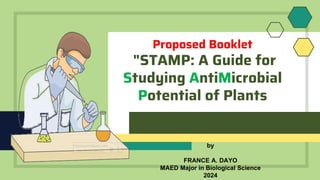
Proposed Booklet
"STAMP: A Guide for
Studying AntiMicrobial
Potential of Plants
by
FRANCE A. DAYO
MAED Major in Biological Science
2024
Table Of Contents
1. Understanding Antimicrobial Potential
2. Collection and Preparation of Plant Samples
3. Different Ways on how to extract plants
4. Methods for Testing Antimicrobial Activity
5. Data Recording and Analysis
6. Safety and Ethical Considerations
7. Activities
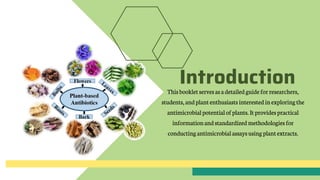
Introduction
Thisbookletserves asadetailed guideforresearchers,
students, andplantenthusiasts interestedinexploringthe
antimicrobialpotentialofplants. Itprovidespractical
informationand standardized methodologiesfor
conductingantimicrobialassays usingplantextracts.
Importance of Studying Antimicrobial Potential
of Plants
With the global rise in antibiotic-resistant pathogens, there is a critical need to
discover new antimicrobial agents. Plants, used traditionally for medicinal
purposes, represent a vast potential source of such agents. Studying these
properties can contribute to developing new, effective antimicrobial treatments.
Overview of Antimicrobial Agents
Antimicrobial agents are substances that kill or inhibit the growth of
microorganisms. They include antibiotics, antifungals, antivirals, and
antiseptics, each targeting different types of pathogens.
Infections and diseases may be caused by different types of organisms like
bacteria, fungi, and viruses, etc., in humans and animals. The drug used to
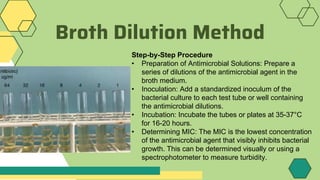
Understanding
Antimicrobial
Potential
Antimicrobial susceptibility is an appropriate test
whenever a specimen is collected from a suspected
infection site. In the face of active infection, this
information, along with the Gram stain and
culture, allows the physician to select an
appropriate antimicrobial agent to treat an
infection.
Definitions and Key Concepts
Antimicrobial: Substances that
kill or inhibit the growth of
microorganisms, including
bacteria, fungi, and viruses.
They play a crucial role in
preventing and treating
Microorganisms are microscopic
organisms that can exist as single
cells or in colonies. They are diverse
and include bacteria, viruses, fungi,
protozoa, and algae. Some
microorganisms are harmless or
Bacteria: Single-celled
organisms that can be
found in various
environments. They can
be beneficial (e.g., gut
microbiota) or harmful
Types of Microorganisms
BACTERIA
Gram-positive bacteria: Bacteria with thick peptidoglycan cell walls that retain
a purple color during the Gram staining process
Examples:
Staphylococcus Enterococcus
Corynebacterium Streptococcus pyogenes
Streptococcus agalactiae
Nocardia Streptomyces
High GC gram+ Streptococcus mutans
Firmicutes
Cutibacterium acnes Streptococcus sanguinis
Actinomyces bovis
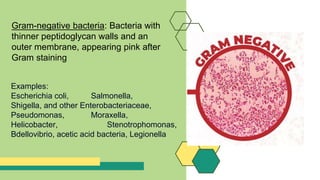
Gram-negative bacteria: Bacteria with
thinner peptidoglycan walls and an
outer membrane, appearing pink after
Gram staining
Examples:
Escherichia coli, Salmonella,
Shigella, and other Enterobacteriaceae,
Pseudomonas, Moraxella,
Helicobacter, Stenotrophomonas,
Bdellovibrio, acetic acid bacteria, Legionella
Detailed Mechanisms
of Action
1. Inhibition of Cell Wall Synthesis- Antibiotics like beta-lactams (penicillins,
cephalosporins) and glycopeptides (vancomycin) prevent peptidoglycan synthesis,
weakening bacterialcell walls andcausing cell lysis.
2. Disruption of Cell Membrane Function- Antifungal agentslikepolyenes
(amphotericinB) bindto ergosterol infungal cell membranes, increasing permeabilityand
leading tocell death.
3. Inhibition of Protein Synthesis- Antibioticslike aminoglycosides (gentamicin) and
macrolides (erythromycin) bindtobacterial ribosomes, preventing protein synthesis.
Antiviral drugs likeinterferons enhance the immune response toviralinfections, inhibiting
viral proteinsynthesis.
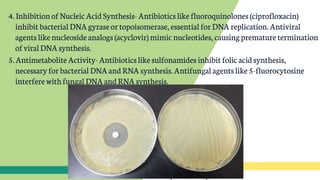
4.Inhibitionof Nucleic Acid Synthesis- Antibioticslikefluoroquinolones (ciprofloxacin)
inhibit bacterialDNAgyraseor topoisomerase, essential forDNA replication.Antiviral
agentslikenucleoside analogs (acyclovir)mimic nucleotides, causing prematuretermination
ofviralDNA synthesis.
5.Antimetabolite Activity-Antibiotics like sulfonamides inhibitfolicacidsynthesis,
necessary forbacterialDNA and RNA synthesis. Antifungal agentslike5-fluorocytosine
interferewithfungal DNAand RNA synthesis.
Understanding the various types of
microorganisms and the mechanisms by which
antimicrobial agents act is crucial for effectively
treating infections. Different antimicrobials target
specific components or processes of
microorganisms, making it essential to choose the
appropriate agent based on the type of infection
and the causative microorganism.
Collection and
Preparation of
Plant Samples
Guidelines for Plant Collection
Steps One Steps Two
Steps Three Steps Four
Selection of Plant Material
Choose healthy plants free from disease or
pests.
Collect parts of the plant that are relevant to the
study (e.g., leaves, stems, roots, flowers).
Timing of Collection:
•Harvest plants at the optimal time of day (often
early morning) and season, depending on the
plant's growth cycle and the compounds of
interest.
Location and Environmental Considerations:
Collect samples from various locations to
ensure genetic and chemical diversity.
Avoid areas exposed to pollution, pesticides, or
heavy metals.
Ethical and Legal Considerations:
Obtain necessary permissions and follow local
regulations and guidelines for plant collection.
Practice sustainable collection methods to
avoid depleting natural populations.
Identification and
Documentation
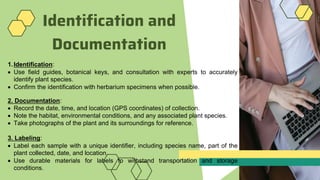
1.Identification:
 Use field guides, botanical keys, and consultation with experts to accurately
identify plant species.
 Confirm the identification with herbarium specimens when possible.
2. Documentation:
 Record the date, time, and location (GPS coordinates) of collection.
 Note the habitat, environmental conditions, and any associated plant species.
 Take photographs of the plant and its surroundings for reference.
3. Labeling:
 Label each sample with a unique identifier, including species name, part of the
plant collected, date, and location.
 Use durable materials for labels to withstand transportation and storage
conditions.
Basic Preparation Techniques
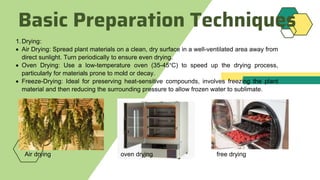
1.Drying:
 Air Drying: Spread plant materials on a clean, dry surface in a well-ventilated area away from
direct sunlight. Turn periodically to ensure even drying.
 Oven Drying: Use a low-temperature oven (35-45°C) to speed up the drying process,
particularly for materials prone to mold or decay.
 Freeze-Drying: Ideal for preserving heat-sensitive compounds, involves freezing the plant
material and then reducing the surrounding pressure to allow frozen water to sublimate.
Air drying oven drying free drying
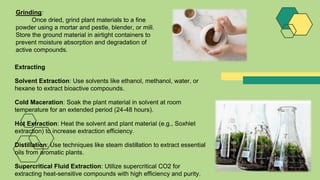
Grinding:
Once dried, grind plant materials to a fine
powder using a mortar and pestle, blender, or mill.
Store the ground material in airtight containers to
prevent moisture absorption and degradation of
active compounds.
Extracting
Solvent Extraction: Use solvents like ethanol, methanol, water, or
hexane to extract bioactive compounds.
Cold Maceration: Soak the plant material in solvent at room
temperature for an extended period (24-48 hours).
Hot Extraction: Heat the solvent and plant material (e.g., Soxhlet
extraction) to increase extraction efficiency.
Distillation: Use techniques like steam distillation to extract essential
oils from aromatic plants.
Supercritical Fluid Extraction: Utilize supercritical CO2 for
extracting heat-sensitive compounds with high efficiency and purity.
Proper collection and preparation of plant samples
are essential for reliable and reproducible research
outcomes. Following guidelines for ethical
collection, accurate identification, and thorough
documentation ensures the integrity of the
samples. Appropriate preparation techniques,
including drying, grinding, and extracting, preserve
the bioactive compounds and make them available
for further analysis and application.
1. Whatarethekeyconsiderations whencollectingplantsamples
forantimicrobial research?
2. Whyisitimportanttoproperlycleanandprepareplantsamples
beforeextraction?
Activity
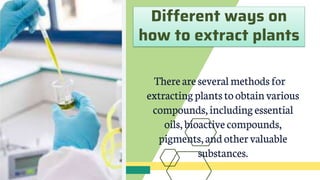
Different ways on
how to extract plants
Thereareseveralmethodsfor
extractingplantstoobtainvarious
compounds,including essential
oils,bioactive compounds,
pigments,andothervaluable
substances.
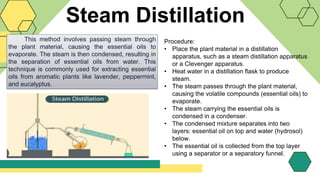
Steam Distillation
This method involves passing steam through
the plant material, causing the essential oils to
evaporate. The steam is then condensed, resulting in
the separation of essential oils from water. This
technique is commonly used for extracting essential
oils from aromatic plants like lavender, peppermint,
and eucalyptus.
Procedure:
• Place the plant material in a distillation
apparatus, such as a steam distillation apparatus
or a Clevenger apparatus.
• Heat water in a distillation flask to produce
steam.
• The steam passes through the plant material,
causing the volatile compounds (essential oils) to
evaporate.
• The steam carrying the essential oils is
condensed in a condenser.
• The condensed mixture separates into two
layers: essential oil on top and water (hydrosol)
below.
• The essential oil is collected from the top layer
using a separator or a separatory funnel.
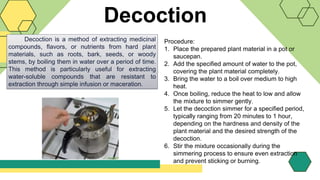
Decoction
Decoction is a method of extracting medicinal
compounds, flavors, or nutrients from hard plant
materials, such as roots, bark, seeds, or woody
stems, by boiling them in water over a period of time.
This method is particularly useful for extracting
water-soluble compounds that are resistant to
extraction through simple infusion or maceration.
Procedure:
1. Place the prepared plant material in a pot or
saucepan.
2. Add the specified amount of water to the pot,
covering the plant material completely.
3. Bring the water to a boil over medium to high
heat.
4. Once boiling, reduce the heat to low and allow
the mixture to simmer gently.
5. Let the decoction simmer for a specified period,
typically ranging from 20 minutes to 1 hour,
depending on the hardness and density of the
plant material and the desired strength of the
decoction.
6. Stir the mixture occasionally during the
simmering process to ensure even extraction
and prevent sticking or burning.
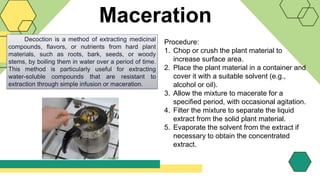
Maceration
Decoction is a method of extracting medicinal
compounds, flavors, or nutrients from hard plant
materials, such as roots, bark, seeds, or woody
stems, by boiling them in water over a period of time.
This method is particularly useful for extracting
water-soluble compounds that are resistant to
extraction through simple infusion or maceration.
Procedure:
1. Chop or crush the plant material to
increase surface area.
2. Place the plant material in a container and
cover it with a suitable solvent (e.g.,
alcohol or oil).
3. Allow the mixture to macerate for a
specified period, with occasional agitation.
4. Filter the mixture to separate the liquid
extract from the solid plant material.
5. Evaporate the solvent from the extract if
necessary to obtain the concentrated
extract.
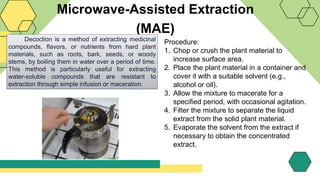
Microwave-Assisted Extraction
(MAE)
Decoction is a method of extracting medicinal
compounds, flavors, or nutrients from hard plant
materials, such as roots, bark, seeds, or woody
stems, by boiling them in water over a period of time.
This method is particularly useful for extracting
water-soluble compounds that are resistant to
extraction through simple infusion or maceration.
Procedure:
1. Chop or crush the plant material to
increase surface area.
2. Place the plant material in a container and
cover it with a suitable solvent (e.g.,
alcohol or oil).
3. Allow the mixture to macerate for a
specified period, with occasional agitation.
4. Filter the mixture to separate the liquid
extract from the solid plant material.
5. Evaporate the solvent from the extract if
necessary to obtain the concentrated
extract.
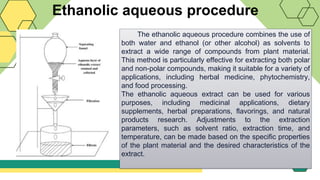
Ethanolic aqueous procedure
The ethanolic aqueous procedure combines the use of
both water and ethanol (or other alcohol) as solvents to
extract a wide range of compounds from plant material.
This method is particularly effective for extracting both polar
and non-polar compounds, making it suitable for a variety of
applications, including herbal medicine, phytochemistry,
and food processing.
The ethanolic aqueous extract can be used for various
purposes, including medicinal applications, dietary
supplements, herbal preparations, flavorings, and natural
products research. Adjustments to the extraction
parameters, such as solvent ratio, extraction time, and
temperature, can be made based on the specific properties
of the plant material and the desired characteristics of the
extract.
Ethanolic aqueous procedure
Preparation of Plant Material:
• Clean the plant material thoroughly to remove any dirt, debris, or contaminants.
• Depending on the nature of the plant material, it may be chopped, crushed, ground, or powdered to
increase the surface area for extraction.
Selection of Solvents:
• Determine the appropriate ratio of water to ethanol based on the solubility of the desired compounds.
• For example, polar compounds such as phenolic compounds, flavonoids, and water-soluble vitamins are
better extracted with water, while non-polar compounds such as essential oils, terpenoids, and lipids are
better extracted with ethanol.
Extraction Process:
• Combine the prepared plant material with a mixture of water and ethanol in a suitable container or vessel.
• The ratio of water to ethanol can vary depending on the specific plant material and desired extract
composition. A common ratio is 1:1 (equal parts water and ethanol), but this can be adjusted based on the
solubility of the target compounds.
• Allow the mixture to macerate or soak for a specified period, typically ranging from a few hours to several
days, with occasional agitation or stirring.
• The duration of maceration will depend on factors such as the hardness of the plant material, the desired
strength of the extract, and the extraction efficiency of the solvent system.
Ethanolic aqueous procedure
Filtration and Separation:
• After maceration, filter the mixture to separate the liquid extract from the solid plant material.
• Use a fine mesh sieve, cheesecloth, or filter paper to remove any particulate matter.
• Press or squeeze the plant material to extract as much liquid as possible.
• The resulting filtrate is the ethanolic aqueous extract containing a combination of water-
soluble and ethanol-soluble compounds.
Concentration and Storage:
• Optionally, concentrate the extract using methods such as rotary evaporation, freeze-drying,
or vacuum distillation to remove excess solvent and increase the potency of the extract.
• Transfer the concentrated extract to a clean, airtight container, such as a glass bottle or jar,
for storage.
• Store the extract in a cool, dark place away from direct sunlight and heat to maintain its
stability and prolong its shelf life.
Oil as Solvents
Using oil as a solvent for extracting compounds from plant material is a common
technique, particularly for extracting lipophilic (fat-soluble) compounds such as
essential oils, fatty acids, and certain bioactive compounds. Oil extraction is often
referred to as maceration or infusion, and it's a gentle method suitable for delicate
plant materials that may degrade under harsher extraction conditions. Here's a
procedure for using oil as a solvent
Selection of Solvent Oil:
Choose a suitable solvent oil based on factors such as the desired compounds to be
extracted, the aroma or flavor profile desired, and the intended use of the extract.
Commonly used solvent oils include olive oil, coconut oil, almond oil, jojoba oil, and
grapeseed oil. Each oil may impart its own unique characteristics to the final extract.
Oil as Solvents
Extraction Process:
• Place the prepared plant material in a clean, dry container or jar.
• Pour the selected solvent oil over the plant material, ensuring that it is completely submerged.
• Seal the container tightly with a lid or cover to prevent evaporation and oxidation.
• Allow the mixture to macerate or steep for a specified period, typically ranging from several
days to several weeks, depending on the desired strength and flavor profile of the extract.
• Agitate or stir the mixture occasionally to promote extraction and ensure even distribution of
the plant compounds in the solvent oil.
Filtration and Separation:
• After maceration, strain the mixture through a fine mesh sieve, cheesecloth, or muslin cloth to
separate the liquid extract from the solid plant material.
• Press or squeeze the plant material to extract as much liquid as possible.
• Discard the spent plant material, as most of the desired compounds will now be in the solvent
oil.
1. Nametwocommonmethodsusedtoextract bioactive
compoundsfromplants.
2. Brieflydescribetheprinciplebehindeachextractionmethod
mentioned.
Activity
Methods for Testing
Antimicrobial Activity
Testing antimicrobial activity is essential in microbiology to
determine the effectiveness of substances against pathogens.
Here, we'll explore three common methods: Disk Diffusion,
Broth Dilution, and Agar Well Diffusion.
Disk Diffusion Method
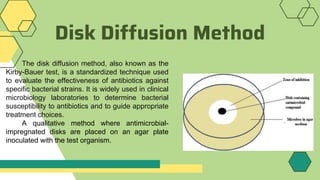
The disk diffusion method, also known as the
Kirby-Bauer test, is a standardized technique used
to evaluate the effectiveness of antibiotics against
specific bacterial strains. It is widely used in clinical
microbiology laboratories to determine bacterial
susceptibility to antibiotics and to guide appropriate
treatment choices.
A qualitative method where antimicrobial-
impregnated disks are placed on an agar plate
inoculated with the test organism.
Disk Diffusion Method
Materials Needed
Mueller-Hinton agar plates Sterile cotton swabs
Bacterial culture (test organism) Sterile forceps
Antibiotic-impregnated disks Incubator
Ruler or caliper
Step-by-Step Procedure
Preparation of Agar Plates: Pour Mueller-Hinton agar into Petri dishes and allow them to solidify.
Inoculation of Plates: Dip a sterile cotton swab into a standardized bacterial suspension and evenly
spread it across the entire surface of the agar plate.
Application of Disks: Using sterile forceps, place antibiotic-impregnated disks onto the surface of the
inoculated agar plate. Gently press the disks to ensure contact.
Incubation: Invert the plates and incubate them at 35-37°C for 16-24 hours.
Interpretation of Results: Measure the diameter of the zone of inhibition around each disk using a ruler
or caliper. Compare the measurements to standardized charts to determine the susceptibility of the
organism to the antibiotics.
Broth Dilution Method
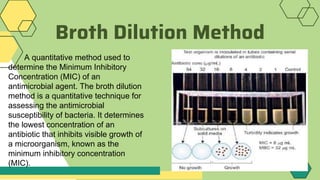
A quantitative method used to
determine the Minimum Inhibitory
Concentration (MIC) of an
antimicrobial agent. The broth dilution
method is a quantitative technique for
assessing the antimicrobial
susceptibility of bacteria. It determines
the lowest concentration of an
antibiotic that inhibits visible growth of
a microorganism, known as the
minimum inhibitory concentration
(MIC).
Broth Dilution Method
Step-by-Step Procedure
• Preparation of Antimicrobial Solutions: Prepare a
series of dilutions of the antimicrobial agent in the
broth medium.
• Inoculation: Add a standardized inoculum of the
bacterial culture to each test tube or well containing
the antimicrobial dilutions.
• Incubation: Incubate the tubes or plates at 35-37°C
for 16-20 hours.
• Determining MIC: The MIC is the lowest concentration
of the antimicrobial agent that visibly inhibits bacterial
growth. This can be determined visually or using a
spectrophotometer to measure turbidity.
Agar Well Diffusion
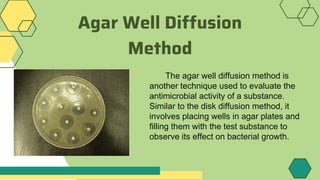
Method
The agar well diffusion method is
another technique used to evaluate the
antimicrobial activity of a substance.
Similar to the disk diffusion method, it
involves placing wells in agar plates and
filling them with the test substance to
observe its effect on bacterial growth.
Agar Well Diffusion
Method
Materials Needed
Mueller-Hinton agar plates Sterile cork borer or pipette tips
Bacterial culture (test organism) Test antimicrobial solutions
Sterile cotton swabs Incubator
Ruler or caliper
Step-by-Step Procedure
Preparation of Agar Plates: Pour Mueller-Hinton agar into Petri dishes and allow them to solidify.
Inoculation of Plates: Dip a sterile cotton swab into a standardized bacterial suspension and evenly
spread it across the entire surface of the agar plate.
Creating Wells: Use a sterile cork borer or pipette tips to punch wells into the agar. Remove the agar
plugs.
Application of Antimicrobial Solutions: Fill each well with a specified volume of the antimicrobial solution.
Incubation: Invert the plates and incubate them at 35-37°C for 16-24 hours.
Analysis of Results: Measure the diameter of the zone of inhibition around each well. Larger zones
indicate greater antimicrobial activity.
1. What are some commonly used methods to
test the antimicrobial activity of plant
extracts?
Activity
Interpretation of Results
Disk Diffusion and Agar Well Diffusion: Zones of inhibition are
measured and compared to standard charts to classify the test organism
as susceptible, intermediate, or resistant to the antimicrobial agent.
Broth Dilution Method: The MIC value is compared to clinical
breakpoints to determine the susceptibility of the organism. Lower MIC
values indicate higher effectiveness of the antimicrobial agent.
By using these methods, researchers and clinicians can assess the
effectiveness of antimicrobial agents and guide appropriate therapeutic
interventions.
Data Recording
and Analysis
Presentations are communication
toolsthatcan beusedas
demonstrations, lectures, speeches,
reports, and more.It ismostly
presented beforean audience.
Data Recording and
Analysis
Accurate and systematic data recording is essential
for reliable analysis and interpretation of the agar
well diffusion method.
Designing Data Collection Sheets
• Define Objectives: Clearly outline the goals of your data collection process. What specific
information do you need to gather?
• Identify Variables: Determine the variables you'll be measuring or observing. These
could be quantitative (numerical) or qualitative (descriptive).
• Choose Data Collection Methods: Select appropriate methods such as surveys,
interviews, observations, or experiments based on your objectives and variables.
• Create the Sheet: Design a data collection sheet that includes fields for each variable.
Make sure it's easy to understand and use by those collecting data.
• Pilot Test: Before full-scale implementation, pilot test your data collection sheet to identify
any issues or areas for improvement.
Statistical Analysis of Results
 Descriptive Statistics: Calculate measures like mean, median, mode, range, and
standard deviation to describe the central tendency and spread of your data.
 Inferential Statistics: Use techniques like hypothesis testing, regression analysis, or
analysis of variance (ANOVA) to make inferences or predictions based on your data.
 Data Visualization: Create graphs, charts, or plots to visually represent your data and
identify patterns or trends.
 Software Utilization: Employ statistical software like R, Python with libraries such as
pandas, numpy, matplotlib, or specialized software like SPSS or SAS for analysis.
 Interpretation: Interpret the results in the context of your research questions or
objectives. What do the statistics reveal about the phenomena you're studying?
Interpreting Data to Determine

Effectiveness
 1. Compare Against Objectives: Assess whether the data aligns with the objectives you
defined earlier. Does it answer the research questions or provide insights into the
effectiveness of your process, product, or intervention?
 2. Contextual Analysis: Consider the broader context in which the data was collected.
Are there external factors that could influence the interpretation of results?
 3. Benchmarking: Compare your data against industry standards, benchmarks, or
previous performance to gauge effectiveness.
 4. Identify Patterns or Trends: Look for consistent patterns or trends in the data that
indicate success or areas needing improvement.
 5. Feedback Loop: Use the interpreted data to inform decision-making processes. If
effectiveness is lacking, consider adjustments or interventions based on your analysis.
Safety and Ethical
Considerations
Implementing rigorous safety and ethical standards is crucial in the
agar well diffusion method and any microbiological research. Adhering to
biosafety guidelines, using PPE, ensuring proper waste disposal, and
maintaining scientific integrity are fundamental practices. Ethical
considerations, such as responsible antimicrobial use, humane treatment of
animals, informed consent, and environmental stewardship, further ensure
that the research is conducted responsibly and ethically. These measures
protect the health and safety of researchers, the public, and the
environment while upholding the integrity of scientific research.
Laboratory Safety Protocols
1. Risk Assessment: Identify potential hazards associated with laboratory work, including
chemical, biological, physical, and ergonomic risks.
2. Safety Equipment: Ensure the availability and proper use of personal protective equipment
(PPE) such as lab coats, gloves, safety goggles, and respirators.
3. Chemical Management: Implement proper storage, handling, labeling, and disposal
procedures for chemicals to minimize exposure and environmental impact.
4. Equipment Maintenance: Regularly inspect and maintain laboratory equipment to prevent
accidents and ensure safe operation.
5. Emergency Response: Develop protocols for responding to accidents, spills, fires, and
other emergencies, including evacuation procedures and the availability of emergency
showers and eyewash stations
By adhering to these laboratory safety protocols, you ensure
a safe working environment, minimize the risk of accidents,
and promote ethical and responsible scientific research.
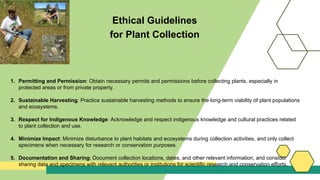
Ethical Guidelines
for Plant Collection
1. Permitting and Permission: Obtain necessary permits and permissions before collecting plants, especially in
protected areas or from private property.
2. Sustainable Harvesting: Practice sustainable harvesting methods to ensure the long-term viability of plant populations
and ecosystems.
3. Respect for Indigenous Knowledge: Acknowledge and respect indigenous knowledge and cultural practices related
to plant collection and use.
4. Minimize Impact: Minimize disturbance to plant habitats and ecosystems during collection activities, and only collect
specimens when necessary for research or conservation purposes.
5. Documentation and Sharing: Document collection locations, dates, and other relevant information, and consider
sharing data and specimens with relevant authorities or institutions for scientific research and conservation efforts.
What is Environmental Impact
Assessment?
An Environmental Impact Assessment
(EIA) is a systematic process used to
identify, predict, evaluate, and mitigate the
environmental effects of proposed
projects, policies, programs, or plans. It
aims to ensure that potential
environmental impacts are considered
during decision-making processes,
allowing for sustainable development and
the protection of the environment.
1. What safety precautions should be followed when
handling plant extracts with potential antimicrobial
properties?
2. Why is it important to consider ethical implications
when conducting research involving plants?
Activity
Thank you!
Writeaclosingstatementor
call-to-actionhere.

OUTPUT CANVA PPT DOWNLOADED.pptx NEW EDITED

  • 1.
    Proposed Booklet "STAMP: AGuide for Studying AntiMicrobial Potential of Plants by FRANCE A. DAYO MAED Major in Biological Science 2024
  • 2.
    Table Of Contents 1.Understanding Antimicrobial Potential 2. Collection and Preparation of Plant Samples 3. Different Ways on how to extract plants 4. Methods for Testing Antimicrobial Activity 5. Data Recording and Analysis 6. Safety and Ethical Considerations 7. Activities
  • 3.
    Introduction Thisbookletserves asadetailed guideforresearchers, students,andplantenthusiasts interestedinexploringthe antimicrobialpotentialofplants. Itprovidespractical informationand standardized methodologiesfor conductingantimicrobialassays usingplantextracts.
  • 4.
    Importance of StudyingAntimicrobial Potential of Plants With the global rise in antibiotic-resistant pathogens, there is a critical need to discover new antimicrobial agents. Plants, used traditionally for medicinal purposes, represent a vast potential source of such agents. Studying these properties can contribute to developing new, effective antimicrobial treatments. Overview of Antimicrobial Agents Antimicrobial agents are substances that kill or inhibit the growth of microorganisms. They include antibiotics, antifungals, antivirals, and antiseptics, each targeting different types of pathogens. Infections and diseases may be caused by different types of organisms like bacteria, fungi, and viruses, etc., in humans and animals. The drug used to
  • 5.
  • 6.
    Antimicrobial susceptibility isan appropriate test whenever a specimen is collected from a suspected infection site. In the face of active infection, this information, along with the Gram stain and culture, allows the physician to select an appropriate antimicrobial agent to treat an infection.
  • 7.
    Definitions and KeyConcepts Antimicrobial: Substances that kill or inhibit the growth of microorganisms, including bacteria, fungi, and viruses. They play a crucial role in preventing and treating Microorganisms are microscopic organisms that can exist as single cells or in colonies. They are diverse and include bacteria, viruses, fungi, protozoa, and algae. Some microorganisms are harmless or Bacteria: Single-celled organisms that can be found in various environments. They can be beneficial (e.g., gut microbiota) or harmful
  • 8.
    Types of Microorganisms BACTERIA Gram-positivebacteria: Bacteria with thick peptidoglycan cell walls that retain a purple color during the Gram staining process Examples: Staphylococcus Enterococcus Corynebacterium Streptococcus pyogenes Streptococcus agalactiae Nocardia Streptomyces High GC gram+ Streptococcus mutans Firmicutes Cutibacterium acnes Streptococcus sanguinis Actinomyces bovis
  • 9.
    Gram-negative bacteria: Bacteriawith thinner peptidoglycan walls and an outer membrane, appearing pink after Gram staining Examples: Escherichia coli, Salmonella, Shigella, and other Enterobacteriaceae, Pseudomonas, Moraxella, Helicobacter, Stenotrophomonas, Bdellovibrio, acetic acid bacteria, Legionella
  • 10.
    Detailed Mechanisms of Action 1.Inhibition of Cell Wall Synthesis- Antibiotics like beta-lactams (penicillins, cephalosporins) and glycopeptides (vancomycin) prevent peptidoglycan synthesis, weakening bacterialcell walls andcausing cell lysis. 2. Disruption of Cell Membrane Function- Antifungal agentslikepolyenes (amphotericinB) bindto ergosterol infungal cell membranes, increasing permeabilityand leading tocell death. 3. Inhibition of Protein Synthesis- Antibioticslike aminoglycosides (gentamicin) and macrolides (erythromycin) bindtobacterial ribosomes, preventing protein synthesis. Antiviral drugs likeinterferons enhance the immune response toviralinfections, inhibiting viral proteinsynthesis.
  • 11.
    4.Inhibitionof Nucleic AcidSynthesis- Antibioticslikefluoroquinolones (ciprofloxacin) inhibit bacterialDNAgyraseor topoisomerase, essential forDNA replication.Antiviral agentslikenucleoside analogs (acyclovir)mimic nucleotides, causing prematuretermination ofviralDNA synthesis. 5.Antimetabolite Activity-Antibiotics like sulfonamides inhibitfolicacidsynthesis, necessary forbacterialDNA and RNA synthesis. Antifungal agentslike5-fluorocytosine interferewithfungal DNAand RNA synthesis.
  • 12.
    Understanding the varioustypes of microorganisms and the mechanisms by which antimicrobial agents act is crucial for effectively treating infections. Different antimicrobials target specific components or processes of microorganisms, making it essential to choose the appropriate agent based on the type of infection and the causative microorganism.
  • 13.
  • 14.
    Guidelines for PlantCollection Steps One Steps Two Steps Three Steps Four Selection of Plant Material Choose healthy plants free from disease or pests. Collect parts of the plant that are relevant to the study (e.g., leaves, stems, roots, flowers). Timing of Collection: •Harvest plants at the optimal time of day (often early morning) and season, depending on the plant's growth cycle and the compounds of interest. Location and Environmental Considerations: Collect samples from various locations to ensure genetic and chemical diversity. Avoid areas exposed to pollution, pesticides, or heavy metals. Ethical and Legal Considerations: Obtain necessary permissions and follow local regulations and guidelines for plant collection. Practice sustainable collection methods to avoid depleting natural populations.
  • 15.
    Identification and Documentation 1.Identification:  Usefield guides, botanical keys, and consultation with experts to accurately identify plant species.  Confirm the identification with herbarium specimens when possible. 2. Documentation:  Record the date, time, and location (GPS coordinates) of collection.  Note the habitat, environmental conditions, and any associated plant species.  Take photographs of the plant and its surroundings for reference. 3. Labeling:  Label each sample with a unique identifier, including species name, part of the plant collected, date, and location.  Use durable materials for labels to withstand transportation and storage conditions.
  • 16.
    Basic Preparation Techniques 1.Drying: Air Drying: Spread plant materials on a clean, dry surface in a well-ventilated area away from direct sunlight. Turn periodically to ensure even drying.  Oven Drying: Use a low-temperature oven (35-45°C) to speed up the drying process, particularly for materials prone to mold or decay.  Freeze-Drying: Ideal for preserving heat-sensitive compounds, involves freezing the plant material and then reducing the surrounding pressure to allow frozen water to sublimate. Air drying oven drying free drying
  • 17.
    Grinding: Once dried, grindplant materials to a fine powder using a mortar and pestle, blender, or mill. Store the ground material in airtight containers to prevent moisture absorption and degradation of active compounds. Extracting Solvent Extraction: Use solvents like ethanol, methanol, water, or hexane to extract bioactive compounds. Cold Maceration: Soak the plant material in solvent at room temperature for an extended period (24-48 hours). Hot Extraction: Heat the solvent and plant material (e.g., Soxhlet extraction) to increase extraction efficiency. Distillation: Use techniques like steam distillation to extract essential oils from aromatic plants. Supercritical Fluid Extraction: Utilize supercritical CO2 for extracting heat-sensitive compounds with high efficiency and purity.
  • 18.
    Proper collection andpreparation of plant samples are essential for reliable and reproducible research outcomes. Following guidelines for ethical collection, accurate identification, and thorough documentation ensures the integrity of the samples. Appropriate preparation techniques, including drying, grinding, and extracting, preserve the bioactive compounds and make them available for further analysis and application.
  • 19.
    1. Whatarethekeyconsiderations whencollectingplantsamples forantimicrobialresearch? 2. Whyisitimportanttoproperlycleanandprepareplantsamples beforeextraction? Activity
  • 20.
    Different ways on howto extract plants Thereareseveralmethodsfor extractingplantstoobtainvarious compounds,including essential oils,bioactive compounds, pigments,andothervaluable substances.
  • 21.
    Steam Distillation This methodinvolves passing steam through the plant material, causing the essential oils to evaporate. The steam is then condensed, resulting in the separation of essential oils from water. This technique is commonly used for extracting essential oils from aromatic plants like lavender, peppermint, and eucalyptus. Procedure: • Place the plant material in a distillation apparatus, such as a steam distillation apparatus or a Clevenger apparatus. • Heat water in a distillation flask to produce steam. • The steam passes through the plant material, causing the volatile compounds (essential oils) to evaporate. • The steam carrying the essential oils is condensed in a condenser. • The condensed mixture separates into two layers: essential oil on top and water (hydrosol) below. • The essential oil is collected from the top layer using a separator or a separatory funnel.
  • 22.
    Decoction Decoction is amethod of extracting medicinal compounds, flavors, or nutrients from hard plant materials, such as roots, bark, seeds, or woody stems, by boiling them in water over a period of time. This method is particularly useful for extracting water-soluble compounds that are resistant to extraction through simple infusion or maceration. Procedure: 1. Place the prepared plant material in a pot or saucepan. 2. Add the specified amount of water to the pot, covering the plant material completely. 3. Bring the water to a boil over medium to high heat. 4. Once boiling, reduce the heat to low and allow the mixture to simmer gently. 5. Let the decoction simmer for a specified period, typically ranging from 20 minutes to 1 hour, depending on the hardness and density of the plant material and the desired strength of the decoction. 6. Stir the mixture occasionally during the simmering process to ensure even extraction and prevent sticking or burning.
  • 23.
    Maceration Decoction is amethod of extracting medicinal compounds, flavors, or nutrients from hard plant materials, such as roots, bark, seeds, or woody stems, by boiling them in water over a period of time. This method is particularly useful for extracting water-soluble compounds that are resistant to extraction through simple infusion or maceration. Procedure: 1. Chop or crush the plant material to increase surface area. 2. Place the plant material in a container and cover it with a suitable solvent (e.g., alcohol or oil). 3. Allow the mixture to macerate for a specified period, with occasional agitation. 4. Filter the mixture to separate the liquid extract from the solid plant material. 5. Evaporate the solvent from the extract if necessary to obtain the concentrated extract.
  • 24.
    Microwave-Assisted Extraction (MAE) Decoction isa method of extracting medicinal compounds, flavors, or nutrients from hard plant materials, such as roots, bark, seeds, or woody stems, by boiling them in water over a period of time. This method is particularly useful for extracting water-soluble compounds that are resistant to extraction through simple infusion or maceration. Procedure: 1. Chop or crush the plant material to increase surface area. 2. Place the plant material in a container and cover it with a suitable solvent (e.g., alcohol or oil). 3. Allow the mixture to macerate for a specified period, with occasional agitation. 4. Filter the mixture to separate the liquid extract from the solid plant material. 5. Evaporate the solvent from the extract if necessary to obtain the concentrated extract.
  • 25.
    Ethanolic aqueous procedure Theethanolic aqueous procedure combines the use of both water and ethanol (or other alcohol) as solvents to extract a wide range of compounds from plant material. This method is particularly effective for extracting both polar and non-polar compounds, making it suitable for a variety of applications, including herbal medicine, phytochemistry, and food processing. The ethanolic aqueous extract can be used for various purposes, including medicinal applications, dietary supplements, herbal preparations, flavorings, and natural products research. Adjustments to the extraction parameters, such as solvent ratio, extraction time, and temperature, can be made based on the specific properties of the plant material and the desired characteristics of the extract.
  • 26.
    Ethanolic aqueous procedure Preparationof Plant Material: • Clean the plant material thoroughly to remove any dirt, debris, or contaminants. • Depending on the nature of the plant material, it may be chopped, crushed, ground, or powdered to increase the surface area for extraction. Selection of Solvents: • Determine the appropriate ratio of water to ethanol based on the solubility of the desired compounds. • For example, polar compounds such as phenolic compounds, flavonoids, and water-soluble vitamins are better extracted with water, while non-polar compounds such as essential oils, terpenoids, and lipids are better extracted with ethanol. Extraction Process: • Combine the prepared plant material with a mixture of water and ethanol in a suitable container or vessel. • The ratio of water to ethanol can vary depending on the specific plant material and desired extract composition. A common ratio is 1:1 (equal parts water and ethanol), but this can be adjusted based on the solubility of the target compounds. • Allow the mixture to macerate or soak for a specified period, typically ranging from a few hours to several days, with occasional agitation or stirring. • The duration of maceration will depend on factors such as the hardness of the plant material, the desired strength of the extract, and the extraction efficiency of the solvent system.
  • 27.
    Ethanolic aqueous procedure Filtrationand Separation: • After maceration, filter the mixture to separate the liquid extract from the solid plant material. • Use a fine mesh sieve, cheesecloth, or filter paper to remove any particulate matter. • Press or squeeze the plant material to extract as much liquid as possible. • The resulting filtrate is the ethanolic aqueous extract containing a combination of water- soluble and ethanol-soluble compounds. Concentration and Storage: • Optionally, concentrate the extract using methods such as rotary evaporation, freeze-drying, or vacuum distillation to remove excess solvent and increase the potency of the extract. • Transfer the concentrated extract to a clean, airtight container, such as a glass bottle or jar, for storage. • Store the extract in a cool, dark place away from direct sunlight and heat to maintain its stability and prolong its shelf life.
  • 28.
    Oil as Solvents Usingoil as a solvent for extracting compounds from plant material is a common technique, particularly for extracting lipophilic (fat-soluble) compounds such as essential oils, fatty acids, and certain bioactive compounds. Oil extraction is often referred to as maceration or infusion, and it's a gentle method suitable for delicate plant materials that may degrade under harsher extraction conditions. Here's a procedure for using oil as a solvent Selection of Solvent Oil: Choose a suitable solvent oil based on factors such as the desired compounds to be extracted, the aroma or flavor profile desired, and the intended use of the extract. Commonly used solvent oils include olive oil, coconut oil, almond oil, jojoba oil, and grapeseed oil. Each oil may impart its own unique characteristics to the final extract.
  • 29.
    Oil as Solvents ExtractionProcess: • Place the prepared plant material in a clean, dry container or jar. • Pour the selected solvent oil over the plant material, ensuring that it is completely submerged. • Seal the container tightly with a lid or cover to prevent evaporation and oxidation. • Allow the mixture to macerate or steep for a specified period, typically ranging from several days to several weeks, depending on the desired strength and flavor profile of the extract. • Agitate or stir the mixture occasionally to promote extraction and ensure even distribution of the plant compounds in the solvent oil. Filtration and Separation: • After maceration, strain the mixture through a fine mesh sieve, cheesecloth, or muslin cloth to separate the liquid extract from the solid plant material. • Press or squeeze the plant material to extract as much liquid as possible. • Discard the spent plant material, as most of the desired compounds will now be in the solvent oil.
  • 30.
    1. Nametwocommonmethodsusedtoextract bioactive compoundsfromplants. 2.Brieflydescribetheprinciplebehindeachextractionmethod mentioned. Activity
  • 31.
    Methods for Testing AntimicrobialActivity Testing antimicrobial activity is essential in microbiology to determine the effectiveness of substances against pathogens. Here, we'll explore three common methods: Disk Diffusion, Broth Dilution, and Agar Well Diffusion.
  • 32.
    Disk Diffusion Method Thedisk diffusion method, also known as the Kirby-Bauer test, is a standardized technique used to evaluate the effectiveness of antibiotics against specific bacterial strains. It is widely used in clinical microbiology laboratories to determine bacterial susceptibility to antibiotics and to guide appropriate treatment choices. A qualitative method where antimicrobial- impregnated disks are placed on an agar plate inoculated with the test organism.
  • 33.
    Disk Diffusion Method MaterialsNeeded Mueller-Hinton agar plates Sterile cotton swabs Bacterial culture (test organism) Sterile forceps Antibiotic-impregnated disks Incubator Ruler or caliper Step-by-Step Procedure Preparation of Agar Plates: Pour Mueller-Hinton agar into Petri dishes and allow them to solidify. Inoculation of Plates: Dip a sterile cotton swab into a standardized bacterial suspension and evenly spread it across the entire surface of the agar plate. Application of Disks: Using sterile forceps, place antibiotic-impregnated disks onto the surface of the inoculated agar plate. Gently press the disks to ensure contact. Incubation: Invert the plates and incubate them at 35-37°C for 16-24 hours. Interpretation of Results: Measure the diameter of the zone of inhibition around each disk using a ruler or caliper. Compare the measurements to standardized charts to determine the susceptibility of the organism to the antibiotics.
  • 34.
    Broth Dilution Method Aquantitative method used to determine the Minimum Inhibitory Concentration (MIC) of an antimicrobial agent. The broth dilution method is a quantitative technique for assessing the antimicrobial susceptibility of bacteria. It determines the lowest concentration of an antibiotic that inhibits visible growth of a microorganism, known as the minimum inhibitory concentration (MIC).
  • 35.
    Broth Dilution Method Step-by-StepProcedure • Preparation of Antimicrobial Solutions: Prepare a series of dilutions of the antimicrobial agent in the broth medium. • Inoculation: Add a standardized inoculum of the bacterial culture to each test tube or well containing the antimicrobial dilutions. • Incubation: Incubate the tubes or plates at 35-37°C for 16-20 hours. • Determining MIC: The MIC is the lowest concentration of the antimicrobial agent that visibly inhibits bacterial growth. This can be determined visually or using a spectrophotometer to measure turbidity.
  • 36.
    Agar Well Diffusion Method Theagar well diffusion method is another technique used to evaluate the antimicrobial activity of a substance. Similar to the disk diffusion method, it involves placing wells in agar plates and filling them with the test substance to observe its effect on bacterial growth.
  • 37.
    Agar Well Diffusion Method MaterialsNeeded Mueller-Hinton agar plates Sterile cork borer or pipette tips Bacterial culture (test organism) Test antimicrobial solutions Sterile cotton swabs Incubator Ruler or caliper Step-by-Step Procedure Preparation of Agar Plates: Pour Mueller-Hinton agar into Petri dishes and allow them to solidify. Inoculation of Plates: Dip a sterile cotton swab into a standardized bacterial suspension and evenly spread it across the entire surface of the agar plate. Creating Wells: Use a sterile cork borer or pipette tips to punch wells into the agar. Remove the agar plugs. Application of Antimicrobial Solutions: Fill each well with a specified volume of the antimicrobial solution. Incubation: Invert the plates and incubate them at 35-37°C for 16-24 hours. Analysis of Results: Measure the diameter of the zone of inhibition around each well. Larger zones indicate greater antimicrobial activity.
  • 38.
    1. What aresome commonly used methods to test the antimicrobial activity of plant extracts? Activity
  • 39.
    Interpretation of Results DiskDiffusion and Agar Well Diffusion: Zones of inhibition are measured and compared to standard charts to classify the test organism as susceptible, intermediate, or resistant to the antimicrobial agent. Broth Dilution Method: The MIC value is compared to clinical breakpoints to determine the susceptibility of the organism. Lower MIC values indicate higher effectiveness of the antimicrobial agent. By using these methods, researchers and clinicians can assess the effectiveness of antimicrobial agents and guide appropriate therapeutic interventions.
  • 40.
    Data Recording and Analysis Presentationsare communication toolsthatcan beusedas demonstrations, lectures, speeches, reports, and more.It ismostly presented beforean audience.
  • 41.
    Data Recording and Analysis Accurateand systematic data recording is essential for reliable analysis and interpretation of the agar well diffusion method.
  • 42.
    Designing Data CollectionSheets • Define Objectives: Clearly outline the goals of your data collection process. What specific information do you need to gather? • Identify Variables: Determine the variables you'll be measuring or observing. These could be quantitative (numerical) or qualitative (descriptive). • Choose Data Collection Methods: Select appropriate methods such as surveys, interviews, observations, or experiments based on your objectives and variables. • Create the Sheet: Design a data collection sheet that includes fields for each variable. Make sure it's easy to understand and use by those collecting data. • Pilot Test: Before full-scale implementation, pilot test your data collection sheet to identify any issues or areas for improvement.
  • 43.
    Statistical Analysis ofResults  Descriptive Statistics: Calculate measures like mean, median, mode, range, and standard deviation to describe the central tendency and spread of your data.  Inferential Statistics: Use techniques like hypothesis testing, regression analysis, or analysis of variance (ANOVA) to make inferences or predictions based on your data.  Data Visualization: Create graphs, charts, or plots to visually represent your data and identify patterns or trends.  Software Utilization: Employ statistical software like R, Python with libraries such as pandas, numpy, matplotlib, or specialized software like SPSS or SAS for analysis.  Interpretation: Interpret the results in the context of your research questions or objectives. What do the statistics reveal about the phenomena you're studying?
  • 44.
    Interpreting Data toDetermine Effectiveness  1. Compare Against Objectives: Assess whether the data aligns with the objectives you defined earlier. Does it answer the research questions or provide insights into the effectiveness of your process, product, or intervention?  2. Contextual Analysis: Consider the broader context in which the data was collected. Are there external factors that could influence the interpretation of results?  3. Benchmarking: Compare your data against industry standards, benchmarks, or previous performance to gauge effectiveness.  4. Identify Patterns or Trends: Look for consistent patterns or trends in the data that indicate success or areas needing improvement.  5. Feedback Loop: Use the interpreted data to inform decision-making processes. If effectiveness is lacking, consider adjustments or interventions based on your analysis.
  • 45.
    Safety and Ethical Considerations Implementingrigorous safety and ethical standards is crucial in the agar well diffusion method and any microbiological research. Adhering to biosafety guidelines, using PPE, ensuring proper waste disposal, and maintaining scientific integrity are fundamental practices. Ethical considerations, such as responsible antimicrobial use, humane treatment of animals, informed consent, and environmental stewardship, further ensure that the research is conducted responsibly and ethically. These measures protect the health and safety of researchers, the public, and the environment while upholding the integrity of scientific research.
  • 46.
    Laboratory Safety Protocols 1.Risk Assessment: Identify potential hazards associated with laboratory work, including chemical, biological, physical, and ergonomic risks. 2. Safety Equipment: Ensure the availability and proper use of personal protective equipment (PPE) such as lab coats, gloves, safety goggles, and respirators. 3. Chemical Management: Implement proper storage, handling, labeling, and disposal procedures for chemicals to minimize exposure and environmental impact. 4. Equipment Maintenance: Regularly inspect and maintain laboratory equipment to prevent accidents and ensure safe operation. 5. Emergency Response: Develop protocols for responding to accidents, spills, fires, and other emergencies, including evacuation procedures and the availability of emergency showers and eyewash stations By adhering to these laboratory safety protocols, you ensure a safe working environment, minimize the risk of accidents, and promote ethical and responsible scientific research.
  • 47.
    Ethical Guidelines for PlantCollection 1. Permitting and Permission: Obtain necessary permits and permissions before collecting plants, especially in protected areas or from private property. 2. Sustainable Harvesting: Practice sustainable harvesting methods to ensure the long-term viability of plant populations and ecosystems. 3. Respect for Indigenous Knowledge: Acknowledge and respect indigenous knowledge and cultural practices related to plant collection and use. 4. Minimize Impact: Minimize disturbance to plant habitats and ecosystems during collection activities, and only collect specimens when necessary for research or conservation purposes. 5. Documentation and Sharing: Document collection locations, dates, and other relevant information, and consider sharing data and specimens with relevant authorities or institutions for scientific research and conservation efforts.
  • 48.
    What is EnvironmentalImpact Assessment? An Environmental Impact Assessment (EIA) is a systematic process used to identify, predict, evaluate, and mitigate the environmental effects of proposed projects, policies, programs, or plans. It aims to ensure that potential environmental impacts are considered during decision-making processes, allowing for sustainable development and the protection of the environment.
  • 49.
    1. What safetyprecautions should be followed when handling plant extracts with potential antimicrobial properties? 2. Why is it important to consider ethical implications when conducting research involving plants? Activity
  • 50.