Outdoor education with BLOCKSTART Association
Vulcana-Băi, Romania
23.10.2018
European projects in our school
• „The youngest entrepreneurs of Europe”, 2010-2012 (Turkey- coordinator, Romania, Bulgaria, Poland, Hungary),
Comenius multilateral project;
• „Cross border cooperation between regions in Latvia and Romania to improve educational offer” (partnership
Romania-Latvia: REGIO project, 2012-2014, Comenius multilateral project;
• „Little Bird-Little tale”(Lithuania-coordinator, Islanda, Greece, Latvia, Poland, Bulgaria, Italy, Spain, Romania,
Turkey, UK), 2013-2015, Comenius multilateral project;
• „English language integration in the pre-school game lessons” (Latvia-coordinator, Italy, Turkey, Romania),
2013-2015, Comenius multilateral project;
• „Outdoor education - future education” (Portugal, Sweden, Czech Republic), 2015-2016, proiect Erasmus+ KA1.
European projects in our school
• „Healthy Herbs Outlook” (Romania-coordinator, Cyprus, Poland, Turkey, Greece, Lithuania), 2015-2017, Erasmus+
project (KA2);
• „Bridging play, learning and technology in childhood education” (Latvia-coordinator, Italy, Turkey, Romania),
2015-2017, Erasmus+ project (KA2);
• „WORDS UNITE US” (Romania-coordinator, Greece, Latvia, Lithuania, Bulgaria), 2015-2017, Erasmus+ project
(KA2);
• „Coloured by the Sun, United by the Sea” (Lithuania-coordinator, France, Portugal, Danmark, Romania), 2015-
2018, Erasmus+ project (KA2);
BLOCKSTART
„A window to the world”
 Who we are:
Romanian NGO created in 2015
 What recommends us: experience in Erasmus+ projects, project management, outdoor
education, sports and cultural events.
 Our areas of expertise: Outdoor Education, Project Management, Ecology and Sustainability,
Humanitarian Causes, Youth Education, Adult Education, Continuous Learning
Our wish is that Blockstart will be for you a window towards the world, one through which we can look together toward a
brighter future, one designed with the fabric of our hopes, dreams, enthusiasm, creativity and energy.
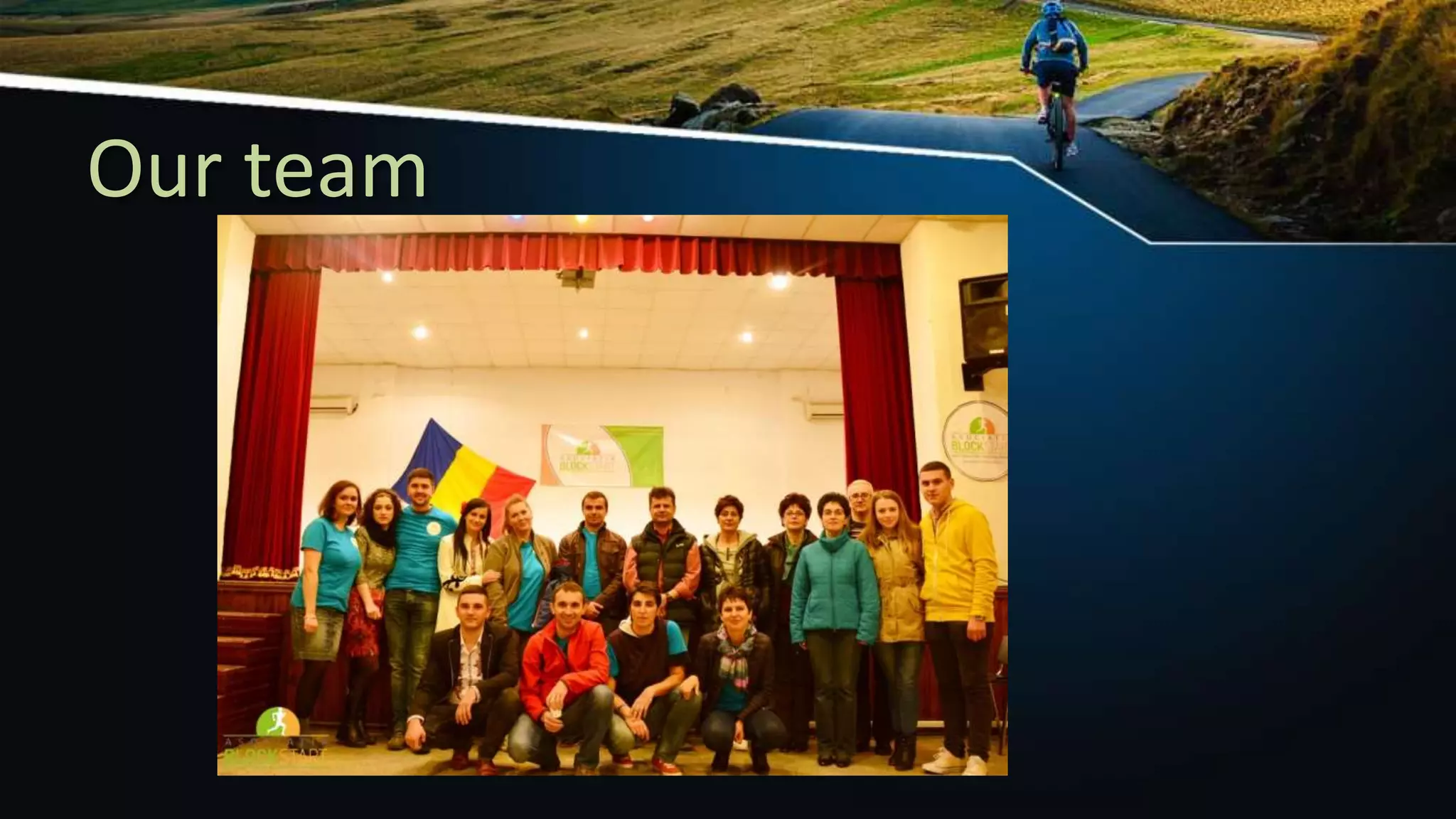
Our team
Some of our activities:
• Humanitarian projects:
 „Copilul Muntelui” – charity concert;
 „Blockstart Summer Camp”;
 Various charitable activities.
 Ecological actions:
 Tree planting;
 Cleaning the polluted areas;
 Awareness raising campaigns.
 Sports activities/contests:
 Let’s DARTS;
 Summer/Autumn SHUTTLE;
 Chess competition;
 Sports’ Day.
Our COURSES:
• „Transdisciplinarity Through Outdoor Learning in the Danube Delta”
 Tulcea, Romania;
 November/ April.
 „Management and Leadership in Projects and Organizations”
 Sighișoara, Romania – October;
 Sighișoara, Romania – May.
 „Global environmental change and sustainable development.
Regional and local impacts and perspectives.”
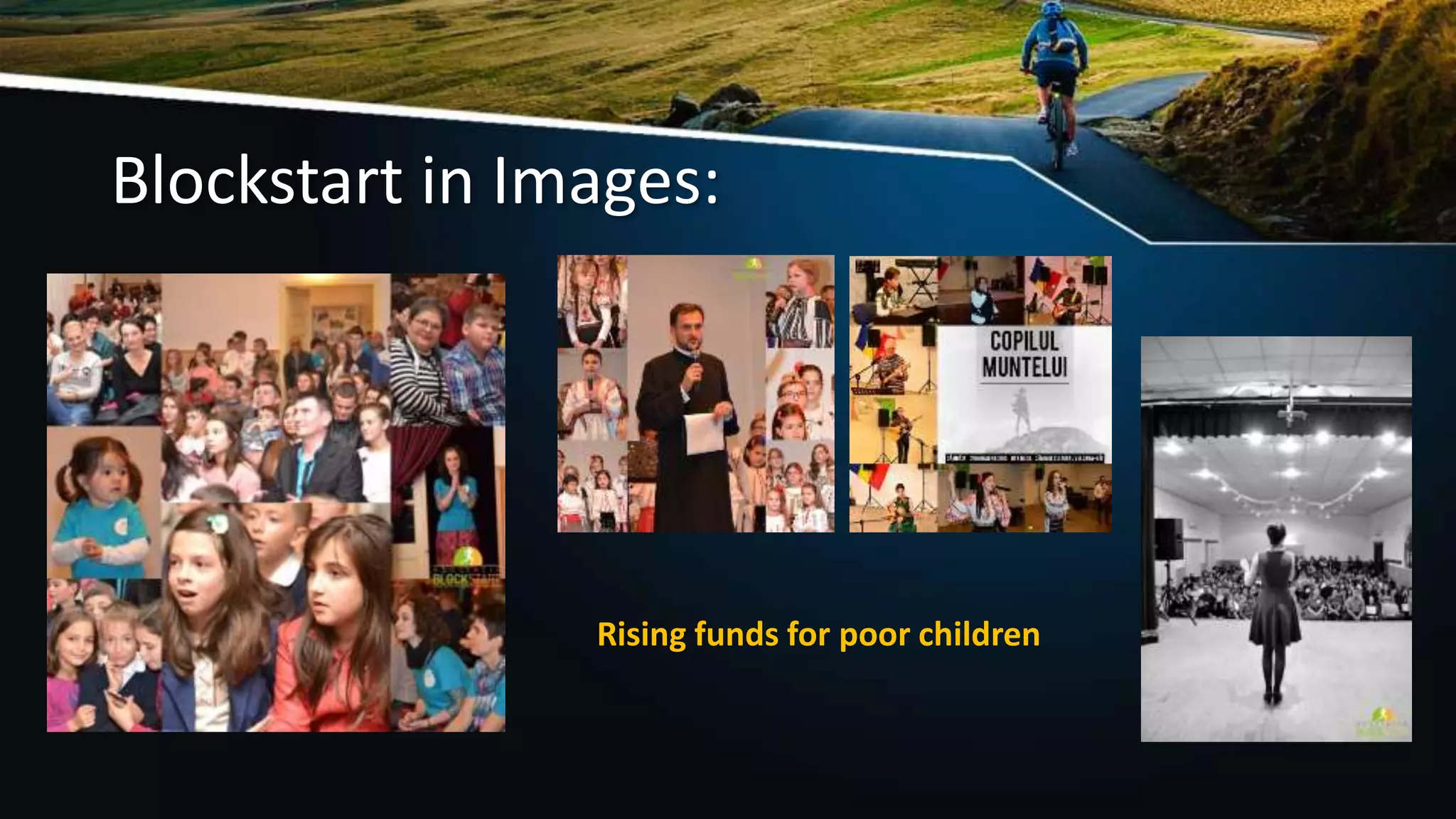
Blockstart in Images:
Rising funds for poor children
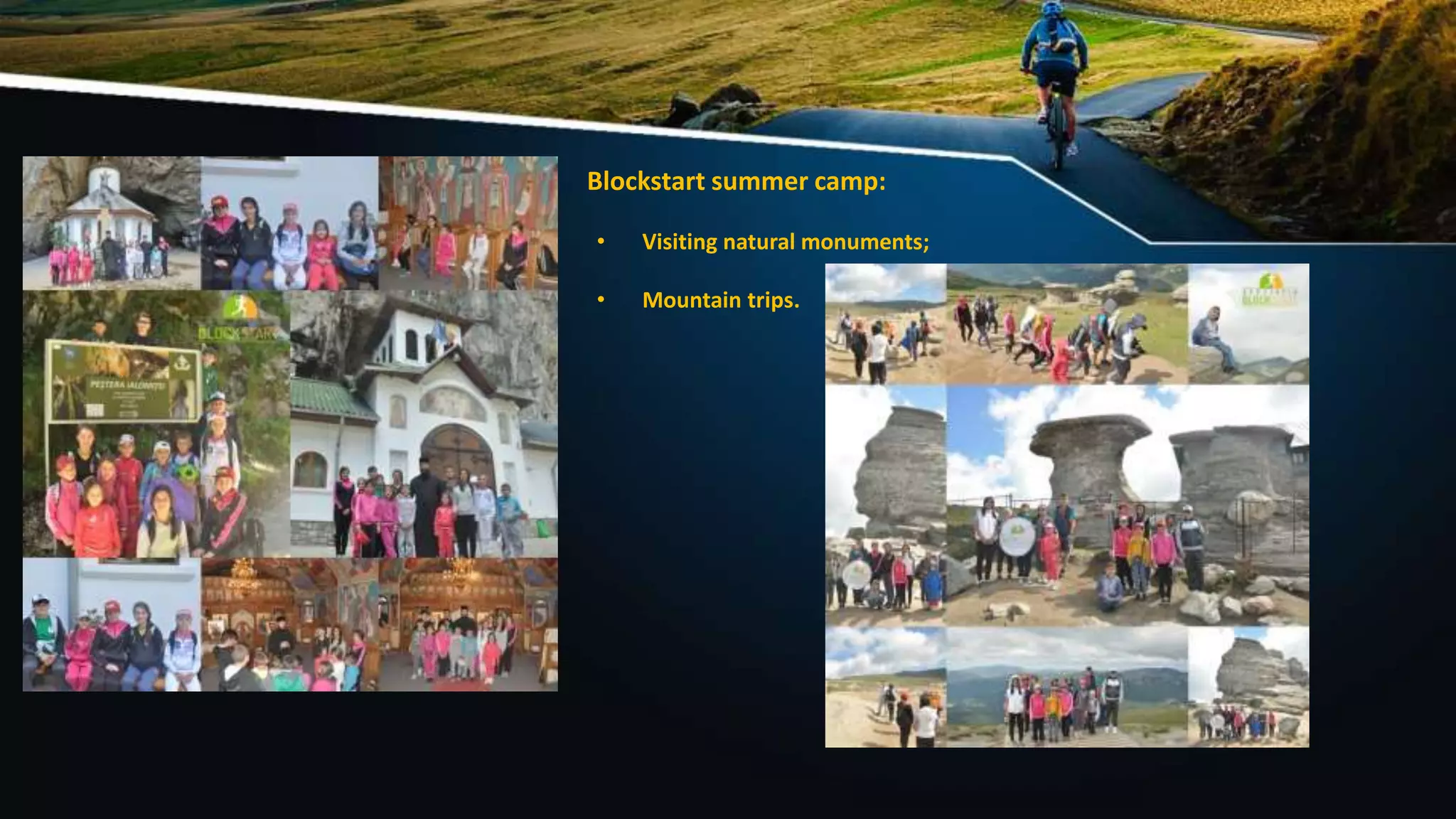
Blockstart summer camp:
• Visiting natural monuments;
• Mountain trips.
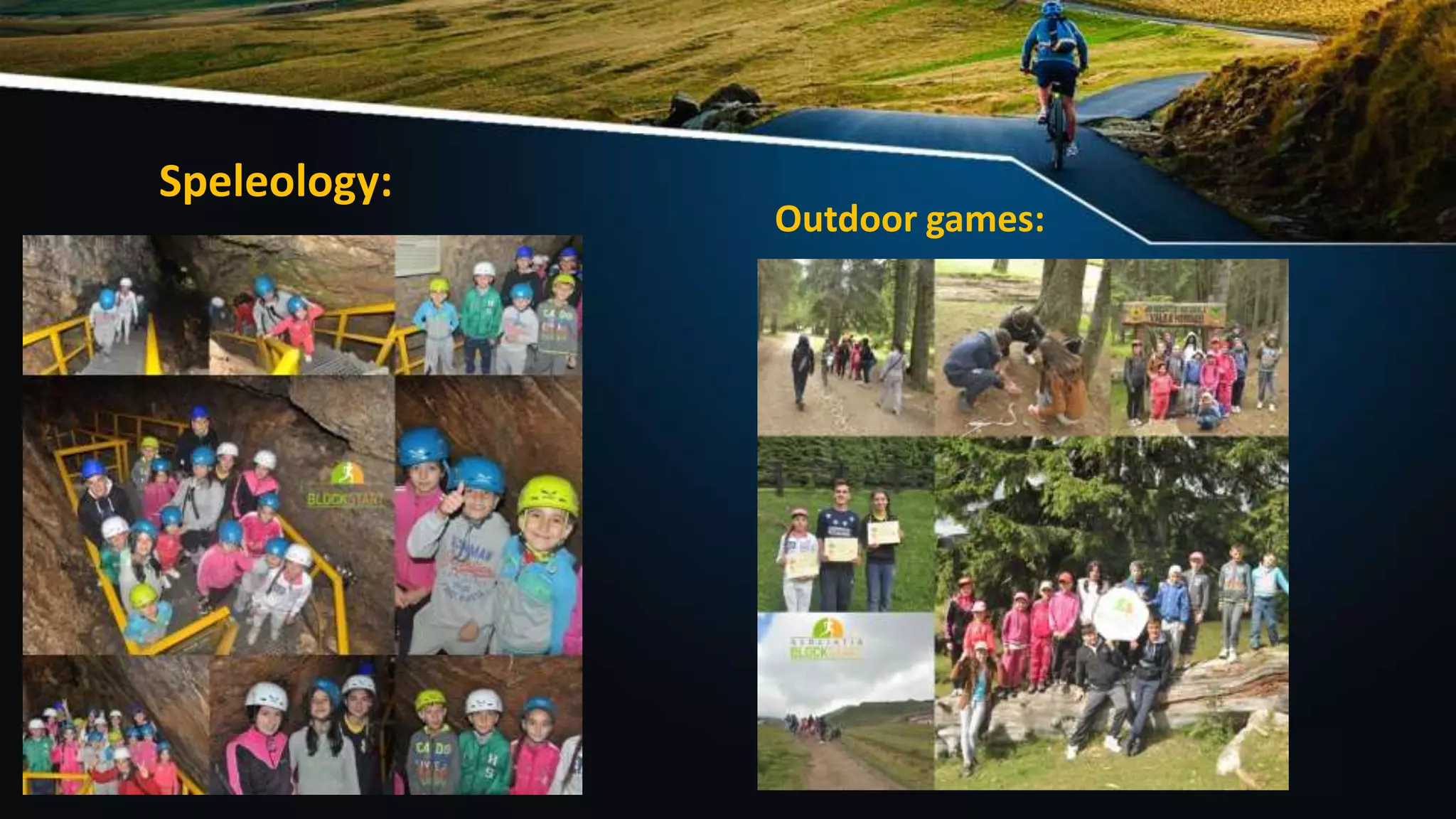
Speleology:
Outdoor games:
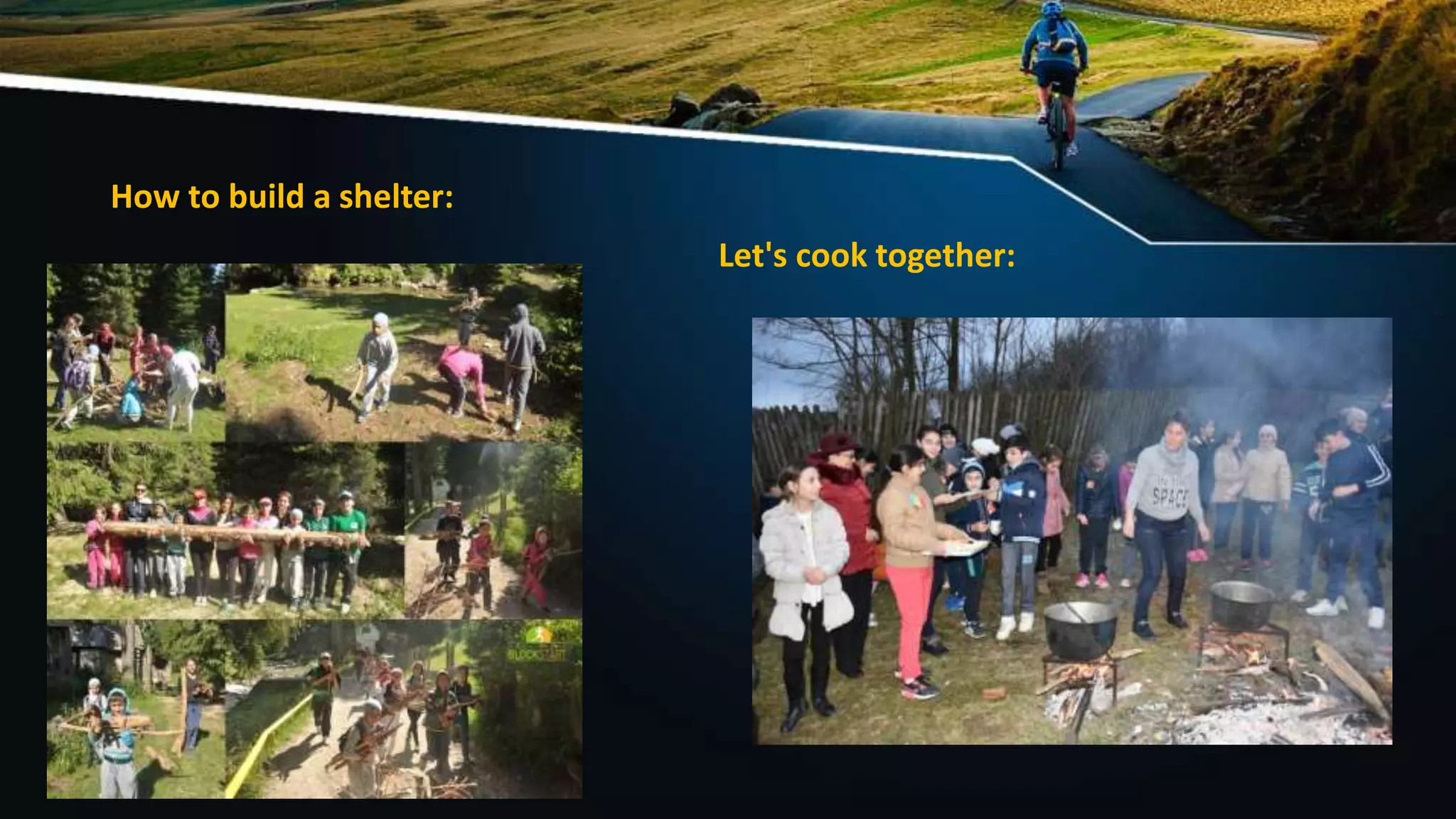
How to build a shelter:
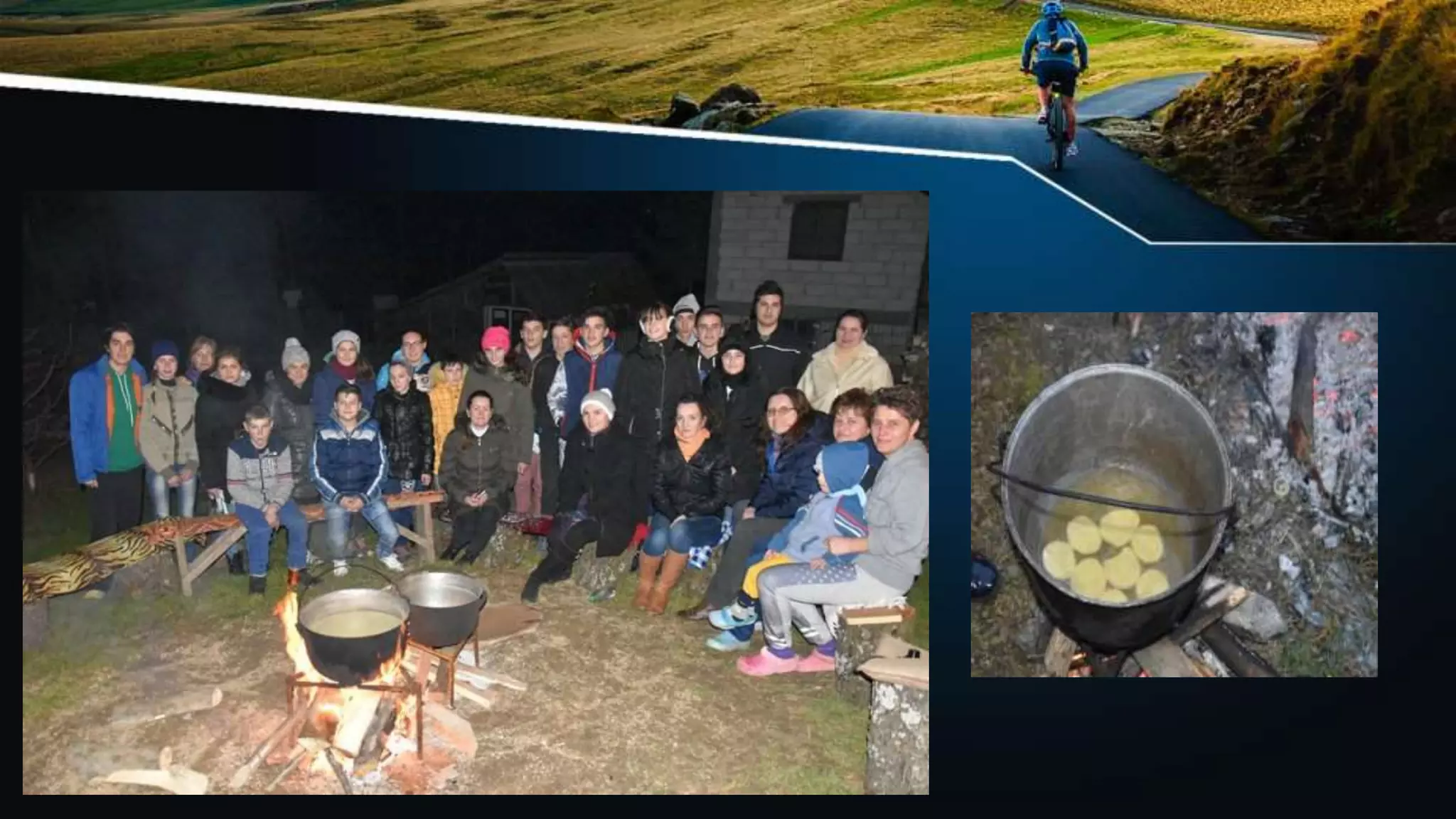
Let's cook together:
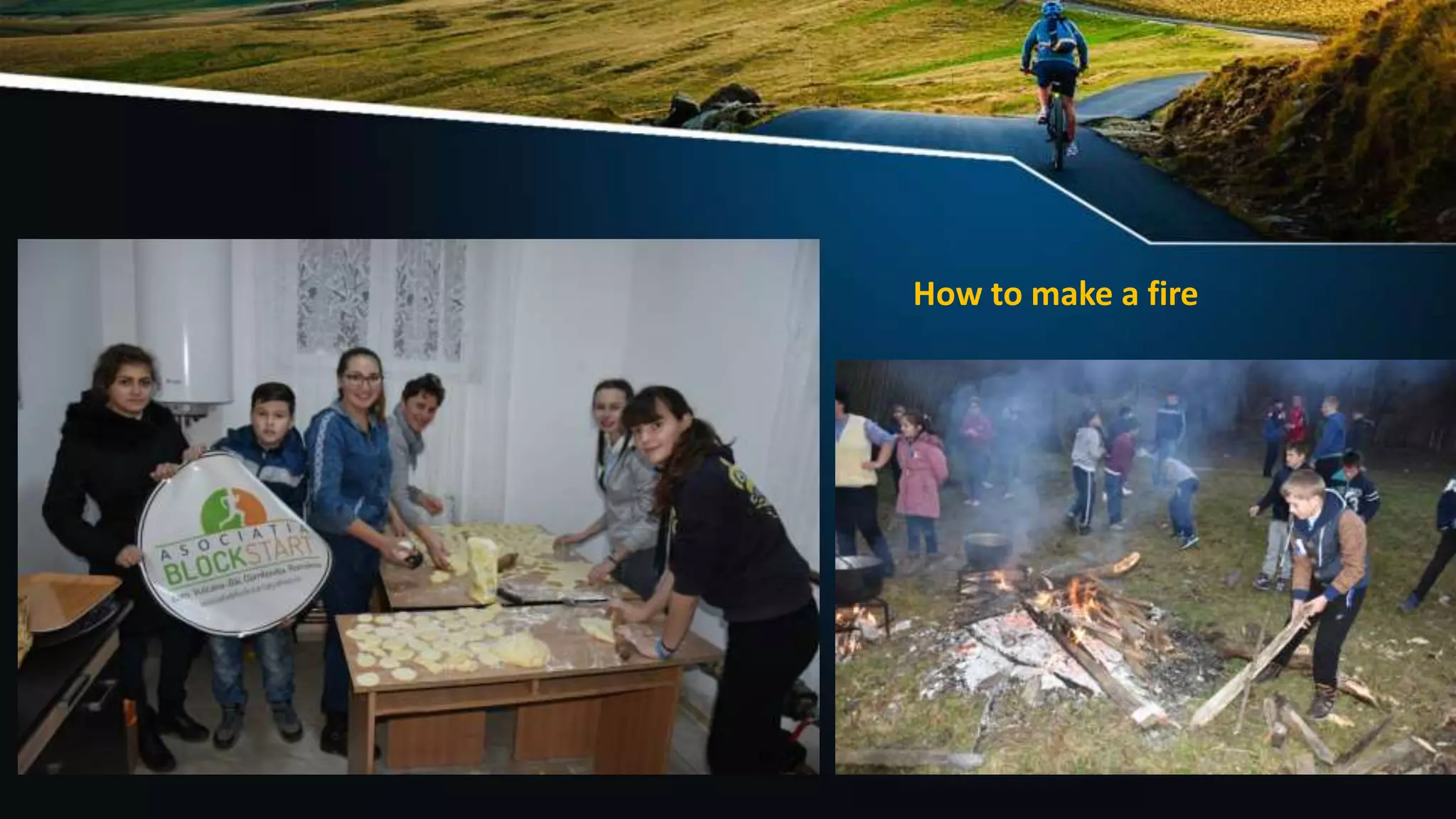
How to make a fire
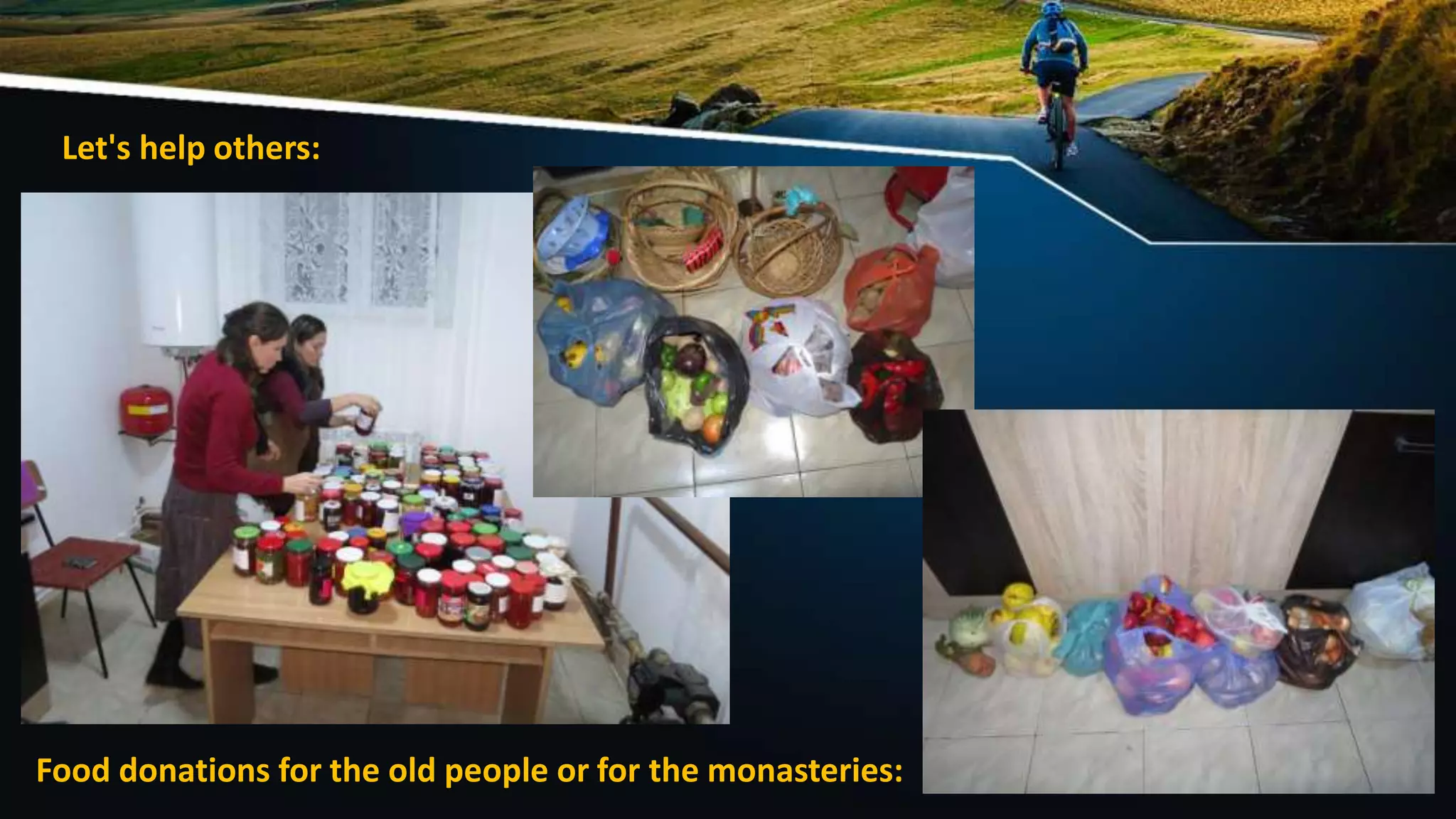
Let's help others:
Food donations for the old people or for the monasteries:
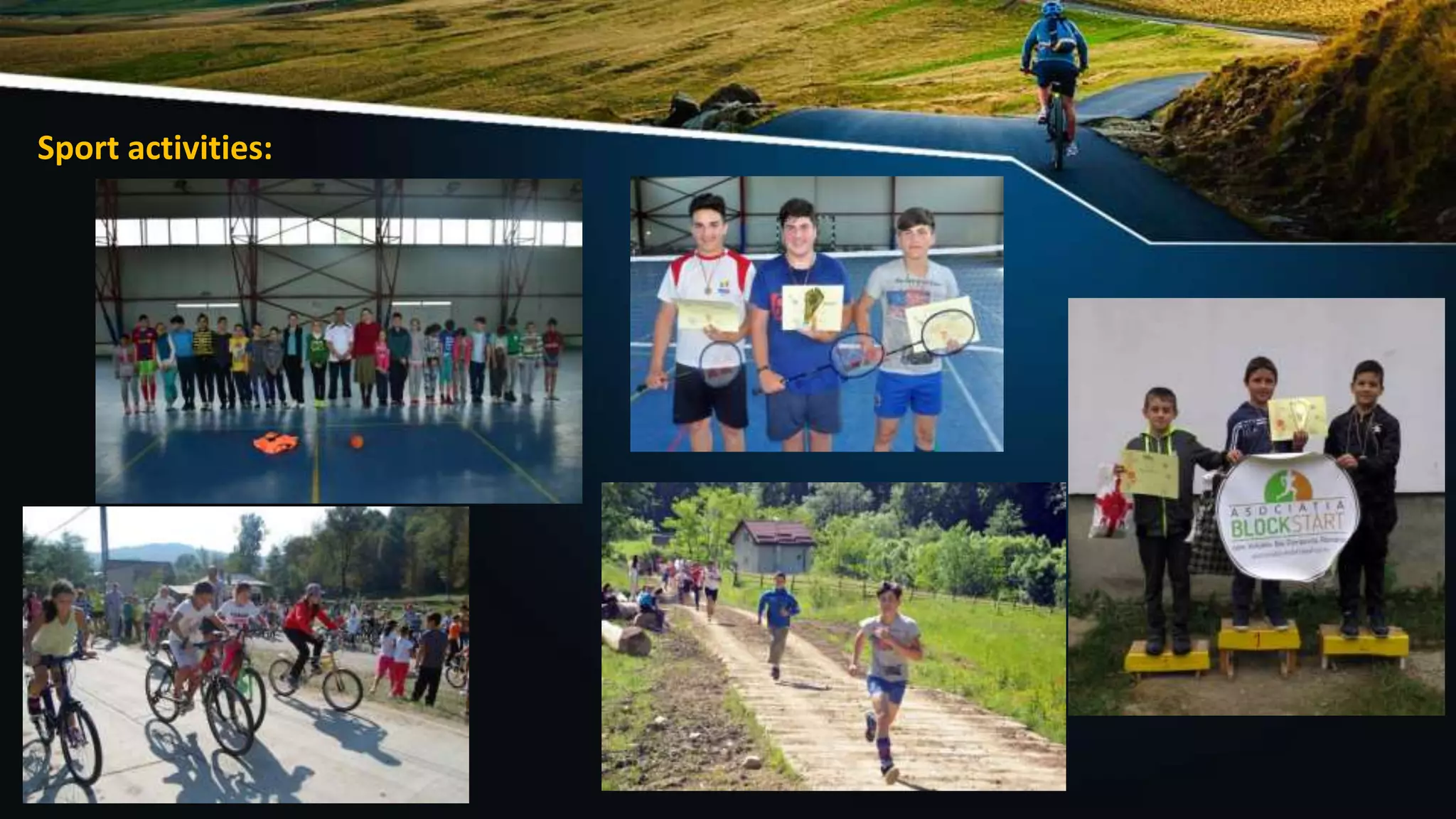
Sport activities:
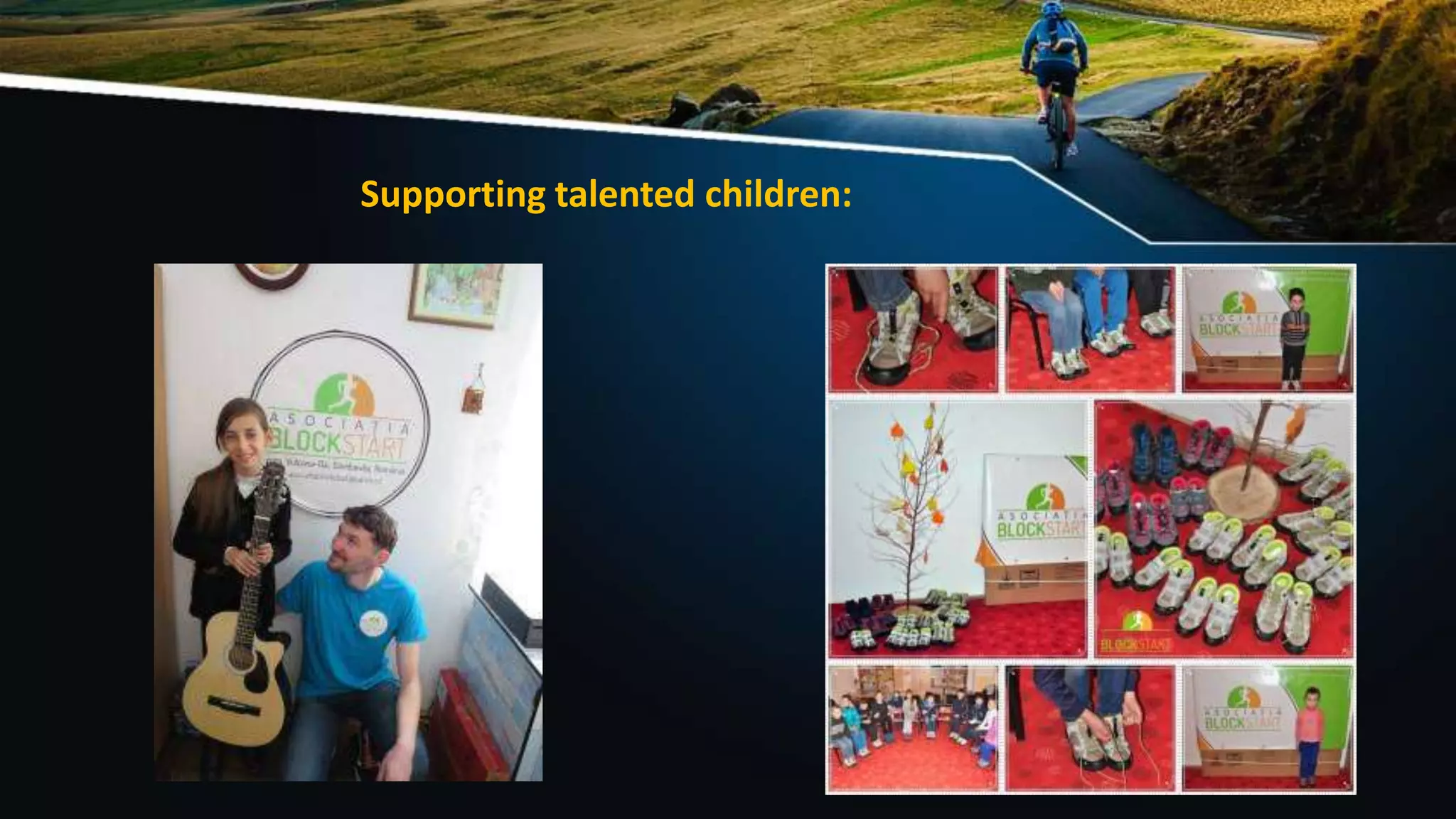
Supporting talented children:
What is Outdoor Education?
? TEAM WORK TIME
What is Outdoor Education?
Outdoor education can be simply described as:
experiential learning in the outdoors.
The term "outdoor education", however, is widely used to refer to a range of
organized activities, which take place in a variety of ways, in predominantly
outdoor environments.
What is Outdoor Learning?
Outdoor Learning is a broad term that includes:
 outdoor play in the early years,
 school grounds projects,
 environmental education,
 recreational and adventure activities,
 personal and social development programmes,
 expeditions,
 team building,
 leadership training,
 management development,
 education for sustainability,
 adventure therapy ... and more.
Outdoor Learning does not have a clearly defined boundary but it does have a
common core.
Outdoor Learning is in dramatic contrast to the indoor classroom.
Experience in the outdoors is more motivating and has more impact and credibility.
In Outdoor Learning participants learn through what they do, through what they encounter and
through what they discover.
Participants learn about the outdoors, themselves and each other, while also learning outdoor
skills.
This type of learning develops the skills of:
• experiment,
• feedback,
• reflection,
• review,
• cooperative learning.
Outdoor Learning happens in the natural environments where participants can see, hear, touch
and smell the real thing. It also happens in an arena where actions have real results and
consequences.
The experiences and curiosities that outdoor environments and activities can create are without
limit. Participants discover potential, abilities and interests that surprise themselves and others.
Outdoor Learning draws in energy and inspiration from all around. 'Broadening horizons' is a
common outcome.
Philosophy/Aims of Outdoor Education
The aim of outdoor education is to learn how to overcome adversity, work with others and to develop a
deeper relationship with nature.
The three domains of self, others and the natural world are commonly understood as the main aims in
outdoor education.
Some specific outdoor education programs aims are to:
 Reduce recidivism (crime)
 Enhance teamwork
 Teach outdoor survival skills
 Promote spirituality
 Understand natural environments
 Develop leadership skills
 Improve problem solving skills
Components of Outdoor Education
Experiential Education
Interpersonal relationships - refer to how people get along in a group of two or more people.
Intrapersonal relationships - refer to how an individual gets along with self, self-concept, spirituality,
confidence, self-efficacy, etc.
Environmental Education
Eco-systemic relationships- refer to the interdependence of living organisms in ecological microclimate.
Ecosystem relationships- refer to the interactions between human society and the natural resources of
an environment.
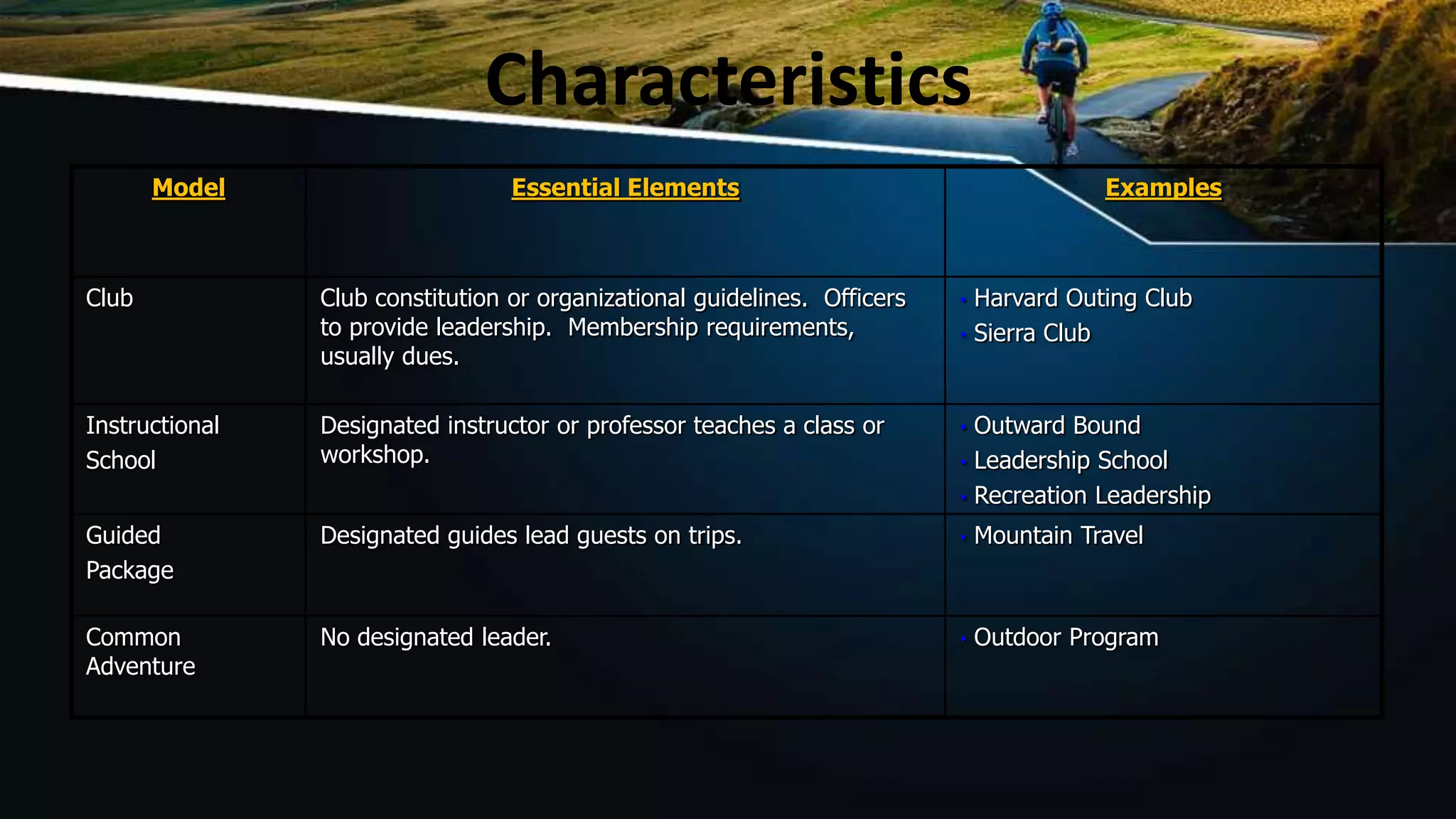
Characteristics
Model Essential Elements Examples
Club Club constitution or organizational guidelines. Officers
to provide leadership. Membership requirements,
usually dues.
• Harvard Outing Club
• Sierra Club
Instructional
School
Designated instructor or professor teaches a class or
workshop.
• Outward Bound
• Leadership School
• Recreation Leadership
Guided
Package
Designated guides lead guests on trips. • Mountain Travel
Common
Adventure
No designated leader. • Outdoor Program
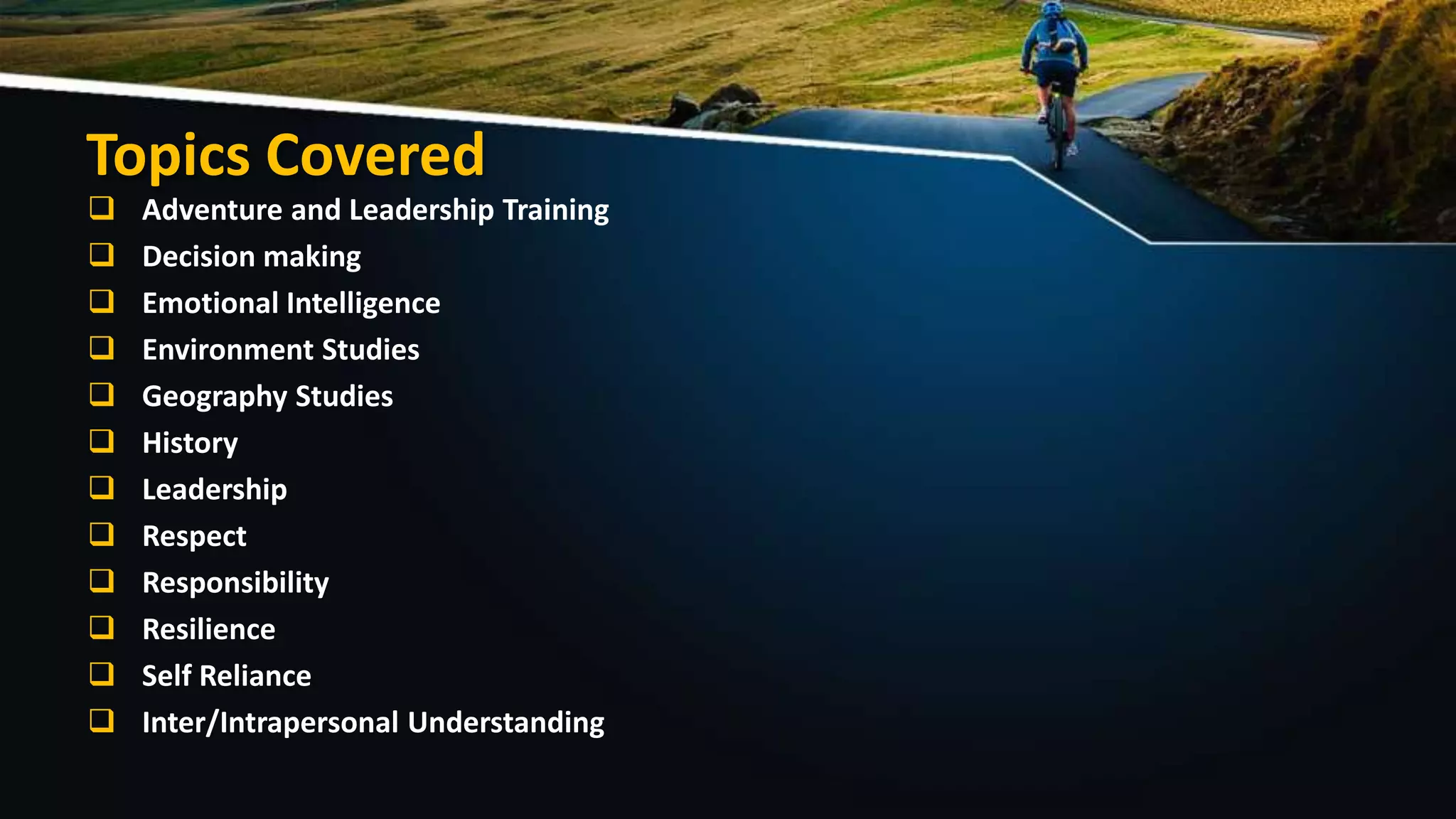
Topics Covered
 Adventure and Leadership Training
 Decision making
 Emotional Intelligence
 Environment Studies
 Geography Studies
 History
 Leadership
 Respect
 Responsibility
 Resilience
 Self Reliance
 Inter/Intrapersonal Understanding
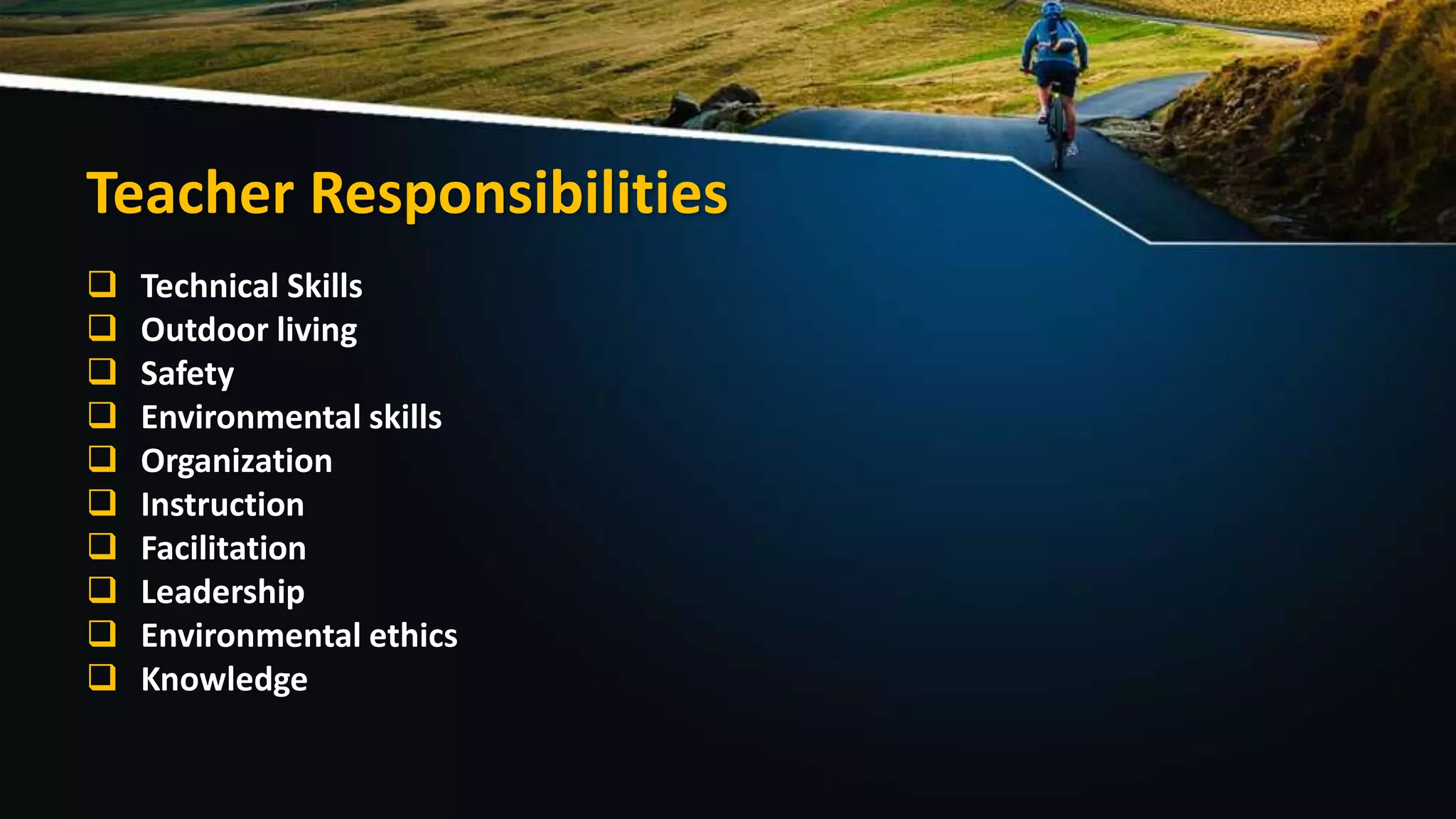
Teacher Responsibilities
 Technical Skills
 Outdoor living
 Safety
 Environmental skills
 Organization
 Instruction
 Facilitation
 Leadership
 Environmental ethics
 Knowledge
Assessment
 Observation checklists of skills
 Progression checklists
 Put students in realistic situations
 Scenarios
 Journaling
 Written tests
 Application Essays
 Interdisciplinary & Transdisciplinary Techniques
 Self Analysis
 Group Feedback/Interaction
 Fitness Tests
 Group Process
 Research
Activities included
 Archery
 Art and Photography Camp craft (cooking)
 Boating
 Biking
 Bushwalking
 Camping
 Canoeing
 Expeditions
 Kayaking
 Navigation activities (orienteering)
 Rafting
 Rock climbing
 Rope courses
 Swimming
 Winter sports (ice fishing, snowshoeing, cross country skiing, snowboarding,
building snow caves, etc.)
Equipment Needed
 Water bottles
 Sunscreen
 Hat/cap
 Waterproof jacket
 Insect repellent
 Cooking utensils
 Extra clothes
 Shoes/boots
 Swim suits
 Towel
 Toiletries
 Camera
 Pillow and sleeping bag
 Bike
 Rope supplies (ropes, harness, etc.)
 Water supplies (canoe, kayak, etc.)
 First Aid kit
 Back pack that everything should fit in
What are the benefits of Outdoor Education?
? TEAM WORK TIME
Benefits
 Different outdoor components and models can be easily blended together through the use of
camping/adventure trips.
 Improved relationships between students and teachers after trips.
 Cultural Connections
 Health benefits
 Positive role models
 Leadership opportunities
 Personal Growth
 Opportunity to make friendships
 Learning accountability and independence
 Increased inter/intrapersonal skills
 Active participation
 Decision making skills
 Problem solving skills
Evidence it works
• Student surveys found that it improves self confidence, self knowledge, team work,
thoughtfulness, and caring for others.
• 65% of those who participate in adventure programs are better off than those who do not
participate.
• Outdoor education participants experience additional growth on returning to their home
environments.
• Researches are still being conducted to find out how effective outdoor education is and
can be.
Thank you!

Outdoor learning presentation

  • 1.
    Outdoor education withBLOCKSTART Association Vulcana-Băi, Romania 23.10.2018
  • 2.
    European projects inour school • „The youngest entrepreneurs of Europe”, 2010-2012 (Turkey- coordinator, Romania, Bulgaria, Poland, Hungary), Comenius multilateral project; • „Cross border cooperation between regions in Latvia and Romania to improve educational offer” (partnership Romania-Latvia: REGIO project, 2012-2014, Comenius multilateral project; • „Little Bird-Little tale”(Lithuania-coordinator, Islanda, Greece, Latvia, Poland, Bulgaria, Italy, Spain, Romania, Turkey, UK), 2013-2015, Comenius multilateral project; • „English language integration in the pre-school game lessons” (Latvia-coordinator, Italy, Turkey, Romania), 2013-2015, Comenius multilateral project; • „Outdoor education - future education” (Portugal, Sweden, Czech Republic), 2015-2016, proiect Erasmus+ KA1.
  • 3.
    European projects inour school • „Healthy Herbs Outlook” (Romania-coordinator, Cyprus, Poland, Turkey, Greece, Lithuania), 2015-2017, Erasmus+ project (KA2); • „Bridging play, learning and technology in childhood education” (Latvia-coordinator, Italy, Turkey, Romania), 2015-2017, Erasmus+ project (KA2); • „WORDS UNITE US” (Romania-coordinator, Greece, Latvia, Lithuania, Bulgaria), 2015-2017, Erasmus+ project (KA2); • „Coloured by the Sun, United by the Sea” (Lithuania-coordinator, France, Portugal, Danmark, Romania), 2015- 2018, Erasmus+ project (KA2);
  • 4.
  • 5.
     Who weare: Romanian NGO created in 2015  What recommends us: experience in Erasmus+ projects, project management, outdoor education, sports and cultural events.  Our areas of expertise: Outdoor Education, Project Management, Ecology and Sustainability, Humanitarian Causes, Youth Education, Adult Education, Continuous Learning Our wish is that Blockstart will be for you a window towards the world, one through which we can look together toward a brighter future, one designed with the fabric of our hopes, dreams, enthusiasm, creativity and energy.
  • 6.
  • 7.
    Some of ouractivities: • Humanitarian projects:  „Copilul Muntelui” – charity concert;  „Blockstart Summer Camp”;  Various charitable activities.  Ecological actions:  Tree planting;  Cleaning the polluted areas;  Awareness raising campaigns.  Sports activities/contests:  Let’s DARTS;  Summer/Autumn SHUTTLE;  Chess competition;  Sports’ Day.
  • 8.
    Our COURSES: • „TransdisciplinarityThrough Outdoor Learning in the Danube Delta”  Tulcea, Romania;  November/ April.  „Management and Leadership in Projects and Organizations”  Sighișoara, Romania – October;  Sighișoara, Romania – May.  „Global environmental change and sustainable development. Regional and local impacts and perspectives.”
  • 9.
    Blockstart in Images: Risingfunds for poor children
  • 10.
    Blockstart summer camp: •Visiting natural monuments; • Mountain trips.
  • 11.
  • 12.
    How to builda shelter: Let's cook together:
  • 14.
  • 16.
    Let's help others: Fooddonations for the old people or for the monasteries:
  • 17.
  • 18.
  • 19.
    What is OutdoorEducation? ? TEAM WORK TIME
  • 20.
    What is OutdoorEducation? Outdoor education can be simply described as: experiential learning in the outdoors. The term "outdoor education", however, is widely used to refer to a range of organized activities, which take place in a variety of ways, in predominantly outdoor environments.
  • 21.
    What is OutdoorLearning? Outdoor Learning is a broad term that includes:  outdoor play in the early years,  school grounds projects,  environmental education,  recreational and adventure activities,  personal and social development programmes,  expeditions,  team building,  leadership training,  management development,  education for sustainability,  adventure therapy ... and more. Outdoor Learning does not have a clearly defined boundary but it does have a common core.
  • 22.
    Outdoor Learning isin dramatic contrast to the indoor classroom. Experience in the outdoors is more motivating and has more impact and credibility. In Outdoor Learning participants learn through what they do, through what they encounter and through what they discover. Participants learn about the outdoors, themselves and each other, while also learning outdoor skills. This type of learning develops the skills of: • experiment, • feedback, • reflection, • review, • cooperative learning.
  • 23.
    Outdoor Learning happensin the natural environments where participants can see, hear, touch and smell the real thing. It also happens in an arena where actions have real results and consequences. The experiences and curiosities that outdoor environments and activities can create are without limit. Participants discover potential, abilities and interests that surprise themselves and others. Outdoor Learning draws in energy and inspiration from all around. 'Broadening horizons' is a common outcome.
  • 24.
    Philosophy/Aims of OutdoorEducation The aim of outdoor education is to learn how to overcome adversity, work with others and to develop a deeper relationship with nature. The three domains of self, others and the natural world are commonly understood as the main aims in outdoor education. Some specific outdoor education programs aims are to:  Reduce recidivism (crime)  Enhance teamwork  Teach outdoor survival skills  Promote spirituality  Understand natural environments  Develop leadership skills  Improve problem solving skills
  • 25.
    Components of OutdoorEducation Experiential Education Interpersonal relationships - refer to how people get along in a group of two or more people. Intrapersonal relationships - refer to how an individual gets along with self, self-concept, spirituality, confidence, self-efficacy, etc. Environmental Education Eco-systemic relationships- refer to the interdependence of living organisms in ecological microclimate. Ecosystem relationships- refer to the interactions between human society and the natural resources of an environment.
  • 26.
    Characteristics Model Essential ElementsExamples Club Club constitution or organizational guidelines. Officers to provide leadership. Membership requirements, usually dues. • Harvard Outing Club • Sierra Club Instructional School Designated instructor or professor teaches a class or workshop. • Outward Bound • Leadership School • Recreation Leadership Guided Package Designated guides lead guests on trips. • Mountain Travel Common Adventure No designated leader. • Outdoor Program
  • 27.
    Topics Covered  Adventureand Leadership Training  Decision making  Emotional Intelligence  Environment Studies  Geography Studies  History  Leadership  Respect  Responsibility  Resilience  Self Reliance  Inter/Intrapersonal Understanding
  • 28.
    Teacher Responsibilities  TechnicalSkills  Outdoor living  Safety  Environmental skills  Organization  Instruction  Facilitation  Leadership  Environmental ethics  Knowledge
  • 29.
    Assessment  Observation checklistsof skills  Progression checklists  Put students in realistic situations  Scenarios  Journaling  Written tests  Application Essays  Interdisciplinary & Transdisciplinary Techniques  Self Analysis  Group Feedback/Interaction  Fitness Tests  Group Process  Research
  • 30.
    Activities included  Archery Art and Photography Camp craft (cooking)  Boating  Biking  Bushwalking  Camping  Canoeing  Expeditions  Kayaking  Navigation activities (orienteering)  Rafting  Rock climbing  Rope courses  Swimming  Winter sports (ice fishing, snowshoeing, cross country skiing, snowboarding, building snow caves, etc.)
  • 31.
    Equipment Needed  Waterbottles  Sunscreen  Hat/cap  Waterproof jacket  Insect repellent  Cooking utensils  Extra clothes  Shoes/boots  Swim suits  Towel  Toiletries  Camera  Pillow and sleeping bag  Bike  Rope supplies (ropes, harness, etc.)  Water supplies (canoe, kayak, etc.)  First Aid kit  Back pack that everything should fit in
  • 32.
    What are thebenefits of Outdoor Education? ? TEAM WORK TIME
  • 33.
    Benefits  Different outdoorcomponents and models can be easily blended together through the use of camping/adventure trips.  Improved relationships between students and teachers after trips.  Cultural Connections  Health benefits  Positive role models  Leadership opportunities  Personal Growth  Opportunity to make friendships  Learning accountability and independence  Increased inter/intrapersonal skills  Active participation  Decision making skills  Problem solving skills
  • 34.
    Evidence it works •Student surveys found that it improves self confidence, self knowledge, team work, thoughtfulness, and caring for others. • 65% of those who participate in adventure programs are better off than those who do not participate. • Outdoor education participants experience additional growth on returning to their home environments. • Researches are still being conducted to find out how effective outdoor education is and can be.
  • 35.

Editor's Notes

  • #10 The “ Copilul Muntelui” fund rising concert. It means child of the mountain and the theme was related to mountain songs. We have raised funds for buying boots for the poor children of the Vulcana Bai village. The concert was fully booked and a real success.
  • #11 Summer camp organized for the poor children who cannot afford to go on summer holiday. They had their forts real holiday, received gifts and had a fun week at the mountains, full of outdoor activities.
  • #12 The summer camp kids exploring caves and playing outdoor games.
  • #13 Resource gathering and meal preparations, another fun way of making outdoor education.
  • #14 Happy people with their bellies full of delicious food.
  • #15 Learning the essentials of survival: how to make a fire but also how to make doughnuts. 
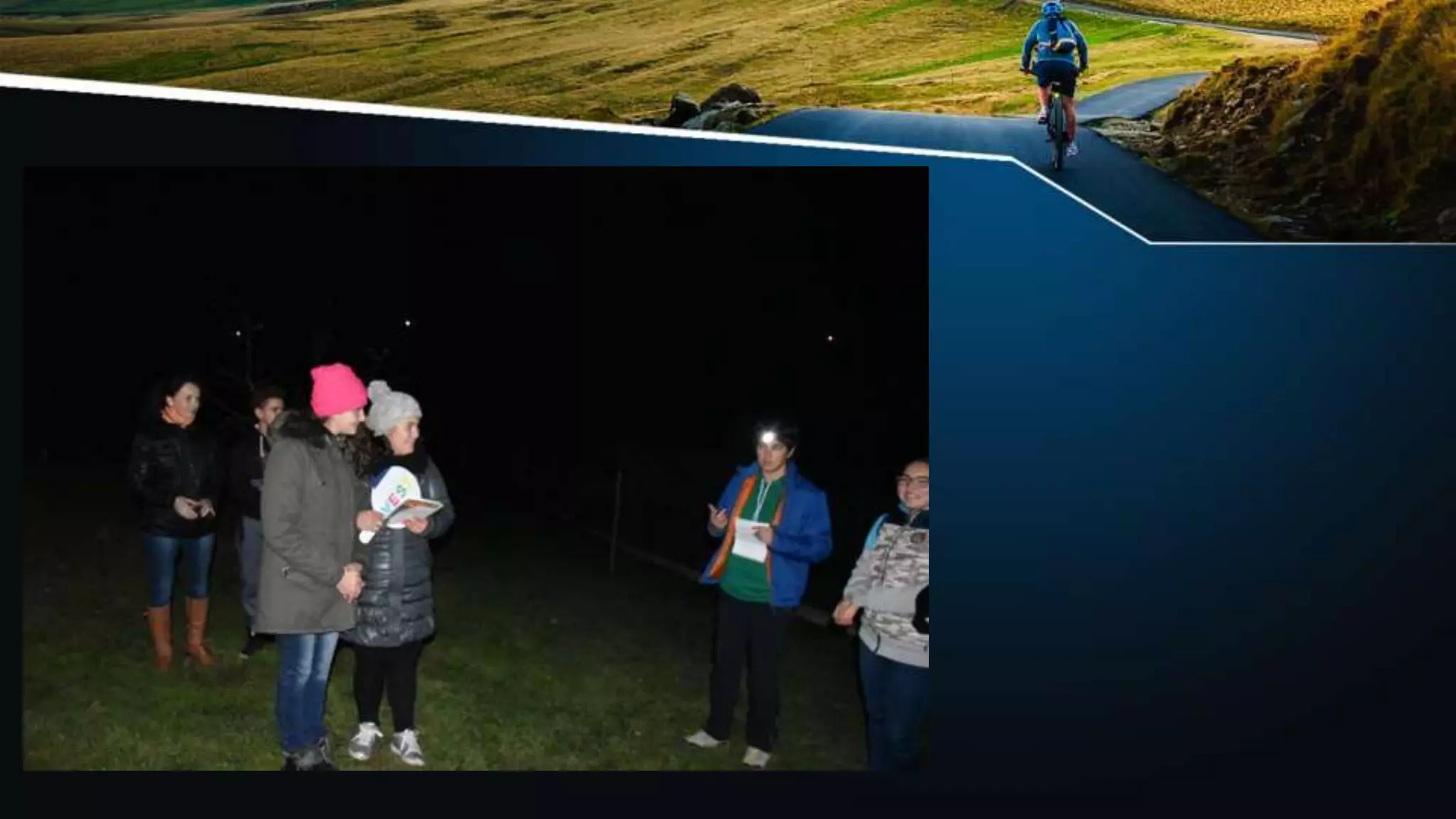
  • #16 Outdoor by day and night.
  • #17 Sharing is caring, and we do care a lot. We always include the less fortunate in our thoughts and plans and we always get help from the community.
  • #18 Let us not forget the sports activities. With a sports teacher in charge we’re always planning for a new sports competition that brings joy to everyone.
  • #19 And music is important too. The talented need to be supported, we might need their autograph sometimes in the future. 