
Our  Intracultural Selves Us, our lives, and our classrooms
many aspects
many different influences PLACES SCHOOL CULTURAL BACKGROUND RELATIONSHIPS
 
 
We are  complex beings
So are our kids
 
Using the questions in the
 
 
An intracultural self
ongoing process The Standards  can help…
Educational theory and practice What is the culture of the school in which you teach? Language and Culture How do you use and develop your language abilities? What sorts of contacts do you have with target language communities, personally or through reading, the media or web? What recent activities have you undertaken to develop your language and cultural knowledge of the culture you teach?
 
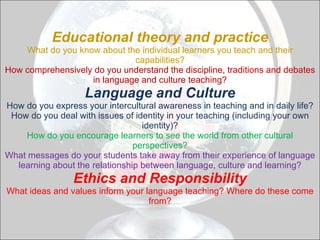
Educational theory and practice What do you know about the individual learners you teach and their capabilities? How comprehensively do you understand the discipline, traditions and debates in language and culture teaching? Language and Culture How do you express your intercultural awareness in teaching and in daily life? How do you deal with issues of identity in your teaching (including your own identity)? How do you encourage learners to see the world from other cultural perspectives? What messages do your students take away from their experience of language learning about the relationship between language, culture and learning? Ethics and Responsibility What ideas and values inform your language teaching? Where do these come from?
Ideas for getting to know our students Class party with traditional food Counting to 10 in different languages – kids teaching kids Interests incorporated into unit you are working on – vocab for their interests Looking at students’ daily routine –eg. what time do you eat tea? Who Am I Profile – read diff. one each session
Ideas continued… Fashion parade Group discussion – telling their stories Students to interview family members Show and Tell – bring in an item and explain its significance Assembly – showing flag and using greeting of student’s nationality

Our Intracultural Selves

  • 1.
    Our IntraculturalSelves Us, our lives, and our classrooms
  • 2.
  • 3.
    many different influencesPLACES SCHOOL CULTURAL BACKGROUND RELATIONSHIPS
  • 4.
  • 5.
  • 6.
    We are complex beings
  • 7.
  • 8.
  • 9.
  • 10.
  • 11.
  • 12.
  • 13.
    ongoing process TheStandards can help…
  • 14.
    Educational theory andpractice What is the culture of the school in which you teach? Language and Culture How do you use and develop your language abilities? What sorts of contacts do you have with target language communities, personally or through reading, the media or web? What recent activities have you undertaken to develop your language and cultural knowledge of the culture you teach?
  • 15.
  • 16.
    Educational theory andpractice What do you know about the individual learners you teach and their capabilities? How comprehensively do you understand the discipline, traditions and debates in language and culture teaching? Language and Culture How do you express your intercultural awareness in teaching and in daily life? How do you deal with issues of identity in your teaching (including your own identity)? How do you encourage learners to see the world from other cultural perspectives? What messages do your students take away from their experience of language learning about the relationship between language, culture and learning? Ethics and Responsibility What ideas and values inform your language teaching? Where do these come from?
  • 17.
    Ideas for gettingto know our students Class party with traditional food Counting to 10 in different languages – kids teaching kids Interests incorporated into unit you are working on – vocab for their interests Looking at students’ daily routine –eg. what time do you eat tea? Who Am I Profile – read diff. one each session
  • 18.
    Ideas continued… Fashionparade Group discussion – telling their stories Students to interview family members Show and Tell – bring in an item and explain its significance Assembly – showing flag and using greeting of student’s nationality