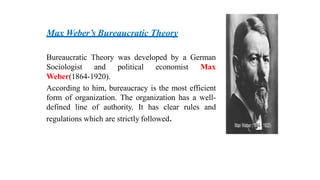
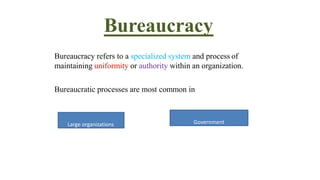
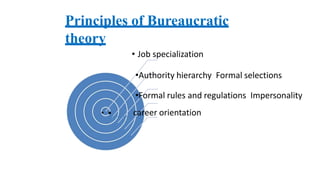
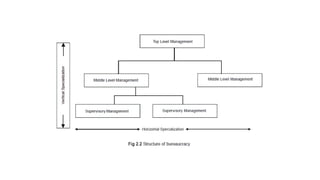
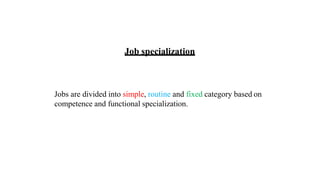
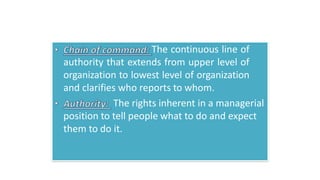
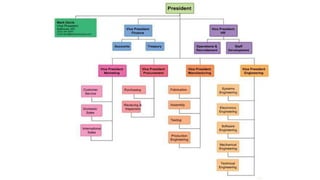
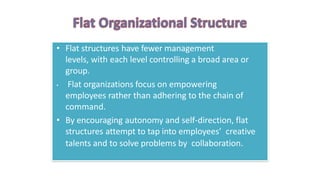
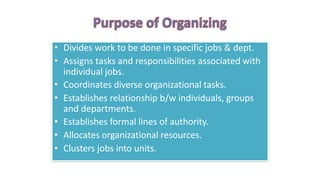
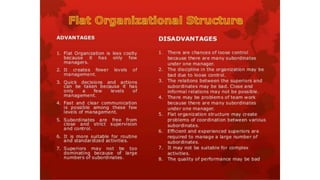
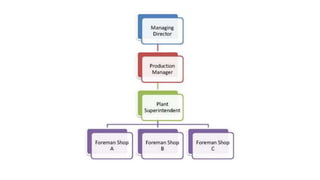
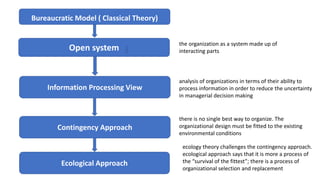
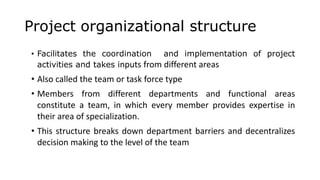
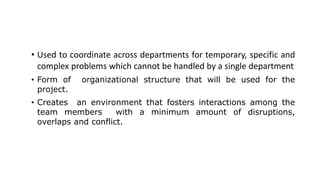
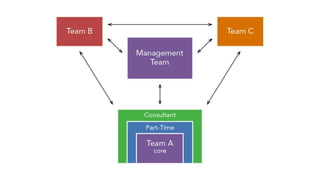
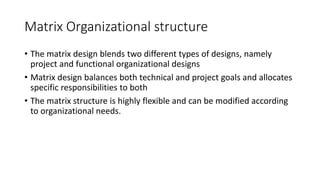
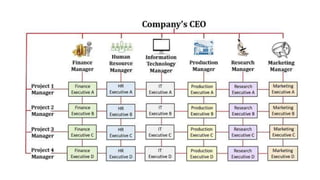
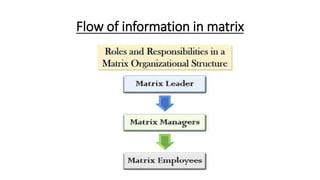
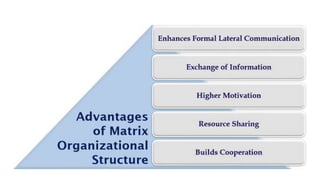
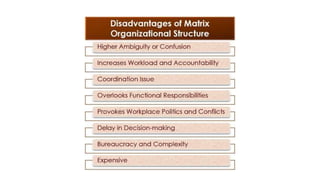
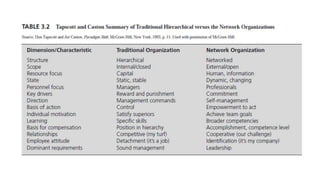
Max Weber developed the bureaucratic theory of organizational design, which proposes that bureaucracy is the most efficient form of organization. Key principles of bureaucratic theory include job specialization, a formal authority hierarchy, formal rules and regulations, impersonality, and career orientation. Bureaucratic organizations typically have a clear division of labor, standardized processes, and decisions made based on technical competence rather than personal relationships. However, bureaucracies are also criticized for being rigid and inflexible with an overemphasis on rules. Modern organizational designs have evolved to incorporate principles like project-based, matrix, and horizontal structures to balance efficiency with flexibility, collaboration, and innovation.