Organization Culture and
Climate
Climate
What is Organizational Culture?
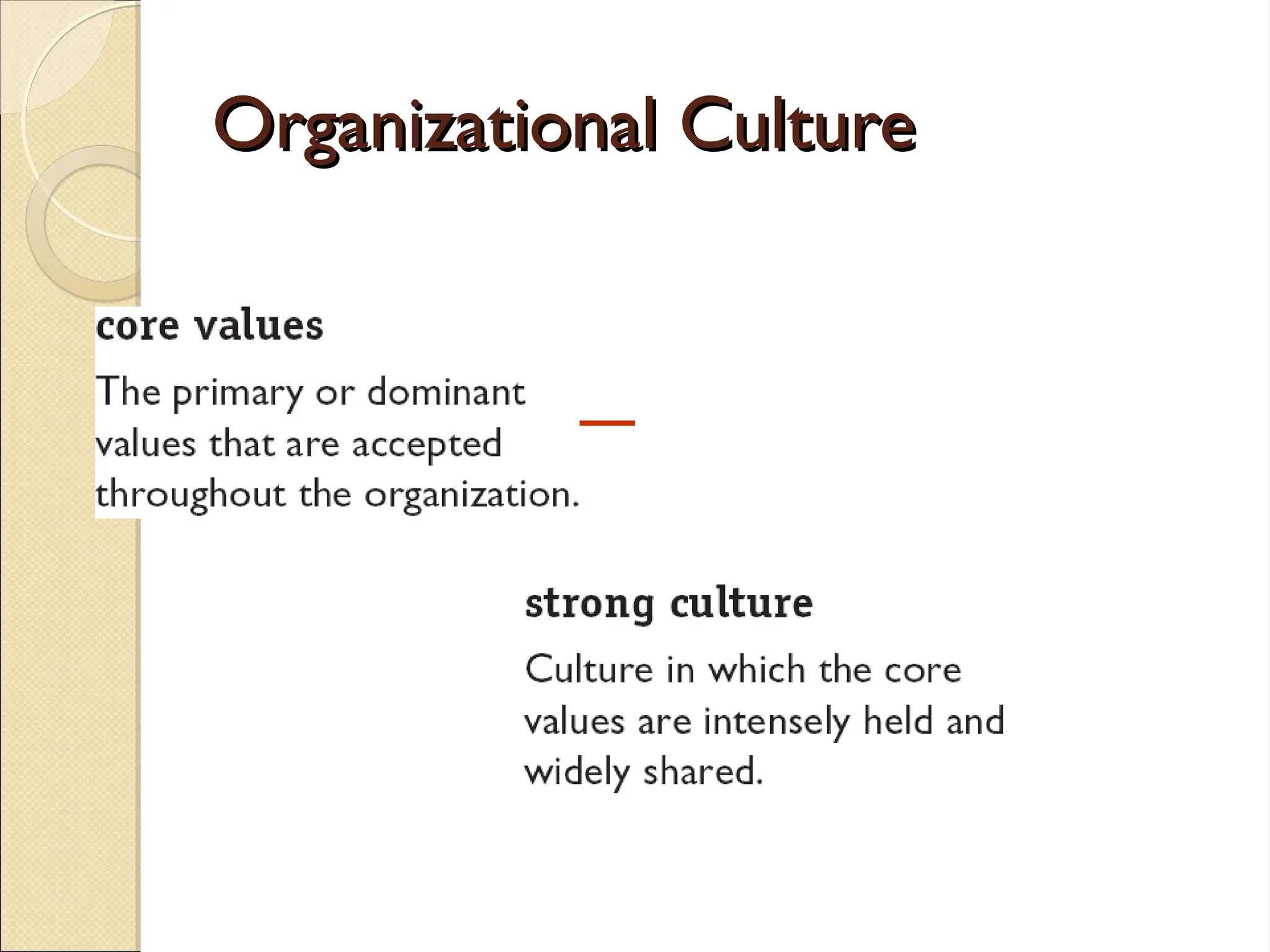
The set of shared values and norms that
controls organizational members’
interactions with each other and with
people outside the organization
Organizational Culture
 Based on enduring values
 embodied in organizational norms, rules,
standard operating procedures, and goals
Organizational Culture
 People use these elements to guide their
actions and decisions when faced with
uncertainty and ambiguity.
 Important influence on members’
behavior and response to situations
Organizational Culture
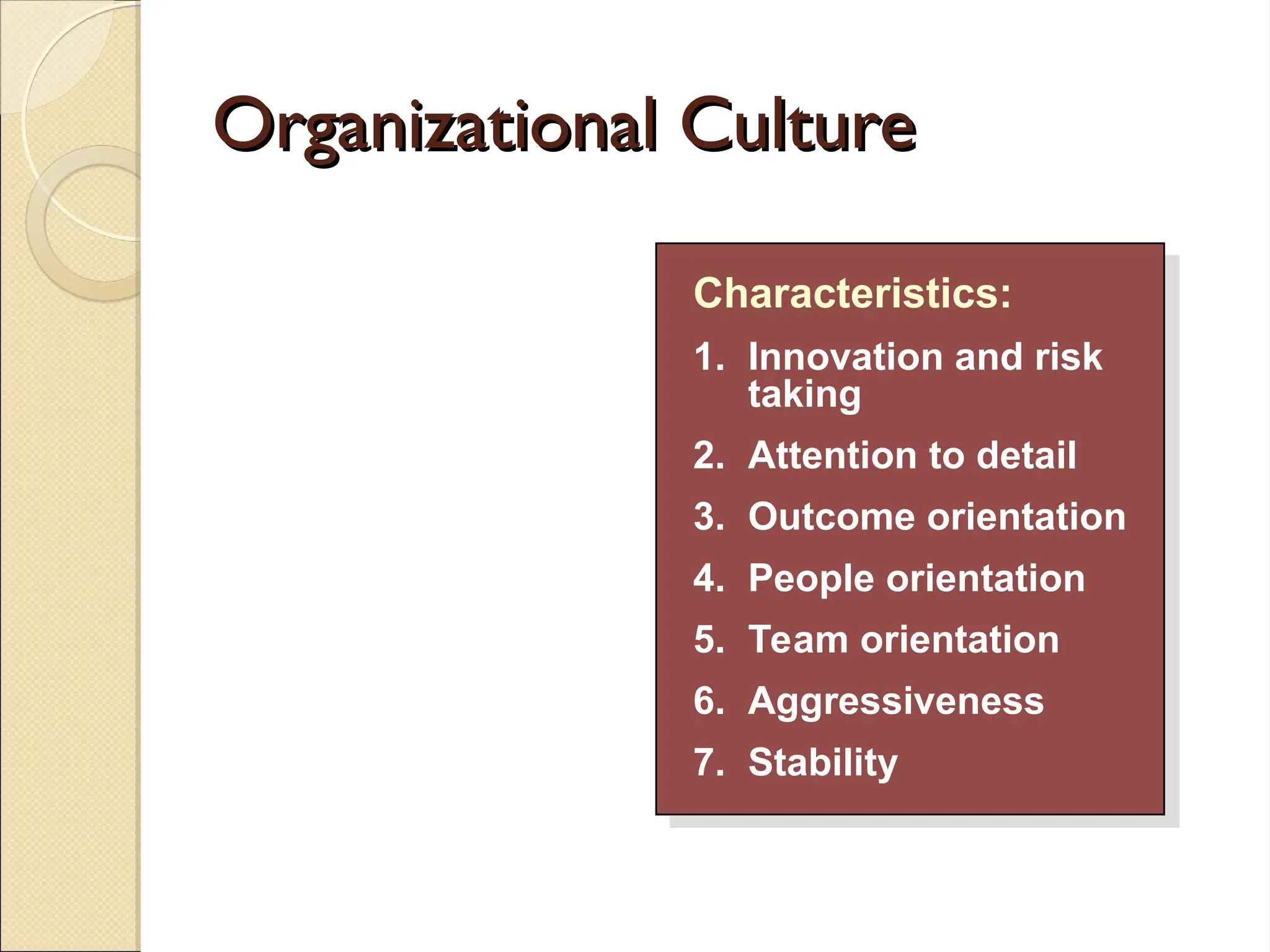
Characteristics:
1. Innovation and risk
taking
2. Attention to detail
3. Outcome orientation
4. People orientation
5. Team orientation
6. Aggressiveness
7. Stability
DIMENTIONS OF ORGANIZATIONAL
CULTURE
CULTURE
© Prentice Hall, 2002 3-
3-11
11
Organizational Culture
What Do Cultures Do?
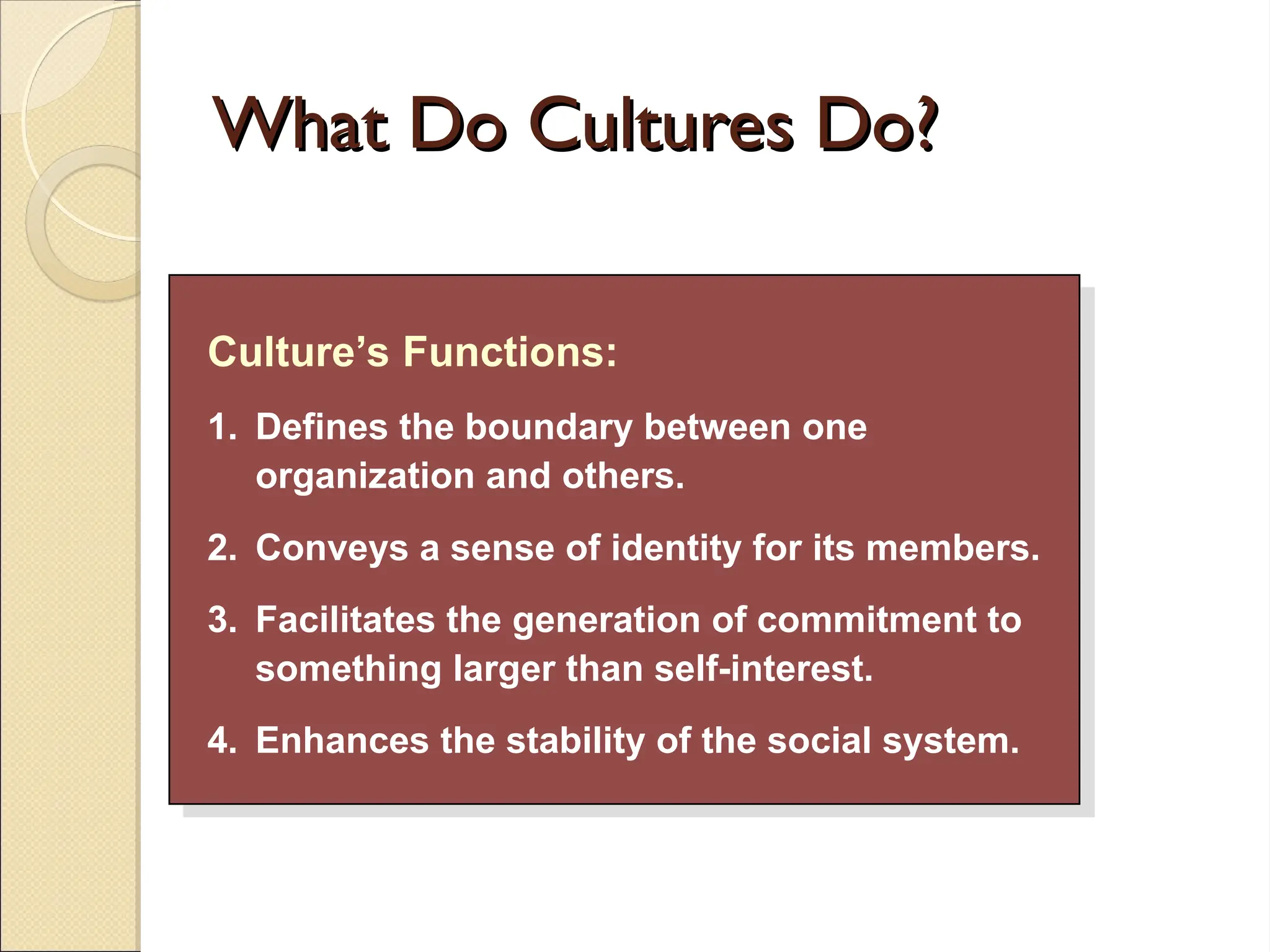
Culture’s Functions:
1. Defines the boundary between one
organization and others.
2. Conveys a sense of identity for its members.
3. Facilitates the generation of commitment to
something larger than self-interest.
4. Enhances the stability of the social system.
Limitations of Culture
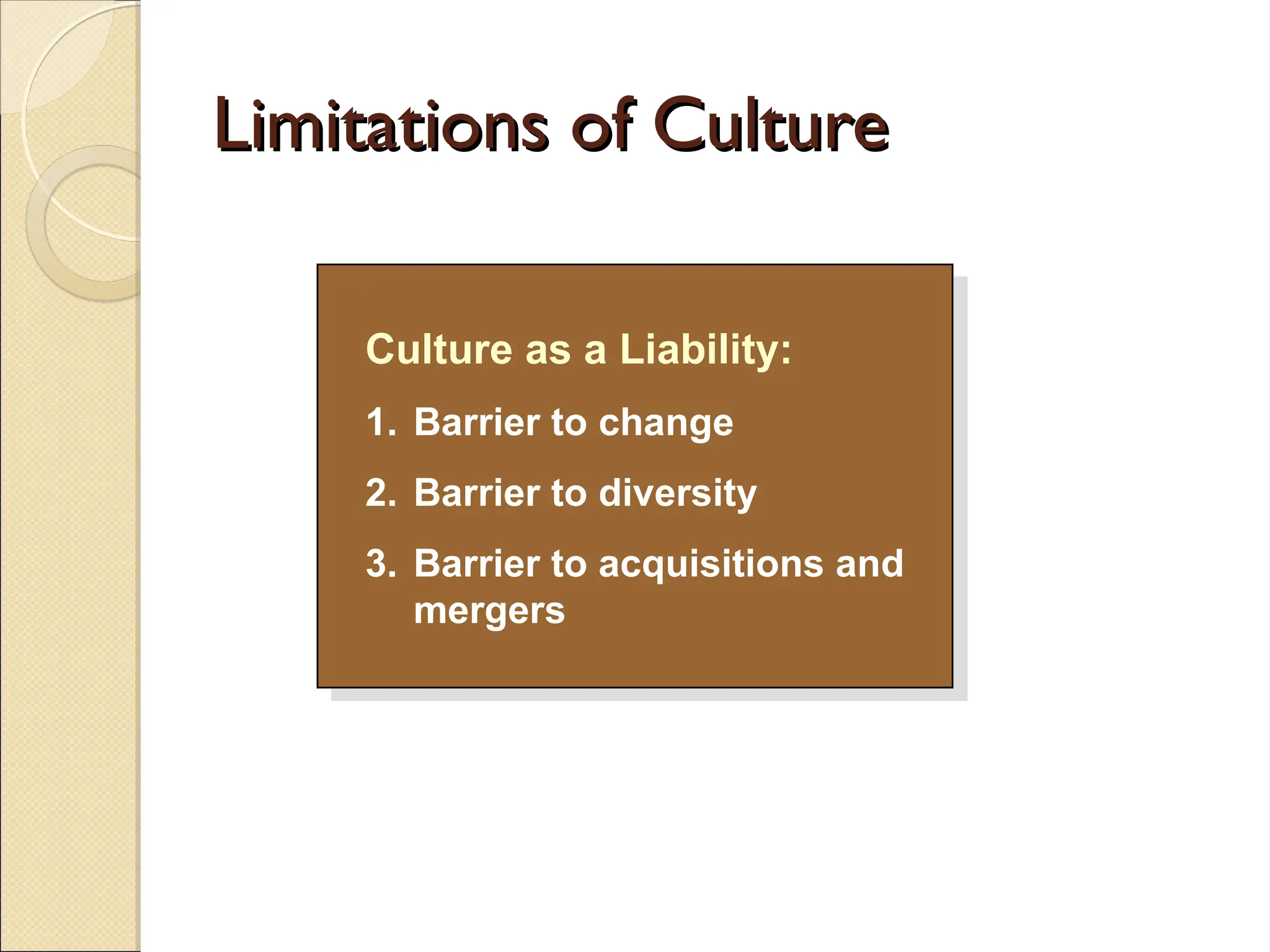
Culture as a Liability:
1. Barrier to change
2. Barrier to diversity
3. Barrier to acquisitions and
mergers
The Organization’s Culture
 StrongVersusWeak Cultures
◦ in strong cultures, the key values are deeply held and
widely shared
◦ strong cultures have greater influence on employees than
do weak cultures
© Prentice Hall, 2002 3-
3-16
16
Strong Versus Weak Cultures
◦ employees more committed to organizations
with strong cultures
◦ strong cultures are associated with high
organizational performance
◦ most organizations have moderate to strong
cultures
How Organization Cultures Form
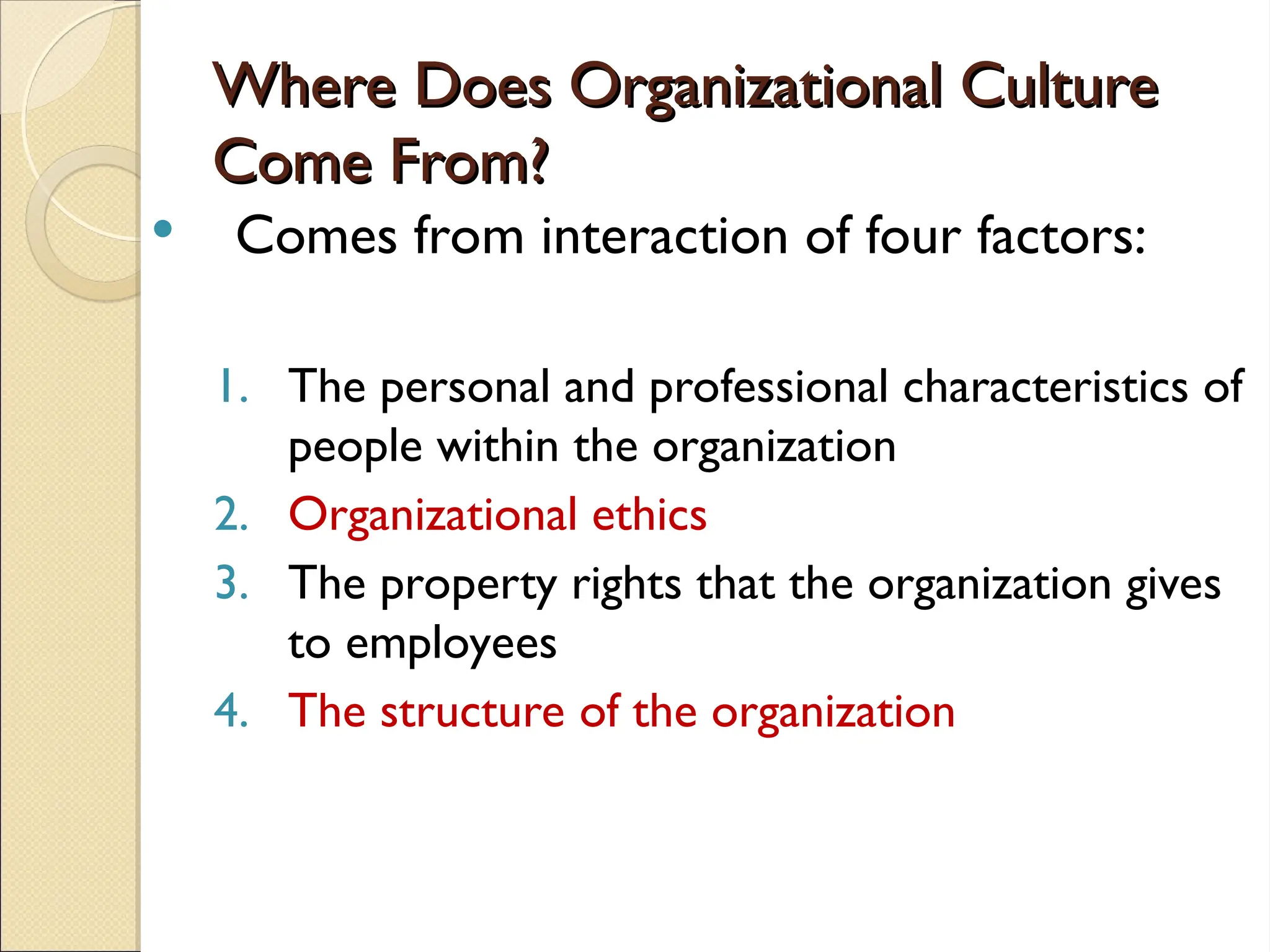
Where Does Organizational Culture
Come From?
Come From?
 Comes from interaction of four factors:
1. The personal and professional characteristics of
people within the organization
2. Organizational ethics
3. The property rights that the organization gives
to employees
4. The structure of the organization
How Employees Learn Culture
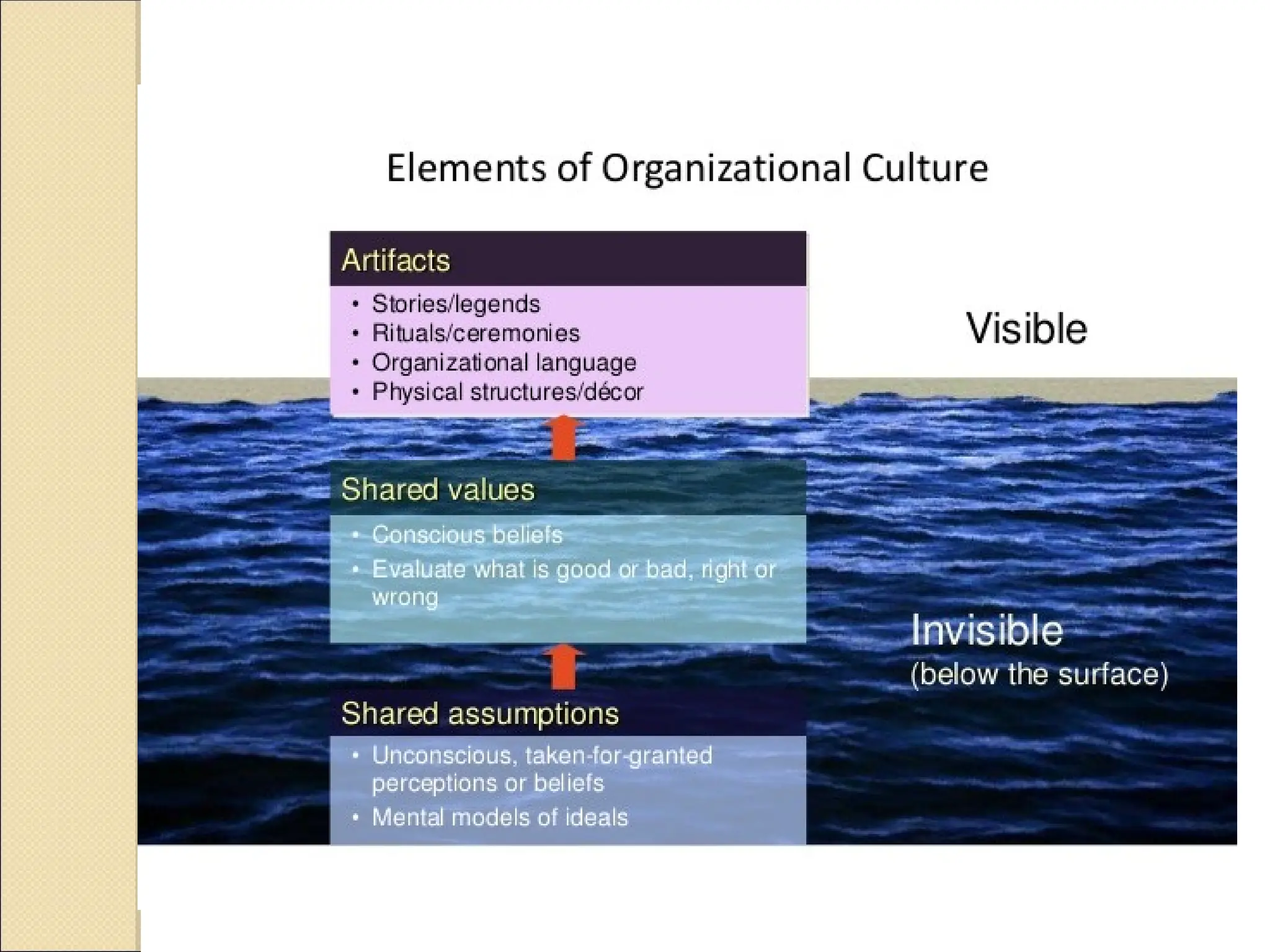
• Stories
• Rituals
• Material Symbols
• Language
How Employees Learn Culture
◦ Stories - a narrative of significant events or people
◦ Rituals - repetitive sequences of activities
◦ Material symbols – essential in creating an
organization’s personality.
◦ Language - identifies members of a culture
 organizations develop unique terminology or jargon
© Prentice Hall, 2002 3-
3-21
21
Keeping Culture Alive
 Selection
◦ Concerned with how well the candidates will fit
into the organization.
◦ Provides information to candidates about the
organization.
Keeping Culture Alive
 Top Management
◦ Senior executives help establish behavioral
norms that are adopted by the organization.
 Socialization
◦ The process that helps new employees adapt
to the organization’s culture.
Can Organizational Culture be
Managed?
Managed?
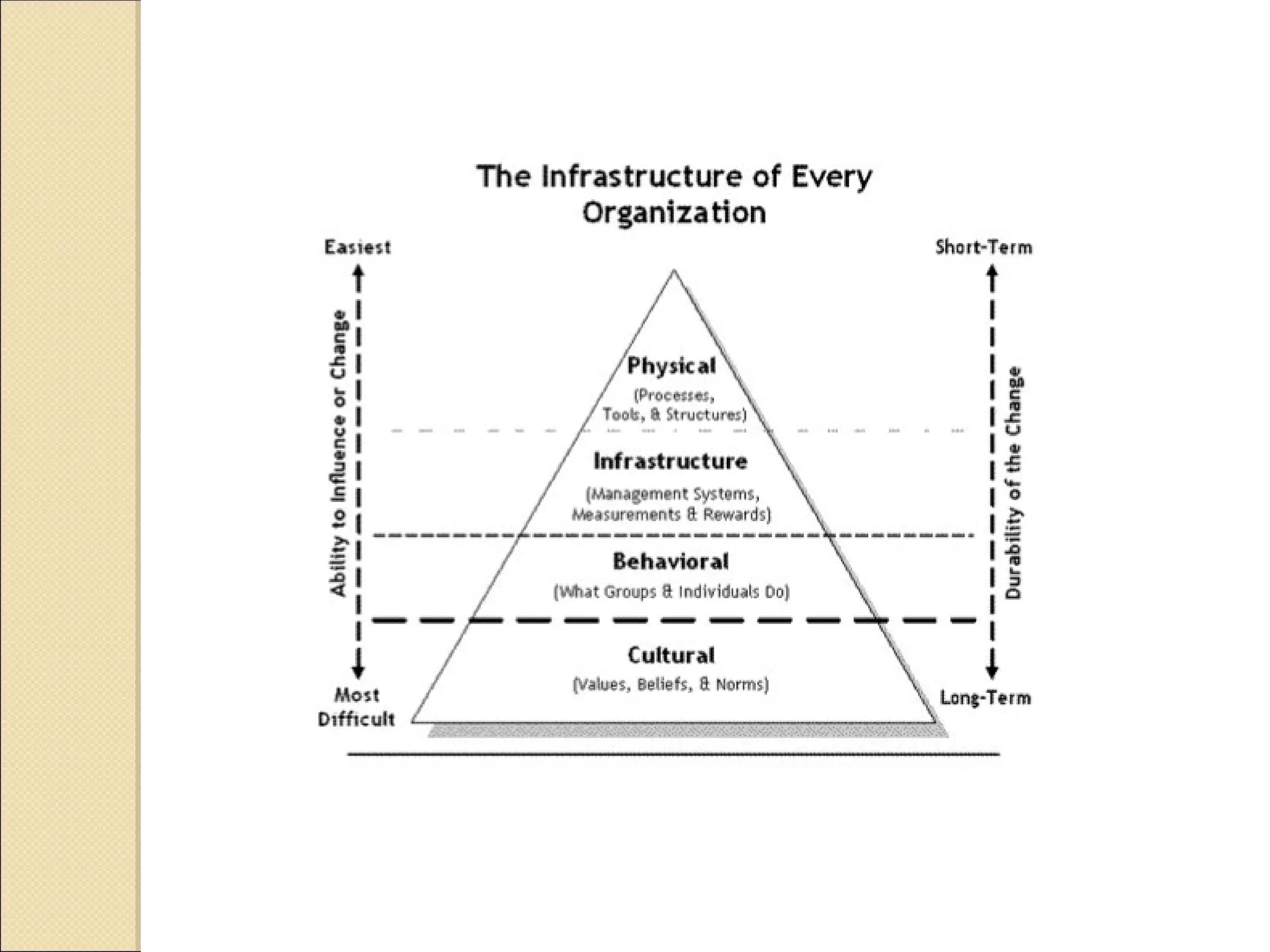
 Changing a culture can be very difficult as
it is hard to understand how the previous
four factors interact.
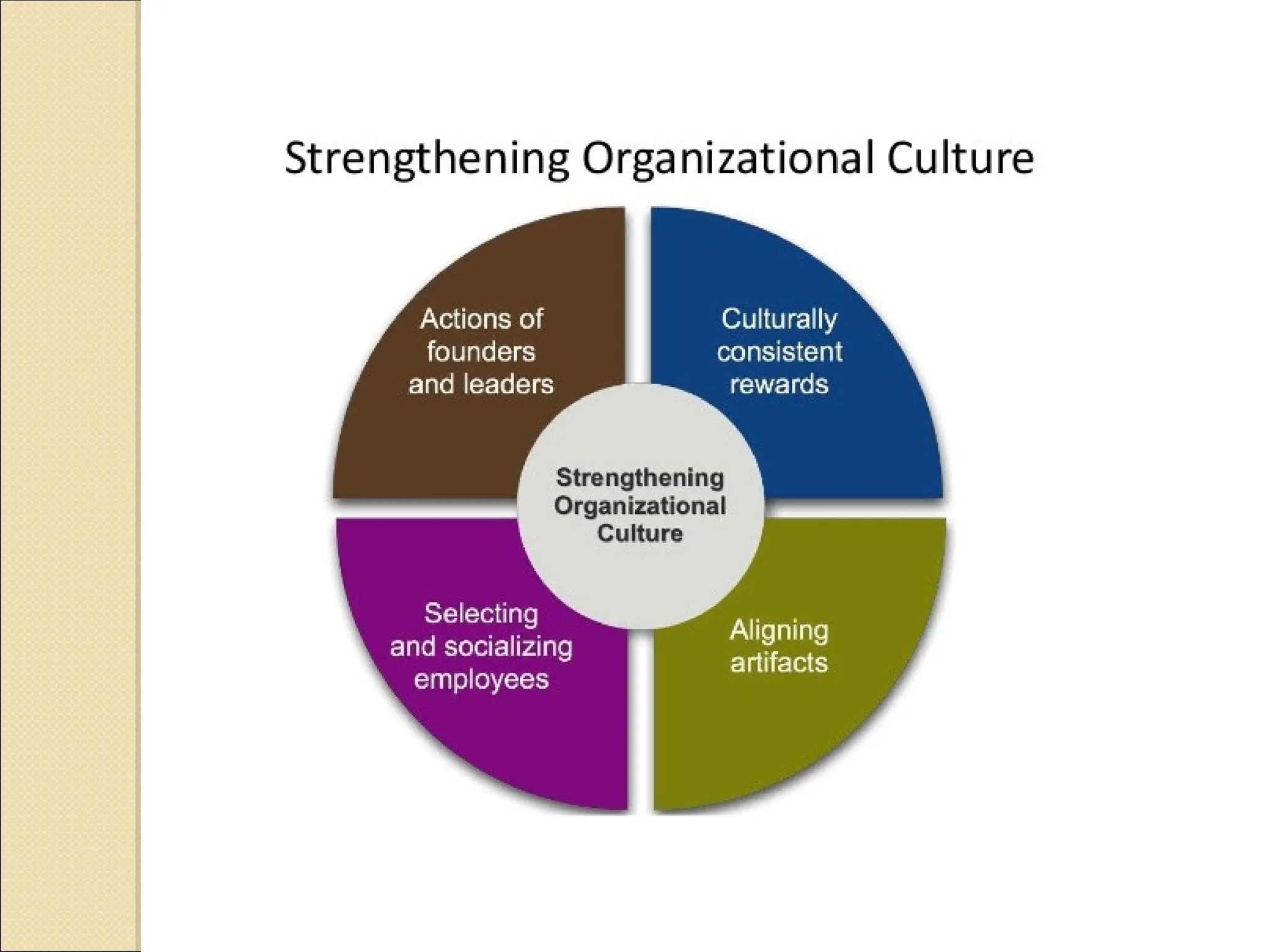
Some ways culture can be changed
 Redesign structure
 Revise property rights used to motivate
people
 Change the people – especially top
management
Organization Culture Power Point Presentation

Organization Culture Power Point Presentation

  • 1.
    Organization Culture and OrganizationCulture and Climate Climate
  • 2.
    What is OrganizationalCulture? What is Organizational Culture? The set of shared values and norms that controls organizational members’ interactions with each other and with people outside the organization
  • 3.
    Organizational Culture Organizational Culture Based on enduring values  embodied in organizational norms, rules, standard operating procedures, and goals
  • 4.
    Organizational Culture Organizational Culture People use these elements to guide their actions and decisions when faced with uncertainty and ambiguity.  Important influence on members’ behavior and response to situations
  • 10.
    Organizational Culture Organizational Culture Characteristics: 1.Innovation and risk taking 2. Attention to detail 3. Outcome orientation 4. People orientation 5. Team orientation 6. Aggressiveness 7. Stability
  • 11.
    DIMENTIONS OF ORGANIZATIONAL DIMENTIONSOF ORGANIZATIONAL CULTURE CULTURE © Prentice Hall, 2002 3- 3-11 11
  • 12.
  • 13.
  • 14.
    What Do CulturesDo? What Do Cultures Do? Culture’s Functions: 1. Defines the boundary between one organization and others. 2. Conveys a sense of identity for its members. 3. Facilitates the generation of commitment to something larger than self-interest. 4. Enhances the stability of the social system.
  • 15.
    Limitations of Culture Limitationsof Culture Culture as a Liability: 1. Barrier to change 2. Barrier to diversity 3. Barrier to acquisitions and mergers
  • 16.
    The Organization’s Culture TheOrganization’s Culture  StrongVersusWeak Cultures ◦ in strong cultures, the key values are deeply held and widely shared ◦ strong cultures have greater influence on employees than do weak cultures © Prentice Hall, 2002 3- 3-16 16
  • 17.
    Strong Versus WeakCultures Strong Versus Weak Cultures ◦ employees more committed to organizations with strong cultures ◦ strong cultures are associated with high organizational performance ◦ most organizations have moderate to strong cultures
  • 18.
    How Organization CulturesForm How Organization Cultures Form
  • 19.
    Where Does OrganizationalCulture Where Does Organizational Culture Come From? Come From?  Comes from interaction of four factors: 1. The personal and professional characteristics of people within the organization 2. Organizational ethics 3. The property rights that the organization gives to employees 4. The structure of the organization
  • 20.
    How Employees LearnCulture How Employees Learn Culture • Stories • Rituals • Material Symbols • Language
  • 21.
    How Employees LearnCulture How Employees Learn Culture ◦ Stories - a narrative of significant events or people ◦ Rituals - repetitive sequences of activities ◦ Material symbols – essential in creating an organization’s personality. ◦ Language - identifies members of a culture  organizations develop unique terminology or jargon © Prentice Hall, 2002 3- 3-21 21
  • 22.
    Keeping Culture Alive KeepingCulture Alive  Selection ◦ Concerned with how well the candidates will fit into the organization. ◦ Provides information to candidates about the organization.
  • 23.
    Keeping Culture Alive KeepingCulture Alive  Top Management ◦ Senior executives help establish behavioral norms that are adopted by the organization.  Socialization ◦ The process that helps new employees adapt to the organization’s culture.
  • 24.
    Can Organizational Culturebe Can Organizational Culture be Managed? Managed?  Changing a culture can be very difficult as it is hard to understand how the previous four factors interact.
  • 25.
    Some ways culturecan be changed Some ways culture can be changed  Redesign structure  Revise property rights used to motivate people  Change the people – especially top management