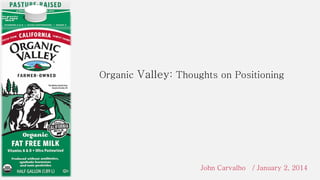
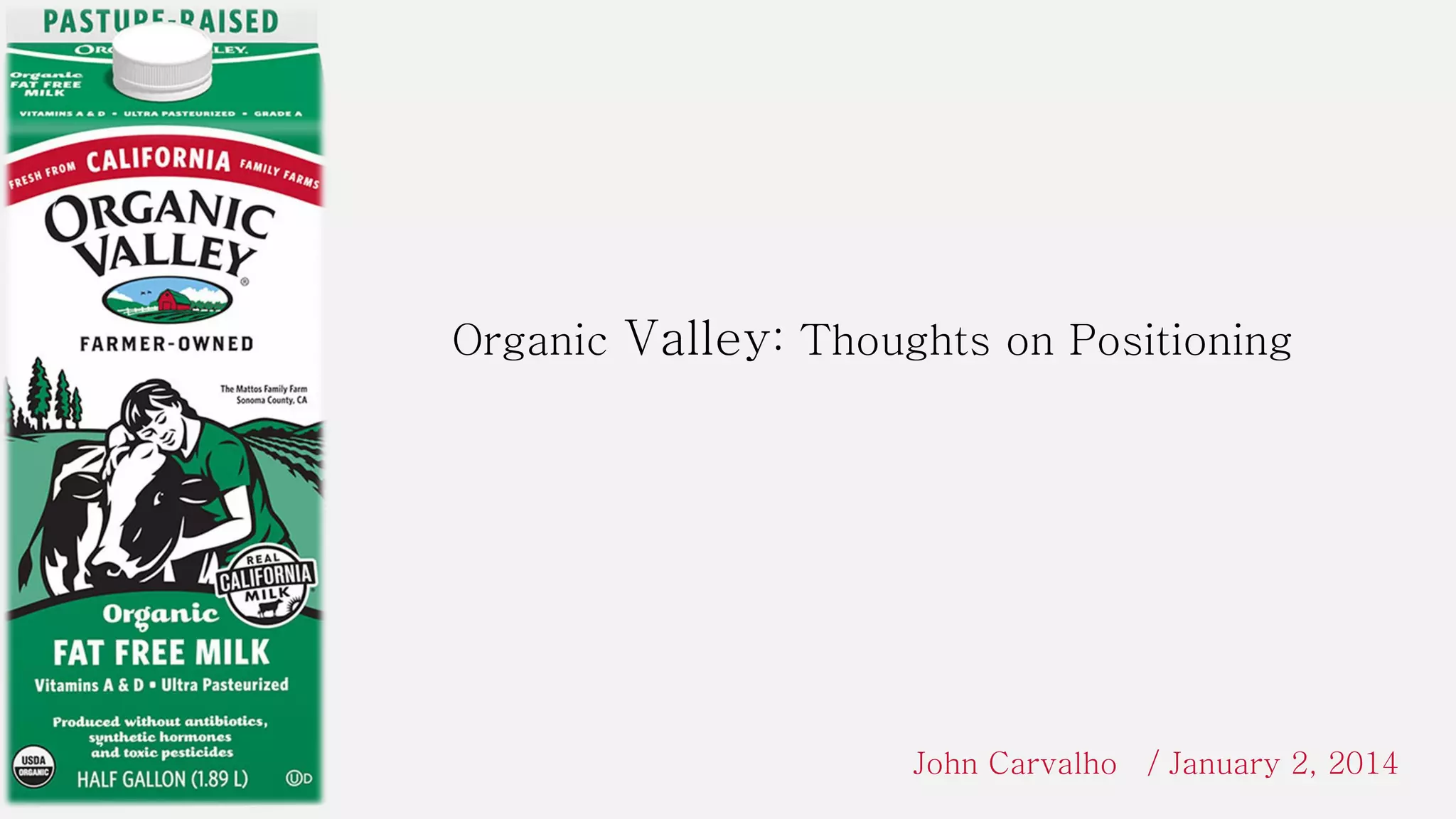
Organic Valley: Thoughts on Positioning

John Carvalho / January 2, 2014
Organic Valley’s problem: grow share without alienating

diehards.
How do we create “loyalty beyond reason” in a
commodity market with razor-thin margins?
Step 1: Figure out what
makes these Diehards
tick.
A hint comes from
understanding
Diehards’ at-shelf
behavior.
According to my
sampling of Whole
Foods employees,
these customers
don’t come in
asking for organic.

They ask for “the best” and
are directed to organic.
So, we start to untangle the relationship between “best”
and “organic” in search of a brand value proposition that
can resonate with both Diehards and the untapped
middle.
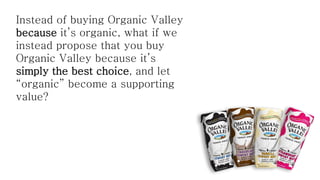
Instead of buying Organic Valley
because it’s organic, what if we
instead propose that you buy
Organic Valley because it’s
simply the best choice, and let
“organic” become a supporting
value?
Gourmet

But, being the best does not
simply mean the most epicurean,
the most fancy. Epicurean
appeals to Diehards, but doesn’t
appeal to middle-America
moms, and doesn’t help truly
broaden appeal.
Instead, let’s consider two ideas that are often placed in
opposition to each other:

Simplicity / Luxury
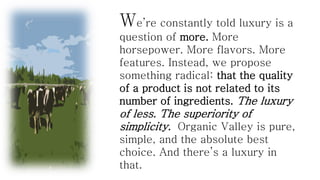
We’re constantly told luxury is a
question of more. More
horsepower. More flavors. More
features. Instead, we propose
something radical: that the quality
of a product is not related to its
number of ingredients. The luxury

of less. The superiority of
simplicity. Organic Valley is pure,
simple, and the absolute best
choice. And there’s a luxury in
that.
What does this do for each of our target audiences?
Diehards: profoundly affirming: all we’re doing is
reminding them that the choice they’re already making is
the choice they should have been making all along.
Untapped Middle: This is someone who is one step away from
purchase, but is a casualty of information overload: buy this
because Omega-3 promotes heart health- buy that because DHA
promotes brain health. She’s heard organic is a good idea, but
doesn’t feel she knows enough. She wants the best, not as a
badge of status, but because having the best lets her know she’s
taking care of herself and those in her life. She fully understands
she can’t maximize everything, so she wants to maximize the
things that count with the time and dollars she has. Milk, a family
staple, is one of those things.
In a world of noise and inauthenticity, a simple message of
genuine, attainable luxury can shine through like a beacon. What a
relief to know you’ve made the best choice- to not have to
evaluate the benefits of different additives because there aren’t
any.
How to Execute
Think of Honest Tea. Buy it at
Whole Foods? You’d think it
was a small batch brand
launched last week. Glass
bottles. Unsweetened blends.
Simple labels.
Buy it at Cub Foods, suddenly
you can tell it’s owned by
Coca-Cola. Plastic bottles.
Sweetened flavors. Next to
the Gatorade.

We don’t need to
bring Whole
Foods into Cub
Foods- we just
need to create a
brand that can
live in both
places.

Organic Valley

  • 1.
    Organic Valley: Thoughtson Positioning John Carvalho / January 2, 2014
  • 2.
    Organic Valley’s problem:grow share without alienating diehards. How do we create “loyalty beyond reason” in a commodity market with razor-thin margins?
  • 3.
    Step 1: Figureout what makes these Diehards tick.
  • 4.
    A hint comesfrom understanding Diehards’ at-shelf behavior. According to my sampling of Whole Foods employees, these customers don’t come in asking for organic. They ask for “the best” and are directed to organic.
  • 5.
    So, we startto untangle the relationship between “best” and “organic” in search of a brand value proposition that can resonate with both Diehards and the untapped middle.
  • 6.
    Instead of buyingOrganic Valley because it’s organic, what if we instead propose that you buy Organic Valley because it’s simply the best choice, and let “organic” become a supporting value?
  • 7.
    Gourmet But, being thebest does not simply mean the most epicurean, the most fancy. Epicurean appeals to Diehards, but doesn’t appeal to middle-America moms, and doesn’t help truly broaden appeal.
  • 8.
    Instead, let’s considertwo ideas that are often placed in opposition to each other: Simplicity / Luxury
  • 9.
    We’re constantly toldluxury is a question of more. More horsepower. More flavors. More features. Instead, we propose something radical: that the quality of a product is not related to its number of ingredients. The luxury of less. The superiority of simplicity. Organic Valley is pure, simple, and the absolute best choice. And there’s a luxury in that.
  • 10.
    What does thisdo for each of our target audiences?
  • 11.
    Diehards: profoundly affirming:all we’re doing is reminding them that the choice they’re already making is the choice they should have been making all along.
  • 12.
    Untapped Middle: Thisis someone who is one step away from purchase, but is a casualty of information overload: buy this because Omega-3 promotes heart health- buy that because DHA promotes brain health. She’s heard organic is a good idea, but doesn’t feel she knows enough. She wants the best, not as a badge of status, but because having the best lets her know she’s taking care of herself and those in her life. She fully understands she can’t maximize everything, so she wants to maximize the things that count with the time and dollars she has. Milk, a family staple, is one of those things. In a world of noise and inauthenticity, a simple message of genuine, attainable luxury can shine through like a beacon. What a relief to know you’ve made the best choice- to not have to evaluate the benefits of different additives because there aren’t any.
  • 13.
    How to Execute Thinkof Honest Tea. Buy it at Whole Foods? You’d think it was a small batch brand launched last week. Glass bottles. Unsweetened blends. Simple labels. Buy it at Cub Foods, suddenly you can tell it’s owned by Coca-Cola. Plastic bottles. Sweetened flavors. Next to the Gatorade. We don’t need to bring Whole Foods into Cub Foods- we just need to create a brand that can live in both places.