OPTIMAL RECEPTION OF
DIGITAL SIGNALS
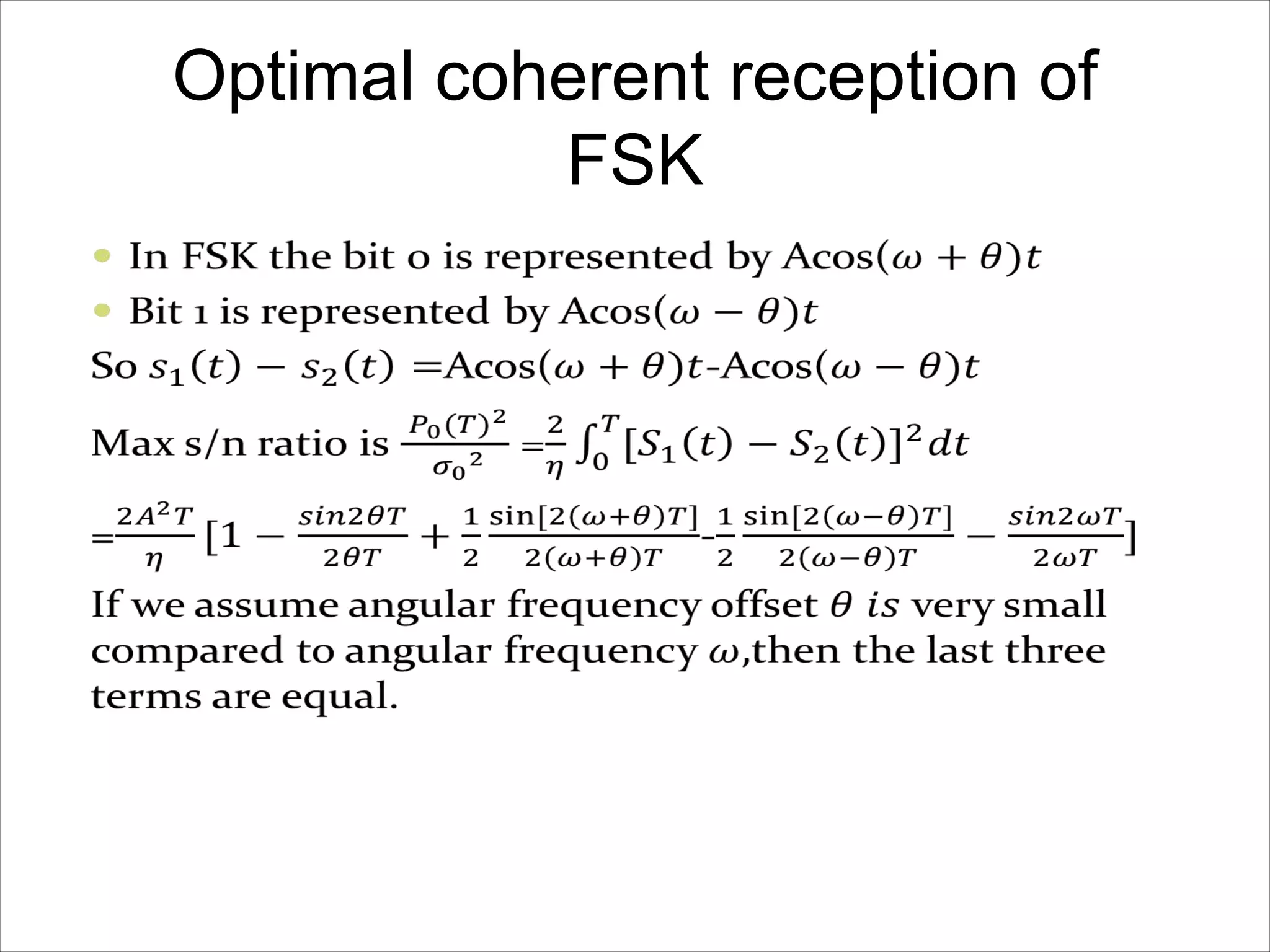
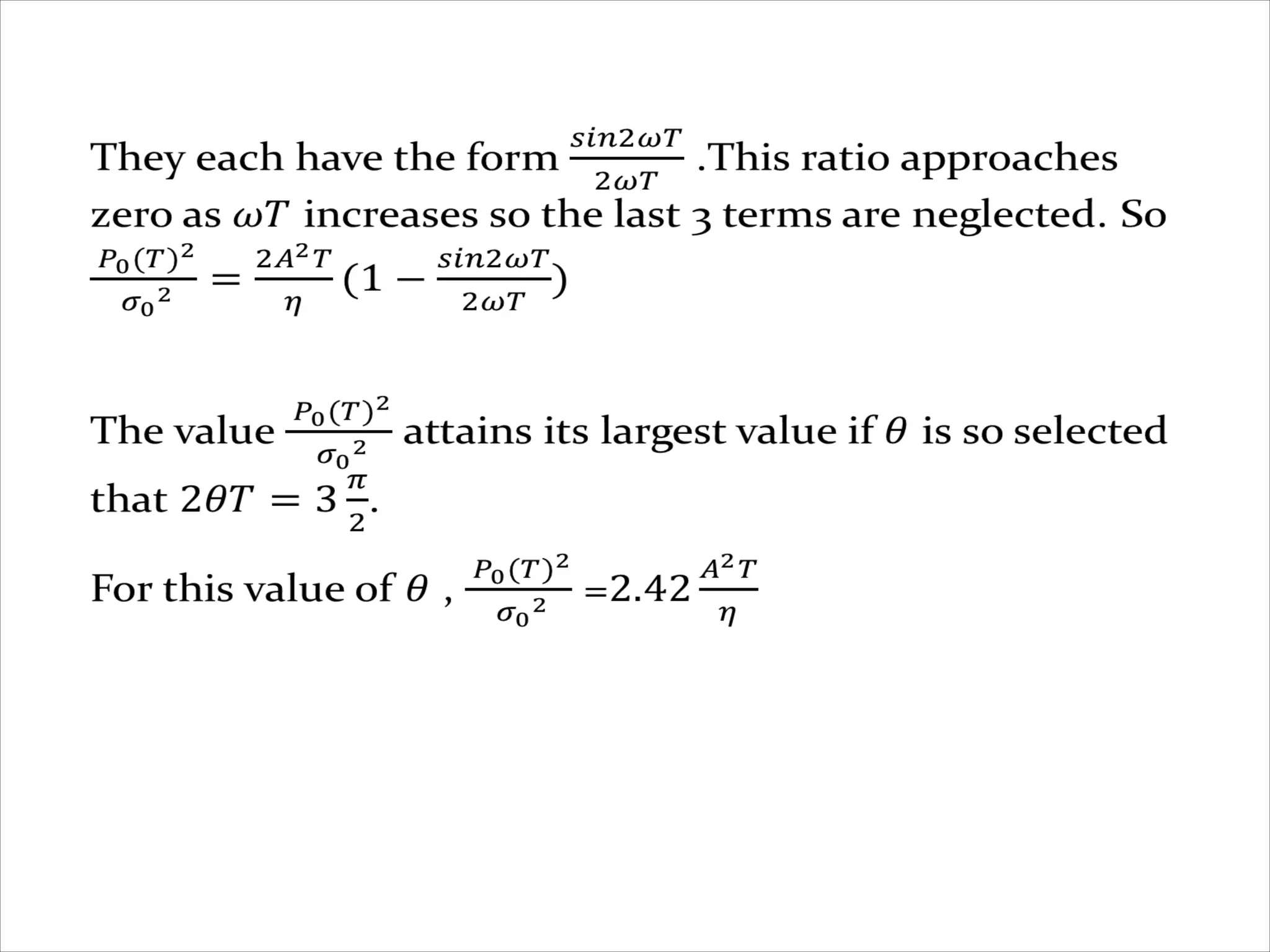
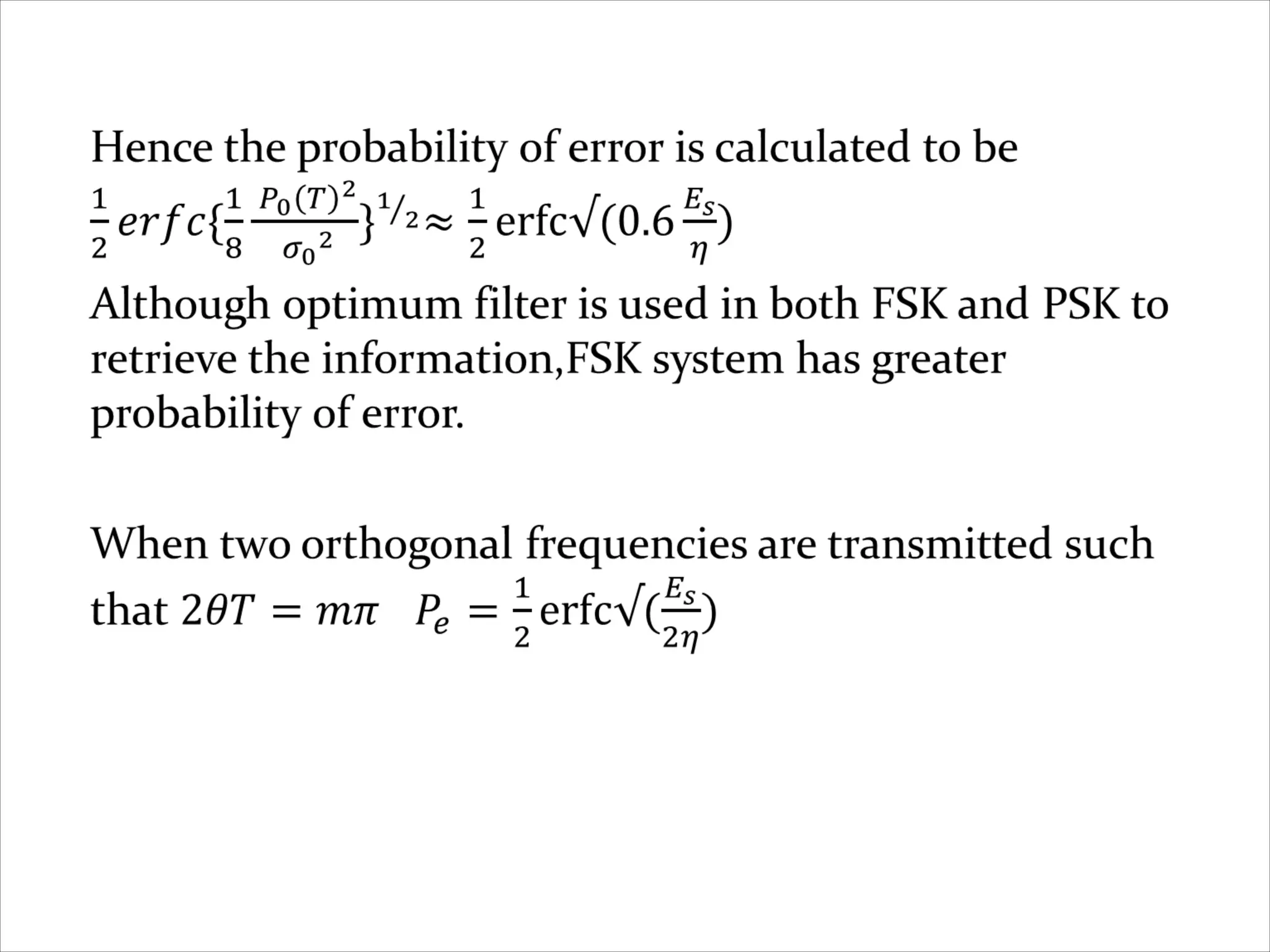
Optimal coherent reception of
FSK
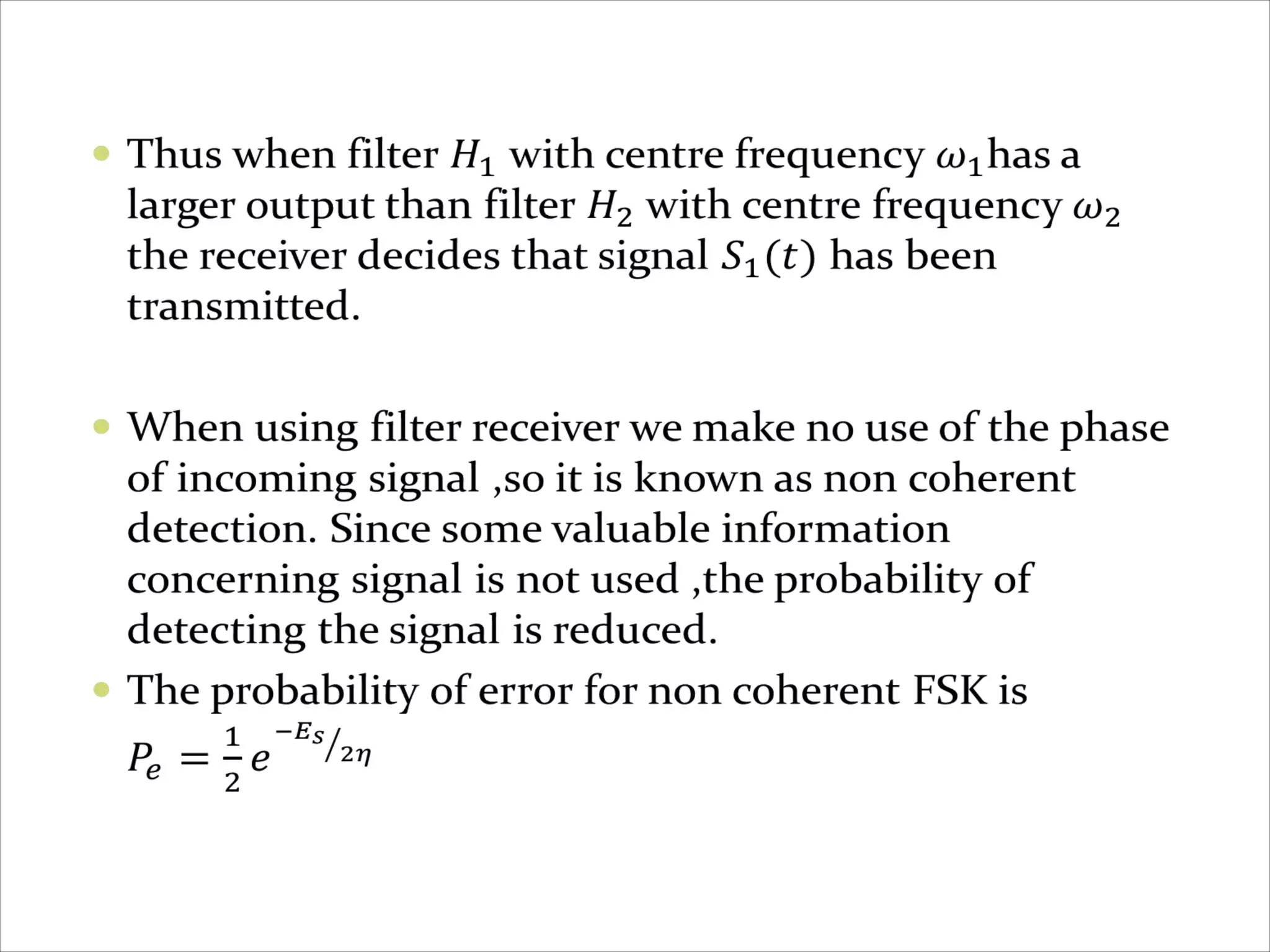
Non coherent detection of FSK
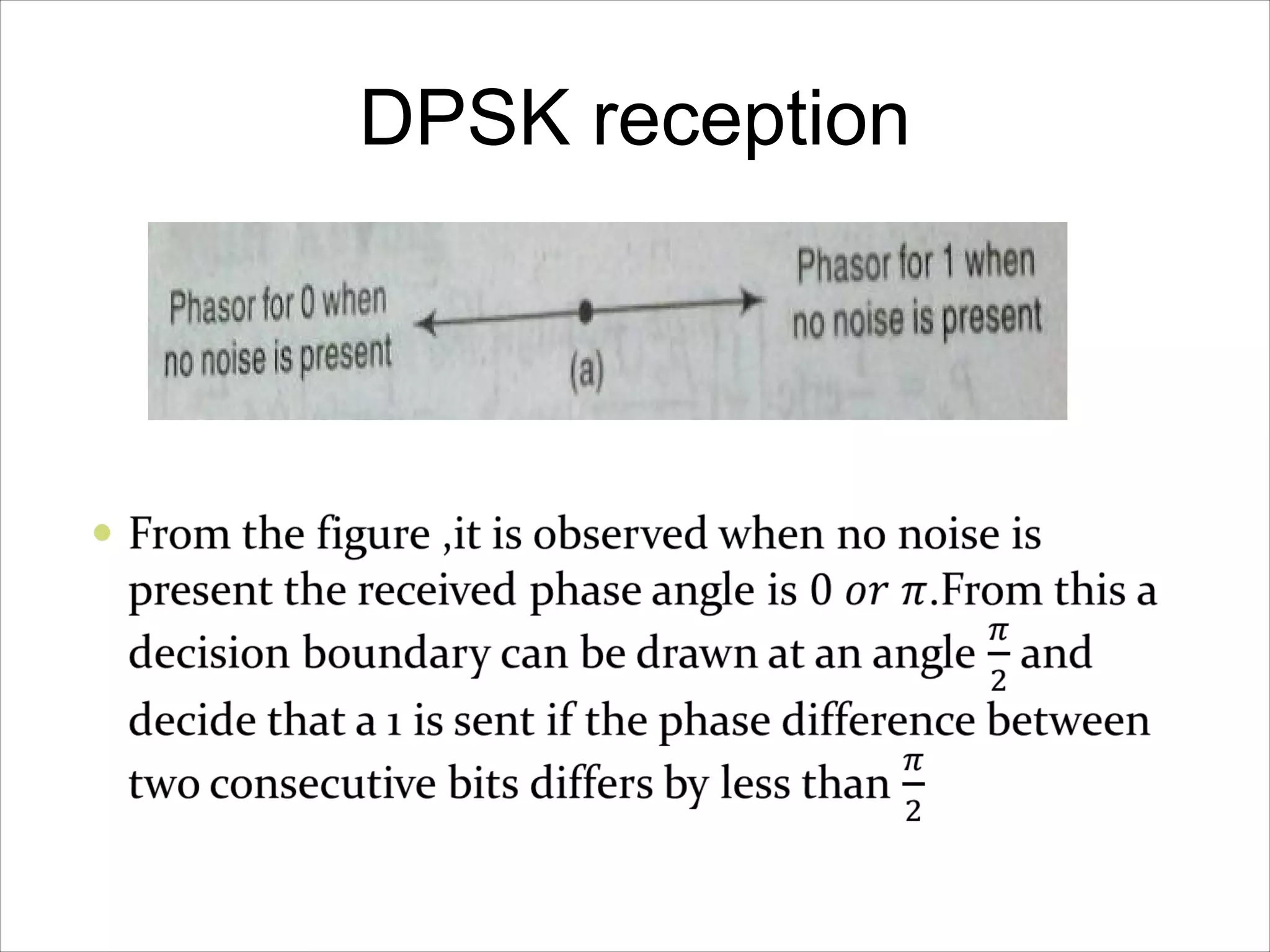
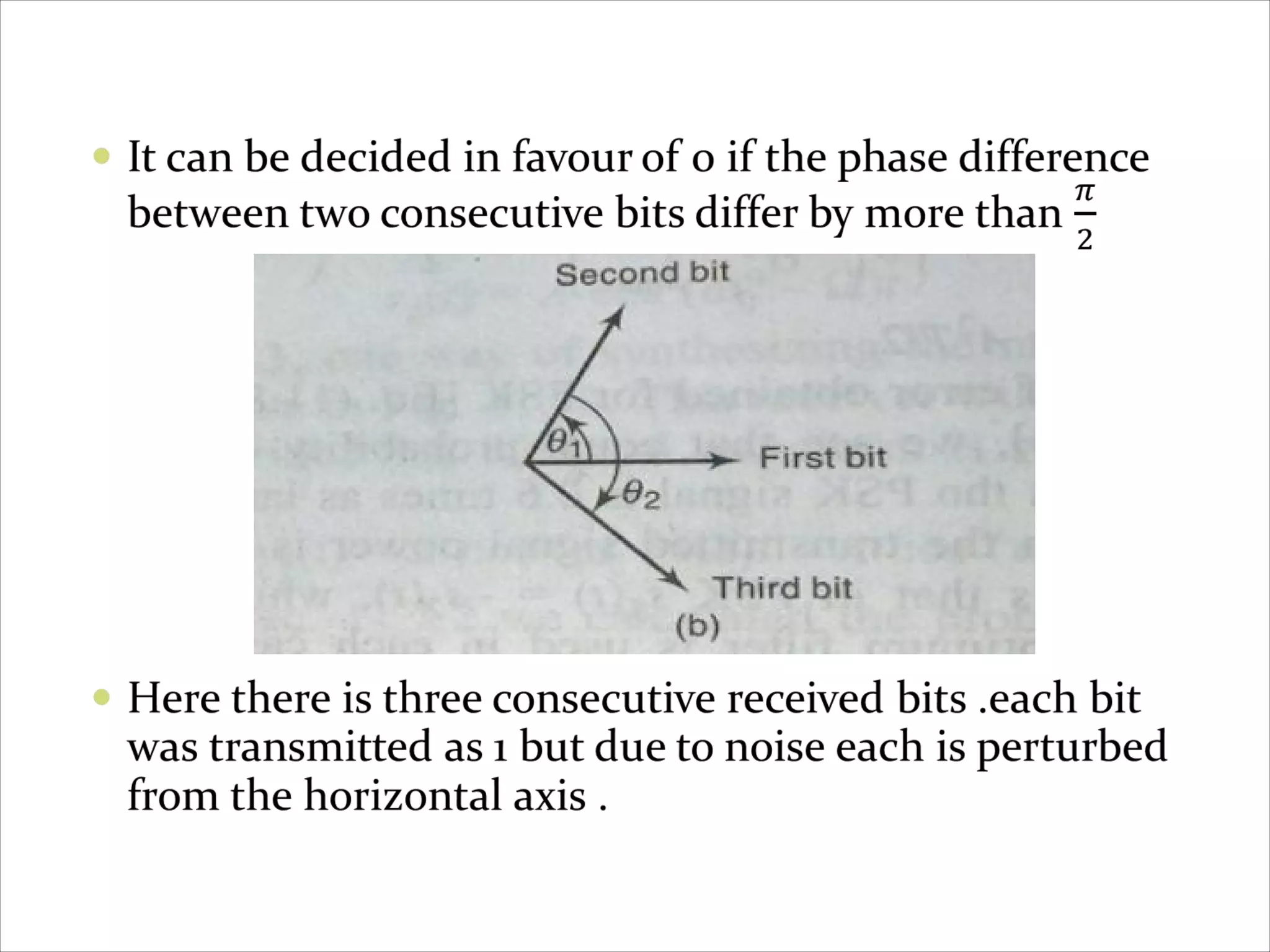
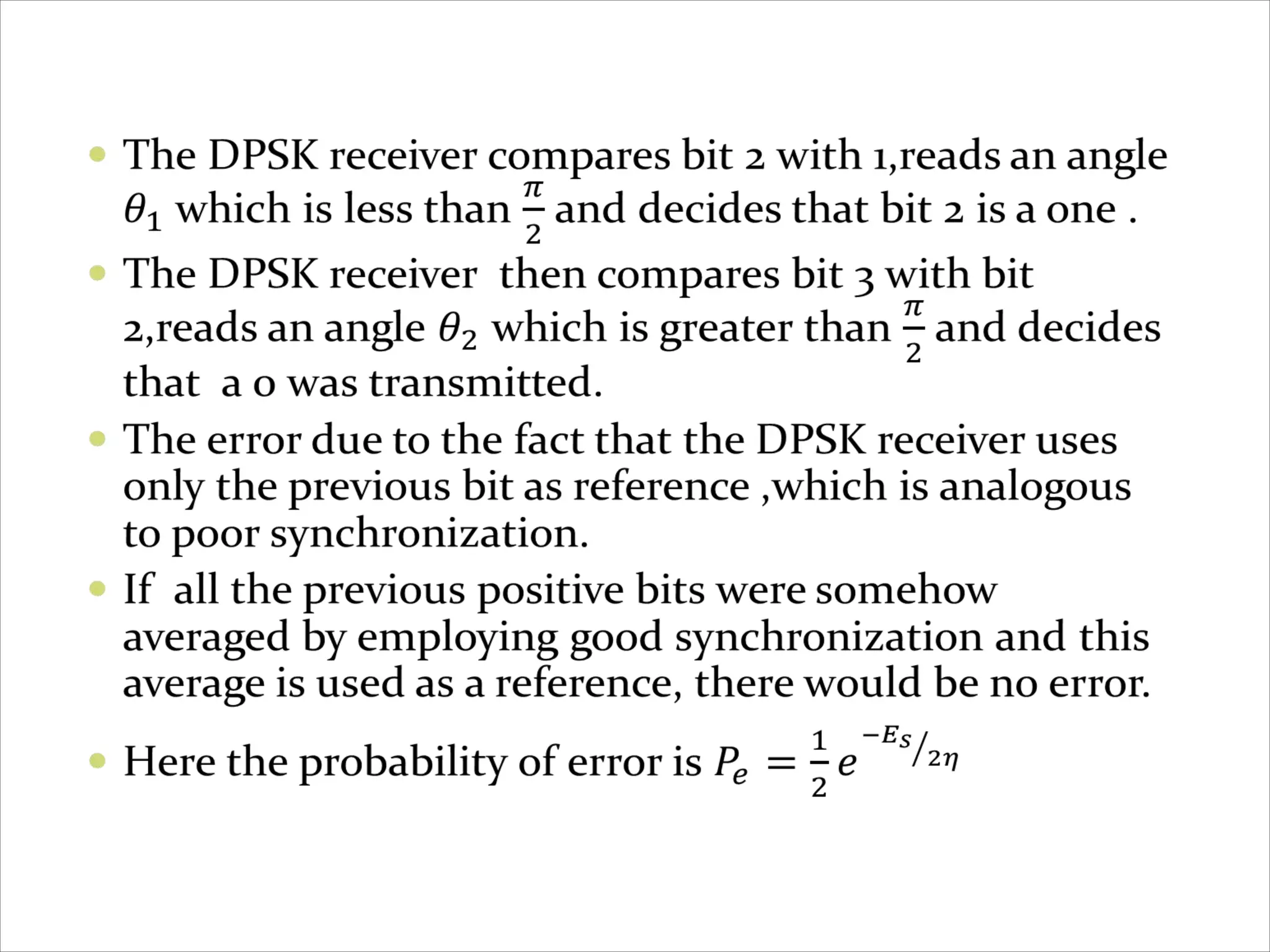
DPSK reception
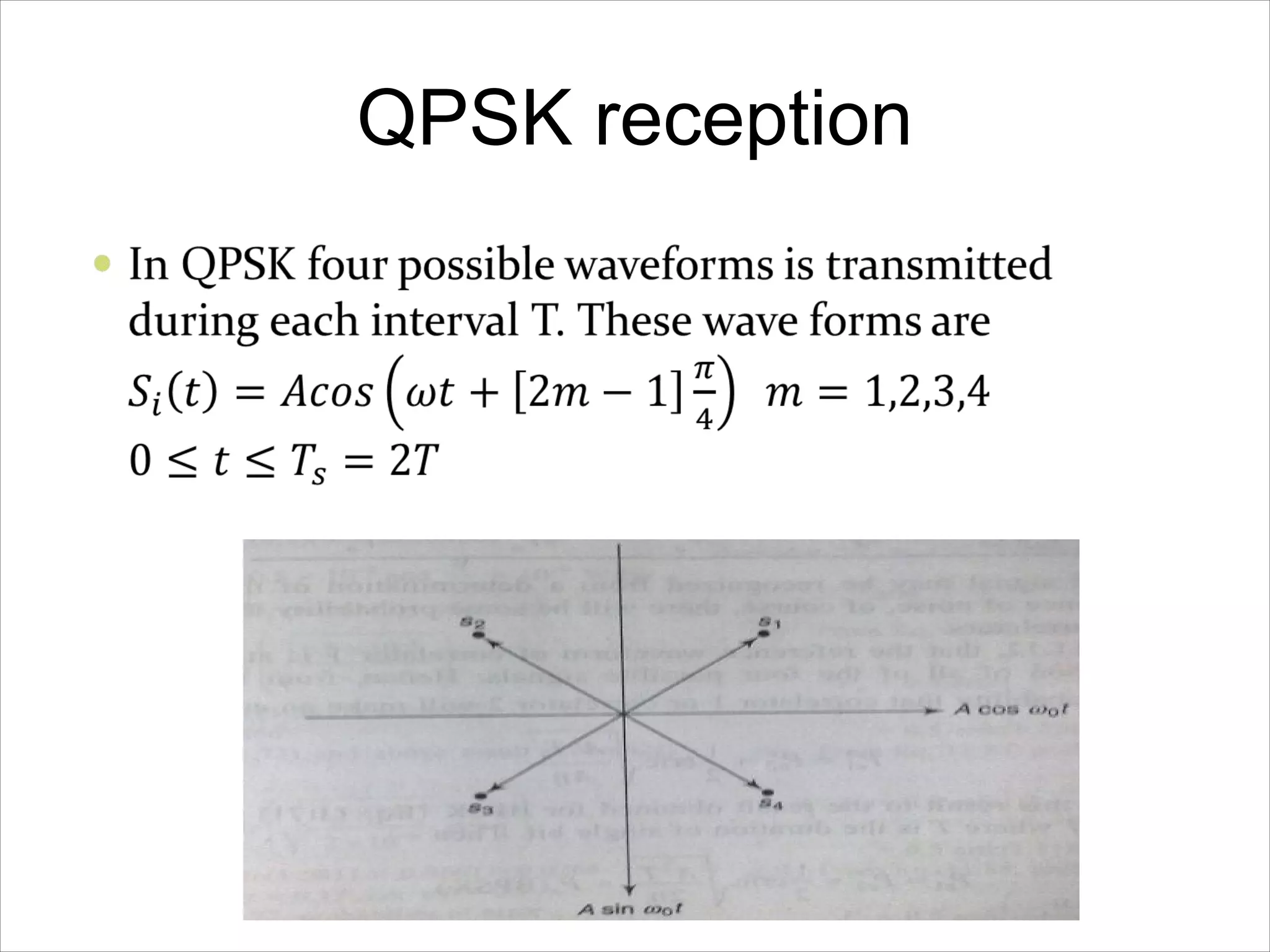
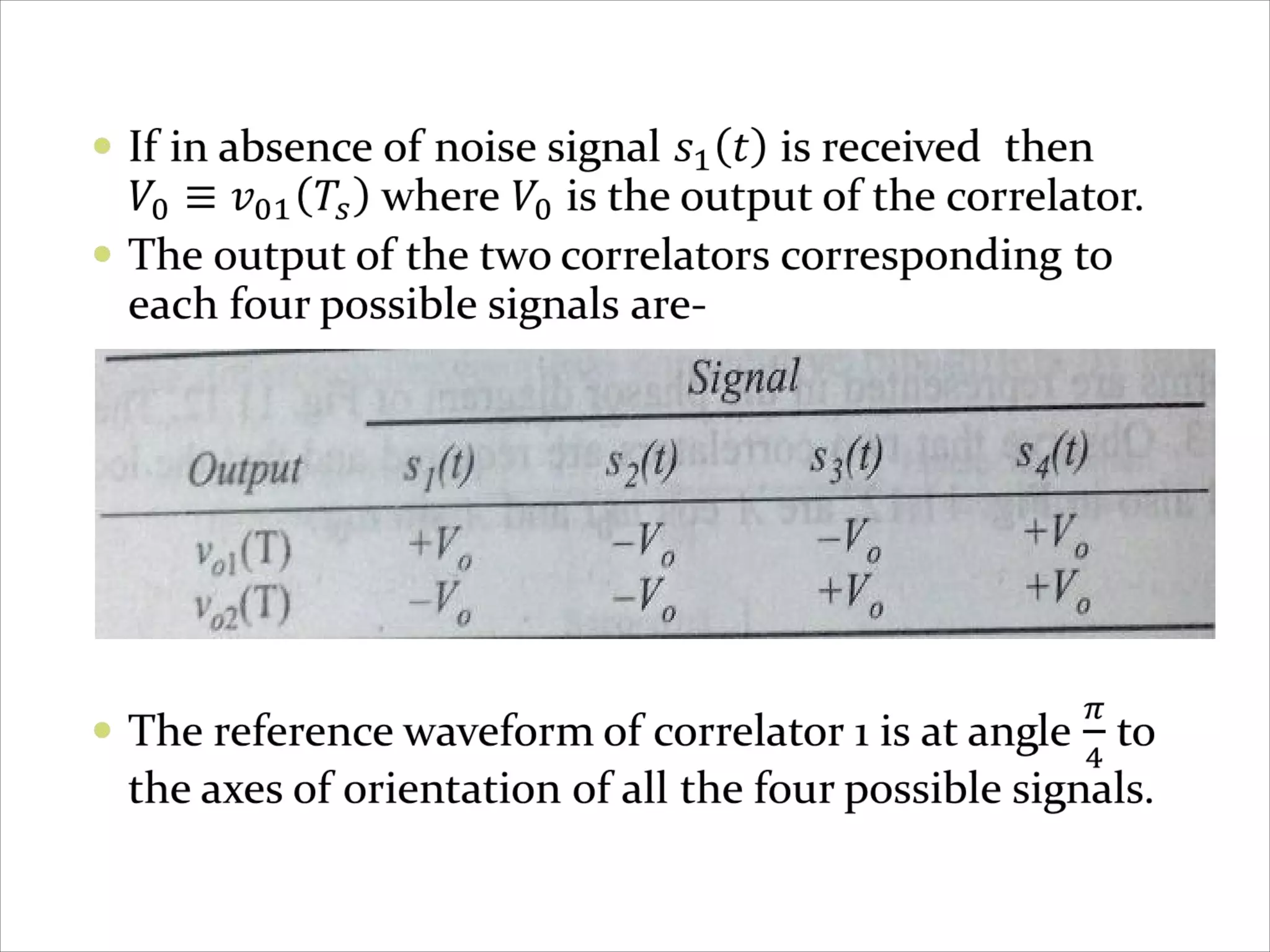
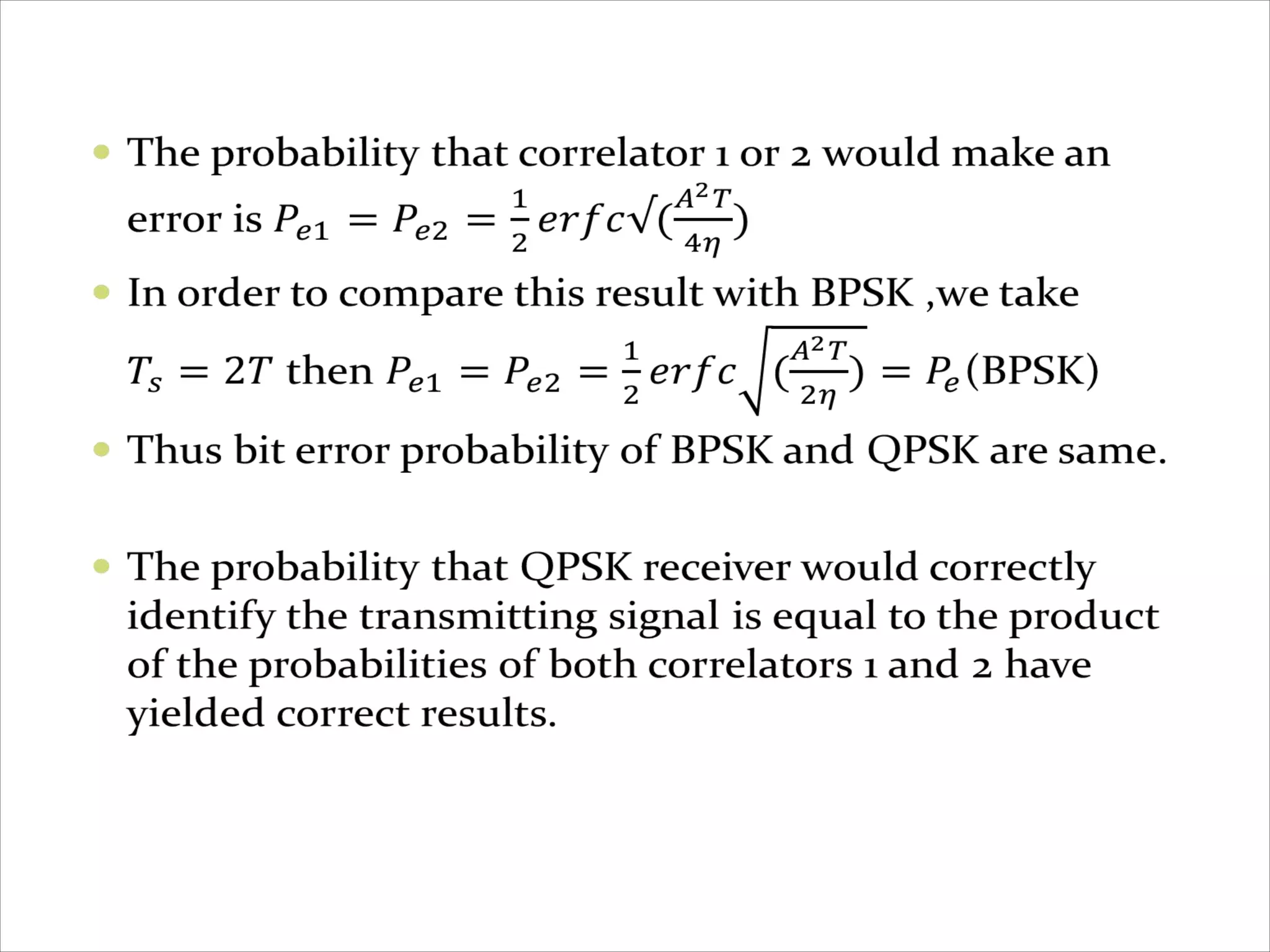
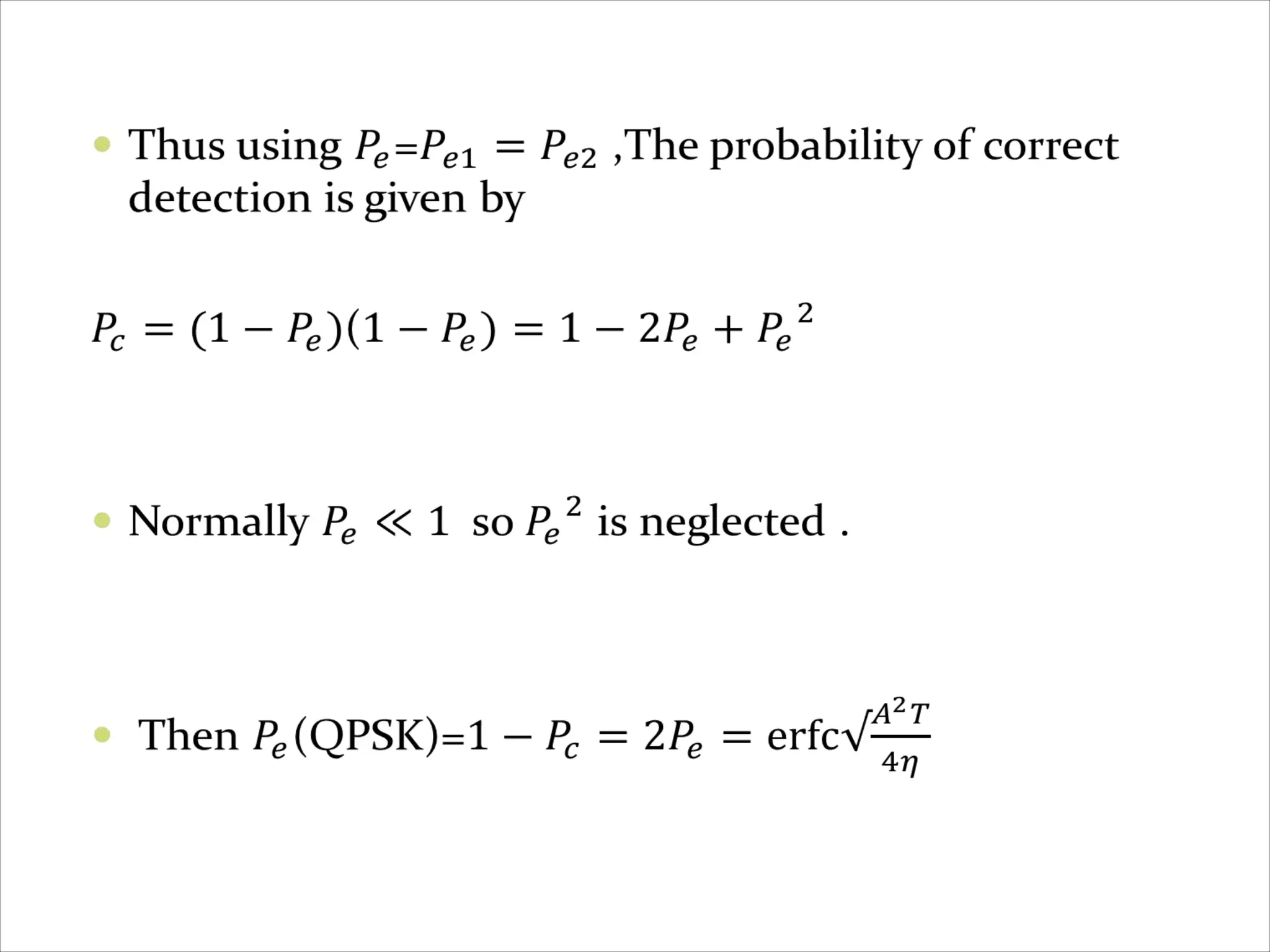
QPSK reception
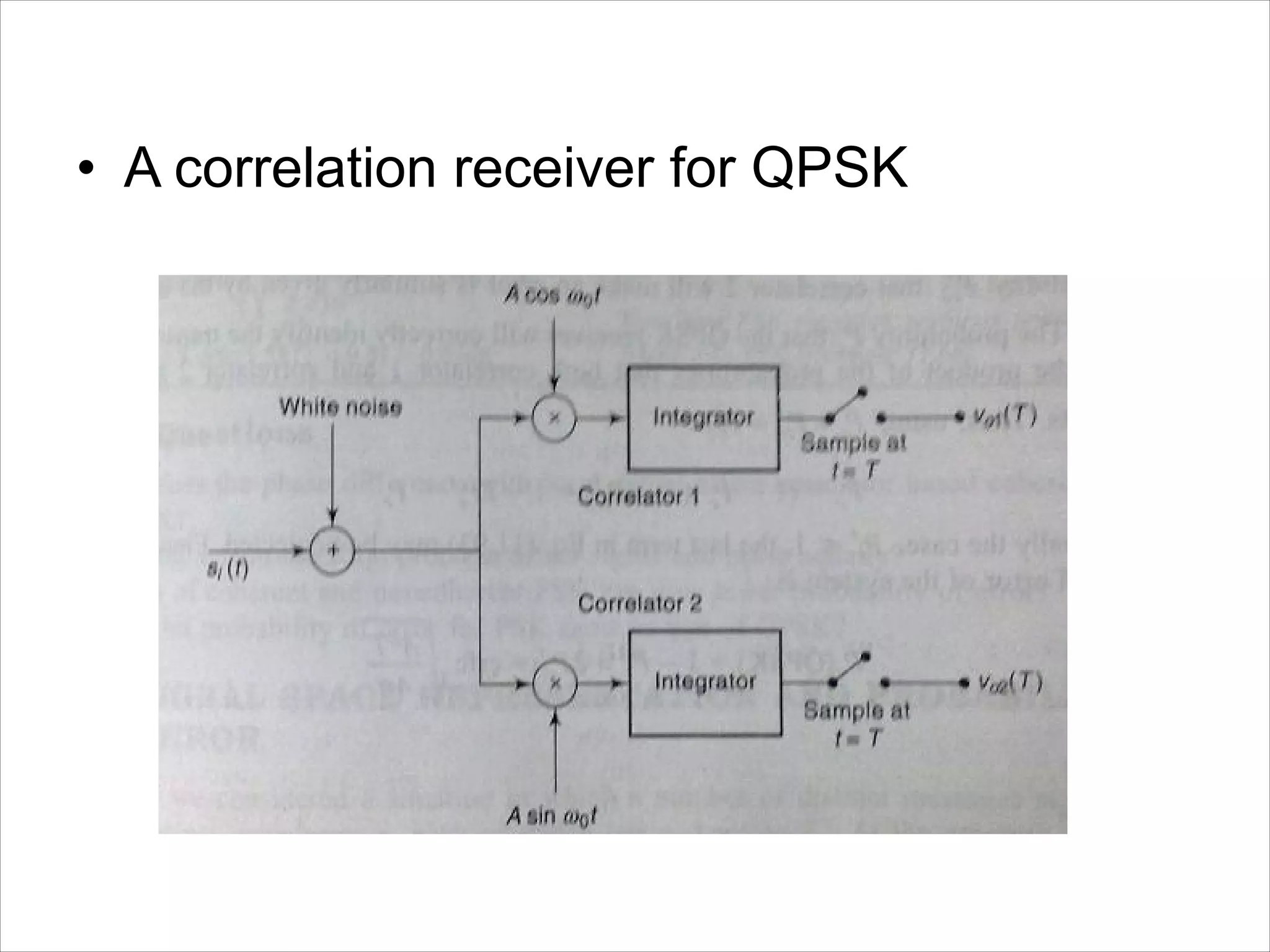
• A correlation receiver for QPSK
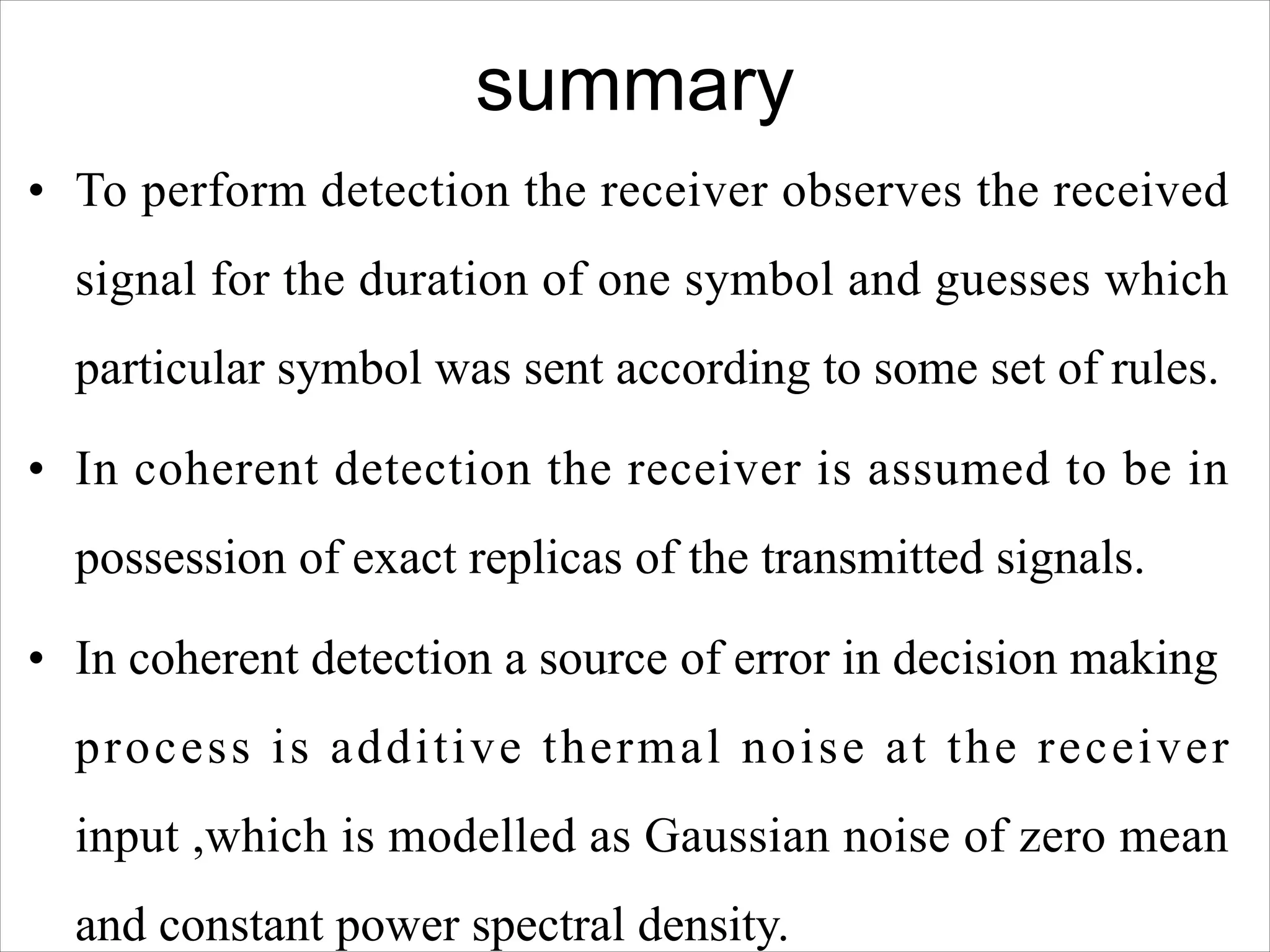
summary
• To perform detection the receiver observes the received
signal for the duration of one symbol and guesses which
particular symbol was sent according to some set of rules.
• In coherent detection the receiver is assumed to be in
possession of exact replicas of the transmitted signals.
• In coherent detection a source of error in decision making
process is additive thermal noise at the receiver
input ,which is modelled as Gaussian noise of zero mean
and constant power spectral density.
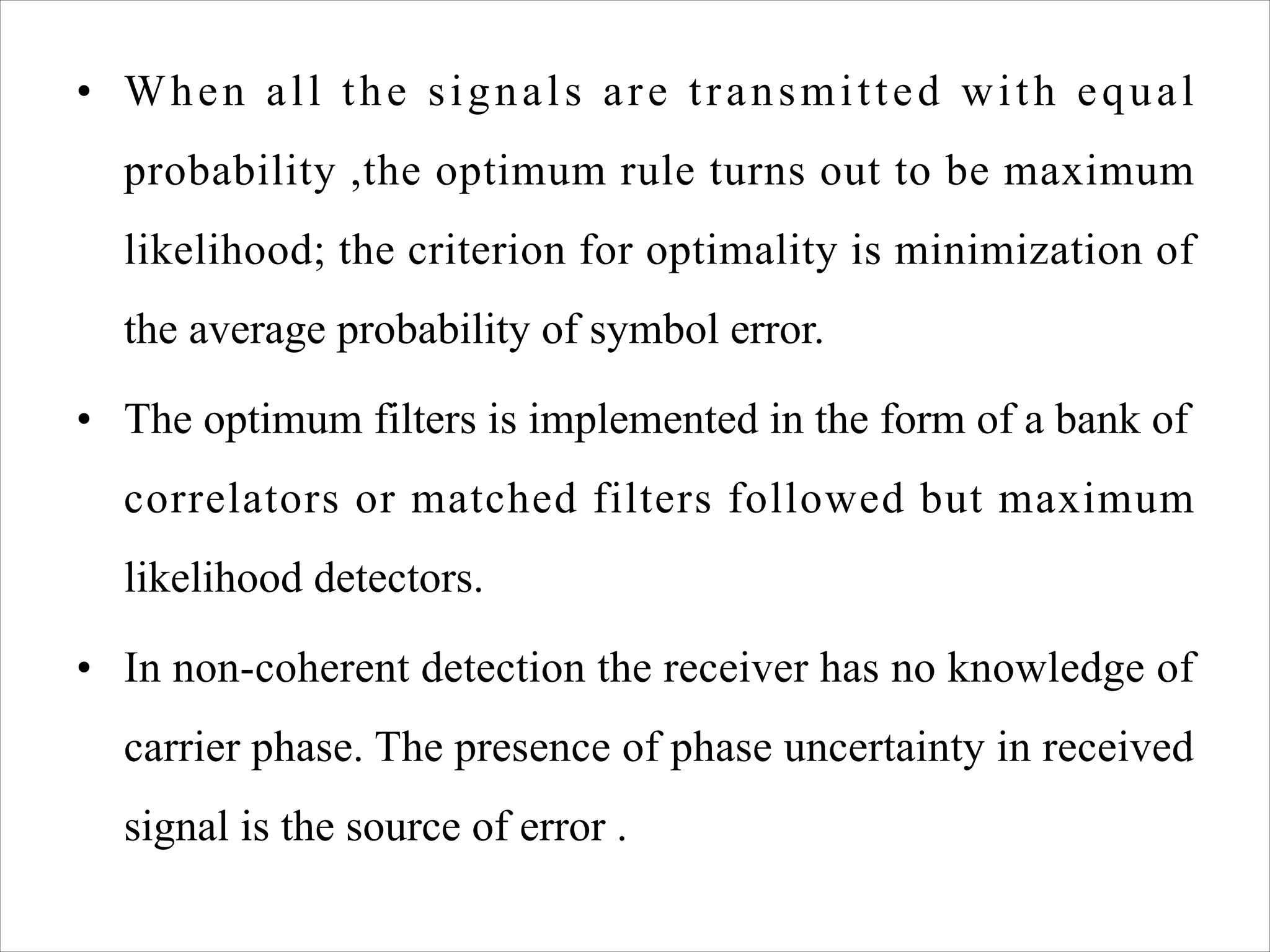
• When all the signals are transmitted with equal
probability ,the optimum rule turns out to be maximum
likelihood; the criterion for optimality is minimization of
the average probability of symbol error.
• The optimum filters is implemented in the form of a bank of
correlators or matched filters followed but maximum
likelihood detectors.
• In non-coherent detection the receiver has no knowledge of
carrier phase. The presence of phase uncertainty in received
signal is the source of error .
Optimal reception-of-digital-signals-2

Optimal reception-of-digital-signals-2

  • 1.
  • 2.
  • 5.
  • 7.
  • 10.
  • 11.
    • A correlationreceiver for QPSK
  • 15.
    summary • To performdetection the receiver observes the received signal for the duration of one symbol and guesses which particular symbol was sent according to some set of rules. • In coherent detection the receiver is assumed to be in possession of exact replicas of the transmitted signals. • In coherent detection a source of error in decision making process is additive thermal noise at the receiver input ,which is modelled as Gaussian noise of zero mean and constant power spectral density.
  • 16.
    • When allthe signals are transmitted with equal probability ,the optimum rule turns out to be maximum likelihood; the criterion for optimality is minimization of the average probability of symbol error. • The optimum filters is implemented in the form of a bank of correlators or matched filters followed but maximum likelihood detectors. • In non-coherent detection the receiver has no knowledge of carrier phase. The presence of phase uncertainty in received signal is the source of error .