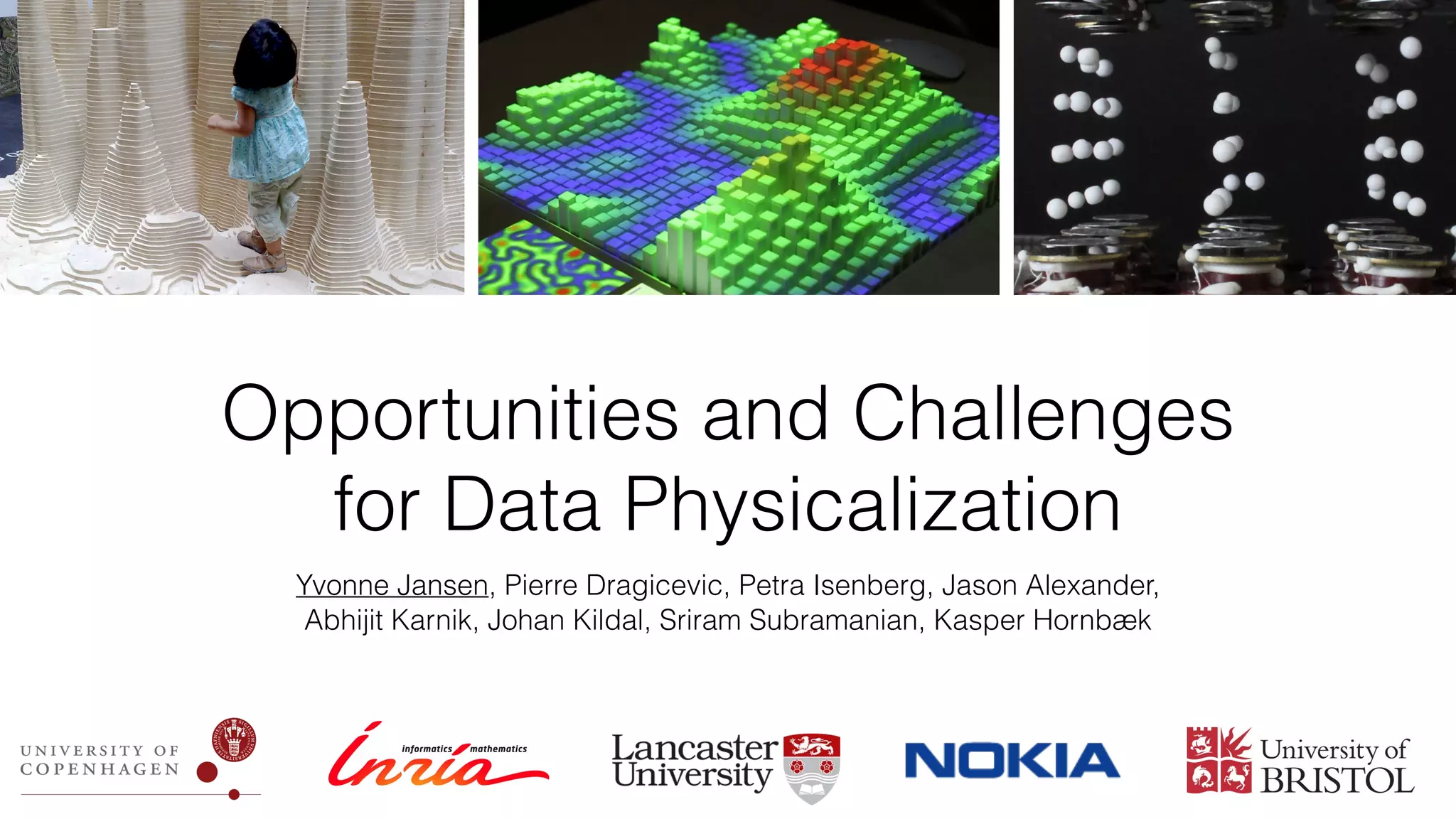
Opportunities and Challenges
for Data Physicalization
Yvonne Jansen, Pierre Dragicevic, Petra Isenberg, Jason Alexander,
Abhijit Karnik, Johan Kildal, Sriram Subramanian, Kasper Hornbæk
Data Physicalization
… a physical artifact whose geometry or material properties encode data.
… a research area that examines how computer-supported, physical
representations of data (i.e., data physicalizations), can support cognition,
communication, learning, problem solving, and decision making.
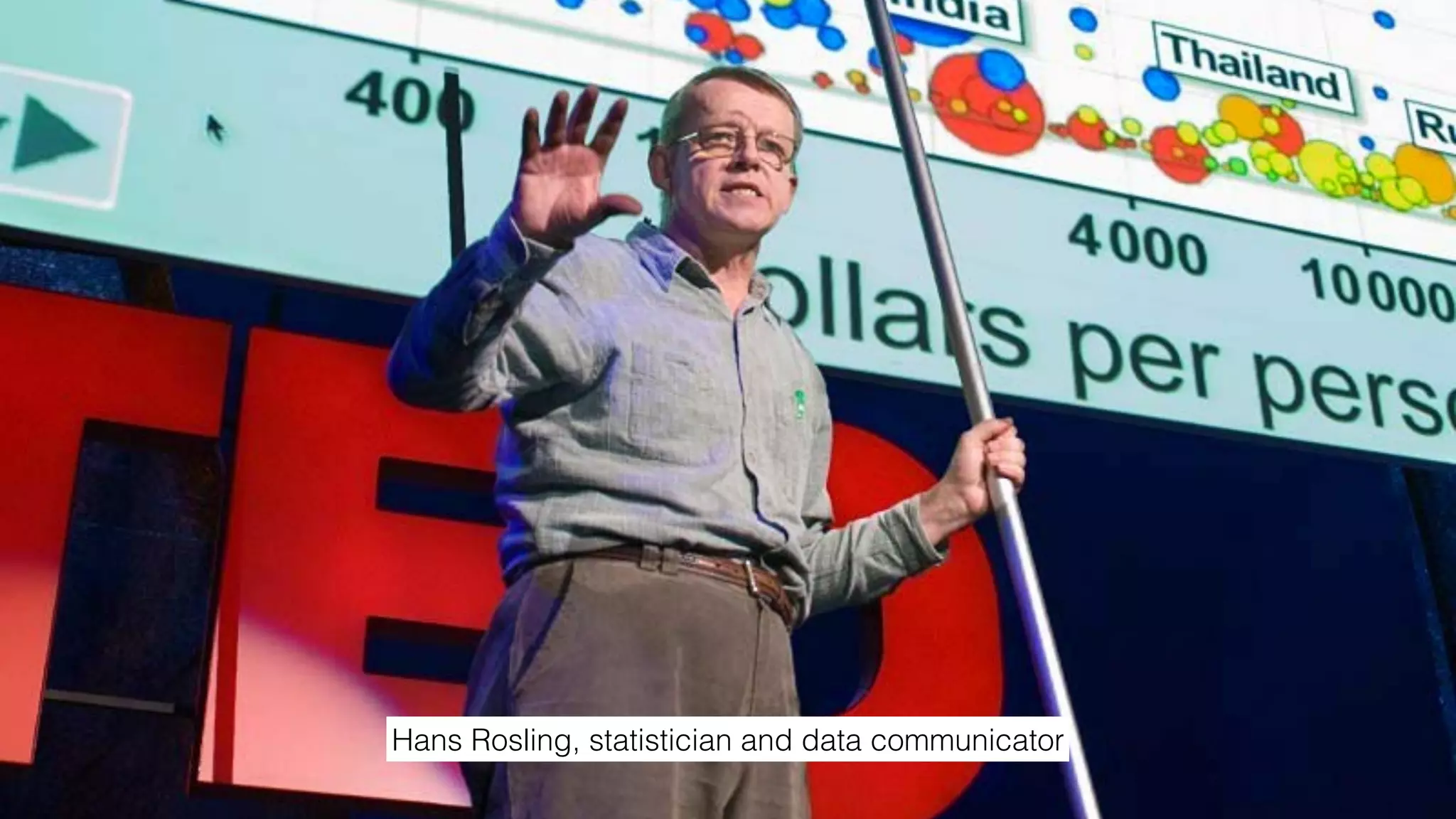
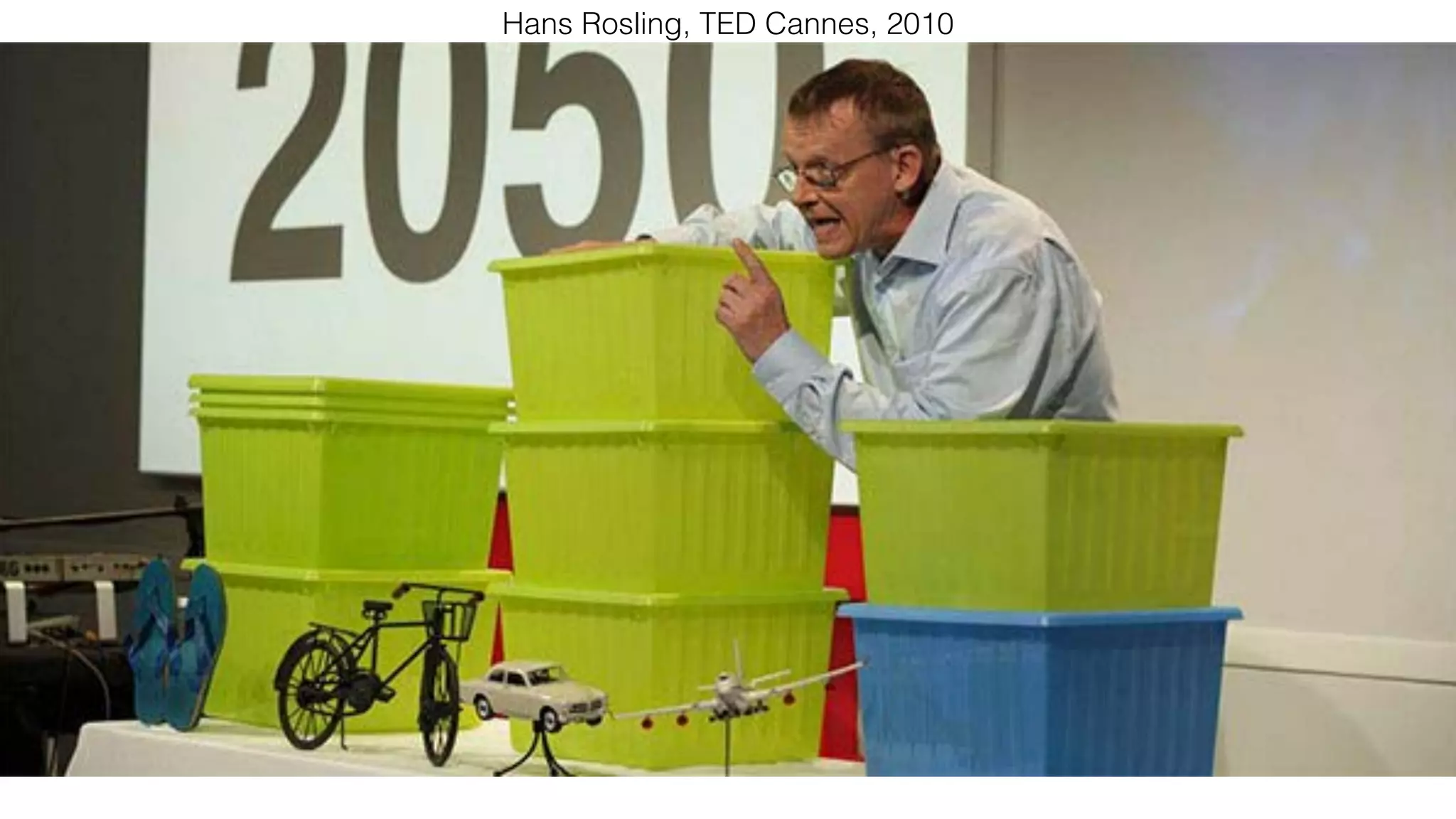
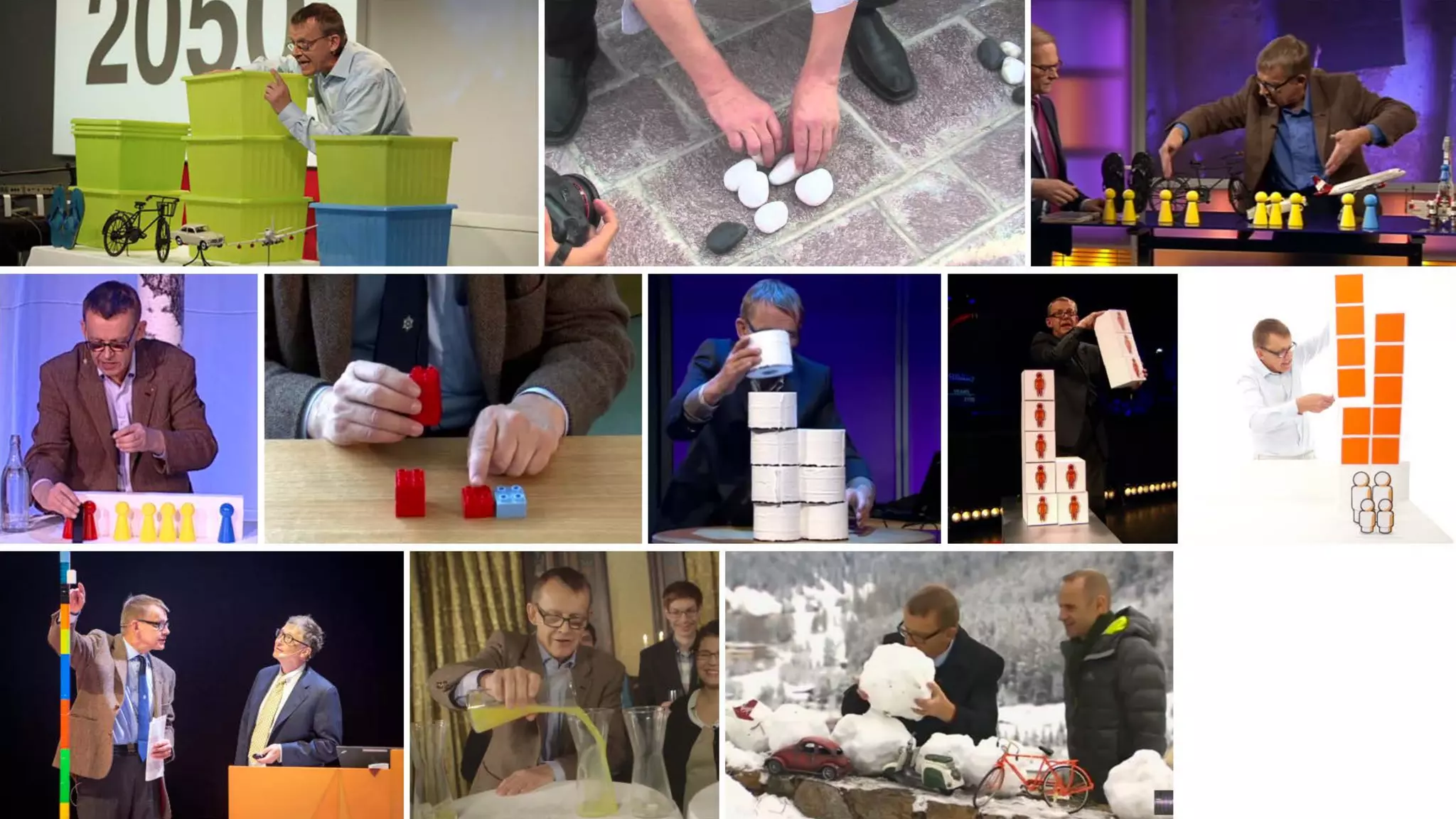
Hans Rosling, statistician and data communicator
Hans Rosling, TED Cannes, 2010
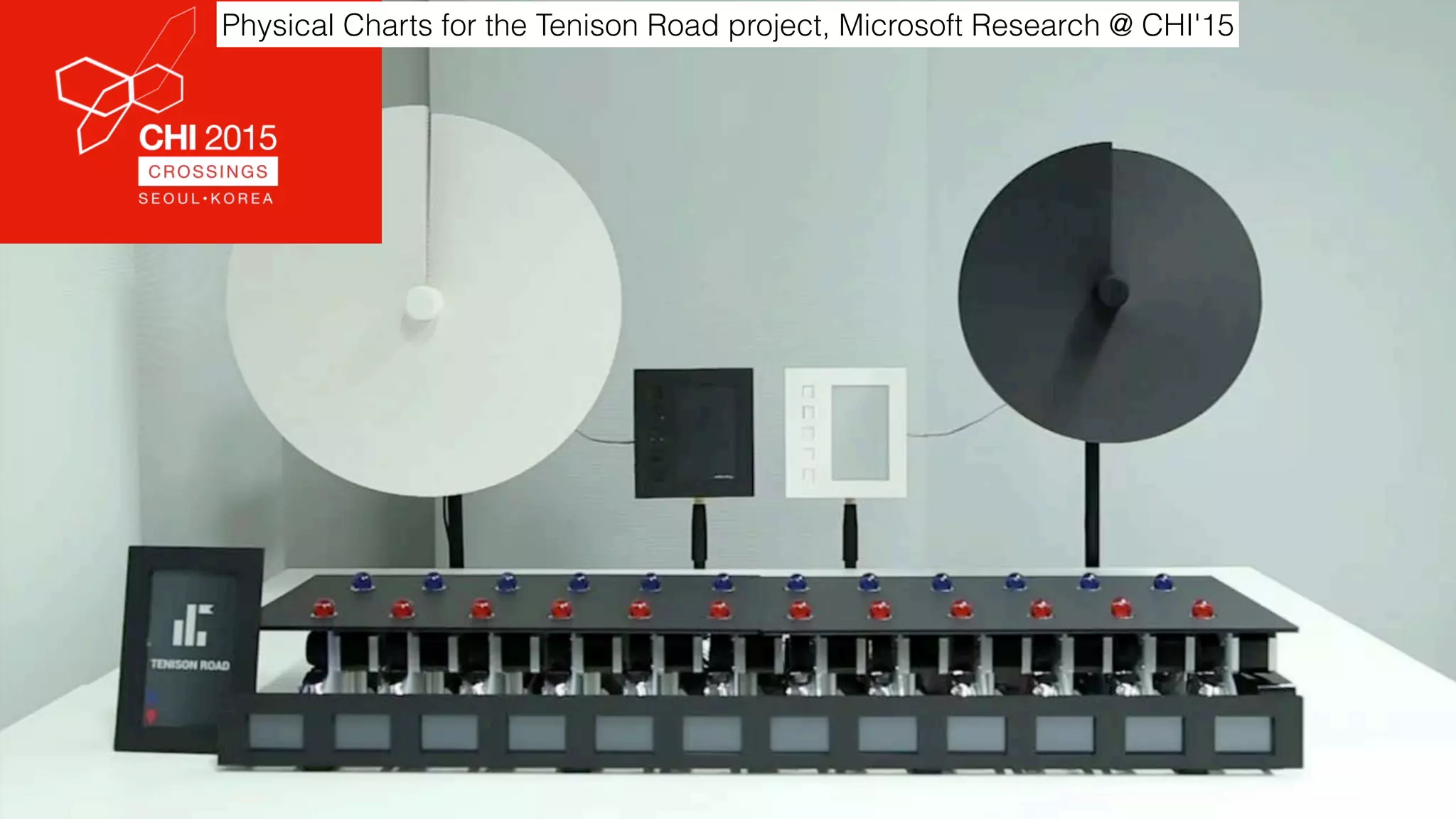
Physical Charts for the Tenison Road project, Microsoft Research @ CHI'15
Early Data Visualizations
Mesopotamian Clay Tokens (from 5500 BCA)
[Image: Denise Schmandt-Besserat]
Early Data Visualizations
Peruvian Quipus (from 2600 BCA)
[Image: Museo Nacional, Lima, Peru]
Why physicalize?
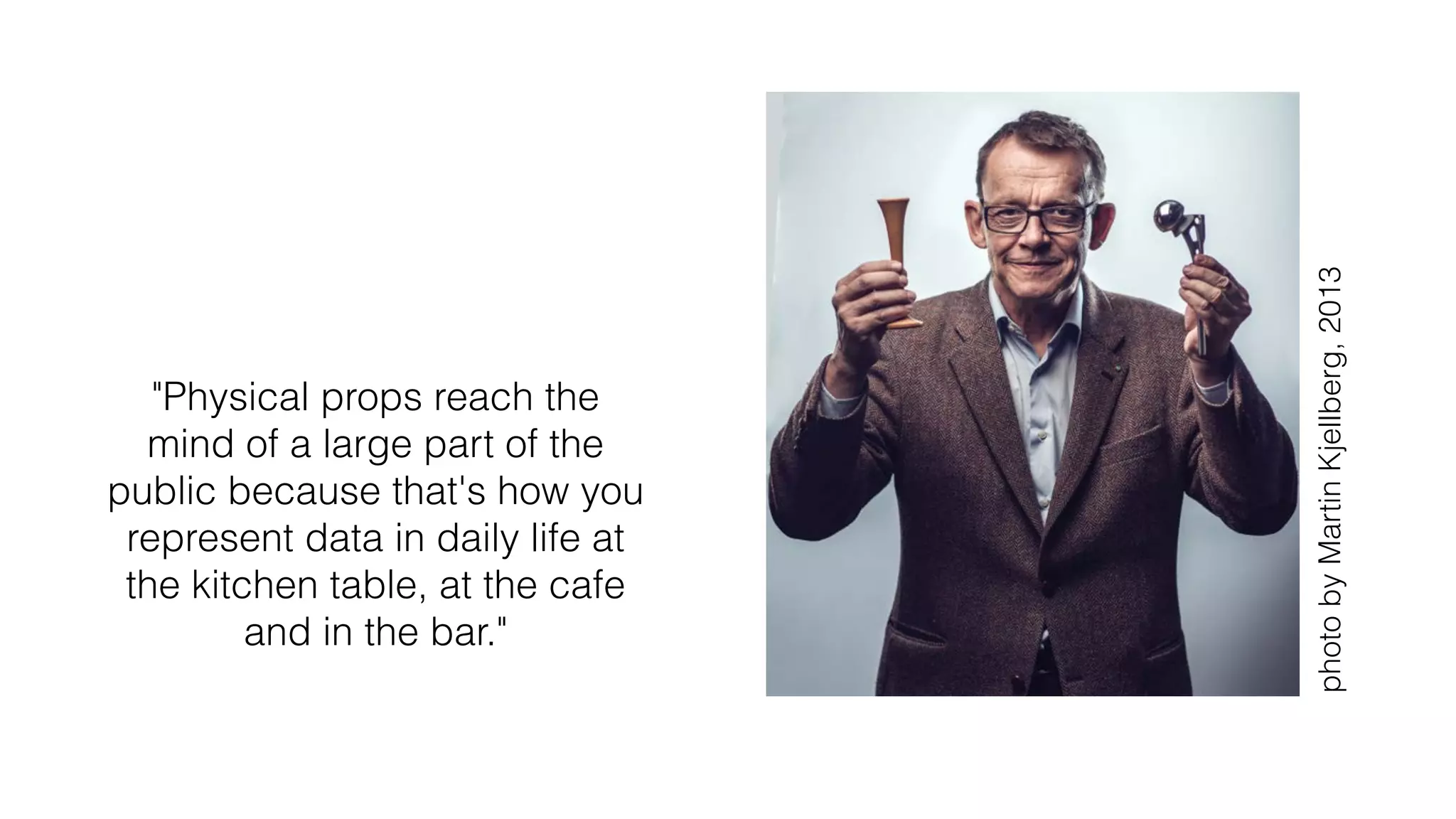
"Physical props reach the
mind of a large part of the
public because that's how you
represent data in daily life at
the kitchen table, at the cafe
and in the bar."
photobyMartinKjellberg,2013
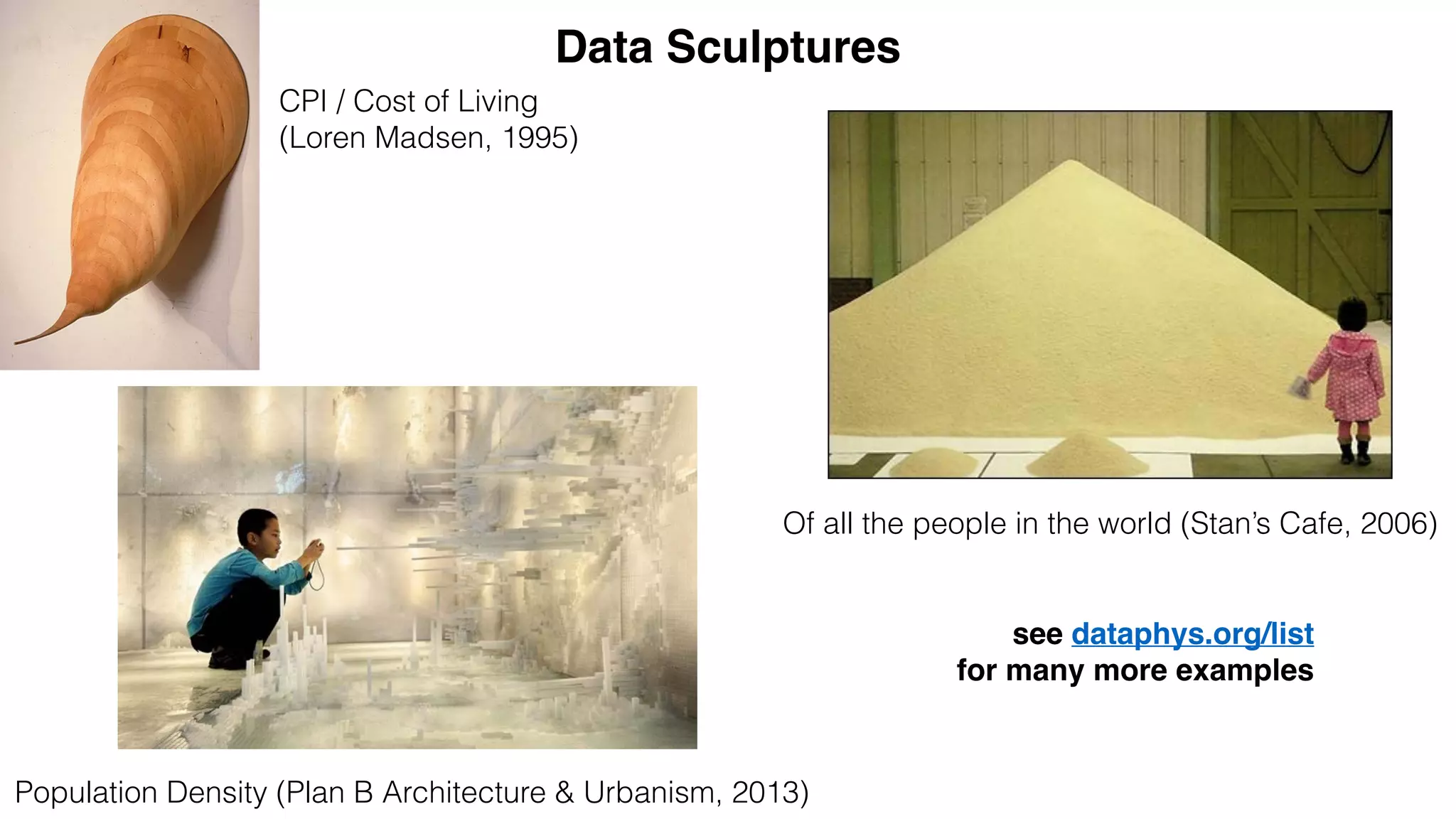
Of all the people in the world (Stan’s Cafe, 2006)
Population Density (Plan B Architecture & Urbanism, 2013)
see dataphys.org/list!
for many more examples
CPI / Cost of Living
(Loren Madsen, 1995)
Data Sculptures
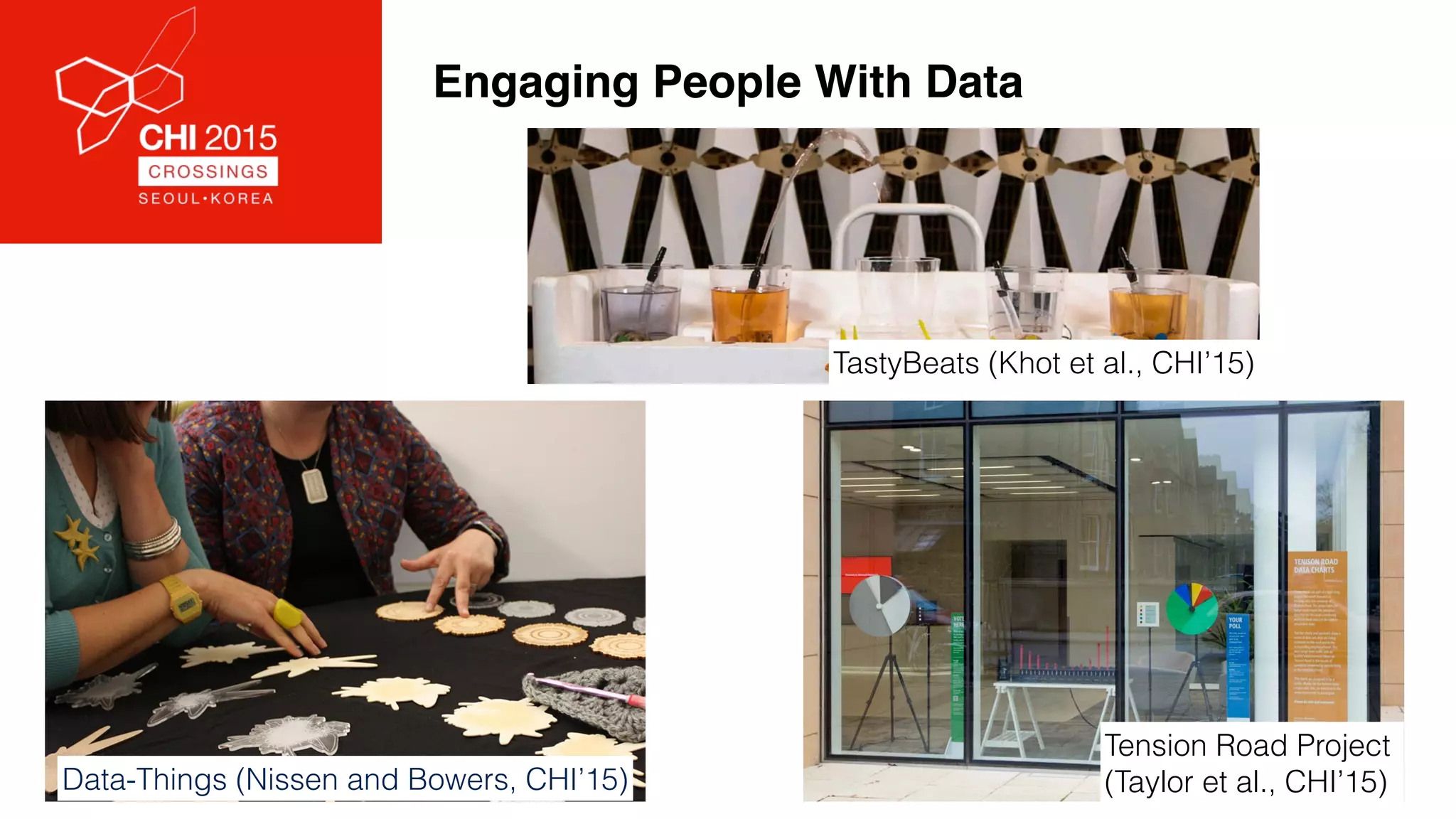
Engaging People With Data
Data-Things (Nissen and Bowers, CHI’15)
TastyBeats (Khot et al., CHI’15)
Tension Road Project
(Taylor et al., CHI’15)
Why physicalize?
To Engage People With Data
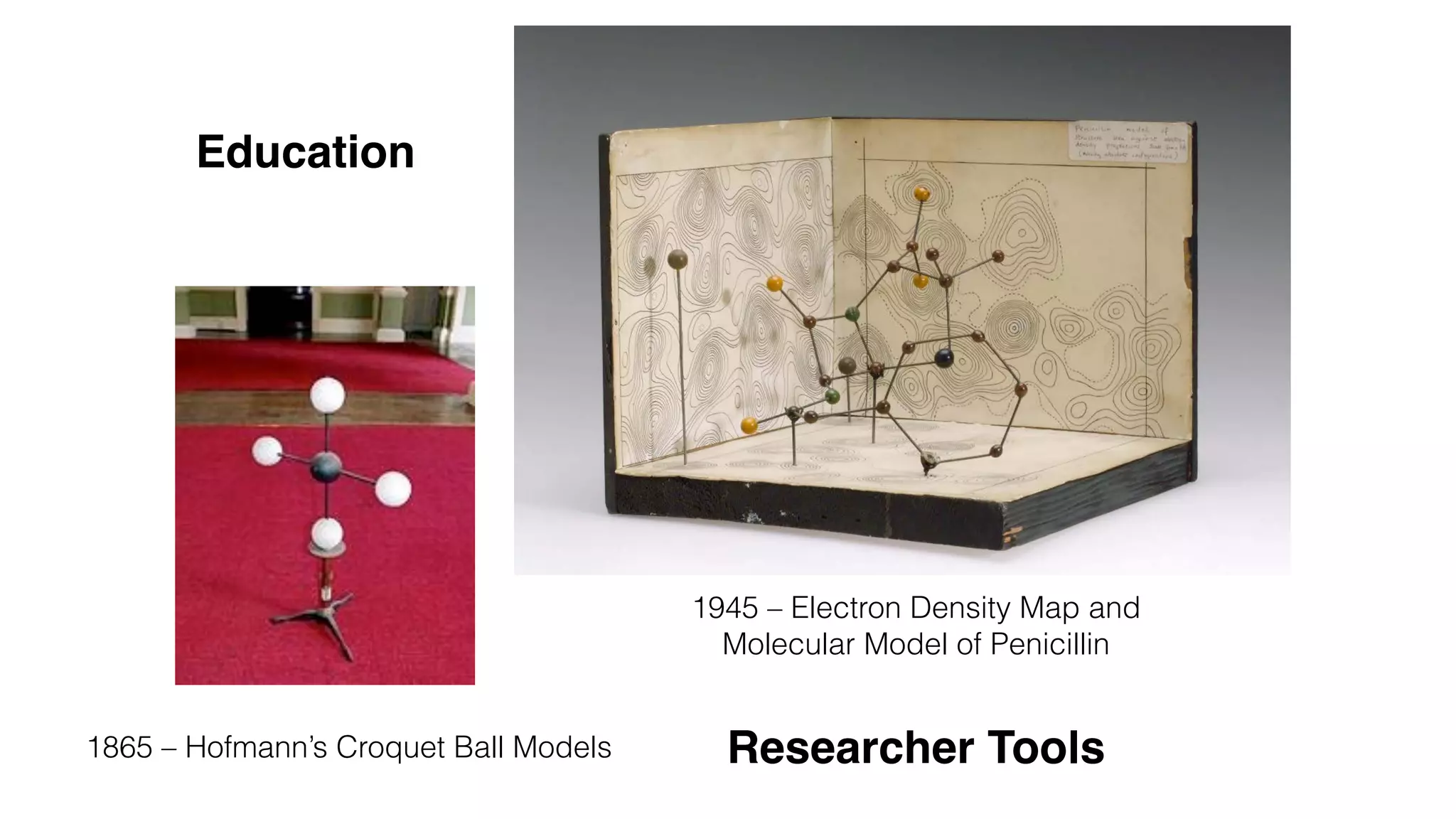
1865 – Hofmann’s Croquet Ball Models
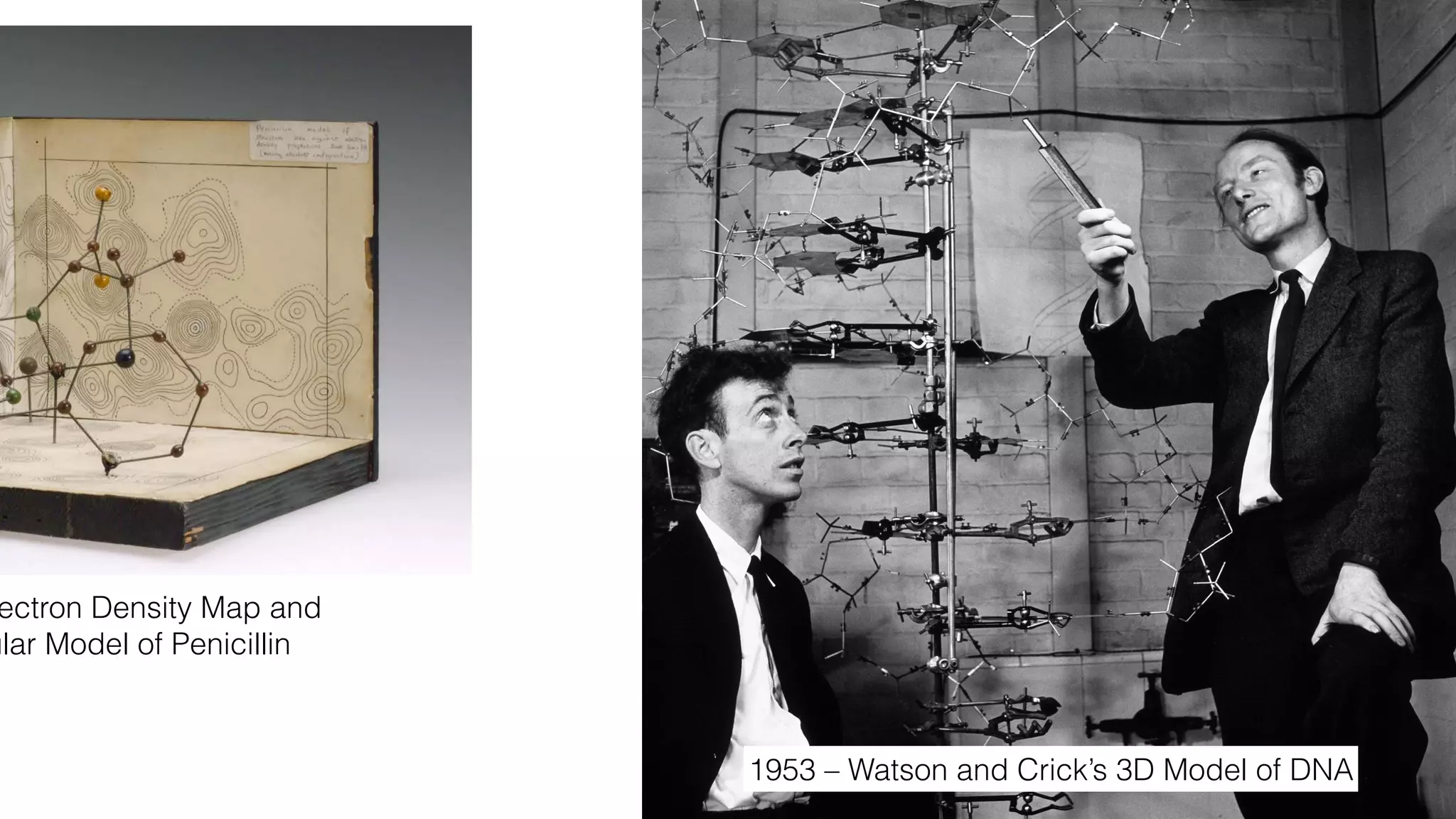
1945 – Electron Density Map and
Molecular Model of Penicillin
Education
Researcher Tools
ectron Density Map and
ular Model of Penicillin
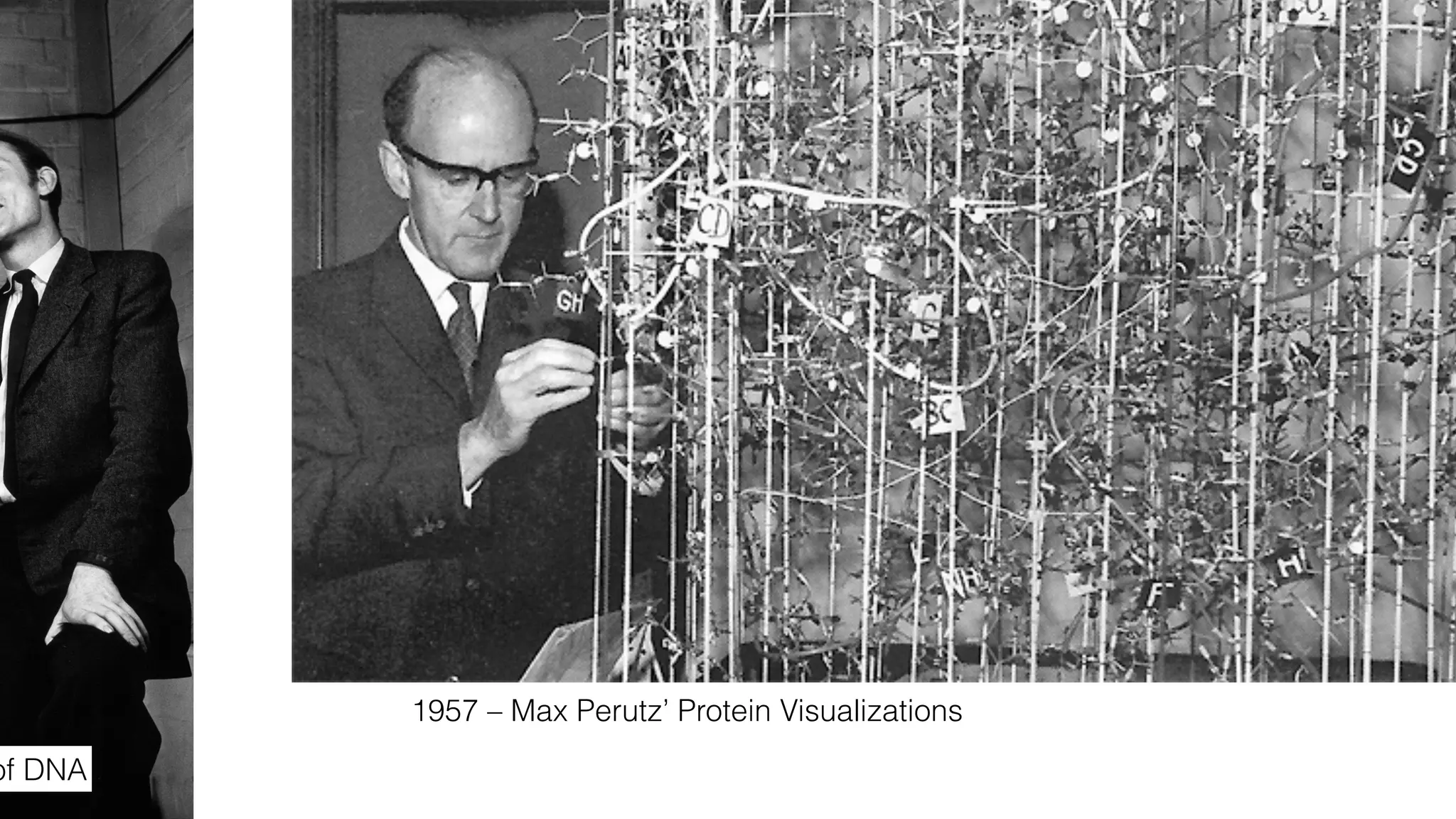
1953 – Watson and Crick’s 3D Model of DNA
of DNA
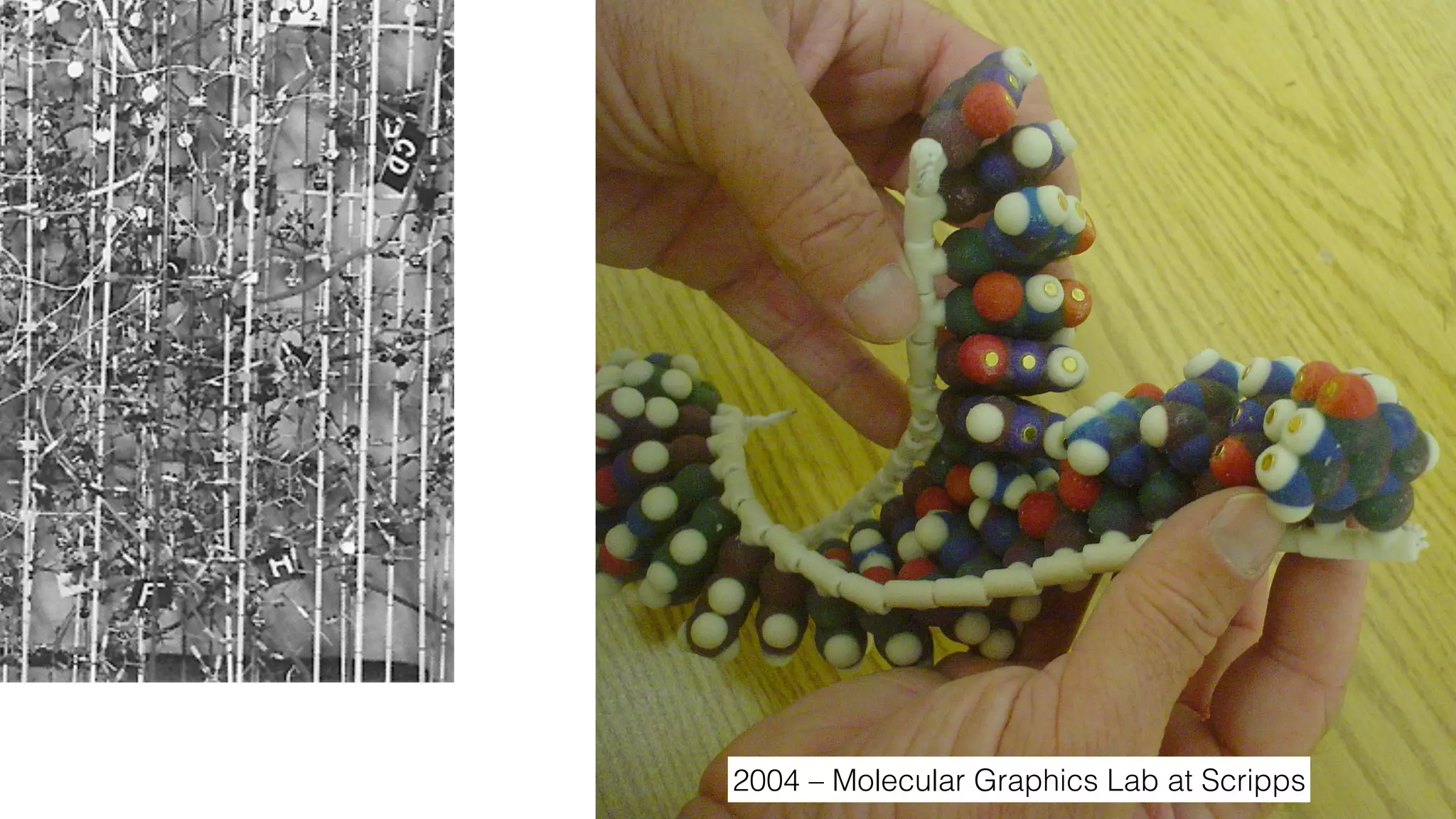
1957 – Max Perutz’ Protein Visualizations
2004 – Molecular Graphics Lab at Scripps
To Think Through Manipulation
To Engage People With Data
Why physicalize?
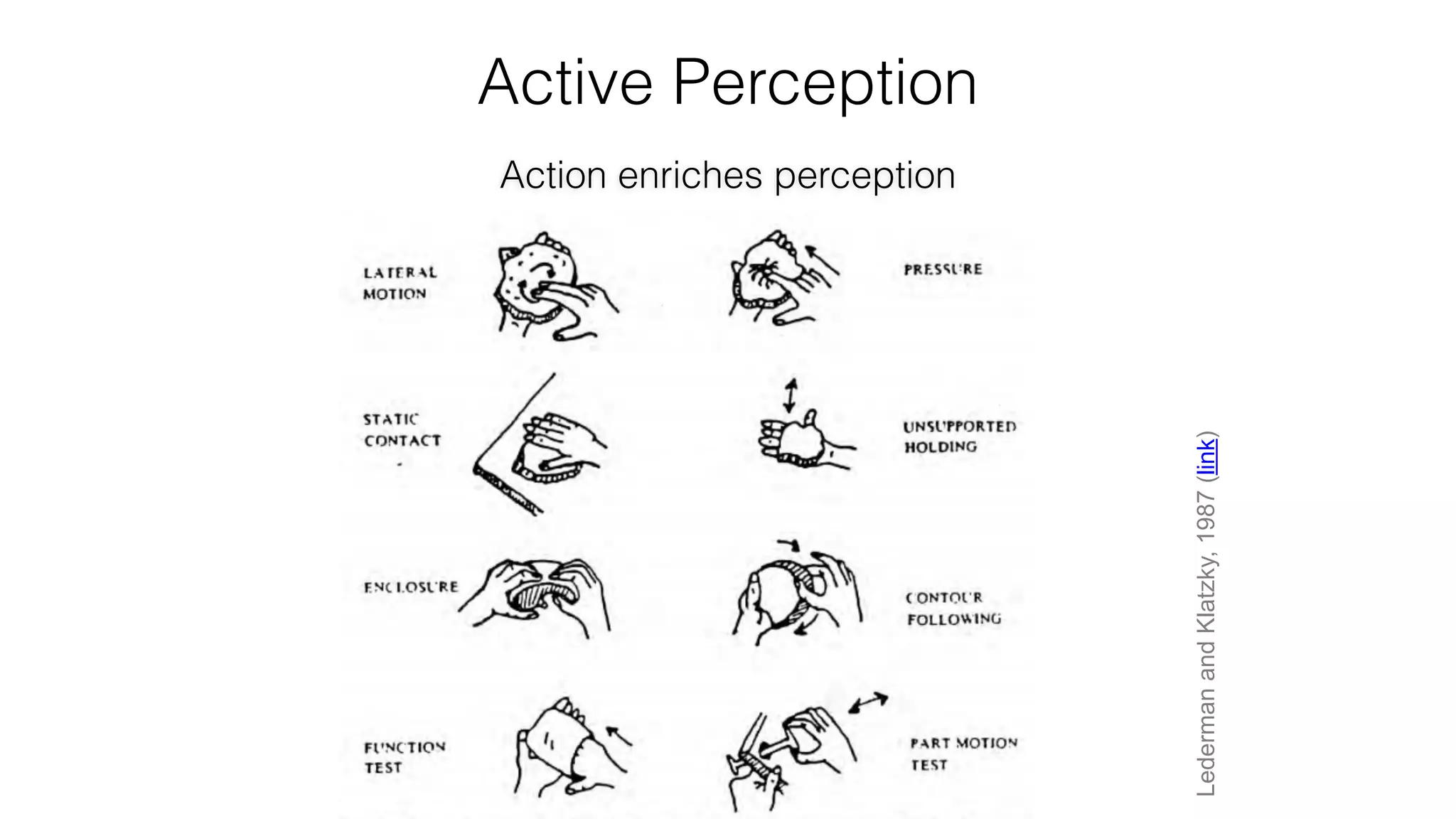
Intrinsic Support of Active Perception
LedermanandKlatzky,1987(link)
Active Perception
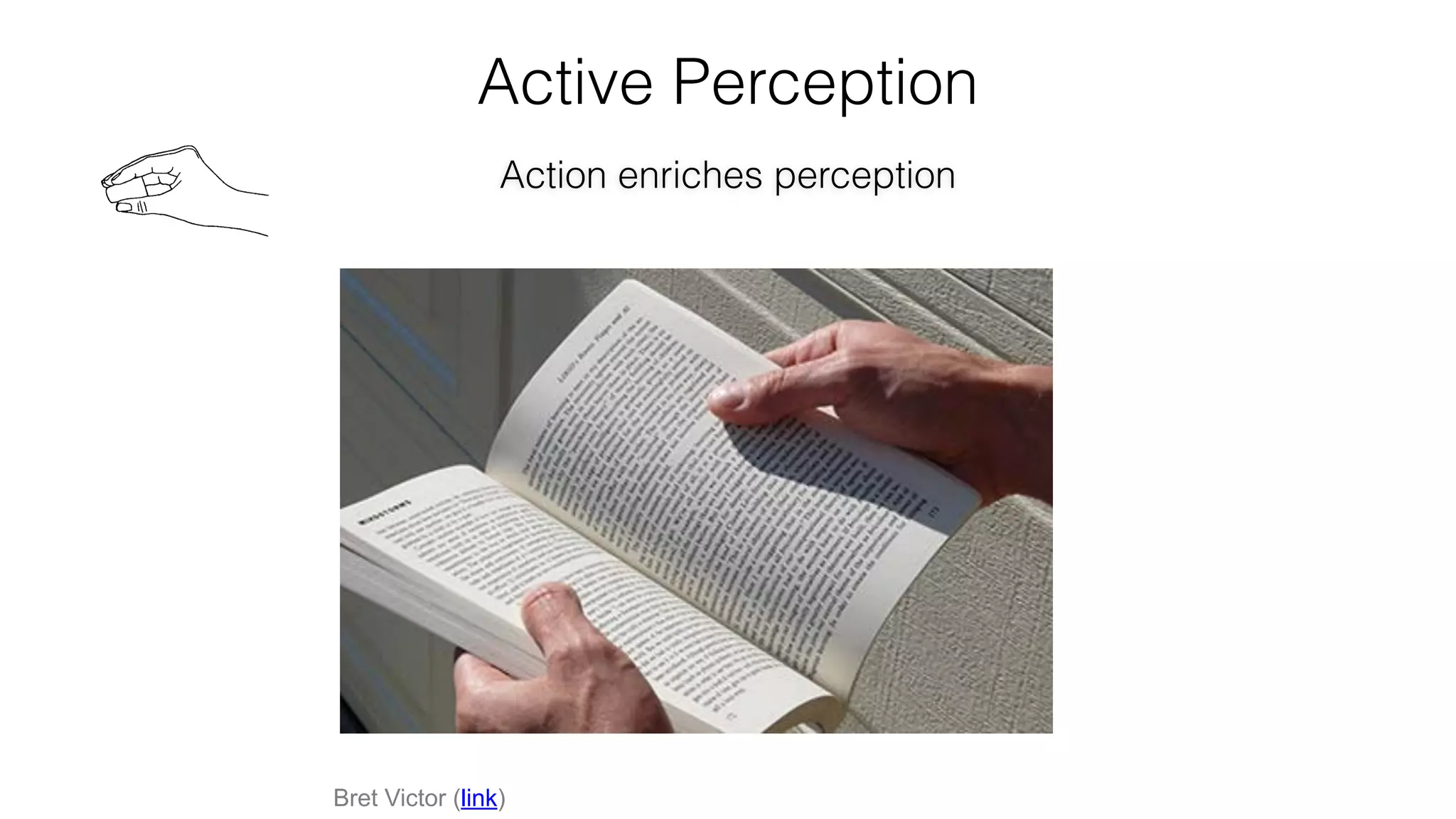
Action enriches perception
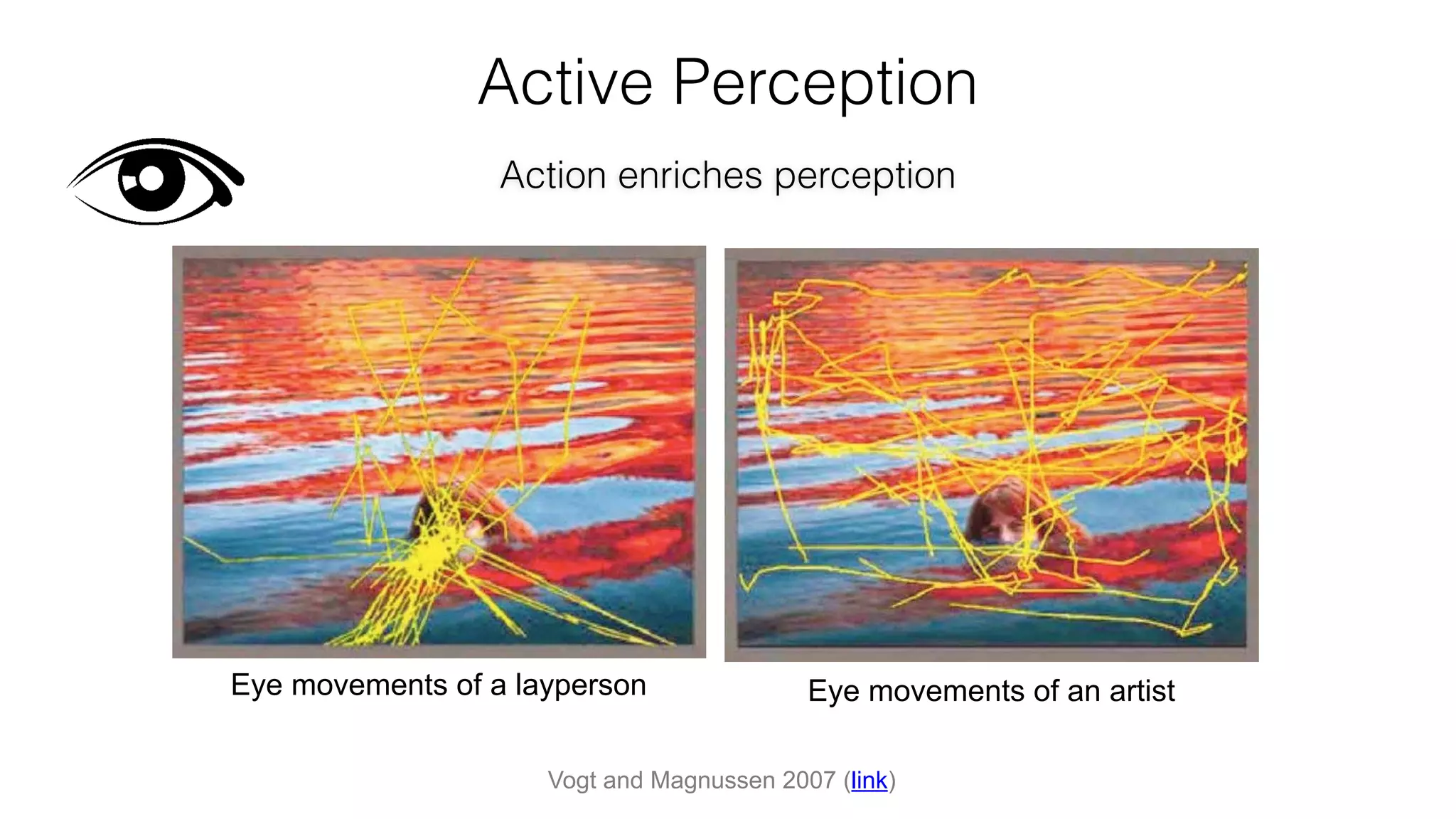
Active Perception
Action enriches perception
Vogt and Magnussen 2007 (link)
Eye movements of a layperson Eye movements of an artist
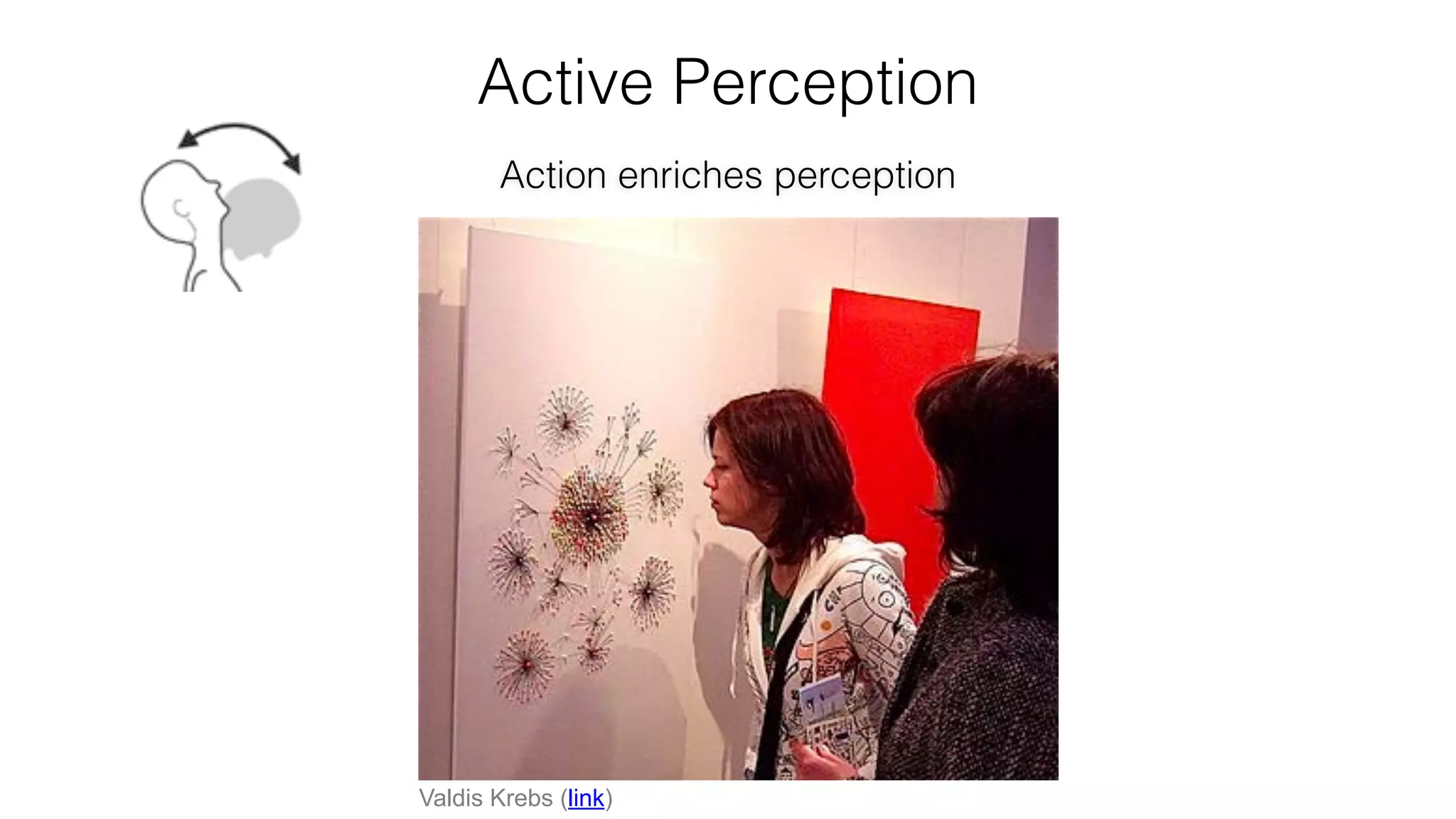
Valdis Krebs (link)
Active Perception
Action enriches perception
Photoappaloosa(link)
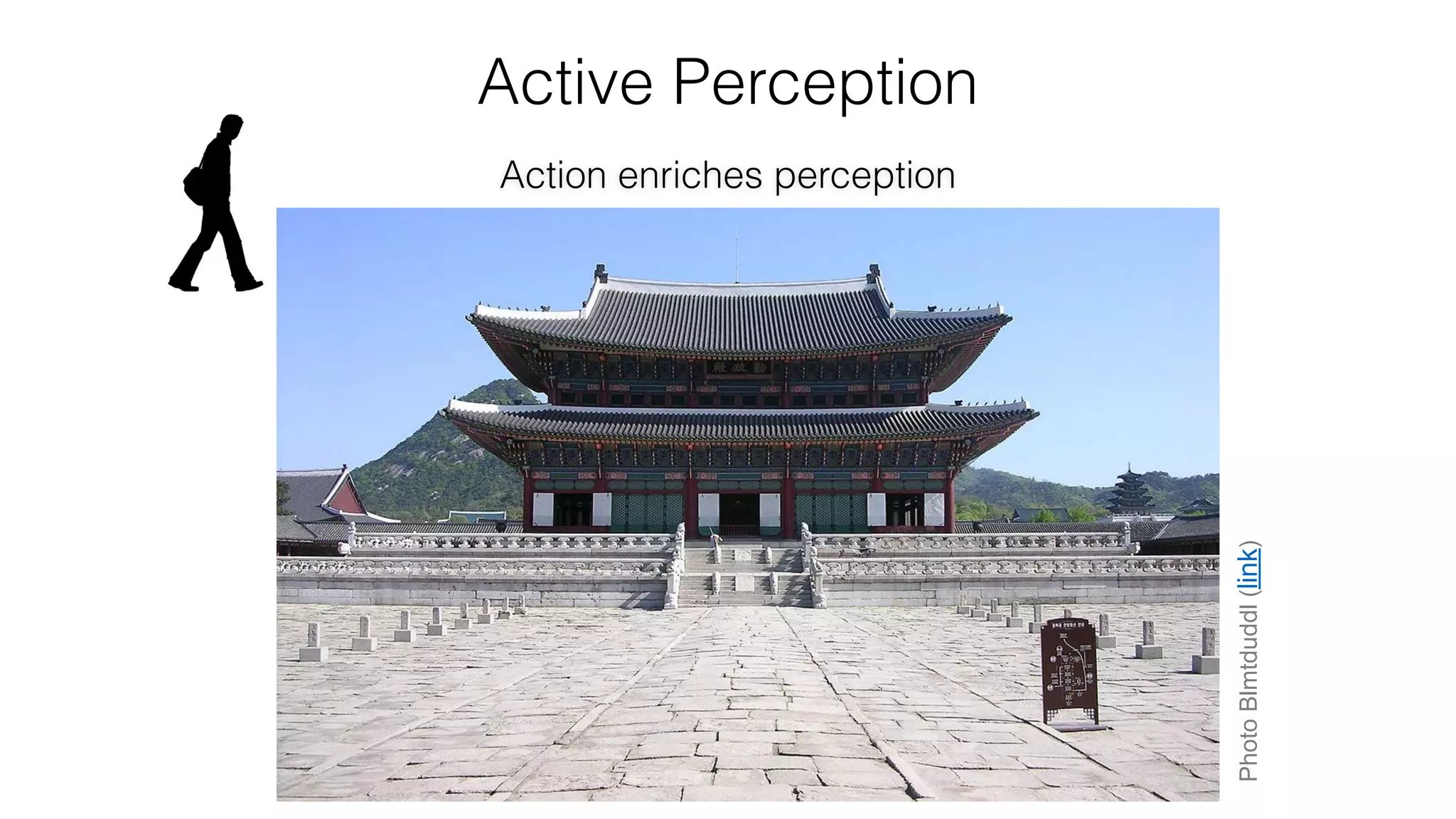
Active Perception
Action enriches perception
PhotoBlmtduddl(link)
Bret Victor (link)
Active Perception
Action enriches perception
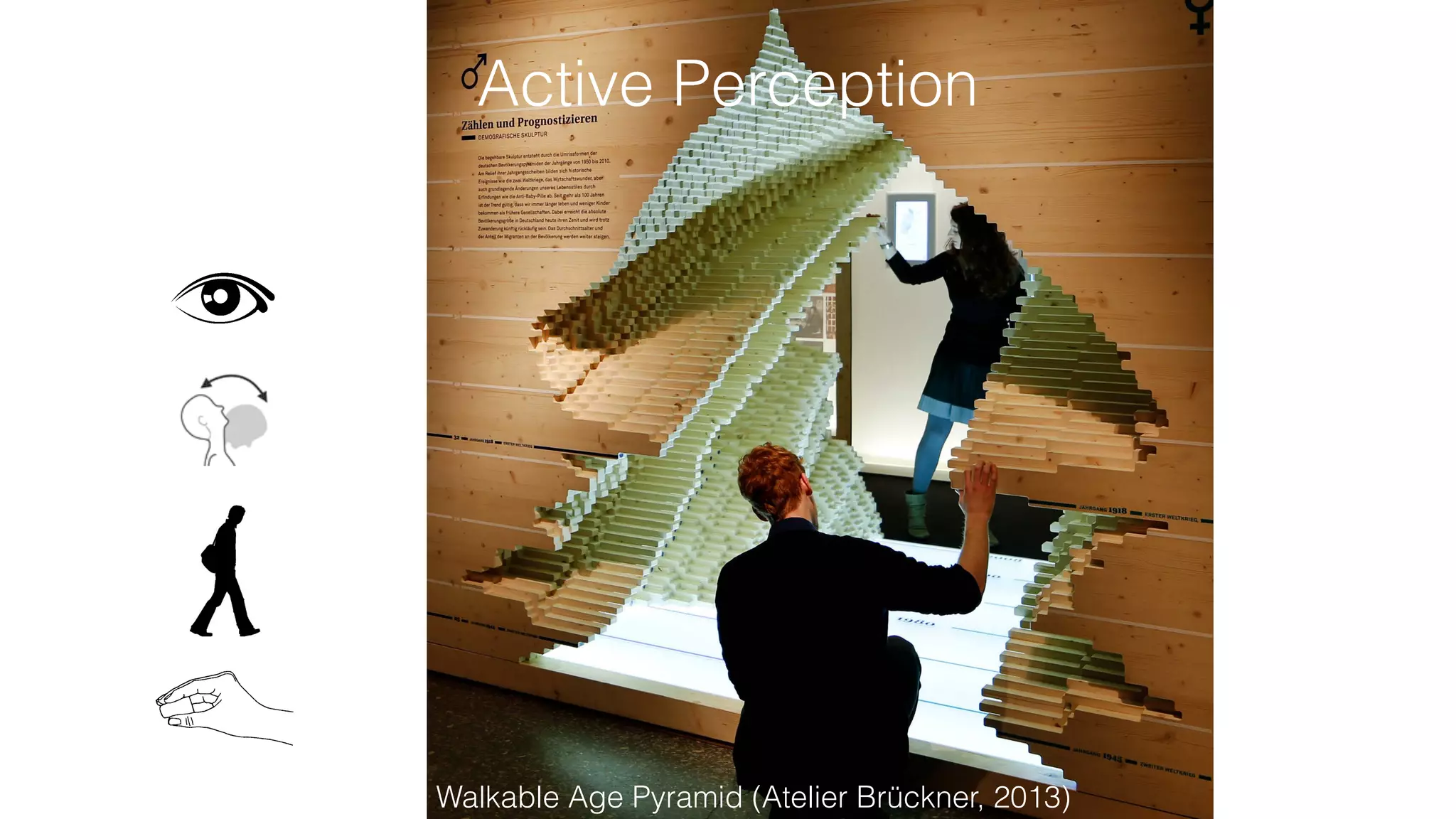
Active Perception
Walkable Age Pyramid (Atelier Brückner, 2013)
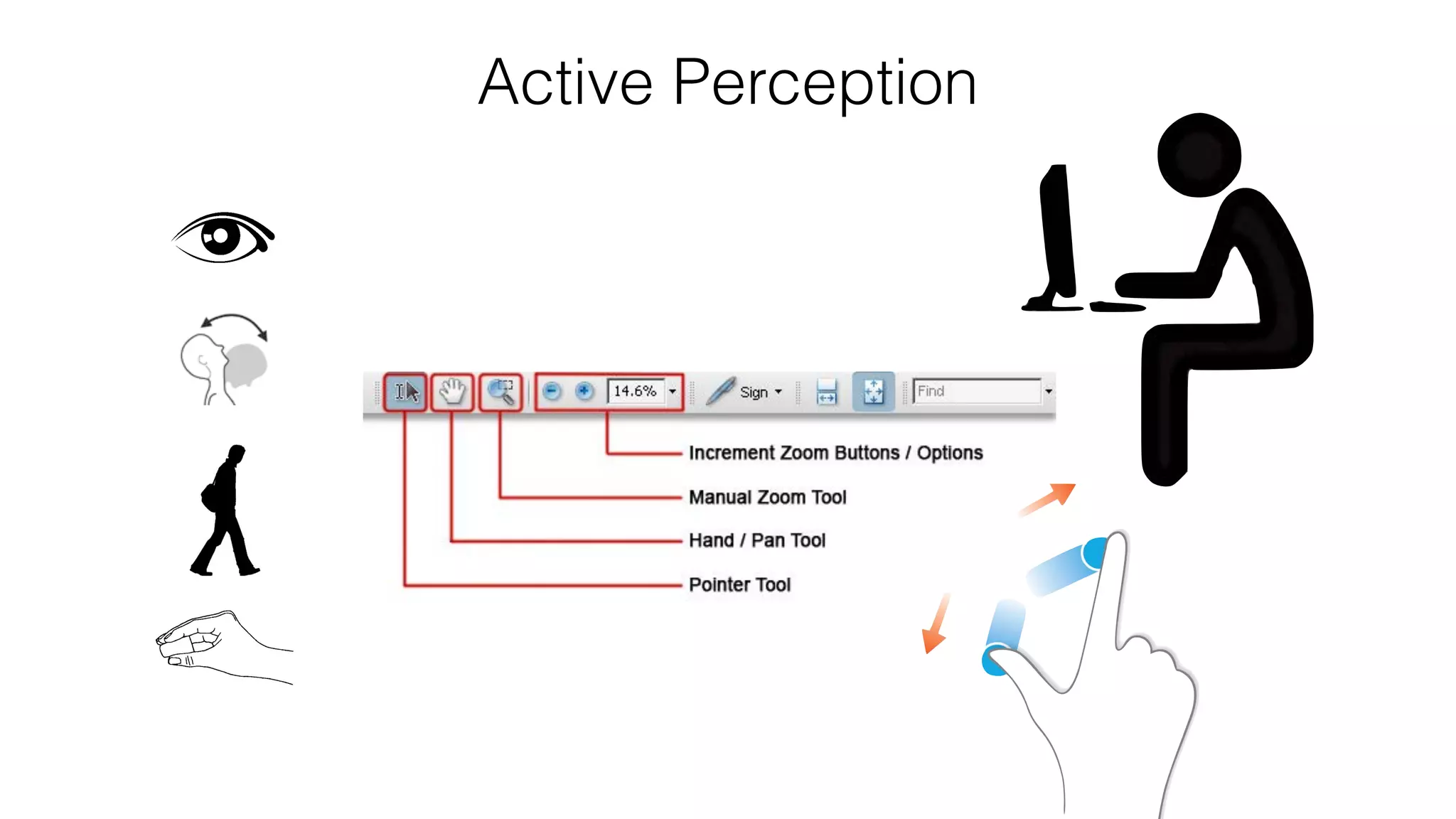
Active Perception
Active Perception
Why physicalize?
To Think Through Manipulation
To Engage People With Data
To Intrinsically Support Active Perception
more in the paper:
To Address Multiple Senses
To Promote Accessibility
…
Challenges
How to Design Data Physicalizations?
Challenges
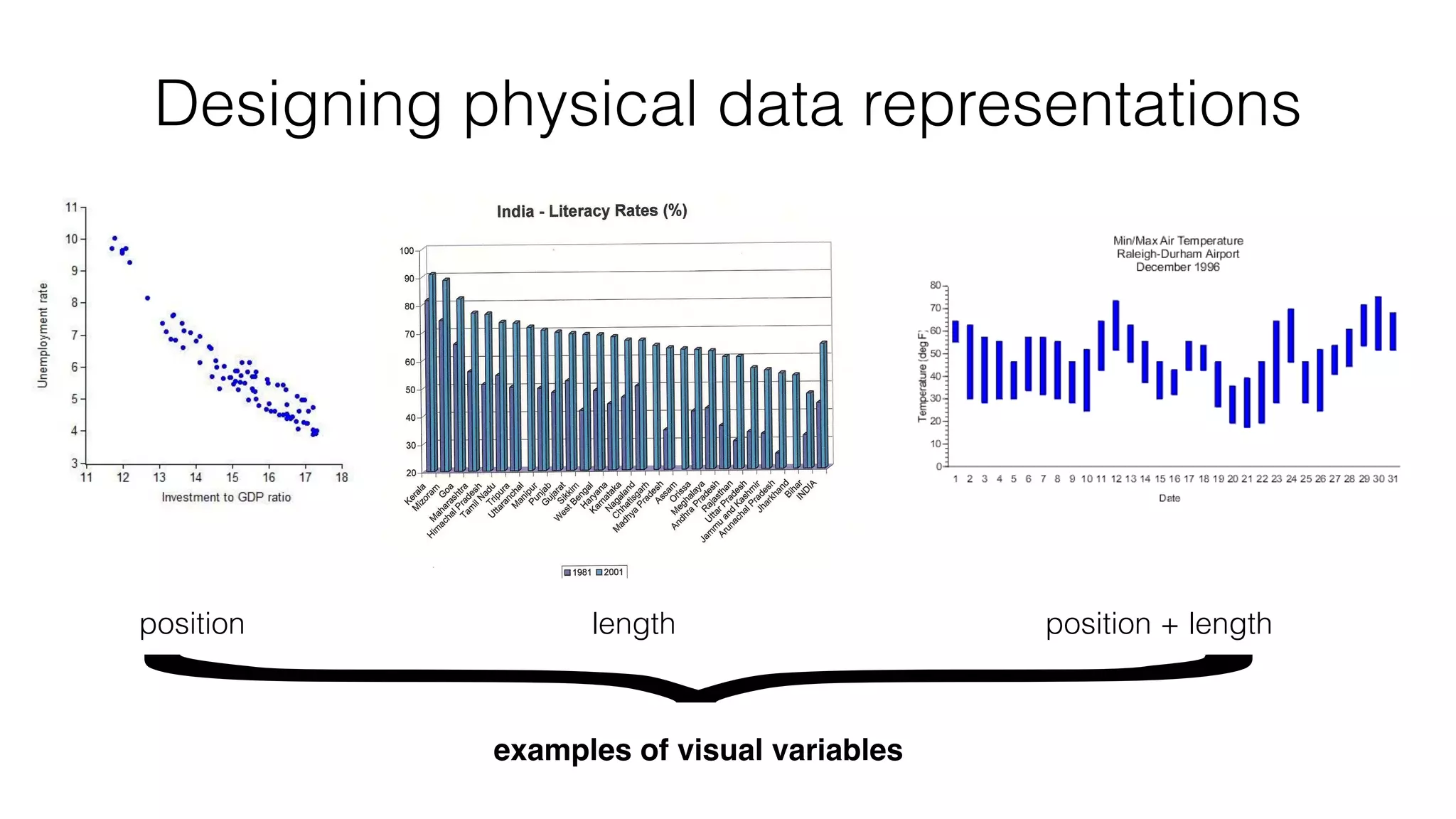
Designing physical data representations
position length position + length
examples of visual variables
Designing physical data representations
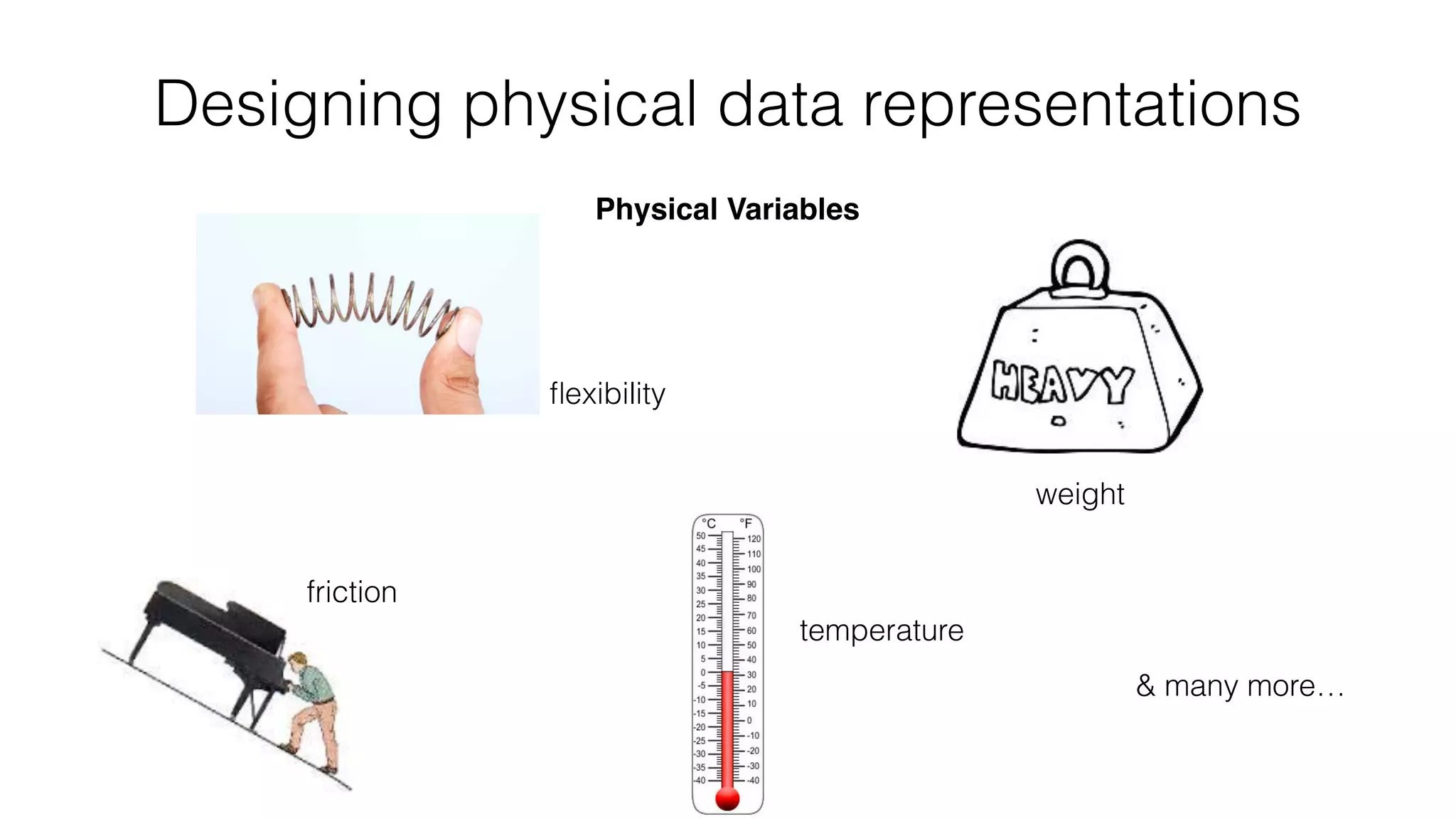
weight
flexibility
temperature
Physical Variables
& many more…
friction
Designing physical data representations
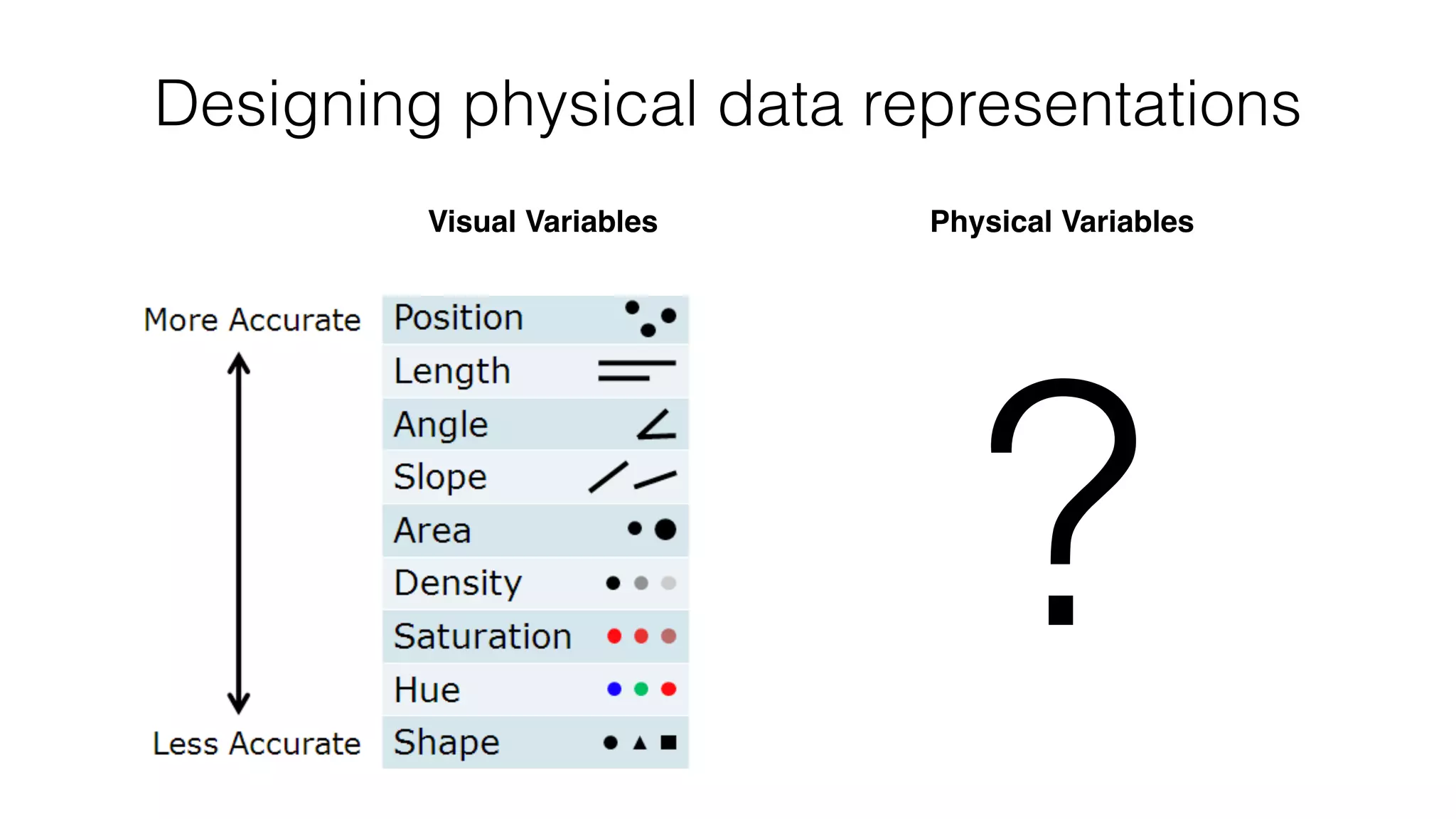
Physical Variables
?
Visual Variables
Designing physical data representations
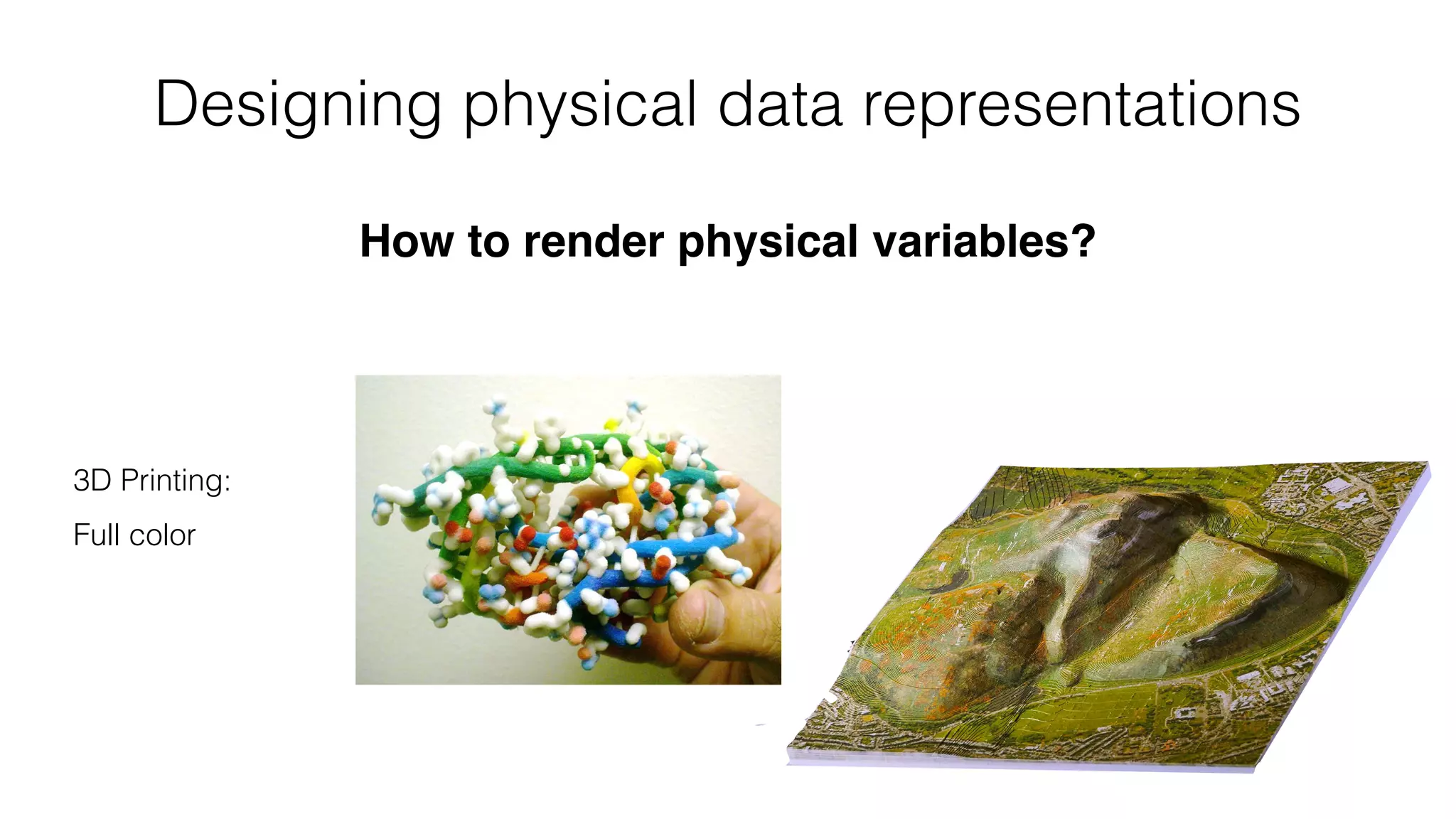
How to render physical variables?
3D Printing:


Full color
Designing physical data representations
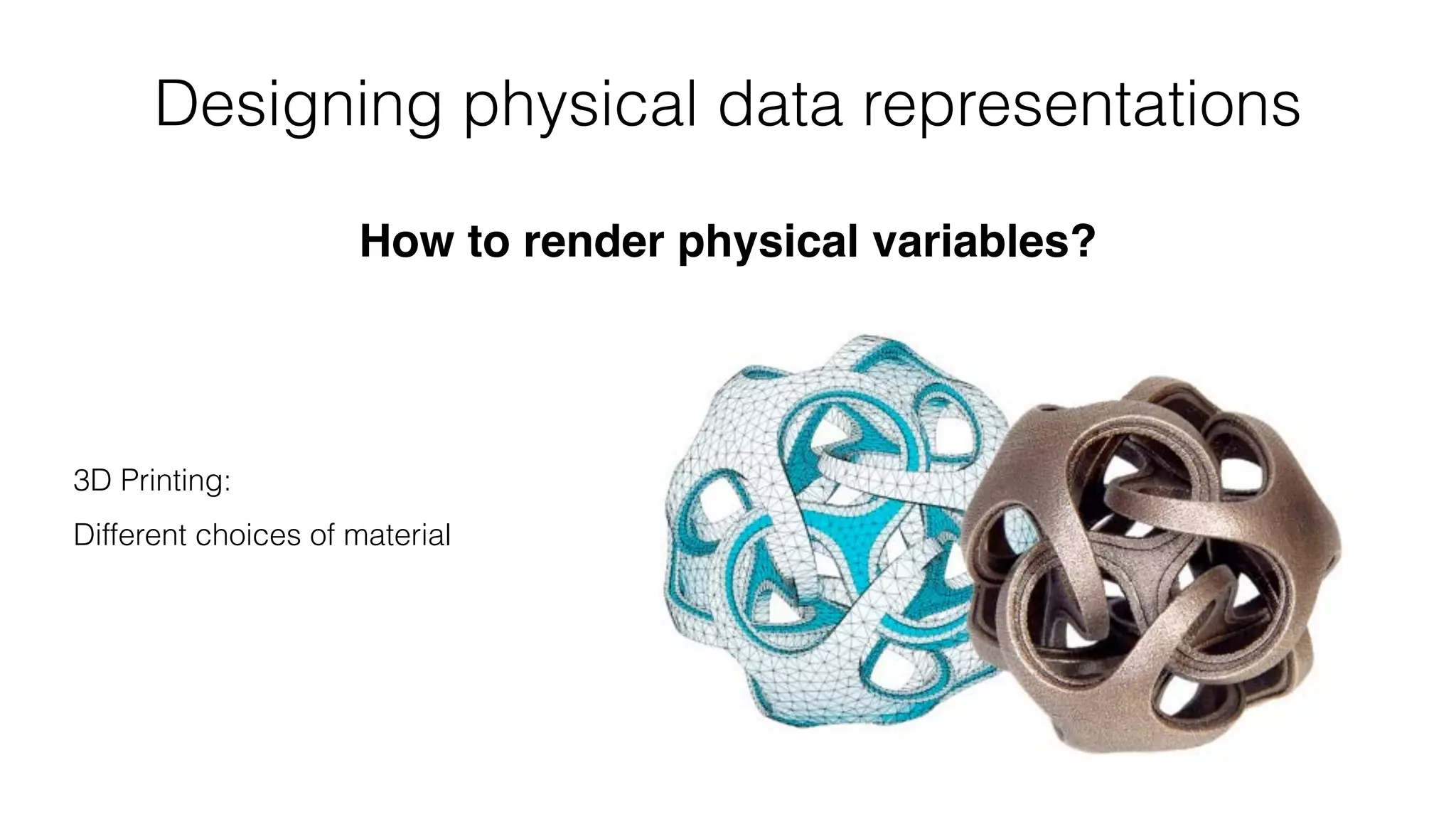
How to render physical variables?
3D Printing:


Different choices of material
Designing physical data representations
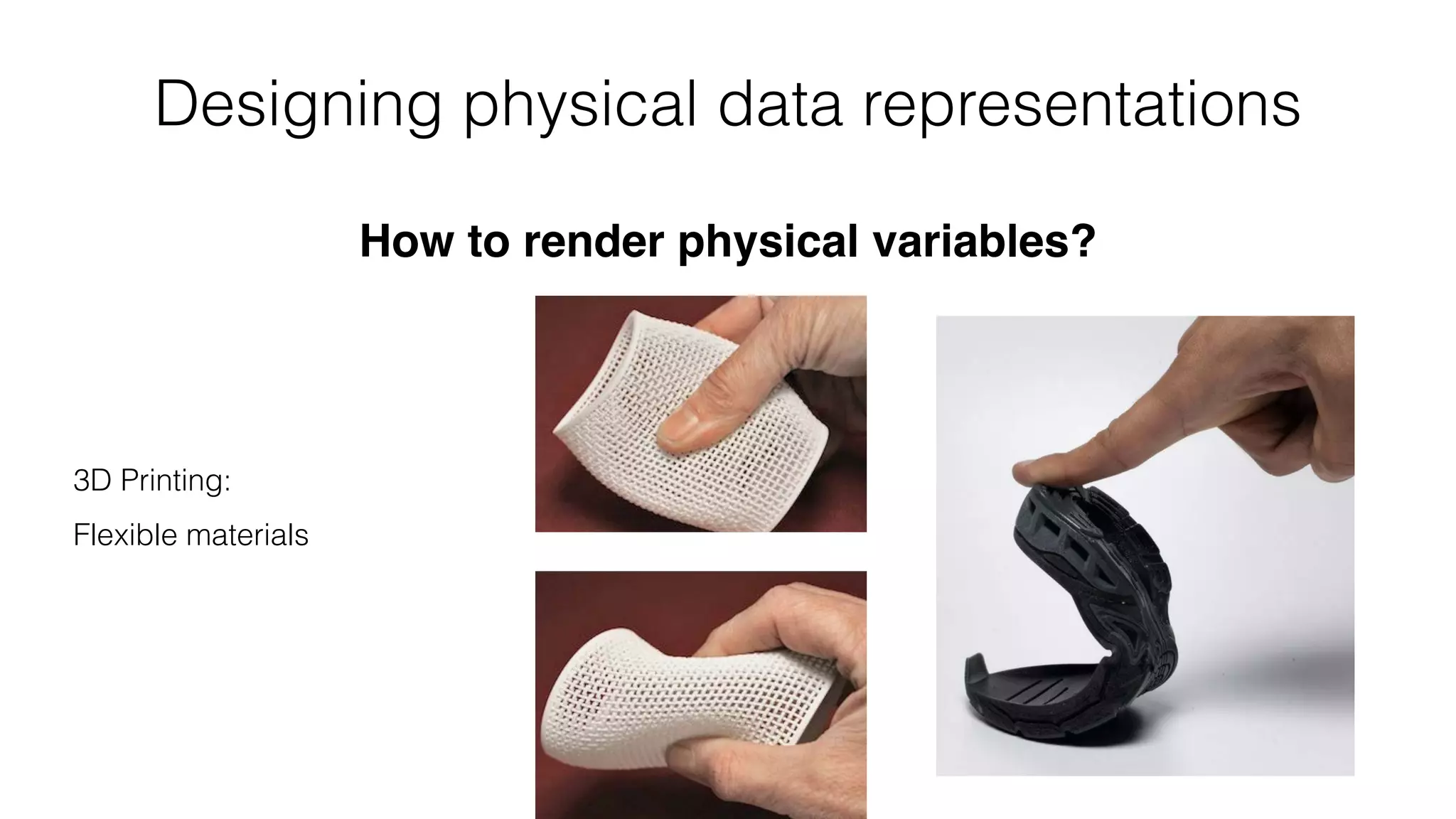
How to render physical variables?
3D Printing:


Flexible materials
Designing physical data representations
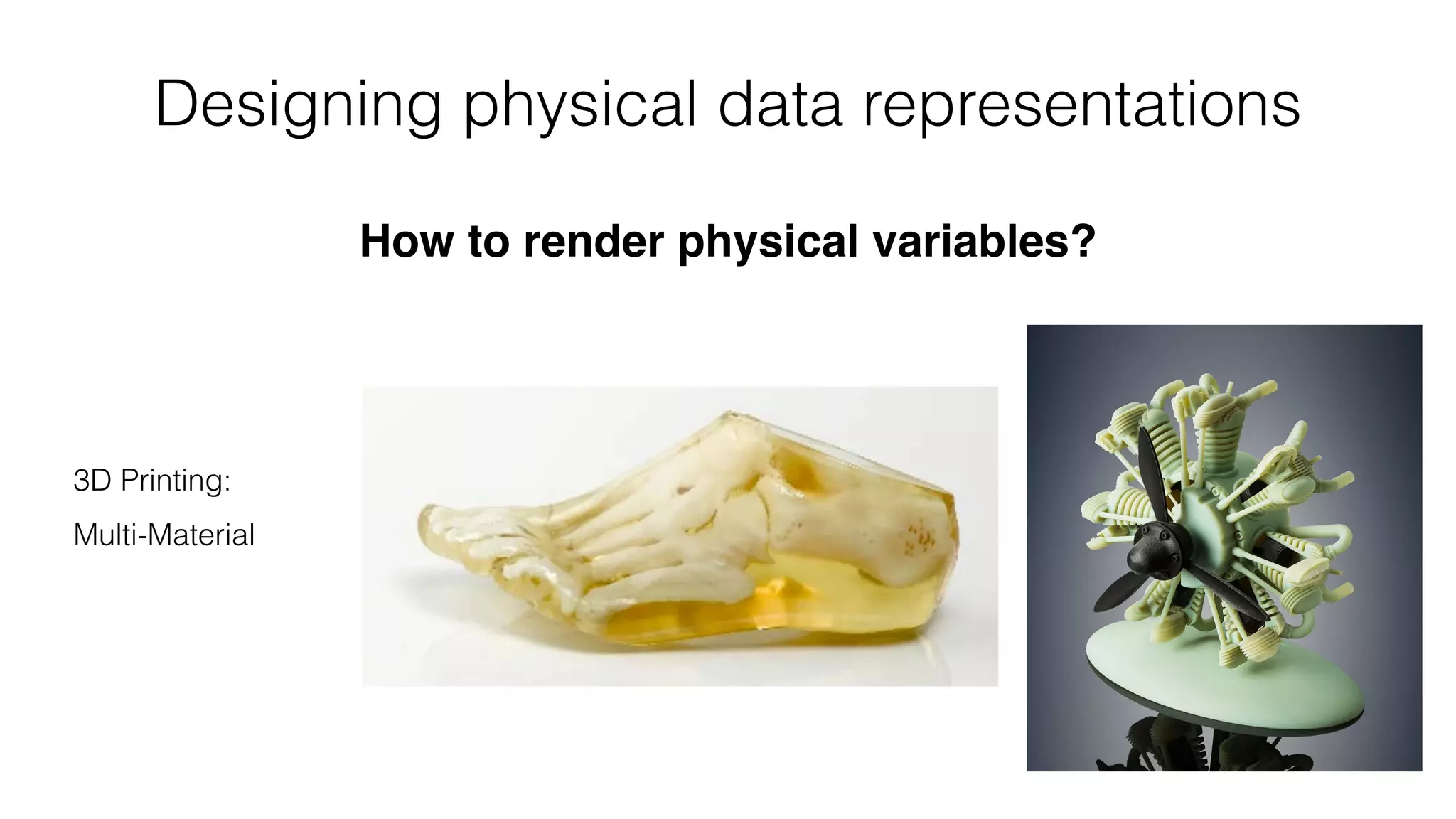
How to render physical variables?
3D Printing:


Multi-Material
Designing physical data representations
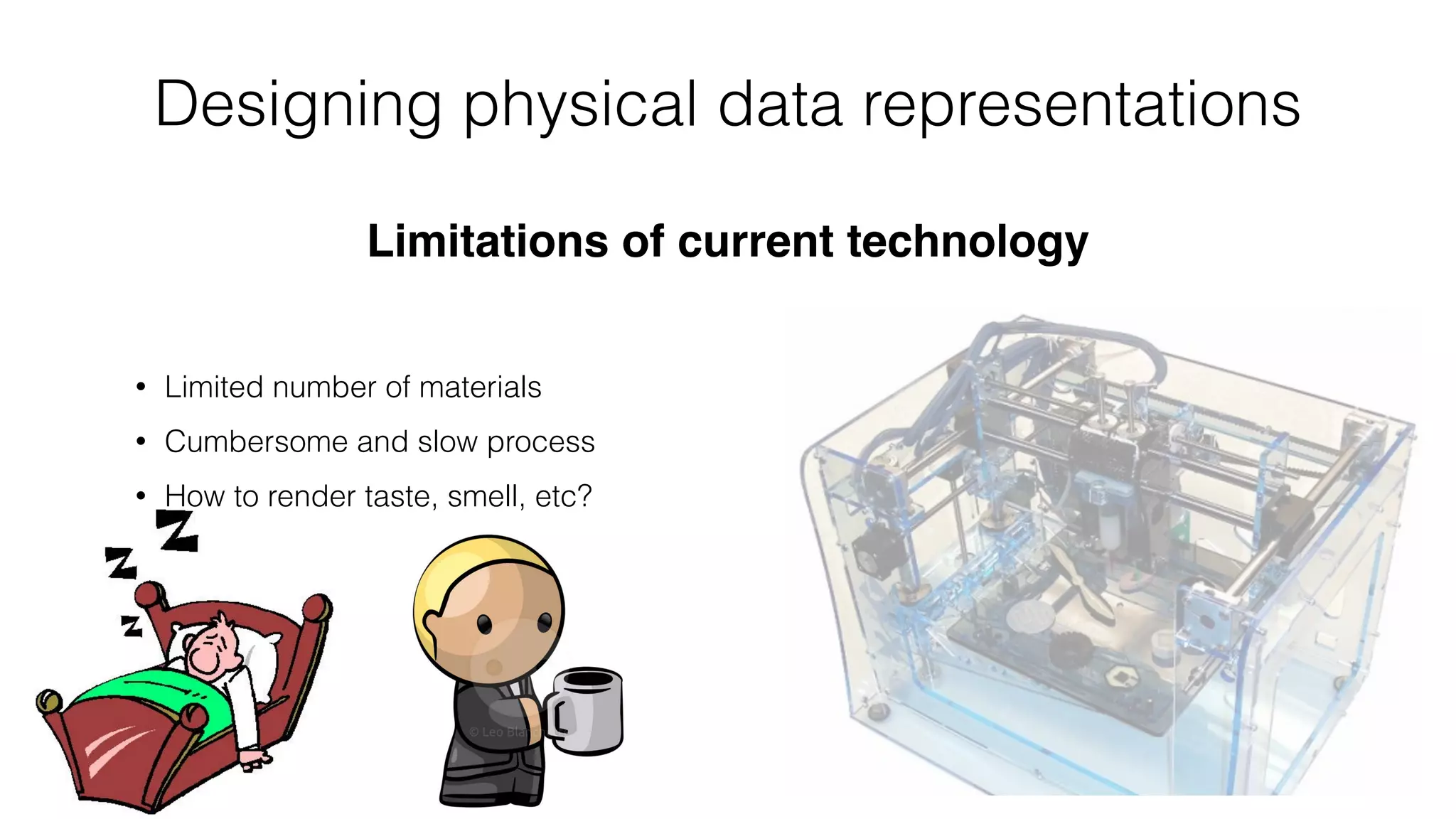
Limitations of current technology
• Limited number of materials
• Cumbersome and slow process
• How to render taste, smell, etc?
Designing physical data representations
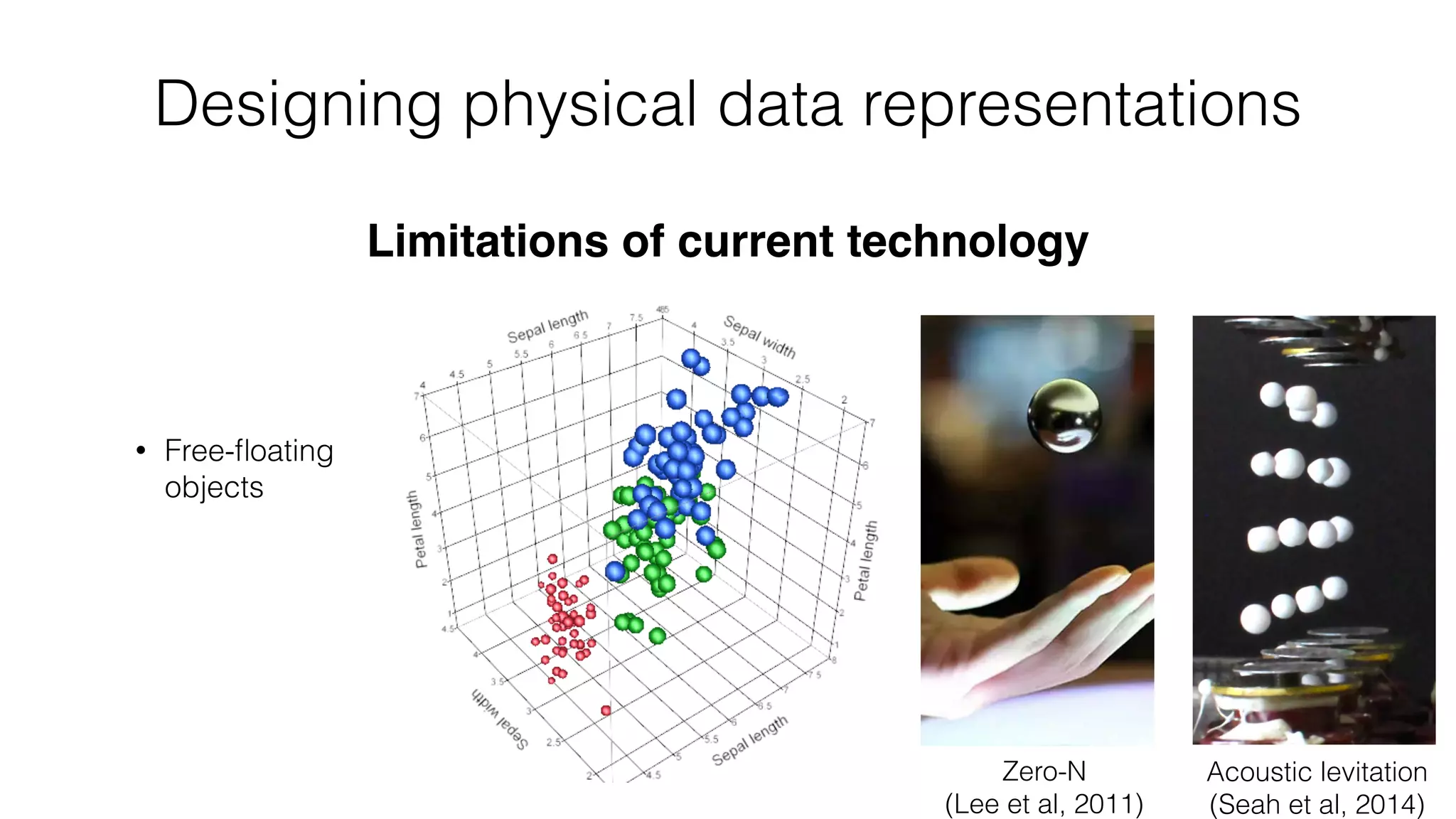
Limitations of current technology
• Free-floating

objects
Zero-N

(Lee et al, 2011)
Acoustic levitation

(Seah et al, 2014)
Supporting Animation and Interactivity
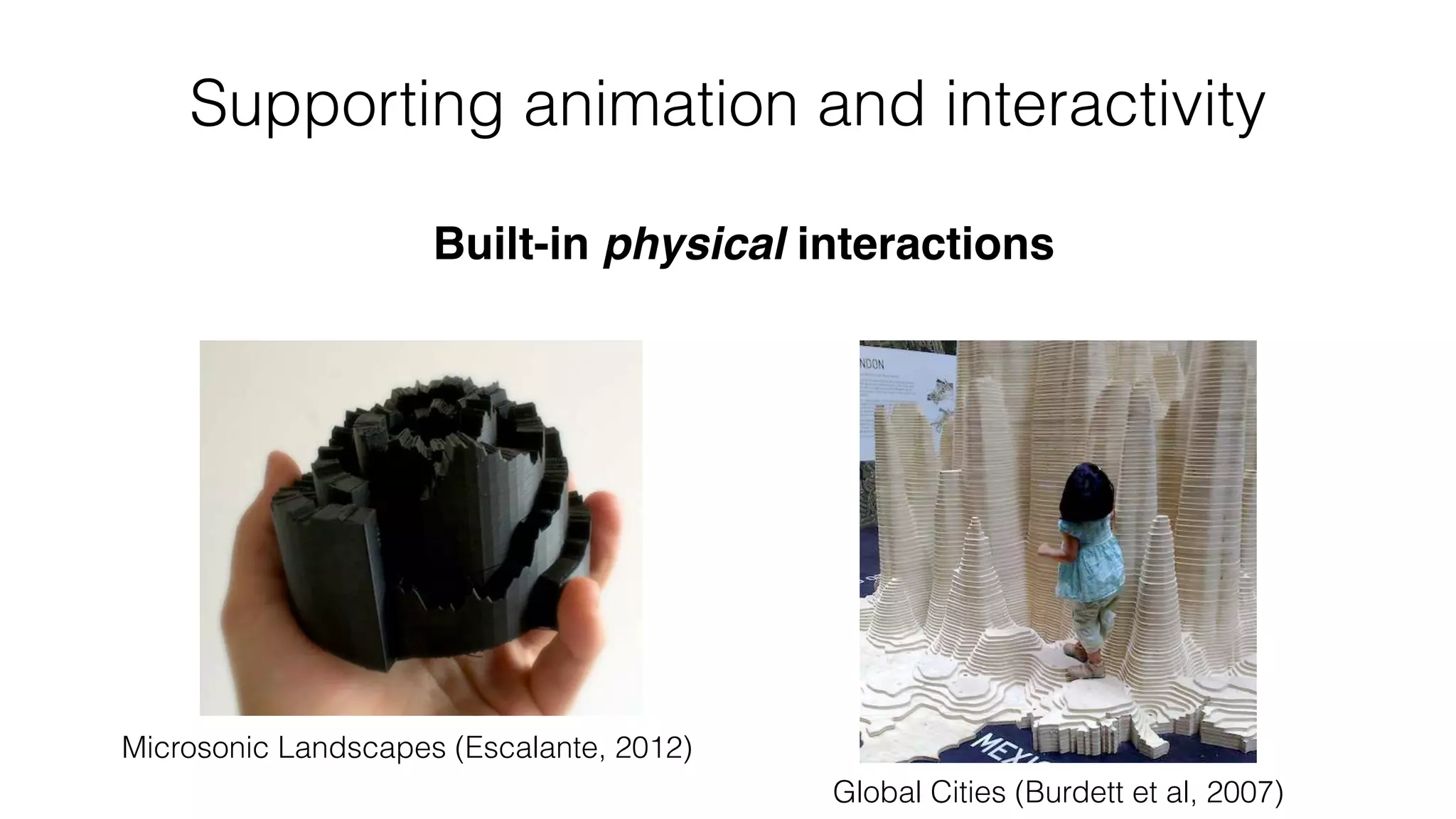
Built-in physical interactions
Supporting animation and interactivity
Microsonic Landscapes (Escalante, 2012)
Global Cities (Burdett et al, 2007)
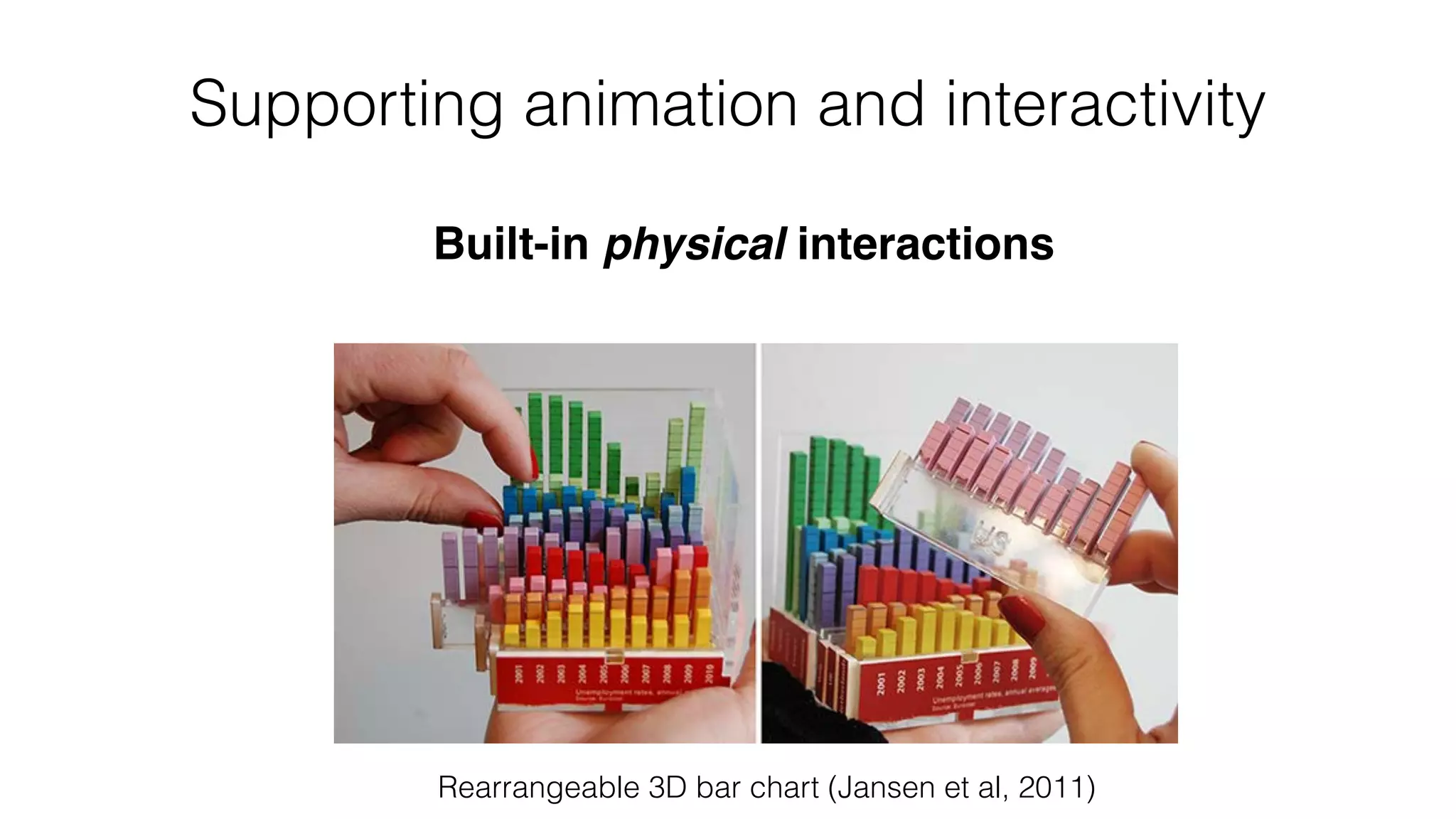
Built-in physical interactions
Supporting animation and interactivity
Rearrangeable 3D bar chart (Jansen et al, 2011)
Built-in physical interactions
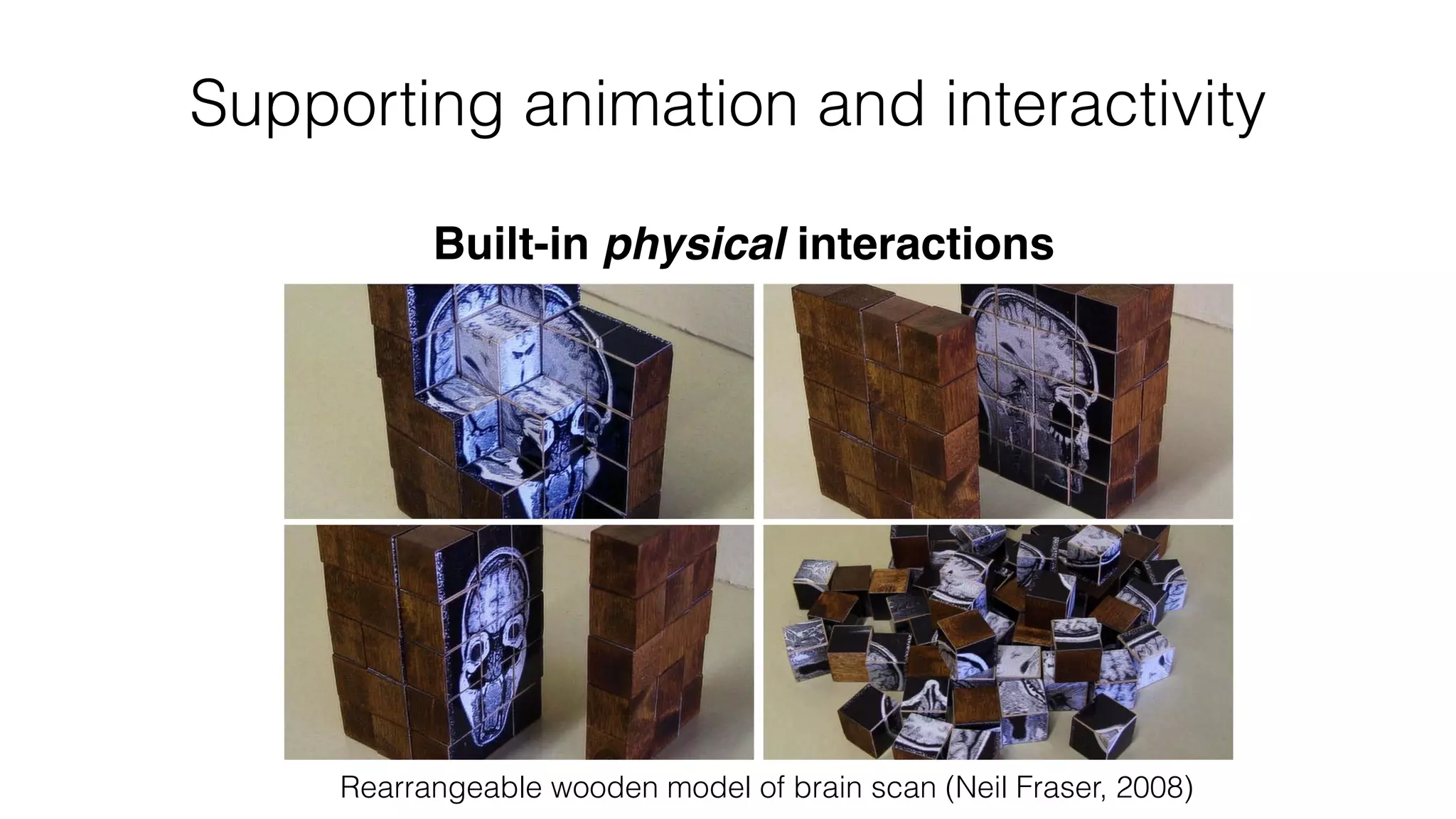
Rearrangeable wooden model of brain scan (Neil Fraser, 2008)
Supporting animation and interactivity
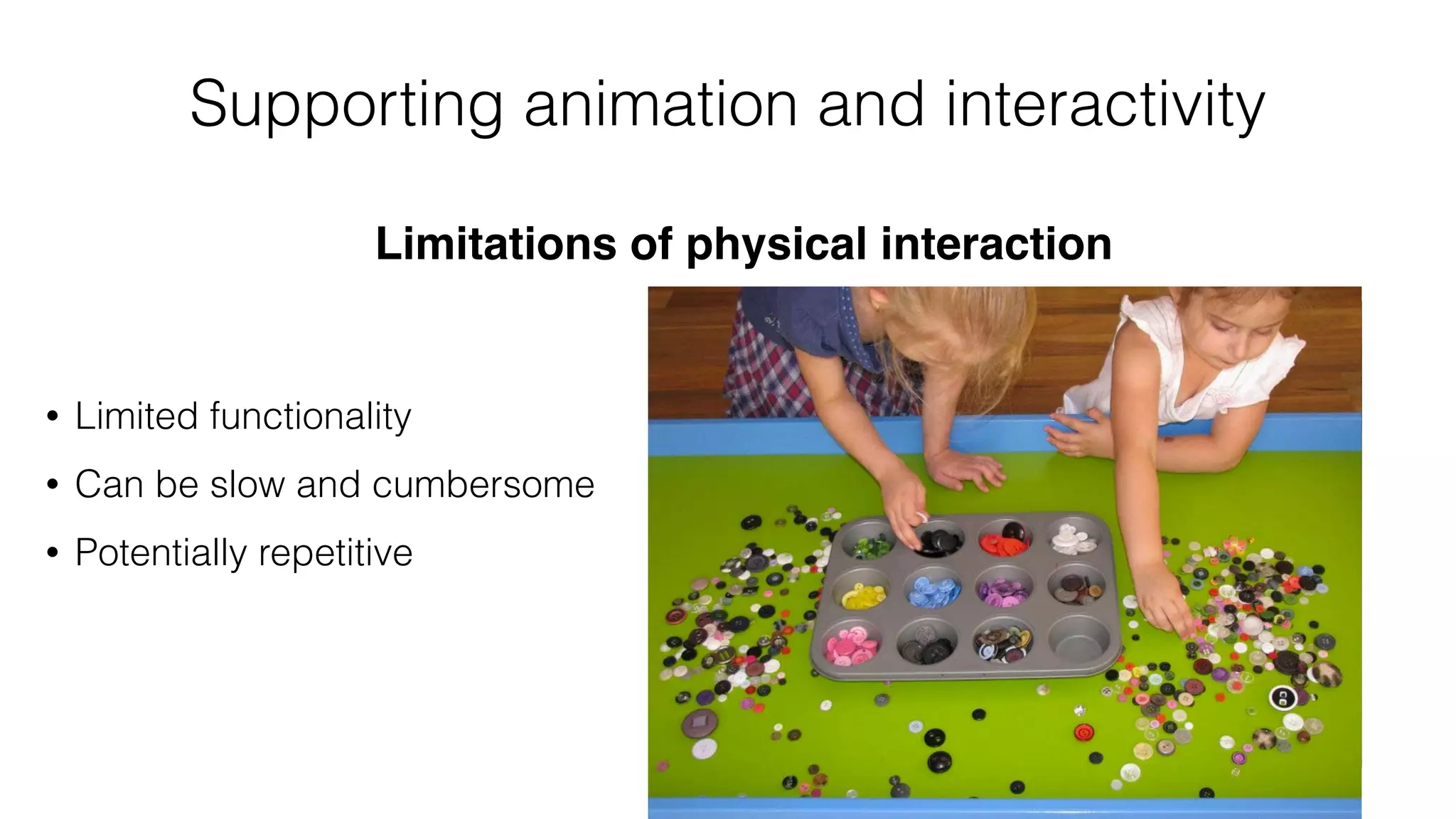
Limitations of physical interaction
Supporting animation and interactivity
• Limited functionality
• Can be slow and cumbersome
• Potentially repetitive
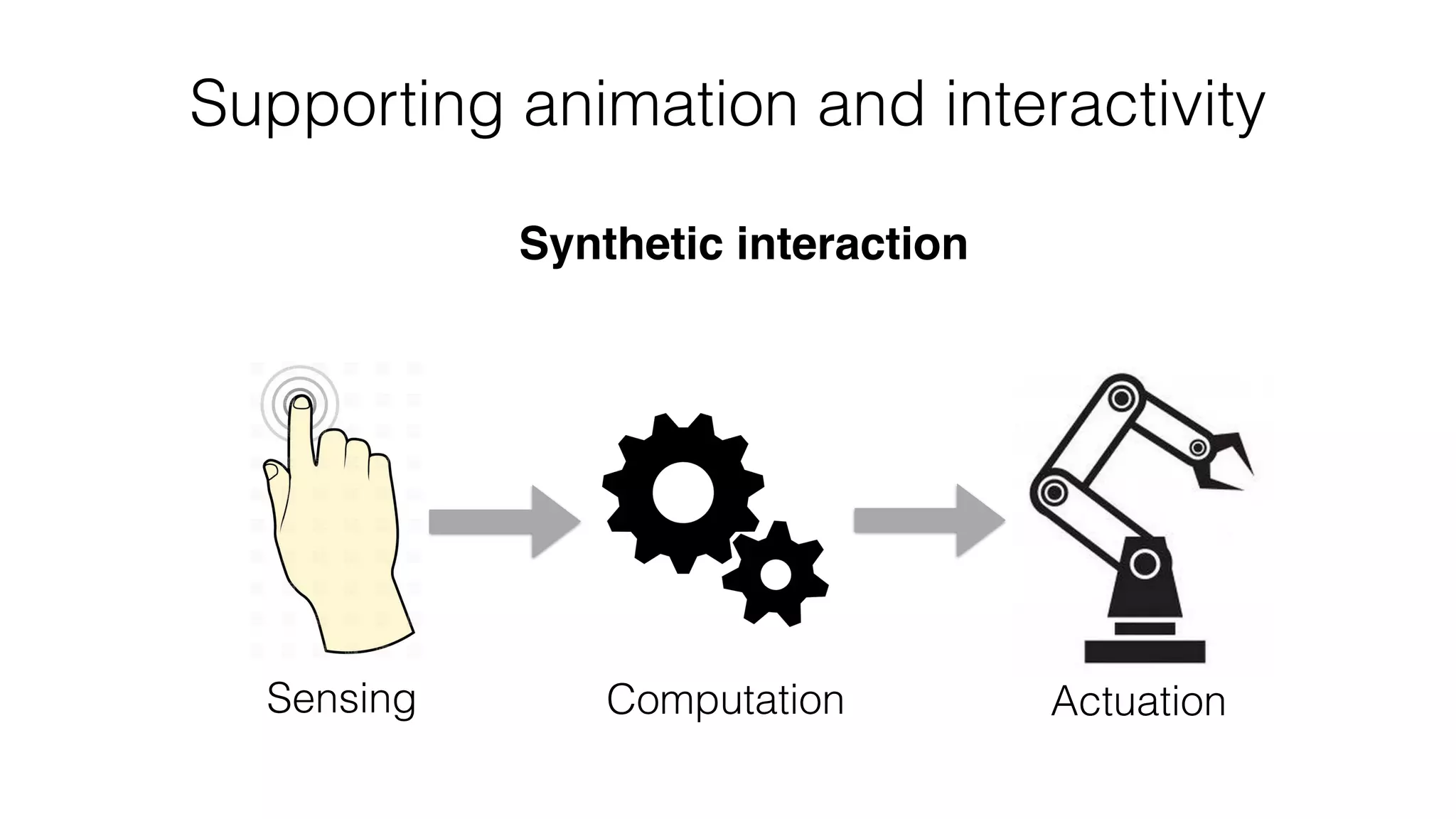
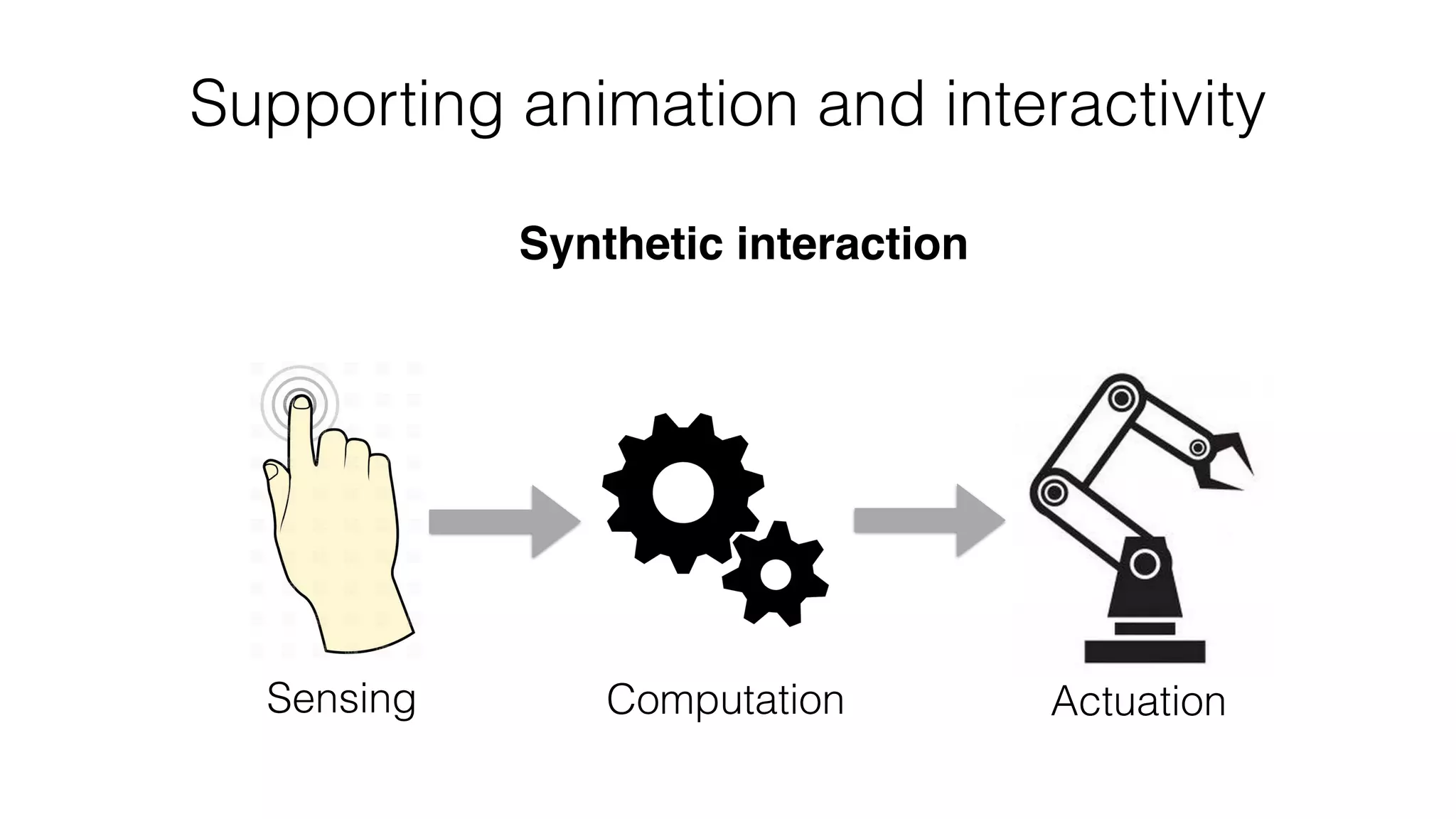
Synthetic interaction
Supporting animation and interactivity
Sensing Computation Actuation
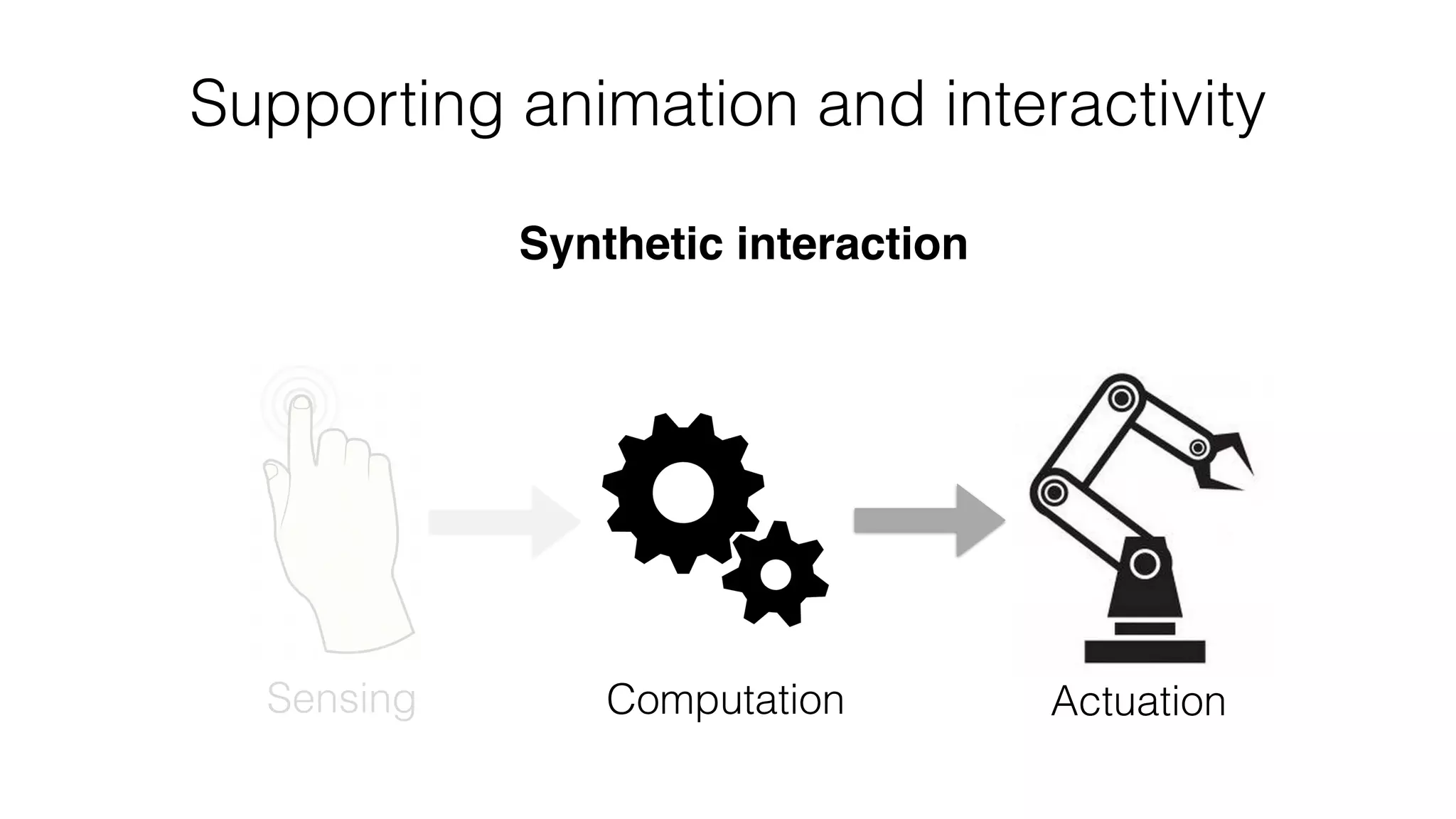
Synthetic interaction
Supporting animation and interactivity
Sensing Computation Actuation
Supporting animation and interactivity
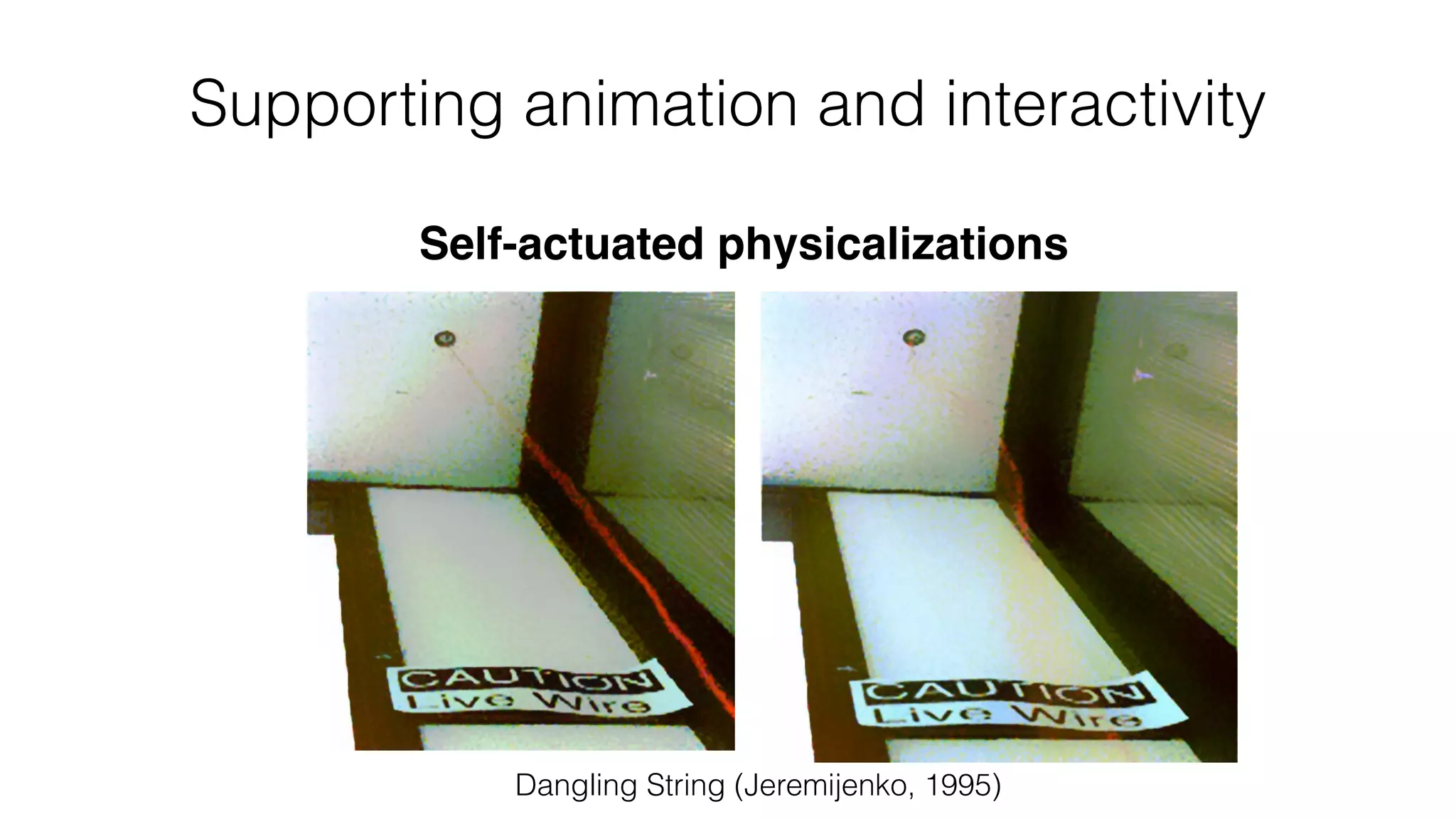
Dangling String (Jeremijenko, 1995)
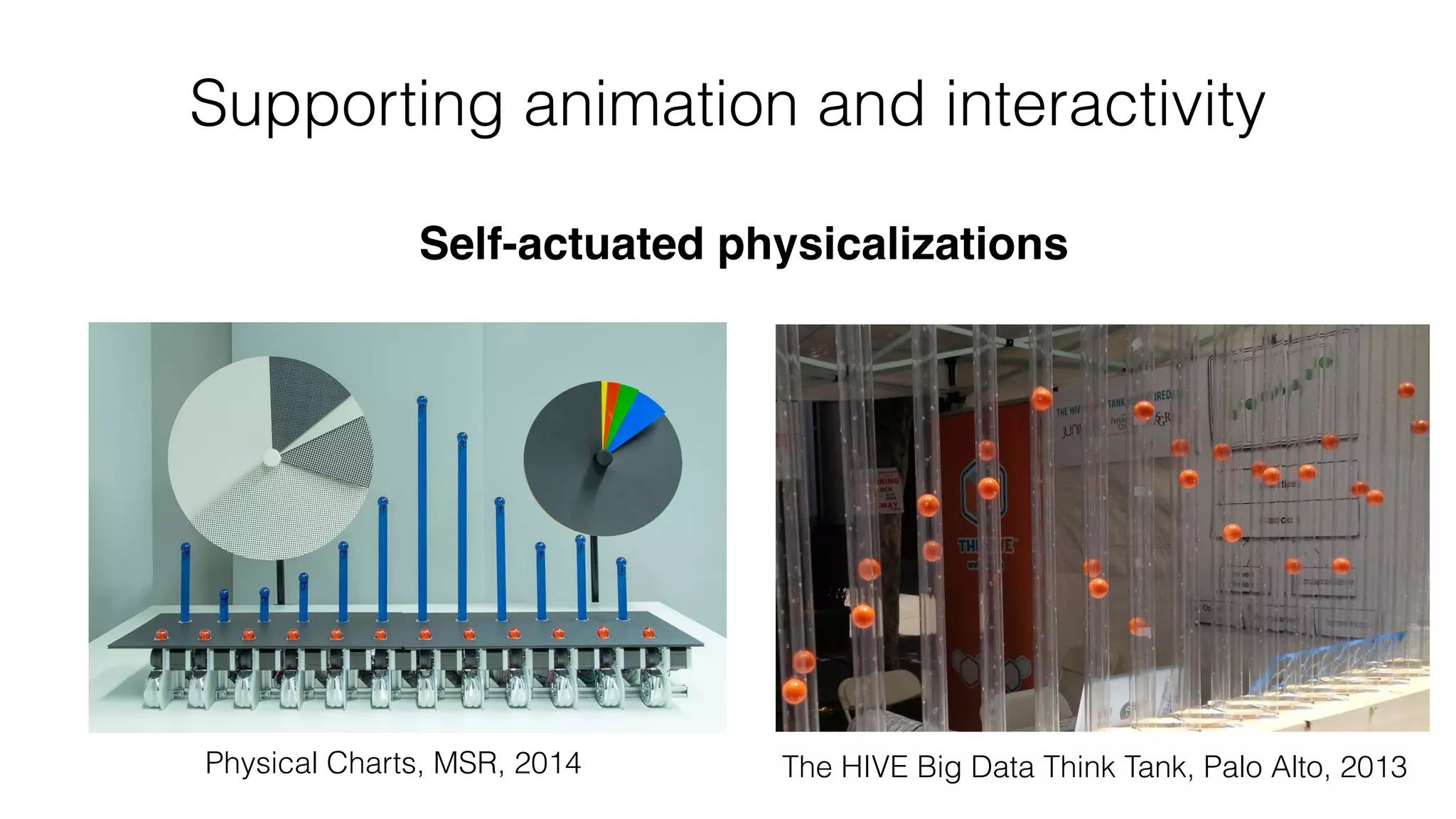
Self-actuated physicalizations
Physical Charts, MSR, 2014 The HIVE Big Data Think Tank, Palo Alto, 2013
Supporting animation and interactivity
Self-actuated physicalizations
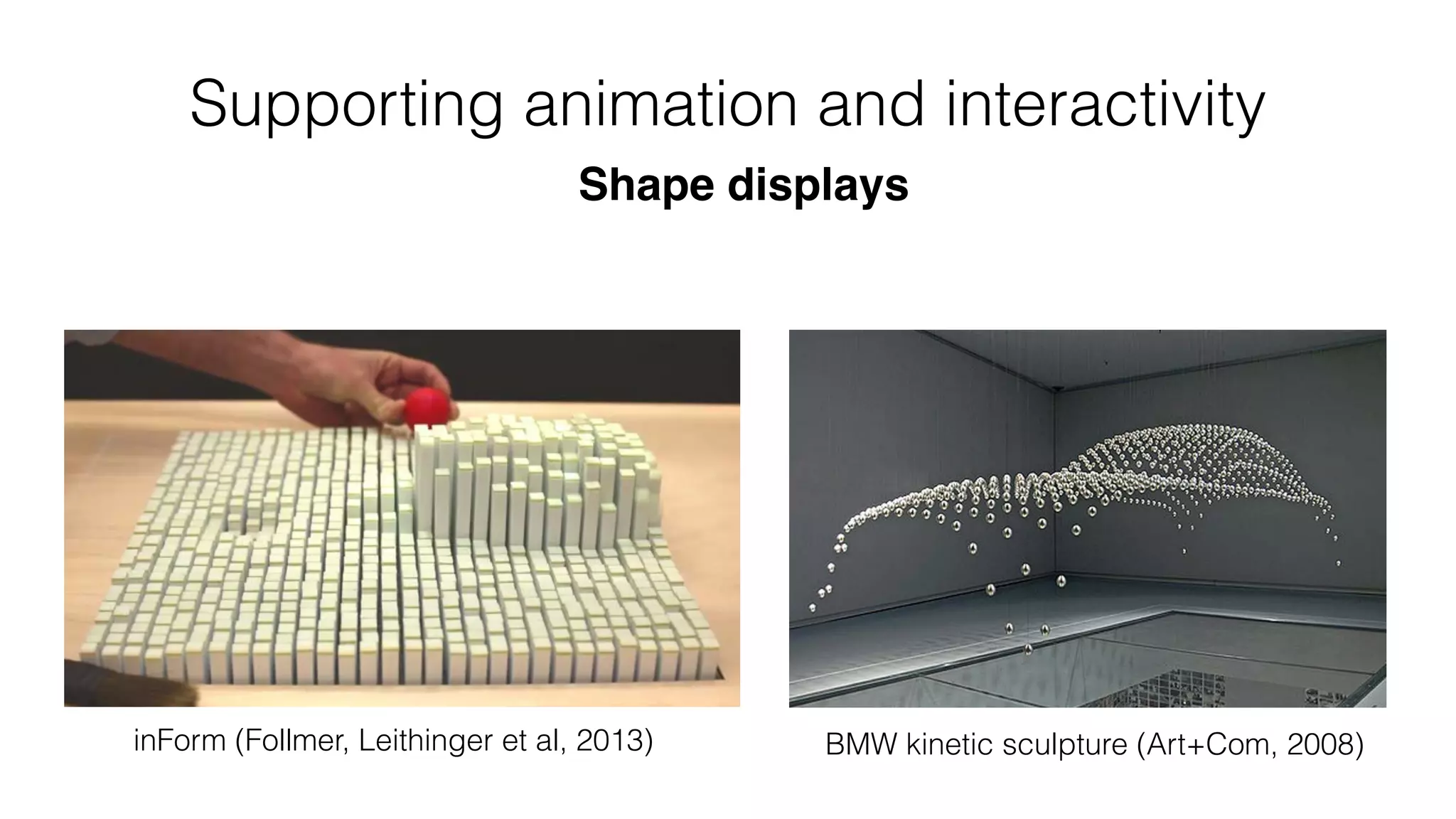
inForm (Follmer, Leithinger et al, 2013) BMW kinetic sculpture (Art+Com, 2008)
Supporting animation and interactivity
Shape displays
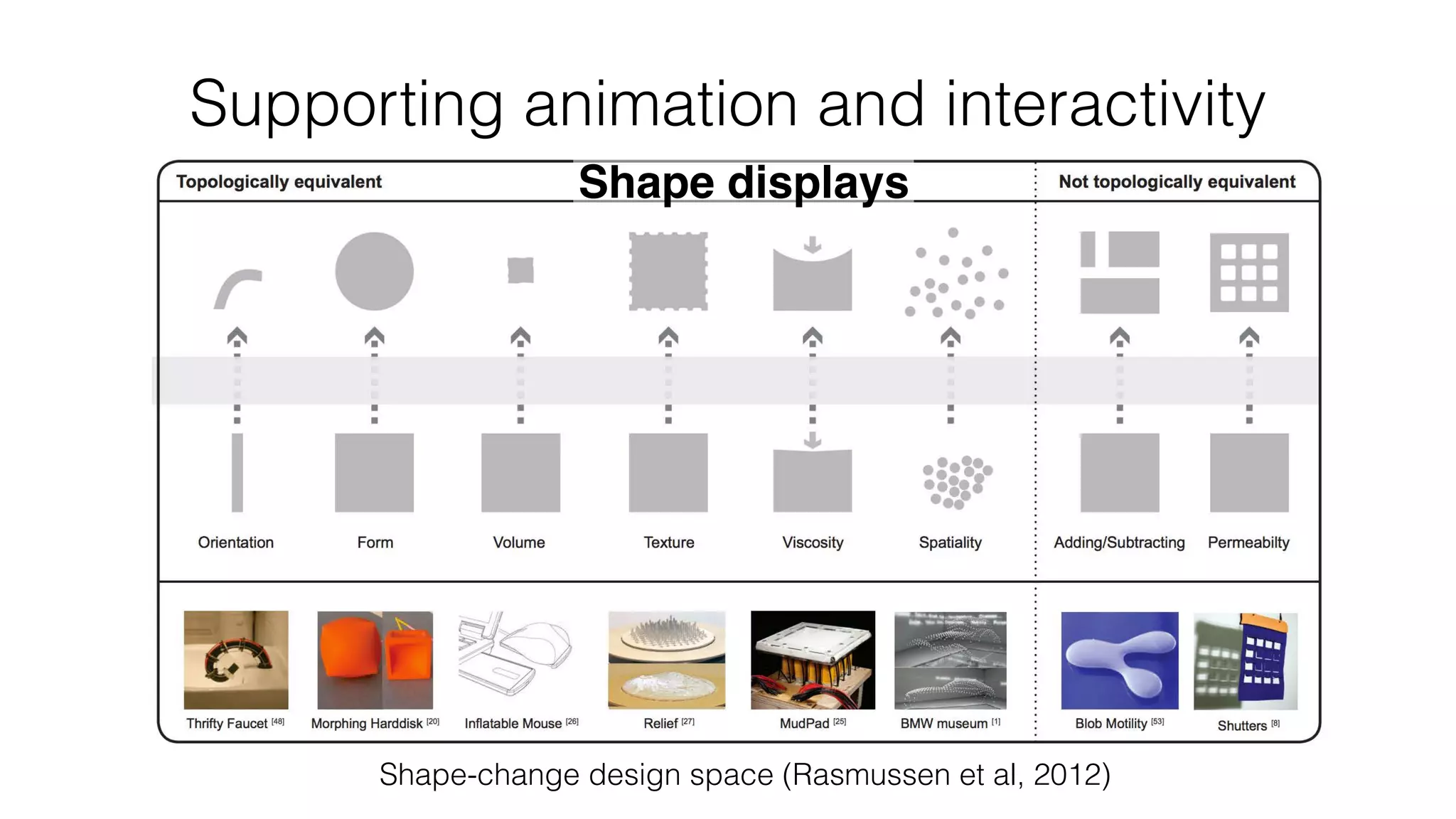
Shape-change design space (Rasmussen et al, 2012)
Supporting animation and interactivity
Shape displays
Shape displays
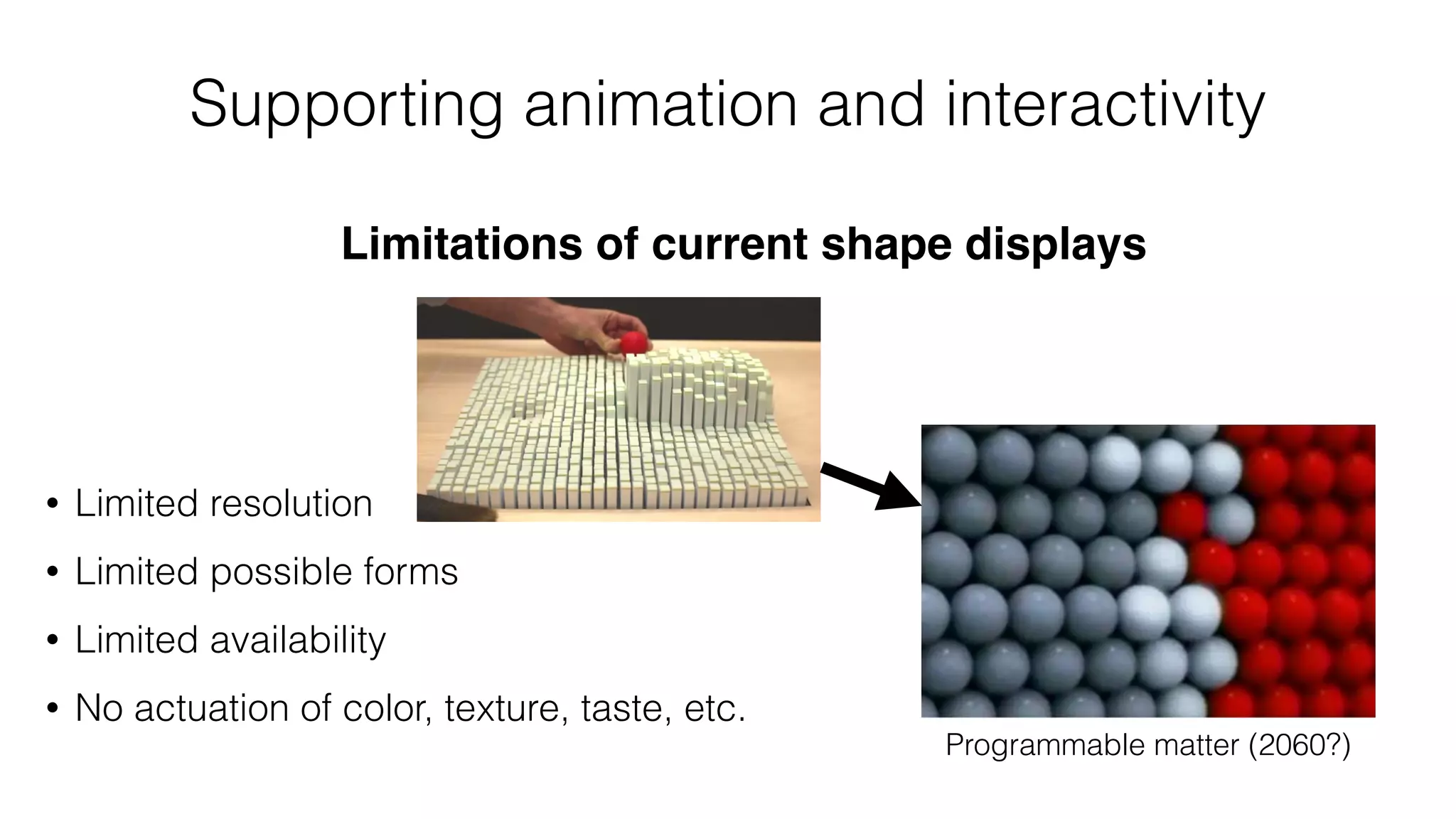
Limitations of current shape displays
Supporting animation and interactivity
• Limited resolution
• Limited possible forms
• Limited availability
• No actuation of color, texture, taste, etc.
Programmable matter (2060?)
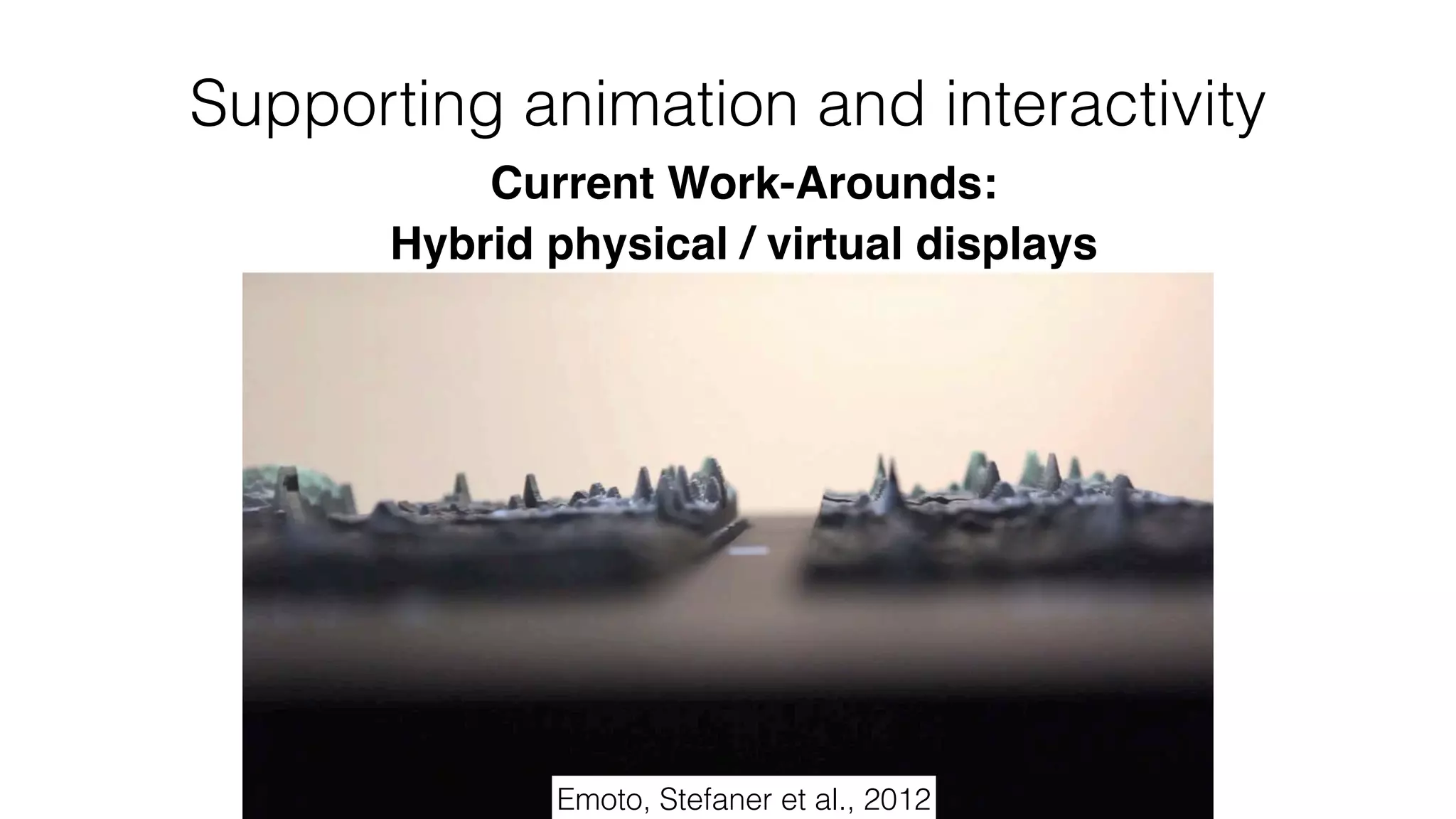
Hybrid physical / virtual displays
Supporting animation and interactivity
Emoto, Stefaner et al., 2012
Current Work-Arounds:
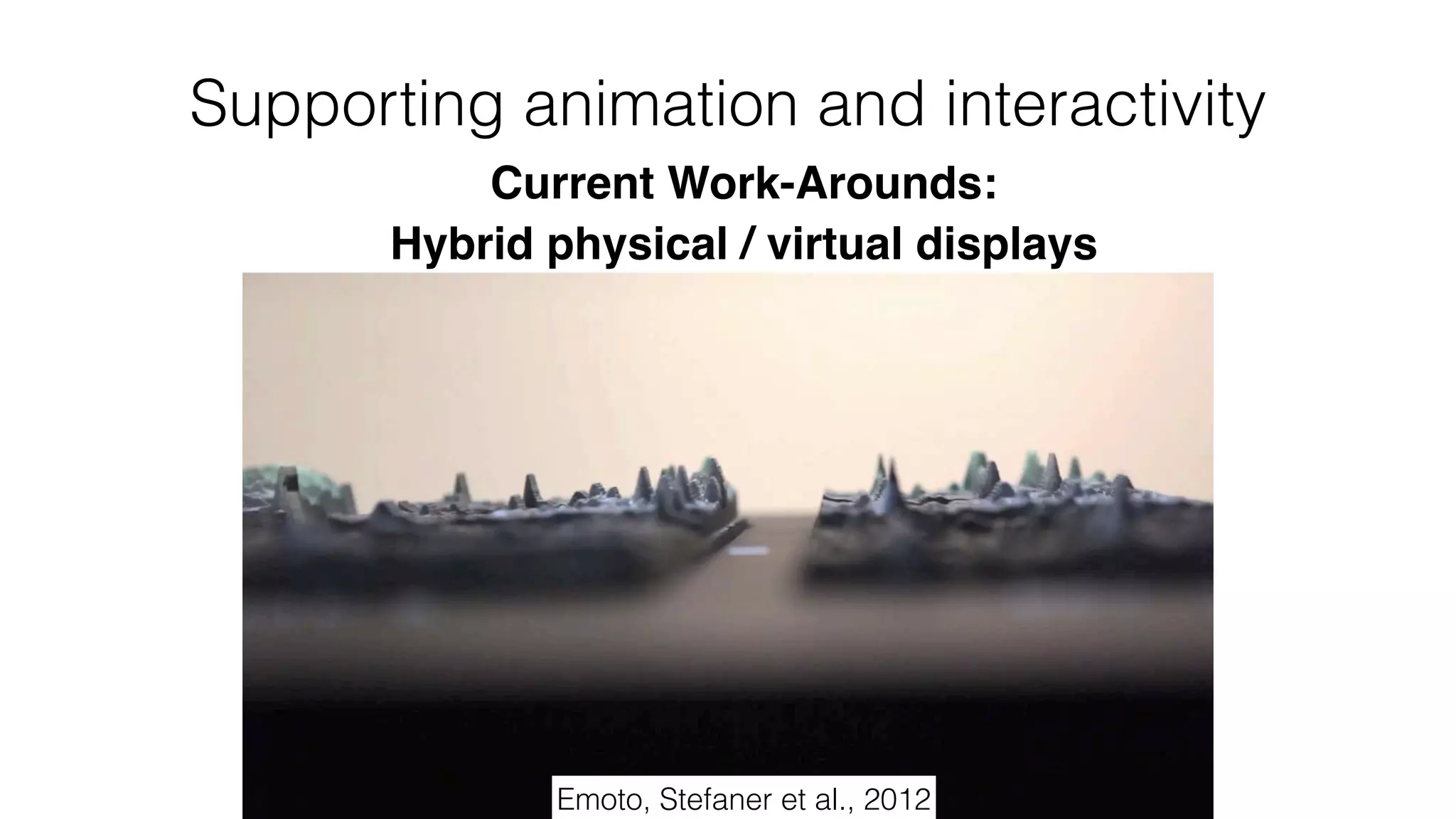
Hybrid physical / virtual displays
Supporting animation and interactivity
Emoto, Stefaner et al., 2012
Current Work-Arounds:
Synthetic interaction
Supporting animation and interactivity
Sensing Computation Actuation
Supporting animation and interactivity
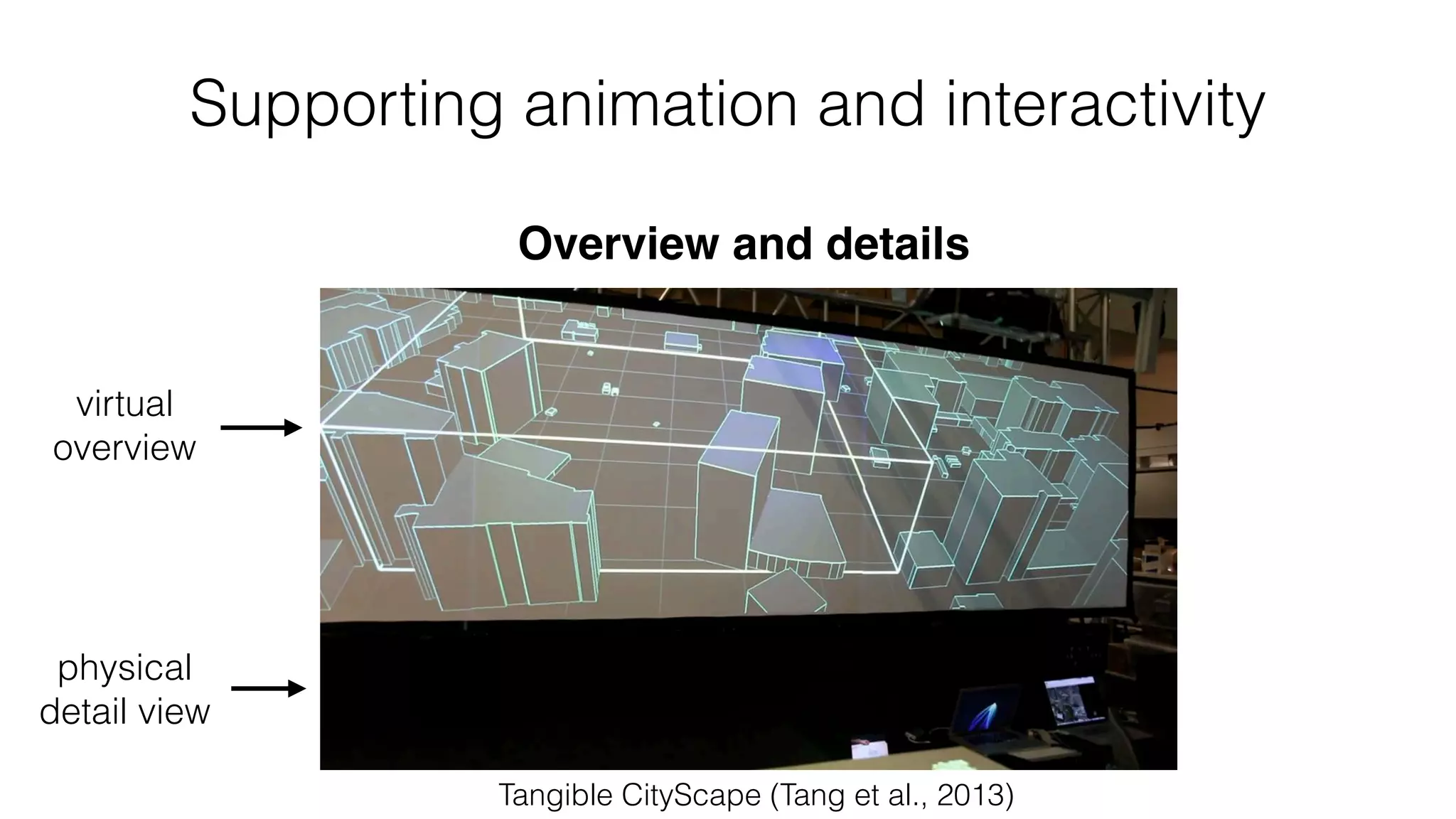
virtual
overview
!


physical
detail view
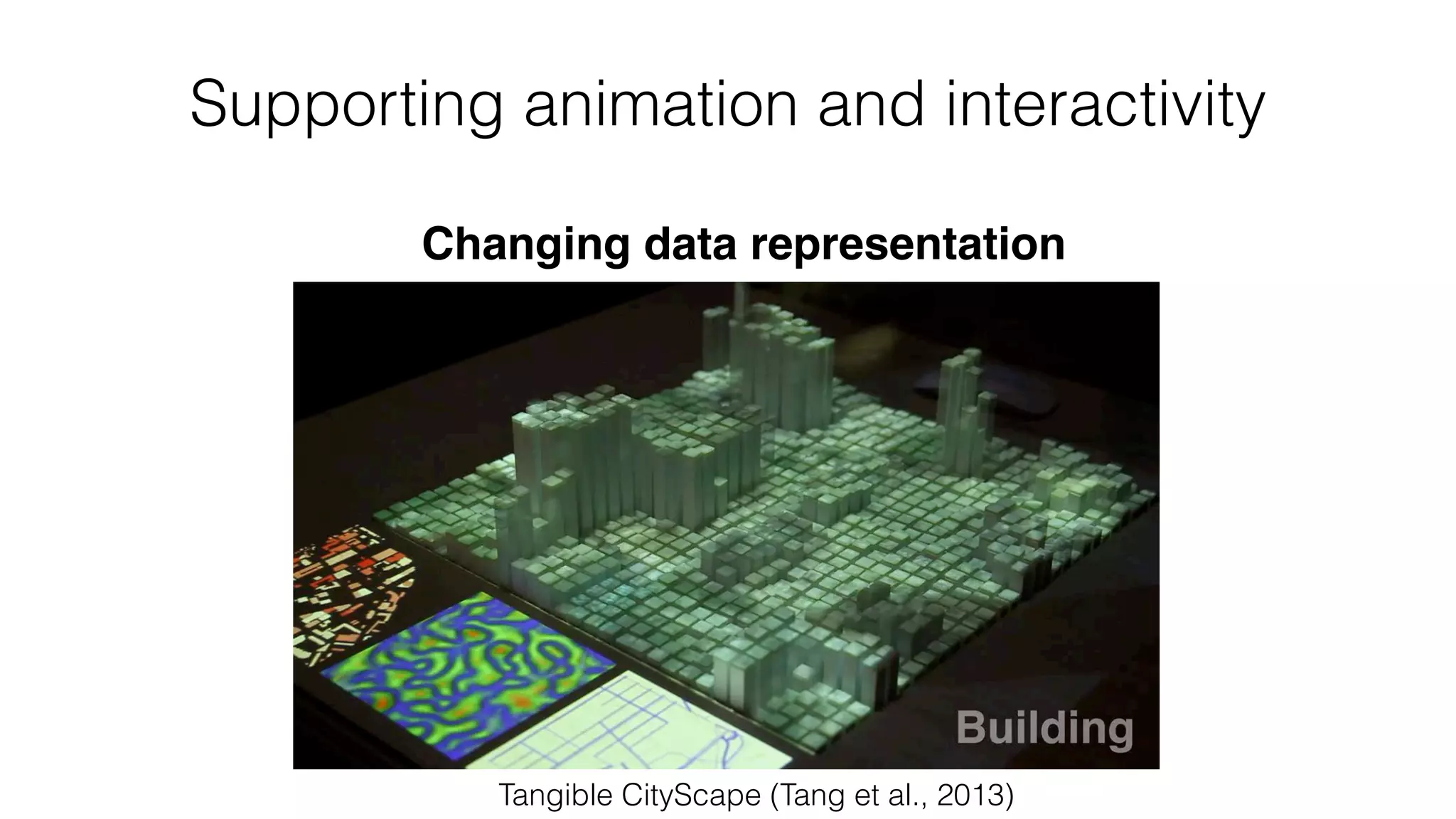
Tangible CityScape (Tang et al., 2013)
Overview and details
Supporting animation and interactivity
Changing data representation
Tangible CityScape (Tang et al., 2013)
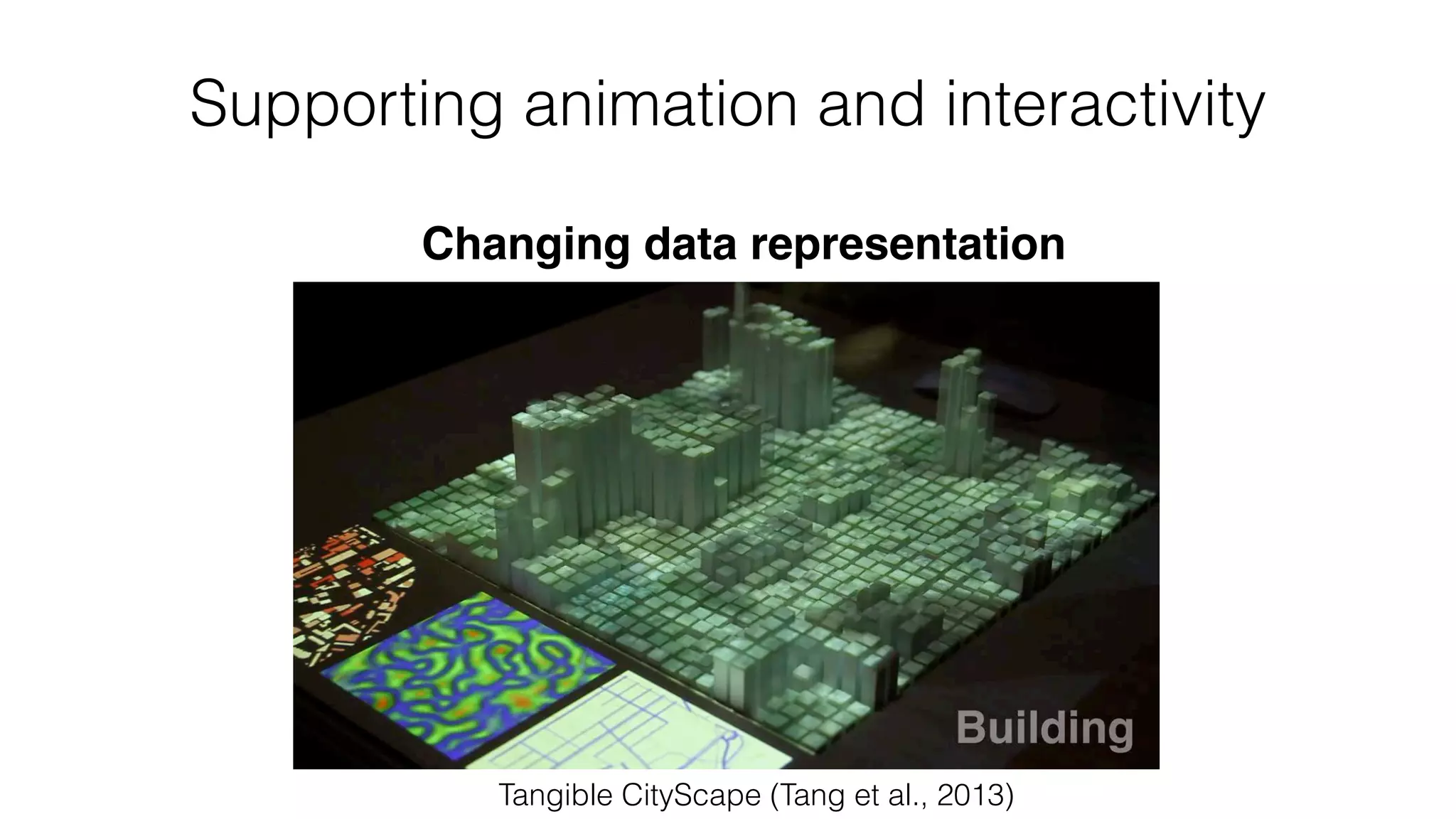
Supporting animation and interactivity
Changing data representation
Tangible CityScape (Tang et al., 2013)
Supporting animation and interactivity
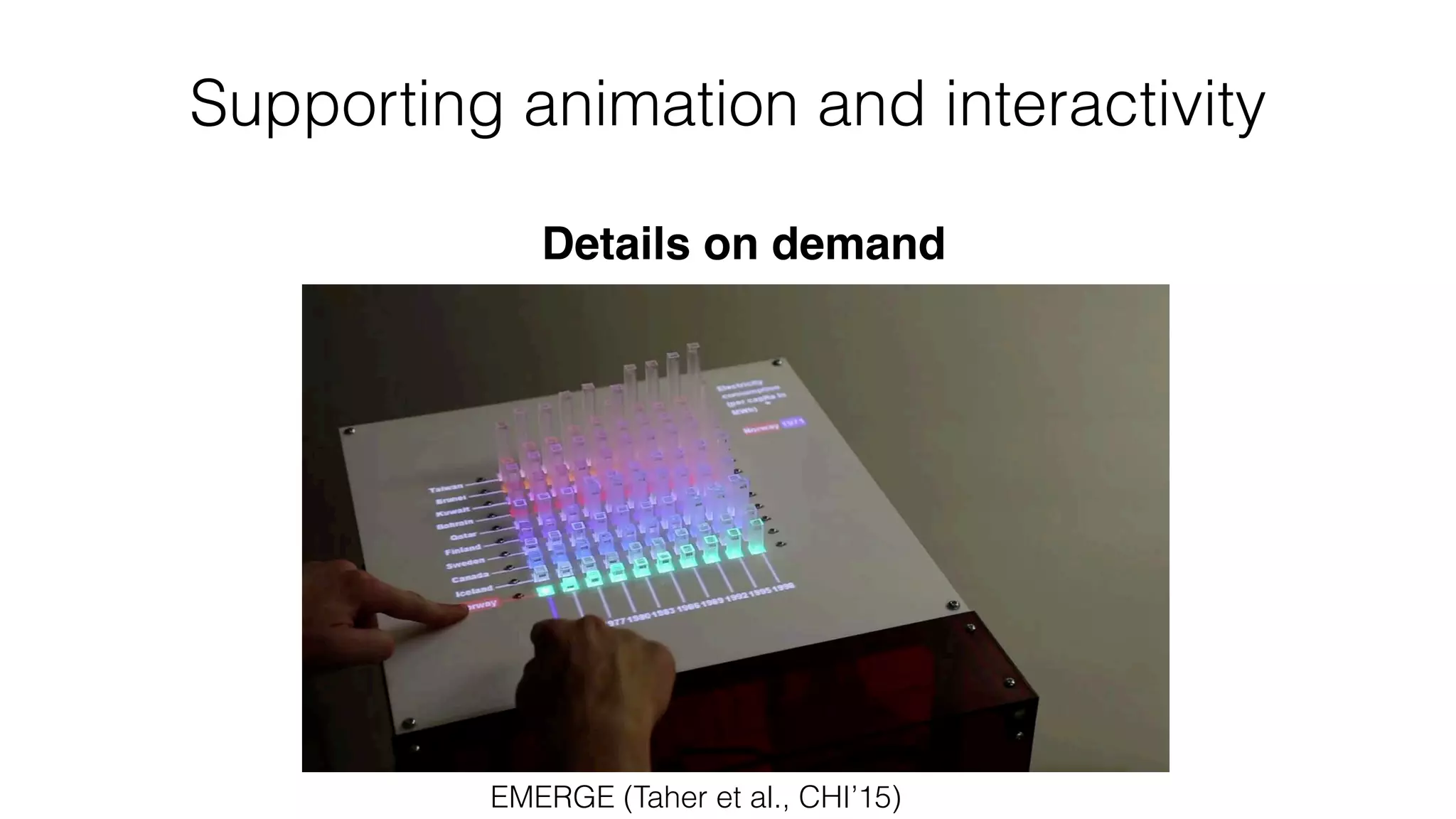
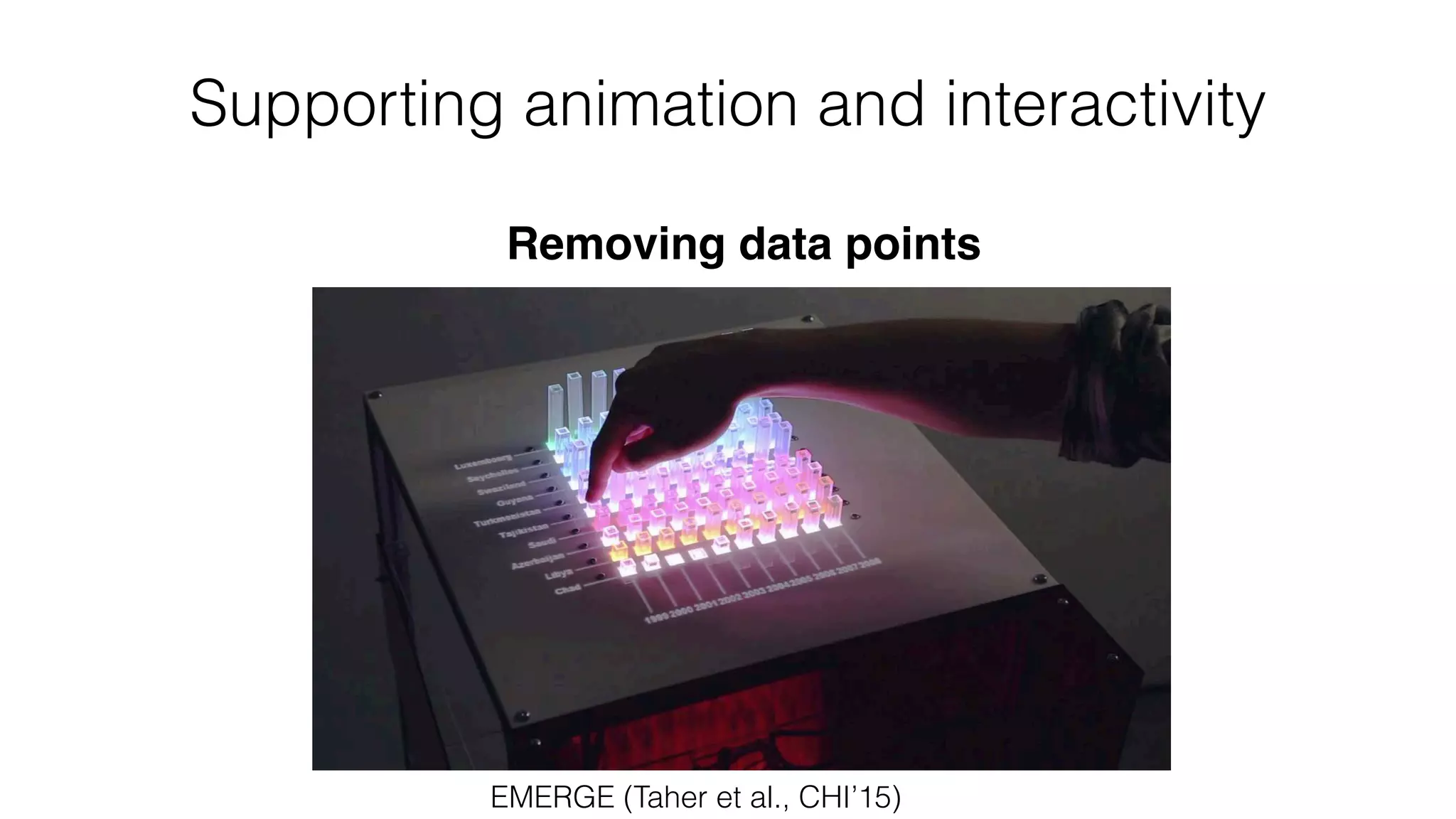
EMERGE (Taher et al., CHI’15)
Details on demand
Supporting animation and interactivity
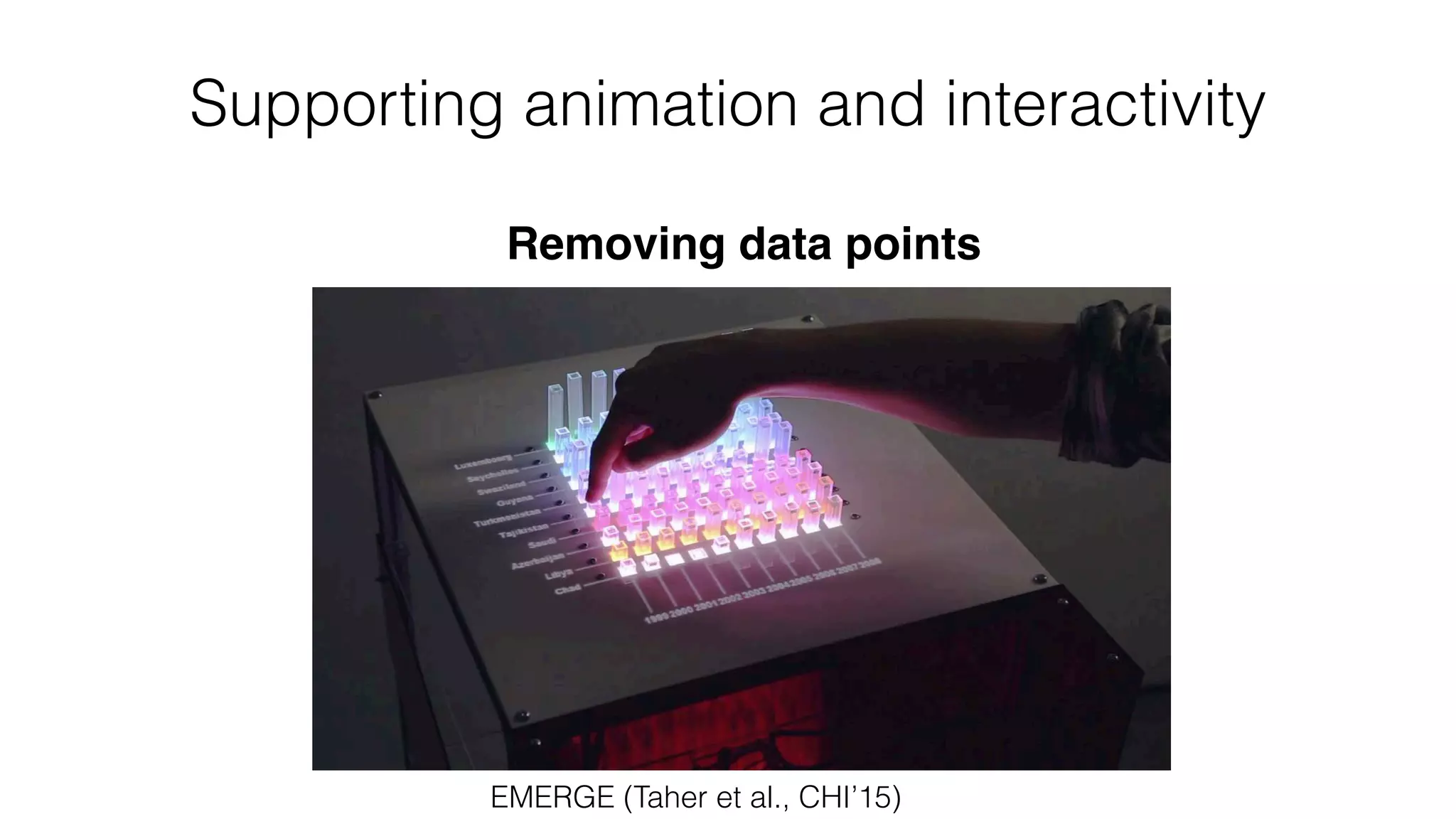
Removing data points
EMERGE (Taher et al., CHI’15)
Supporting animation and interactivity
Removing data points
EMERGE (Taher et al., CHI’15)
Supporting animation and interactivity
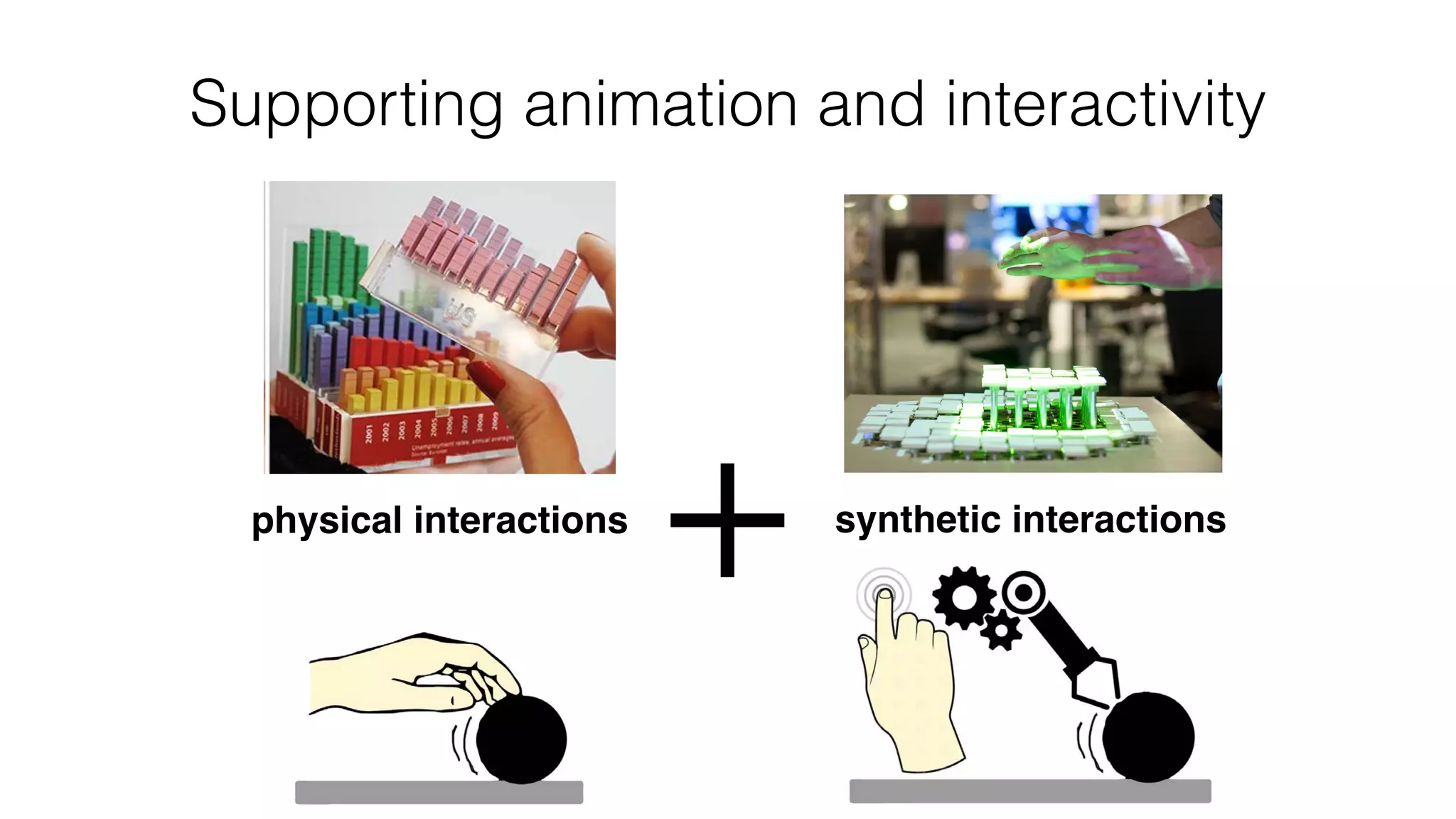
physical interactions synthetic interactions
+
What to evaluate?
(and how?)
Evaluation-Specific Challenges
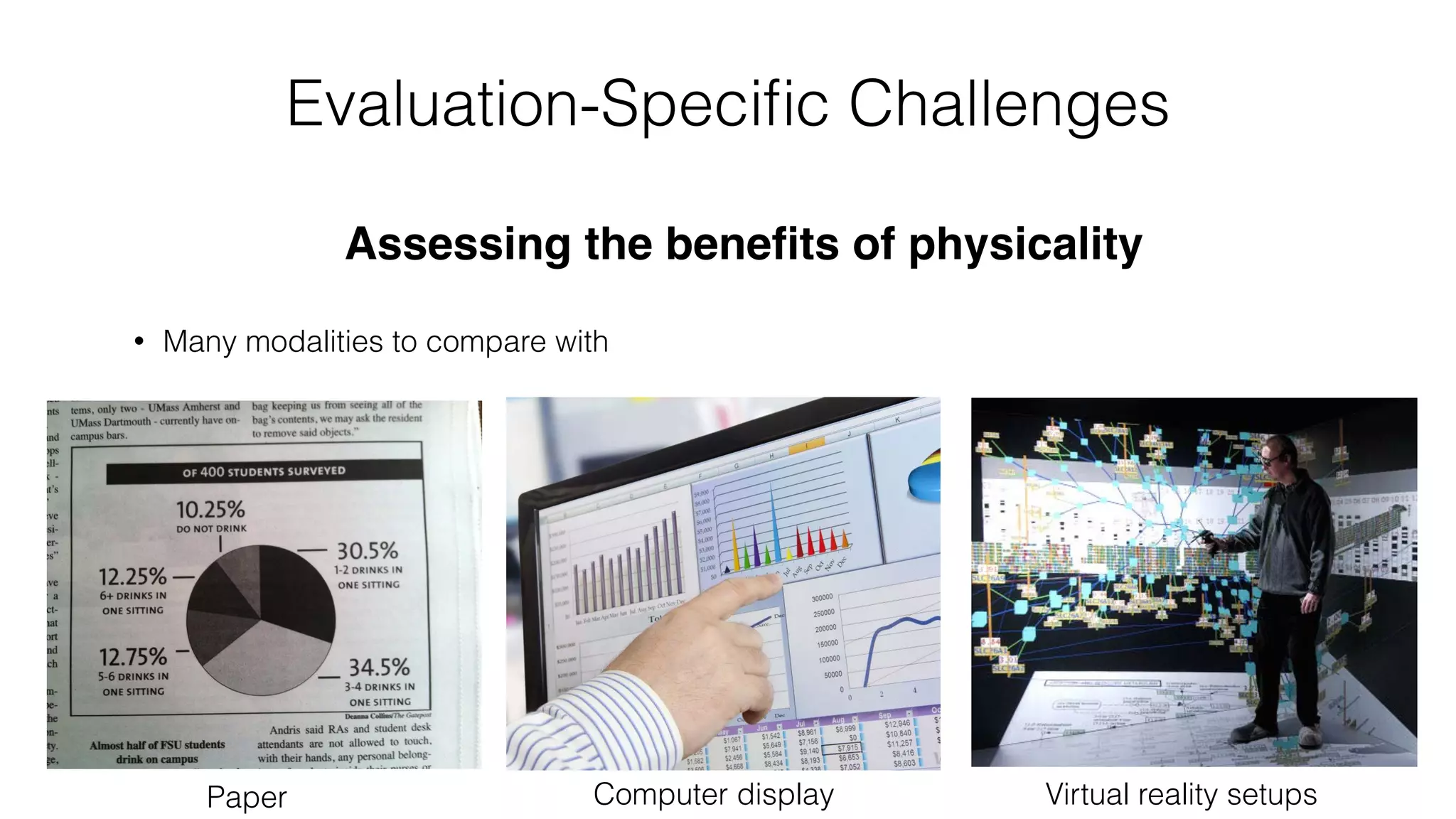
Assessing the benefits of physicality
• Many modalities to compare with
Paper Virtual reality setupsComputer display
Evaluation-Specific Challenges
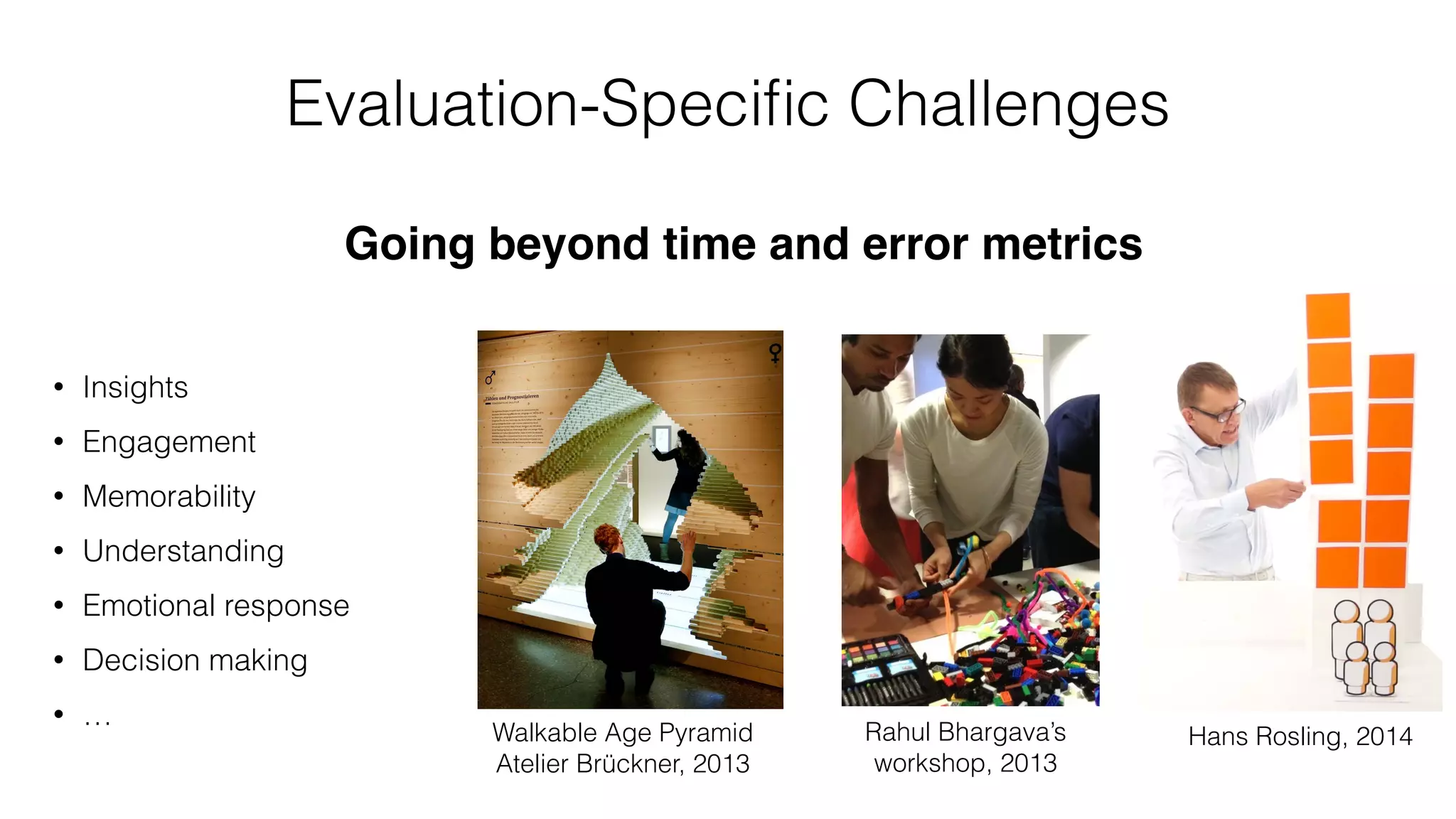
Going beyond time and error metrics
Walkable Age Pyramid

Atelier Brückner, 2013
• Insights
• Engagement
• Memorability
• Understanding
• Emotional response
• Decision making
• …
Hans Rosling, 2014Rahul Bhargava’s

workshop, 2013
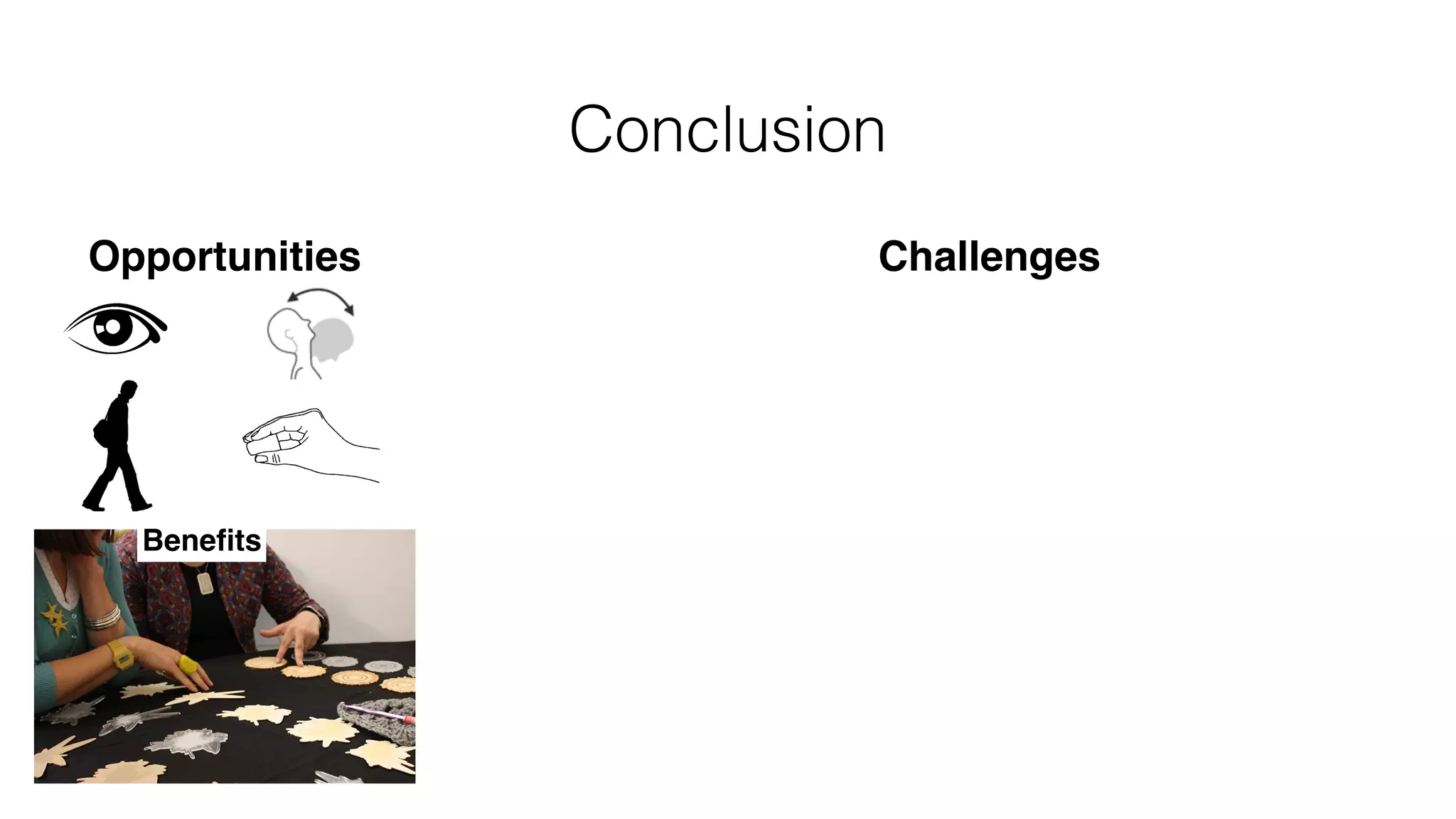
Conclusion
Opportunities Challenges
Benefits
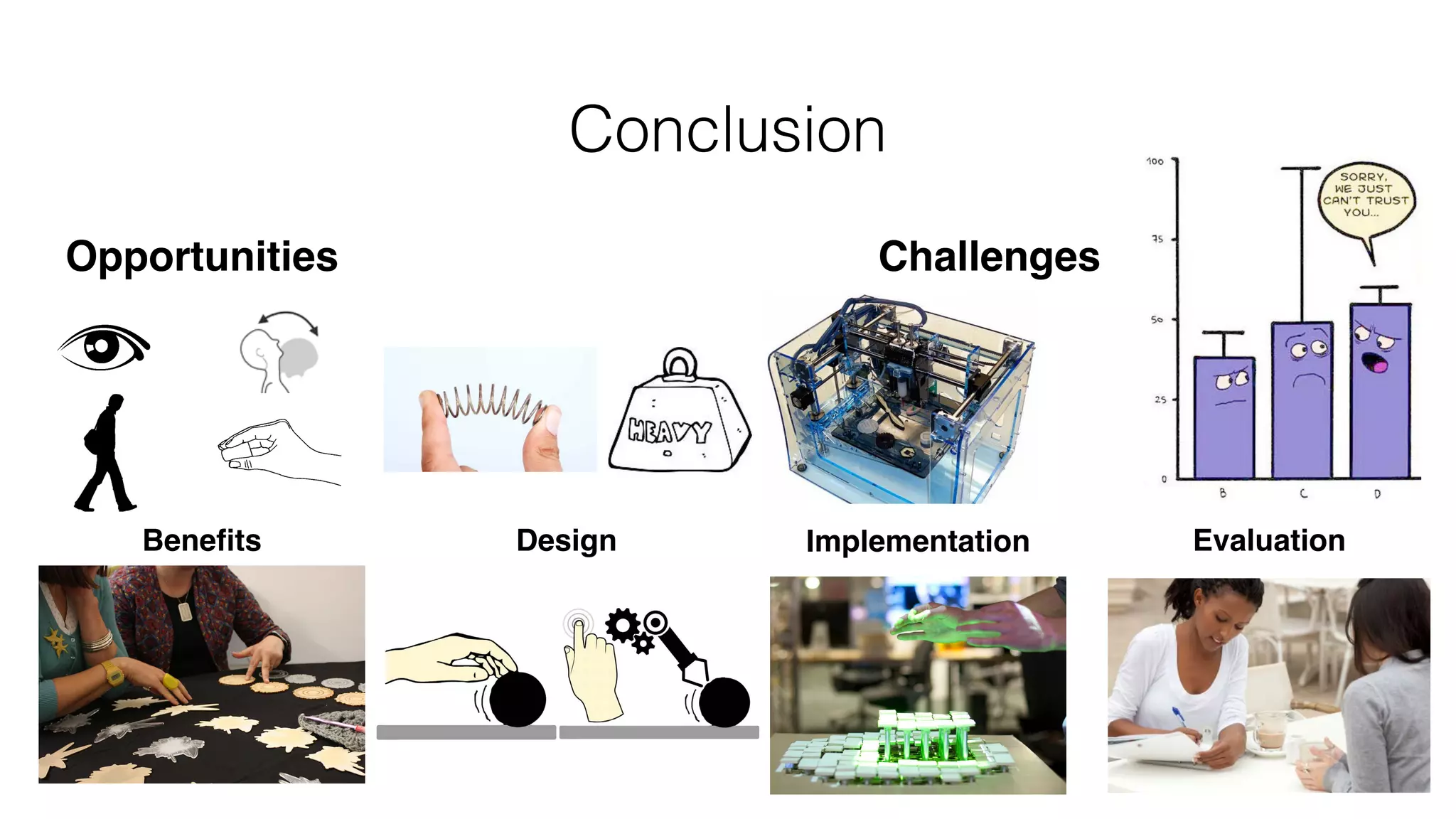
Conclusion
Opportunities Challenges
Design Implementation EvaluationBenefits
http://dataphys.org
Data Physicalization Wiki
• connect the communities
• academia
• artists and designers
• industry
• bibliography
• emerging technologies
http://yvonnejansen.me

Opportunities and Challenges for Data Physicalization